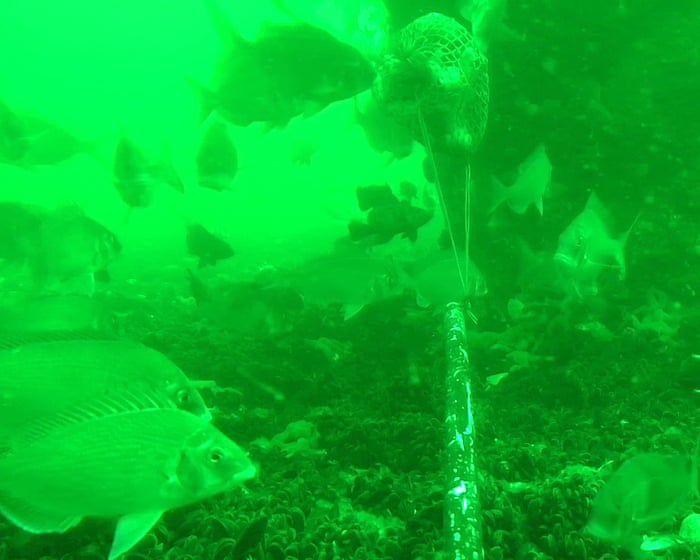
‘Huge experiment in biogeography’: US offshore windfarms are creating artificial reefs
Summary
Offshore wind turbines can attract mussels, algae, crabs and fish, creating artificial reef habitat. Research at Rhode Island’s Block Island windfarm found many more black sea bass near the turbines, but scientists are still studying whether the structures increase fish populations or mainly draw fish together.Key Facts
- The Block Island windfarm, completed in 2016, is the oldest offshore windfarm in the United States.
- A 2022 developer-funded study found ten times as many black sea bass near the Block Island turbines as in similar reference areas.
- Mussels and algae can settle on turbines, attracting crabs and small fish that seek food and shelter.
- Researchers have not yet determined whether turbines help fish populations grow or mainly concentrate fish that already exist.
- A two-year survey found black sea bass stayed near the Block Island turbines while in the area, then followed their usual migration patterns.
- The United States has five operating offshore windfarms on its East Coast, and three more are expected to begin operating in 2027.
- The operating farms are expected to generate a combined 6 gigawatts of power, enough for more than 4.5 million homes.
Read the Full Article
This is a fact-based summary from The Actual News. Click below to read the complete story directly from the original source.