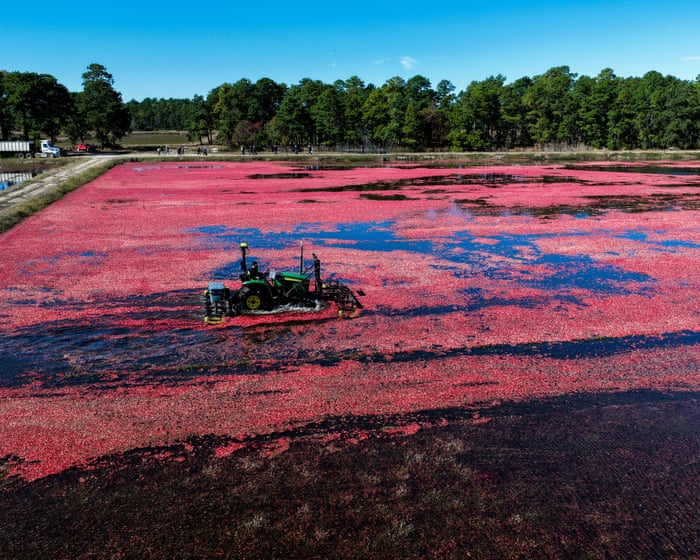
Cranberry jam: warming winters and extreme weather threaten an iconic holiday fruit
Summary
Wisconsin grows more than 60% of the U.S. cranberry supply, and growers say increasingly erratic weather is making production harder. Heat, heavy rain, fungal disease, and warmer winters with sudden freezes threaten crops, while researchers and farmers are testing resilient varieties and using tools such as drones to adapt.Key Facts
- Wisconsin produces more than 60% of the nation’s cranberries.
- Cranberries grow on low vines in dry soil; growers flood the beds at harvest so loosened berries float to the surface.
- Extreme summer heat can scald cranberries on the vine in states such as Massachusetts and New Jersey.
- Humid conditions and heavy rainfall can encourage fungal diseases that rot cranberry crops.
- Wisconsin growers spray water over vines in winter to form protective ice that helps shield plants from cold and wind.
- Cranberry-growing regions in the upper Midwest now average 14 more warm winter days than in 1970.
- Warm spells can melt protective ice early, leaving cranberry vines exposed to later freezes.
- Researchers are developing weather- and disease-resistant cranberry varieties, while growers use drones to apply fertilizer and monitor temperatures.
Read the Full Article
This is a fact-based summary from The Actual News. Click below to read the complete story directly from the original source.