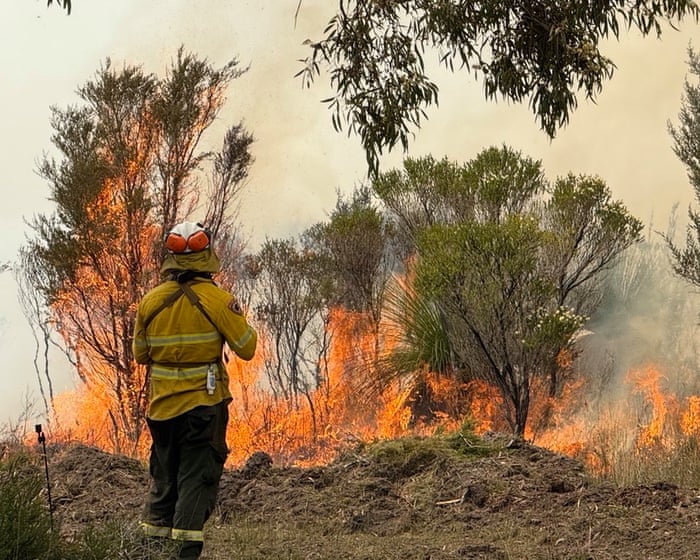
Southern and central Australia face summer of heightened bushfire risk and heatwaves
Summary
Large parts of southern and central Australia face heightened bushfire risk this summer because of dry conditions, low soil moisture and abundant vegetation that can burn. Forecasters also expect hotter-than-usual days and nights nationwide from December to February, increasing the chance of heatwaves.Key Facts
- The Australian and New Zealand Council for Fire and Emergency Services identified elevated bushfire risk across most of Victoria, eastern Tasmania and large areas of South Australia, Western Australia, New South Wales and the Northern Territory.
- Recent rain has produced grass growth in parts of Victoria that could dry quickly as temperatures rise.
- More than 440,000 hectares burned in Victoria last summer.
- A bushfire on Flinders Island in Tasmania was out of control and had destroyed at least six homes, according to the report.
- The Bureau of Meteorology forecast hotter-than-usual days and nights across Australia between December and February.
- Forecasters expected drier-than-usual conditions in north-western Australia and eastern Tasmania, and above-average rainfall in Queensland and north-eastern New South Wales.
- AFAC chief executive Rob Webb urged people to make an emergency plan and know where to get reliable information.
Read the Full Article
This is a fact-based summary from The Actual News. Click below to read the complete story directly from the original source.