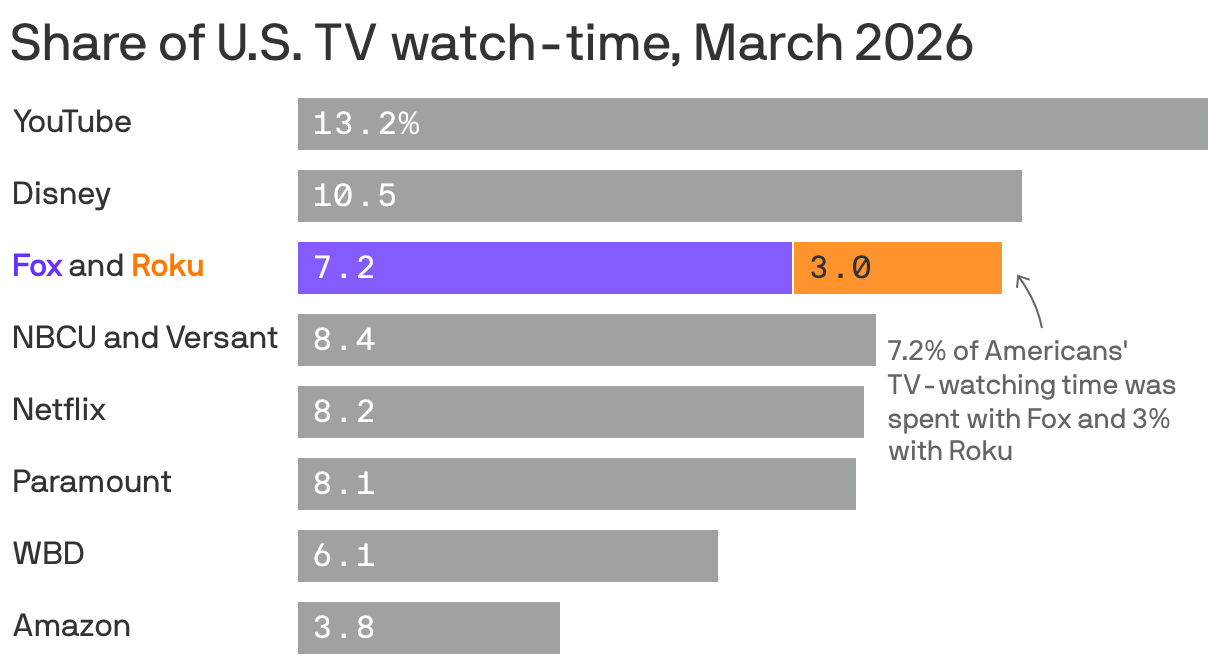
Fox is buying Roku for $22 billion in a deal that changes its business strategy. This deal will help Fox reach more viewers through Roku’s streaming device and advertising platform, while Roku benefits by selling at a higher price amid strong competition.
Key Facts
Fox will pay $22 billion to buy Roku, a popular streaming device and platform.
Roku has about 100 million households worldwide using its service.
The deal gives Fox control over Roku’s digital TV operating system and advertising channel, The Roku Channel.
Fox already owns a free streaming service called Tubi, and combining it with Roku’s platform creates a large digital ad network.
The purchase helps Fox shift from just creating content to also managing how viewers watch it.
Fox’s stock price fell after the deal announcement due to concerns about managing hardware business and possible stock dilution.
Roku faces strong competition from big tech companies like Amazon and Google.
Fox will pay for the deal using a mix of cash and stock, made possible by its strong financial position.
Read the Original
Want the full story? Tap a source to open the original
article.
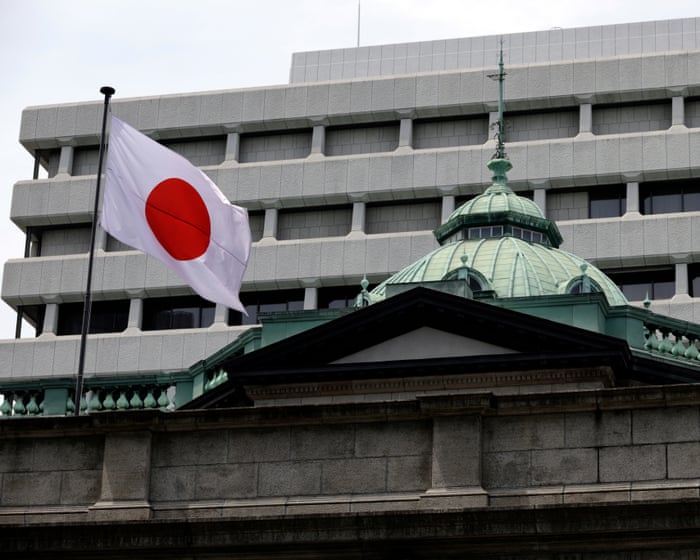
The Bank of Japan raised its short-term interest rate to 1%, the highest level in 31 years, to tackle inflation caused partly by the Iran war. Despite recent lower oil prices and easing risks to the economy, the central bank wants to keep inflation near its 2% target.
Key Facts
The Bank of Japan increased its policy rate from 0.75% to 1%.
This is the highest rate since 1995.
The rate hike aims to control inflation linked to rising oil costs due to the Iran conflict.
Japan’s core inflation dropped to 1.4% in April, a four-year low.
The Bank of Japan sees reduced economic risk due to a US-Iran peace agreement and government relief for high fuel costs.
The stock market in Tokyo reached a record high, with the Nikkei index hitting 70,000 points.
The Bank of Japan is the second Group of Seven (G7) central bank to raise rates after the Iran war, following the European Central Bank.
The US Federal Reserve and Bank of England plan to keep their interest rates steady for now.
Read the Original
Want the full story? Tap a source to open the original
article.
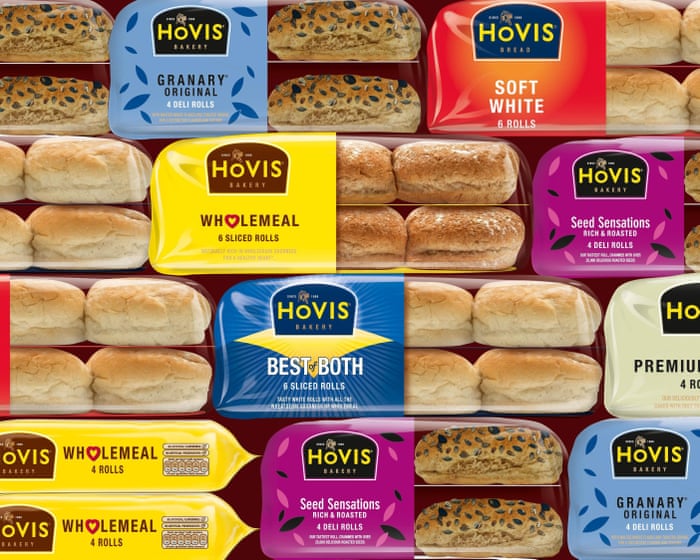
The UK competition watchdog has approved a £75 million deal for Associated British Foods (ABF), the owner of Kingsmill bread, to buy Hovis. The regulator said the deal does not harm competition because without it, ABF’s bakery business might leave the UK market, which would hurt bread supplies, especially for low-income people.
Key Facts
ABF owns Allied Bakeries, which produces Kingsmill, Allinson’s, and Sunblest bread brands.
ABF plans to buy Hovis, which owns brands like Mother’s Pride and Ormo, in a £75 million deal.
The Competition and Markets Authority (CMA) investigated the deal and found no competition problems.
CMA said if the deal failed, Allied Bakeries might leave the UK market entirely.
Bread demand in the UK is falling, while costs for energy, wheat, and distribution are rising.
Allied Bakeries has made losses for 14 years due to lower sliced bread popularity and competition from cheaper supermarket brands.
Hovis’s pre-tax losses rose from £3.6 million to £4.7 million in a year.
ABF also owns Primark but plans to spin it off next year.
Read the Original
Want the full story? Tap a source to open the original
article.
Japan’s central bank raised its main interest rate to 1 percent, the highest level since 1995. The Bank of Japan made this change to address rising prices partly caused by the war involving the United States, Israel, and Iran, and to move away from years of very low borrowing costs.
Key Facts
The Bank of Japan raised its benchmark interest rate by 0.25 percentage points to 1 percent.
This is the first time since 1995 that the rate has been this high.
The increase is part of efforts to control inflation and end a long period of very low interest rates.
Rising oil prices, linked to the war involving the US, Israel, and Iran, are causing higher costs for businesses in Japan.
Japan imports most of its crude oil from the Middle East, making it sensitive to fuel price changes.
The government has used oil reserves and subsidies to help control energy costs for households.
Japan’s inflation rate is near the central bank’s 2 percent target, signaling progress toward price stability.
Japan’s economy grew at a strong pace in early 2024, the fastest growth in 18 months.
Read the Original
Want the full story? Tap a source to open the original
article.
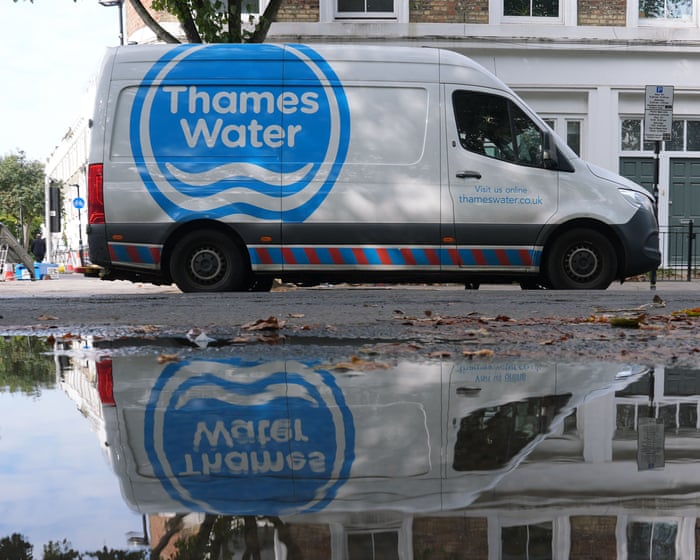
The UK government is objecting to a £10 billion rescue plan for Thames Water because it might unfairly affect customers. The plan would let creditors take control of the company and avoid fines, moving Thames Water closer to public ownership or nationalisation.
Key Facts
The UK environment secretary raised concerns about a £10 billion rescue plan for Thames Water.
The rescue deal would let creditors inject cash and avoid new fines for four years despite sewage leaks.
Thames Water serves about 16 million people in London and southern England.
The company has £17.6 billion in debt and is near financial collapse.
The government must choose between temporary nationalisation or accepting the creditor-led rescue deal.
Elliott Investment Management, a hedge fund led by billionaire Paul Singer, would partly control Thames Water under the deal.
Labour politician Andy Burnham supports public ownership of water companies, including Thames Water.
Thames Water was privatised decades ago, and private owners increased its debt significantly.
Read the Original
Want the full story? Tap a source to open the original
article.
Venezuela has made a deal with the U.S. company General Electric Vernova to improve its electricity supply. The agreement aims to increase the country's power generation by 5 gigawatts within four years.
Key Facts
Venezuela signed an agreement with General Electric Vernova, a U.S. energy company.
The goal is to boost Venezuela’s electricity generation capacity.
The deal could add 5 gigawatts of power over four years.
Venezuela has faced long-term problems with power outages.
General Electric Vernova specializes in energy technologies.
Improving electricity could help Venezuela's economy and daily life.
The cooperation involves technology and resources to strengthen the power grid.
Read the Original
Want the full story? Tap a source to open the original
article.
Asian stock markets mostly rose, with Japan’s Nikkei index briefly passing 70,000 points before falling back slightly after the Bank of Japan increased its key interest rate to 1%, the highest level in 30 years. Global markets rallied on hopes of a deal between the United States and Iran to improve oil supplies, causing oil prices to drop and U.S. stocks, especially those linked to artificial intelligence, to rise.
Key Facts
Japan’s Nikkei 225 index briefly rose above 70,000 points but settled at 69,713.05 after the Bank of Japan raised its interest rate by 0.25% to 1%.
South Korea’s Kospi index reached a new record high, increasing by 2.1% to 8,721.64.
China’s Shanghai Composite slightly increased by 0.1%, while Australia’s ASX 200 and Hong Kong’s Hang Seng both fell by 0.3% and 1.3%, respectively.
The U.S. and Iran reached a tentative agreement to resume the flow of crude oil, expected to reopen the Strait of Hormuz by Friday.
Following the tentative deal, Brent crude oil prices dropped by 4.8% to around $83 per barrel, and U.S. crude stayed near $80 per barrel.
U.S. stock markets saw gains, with the S&P 500 rising 1.7%, the Dow Jones increasing 0.9% to a record, and the Nasdaq climbing 3.1%.
Stocks tied to artificial intelligence, such as Micron Technology, Advanced Micro Devices, and Nvidia, saw significant price increases.
SpaceX, owned by Elon Musk and linked to AI company xAI, rose 19.6% in its second day of trading on Wall Street.
Read the Original
Want the full story? Tap a source to open the original
article.
Experts say that higher prices for gas, groceries, and airline tickets will continue even after a tentative deal ends the conflict with Iran. It will take time for oil supplies and supply chains to recover, so consumers should expect prices to stay high for a while.
Key Facts
A tentative deal is in place to end the Iran war, which disrupted oil and supply chains.
Oil prices fell to about $80 per barrel after the announcement but were $67 before the war and over $120 during it.
Gasoline prices drop slowly because refineries buy oil weeks in advance.
Places with less refining capacity, like the U.S. West Coast, will see slower gas price decreases.
The war affected supplies of fertilizer, food, and other goods, raising costs beyond fuel.
Some countries in Asia and Africa faced school and office closures due to oil shortages.
Experts say it will take a long time and cooperation between many countries to return to normal prices.
The overall effect of the war has made consumers worldwide worse off economically.
Read the Original
Want the full story? Tap a source to open the original
article.
Kevin Warsh was sworn in as the new chair of the Federal Reserve on May 22, 2026. He will lead the Fed’s next policy meeting, where decisions on interest rates will be closely watched as they impact inflation and the economy.
Key Facts
Kevin Warsh became Federal Reserve chair in May 2026, nominated by President Donald Trump.
Warsh’s first major task is managing interest rates to balance inflation and economic growth.
Inflation recently reached 4.2%, its highest in three years, mainly due to rising gas prices.
Warsh is expected to take a neutral approach on interest rates amid economic uncertainty.
The Fed’s key interest rate has been steady at about 3.6% since December.
President Trump has said Warsh can make his own choices but has expressed skepticism about raising rates.
A tentative U.S.-Iran deal on oil may lower gas prices and reduce inflation pressures.
The Fed’s rate decisions affect borrowing costs for mortgages, car loans, and business loans.
Read the Original
Want the full story? Tap a source to open the original
article.
A large painting called Scene in Braemar, created by Sir Edwin Landseer and considered a companion to his famous Monarch of the Glen, is expected to sell for up to £4 million at a London auction next month. The painting has a long history of private ownership and public displays and is notable for its dramatic depiction of a stag in the Scottish Highlands.
Key Facts
Scene in Braemar is a large painting (almost 9 feet tall) by Sir Edwin Landseer.
It features a 12-point stag on a Highland mountain and is seen as a darker, more dramatic counterpart to Monarch of the Glen.
The painting was first commissioned in 1859 by Edward Ladd Betts, a railway businessman, who paid more than the artist’s initial fee.
Betts had to sell the painting in 1868 due to financial troubles, and it has changed hands several times since then.
The painting last sold at auction in 1994 for £793,500.
Sotheby’s expects it to fetch between £3 million and £4 million at the upcoming auction in July.
Monarch of the Glen, Landseer’s more famous work, is owned by the National Galleries of Scotland and has been widely reproduced.
Scene in Braemar has appeared in major exhibitions and was praised by notable figures like writer Beatrix Potter.
Read the Original
Want the full story? Tap a source to open the original
article.
Chinese electric carmaker Xpeng says electric vehicle prices in the UK and EU are unlikely to drop sharply despite growing competition from Chinese brands. Instead of cutting prices, Chinese companies plan to compete by offering better quality and advanced technology.
Key Facts
Chinese EV makers dominate the global market due to government subsidies and lower labor costs.
Intense competition in China led to price cuts, but this is not expected to happen in Europe or the UK.
Xpeng sold 7,300 cars in Europe in the first three months of 2026 and plans to increase sales.
Chinese brands focus on quality and differentiation for customers in developed European markets.
Xpeng aims to stand out with advanced features like autonomous driving and robotaxis.
The company develops cars, chips, and driverless software together to speed up innovation.
Xpeng is considering building cars in Europe and currently uses an Austrian contract manufacturer.
Volkswagen offered Xpeng an older German factory, but Xpeng is exploring other options with European carmakers.
Read the Original
Want the full story? Tap a source to open the original
article.
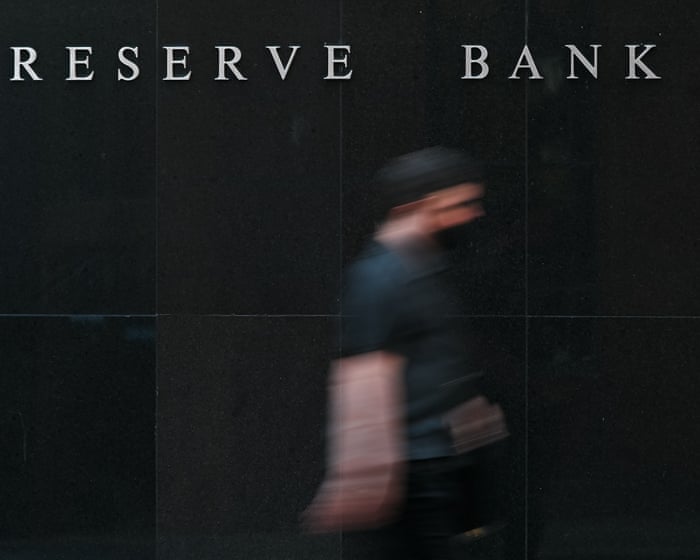
The Reserve Bank of Australia (RBA) kept its official interest rate at 4.35% due to slower economic growth and rising unemployment. Mortgage payments have become more expensive, and consumer spending is weak, while experts have mixed views on whether rates will rise again soon.
Key Facts
The RBA left the official cash rate unchanged at 4.35%.
Economic growth slowed down to 0.3% in the March quarter, down from 0.9% previously.
Unemployment rose to 4.5% in May, the highest since 2021.
Mortgage holders are paying more, with monthly payments up from $4,114 to $4,467 for a typical loan.
Consumers are spending less on non-essentials and using savings to cover essentials like electricity and fuel.
Some experts predict rates will stay steady or start to fall in mid-2027.
Others, including Westpac, think rates might rise again in late 2026 and stay high until 2028.
Inflation could remain high due to increased fuel costs linked to international conflicts affecting supply chains.
Read the Original
Want the full story? Tap a source to open the original
article.
The Australian consumer watchdog (ACCC) has sued the Grill’d burger chain, accusing it of misleading customers about donations to its tree-planting campaign. Grill’d claimed it would donate $1 for each burger sold on Tuesdays, but only about 4% of sales actually qualified, leading to much smaller donations than advertised.
Key Facts
The ACCC took legal action against Grill’d over its Tree Day Tuesday campaign.
Grill’d said it would donate $1 per burger sold on Tuesdays to plant trees.
Between January 2021 and April 2024, Grill’d sold over 5 million burgers on Tuesdays.
Only about 4% of these burger sales triggered a donation due to strict conditions.
Conditions required customers to be in the loyalty program and buy only at the front counter, excluding online, takeaway, or QR code table orders.
Grill’d donated about $250,000 during the entire campaign, far less than customers might have expected.
The ACCC said this was a case of greenwashing—making environmental claims that are misleading.
Grill’d stated the promotion was done with good intentions and insisted it follows Australian Consumer Law.
Grill’d runs about 180 stores and is also facing a separate lawsuit about workers’ unpaid rest breaks.
Read the Original
Want the full story? Tap a source to open the original
article.
Japan's central bank raised its main interest rate to 1%, the highest since 1995, to address rising inflation caused by higher energy prices. The Bank of Japan has been increasing rates gradually since March 2024 to move away from decades of very low rates and combat inflation while balancing economic growth.
Key Facts
The Bank of Japan raised its policy interest rate from 0.75% to 1%.
This is the highest interest rate in Japan since 1995.
Interest rates had been near zero for about 20 years due to deflation and slow growth.
Higher global energy prices, worsened by the Iran war, have increased inflation in Japan.
Japan’s wholesale prices rose over 6% in May compared to last year.
Overall inflation in Japan was 1.4% in April, below the 2% target set by the Bank of Japan.
Higher rates may reduce inflation but increase borrowing costs for businesses and the government.
The Bank of Japan aims to stabilize the yen, which has weakened against major currencies like the US dollar and euro.
Read the Original
Want the full story? Tap a source to open the original
article.
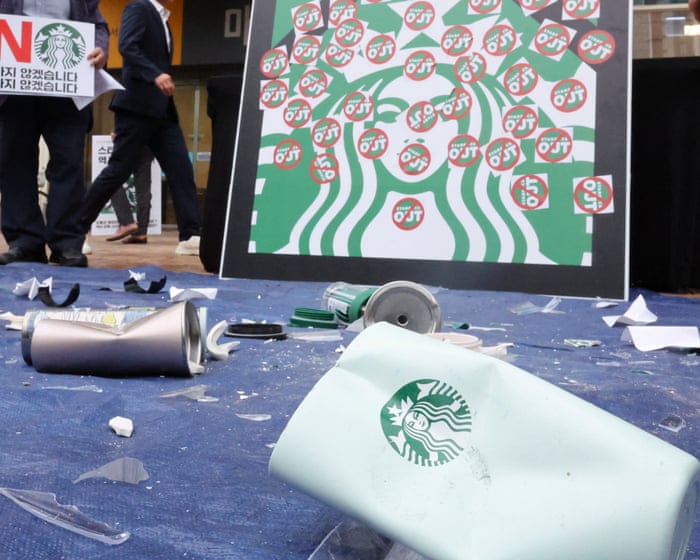
Starbucks Korea will close over 2,000 stores for a half-day on June 22 so staff can take history lessons and training about social sensitivity. This follows a marketing mistake that upset many people by coinciding with a tragic event in South Korea’s history, causing protests and store boycotts.
Key Facts
Starbucks Korea’s stores will close at 3 pm on June 22 for staff to watch recorded lessons on modern Korean history and social sensitivity training.
The shutdown is expected to cost about 2.1 billion won (around $1.4 million) in lost sales.
The training will also be taken by Shinsegae Group executives, the company that runs Starbucks Korea under license.
The marketing error happened on May 18, the anniversary of the 1980 Gwangju massacre, a painful event where many pro-democracy protesters were killed.
Starbucks ran a “Tank Day” promotion using the slogan “thwack on the desk,” which linked to a historic police torture case.
The campaign was created with help from an AI tool, but some managers did not review the materials carefully before approval.
After strong backlash, Starbucks quickly ended the campaign, and the CEO was fired the same day.
Starbucks and its executives have apologized publicly, and an internal investigation found no deliberate wrongdoing, though police are still investigating.
Read the Original
Want the full story? Tap a source to open the original
article.
US stock markets rose sharply after President Donald Trump announced a tentative deal with Iran aiming to end the conflict affecting energy supplies. The S&P 500 and Dow Jones reached near-record highs, while global oil prices dropped as hopes grew for more stable energy markets.
Key Facts
The S&P 500 index rose 1.7 percent on Monday toward its all-time high.
The Nasdaq Composite increased by 3.1 percent, helped by a big gain from SpaceX’s stock debut.
The Dow Jones Industrial Average climbed 0.9 percent to a record high.
Brent crude oil prices fell nearly 5 percent to around $83 per barrel, the lowest since the start of the conflict.
The deal between the US and Iran aims to end the US-Israel war on Iran and restore stability to energy supply routes.
About 500 ships remain stuck near the Strait of Hormuz due to months of disruption and safety concerns.
It will take months for oil and gas flows through the strait to return to normal levels, according to analysts.
Asian stock markets were mostly steady following the US market gains.
Read the Original
Want the full story? Tap a source to open the original
article.
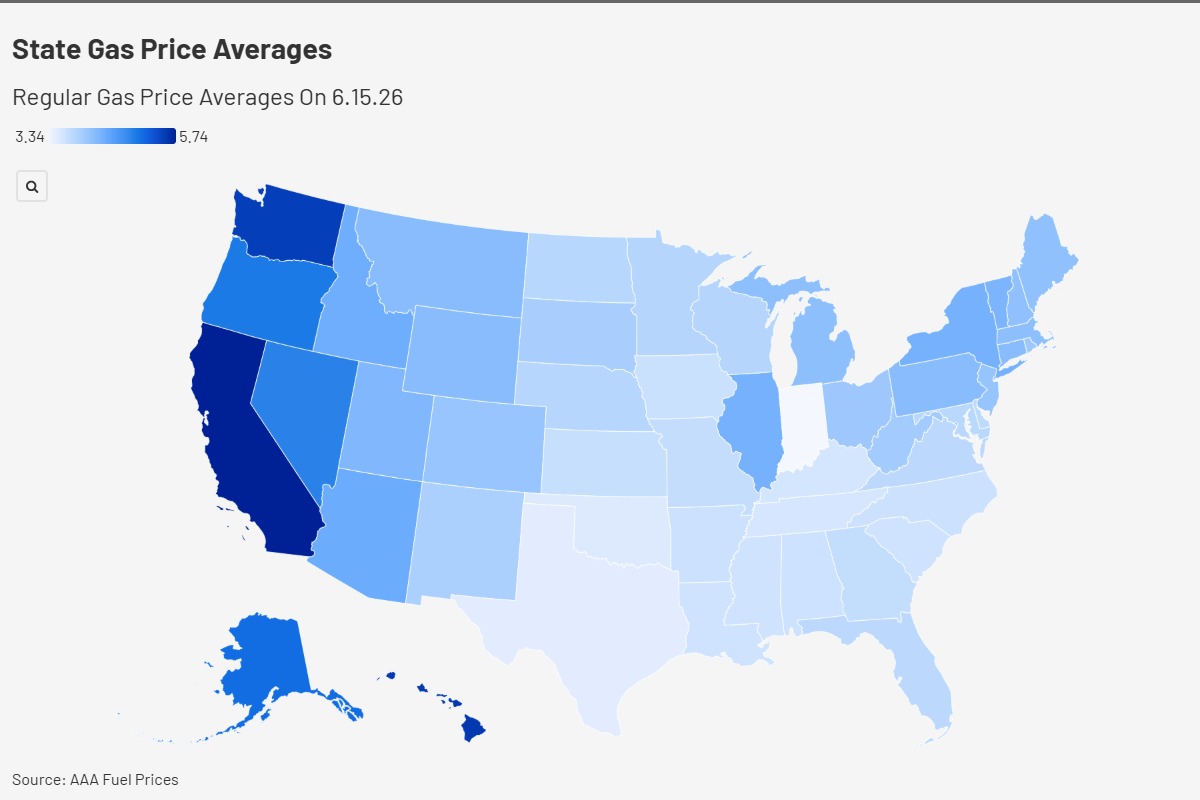
Gas prices in the U.S. fell to an average of $4.07 per gallon following reports that the U.S. and Iran reached an agreement to ease tensions and reopen critical oil shipping routes. This deal is expected to lower prices further, especially in states that had the steepest recent increases, though changes at the pump will take time.
Key Facts
The national average gas price dropped from over $4.50 in May to $4.07 per gallon.
The U.S. and Iran have a framework deal to extend the ceasefire and reopen the Strait of Hormuz, a key oil route.
States in the Midwest and West Coast saw the biggest recent gas price increases and may see the largest declines.
Gas prices tend to lag behind crude oil prices because gas stations sell older, more expensive fuel first.
The U.S. produces near-record amounts of oil but gas prices are still influenced by global oil supply and demand.
The Strait of Hormuz usually carries about 20% of the world’s oil, so reopening it could ease global supply issues.
Experts say price drops depend on whether the U.S.-Iran deal holds and how quickly oil tankers can move freely again.
Some analysts warn that limited oil inventories due to the conflict may keep prices from falling too low.
Read the Original
Want the full story? Tap a source to open the original
article.
The UK government has rejected a rescue plan for Thames Water, the country's largest water company, raising the chance of nationalisation. Thames Water is facing financial trouble and risks running out of money soon if no deal is made.
Key Facts
The government objected to a rescue deal proposed by Thames Water’s lenders.
Thames Water serves about 16 million customers across London and southern England.
The company has been under financial stress and environmental criticism, including a record £122.7 million fine for sewage rule breaches.
Lenders offered to forgive 30% of nearly £20 billion debt and invest new funds but want fewer future pollution fines.
The government fears the deal would unfairly burden customers and harm the environment.
Without a deal, Thames Water could collapse within months, risking water and sewer service disruptions.
The government may use a special administration regime (SAR) to keep Thames Water running temporarily.
Thames Water’s management warns that SAR could delay improvements and increase costs.
Read the Original
Want the full story? Tap a source to open the original
article.
Centene Corporation is offering voluntary buyouts to most of its employees as it faces financial challenges from losing members in key health insurance plans. If not enough workers choose to leave, the company may proceed with layoffs to reduce costs, which could affect how quickly insurance claims are processed for millions of Americans.
Key Facts
Centene is one of the largest health insurers in the U.S., covering about 26 million members.
The company is offering buyouts to most of its roughly 61,000 employees nationwide.
Buyouts are voluntary, but layoffs could happen if the cost-cutting goals are not met.
Centene has seen significant membership declines in Affordable Care Act (ACA) marketplace plans.
Rising medical costs and the end of pandemic-era Medicaid protections have put financial pressure on Centene.
Workforce reductions could slow down claims and authorization processing but will not immediately end coverage.
The company has not yet announced specific numbers or when layoffs might occur.
Previous workforce cuts happened three years ago, reducing staff by about 3 percent.
Read the Original
Want the full story? Tap a source to open the original
article.
The U.S. Strategic Petroleum Reserve, which is a large stockpile of emergency oil, has dropped to its lowest amount since 1983. The reserve now holds 340.3 million barrels of oil, based on recent government data.
Key Facts
The U.S. Strategic Petroleum Reserve (SPR) is a supply of oil kept for emergencies.
As of the latest data, the SPR contains 340.3 million barrels of oil.
This is the lowest level recorded since 1983.
The last time the SPR was this low, the Reagan administration was adding oil to the reserve.
The reserve helps the U.S. respond to oil supply disruptions.
The SPR level changes over time due to government decisions and market conditions.
Read the Original
Want the full story? Tap a source to open the original
article.