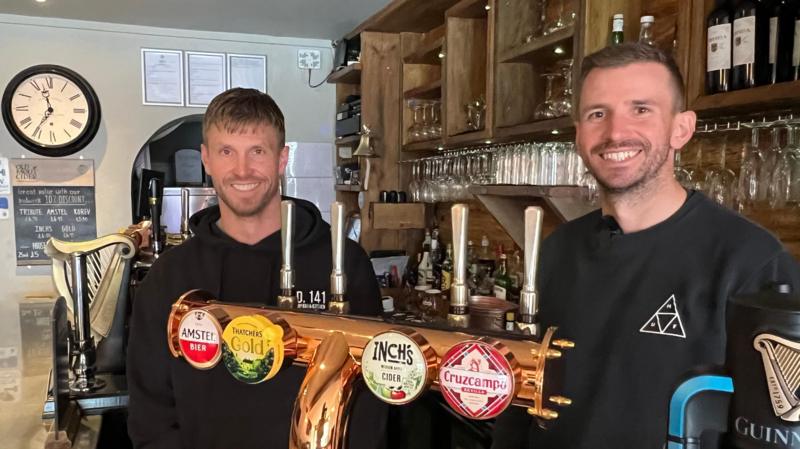
The price of a pint in UK pubs has increased by about 36% since the last World Cup in 2022, rising faster than general inflation. This rise is due to higher costs for pubs from energy bills, taxes, and staff expenses, leading pubs to raise beer prices to stay in business.
Key Facts
The average cost of a pint in UK pubs rose by around £1.50 (36%) over four years since 2022.
General inflation during this period was about 16%, so beer prices increased more than twice as fast.
Energy bills increased sharply after the Russian invasion of Ukraine, affecting pub operating costs.
New national insurance taxes increased the cost of employing part-time bar workers.
Many pubs have had to reduce services, such as cutting back kitchen offerings, to focus on drinks sales.
About two pubs close every day in the UK due to rising costs.
Beer prices have risen 128% over the past 20 years, compared to 77% for average prices.
Popular beers now often cost around £6 per pint at some pubs.
Read the Original
Want the full story? Tap a source to open the original
article.
A new investigation found that major global companies like Amazon, Ericsson, and Sony likely used a mineral called coltan sourced from mines controlled by the M23 militia in the Democratic Republic of the Congo (DRC). The M23 militia has been accused of serious crimes including violence and sexual abuse, and they tax coltan mining to fund their operations. The coltan is smuggled through Rwanda and ends up in products made by big tech and automotive companies.
Key Facts
Coltan is a mineral important for making electronics like phones and computers.
Mines in North Kivu province, DRC, hold about 15% of the world’s coltan.
The M23 militia took control of these mines two years ago and funds their activities by taxing coltan production.
M23 has been accused of widespread violence, including killing, rape, and displacement of civilians.
Coltan is smuggled into Rwanda, then sold by exporters to smelters in China and Kazakhstan.
Processed coltan becomes tantalum, a metal used in electronic components.
Global Witness, the investigative group, says many big brands likely have coltan linked to the conflict in their supply chains.
The investigation suggests that current systems meant to prevent conflict minerals from entering supply chains have failed.
Read the Original
Want the full story? Tap a source to open the original
article.
South Korea’s stock market has grown quickly, attracting many new investors like office worker Kim Ha-young who started buying shares with little experience. The main stock index, Kospi, has nearly doubled recently, making it one of the best-performing markets worldwide and leading to a large increase in the number of people owning stocks.
Key Facts
The number of South Koreans owning stocks rose from about 6 million in 2019 to over 14.5 million by the end of 2025.
South Korea’s main stock index, the Kospi, has nearly doubled in value recently.
Active trading accounts in South Korea reached over 105 million by May 2026.
Many new investors buy shares in well-known companies like Samsung Electronics and SK Hynix.
South Korea’s stock market was previously known for low company valuations called the “Korea discount.”
Weak corporate governance and family-run business groups (chaebols) had caused poor market performance.
President Lee Jae-myung has introduced reforms to improve the stock market and increase investor returns.
The Kospi index passed President Lee’s goal of 5,000 points and continued increasing.
Read the Original
Want the full story? Tap a source to open the original
article.
New research shows that working from home all the time can harm people's mental health. This happens even though many workers say they would accept lower pay to have flexible work options.
Key Facts
Full-time remote work may negatively affect mental health.
People often prefer flexible work schedules.
Some workers are willing to take a pay cut for flexibility.
The research contrasts with popular opinions found in polls.
The study highlights possible mental health challenges linked to remote work.
Read the Original
Want the full story? Tap a source to open the original
article.
PepsiCo has started using self-driving trucks to deliver products in Texas, Arizona, and Arkansas. These autonomous trucks can operate without a human driver to help with deliveries.
Key Facts
PepsiCo is deploying self-driving trucks for deliveries.
The trucks will operate in Texas, Arizona, and Arkansas.
The trucks use autonomous technology to drive themselves.
A Wall Street Journal reporter experienced a ride in one of these trucks.
The use of these trucks is part of PepsiCo’s efforts to improve delivery efficiency.
Read the Original
Want the full story? Tap a source to open the original
article.
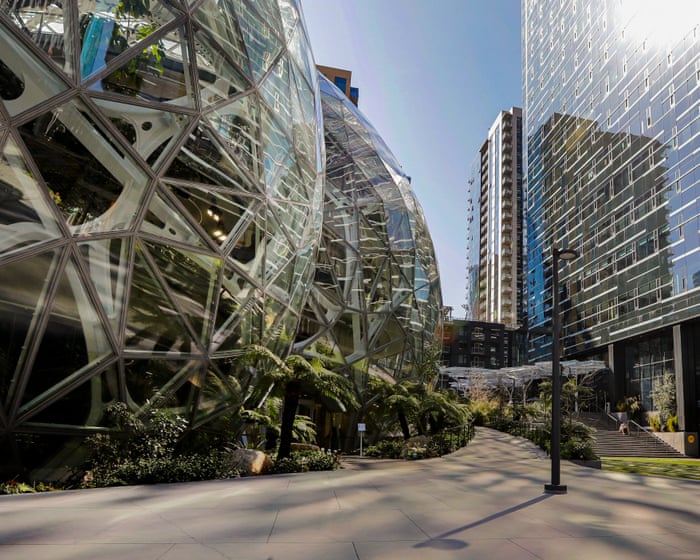
Seattle city council has voted to pause building new datacenters for one year. This pause aims to create rules to manage the energy use and impact of datacenters that serve artificial intelligence (AI) projects.
Key Facts
Seattle passed a one-year ban on building new datacenters.
The ban is a response to concerns about electricity use and environmental effects.
The metro area includes major companies like Amazon and Microsoft.
Five proposed datacenters might use up to a third of Seattle’s electricity demand.
Existing datacenters can still expand by adding up to 20 megawatts of power during the ban.
Local tech workers and climate groups pushed for the ban, citing job loss and climate concerns.
Seattle’s mayor wants to review if datacenters are a good use of city land and may require developers to support local transit and housing.
Activists are working to spread similar datacenter restrictions to other cities in Washington state.
Read the Original
Want the full story? Tap a source to open the original
article.
Ontario Premier Doug Ford traveled to Washington, D.C., to work on renewing the trade agreement between Canada and the United States. Both countries aim to finalize the deal before a July 1 deadline.
Key Facts
Ontario Premier Doug Ford visited Washington, D.C.
The purpose of the trip was to seek a new trade deal with the U.S.
Canada and the U.S. have a continent-wide trade agreement they want to renew.
The deadline to finalize the trade agreement is July 1.
Ford spoke with CBS News correspondent Ed O’Keefe about his efforts.
The trade deal affects business and trade between Canada and the U.S.
Read the Original
Want the full story? Tap a source to open the original
article.
Texas barbecue restaurants are losing money when they sell brisket because beef prices are very high. They are encouraging customers to buy other, less expensive menu items to reduce losses.
Key Facts
Beef prices have risen significantly, making brisket more costly for restaurants.
Barbecue restaurants in Texas are not making a profit from brisket sales.
To manage costs, these restaurants suggest customers choose different dishes.
High beef costs affect restaurant menus and business revenue.
The increase in beef prices is putting financial pressure on small barbecue joints.
Read the Original
Want the full story? Tap a source to open the original
article.
Millions of people in the UK owe billions of pounds on their water, broadband, and energy bills, but many do not know they can get help. The National Audit Office says more needs to be done to inform and support those struggling to pay.
Key Facts
Over £7 billion was owed to utility companies by March 2023, and this total is likely higher now.
Many people are unaware of repayment plans and discounted social tariffs that can reduce bills for those in debt.
Only about one-third of struggling broadband customers and 39% of water customers know about these social tariffs.
Energy customers with repayment plans owe on average £1,000 less than those without plans.
Household energy debt has increased by 118% since 2021, partly due to the financial impact of Russia’s invasion of Ukraine.
The Priority Services Register, which helps identify customers with special needs, remains little known.
Regulators Ofgem, Ofcom, and Ofwat have made progress but still need to improve communication and support for vulnerable customers.
Some consumers report difficulty contacting companies and handling billing errors that worsen their debts.
Read the Original
Want the full story? Tap a source to open the original
article.
An advertisement for Beauty Pie's LED face mask was banned because it claimed to reduce wrinkles in four weeks without enough proof. The UK Advertising Standards Authority (ASA) said the company’s test was too small and didn’t prove the mask alone caused skin improvements.
Key Facts
Beauty Pie claimed its LED mask is "clinically proven to reduce wrinkles in four weeks."
The ad appeared on the London Underground but was banned by the ASA for misleading claims.
The product was tested on 28 people aged 30 to 65 over four weeks.
The ASA said the sample size was too small and the testing did not include a placebo group.
Testers also used an exfoliating product and hydrogel not included with the mask, making it unclear what caused the wrinkle changes.
LED masks are becoming popular for home use but lack large, long-term clinical trials proving effectiveness.
Beauty Pie sells the mask for £199 to members and £299 to non-members, cheaper than similar products.
The ASA ordered Beauty Pie to stop making anti-wrinkle claims unless supported by strong evidence.
Read the Original
Want the full story? Tap a source to open the original
article.
The 2026 FIFA World Cup will take place across the US, Canada, and Mexico with late kick-off times that affect UK workers' sleep and productivity. Some employees are booking time off or asking for flexible work hours, while some companies are adjusting policies to allow workers to watch games and maintain morale.
Key Facts
The World Cup matches for England and Scotland start very late, between 9 PM and 2 AM UK time.
Scottish fans have a one-time national bank holiday on June 15 to celebrate Scotland’s World Cup participation.
Pubs in the UK will stay open later than usual during knockout stage matches to accommodate fans.
Some workers have pre-booked leave or are negotiating flexible hours because of late kick-offs.
Experts expect around 1.5 million UK workers may call in sick during the tournament, causing significant lost productivity.
UK employers could lose approximately £681 million due to reduced work output linked to the World Cup.
Some companies, like a digital agency in Birmingham, are offering flexible work hours to let employees watch games and maintain transparency about their schedules.
The policy adjustment aims to support employee morale and enjoyment during the tournament.
Read the Original
Want the full story? Tap a source to open the original
article.
New York’s Penn Station will undergo a major $8 billion redesign to restore its historic grandeur with large columns, tall ceilings, and sunlight-filled spaces. The project, led by Amtrak and planned to start before 2028, will keep the Madison Square Garden arena in place while improving the station for over 600,000 daily commuters.
Key Facts
The original Penn Station, built in 1910 with grand Roman columns, was demolished in 1963.
The current station, opened in 1968, is smaller and underground with low ceilings.
The $8 billion redesign aims to bring back a grand and decorative style similar to the original.
The new design includes a large stone facade, tall ceilings up to 50 feet, and bronze decorations.
An entry wall will display President Donald Trump’s name and seal because he ordered Amtrak to manage the project.
The station will remain open and operational during the phased six-year construction.
Madison Square Garden, home to the New York Knicks and Rangers, will stay at the site.
The theater above the tracks owned by MSG will be demolished as part of the redevelopment.
Read the Original
Want the full story? Tap a source to open the original
article.
As the 2026 FIFA World Cup approaches, hotel bookings in cities hosting matches are higher in Canada and Mexico than in the United States. Factors such as visa issues, high prices, and geopolitical concerns are affecting U.S. hotel demand for the event.
Key Facts
The 2026 World Cup will take place in 16 cities across Canada, Mexico, and the United States from June 11 to July 19.
CoStar data shows that Canadian and Mexican cities lead in average hotel booking percentages during match days.
San Francisco ranks highest among U.S. cities, but still below top Canadian and Mexican cities like Guadalajara and Vancouver.
Some U.S. cities like Los Angeles show lower hotel booking rates for 2026 compared to the same dates in 2025.
A report from the American Hotel & Lodging Association found 80% of hoteliers say bookings are below forecasts due to visa barriers and geopolitical concerns.
High ticket prices for World Cup matches in the U.S., some reaching up to $11,000, may also reduce demand.
FIFA’s dynamic pricing system adjusts ticket costs based on demand, leading to scrutiny and legal investigations.
Accommodation searches on platforms like Airbnb have increased, despite limited hotel bookings and higher prices in match cities.
Read the Original
Want the full story? Tap a source to open the original
article.
Residents of Mississippi have sued Elon Musk’s companies xAI and SpaceX, saying a power plant that powers nearby data centers creates constant loud noise. They claim this noise hurts their health and lowers their home values. The lawsuit asks for money damages and says the companies created a public nuisance.
Key Facts
The lawsuit was filed in federal court in Oxford, Mississippi, by three residents on behalf of over 10,000 people.
The noise comes from gas turbines at a power plant in Southaven that fuels data centers nearby.
Plaintiffs say the noise is continuous and causes emotional distress and lower property values.
The companies named are xAI, SpaceX, and MZX Tech (an xAI subsidiary); Elon Musk himself is not a defendant.
More than $20 billion was invested by xAI to build the power plant with support from Mississippi Governor Tate Reeves.
In April, the NAACP sued xAI over environmental rule violations related to the plant and data centers; that case is still pending.
The US Department of Justice may join the NAACP lawsuit due to legal and policy issues about government roles in AI infrastructure.
SpaceX and xAI have not commented publicly on the lawsuit yet.
Read the Original
Want the full story? Tap a source to open the original
article.
The FDA has approved a new sunscreen ingredient called bemotrizinol, the first new addition in more than 25 years. This ingredient has been used safely in Europe and will offer better protection against harmful sun rays without causing irritation or leaving a white residue.
Key Facts
Bemotrizinol protects against both UVA (causes skin cancer and wrinkles) and UVB rays (cause sunburn).
It is safe for adults and children 6 months and older.
The ingredient will be sold in the U.S. first by Dutch company DSM under the brand Parsol Shield later this year.
After 18 months of exclusive sales by DSM, other companies can use bemotrizinol in their products.
Bemotrizinol has been used in Europe since 1999 and was first submitted for FDA approval in 2005.
The FDA’s 2020 streamlined process helped speed up the ingredient’s approval after decades of delays.
Current U.S. sunscreens either protect against UVA or UVB, but bemotrizinol protects against both without leaving chalky white marks.
The FDA has been updating sunscreen rules gradually, including banning the term “waterproof” and requiring broad UVA and UVB protection.
Read the Original
Want the full story? Tap a source to open the original
article.
The European Union (EU) has ordered Meta to let other companies’ AI chatbots use WhatsApp for free while it investigates Meta for possible unfair business practices. Meta plans to challenge this order, saying the EU is going too far with regulations. The EU also disagreed with Apple after the company said new Siri AI would launch late in Europe because of EU rules.
Key Facts
The EU wants Meta to allow rival AI chatbots to access WhatsApp within five working days.
This order comes during an antitrust investigation into Meta’s business practices.
Meta disagrees and will appeal the EU’s decision, calling it regulatory overreach.
Apple blamed the EU’s Digital Marketing Act for delaying the launch of its new Siri AI in Europe.
The EU responded critically to Apple’s explanation.
The EU is actively regulating big tech companies to promote competition and fair market rules.
WhatsApp is owned by Meta, a company known for social media and messaging platforms.
AI chatbots are software programs that can talk and answer questions like a human assistant.
Read the Original
Want the full story? Tap a source to open the original
article.
Paramount's chief lawyer said that Netflix is trying to block Paramount's plan to buy Warner Bros. Discovery (WBD). Paramount argues that the merger will create more jobs and content, but some groups worry it might lead to job cuts.
Key Facts
Paramount's lawyer accused Netflix of trying to influence regulators against the Paramount-WBD merger.
The International Brotherhood of Teamsters, a large union, asked the U.S. Department of Justice (DOJ) to block the merger unless worker protections are made.
Paramount says the merger will increase movie and TV production, which will create jobs for many roles like actors, drivers, and caterers.
Since merging with Skydance in 2025, Paramount increased its shows and will nearly double its movie output in 2027.
Paramount expects to spend slightly less on content after merging with WBD, but says cuts won't affect studios.
Paramount CEO promised the combined company will release at least 30 movies each year, with long theater runs.
Despite job creation claims, Paramount said the merger will cut over $6 billion in costs, mainly by reducing duplicate jobs in areas like finance and legal.
The merged company would have $79 billion in debt.
Read the Original
Want the full story? Tap a source to open the original
article.
Newsweek is changing its business to keep up with how people find and use news today. They are focusing on trusted journalism, subscriptions, and new services like events and research to build a stronger and lasting company.
Key Facts
Newsweek shifted early from print to digital and focused on growing an online audience.
They use tools like the Fairness Meter and participate in The Trust Project to improve transparency and trust.
The media industry is changing in how people search for and consume information.
Newsweek is building multiple business areas beyond news publishing to deepen audience connections and create new ways to earn money.
They emphasize original reporting and have special content hubs on topics such as artificial intelligence.
Subscription services for individual readers and businesses are a key part of their growth.
Nexus is a platform that combines premium content, research, events, and communities to build stronger audience ties.
Newsweek bought Adprime, a company that specializes in data-driven advertising and marketing, especially in healthcare and regulated markets.
Read the Original
Want the full story? Tap a source to open the original
article.
Putting $200,000 into a certificate of deposit (CD) account with fixed interest rates can help protect and grow retirement savings. CD interest rates are about 4% or higher now, offering guaranteed returns with less risk than stocks, and the money is insured up to $250,000.
Key Facts
CDs have fixed interest rates that remain the same until maturity.
Current CD rates for $200,000 range from about 3.9% for 3 months to 4.16% for 2 years.
Interest earnings range from roughly $1,922 (3-month CD) up to about $17,000 (2-year CD).
CDs protect the original money (principal) and guarantee the earned interest.
Accounts up to $250,000 are insured by the FDIC, meaning the government protects that money.
Early withdrawal from a CD can cause penalties, reducing earnings.
CDs offer a safer alternative to stocks, which provide higher but less certain returns.
CD terms vary widely from a few months up to 10 years, allowing flexibility for savers.
Read the Original
Want the full story? Tap a source to open the original
article.
Mortgage interest rates have been changing quickly, with rates rising again after a recent drop. Borrowers should consider locking in a mortgage rate now, shop around for the best rates online, and be aware that rate cuts may not happen soon.
Key Facts
Mortgage rates started 2025 around 7% for 30-year loans, dropped to 5.75% by March 2026, and then rose to 6.62% by May 21, 2026.
The Federal Reserve has kept its main interest rate unchanged recently, but mortgage rates still rose.
Locking in a mortgage rate can protect borrowers from future rate increases.
Borrowers should not assume that mortgage rates will go down soon; rates could rise if inflation and employment remain strong.
Shopping around online for mortgage rates can help find lower rates and better terms.
Adjustable-rate mortgages (ARMs) may offer lower starting rates but can increase after a few years.
Buying mortgage interest points is another way to get a lower mortgage rate.
Locking a rate now helps borrowers plan their budgets with certainty.
Read the Original
Want the full story? Tap a source to open the original
article.