
The Actual News

Just the Facts, from multiple news sources.

Business News

Business news, market updates, and economic developments

Is there an AI stock market bubble, and is it ready to burst?

Is there an AI stock market bubble, and is it ready to burst?

Summary

US stock markets continue to reach record highs this year, mainly because of heavy investments in artificial intelligence (AI). Some investors are worried that AI-related stocks might be overvalued and that the market could be facing a bubble that may soon burst.

Key Facts

  • US stock markets are hitting all-time highs in 2024.
  • The main driver of this growth is big investments in AI technology.
  • There are concerns about a gap between high market prices and the real economy.
  • Some investors fear the AI stock market could be in a bubble.
  • Other challenges this year include the Iran war, rising inflation, and government debt worries.
  • The article was reported from Wall Street by the BBC's Samira Hussain.
Read the Original

Want the full story? Tap a source to open the original article.

‘Oyster card for the north’ could save commuters £276 a year, thinktank says

‘Oyster card for the north’ could save commuters £276 a year, thinktank says

Summary

A new travel card for northern England, like London’s Oyster card, could save commuters up to £276 a year by using one payment system for different transport networks. This system would make travel easier between towns and cities and could add £2.7 billion to the economy over five years.

Key Facts

  • The proposed card would work across northern England, linking networks like Manchester’s Bee Network and West Yorkshire’s Weaver Network.
  • Users would tap in and out, and fares would be capped at the cheapest possible rate automatically.
  • The system would accept payment via bank cards, phones, or a special travel card.
  • Discounts for students, older people, and disabled passengers would apply across the whole system.
  • The Good Growth Foundation thinktank and MP Luke Charters support the idea.
  • The card aims to make it easier to travel for work, training, and leisure between different northern cities.
  • Greater Manchester mayor Andy Burnham has shown interest in the concept.
  • No official plans have been made yet, but ongoing local transport improvements could support the card’s introduction.
Read the Original

Want the full story? Tap a source to open the original article.

About half of California waterways contaminated with Pfas, pesticide analysis finds

About half of California waterways contaminated with Pfas, pesticide analysis finds

Summary

Almost half of the waterways tested in California contain pesticides that include PFAS, a group of chemicals linked to health problems like cancer. These "forever chemicals" are widely used in farming and have been found in streams, sediment, and many fruits and vegetables. State regulators recently reviewed data showing the spread of PFAS pollution, but a full ban on these pesticides did not pass in California's state assembly.

Key Facts

  • About 50% of California waterways tested have contamination from PFAS pesticides.
  • PFAS are chemicals that resist breaking down and can cause serious health issues.
  • These pesticides are used on food crops to kill weeds and insects.
  • Over half of sediment samples in waterways also contained PFAS pesticides.
  • From 2018 to 2023, California farms applied an average of 2.5 million pounds of PFAS pesticides annually.
  • PFAS residues were found in 37% of all tested produce; 90% of peaches, plums, and nectarines had them.
  • Highest contamination was found near farming areas like Monterey and San Luis Obispo counties.
  • A proposed law to ban PFAS pesticides by 2035 failed, but a pause on approving new PFAS pesticides was approved.
Read the Original

Want the full story? Tap a source to open the original article.

The Food Industry Loves Its Buzzwords, but Hates Paying Farmers | Opinion

The Food Industry Loves Its Buzzwords, but Hates Paying Farmers | Opinion

Summary

The food and beverage industry often uses sustainability buzzwords, but many farmers, who face climate change impacts, do not receive fair prices for their crops. Paying farmers fair prices and providing financial support can help them adopt better farming methods that protect the environment and improve their incomes over time.

Key Facts

  • Food companies use many sustainability buzzwords like "regenerative" and "carbon neutral."
  • Climate change threatens farming regions for crops like coffee and cocoa, reducing suitable growing areas.
  • Many farmers live in poverty and struggle to adapt to changing climate conditions.
  • Fair pricing for farmers is important for them to afford sustainable farming practices.
  • Research shows financial support encourages farmers to adopt environmentally friendly methods.
  • Fairtrade requires companies to pay a minimum price plus extra premiums to farmer cooperatives.
  • Fairtrade premiums fund projects like planting new crops, building irrigation, and training farmers.
  • Farmer training programs in places like Ghana help improve farming techniques for better environmental and financial outcomes.
Read the Original

Want the full story? Tap a source to open the original article.

Don’t buy the hype: Homeownership is usually not such a great deal

Don’t buy the hype: Homeownership is usually not such a great deal

Summary

The article explains that while many people believe buying a home is always better than renting, data shows this is not always true. Renting can sometimes be a better financial choice depending on personal circumstances and market conditions.

Key Facts

  • Many people think renting money is wasted.
  • Data suggests this belief is not always correct.
  • Homeownership is not always the best financial decision.
  • Renting can sometimes be more affordable or flexible.
  • Costs like maintenance, taxes, and fees affect homeownership value.
  • Market changes influence whether buying or renting is better.
Read the Original

Want the full story? Tap a source to open the original article.

What’s Next for AI in Finance? Join Our Webinar Discussion

What’s Next for AI in Finance? Join Our Webinar Discussion

Summary

New AI tools are helping financial workers do research, analysis, and presentations faster. Experts say the real change will come if companies use AI to improve entire workflows, not just small tasks.

Key Facts

  • AI is speeding up routine tasks like using PowerPoint, Excel, and communication for junior financial professionals.
  • The next step is applying AI to complex processes like client onboarding, mergers and acquisitions, and lending.
  • How firms use the extra efficiency from AI varies: some may cut costs, others may serve more clients or train staff better.
  • Adoption happens in three stages: junior staff use AI tools, senior leaders adopt and manage AI usage, then firms redesign workflows with AI.
  • Most financial firms are still early in integrating AI across entire business processes.
  • Successful AI implementation needs good data, trained employees, leadership support, and careful change management.
  • An upcoming webinar will discuss the economics and future impact of AI in finance.
Read the Original

Want the full story? Tap a source to open the original article.

CBS News' Shakeup and the Future of the Mainstream Press

CBS News' Shakeup and the Future of the Mainstream Press

Summary

CBS News has undergone major changes since being bought by Skydance Media, a company linked to a GOP donor. New leadership, including editor-in-chief Bari Weiss, has made big staffing changes, including firing longtime “60 Minutes” anchors and producers. These shifts come amid debates about news coverage and objectivity, especially related to political topics.

Key Facts

  • Ta-Nehisi Coates appeared on CBS Mornings on September 30, 2024, discussing his book about the Israeli-Palestinian conflict.
  • CBS journalist Tony Dokupil challenged Coates’ views and was later reprimanded for his tone by CBS’s “Race and Culture Unit.”
  • On October 7, 2024, CBS executives criticized Dokupil for not preserving CBS’s neutrality.
  • Skydance Media, owned by Larry Ellison’s son David Ellison, bought CBS’s parent company Paramount Global for $8 billion.
  • David Ellison appointed Bari Weiss, a right-leaning former writer, as CBS News’s editor-in-chief.
  • Several longtime “60 Minutes” staff, including anchor Anderson Cooper and executive producer, left or were fired after Weiss’s arrival.
  • Scott Pelley, a longtime “60 Minutes” anchor, was fired after criticizing the network’s direction.
  • CBS News previously settled a $16 million lawsuit with President Donald Trump over a disputed “60 Minutes” interview.
Read the Original

Want the full story? Tap a source to open the original article.
America’s Beef Farmers Can’t Catch a Break

America’s Beef Farmers Can’t Catch a Break

Summary

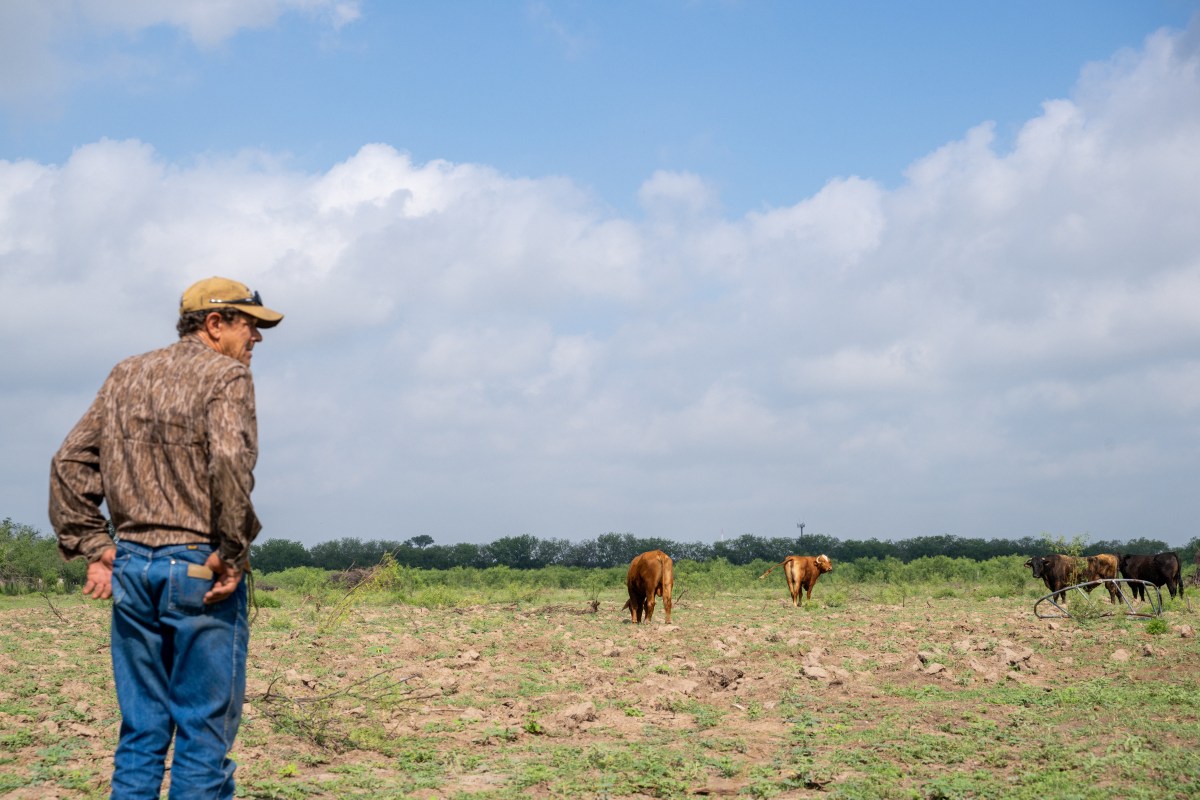
Federal officials confirmed the New World screwworm has appeared in Texas, posing a threat to cattle and other warm-blooded animals. This pest damages live tissue and spreads through wounds, which could hurt the already stressed U.S. cattle industry facing low herd sizes and high prices.

Key Facts

  • The New World screwworm was found in a calf in La Pryor, Texas, near the Mexican border.
  • A 12-mile quarantine zone was set up to stop the spread of the pest in Zavala and Uvalde counties.
  • The screwworm larvae eat live flesh by burrowing into open wounds on animals and occasionally humans.
  • The pest was eradicated in the U.S. in the 1960s using sterile male flies to reduce breeding.
  • It has recently moved north from Panama through Central America and Mexico into the U.S.
  • The U.S. cattle herd is at its smallest size since 1951 due to drought, costs, and market problems.
  • Beef and cattle prices have reached record highs because of lower production.
  • The cattle industry is asking President Donald Trump to declare a national emergency for more support.
Read the Original

Want the full story? Tap a source to open the original article.

Why Is the US Not Drilling More Oil as Gas Prices Soar

Why Is the US Not Drilling More Oil as Gas Prices Soar

Summary

The United States is producing more oil than any other country, but gas prices remain high due to global supply disruptions, especially near the Strait of Hormuz. Increasing U.S. oil production quickly is difficult because new drilling takes time and producers base decisions on long-term economic factors, not just current prices or political pressure.

Key Facts

  • U.S. crude oil production averaged about 13.7 million barrels per day in March, near record levels.
  • Gas prices in the U.S. have risen to an average of $4.24 per gallon, with prices near $6 in California.
  • Global supply disruptions, especially around the Strait of Hormuz, have reduced about 20 million barrels of oil, causing higher worldwide prices.
  • It takes months or years to start new drilling and increase oil supply.
  • Oil producers decide to drill more only if long-term prices justify the cost, not just due to short-term price spikes.
  • The Energy Information Administration expects U.S. oil production to possibly decline this year.
  • Recent small production increases relate to companies expecting prices to stay high, not political pressure.
  • Oil prices currently hover around $93 to $95 per barrel.
Read the Original

Want the full story? Tap a source to open the original article.

William Hill owner agrees £243m takeover by Greek casino and lottery firm

William Hill owner agrees £243m takeover by Greek casino and lottery firm

Summary

The owner of William Hill and the 888 online casino brand, Evoke, has agreed to be bought for £243 million by the Greek casino and lottery company Bally’s Intralot. This deal follows financial challenges for Evoke after new UK gambling taxes and other business problems.

Key Facts

  • Evoke, owner of William Hill and 888casino, agreed to a £243 million takeover by Bally’s Intralot.
  • Bally’s Intralot is a Greek company with international operations, including in the US.
  • Evoke bought William Hill’s 1,400 betting shops for £2.2 billion four years ago, but its shares have since dropped 90%.
  • UK increased remote gaming tax from 21% to 40%, causing problems for Evoke’s business.
  • Evoke has about £1.8 billion in debt and a market value of around £180 million.
  • Evoke plans to close about 200 William Hill shops due to cost and tax pressures.
  • The company faced management problems, including a CEO removal and a money-laundering investigation.
  • Evoke paid a £9.4 million fine in 2022 for failures that led to large customer losses during the Covid pandemic.
Read the Original

Want the full story? Tap a source to open the original article.

UK house prices fall for third successive month amid Iran war uncertainty

UK house prices fall for third successive month amid Iran war uncertainty

Summary

UK house prices fell for the third month in a row in May, dropping by 0.1% despite expectations they would rise. Higher mortgage rates, influenced by uncertainty from the war in Iran, have made buying homes more expensive and reduced demand.

Key Facts

  • The average UK house price was £298,806 in May, down 0.1% from April.
  • This decline marks the third consecutive monthly drop in UK house prices.
  • Mortgage rates have risen, with the average two-year fixed rate at 5.66% in May, up from 4.83% in March.
  • Inflation slowed to 2.8% in April, partly due to a lower household energy price cap.
  • Analysts expected a 0.1% rise in house prices, but prices fell instead.
  • Annual house price growth slowed to 0.5% in May, below expectations of 1%.
  • Higher borrowing costs make it harder for buyers to afford homes, limiting demand.
  • There is more choice for buyers due to steady prices and available properties, which helps people trying to buy their first home.
Read the Original

Want the full story? Tap a source to open the original article.

ANU scandals during Julie Bishop’s tenure caused $100m in reputational damage, university estimates

ANU scandals during Julie Bishop’s tenure caused $100m in reputational damage, university estimates

Summary

The Australian National University (ANU) has suffered about $100 million in damage to its reputation due to several scandals and management problems. This has affected donations and international student enrollments, with a recent audit criticizing a $250 million cost-cutting plan called Renew ANU.

Key Facts

  • ANU’s reputational damage is estimated at around $100 million, affecting donors and international students.
  • The cost-cutting plan, Renew ANU, was approved without clear evidence it was needed or achievable.
  • Renew ANU cost over $35 million to run and saved about $74.8 million each year.
  • The plan led to at least 399 job cuts before September 2023.
  • Former vice-chancellor Genevieve Bell resigned in September 2023 following the program.
  • Former chancellor Julie Bishop faced bullying allegations but denied them; she resigned in May 2023.
  • Five of the 15 members of ANU’s council resigned in 2023.
  • A government regulator now oversees the selection of ANU’s next chancellor to improve governance.
Read the Original

Want the full story? Tap a source to open the original article.

Asian shares drop, with South Korea’s Kospi down more than 5%

Asian shares drop, with South Korea’s Kospi down more than 5%

Summary

Asian stock markets fell sharply, with South Korea’s main stock index, the Kospi, dropping over 5%. The decline followed heavy losses in U.S. technology and artificial intelligence-related company shares, especially in the computer chip sector.

Key Facts

  • South Korea’s Kospi index fell 5.1% to 8,185.62 by midday.
  • South Korean technology stocks SK Hynix and Samsung Electronics dropped 8.4% and 5.4%, respectively.
  • U.S. chipmaker Broadcom’s shares fell 12.6% after a weak earnings forecast.
  • Other U.S. tech stocks like Micron Technology and CrowdStrike also lost value.
  • Japan’s Nikkei 225 index dropped 1.4%, with chip equipment maker Tokyo Electron down 7.2%.
  • Hong Kong’s Hang Seng index fell 0.8%, while Shanghai’s stock index gained 0.4%.
  • Oil prices stabilized slightly but remain affected by geopolitical tensions in the Middle East.
  • Despite some market falls, U.S. indexes like the S&P 500 and Dow Jones reached new highs recently.
Read the Original

Want the full story? Tap a source to open the original article.

Actors’ union approves 4-year contract with studios and streamers

Actors’ union approves 4-year contract with studios and streamers

Summary

Actors in the Screen Actors Guild-American Federation of Television and Radio Artists (SAG-AFTRA) voted to approve a new four-year contract with movie studios and streaming companies. The agreement includes rules to limit the use of artificial intelligence (AI) actors and offers better pay and benefits protections.

Key Facts

  • Over 90% of SAG-AFTRA members who voted approved the new contract.
  • About 19% of eligible members cast their votes.
  • The contract lasts four years, one year longer than typical agreements.
  • It includes protections against using AI to replace human actors unless AI adds significant value.
  • The agreement aims to prevent another strike like those in 2023 involving actors and writers.
  • SAG-AFTRA president Sean Astin highlighted gains in pay, AI protections, and benefits security.
  • The Alliance of Motion Picture and Television Producers (AMPTP), representing studios and streamers, supported the deal.
  • Similar contract talks continue with the Directors Guild of America, whose contract expires on June 30.
Read the Original

Want the full story? Tap a source to open the original article.

Who's really at your door? App delivery drivers in California found using accounts that aren't theirs

Who's really at your door? App delivery drivers in California found using accounts that aren't theirs

Summary

A CBS News California investigation found that some food delivery drivers in California use rented or stolen app accounts to avoid background checks. This loophole means customers might not know who is actually delivering their food, raising safety concerns and prompting lawmakers to consider stronger rules.

Key Facts

  • Some delivery drivers use accounts that do not belong to them by renting or buying them online.
  • One in four drivers in test orders did not match the photo shown in the app.
  • These fake accounts help people avoid required background checks.
  • California law requires delivery apps to show the driver's first name and photo to customers.
  • Lawmakers are looking into stronger penalties for renting or selling delivery accounts.
  • Companies like DoorDash, Uber, and Lyft say they remove accounts involved in fraud when found.
  • The investigation showed accounts for Uber and Lyft were also rented on social media platforms.
  • Assemblywoman Laurie Davies is working to close this loophole to protect customers.
Read the Original

Want the full story? Tap a source to open the original article.

Tech companies invoke possibility of Trump’s wrath in fight against Labor’s media laws

Tech companies invoke possibility of Trump’s wrath in fight against Labor’s media laws

Summary

Tech companies like Meta are opposing a new Australian law that would require them to pay news outlets for using their content or face a 2.25% levy on local revenue. These companies argue the law breaks the Australia-US free trade agreement and could lead to retaliation from the Trump administration. Media industry leaders support the law, saying it is necessary to ensure fair payment for news content.

Key Facts

  • Australia plans to make tech companies pay news outlets or pay a 2.25% fee on revenue.
  • The law is called the news media bargaining incentive (NBI).
  • Meta says the NBI is a "discriminatory tax" targeting foreign companies unfairly.
  • US trade groups warn the draft law may violate the Australia-US free trade agreement.
  • The Software & Information Industry Association says the Trump administration might retaliate.
  • Australian media leaders say the law helps ensure tech companies pay fairly for news content.
  • The law aims to support journalism and maintain diverse news sources in Australia.
  • Some call for changes to ensure small news producers also benefit from payments.
Read the Original

Want the full story? Tap a source to open the original article.

Grant puts gloss on paint recycling enterprise

Grant puts gloss on paint recycling enterprise

Summary

A social enterprise called Remo in March, Cambridgeshire, which recycles paint and other materials, has received a £400,000 grant from the National Lottery. This funding will help Remo hire more staff and stay open seven days a week, making affordable recycled paint and materials more available to the community.

Key Facts

  • Remo recycles paint, furniture, and other materials to help people decorate affordably.
  • The National Lottery awarded Remo a £400,000 grant to support its growth.
  • The grant money will be paid out over five years.
  • Remo was started about 20 years ago and is based in March, Cambridgeshire.
  • The grant allows Remo to increase staff and extend opening hours to seven days a week.
  • Used paint is sold at much lower prices than new paint.
  • Development director Nikki Digiovanni founded the initiative after experiencing the high cost of paint firsthand.
  • Remo’s facility also has a woodwork shop, pottery studio, and digital lounge for community use.
Read the Original

Want the full story? Tap a source to open the original article.

Chippies turn to new species amid 'massive' cod price rise

Chippies turn to new species amid 'massive' cod price rise

Summary

The price of cod fish in the UK has risen significantly due to fishing limits and global conflicts, causing fish and chip shops to offer cheaper types of fish like hake and pollock. Many traditional shops are struggling to stay open as costs rise and customer demand for cod remains strong.

Key Facts

  • Cod prices have increased by about £150 per case in one year, with a case costing around £298 for 18kg.
  • Fish and chip shops are adding alternative fish species such as hake, pollock, and monkfish to their menus.
  • The number of fish and chip shops in the UK has dropped from around 35,000 a century ago to about 10,000 today.
  • Some customers prefer cod so much that they choose it despite higher prices.
  • Smaller fish and chip shops are closing because they find it hard to compete and keep up with new rules.
  • Owners say customer loyalty and good service help them survive despite rising fish costs.
  • Fish and chips remain a popular traditional meal in the UK, but the cost is making it harder for businesses to maintain.
Read the Original

Want the full story? Tap a source to open the original article.
UK shoppers return to high street as warm weather brings respite from shadow of war

UK shoppers return to high street as warm weather brings respite from shadow of war

Summary

More people went shopping in the UK last month as warm spring weather helped improve sales after a tough period caused by international conflict and rising prices. Retailers saw a rise in shoppers, especially on high streets, and consumer confidence grew, but challenges like higher energy bills and global tensions remain.

Key Facts

  • UK shoppers returned in higher numbers during May after a drop in April.
  • High streets had less decline in footfall than shopping centres and retail parks.
  • Warm weather encouraged shopping early in May, but very hot days at the end reduced visits.
  • Consumer confidence rose to its highest level since 2021, showing people felt better about their finances.
  • Sales on the high street increased by 3.4% compared to last year according to BDO.
  • The British Retail Consortium reported a 2.6% decline in footfall year-on-year but noted big improvement from April’s 10.7% drop.
  • The UK economy’s growth forecast was slightly upgraded to 0.9% this year by the OECD.
  • Retailers remain worried about rising costs, energy prices, and uncertainty from global conflicts, despite hope the World Cup will boost sales.
Read the Original

Want the full story? Tap a source to open the original article.

China cracks down on violence and misogyny in viral micro dramas

China cracks down on violence and misogyny in viral micro dramas

Summary

China’s government is conducting a two-month campaign to check and control violent, sexual, and materialistic content in short, mobile video dramas called micro dramas. Authorities will inspect these shows for issues like soft pornography, harmful views on marriage, and flashy displays of wealth, to make the industry healthier.

Key Facts

  • China’s State Administration of Radio and Television is leading the campaign.
  • The campaign focuses on eight types of harmful content, such as violence, soft pornography, and distorted views on relationships.
  • Micro dramas are short, serial videos made for mobile phones that have become very popular worldwide.
  • These dramas often have fast, sensational stories about rich characters, forbidden love, and revenge.
  • Local producers must fix any problems found during inspections quickly.
  • China plans to improve rules based on what the campaign finds.
  • The micro drama industry in China is worth billions of dollars and draws viewers in Asia, Africa, and beyond.
  • Filmmakers in other countries like South Korea and the U.S. are also investing in making micro dramas.
Read the Original

Want the full story? Tap a source to open the original article.