State Farm is sending refund checks to auto insurance customers with active policies in 2025. The company is paying a total of $5 billion in dividends, with average refunds of about $100 per vehicle, based on each customer’s premium paid.
Key Facts
More than 7.2 million refund checks have been mailed since July 31, and 3.8 million more checks will be sent soon.
The refunds are part of a $5 billion dividend to policyholders of 49 million vehicles.
Customers with auto insurance policies active any time in 2025 qualify for the refund.
Customers with an email on file will get instructions via email on how to receive payments digitally or by mail.
Customers without an email on file will receive a check by mail automatically.
Refund amounts depend on the percentage of the premium paid, which ranges between 4% and 10% depending on the state.
Payments are being sent in waves by state and will take several months to complete.
Customers can get more information by visiting sfdividend.com or calling the provided phone number.
Read the Original
Want the full story? Tap a source to open the original
article.
A major trial started in the US where 29 states are suing Meta, the parent company of Facebook and Instagram, for creating addictive social media products targeted at children. The lawsuit seeks $200 billion in damages and aims to change how Meta’s platforms work, especially their algorithms that show users content designed to keep them engaged.
Key Facts
Twenty-nine US states are suing Meta for designing addictive social media platforms aimed at children.
The lawsuit demands $200 billion in damages, equal to Meta’s yearly revenue.
Previous related cases forced Meta to pay millions for issues tied to addiction and child exploitation on its platforms.
The trial focuses on Meta’s algorithms, which show content that keeps users hooked by triggering emotional responses.
Meta’s business relies heavily on digital advertising driven by user engagement on its apps.
Changing the algorithm could reduce user activity and hurt Meta’s advertising income.
Experts say the trial could lead to significant changes in social media but likely won’t destroy the industry.
Similar concerns about addictive online design are also being addressed by regulators in the European Union.
Read the Original
Want the full story? Tap a source to open the original
article.
A new study found that companies keeping their diversity, equity, and inclusion (DEI) programs during President Trump’s second term did not suffer financially compared to those that cut these programs. The research showed no difference in stock returns or revenue between firms maintaining DEI efforts and those that ended them.
Key Facts
The study looked at S&P 500 companies before and after President Trump signed Executive Order 14173 in January 2025, which pushed to reduce DEI programs.
Some big companies like Apple, Costco, Delta Air Lines, and Dollar Tree kept their DEI policies unchanged.
Others like Target and Walmart rolled back their DEI efforts.
Financial performance was measured by “abnormal returns,” comparing expected stock returns to actual returns.
Firms maintaining DEI showed no financial penalties or revenue loss compared to firms that cut DEI programs.
Some executives worried about potential government retaliation, such as less favorable treatment or blocked mergers, but this did not show up in financial data.
Consumer support for companies with DEI programs remained strong overall, despite some cases of backlash like Bud Light’s controversy and Target’s boycott by progressive shoppers.
A 2025 poll found about 60% of Americans believe diverse workforces help businesses be more profitable and innovative.
Read the Original
Want the full story? Tap a source to open the original
article.
Wetherspoons pubs have banned loud phone calls and playing videos without headphones in all their 792 locations. The company says loud sounds from phones have become a problem, and the ban aims to create a quieter, more peaceful atmosphere for customers.
Key Facts
Wetherspoons owner Tim Martin introduced a ban on loud phone calls and playing videos without headphones.
The ban applies to all 792 Wetherspoons pubs.
The company said loud sounds from smartphones and tablets had become a growing problem.
Customers have generally welcomed the ban as it helps keep the pub atmosphere calm and enjoyable.
Some people still ignore the ban and play sounds loudly, causing annoyance.
Wetherspoons has also banned “spy glasses” with small cameras that secretly record inside pubs.
Staff have had to remind customers to turn off their phone sounds and enforce the rules.
The ban reflects wider efforts by Wetherspoons to manage modern behaviors that disrupt the pub environment.
Read the Original
Want the full story? Tap a source to open the original
article.
John Ott, a blind man, has sued Boeing, claiming the company did not provide the accommodations he needed after offering him a job. He accuses Boeing of wrongful termination, disability discrimination, and retaliation, and is seeking damages and possibly to return to work at Boeing.
Key Facts
John Ott is a 63-year-old blind man who sued Boeing.
He was offered a job as a machinist, which was later changed to a composite fabricator role.
Ott has a genetic disease called retinitis pigmentosa that caused his blindness.
He had worked as a machinist producing parts for Boeing at a nonprofit for people with disabilities since 2014.
Boeing raised safety concerns and changed the start date to January 19, 2024.
Ott experienced a lack of accommodations and unwelcoming attitudes during orientation.
He alleges discrimination and retaliation and is seeking damages and possible job reinstatement.
Boeing said it made good faith efforts to accommodate Ott without facing hardship.
Read the Original
Want the full story? Tap a source to open the original
article.
Bill Rasmussen, who co-founded ESPN, died at 93 after a long fight with Parkinson’s disease. He and his son created the idea for a 24-hour sports network in the 1970s, and ESPN officially started in 1979.
Key Facts
Bill Rasmussen died at his home in Florida at age 93.
He had Parkinson’s disease for many years.
Rasmussen and his son Scott came up with the idea for ESPN in the 1970s.
ESPN launched on September 7, 1979, as the first all-sports TV network.
Bill was the first president and CEO of ESPN.
He left ESPN a few years after it started but stayed involved in sports.
ESPN leaders and staff praised him as an important visionary for the company.
Rasmussen wrote a book called "Sports Junkies Rejoice: The Birth of ESPN."
Read the Original
Want the full story? Tap a source to open the original
article.
Klarna, a company that lets people buy items now and pay for them later, reported a 27% increase in revenue from April to June 2026. This shows the company earned much more money during that time compared to before.
Key Facts
Klarna offers "buy now, pay later" services.
The company’s revenue grew by 27% in the second quarter (April to June) of 2026.
Revenue growth means Klarna made more sales or earned more money.
The report about this increase was shared by Stacy Cowley, a business reporter from The New York Times.
The news was covered by CBS News as well.
Read the Original
Want the full story? Tap a source to open the original
article.
Bill Rasmussen, who co-founded ESPN in 1979, died at age 93 from Parkinson’s disease. He and his son created the idea of a 24-hour sports network, which changed how Americans watch sports on TV.
Key Facts
Bill Rasmussen co-founded ESPN in 1979 after leaving a public relations job in hockey.
ESPN was the first TV channel devoted entirely to sports.
The network launched on September 7, 1979, with its first show “SportsCenter.”
Rasmussen and his son Scott came up with the idea for a national sports channel after originally planning a local Connecticut channel.
They got financial support from Getty Oil and a rights deal with the NCAA on the same day.
Rasmussen and his son were forced out of ESPN in 1980 when Getty Oil owned most of the company.
Later, ABC bought ESPN from Texaco in 1984.
Bill was recognized again by ESPN starting in 1999 and celebrated for his role in creating the sports network.
Read the Original
Want the full story? Tap a source to open the original
article.
Costco is preparing to offer Medicare insurance plans through a partnership with SCAN Group, starting with a limited rollout in three states after federal approval. These plans include Medicare Advantage and Medicare Supplement options, allowing millions of Medicare beneficiaries to shop for coverage through Costco stores and websites.
Key Facts
Costco plans to enter the Medicare insurance market with SCAN Group, an insurer with about 560,000 members.
The rollout will include Costco-branded Medicare Advantage plans in two states and a Medicare Supplement plan in a third state.
The new Medicare plans are pending approval from federal Medicare regulators.
About 5 million Medicare enrollees live in the three states targeted for this rollout.
Costco Medicare plans will be sold through stores, agents, and online but will not require a Costco membership.
Medicare Advantage plans combine hospital and medical coverage and often include prescription drug benefits.
Medicare Supplement Insurance (Medigap) helps cover out-of-pocket costs for people with Original Medicare.
Eligible beneficiaries usually need to have Medicare Part A and Part B and live in the designated service areas.
Read the Original
Want the full story? Tap a source to open the original
article.
Peacock, a streaming service owned by NBCUniversal, has raised its subscription prices for the fourth time in four years. The company recently became profitable, with growing subscriber numbers and higher advertising revenue, but plans to keep investing heavily in live sports and other content.
Key Facts
Peacock increased its monthly prices by about 18 percent across three subscription plans.
The Select plan went from $8 to $9 per month, the Premium plan from $11 to $13, and the Premium Plus plan from $17 to $20.
Peacock launched in 2020 and has raised its prices four times since then.
The service earned its first profit in the second quarter of 2026, with $189 million in adjusted EBITDA (a measure of earnings).
Peacock’s subscriptions grew by 2 million in that quarter, bringing the total to 48 million subscribers.
Advertising revenue for Peacock increased almost 70 percent in the same period.
NBCUniversal has signed expensive deals to stream live sports, including paying $2.5 billion per year for exclusive rights to about 50 NBA games on Peacock.
Future profits may vary depending on the popularity of new shows and sporting events that appear each quarter.
Read the Original
Want the full story? Tap a source to open the original
article.
Long-term borrowing costs have reached their highest levels in years in major economies like the US and the UK. This rise is mainly due to fears about inflation, government debt, and large investments in Artificial Intelligence (AI), along with higher oil prices caused by tensions in the Middle East.
Key Facts
The US 30-year borrowing rate hit 5.33%, the highest since June 2007.
The UK long-term debt yield rose to 5.85%.
Germany and Japan experienced similar increases in borrowing costs.
Rising oil prices, driven by conflict in the Middle East, are pushing inflation concerns higher.
President Donald Trump warned Oman against interfering with talks to reopen the Strait of Hormuz, affecting oil supply.
Higher borrowing costs could lead to more expensive mortgages, car loans, and loans for companies.
Large investments in AI are creating uncertainty, causing investors to demand higher returns on loans.
UK’s new Labour leader, Andy Burnham, reassured markets he will follow existing government borrowing rules amid concerns about government debt.
Read the Original
Want the full story? Tap a source to open the original
article.
The U.S. government is paying more interest on its debt because borrowing costs have gone up. This means more of the budget will go to interest payments, which are now higher than defense spending.
Key Facts
The government’s annual interest costs have reached $1.2 trillion.
These interest payments are currently more than what the U.S. spends on defense.
The government refinances its debt at current market rates, so higher rates increase interest costs.
Rising interest payments can lead to bigger budget deficits and more borrowing.
The U.S. public debt is about 101% of the country’s total economic output (GDP).
The Congressional Budget Office expects debt to rise to 120% of GDP in 10 years.
Recent government bond auctions have seen the highest yields in over a decade.
If a recession happens, government revenues could fall and spending might increase, leading to more borrowing.
Read the Original
Want the full story? Tap a source to open the original
article.
Mortgage rates have mostly stayed above 6.5% in 2026, recently reaching about 6.75% for a 30-year loan. Experts say rates could drop below 6% only if inflation cools significantly, certain global conflicts ease, and unemployment rises, but these changes are unlikely soon.
Key Facts
Mortgage rates started 2026 near 6% but rose to an average of 6.75% for conventional 30-year loans.
High inflation, geopolitical issues, and uncertainty around Federal Reserve actions have kept rates elevated.
The Federal Reserve's target inflation is 2%, but inflation has been higher and only recently showed slight declines.
For rates to drop below 6%, core inflation must consistently fall, the U.S.-Iran conflict would need resolution, and unemployment could rise to 4.5% or more.
Experts believe a significant rate drop under 6% is unlikely in 2026.
The Federal Reserve is not expected to cut interest rates soon and may even raise them later this year.
The best possible scenario may see mortgage rates fall to the low-to-mid 6% range by the end of 2026.
Read the Original
Want the full story? Tap a source to open the original
article.
Some people who had State Farm insurance last year might get a payment called a dividend. This means State Farm is giving part of its profits back to eligible customers.
Key Facts
State Farm may pay dividends to customers who had insurance last year.
Dividends are payments made to share company profits.
Eligibility depends on having State Farm insurance at any time during the previous year.
The payment amount could start at $10 or possibly be higher.
This is a way for State Farm to return money to its insured customers.
Read the Original
Want the full story? Tap a source to open the original
article.
Senator Jeff Merkley and Representative Lou Correa have introduced the Truth in Labeling Act. The law aims to create clear nationwide rules for recycling labels to stop companies from misleading people about how recyclable their products are.
Key Facts
The Truth in Labeling Act was introduced by Sen. Jeff Merkley and Rep. Lou Correa.
The act proposes clear federal standards for recycling labels on products.
Its goal is to reduce greenwashing, which means companies making false or confusing environmental claims.
Currently, recycling labels in the U.S. can be unclear or misleading to consumers.
The law would help consumers better understand which products are truly recyclable.
Clear labeling could encourage more accurate recycling habits across the country.
The act addresses issues caused by the plastics industry misusing the recycling symbol.
Read the Original
Want the full story? Tap a source to open the original
article.
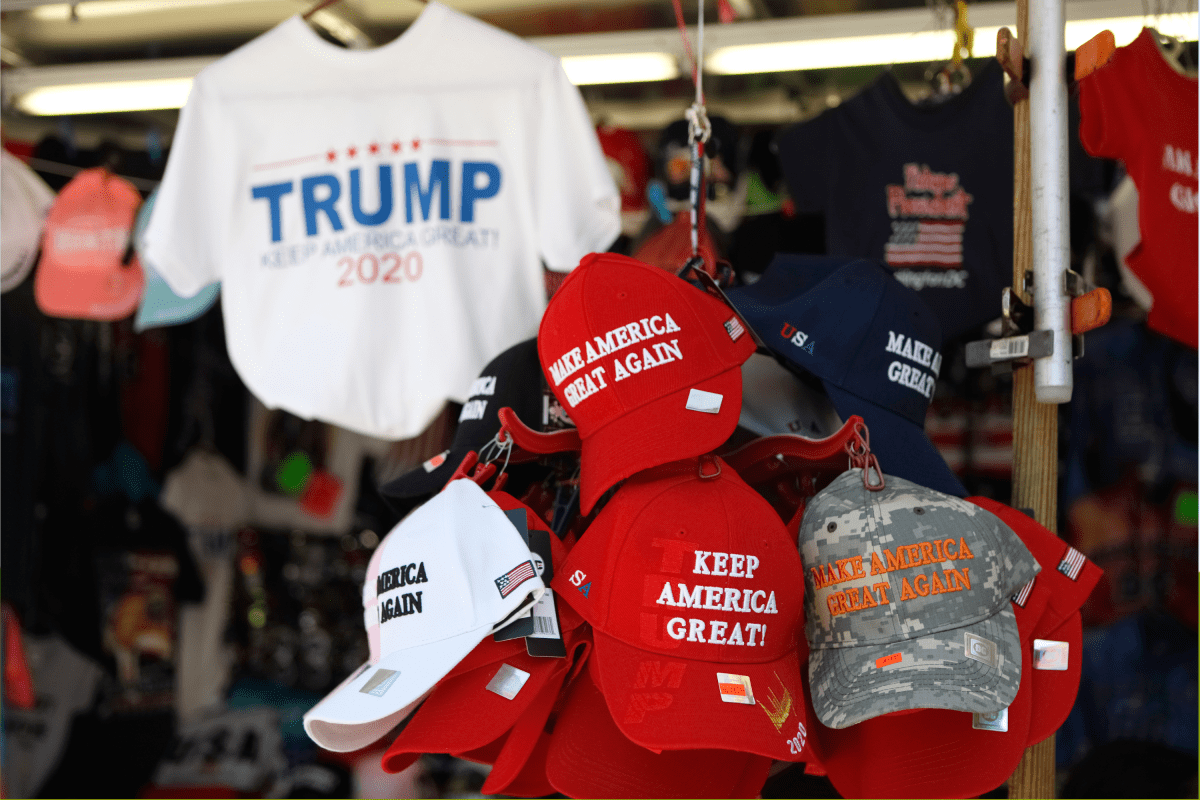
Two Trump-themed merchandise stores, one near Knoxville, Tennessee, and another in Bensalem, Pennsylvania, have closed due to fewer customers and slower sales following the 2024 election. While Trump-branded products still sell online and in some stores, owners say the energy and interest from the election period have decreased.
Key Facts
The Knoxville store closed because of low business, not retirement or relocation.
Sales spiked after events like the July 2024 assassination attempt on President Trump but have since dropped.
The Bensalem store had been open for six years and closed after the 2024 election ended.
The Bensalem store was a popular spot for Trump supporters in Bucks County, Pennsylvania.
Remaining Trump merchandise stores operate in places like Gatlinburg, Tennessee; North Myrtle Beach, South Carolina; and Trump Tower in New York.
The Trump Organization continues to sell merchandise online and at some golf clubs and resorts.
The closures show how political merchandise sales often drop when elections end.
Retail store closures in 2026 are also affected by inflation and changes in how people shop.
Read the Original
Want the full story? Tap a source to open the original
article.
State Farm is paying out $5 billion to current and past auto insurance customers as a dividend, with refunds averaging about $100 per insured vehicle. These payments come from better financial results in 2025, including fewer claims and lower repair costs, and are being sent automatically without customers needing to apply.
Key Facts
The $5 billion payout is described as the largest in State Farm’s more than 100-year history.
Customers who had State Farm auto insurance at any time during 2025 may qualify for payments.
Payments average about $100 per insured vehicle but vary by state and coverage.
Over 49 million insured vehicles nationwide are expected to be eligible.
Customers with an email on file may receive digital payment notifications, others will get paper checks in the mail.
Distribution of payments began in July 2026 and will continue for several months.
State Farm’s improved financial performance is due to fewer claims and lower auto repair costs.
Because State Farm is a mutual insurer, excess profits are returned to customers instead of shareholders.
Read the Original
Want the full story? Tap a source to open the original
article.
The cost for the U.S. government to borrow money has reached the highest level since 2007. This increase in borrowing costs is raising interest rates on mortgages and credit cards, partly due to higher oil prices and ongoing conflicts affecting global supply.
Key Facts
The 30-year U.S. Treasury bond yield rose to 5.32%, the highest since 2007.
Higher bond yields lead to higher interest rates on consumer loans like mortgages and credit cards.
An ongoing conflict involving Iran has disrupted oil supply, pushing global oil prices above $91 a barrel.
The Strait of Hormuz, a key route for about 20% of the world’s oil, is nearly closed due to the conflict and U.S. actions.
The average gas price in the U.S. increased to $4.06 per gallon, up from $2.98 before the conflict.
Inflation rose by 3.4% in July compared to last year, above the Federal Reserve’s target of 2%.
The Federal Reserve has not increased interest rates yet, fearing it could slow down the economy.
Market expectations show only a 34% chance of a rate hike at the Fed’s next meeting in September.
Read the Original
Want the full story? Tap a source to open the original
article.
Publisher Bonnier Books has ended its relationship with true crime author Christopher Berry-Dee following allegations of violence and sexual abuse, which he denies. Waterstones has also stopped selling his books after the publisher decided to remove his works from the market.
Key Facts
Christopher Berry-Dee is a bestselling true crime author in the UK.
Allegations include domestic violence and sexual assault of a 13-year-old student.
Berry-Dee denies all the accusations and did not give an interview due to health reasons.
Bonnier Books UK will no longer publish or work with Berry-Dee and is ending all contracts with him.
The publisher is actively removing Berry-Dee’s books from stores and third parties.
Waterstones removed Berry-Dee’s books from both physical shops and online sales following Bonnier’s decision.
Berry-Dee admitted in his writing that he has lied to his subjects to gain their trust for his books.
Another publisher, Orion (part of Hachette), recently published one of his books but has not commented on future plans.
Read the Original
Want the full story? Tap a source to open the original
article.
The U.S. government plans to start new tariffs on $20 billion of Canadian goods on Wednesday, including products like hockey sticks and building materials. These tariffs come because of trade disputes between the U.S. and Canada and could raise prices and hurt economies in U.S. border states.
Key Facts
The Trump administration will impose 50% tariffs on certain Canadian exports starting Wednesday.
Products affected include hockey sticks, some clothing, wine, dairy, cement, and plywood.
Some items like energy and fish are not subject to the new tariffs.
The tariffs respond to Canada’s restrictions on U.S. goods like alcohol, dairy, and cars.
Talks between U.S. and Canadian leaders have not made enough progress to stop the tariffs.
The U.S. Chamber of Commerce warned the tariffs could harm both countries’ economies and increase costs for American families.
Research shows U.S. border states with strong Canadian trade ties, such as Minnesota and New York, will be hit hardest.
New York has already seen reduced Canadian tourism and exports due to earlier tariffs, especially near the border.
Read the Original
Want the full story? Tap a source to open the original
article.