The war in Iran is causing oil prices to rise, which is increasing inflation and affecting the global economy. At the same time, the growth of artificial intelligence (AI) is causing more demand for electricity, which puts strain on power grids, especially in the United States.
Key Facts
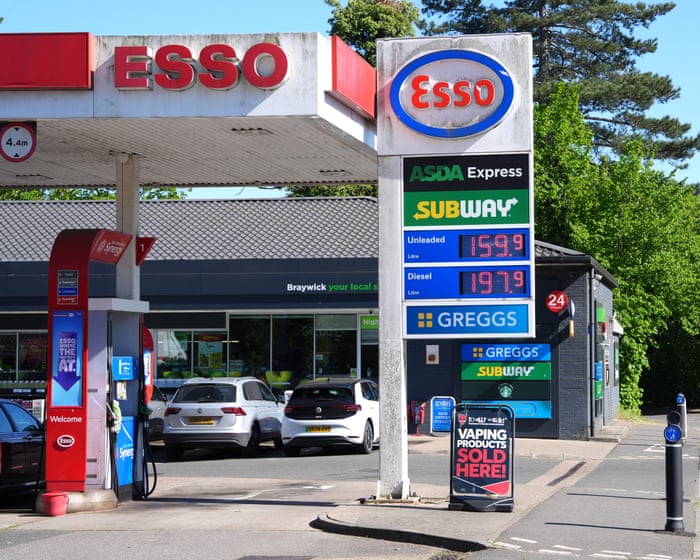
The war in Iran has led to higher oil prices, with energy costs up 18% compared to last year.
Higher oil prices contributed significantly to the 3.8% rise in the Consumer Price Index in April.
AI data centers require large amounts of electricity, causing concerns about the ability of power grids to meet demand.
The U.S. grid watchdog issued a high-level warning about potential power system strain due to AI growth.
While U.S. electricity supply is not directly affected by the Iran war, power prices are rising partly because of increased demand from data centers.
Rising energy prices could increase public dissatisfaction and political challenges for policymakers.
Data centers contribute more to power demand growth in the U.S. than in other countries.
Energy availability and cost are crucial factors influencing economic growth and global stability.
Read the Original
Want the full story? Tap a source to open the original
article.
Ted Turner changed television news by creating CNN in 1980, offering news 24 hours a day for the first time. In 1987, Turner faced financial problems and nearly made a deal with NBC, which would have changed the cable news industry significantly.
Key Facts
Before CNN, TV news was limited to three networks and about 22 minutes each evening.
CNN started in 1980, creating 24-hour news coverage.
Ted Turner personally lobbied Congress for cable laws favoring his business.
In 1987, Turner struggled financially after buying the MGM Film Library.
Major cable companies helped Turner avoid financial collapse in 1987.
NBC, led by General Electric, planned to buy 25% of Turner Broadcasting to launch a new channel called TNT.
The deal included combining CNN’s foreign news with NBC News.
This partnership aimed to ease NBC’s entry into the cable business, facing opposition from cable operators.
Read the Original
Want the full story? Tap a source to open the original
article.
Britain’s economy grew by 0.3% in March 2026, beating expectations and making it the fastest growing economy in the G7 for the first quarter. Chancellor Rachel Reeves said this shows the government’s economic plan is working and warned against making risky changes during uncertain times.
Key Facts
The UK economy grew 0.3% in March 2026, better than the expected 0.2% decline.
Overall growth for the first three months of 2026 was 0.6%, up from 0.1% in the last quarter of 2025.
Britain leads the G7 countries in economic growth in early 2026.
Chancellor Rachel Reeves aims to keep economic policies steady to avoid risks.
Some Labour Party members are preparing leadership bids amid internal debate.
Economists worry that growth may slow later in the year, with risks from the Middle East conflict.
The Bank of England may raise interest rates because of inflation, affecting loans and business costs.
Rising energy prices and the cost of living crisis continue to pressure British households.
The Iran war could reduce household incomes by about £550 in 2026 and increase government debt by £16 billion by 2030.
Read the Original
Want the full story? Tap a source to open the original
article.
A war involving the US and Israel against Iran has caused problems in the supply of oil-based raw materials needed by Japanese companies. This has led Calbee, a popular Japanese snack maker, to temporarily use black-and-white packaging on some of its products because color inks have become hard to get and more expensive.
Key Facts
The US-Israeli conflict with Iran has disrupted shipping through the Strait of Hormuz, a key route for oil transport.
Japan gets 40% of its naphtha, a type of oil product needed to make printing inks, from the Middle East.
Calbee will change the packaging of 14 products, including its potato chips, to black and white starting May 25 to manage ink shortages.
Japanese government officials say they are working to find alternative suppliers and have increased imports from outside the Middle East.
Ink producers in the US and Germany have raised prices due to higher costs for raw materials and energy linked to the conflict.
Naphtha is used in many products including inks, plastics, synthetic rubber, petrol, and industrial solvents.
The conflict has caused a global supply shock affecting costs and availability of oil-based materials.
Read the Original
Want the full story? Tap a source to open the original
article.
The article discusses recent changes to Personal Independence Payment (PIP) payments. A finance expert, Laura Pomfret, explains how these changes affect the payments individuals receive.
Key Facts
PIP stands for Personal Independence Payment, which helps people with long-term health conditions or disabilities.
Changes to PIP payments have been made recently.
Laura Pomfret, a finance expert, provides explanations about the new rules.
The information was shared on a BBC program called Morning Live.
The video explaining the changes is available with subtitles on BBC iPlayer.
The article was published 22 minutes ago.
Read the Original
Want the full story? Tap a source to open the original
article.
The UK economy grew by 0.6% in the first three months of the year, mainly due to a strong services sector. Growth in March was 0.3%, higher than expected, and construction also started to recover after a difficult end to last year.
Key Facts
The UK economy grew by 0.6% between January and March.
Monthly growth in March was 0.3%, stronger than analysts predicted.
The services sector, including wholesale, computer programming, and advertising, led the growth.
Construction returned to growth but only partly made up for earlier losses.
The Office for National Statistics (ONS) revised some previous monthly growth estimates downward.
Chancellor Rachel Reeves said the government’s economic plan is on track to build a stronger and more resilient economy.
These figures reflect the first full month with data during the Iran war period.
Economic data can be updated as new information becomes available.
Read the Original
Want the full story? Tap a source to open the original
article.
Asian stock markets had mixed results after President Donald Trump met with Chinese leader Xi Jinping in Beijing to discuss U.S.-China relations and Taiwan. Investors are watching for the impact of the summit and global factors like rising oil prices caused by the ongoing war in Iran.
Key Facts
President Trump and President Xi Jinping held talks at the Great Hall of the People in Beijing.
No major breakthroughs were expected from the U.S.-China summit on trade or Taiwan issues.
Tokyo’s Nikkei 225 index rose 0.3%, reaching near-record levels during the day.
South Korea’s Kospi increased by 0.5%, helped by technology stocks.
Hong Kong’s Hang Seng went up 0.7%, while Shanghai’s index fell 0.9%.
Oil prices rose due to the continued conflict in Iran, with Brent crude at $106.04 per barrel.
Investors are watching possible effects of China using its influence with Iran to reopen key oil shipping routes.
Nvidia’s CEO Jensen Huang and other tech leaders accompanied President Trump on his China visit to discuss advanced technology exports.
Read the Original
Want the full story? Tap a source to open the original
article.
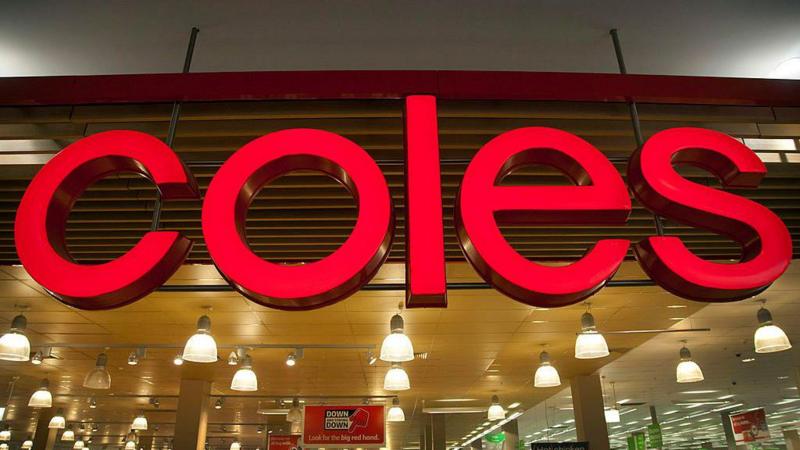
An Australian court found that supermarket Coles misled customers with its "Down Down" discount campaign by showing fake price reductions. Coles changed its rules for how long a higher "was" price had to stay before dropping prices to create discounts, which made some deals misleading.
Key Facts
Coles runs the "Down Down" promotion, which claims products are cheaper than before.
The court ruled Coles misled shoppers by showing discounts that were not genuine.
Coles had rules ("guardrails") requiring products to be sold at the higher "was" price for a set time before a discount.
In 2022, Coles shortened the time from 12 weeks to 4 weeks to match competitor Woolworths' practice.
Customers reported items with supposed discounts that were actually more expensive recently.
The Australian Competition and Consumer Commission (ACCC) found hundreds of products affected.
The court noted Coles changed its practices due to pressure from Woolworths, its main rival.
Coles may face fines of tens of millions of dollars and might have to change how it promotes discounts.
Read the Original
Want the full story? Tap a source to open the original
article.
The UK economy grew by 0.3% in March 2026, despite the start of the Iran war at the end of February. This growth was stronger than expected and driven mainly by services like computer programming and advertising, along with a return to growth in construction.
Key Facts
UK GDP grew 0.3% in March 2026, exceeding forecasts of a 0.2% decline.
Growth in the first quarter of 2026 was 0.6%, higher than 0.1% in the last quarter of 2025.
Services sector led growth, especially computer programming and advertising industries.
Construction sector returned to growth in March.
Iran war started on February 28, 2026, causing oil and gas prices to rise sharply.
Retail sales increased in March, even after removing the effect of rising fuel costs.
Bank of England warned of likely higher interest rates due to rising inflation linked to the war.
Inflation rose from 3.0% in February to 3.3% in March, influenced by increased fuel prices.
Read the Original
Want the full story? Tap a source to open the original
article.
The UK is facing rising borrowing costs as political uncertainty grows with the possibility of another change in prime minister. Investors fear that a leadership challenge to Labour’s Keir Starmer could increase government borrowing and lead to a repeat of the 2022 bond market crisis during Liz Truss’s brief time as prime minister.
Key Facts
The interest rate on 30-year UK government bonds briefly rose to 5.8%, the highest since 1998.
Political instability in the UK has raised fears among investors about higher government borrowing.
Keir Starmer, the Labour leader and prime minister, faces a potential leadership challenge.
Investors warn that increased borrowing without clear economic growth could hurt market confidence.
Some Labour MPs show frustration with current tight tax and spending policies but are aware of financial market risks.
The UK’s national debt is about 100% of GDP, the highest since the 1960s.
Rising global interest rates and geopolitical issues, like the Iran war, have increased the cost of UK debt.
Analysts say any new leader would still face significant spending pressure and high taxes, limiting policy options.
Read the Original
Want the full story? Tap a source to open the original
article.
A woman in rural Cornwall had trouble depositing a £900 cheque from HMRC because it could not be scanned by her bank’s app and the Post Office no longer accepts cheque deposits for Lloyds Banking Group customers. She must now travel long distances to a bank branch or use a mail-in service, which she feels is inconvenient and unfair for rural residents. Lloyds said cheque use is very low and offered alternatives like mobile app deposits and freepost services.
Key Facts
Annabel Yates from Cornwall received a £900 HMRC cheque that could not be deposited online.
The cheque lacked perforated edges, so it would not scan in the banking app.
Lloyds Banking Group stopped allowing cheque deposits at the Post Office in January 2024.
Yates faces a 75 to 94-mile trip to the nearest Lloyds branches in Okehampton or Truro.
Lloyds offers cheque deposits via their app, any branch, or a freepost (mail) service.
Yates is concerned about sending large cheques by post and feels rural customers are disadvantaged.
The Post Office reports many customers are frustrated by losing the cheque deposit service.
Lloyds says cheque payments make up only 0.1% of UK payments and are declining in use.
Read the Original
Want the full story? Tap a source to open the original
article.
The Yindjibarndi traditional owners in Western Australia are thinking about appealing a federal court decision that ordered mining company Fortescue to pay $150 million in compensation for cultural and economic losses from mining activities on their land. The court recognized the deep connection of the Yindjibarndi people to their land but awarded less economic compensation than they had requested.
Key Facts
Fortescue must pay $150 million to Yindjibarndi traditional owners for cultural and economic damages related to its Solomon Hub iron ore mine.
This is the largest compensation payout in native title history in Australia.
Yindjibarndi Ngurra Aboriginal Corporation (YNAC) originally sought $1.8 billion, including amounts for cultural damage, economic loss, site destruction, and social impacts.
The court based its economic loss calculation on the value of freehold land, not on mining royalties as YNAC had argued.
The Solomon Hub mine has generated about $80 billion in revenue since it started but was approved without permission from the Yindjibarndi traditional owners.
The Western Australian government supported Fortescue in limiting compensation, opposing the Yindjibarndi claim.
YNAC’s CEO Michael Woodley said the judgment was a partial win but still unsatisfactory, and they plan to continue fighting for recognition of their rights.
The Yindjibarndi people gained exclusive native title rights to the land in 2017 after filing their claim in 2003.
Read the Original
Want the full story? Tap a source to open the original
article.
Australia’s federal court ruled that supermarket chain Coles misled customers with fake discount promotions by raising prices before sales. The court found that most of the discounted items were not genuine savings, and Coles may face large penalties.
Key Facts
The court case was brought by the Australian Competition and Consumer Commission (ACCC).
Coles advertised “Down Down” promotions on 245 products between February 2022 and May 2023.
The court found that 13 out of 14 tested products did not show real discounts.
For a discount to be genuine, the higher price must be in place for at least 12 weeks before the sale.
One product, Nature’s Gift Dog Food, was found not to be misleading because it had no previous “was” price.
A similar case is underway against Woolworths, Coles’ main competitor, over misleading discounts.
Both supermarkets hold about two-thirds of Australia’s grocery market.
Coles said it is reviewing the judgment and called for clear rules to avoid future legal issues.
Read the Original
Want the full story? Tap a source to open the original
article.
The Australian government has cut $760 million from the Australia’s Economic Accelerator (AEA) research commercialization program to fund other science projects, including support for the CSIRO and the National Measurement Institute. Researchers and university leaders criticize the decision, saying it wastes effort and harms research commercialization and development.
Key Facts
The Australia’s Economic Accelerator program lost $760 million in funding over five years up to 2029–30.
The budget adds $387.4 million to support CSIRO’s financial health and $273 million for the National Measurement Institute.
The AEA program, started in 2023, helped turn research into economic and social benefits but will stop new project funding after 2025–26.
Researchers like Prof Melanie Davern spent months applying for AEA grants that may no longer be funded.
Universities Australia says cutting the AEA harms research commercialization and sends a negative signal to the sector.
Australia’s investment in research and development is 1.7% of GDP, below the OECD average of 2.7%.
Australian Academy of Science and Science & Technology Australia express concern that the budget does not increase overall science funding enough.
The government plans a new National Resilience and Science Council as part of other budget measures.
Read the Original
Want the full story? Tap a source to open the original
article.
Elon Musk traveled to China during a $150 billion civil lawsuit against OpenAI CEO Sam Altman that was ongoing in a U.S. court. The judge had allowed Musk to leave the courtroom but said he could be called back for more testimony if needed.
Key Facts
Elon Musk flew to Beijing while testifying in a trial against OpenAI CEO Sam Altman.
The lawsuit involves $150 billion related to OpenAI’s direction and leadership.
A U.S. judge allowed Musk to leave the courtroom but said he was subject to recall.
The trial is civil, so Musk is not required to attend every day in person.
Musk traveled to China with President Donald Trump, who was meeting Chinese President Xi Jinping.
Musk co-founded OpenAI as a nonprofit in 2015 but later left the company.
Musk is suing Altman, claiming Altman broke the nonprofit’s rules and focused on profits.
Musk wants Altman removed, OpenAI returned to nonprofit status, and money shifted to charity.
OpenAI argues Musk’s lawsuit aims to help his own company, xAI.
Read the Original
Want the full story? Tap a source to open the original
article.
A federal court ruled that Coles, a major Australian supermarket, misled customers by showing fake discounts in its "Down Down" price campaign. The court found that Coles raised prices briefly before claiming to offer discounts, which was misleading under Australian consumer law.
Key Facts
The court case was brought by the Australian Competition and Consumer Commission (ACCC) against Coles.
Coles advertised discounts using "was/is" pricing but did not tell customers the higher "was" prices lasted only a short time.
The supermarket sold many products at a lower price for about a year, raised them briefly, then lowered the price again, which was sometimes equal to or higher than the original price.
The judge said Coles’ price increases were normal business practice, responding to supplier demands during inflation.
However, showing short-term price increases as the baseline for discounts misled shoppers.
The court ruled this practice broke Australian consumer laws against misleading conduct.
A similar case involving Woolworths, another major supermarket, is still ongoing in federal court.
The decision affects how supermarkets advertise discounts during inflation periods.
Read the Original
Want the full story? Tap a source to open the original
article.
Wholesale prices in the United States rose by 6% last month compared to the same time last year. This is the largest yearly increase in over three years, mainly because gas prices went up. Many Americans are feeling the effects of these higher prices.
Key Facts
Wholesale prices in the U.S. increased by 6% last month compared to one year ago.
This is the biggest annual increase in more than three years.
The rise in gas prices is a main reason for the higher wholesale prices.
Higher wholesale prices often lead to higher costs for consumers.
Many people in the U.S. are experiencing the impact of inflation.
The report was shared by CBS News with Jo Ling Kent as the reporter.
Read the Original
Want the full story? Tap a source to open the original
article.
Big tech companies like Microsoft and Apple are creating cute cartoon mascots to make their brands feel friendlier and more relatable. These characters help companies connect better with customers and can boost market share.
Key Facts
Microsoft introduced Mico, a customizable and friendly-looking avatar for its AI assistant Copilot.
Apple launched a blue and white cartoon figure nicknamed Little Finder Guy to promote a new laptop.
Research shows companies using mascots are 37% more likely to increase their market share.
Google lets users personalize its Android robot mascot with clothes and hairstyles.
Mozilla turned its Firefox logo into a mascot called Kit to stand out from competitors.
Some experts think mascots try to counteract people’s mistrust of big tech brands.
AI-powered mascots may start interacting with users personally, raising concerns about manipulation.
Microsoft says it has received positive feedback about its new mascot so far.
Read the Original
Want the full story? Tap a source to open the original
article.
A Greenpeace report found that a typical English roast dinner may contain ingredients treated with over 100 different pesticides, including some banned in the EU. The report warns that heavy pesticide use harms wildlife and ecosystems and calls for stricter rules and reduced pesticide use in the UK.
Key Facts
Greenpeace’s report used 2024 data to identify 102 pesticides on vegetables and fruits in a Sunday roast.
Seven of these pesticides are banned in the European Union due to health and environmental risks.
Some pesticides found can cause cancer, disrupt hormones, and harm bees, fish, birds, and other wildlife.
Pesticides have been widely used since WWII to protect crops but also negatively affect beneficial plants and insects.
The UK government aims to reduce pesticide use by 10% by 2030, while Greenpeace calls for a 50% cut.
Greenpeace suggests aligning UK rules with EU standards and increasing organic farming to at least 10%.
The National Farmers’ Union says pesticides are carefully regulated and essential to maintaining crop yields.
The UK government asserts strict safety limits on pesticide residues in both domestic and imported food.
Read the Original
Want the full story? Tap a source to open the original
article.
The housing market in England and Wales is slowing down due to concerns about higher mortgage rates and inflation linked to the war in the Middle East. Estate agents report fewer buyers and sellers, slower sales, and falling house prices, especially in southern England and London.
Key Facts
Estate agents in England and Wales see less interest from homebuyers recently.
Concerns about rising inflation and mortgage rates are making buyers and sellers cautious.
The Bank of England warned interest rates might rise because of higher energy prices from the Middle East conflict.
The number of completed home sales decreased in April, and this trend is expected to continue.
House prices are falling overall, with sharper drops in London, the south-east, East Anglia, and the south-west.
Northern England regions are seeing small increases in house prices.
The rental market has more demand than supply, as some landlords are leaving due to tougher regulations and higher taxes.
Estate agents expect rents to increase in the near future.
Read the Original
Want the full story? Tap a source to open the original
article.