Back-to-school costs in the U.S. are rising, with prices for school supplies and lunches increasing compared to last year. Families are expected to spend about $4,000 per student this year, driven by higher tariffs on imported goods and rising energy costs linked to global events.
Key Facts
The price for a typical set of school supplies is up nearly 8% compared to last year.
School lunches are about 11% more expensive than in the previous year.
Families may spend around $175 on school supplies and $3,800 on packed lunches per student this year.
Many school supplies like notebooks, pens, and glue are made overseas and face higher U.S. tariffs, raising prices.
Energy cost increases from conflicts in the Middle East have raised production expenses for supply companies.
Some companies, like Newell Brands and Logitech, have raised prices due to tariff and energy cost increases.
A survey found 45% of parents expect to borrow money to cover back-to-school spending, and half plan to cut household expenses.
Common back-to-school items such as notebooks, index cards, and lunch staples like bread and blueberries have all seen significant price increases.
Read the Original
Want the full story? Tap a source to open the original
article.
Keeping $10,000 in a traditional savings account pays much less interest than other types of accounts. High-yield savings accounts, certificates of deposit (CDs), and money market accounts offer much higher rates, helping savers earn more money over time.
Key Facts
The average interest rate for traditional savings accounts is about 0.38%.
A $10,000 amount in a traditional savings account will earn about $38 in one year.
A $10,000 certificate of deposit (CD) at 4.17% interest would earn $417 in one year.
A high-yield savings account at 4.10% would earn $410 on $10,000 in one year.
A money market account at 3.80% would earn $380 on $10,000 in one year.
By keeping money in a traditional savings account, savers could lose between $342 and $379 in potential interest earnings per year.
Interest rates on other savings options might change, but the difference in earnings is already large.
Savers can easily compare accounts online to find better rates and increase their savings growth.
Read the Original
Want the full story? Tap a source to open the original
article.
Ebay and three former top executives agreed to pay $55.7 million to a Massachusetts couple who were harassed by several former eBay employees. The harassment included sending cockroaches and trying to track the couple’s car, which was done in retaliation for the couple’s critical newsletter about eBay.
Key Facts
David and Ina Steiner filed a lawsuit in 2021 after being targeted in a stalking and harassment campaign.
Ebay agreed to pay the couple $46.15 million and donate $6 million to charities as part of the settlement.
Seven former eBay employees pleaded guilty and were sentenced to prison for their roles in the harassment.
The harassment involved sending cockroaches, fly larvae, a bloody pig mask, and attempts to install a GPS tracker on the couple’s car.
The campaign was linked to a company effort to silence the couple’s newsletter, EcommerceBytes, which was critical of eBay.
Devin Wenig, former eBay CEO, was never charged but agreed to pay $2 million to the couple and donate $1 million to a free speech charity.
Ebay publicly apologized and called the events “wrong” and “reprehensible.”
Additional settlements were reached with other former eBay employees involved in the lawsuit.
Read the Original
Want the full story? Tap a source to open the original
article.
eBay agreed to pay nearly $50 million to a Massachusetts couple who said former eBay employees harassed them with threats and strange deliveries, including live insects and a bloody pig mask. The settlement ends over six years of legal actions and requires eBay to make a public statement about the behavior of its former executives.
Key Facts
eBay settled for almost $50 million with David and Ina Steiner, who run an e-commerce newsletter.
The couple was targeted by former eBay workers with threats, live insects, a funeral wreath, and a bloody pig Halloween mask.
The harassment included cyberstalking, death threats, and in-person surveillance.
The case started in 2019 and involved criminal and civil charges.
Seven former eBay employees were charged; most pleaded guilty and received prison or home confinement sentences.
eBay apologized and said the incidents were not part of the company culture.
The settlement includes $7 million in donations to charities supporting First Amendment rights (free speech).
eBay must publicly address the misconduct of former top executives named in the case.
Read the Original
Want the full story? Tap a source to open the original
article.
In 2025, Canadians spent $3.3 billion less on trips to the United States compared to before President Donald Trump’s second term. Overall, Canadians spent $18.8 billion on travel to the U.S. during that year.
Key Facts
Canadian spending on travel to the U.S. dropped by $3.3 billion in 2025.
Total Canadian travel expenditure in the U.S. was $18.8 billion in 2025.
The decline happened during President Donald Trump’s second term.
The report comes from Statistics Canada, the country’s official data agency.
The decrease affected leisure trips among Canadians traveling to the U.S.
Economic and political factors during President Trump’s term influenced Canadian travel behavior.
Read the Original
Want the full story? Tap a source to open the original
article.
Lidl is recalling certain cookies sold in all its stores in the United States because they contain allergens that are not listed on the packaging. This recall affects customers who may have allergies to those ingredients.
Key Facts
Lidl is a German supermarket chain with stores in the U.S.
The recall involves cookies sold in all Lidl locations in the United States.
The reason for the recall is undeclared allergens in the cookies.
Undeclared allergens can pose health risks to people with food allergies.
Lidl is taking action to remove these products from its shelves.
Customers should check their cookies and avoid eating the recalled items.
Lidl is likely informing customers and offering refunds or replacements.
Read the Original
Want the full story? Tap a source to open the original
article.
The global collagen market is changing as companies focus on proving their products work through scientific studies. Sel Sanayi, with its CollaSel brand, has published several peer-reviewed studies showing its collagen peptides may be more effective than typical products. This shift is driven by stricter rules and smarter customers who want clinically proven health benefits.
Key Facts
The collagen market is moving from broad health claims to clinical proof backed by research.
Sel Sanayi’s CollaSel has three recent peer-reviewed studies validating its collagen peptides.
One study found CollaSel Tripeptide has stronger biological activity relevant to heart and metabolic health compared to standard collagen.
Two clinical trials showed CollaSel Pro improved skin health and reduced joint pain in osteoarthritis patients.
CollaSel peptides are much smaller in molecular size (300-500 Daltons) than typical collagen (2,000-5,000 Daltons).
The smaller size may help the peptides absorb better in the body, increasing exposure by about 2.7 to 3.3 times.
Sel Sanayi treats clinical validation as a key part of making their products, not just marketing.
Regulatory agencies in the US and Europe require stronger scientific evidence for health claims, influencing market trends.
Read the Original
Want the full story? Tap a source to open the original
article.
Apple has become the world's most valuable company, surpassing Nvidia after more than two years. Apple's stock has increased by 25% this year, giving it a market value of about $4.99 trillion as of midday Tuesday.
Key Facts
Apple is now the most valuable company globally.
Nvidia was the top company for more than two years before Apple overtook it.
Apple's stock price has increased by 25% since the beginning of this year.
As of midday Tuesday, Apple's market value reached approximately $4.99 trillion.
The market value means the total worth of all Apple's shares combined.
Nvidia is a company that makes computer chips.
Apple's main product is the iPhone.
Read the Original
Want the full story? Tap a source to open the original
article.
A 3-month certificate of deposit (CD) with $10,000 can earn about $94 to $97 in interest at current rates near 4%. Alternatively, a high-yield savings account offers a similar return with more flexibility but a variable interest rate.
Key Facts
A 3-month CD locks in money for the term but offers fixed interest rates around 3.8% to 3.95%.
Interest earned on a $10,000 3-month CD is roughly $94 to $97 by maturity.
This means savers earn about $1 per day during the 3-month period.
High-yield savings accounts currently offer around 4.10% interest with about $100 earned in three months.
Unlike CDs, savings account rates can change over time and money remains accessible.
Traditional savings accounts offer much lower rates, about 0.38%, which may not keep up with inflation.
Online banks often provide better CD rates than banks with physical branches.
Savers should compare options because both CDs and high-yield savings accounts are better than regular savings accounts right now.
Read the Original
Want the full story? Tap a source to open the original
article.
The cryptocurrency industry is becoming more like traditional industries, focusing less on new technology and more on using existing systems efficiently. Companies that run the underlying services and infrastructure well are gaining value as the technology itself becomes more standard.
Key Facts
Early crypto success came from creating new blockchain technologies and proving they were better.
Now, many blockchains offer similar features, making them more like standard tools than unique products.
Value is shifting to companies that operate infrastructure like validators, exchanges, and custodians effectively.
This change is similar to past industries like telecommunications and railroads, where managing infrastructure well created wealth.
Crypto firms now compete on factors like reliability, speed, risk management, and compliance.
Larger crypto companies benefit from economies of scale, meaning they can operate more cheaply and securely.
The industry is moving from innovation to efficient operation of complex systems that support crypto services.
Read the Original
Want the full story? Tap a source to open the original
article.
The 52-week money challenge helps people save money by increasing their weekly savings by $1 each week. By the end of the year, participants can save about $1,378, and using special savings accounts with higher interest rates can help grow this amount faster.
Key Facts
The challenge starts by saving $1 in week one and adds $1 more each following week.
By week 52, the savings amount is $52, totaling $1,378 saved in one year.
Inflation is around 3%, above the Federal Reserve’s 2% target.
Households face high debt, with credit card rates over 20%, and wages are not keeping up with inflation.
Using a traditional savings account with low interest (around 0.38%) won’t grow the savings much.
GSK is investing £400 million in a new research and development center in Cambridge, moving many scientists from its Stevenage site. The company plans to increase its late-stage drug trials and cut £1.9 billion in annual costs by 2029, while aiming for revenue of over £40 billion by 2031.
Key Facts
GSK will spend £400 million to open a new research center in Cambridge.
The Stevenage facility will close, and most scientists will move to Cambridge.
Cambridge is a major life sciences hub with universities, hospitals, and biotech companies.
GSK plans to start late-stage trials for at least 20 potential medicines this year, up from 10.
The company recently bought US cancer specialist Nuvalent for nearly £8 billion.
GSK aims to cut £1.9 billion in annual costs by 2029 through efficiency measures.
Patent expiration on the HIV drug dolutegravir (about 20% of sales) in 2028-30 is a concern.
GSK expects stable or improving profit margins despite patent challenges and is targeting £40 billion+ revenue by 2031.
Read the Original
Want the full story? Tap a source to open the original
article.
A recent study found that 80% of toddler foods sold in grocery stores are ultra-processed. These foods often have higher levels of sugar, salt (sodium), fat, or calories than recommended for young children.
Key Facts
Four out of five toddler food products are highly processed.
These foods often contain too much sugar.
Many have excessive amounts of sodium, which is salt.
Some toddler foods have too much fat.
Calories in these products frequently exceed healthy guidelines for toddlers.
The study focused on products available in grocery stores.
The findings raise concerns about the nutritional quality of foods marketed for toddlers.
Read the Original
Want the full story? Tap a source to open the original
article.
The UK government will give some parents on benefits up to £4,500 a year to encourage their children to start apprenticeships. This payment will help families who lose some benefit money when their children begin paid apprenticeships by replacing the lost income.
Key Facts
Parents on benefits could get up to £4,500 yearly to support children starting apprenticeships.
The payment aims to stop families from losing money when a young person starts an apprenticeship job.
It will help a few thousand households who currently lose between £17 and £330 a week because apprenticeships count as earned income.
The bursary is funded by a £30 million budget from a levy on employers with wage bills over £3 million.
A government advisory report pointed out that benefits rules sometimes reduce payments too much when young people work as apprentices.
More than a million young people aged 16 to 24 in the UK are not in education, employment, or training (NEET).
The government says this bursary will support young people to "earn and learn" without losing benefits.
Additional funding and support for apprenticeship training for under-25s and employers will continue.
Read the Original
Want the full story? Tap a source to open the original
article.
Many timeshare owners find it very hard to stop owning their timeshare, even though they want to. Some companies offering help to end timeshare ownership use confusing language about lawyers, which can mislead owners about who the lawyer actually represents.
Key Facts
Many timeshare owners struggle with ending their ownership, often because of rising fees and changing lifestyles.
A study by Newton Group showed that over half of timeshare owners trying to exit had already failed once.
About 27% of owners hired a timeshare exit company before, but the company did not succeed.
Timeshare exit companies often use phrases like “attorney-backed” or “legal team” that sound like they offer legal help directly to the owner.
In many cases, the lawyer works for the company, not the owner, which means the lawyer’s duty is to the company’s interests.
Owners should be clearly told if a lawyer represents them personally or only the company before they pay for services.
Newton Group suggests that rules be made so companies must disclose in writing if the lawyer actually represents the timeshare owner.
Consumers deserve clear information to understand who is protecting their interests during timeshare exit services.
Read the Original
Want the full story? Tap a source to open the original
article.
The article explains how to know the best time to pick different garden vegetables like tomatoes, cucumbers, green beans, zucchini, eggplants, corn, and peppers. It gives advice on how waiting too long to harvest can reduce quality or cause loss.
Key Facts
Tomatoes should be picked when about half the fruit shows color to avoid splitting or animals eating them.
Cucumbers should be harvested when green, firm, and glossy; standard ones between 6 and 8 inches long.
Green beans must be picked daily once plump and firm to keep plants producing more pods.
Zucchini grow quickly and taste best when 6 to 8 inches long with skin soft to the touch.
Eggplants are best picked when their skin is shiny; a dull skin means they are overripe.
Corn is ready when silks turn brown and kernels release a milky juice when pierced.
Peppers can be harvested green or when fully colored, with flavor changing as they ripen.
Morning, after dew dries, is the best time to harvest vegetables for quality and moisture.
Read the Original
Want the full story? Tap a source to open the original
article.
Long-term care insurance helps pay for services like in-home care or nursing homes as people age. Although premiums can increase after buying a policy, insurers usually raise rates only for groups of policyholders, not individuals, based on overall costs and claims.
Key Facts
Long-term care insurance pays for extended care such as assisted living or nursing homes.
Premiums can rise over time but usually increase for all policyholders in a group, not just one person.
Insurers cannot raise rates based on an individual's age, health changes, or claim history.
Many older policies have seen premium increases due to longer lifespans and higher care costs than predicted.
Newer policies are often priced more conservatively with better data, so they may have smaller premium increases.
Different policies have varying rules about how premiums can change, so reading details before buying is important.
Rising costs reflect factors like underestimated claims, increasing care expenses, and low investment returns.
Keeping premiums low may require choosing plans with features that limit increases, but some risk of hikes remains.
Read the Original
Want the full story? Tap a source to open the original
article.
Apple became the second company ever to reach a $5 trillion market value as investors moved away from artificial intelligence (AI) and semiconductor stocks. The rise in Apple’s stock comes while many AI and chip companies are losing value due to concerns over heavy borrowing and competition.
Key Facts
Apple’s shares reached a high giving it a $5.04 trillion valuation, briefly making it the second company to cross $5 trillion.
Apple overtook Nvidia this month to become the world’s most valuable company.
Nvidia was the first company to reach $5 trillion last October.
Many AI and semiconductor stocks fell sharply, with companies like Intel, AMD, and Samsung dropping over 4-10%.
The Nasdaq 100 technology index dropped nearly 2%, marking a technical market correction (a drop of over 10% from a recent high).
Investors are worried about AI firms’ heavy borrowing to build data centers and competition from cheaper Chinese chip makers.
Apple avoided heavy AI spending and instead continues to use Google’s AI technology, reducing costly infrastructure investments.
Apple launched a leasing program in the US, making it easier for customers to pay for devices like iPhones and MacBooks.
Read the Original
Want the full story? Tap a source to open the original
article.
Canadians spent $3.3 billion less on travel to the United States in 2025 compared to 2024. Instead, they chose to travel more to other parts of the world, such as Europe and Asia, according to new data from Statistics Canada.
Key Facts
Canadian spending on travel to the US dropped from $22.1 billion in 2024 to $18.8 billion in 2025.
Spending on travel outside the US increased by $3.6 billion, reaching $22.8 billion in 2025.
Visits by Canadians to Europe rose by nearly 14%, and visits to Asia rose by almost 17% in 2025.
Return trips from the US to Canada fell by about 25% in 2025 compared to 2024.
The biggest drop in border crossings happened in July 2025, with about a one-third decrease from the previous year.
The decline in US travel and border crossings in 2025 was among the largest recorded since digital records began in 1972.
Early data from 2026 shows the trend of fewer Canadian trips to the US is continuing.
The data reflects a lasting change in Canadian travel habits, moving away from the US towards other international destinations.
Read the Original
Want the full story? Tap a source to open the original
article.
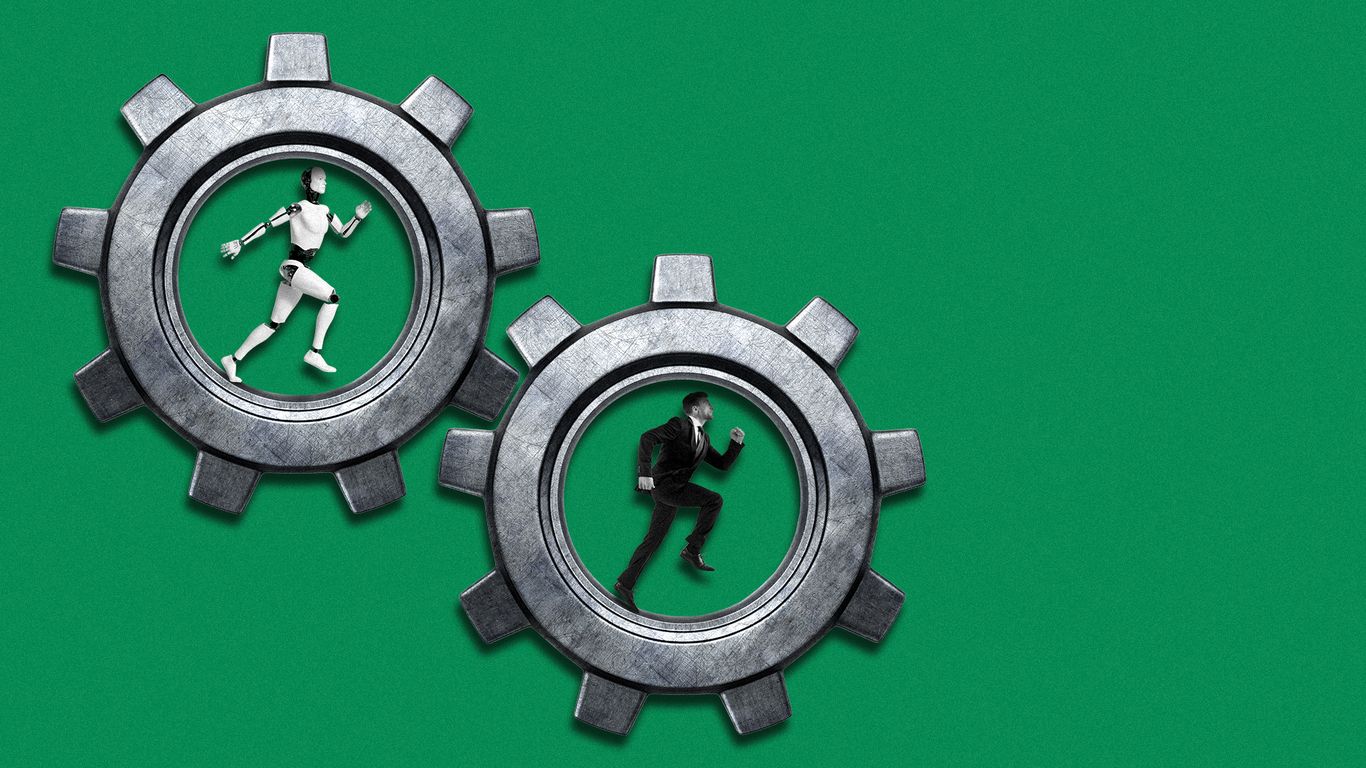
U.S. productivity has increased significantly in recent years, but this rise is mostly due to better use of existing capital, like equipment and facilities, rather than major gains from artificial intelligence (AI). AI is helping improve efficiency in some sectors, but it is not yet the main cause of the overall economic productivity growth.
Key Facts
U.S. labor productivity (output per hour worked) rose 2.5% last year, higher than the 1.6% average over the past 20 years.
The increase in productivity mainly comes from using existing capital more intensively, such as factories, servers, and hotel rooms.
Total factor productivity, which accounts for both labor and capital together, has stayed mostly flat.
Industries that adopted AI earlier showed productivity growth before the pandemic, indicating AI is not the sole driver.
Economists call increased use of capital "capital intensity" or "capital utilization."
AI may contribute to future productivity growth by solving workflow problems, but its current impact is limited.
The rise in productivity is real but may not yet reflect a permanent, transformational change caused by AI.
Understanding AI’s role will help predict if productivity gains are temporary or long-lasting.
Read the Original
Want the full story? Tap a source to open the original
article.