Some U.S. states are working to change laws that allow insurance companies to use people’s credit histories to set prices for home and car insurance. Currently, this practice is banned in a few states, but many still allow it, which can cause people with low credit scores to pay higher insurance costs.
Key Facts
Insurance companies often use a credit-based insurance score, created by firms like FICO and TransUnion, to decide insurance premiums.
This score is different from a regular credit score and is based on factors like payment history and debt.
People with low credit scores tend to pay more for insurance because they are seen as more likely to file claims.
Studies show that homeowners with low credit scores pay about 24% more for insurance than those with high scores. Drivers with poor credit pay about 69% more on average.
States like California and Massachusetts do not allow insurance companies to use credit history for home or auto insurance pricing.
Some states, like Michigan and Hawaii, have partial bans or restrictions on how credit history can be used.
Other states, including Oregon and Utah, have strict rules limiting how credit information can affect insurance decisions but do not ban the practice outright.
Currently, there are bills in states like Iowa, New York, Oklahoma, and Pennsylvania that aim to ban or limit the use of credit history in insurance pricing.
Read the Original
Want the full story? Tap a source to open the original
article.
The article explains that many health care systems focus on paying for the number of services provided, like tests and visits, rather than for improving patients’ health over time. This payment model, called fee-for-service, can lead to inefficiencies and poor health results. To fix this, health care should shift to value-based care, which rewards better health outcomes instead of just more activity.
Key Facts
Health care systems often pay for each service done, such as tests and doctor visits, rather than patient health improvements.
This payment style is called fee-for-service and encourages more procedures, not necessarily better care.
Paying for activity can cause fragmented care with no one responsible for overall patient health.
The article uses diabetes care as an example where many separate visits and tests don’t guarantee better health outcomes.
This approach can increase unnecessary procedures and reduce system efficiency.
Value-based care focuses on whether patients get better and remain healthy over time.
Instead of paying for each act, value-based care rewards accountability for health results across the full care process.
Changing how health care is rewarded can improve system behavior and health outcomes.
Read the Original
Want the full story? Tap a source to open the original
article.
A survey found that business leaders and employees have different views on how artificial intelligence (AI) will affect jobs. Executives expect job losses, while employees often think the number of jobs will stay the same or even grow.
Key Facts
Business leaders predict that AI will reduce the number of jobs.
Employees believe that AI will have less impact on employment or may create more jobs.
The survey was conducted separately for executives and employees.
There is a clear difference in expectations about AI’s effect on the workforce.
Executives foresee a contraction, meaning fewer jobs in the future.
Employees tend to be more optimistic or uncertain about employment changes due to AI.
This gap shows that business decision-makers and workers do not agree on AI’s impact.
Understanding these views can help companies manage changes caused by AI technology.
Read the Original
Want the full story? Tap a source to open the original
article.
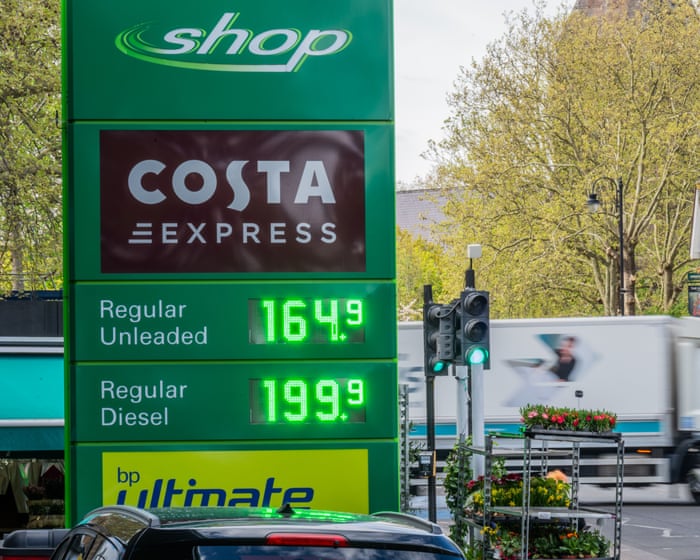
Southwest Airlines' CEO spoke about how rising fuel prices are making airfares more expensive for travelers. The increase in fuel costs is linked to the ongoing war with Iran. Some budget airlines have asked the government for assistance to handle these higher fuel expenses.
Key Facts
Domestic airfares have increased by about 18% compared to last year.
Rising fuel costs are a main reason for higher ticket prices.
The war with Iran has contributed to the rise in fuel prices.
Several low-cost airlines have requested government help to manage fuel costs.
Southwest Airlines' CEO discussed these challenges in an interview.
Higher fuel prices affect both airlines' profits and travelers' expenses.
The situation is ongoing and affecting the airline industry broadly.
Read the Original
Want the full story? Tap a source to open the original
article.
Mortgage interest rates have fallen in April 2026 after rising in March. The average rate for a 30-year mortgage is now about 6.12%, and for a 15-year mortgage, it is about 5.62%. Borrowers are encouraged to compare rates from different lenders to find the best deals.
Key Facts
In early March 2026, the average 30-year mortgage rate was around 5.75%.
By the end of March, the 30-year rate rose to 6.37%, influenced by global tensions.
In April, rates decreased, with the 30-year average dropping to approximately 6.12%.
The average refinance rate for a 30-year mortgage is about 6.45% as of April 28, 2026.
The median refinance rate for a 15-year mortgage is around 5.60%.
Shorter mortgage terms, like 15 or 20 years, may have lower rates but higher monthly payments.
Online tools and marketplaces can help borrowers compare rates, terms, and costs from multiple lenders.
Shopping around with at least three lenders is recommended to find the best mortgage rate.
Read the Original
Want the full story? Tap a source to open the original
article.
BP reported that its profits nearly doubled to $3.2 billion in the first quarter of 2026, helped by higher oil prices after the war in Iran began. The conflict caused energy supply problems, boosting BP’s oil trading earnings and production in some US areas despite disruptions.
Key Facts
BP made $3.2 billion in profits in Q1 2026, up from $1.38 billion a year earlier.
The Iran war that started in late February disrupted oil and gas supplies, pushing prices higher.
BP’s oil trading business showed "exceptional" results due to the conflict.
BP’s CEO Meg O’Neill said the company is working to deliver fuel amid a complex and difficult environment.
Production increased in the Gulf of America and at BP’s US onshore unit.
Oil prices rose to their highest in three weeks, exceeding $110 per barrel.
The rising energy prices are worrying central banks and affecting government borrowing costs.
UK government borrowing costs are nearing their highest since 2008 due to economic pressures from the war and higher oil prices.
Read the Original
Want the full story? Tap a source to open the original
article.
The biopic "Michael," about Michael Jackson's life until 1988, has broken box office records for music biopics, earning $217 million worldwide in its opening weekend. It performed very well in the UK and US, surpassing previous hits like "Bohemian Rhapsody," and is on track to become the first music biopic to earn over $1 billion.
Key Facts
"Michael" is directed by Antoine Fuqua and covers Michael Jackson's life before 1988.
The film earned $97 million in the US during its opening weekend, 90% more than "Bohemian Rhapsody."
In the UK, "Michael" earned £11.6 million, compared to £6.4 million for "Bohemian Rhapsody."
The movie accounted for 68% of total box office takings in the UK and Ireland during its opening weekend.
Other UK music biopics like "Rocketman" and "Elvis" earned less than "Michael."
The global opening total for "Michael" is $217 million, with Japan yet to release the film.
"Michael" is expected to become the first music biopic to earn more than $1 billion worldwide.
Universal Studios is the studio behind the film, and Graham King is one of the producers, also known for producing "Bohemian Rhapsody."
Read the Original
Want the full story? Tap a source to open the original
article.
General Motors expects to get back $500 million in tariff money after the Supreme Court ruled certain tariffs illegal. This ruling has helped GM increase its profit forecast for the year.
Key Facts
General Motors (GM) says it will receive $500 million in tariff refunds.
The Supreme Court decided that President Donald Trump did not have the power to impose these tariffs alone under the International Emergency Economic Powers Act (IEEPA).
The U.S. government opened a refund portal for companies to apply for tariff money back.
GM is raising its full-year profit forecast by $500 million partly because of the refund.
More than 330,000 importers paid these now-invalid tariffs, totaling $166 billion.
The typical American household paid about $700 last year due to these tariffs, according to a nonpartisan research group.
GM’s CEO Mary Barra noted strong sales of full-size pickup trucks even as gas prices rose.
Read the Original
Want the full story? Tap a source to open the original
article.
The U.S. Postal Service (USPS) introduced a new set of Forever stamps called "A Day at the Beach" on April 24, 2026. The stamps feature seaside scenes and are available for purchase at post offices, online, and through other retailers at the current First-Class Mail price of 78 cents each.
Key Facts
The "A Day at the Beach" stamp set includes four illustrated designs showing beach scenes like a sandcastle and a bicycle on the sand.
Artist Gregory Manchess created original oil paintings for the stamp designs, guided by USPS art director Derry Noyes.
The stamps debuted at the WESTPEX Stamp Show in Burlingame, California.
Each Forever stamp costs 78 cents, matching the current First-Class Mail one-ounce letter rate.
USPS plans to raise stamp prices to 82 cents on July 12, 2026, if postal regulators approve the increase.
Forever stamps remain valid for mailing one-ounce letters regardless of future rate changes.
The stamps can be purchased in booklets of 20 at post offices, online through the USPS website, by phone, or from selected retailers like Amazon.
The "Day at the Beach" stamps are part of USPS’s 2026 stamp program, which also includes commemorative stamps honoring people like Muhammad Ali and themes like Black Heritage and American Revolution figures.
Read the Original
Want the full story? Tap a source to open the original
article.
Deloitte and Zoom, two large US companies, are reducing the amount of paid parental leave they offer to employees. Experts warn that while these changes might save money now, they could harm the companies in the long term by lowering worker productivity and satisfaction.
Key Facts
Deloitte will cut paid parental leave from 16 weeks to 8 weeks for some support-role employees starting in January 2027.
Deloitte is also removing a $50,000 adoption and surrogacy reimbursement for these employees.
Zoom reduced paid parental leave for birthing parents from 22–24 weeks to 18 weeks.
The US is the only developed country without guaranteed paid parental leave for all workers.
13 US states and the District of Columbia have mandatory paid leave laws, and many federal employees get up to 12 weeks of paid leave.
Experts say paid parental leave benefits health, productivity, and economic outcomes for families and society.
Companies may be cutting benefits due to a weaker labor market, where there are fewer job options for workers.
Studies show that each $1,000 spent on taxpayer-funded paid parental leave can generate over $20,000 in social benefits.
Read the Original
Want the full story? Tap a source to open the original
article.
Taylor Swift is applying to trademark her voice and image because they have been used without her permission in fake videos created by artificial intelligence (AI). She filed three new trademark applications to protect her likeness from such misuse.
Key Facts
Taylor Swift is filing three trademark applications related to her voice and image.
The reason is the unauthorized use of her likeness in AI-generated fake content.
Trademarks help protect a person's name, voice, or image from being used without permission.
This filing reflects growing concerns about how AI can create false or misleading media.
The trademark process is a legal way to stop others from misusing someone's identity commercially.
Swift’s actions highlight broader issues with AI and digital rights for public figures.
Read the Original
Want the full story? Tap a source to open the original
article.
UK Chancellor Rachel Reeves is reportedly considering a one-year rent freeze for private landlords in England to help households facing higher living costs linked to the Iran war. As news of the possible rent freeze emerged, shares in major UK buy-to-let mortgage lenders, including Paragon and One Savings Bank, dropped on the stock market.
Key Facts
Shares of big UK buy-to-let mortgage lenders fell after reports of a possible rent freeze.
The proposed rent freeze would stop landlords from raising rents for one year.
The move aims to protect families from rising living costs related to the conflict in the Middle East.
Buy-to-let lenders like OSB Group and Paragon saw share price drops of around 2.4% to 3.6%.
The UK Treasury did not comment on the proposal, calling it speculation.
The education secretary said a rent freeze is not currently being actively considered.
The Renters’ Rights Act will soon limit evictions and rent increases to protect renters.
Experts warn that rent controls could hurt investment and worsen housing supply shortages.
Read the Original
Want the full story? Tap a source to open the original
article.
Budget airlines like Ryanair and Transavia are cutting some flights because the price of jet fuel has gone up a lot. This increase is linked to the ongoing war in the Middle East, which is making it more expensive for airlines to operate.
Key Facts
Several low-cost airlines, including Ryanair and Transavia, are reducing flights.
Jet fuel prices have risen significantly due to the Middle East war.
Transavia is canceling some flights scheduled for May and June.
Higher fuel costs increase the overall expenses for budget airlines.
Cutting flights is a way for these airlines to manage financial losses caused by fuel price spikes.
The situation is part of broader impacts on the travel and airline industry.
Budget airlines often have less financial flexibility compared to larger carriers.
The article was published on April 28, 2026.
Read the Original
Want the full story? Tap a source to open the original
article.
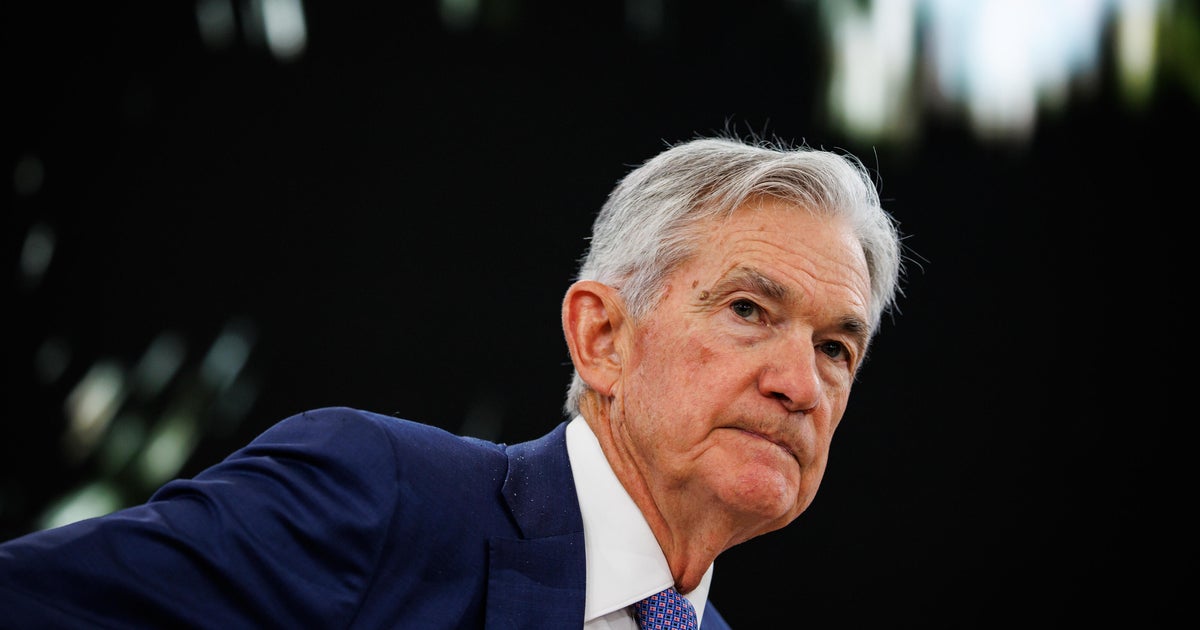
The Federal Reserve is expected to keep interest rates unchanged at its meeting on Wednesday because inflation remains high and the job market is stable but not strong. Jerome Powell will hold his final meeting as Fed chair before being replaced by Kevin Warsh, whose nomination is moving forward after an investigation into Powell concluded.
Key Facts
The Fed will announce its interest rate decision at 2 p.m. ET on Wednesday, followed by a press conference at 2:30 p.m. led by Jerome Powell.
Economists agree the Fed will keep rates steady between 3.5% and 3.75%, the same level since December 2025.
Inflation reached 3.3% in March, the highest since May 2024, above the Fed’s target of 2%.
The Fed has a dual goal to keep inflation low and maintain a strong job market.
The job market is steady but not growing fast, with employers neither hiring much nor laying workers off.
Jerome Powell will step down as Fed chair on May 15 after eight years.
Kevin Warsh is expected to replace Powell, with his nomination progressing after the end of a legal probe into Powell’s office renovation.
Some economists expect the Fed might cut rates later in 2026, possibly in September or December.
Read the Original
Want the full story? Tap a source to open the original
article.
The average age of American CEOs has increased from about 51 to 61 over the past 20 years. Older CEOs tend to lead companies more cautiously but manage well during uncertain times; this trend is stronger in smaller businesses.
Key Facts
The study analyzed over 50,000 U.S. CEOs.
Small, private companies are more likely to hire older CEOs than big corporations.
The average age of CEOs in large companies (S&P 500) is 58.5 in 2023, up from 56 in 2000.
CEOs now become leaders at about 55 years old, compared to 47 years old two decades ago.
Today's CEOs often have more diverse job experience across several companies before becoming CEO.
Economic uncertainty makes CEOs with broad experience more valuable.
Although experienced CEOs are prized, fewer young leaders are being developed given slower hiring at entry levels.
Aging leadership reflects a broader trend affecting various careers, including politics and science.
Read the Original
Want the full story? Tap a source to open the original
article.
Barclays is reducing loans to risky borrowers after losing £228 million linked to the failure of a UK mortgage lender called Market Financial Solutions (MFS), which is under investigation for fraud. The bank’s CEO also warned about rising fraud cases and increased losses in recent quarters, affecting its lending decisions.
Key Facts
Barclays took a £228 million loss due to the collapse of the mortgage lender MFS.
MFS failed in February and is currently being investigated for fraud by UK regulators.
Barclays’ total credit impairment charges rose to £823 million in the first quarter of 2026.
The bank is limiting loans to certain high-risk finance companies with weak controls.
Barclays also increased provisions to £430 million for a UK motor finance compensation scheme.
First-quarter pre-tax profit grew 3% to £2.8 billion, with revenue up 6% to £8.2 billion.
Investment banking income surpassed £4 billion for the first time, helped by market trading.
Barclays plans to give debit card users 5% cashback on fuel at Tesco to ease petrol price worries.
Read the Original
Want the full story? Tap a source to open the original
article.
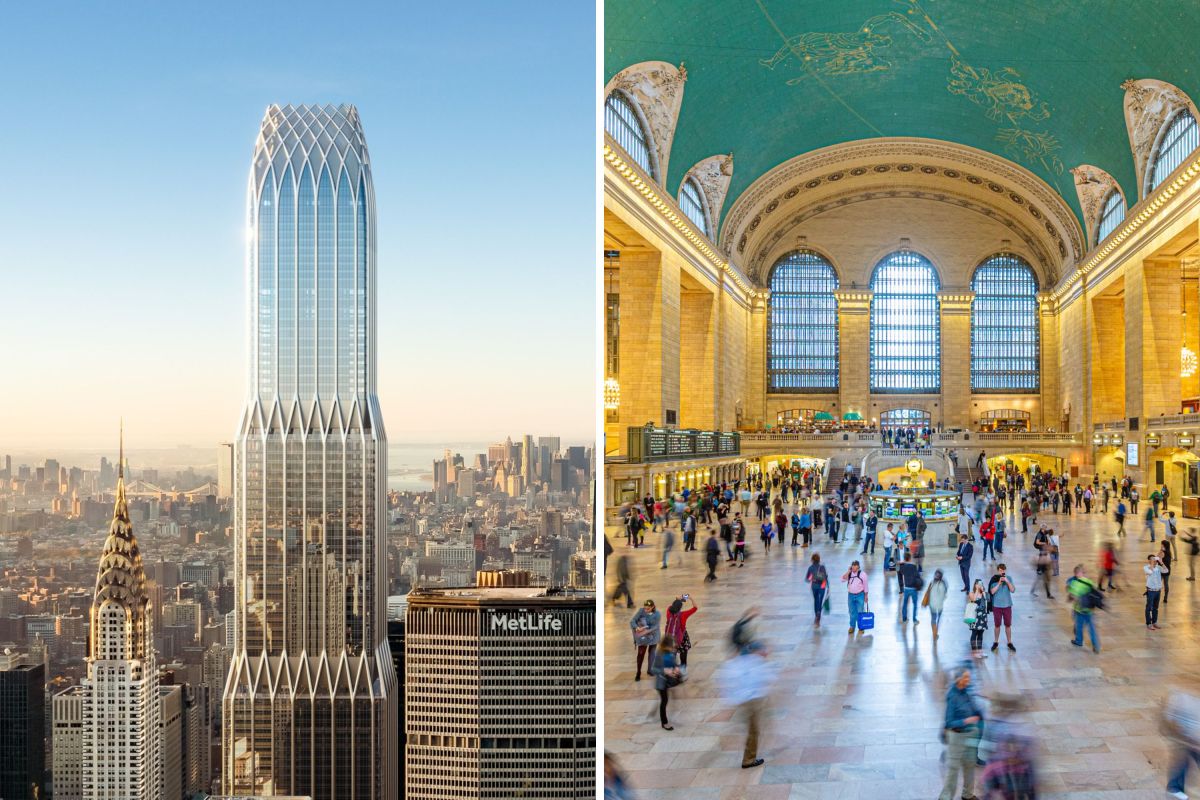
A new skyscraper called 175 Park Avenue will be built next to New York City’s Grand Central Terminal, the world’s largest railway station. The tower will include office space, a hotel, public areas, and will improve transit facilities, with construction expected to begin soon and finish by 2032.
Key Facts
The tower will be 1,545 feet tall and be the third tallest building in New York City.
It will provide 2.4 million square feet of office space and a 200-room hotel.
The project includes over $550 million in upgrades to Grand Central Terminal.
Grand Central serves around 29.5 million riders a year and about 125,000 daily commuters.
The building’s design is by Skidmore, Owings & Merrill (SOM), the same firm that designed the Burj Khalifa.
The base features a new 5,400-square-foot transit hall to ease congestion.
Subway turnstiles will move to a larger, street-level hall with new stairs, escalators, and elevators.
Retail space, multiple entrances, and a skylight will enhance the pedestrian and commuter experience.
Read the Original
Want the full story? Tap a source to open the original
article.
BP’s profits more than doubled in the first quarter due to higher oil and gas prices linked to the Middle East conflict. The company reported $3.2 billion in underlying profits, driven by strong oil trading, while oil prices increased because of tensions affecting key shipping routes.
Key Facts
BP’s first-quarter profits rose to $3.2 billion, up more than 130% from $1.38 billion a year ago.
The increase surpassed analysts’ expectations of $2.67 billion.
Oil prices rose because of conflict involving the US, Israel, and Iran, blocking the Strait of Hormuz, a crucial oil shipping channel.
Brent crude oil hit $110.68 a barrel, the highest since early April.
BP’s oil trading profits grew significantly, contributing to the overall profit increase.
Rising fuel prices have raised concerns about jet fuel shortages and possible flight cancellations.
Household energy bills in the UK are expected to reach nearly £2,000 from July due to higher gas and electricity costs.
BP’s net debt increased to $25.3 billion, affected by lower operating cash flow and the conflict’s impact.
Read the Original
Want the full story? Tap a source to open the original
article.
BP's profits more than doubled in the first three months of the year, reaching $3.2 billion. This increase happened because oil prices rose after the war in Iran started.
Key Facts
BP earned $3.2 billion in profits from January to March this year.
This profit is more than twice the $1.38 billion made during the same period last year.
The rise in profits was helped by higher oil prices linked to the war in Iran.
BP’s trading division had an especially strong performance.
These are BP’s first quarterly results since the conflict began.
Meg O’Neill became BP’s new CEO in April, after this quarter ended.
The profit figures were better than what experts had predicted.
Read the Original
Want the full story? Tap a source to open the original
article.
Italian luxury brand Prada has launched a limited-edition line of sandals made in India, inspired by traditional Kolhapuri sandals. This move follows criticism the company faced for previously presenting the design without crediting its Indian origins.
Key Facts
Prada's new sandals are handmade by artisans in Maharashtra and Karnataka, India.
Each pair costs about €750 (around $881).
Kolhapuri sandals have been made in India since the 12th Century.
The sandals were previously shown by Prada without acknowledging their Indian heritage, causing public backlash.
Prada's collection is sold in 40 stores worldwide and online.
The brand started a three-year training program to teach skills to 180 Indian artisans in sandal-making.
The program collaborates with Indian design institutes and Prada’s academy in Italy.
Kolhapuri sandals have a Geographical Indication status, certifying their origin and authenticity.
Read the Original
Want the full story? Tap a source to open the original
article.