Gas prices in the United States have fallen below $4 per gallon for the first time in several months. This drop happened after President Donald Trump signed a memorandum of understanding with Iran, which improved global relations.
Key Facts
Gas prices fell below $4 a gallon on average in the U.S.
This is the first time prices have dropped below $4 in several months.
The price change followed President Trump’s signing of a memorandum of understanding with Iran.
The memorandum helped improve relations between the U.S. and Iran.
Despite the drop, gas prices are still about $1 higher than before the war started.
AAA (American Automobile Association) provided data on gas prices.
Market reactions are connected to changes in global political relations.
Read the Original
Want the full story? Tap a source to open the original
article.
A small town in California, Lone Pine, is at the center of a new gold mining project on Conglomerate Mesa. The Bureau of Land Management (BLM) recently approved a gold exploration plan by K2 Gold, sparking debate between supporters of mining and local Indigenous groups who want to protect the land.
Key Facts
Lone Pine, California, is near Conglomerate Mesa, a 14,000-acre desert area with natural and cultural significance.
K2 Gold, a Canadian company, has spent over seven years exploring gold deposits in the area.
On April 8, the BLM gave final approval to K2 Gold’s Mojave Project, covering 6,000 hectares for exploration.
Construction for drilling sites has begun, with helicopter deliveries supporting the work.
The project approval includes limits like fewer drill holes and less water usage than initially requested.
This project follows new rules under President Donald Trump’s Unleashing American Energy Act, which sped up mining approvals and classified gold as a critical mineral.
Some local businesses support mining for economic benefits, while tribal leaders and environmental groups want to protect the area from damage.
The Paiute Shoshone Tribe monitors the site to ensure cultural and natural resources are not harmed.
Read the Original
Want the full story? Tap a source to open the original
article.
Bankruptcy can protect many retirement accounts from creditors, but some accounts have less protection. Employer-sponsored retirement plans usually have strong protections under federal law, while individual retirement accounts (IRAs) have protection limits that vary. Non-retirement accounts generally do not have the same safeguards during bankruptcy.
Key Facts
Many older Americans face rising debt and may consider bankruptcy to manage it.
Employer-sponsored retirement plans like 401(k)s, 403(b)s, and pensions are mostly protected under the Employee Retirement Income Security Act (ERISA).
These protected plans are generally safe from creditors and bankruptcy trustees.
Individual Retirement Accounts (IRAs) also have bankruptcy protections but with limits that change over time.
IRA funds rolled over from employer plans may have stronger legal protections than direct IRA contributions.
Large IRA balances may need legal advice to understand the level of protection.
Non-retirement accounts such as regular brokerage or savings accounts usually do not have bankruptcy protection.
Creditors can access non-qualified accounts during bankruptcy, unlike many retirement accounts.
Read the Original
Want the full story? Tap a source to open the original
article.
The Federal Reserve has kept interest rates steady between 3.50% and 3.75%, which affects how much banks pay on savings accounts. Four main types of savings accounts—certificates of deposit (CDs), high-yield savings, money market, and traditional savings—offer different interest earnings on $50,000, with CDs generally paying the most.
Key Facts
The Federal Reserve paused raising or lowering interest rates this week.
Current rates affect how much interest banks pay savers.
Four common savings options are CDs, high-yield savings, money market, and traditional savings accounts.
CDs have fixed interest rates but limit access to money until maturity.
High-yield savings and money market accounts offer variable rates but allow withdrawals.
A 1-year CD at about 4.15% could earn $2,075 on $50,000 in one year.
High-yield savings and money market accounts provide slightly less interest but more access.
Traditional savings accounts offer very low returns, around $190 on $50,000 per year.
Read the Original
Want the full story? Tap a source to open the original
article.
The UK government has released a plan to build a third runway at Heathrow Airport, calling it important for the country's growth. The project aims to increase the airport's capacity but must meet rules on air quality, noise, and climate targets before it can start.
Key Facts
The government published a draft plan called the Heathrow expansion national policy statement (HENPS).
Heathrow Airport Limited wants to build a full 3,500-metre runway, which could cost £33 billion and require moving the M25 motorway.
Another proposal suggests a shorter 2,800-metre runway that would not move the motorway.
The expansion could increase Heathrow’s flights to 756,000 a year and carry up to 150 million passengers annually.
The project must meet legal climate goals and noise limits, ensuring no worse conditions than in 2024.
Chancellor Rachel Reeves supports starting construction and wants the runway completed by 2035.
Some climate groups warn the expansion could increase air pollution and noise.
Heathrow’s CEO said the expansion is essential for the UK’s economy and they will now work on getting the necessary permissions.
Read the Original
Want the full story? Tap a source to open the original
article.
The Australian Labor government made some small changes to its planned capital gains tax reforms after facing criticism. These adjustments include raising the small business turnover limit and creating new tax discounts for start-ups, but the overall goal to help young Australians buy homes remains unchanged.
Key Facts
Labor proposed changes to capital gains tax aimed at helping people buy homes.
After public backlash, they raised the small business turnover limit from $2 million to $10 million for tax concessions.
A new 50% capital gains tax discount will be available for "innovative" start-ups.
All testamentary trusts are exempt from the proposed 30% minimum tax rate to avoid a so-called "death tax."
The treasurer’s discretionary powers to set rules will be reduced.
These changes will reduce expected government revenue by $475 million but still aim to raise $8.1 billion overall.
Opposition parties and business groups remain critical and want the tax changes scrapped.
The government will try to pass the reforms through the Senate, negotiating especially with the Greens, who remain cautious.
Read the Original
Want the full story? Tap a source to open the original
article.
Australia’s net overseas migration (the number of people coming in minus those leaving) increased by 301,000 in the past year, which is the lowest increase since mid-2022 but still higher than before the COVID-19 pandemic. The government expects migration to gradually decrease, but some experts say recent levels reflect a new normal driven by strong job markets in certain states.
Key Facts
Net overseas migration added 301,000 people to Australia’s population last year.
This figure is the lowest yearly increase since mid-2022 but remains above pre-pandemic levels.
Migration dropped below zero during COVID-19 lockdowns but peaked at 556,000 by late 2023.
The Australian government forecasts migration will fall to 295,000 this year and continue decreasing to 225,000 by 2027-28.
Economists say migration has settled around 300,000 people annually, about 25% more than before COVID.
Queensland and Western Australia have seen big increases in migrants, linked to strong local economies needing workers.
New South Wales and Victoria have migration levels near their pre-pandemic numbers.
Opposition politicians argue that 301,000 migrants a year is still too high given housing and public service pressures.
Read the Original
Want the full story? Tap a source to open the original
article.
Intel’s stock price rose sharply after President Donald Trump announced that Intel will work with Apple to design and make computer chips in the United States. The U.S. government owns 10% of Intel, and this deal could help Apple rely less on overseas chip suppliers.
Key Facts
Intel’s stock rose 10.5%, increasing by $12.72 to $133.82 after the announcement.
President Trump posted on social media about the Intel and Apple chip deal.
The U.S. government owns a 10% stake in Intel, making it the largest shareholder.
The value of Intel has grown from about $100 billion in August to roughly $600 billion today.
Apple aims to reduce dependence on Taiwan Semiconductor Manufacturing Company (TSMC), its main overseas chip supplier.
Apple has been diversifying its supply chain to countries like Vietnam, India, and the U.S.
Intel declined to comment specifically on the Apple deal, and Apple did not immediately respond.
Rising chip prices are causing Apple to plan product price increases to cover higher costs.
Read the Original
Want the full story? Tap a source to open the original
article.
Banks are using artificial intelligence (AI) agents to help fight financial crimes because there is too much data for human workers to handle. WorkFusion, a company that builds AI tools, says many big banks are using these agents to review transactions and alerts faster and more efficiently.
Key Facts
Banks face more financial transaction reviews than their staff can manage.
WorkFusion creates AI agents that assist banks with compliance and screening tasks.
One bank avoided hiring about 1,800 workers by using an AI agent called Evan.
AI agents screened 80 million entities in one day at a top bank.
Over half of the 20 biggest banks use WorkFusion’s AI in daily operations.
Common AI tasks include checking names against sanctions lists and media reports.
AI helps reduce false positives, saving compliance teams 50 to 70 percent of their time.
Banks increase trust in AI agents after seeing them work live and customizing them.
Read the Original
Want the full story? Tap a source to open the original
article.
Amazon and other retailers are starting their summer sales early, offering discounts on popular products before the official Prime Day on June 23. This sale includes deals on tech, kitchen tools, home goods, and more, without needing a Prime membership for most items.
Key Facts
Amazon’s annual summer sale begins on June 23, with early deals already available.
Discounts cover a range of products like AirPods Pro 3, kitchen pans, blenders, and fans.
The AirPods Pro 3 are marked down from $249 to about $160.
The Mini Titanium Always Pan Pro from Our Place is 30% off, now $109.
The Vitamix 5200 Blender is $70 cheaper, priced at $430.
Many deals do not require an Amazon Prime subscription.
Other retailers such as Walmart, Kohl’s, and Caraway also offer discounted items.
Some items come with bonus bundles, like cookbooks with glass dish sets.
Read the Original
Want the full story? Tap a source to open the original
article.
CBS Mornings Deals offers special discounts on products that can improve daily life. People can visit cbsdeals.com to find and buy these discounted items.
Key Facts
CBS Mornings Deals features products with exclusive discounts.
The deals focus on items that help improve everyday lifestyle.
Customers can access the discounts by visiting cbsdeals.com.
CBS earns commissions from purchases made through their website.
The promotion is shown during CBS Mornings programming.
The deals are highlighted as a way to save money on useful products.
CBS News also has an app where people can get news updates.
Read the Original
Want the full story? Tap a source to open the original
article.
A French startup called BeeAlp is creating a smartphone that is designed and made entirely in Europe. The company aims to support Europe's goal of tech independence and offers the phone through a subscription service.
Key Facts
BeeAlp is a French startup focused on building a European-made smartphone.
The phone is designed and manufactured within Europe.
This effort aligns with European leaders promoting "tech sovereignty," meaning controlling their own technology supply.
BeeAlp offers its smartphone through a subscription model instead of traditional buying.
The CEO of BeeAlp is Olivier Dufour.
The company faces challenges competing with large global smartphone makers.
The initiative reflects broader European ambitions to strengthen its technology industry.
Read the Original
Want the full story? Tap a source to open the original
article.
A new Boost project by Wolverhampton City Council has helped over 200 residents access nearly £1.4 million in unclaimed income, including benefits and grants. The scheme also saved people about £64,000 in bills and spending, and now includes Citizens Advice Dudley and Wolverhampton to help more residents manage their finances.
Key Facts
The Boost project started at the beginning of the year.
More than 200 people have been helped to access unclaimed benefits, grants, and other income.
Nearly £1.4 million was unlocked for residents through this scheme.
The project helped save £64,468 in annual bill reductions and expenses.
Citizens Advice Dudley and Wolverhampton has joined the project as a partner.
The scheme aims to help people take better control of their money.
Many residents were not aware of the financial help they were entitled to before Boost.
Officials say the project supports both working people and those who have paid into the system for years.
Read the Original
Want the full story? Tap a source to open the original
article.
The average price of gasoline in the United States dropped below $4 per gallon, reaching about $3.99. This happened after the U.S. and Iran agreed to reopen the Strait of Hormuz, a vital waterway for oil transport.
Key Facts
Gasoline prices in the U.S. fell below $4 per gallon for the first time in several months.
The current national average price is about $3.99 per gallon for regular gas.
The price drop followed an agreement between the U.S. and Iran.
The agreement is a memorandum of understanding (MOU).
The MOU calls for reopening the Strait of Hormuz.
The Strait of Hormuz is a crucial passage for shipping oil globally.
Changes in the Strait of Hormuz can impact oil supply and gas prices.
Read the Original
Want the full story? Tap a source to open the original
article.
Gas prices in the United States fell below $4 a gallon for the first time in nearly three months. This drop follows a decrease in oil prices after the U.S. and Iran reached a preliminary deal to end their conflict, which reopened an important oil shipping route.
Key Facts
The national average price for a gallon of gas dropped to $3.99, the lowest since March 30.
Gas prices had risen sharply due to the war in Iran, which began on February 28.
The Strait of Hormuz, a key waterway for about 20% of the world’s oil, was nearly closed during the war but has reopened after the agreement.
More than 10 commercial ships have passed through the Strait of Hormuz since the deal was signed by President Donald Trump.
Brent crude oil fell 1.4% to $78.46 per barrel; West Texas Intermediate fell 2.2% to $75.10 per barrel.
Petroleum expert Patrick De Haan said gas prices may keep falling if the U.S. and Iran continue to improve relations.
De Haan predicts gas prices could drop below $3 a gallon by late 2026 or early 2027.
Iran is expected to resume selling oil on global markets, which could help increase oil supply and reduce prices further.
Read the Original
Want the full story? Tap a source to open the original
article.
A recent survey by the Employee Benefit Research Institute shows that both working and retired Americans feel less confident about having enough money for a comfortable retirement than they did a year ago. This is happening even though people are saving more money for retirement.
Key Facts
The survey was done by the Employee Benefit Research Institute.
Both working and retired Americans feel less sure about their financial future.
Confidence in being able to afford a comfortable retirement has decreased compared to last year.
Despite this, people are saving more money for retirement.
The survey highlights increasing anxiety about retirement finances among Americans.
The information was reported by CBS News and business analyst Jill Schlesinger.
Read the Original
Want the full story? Tap a source to open the original
article.
U.S. gas prices have dropped below $4 per gallon for the first time since March, averaging about $3.999. This decrease followed a 15% fall in U.S. crude oil prices, linked to a new agreement between President Donald Trump and Iran about Iran’s nuclear program and sanctions.
Key Facts
Gas prices in the U.S. fell just below $4 per gallon on average.
Prices have not been this low since March.
President Trump signed an agreement with Iran that includes diluting Iran’s stockpile of highly enriched uranium and easing some sanctions.
U.S. crude oil prices fell 15% this month, dropping to about $80 per barrel.
Gas prices vary by state, with California at $5.64 and South Carolina at $3.58 per gallon.
The agreement starts a 60-day period to negotiate a final deal on Iran’s nuclear program.
The Strait of Hormuz, a key route for oil shipping, remains disrupted, delaying oil flow and keeping prices higher.
Oil refineries pay for crude oil in advance, so lower prices won’t reduce fuel costs immediately.
Read the Original
Want the full story? Tap a source to open the original
article.
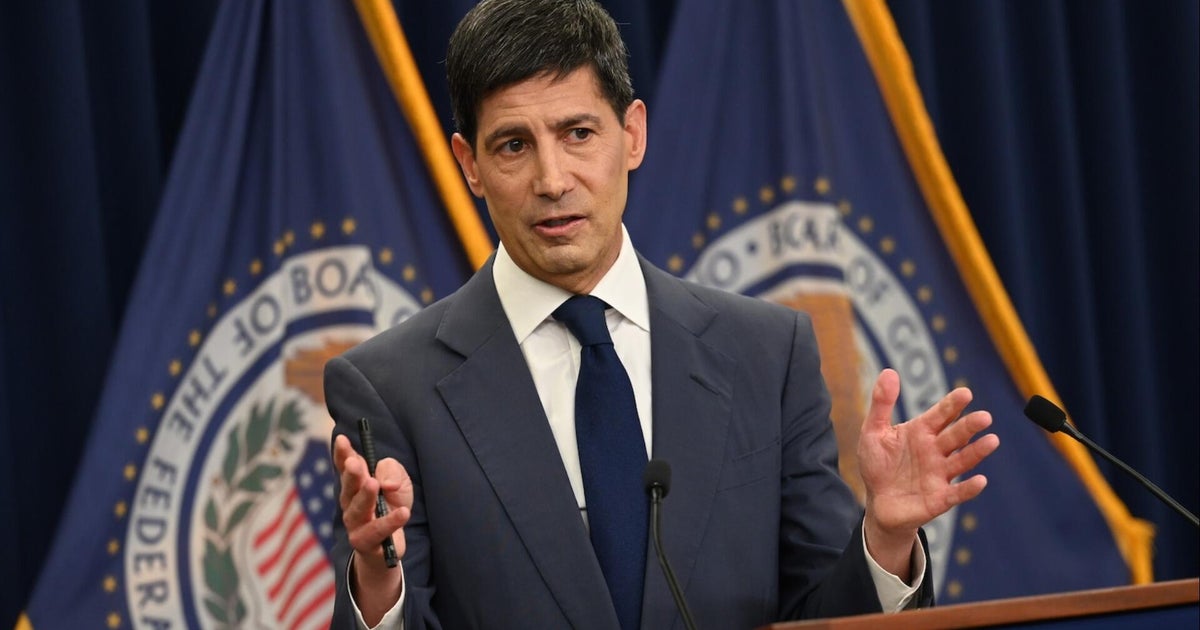
Federal Reserve Chair Kevin Warsh decided to keep interest rates the same at his first meeting. He mentioned there is high uncertainty because of the ongoing war in Iran, which is affecting the economy in the United States and other countries.
Key Facts
Kevin Warsh is the Chair of the Federal Reserve.
The Federal Reserve chose not to change interest rates at this meeting.
This was Warsh’s first meeting as Federal Reserve Chair.
Warsh spoke about "elevated uncertainty" due to the war in Iran.
The war in Iran is having negative effects on the U.S. economy and others.
Interest rates are an important tool used to control economic growth and inflation.
Keeping rates steady means the Federal Reserve is watching how the situation develops before making changes.
Read the Original
Want the full story? Tap a source to open the original
article.
CrossCountry, a train company in Britain, received the lowest score in a passenger satisfaction survey for the first quarter of the year. The company had 72% of its trains arriving within three minutes of the scheduled time and canceled 7% of services. They have been asked to improve how they handle delays, provide better information, and reduce overcrowding.
Key Facts
CrossCountry achieved 72% on-time arrivals within three minutes and had a 7% cancellation rate.
79% of surveyed passengers were satisfied overall with CrossCountry's service.
Passenger satisfaction with punctuality and reliability was 77%; only 46% were happy with how delays were managed.
Passenger satisfaction was lower among disabled travelers (85%) compared to non-disabled passengers.
Hull Trains and LNER were the top-rated train companies with 94% and 93% satisfaction scores respectively.
More than 100,000 passengers were surveyed over six months ending in March.
CrossCountry runs long-distance routes connecting cities like Cambridge, Cardiff, and Manchester.
The company is improving trains with refurbishments, better cleaning, catering, wi-fi, and clearer information during disruptions.
Transport Focus, the watchdog, urged CrossCountry to focus on reducing delays, improving passenger experience, and easing overcrowding.
Read the Original
Want the full story? Tap a source to open the original
article.
The Bank of England decided to keep interest rates at 3.75% because of uncertainty about how high energy prices will affect the economy. Although oil prices have recently fallen, energy costs remain higher than before the conflict in the Middle East, which is causing ongoing inflation concerns.
Key Facts
The Bank of England’s Monetary Policy Committee has kept interest rates unchanged for the fourth time in a row at 3.75%.
High energy prices, partly caused by the war in the Middle East, are putting upward pressure on inflation.
Recent drops in oil prices are seen as a positive sign but prices are still above pre-conflict levels.
Inflation is currently higher than the Bank expected earlier this year but is forecasted to fall to about 3.25% by the end of 2026, above the 2% target.
Some committee members voted to increase the interest rate to 4%, citing uncertainty over the impact of energy costs on households and businesses.
A recent US-Iran peace deal could ease energy supply worries if oil flow through the Strait of Hormuz returns to normal.
UK energy bills are expected to rise by 13% in July due to regulator Ofgem’s price cap increase.
Official data shows inflation steady at 2.8% in May and slowing food price increases, but transport costs have risen quickly.
Read the Original
Want the full story? Tap a source to open the original
article.