The rising use of weight-loss drugs called GLP-1s has increased global demand for whey protein, causing prices to soar and raising concerns about shortages. Whey protein helps people keep muscle while losing weight, and companies are struggling to secure enough supply as demand outpaces production.
Key Facts
Demand for whey protein has grown because GLP-1 weight-loss drugs reduce appetite, causing users to need more protein.
Whey protein prices in northwest Europe have risen more than 50% in 2024, reaching record highs around €1,700 per tonne.
Prices for high-concentrate whey protein rose from £4,302 per tonne in June 2023 to £23,751 per tonne in June 2024.
Manufacturers want to produce more whey protein but face supply limits and cannot build large safety stock.
New production plants are opening, and some products now mix whey with cheaper milk protein to reduce costs.
Some whey protein suppliers are sold out for the rest of 2026, and one producer plans to stop making a key type of whey after summer, worsening shortages.
Small businesses report paying double prices compared to last quarter and struggle to compete with big companies that can absorb price rises.
The popularity of protein-enriched foods like snacks and doughnuts has also increased due to diet trends linked to GLP-1 drug users.
Read the Original
Want the full story? Tap a source to open the original
article.
A new bill introduced by Representative Nicole Malliotakis proposes to temporarily increase the capital gains tax break for homeowners over 65. The bill would allow some senior homeowners to avoid paying taxes on up to $1 million of profit when selling their long-held homes between 2027 and 2030.
Key Facts
The bill is called the Nest Egg Protection Act (H.R. 9064).
It would double the capital gains tax exclusion for seniors 65 and older, raising the limit to $1 million.
Currently, the exclusion is $250,000 for individuals and $500,000 for married couples.
The increased exclusion applies only if the homeowner has owned their main home for at least 25 years.
The purpose is to help seniors sell homes without large tax bills, encouraging them to downsize and increase housing availability.
Housing prices have tripled since 1997, but the current tax exclusion has not changed since then.
Many seniors have a large amount of home equity due to rising home values.
The bill aims to reduce the "lock-in effect," where seniors hesitate to sell because of possible capital gains taxes.
Read the Original
Want the full story? Tap a source to open the original
article.
The new EU entry/exit system (EES), which checks non-EU travelers’ personal and biometric data at borders, is causing long delays at airports and may take up to two years to fully settle. Some countries are still struggling to handle the system, and this has led to disruptions that could affect summer travel bookings and cause anxiety among holidaymakers.
Key Facts
The EU introduced the new border system in October, fully launching it on April 10.
Travelers from non-EU countries must register personal details, fingerprints, and facial images the first time they enter; returning visitors have faster entry.
Some EU states manage the system well, but others find it difficult to handle, causing delays.
The EU allows suspension of biometric checks during busy times to avoid long queues, but this may end in September.
France and Greece have temporarily stopped some biometric checks during the busy summer to ease travel flow.
The system’s delays and the uncertain global situation, including the conflict in the Middle East and rising living costs, are making people delay or reduce holiday bookings.
Increased oil and jet fuel prices raise concerns about higher airfares, though most summer flights remain scheduled.
Travel companies report more last-minute bookings and some financial hits but expect the market to grow again when conditions improve.
Read the Original
Want the full story? Tap a source to open the original
article.
The UK's Financial Conduct Authority (FCA) warned that legal challenges against its car finance compensation scheme could delay payouts to drivers by up to three years and add more than £6 billion in extra costs to lenders. The FCA said court cases could push payouts into 2027 and increase expenses for banks involved in a scandal over loan overcharging from 2007 to 2024.
Key Facts
The FCA created a £9.1 billion compensation plan to repay drivers overcharged on car loans.
Four parties are legally challenging this compensation plan: Volkswagen Financial Services, Mercedes-Benz Financial Services, Crédit Agricole Auto Finance, and the consumer group Consumer Voice.
These legal actions may delay payouts until 2027 or later.
If the court rejects the FCA scheme, the regulator may need to create a new plan or let individual complaints be handled by the Financial Ombudsman Service.
Handling claims through complaints instead of the current scheme could cost lenders over £6 billion more and take three years longer to finish.
The FCA must spend around £2.7 million more to manage the legal challenges.
The FCA is funded by the companies it regulates and will have to redirect resources due to these costs.
The scandal involves commission payments between lenders and car dealers that caused loan overcharges from 2007 to 2024.
Read the Original
Want the full story? Tap a source to open the original
article.
Rivian's CEO RJ Scaringe admitted that the company had big problems with customer service and vehicle technology in the early years after launching its R1T truck and R1S SUV. Since then, Rivian has invested heavily to improve service speed, technician training, and technology, hoping to regain customers who left due to a poor experience.
Key Facts
Rivian's R1T truck and R1S SUV had customer complaints, especially about advanced tech and vehicle controls.
The company ranked below average in J.D. Power's Initial Quality Study.
Early service centers were few, causing long wait times of 20-40 days in popular markets like Seattle.
Rivian invested heavily in service infrastructure, technician training, diagnostic tools, and AI integration to improve service speed.
Service wait times have been reduced to 2-3 days in many locations.
Rivian plans to launch a new midsize SUV called the R2 and wanted service improvements ready beforehand.
CEO Scaringe hopes customers who left during earlier problems will return to try Rivian again.
Rivian developed its own infotainment and service technologies rather than relying on third parties.
Read the Original
Want the full story? Tap a source to open the original
article.
Rivian has started taking orders and begun production of its new midsize electric SUV called the R2. This vehicle is designed to reach more customers with a lower price than its larger, more expensive R1S model.
Key Facts
Rivian launched orders for the R2 midsize electric SUV in late April.
The R2 aims to attract a wider group of buyers than the larger R1S SUV.
Midsize SUVs make up a large part of U.S. vehicle sales, about 1 in 6 cars sold each year.
The R1S is considered a flagship model with an average price over $90,000.
Rivian's founder and CEO, RJ Scaringe, said the R2 was planned even before the R1 models.
The R2 and R1S look similar but have important design and engineering differences.
The R2 includes detailed design touches, such as a hidden rear windshield wiper.
Rivian sees the R2 as a key product to introduce the brand to the mass market.
Read the Original
Want the full story? Tap a source to open the original
article.
Rivian has introduced the R2, a new American-made electric SUV priced between Toyota and Subaru’s electric models. The R2 offers strong performance, advanced technology, and off-road ability, aiming to attract customers who currently buy from Toyota and Subaru.
Key Facts
Rivian’s new R2 SUV is electric and made in the USA.
The R2 is sized between Toyota’s smaller bZ and larger Highlander electric SUVs.
It starts at $44,990 with 275 miles range, 350 horsepower, and 355 pound-feet of torque.
The top R2 version costs $57,990, has 330 miles range, 656 horsepower, and 609 pound-feet of torque.
The R2 features advanced driver assistance and better off-road capabilities than Toyota and Subaru models.
Toyota and Subaru jointly develop electric SUVs targeting U.S. customers amid competition and regulations.
Rivian aims to offer a premium but practical vehicle at a more accessible price than its luxury R1 models.
Rivian CEO RJ Scaringe describes the brand as premium and usable, not strictly luxury.
Read the Original
Want the full story? Tap a source to open the original
article.
Wall Street is expected to open with small gains after a recent drop, while oil prices have decreased from their recent highs. Higher oil prices since a conflict involving the U.S., Israel, and Iran have increased costs for airlines, affecting profits in the industry and contributing to higher inflation and bond yields.
Key Facts
S&P 500 futures rose by 0.4%, Dow futures increased by less than 0.2%, and Nasdaq futures went up by 0.8%.
Brent crude oil price dropped $1.42 to $92.83 per barrel after reaching nearly $98 overnight.
U.S. crude oil prices fell $1.68 to $89.62 per barrel but remain higher than before the February conflict involving the U.S. and Israel attacking Iran.
U.S. airlines spent over $6 billion on jet fuel in April, 78% more than the same time last year.
Airlines like Delta, American, and United saw their stock prices rise by 1% to 2%.
The shipping route called the Strait of Hormuz, important for oil transport, has been largely blocked due to the Middle East conflict, pushing fuel prices higher.
The airline industry group warned that high fuel costs could cut 2026 profits nearly in half despite fare hikes and flight cuts.
Higher oil prices have increased overall inflation and bond market yields, with the 10-year U.S. Treasury yield rising from 4.01% to about 4.55%.
The U.S. government will release inflation reports this week, and the Federal Reserve is unlikely to lower interest rates soon; a rate increase is possible.
Read the Original
Want the full story? Tap a source to open the original
article.
Amazon’s main UK business unit saw its profits rise by over 25% last year to £355 million and received a £7.6 million tax credit from HM Revenue and Customs. Despite this, Amazon UK reported paying more than £1.3 billion in various UK taxes, including corporation tax and other business levies.
Key Facts
Amazon UK Services made a pre-tax profit of £355 million in 2025, up 26.5% from the previous year.
The company owed £9.1 million in current tax but received a £16.7 million adjustment credit, resulting in a net £7.6 million tax credit.
The tax adjustment was linked to government relief for large investments in UK infrastructure, including £5.2 billion spent on facilities and equipment.
Amazon UK employs about 66,000 people out of its 75,000 UK workforce.
Total UK revenues from all Amazon operations were about £32 billion in 2025.
Five main Amazon UK divisions accounted for about half of this revenue and saw combined pre-tax profits jump to £555 million.
The company's effective corporation tax rate for these main divisions was calculated at about 7.1%, much lower than usual rates.
Amazon stated it paid over £1.3 billion in UK taxes last year, covering corporation tax, national insurance, business rates, and digital services tax.
Read the Original
Want the full story? Tap a source to open the original
article.
South Korean chip stocks, like Samsung Electronics and SK Hynix, rose sharply after a recent drop, pushing the KOSPI stock market up by 8.4%. OpenAI has applied to sell shares in a public stock offering, potentially valuing the company at more than $1 trillion, as tech firms related to artificial intelligence prepare to enter the stock market.
Key Facts
The Seoul stock exchange triggered circuit breakers twice due to rapid market rises, not falls.
Samsung Electronics shares increased by over 9%, and SK Hynix shares rose by 15%.
The KOSPI market index climbed 8.4%, recovering from an 8% drop the previous day.
SK Hynix partnered with Nvidia to develop memory chips for AI systems, boosting investor interest.
Nvidia’s CEO Jensen Huang visited Seoul and engaged with local tech leaders.
OpenAI filed confidentially for an initial public offering (IPO), with a valuation possibly above $1 trillion.
Other AI-related companies like Anthropic and Elon Musk’s SpaceX are also preparing to go public soon.
Market experts warn the rapid swings show high volatility and cautious investor speculation.
Read the Original
Want the full story? Tap a source to open the original
article.
Mortgage rates have stayed high around 6.5% this year, which is affecting home prices. Experts say if rates remain high, home prices may slowly drop because fewer people will want to buy, but if rates go down, prices could rise again as more buyers enter the market.
Key Facts
The average 30-year fixed mortgage rate has hovered near 6.5% in 2026.
Home listing prices fell 2.4% nationwide in May compared to last year.
Prices are dropping in 41 of the 50 largest U.S. metropolitan areas.
High mortgage rates reduce buyer demand, which could lead to more houses for sale and lower prices.
If rates drop, more buyers might return, causing prices to stabilize or increase.
Experts do not expect mortgage rates to fall soon due to inflation and economic factors.
Waiting for rates to fall might mean higher home prices later because of increased buyer competition.
Some advise buying now and refinancing later if rates decline to lock in current prices.
Read the Original
Want the full story? Tap a source to open the original
article.
Elon Musk, the owner of Twitter/X and CEO of SpaceX, is about to become the world’s first trillionaire after a SpaceX stock sale. His wealth gives him significant power and influence, including a large political impact in the U.S. and involvement in government decisions.
Key Facts
Elon Musk acquired Twitter/X for $44 billion.
A 2024 study shows wealth can increase happiness by giving people more control over their lives.
Musk’s net worth jumped from $270 billion in late 2022 to nearly $1 trillion in 2024.
One trillion dollars is a million million, or $1,000,000,000,000.
Musk gave $290 million to President Donald Trump and Republican campaigns in 2024.
He has influenced government policy and attended White House meetings.
Musk led a government efficiency initiative that cut funding and jobs, with reported negative effects on foreign aid and public health.
The Supreme Court’s 2010 Citizens United decision allows unlimited political spending by corporations and wealthy individuals like Musk.
Read the Original
Want the full story? Tap a source to open the original
article.
Denby Pottery, a historic pottery company in Derbyshire founded in 1809, has stopped production and appointed administrators due to financial struggles. The last piece, in the famous Imperial Blue design, was signed by its designer Richard Eaton, marking the end of centuries of pottery making at Denby.
Key Facts
Denby Pottery was founded in 1809 and is known for its handcrafted tableware using local clay.
The company faced rising energy and labor costs, reduced demand, and increasing employment expenses.
Administrators were appointed on 31 March after efforts to find a buyer failed.
The last bowl was finished in Denby's iconic Imperial Blue glaze and signed by designer Richard Eaton.
A #SaveDenby campaign encouraged purchases to support the company but was unsuccessful.
A petition with over 105,000 signatures seeks to protect the ceramics industry and support British manufacturing jobs.
Denby’s international subsidiaries in Korea, the US, and China remain operational and are not affected by the closure.
Local MP Linsey Farnsworth expressed commitment to fight for Denby Pottery and highlighted its importance to the community.
Read the Original
Want the full story? Tap a source to open the original
article.
The Economist magazine published an editorial warning about a rise in socialism among the younger generation known as Gen Z. The editorial argues that this new socialism opposes free-market capitalism and calls for people who support private businesses to strongly defend the current system.
Key Facts
The Economist’s editorial describes Gen Z socialism as focused on taking from others rather than creating new value.
The magazine’s largest investors include wealthy individuals and families with billions in assets.
Poverty and hunger remain serious issues in the UK and the US, with millions affected, especially children.
The Economist emphasizes that free markets create opportunities for success rather than guaranteed outcomes.
The editorial criticizes Gen Z socialists for wanting government handouts paid for by the richest people.
It argues that the ideas of Gen Z socialists are increasingly influencing mainstream left-leaning politics.
The magazine calls on supporters of free enterprise to stop apologizing and to actively defend capitalism.
The article suggests that fighting socialism among young people is more urgent than addressing immediate social problems.
Read the Original
Want the full story? Tap a source to open the original
article.
Chrysler is recalling about 1.08 million Jeep Wranglers and Gladiators from model years 2021 to 2025 because of a risk that the vehicles could catch fire even when turned off. The company will inspect and fix the problem for free, and owners are advised to park outside until repairs are done.
Key Facts
Chrysler is recalling roughly 1.08 million Jeep Wranglers and Gladiators.
The affected model years are from 2021 to 2025.
The problem involves the electric hydraulic power steering pump wiring overheating.
This overheating can cause a fire even if the vehicle is parked and turned off.
Owners are told to park their vehicles outside and away from buildings until repairs happen.
Dealers will inspect and replace parts for free.
Owner notification letters will be sent starting July 9, 2026.
Read the Original
Want the full story? Tap a source to open the original
article.
OpenAI has started the process to sell its shares to the public by filing a confidential document with the U.S. Securities and Exchange Commission. The company aims to raise money by using its strong position in the AI chatbot market.
Key Facts
OpenAI is the creator of ChatGPT, a popular AI chatbot.
The company submitted a confidential filing on Monday with the U.S. Securities and Exchange Commission.
This filing begins the process to offer shares to the public through an Initial Public Offering (IPO).
OpenAI wants to use the IPO to raise money to support its business growth.
The filing shows OpenAI’s intent to enter public financial markets.
The AI chatbot market is currently a leading area for the company’s products.
The move comes as investor interest in AI companies is growing.
Other AI firms, like Anthropic, are also preparing for IPOs with large valuations.
Read the Original
Want the full story? Tap a source to open the original
article.
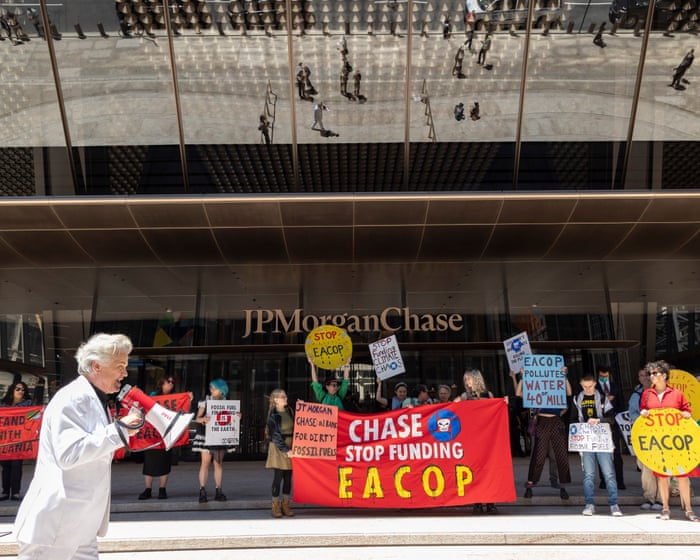
In 2025, the world’s biggest 65 banks gave $906 billion to fossil fuel companies, an increase of nearly 8% compared to 2024. This funding supports coal, oil, and gas production despite global efforts to reduce emissions and limit climate change.
Key Facts
Banks increased funding for fossil fuels by $64 billion (almost 8%) in 2025, totaling $906 billion.
JPMorgan Chase was the top lender, providing $58 billion to fossil fuels, a 13% increase from 2024.
Bank of America, MUFG, Mizuho, and Citigroup were the next biggest lenders.
Since the 2015 Paris Agreement, banks have lent $8.7 trillion to fossil fuel projects.
Nearly 40% of fossil fuel financing comes from 12 large banks, mostly located in the US, Canada, Japan, China, the UK, and the EU.
Some European banks, including BNP Paribas, UBS, and La Caixa, reduced their fossil fuel lending in 2025.
Despite changing energy policies, fossil fuel companies continue expanding with increased financing from banks.
The increase in fossil fuel financing contrasts with global climate goals to limit warming to 1.5°C above pre-industrial levels.
Read the Original
Want the full story? Tap a source to open the original
article.
Levi’s, a large U.S. jeans company, has filed a lawsuit against Australian brand Globe and its label S-Double. Levi’s claims Globe copied its trademarked pocket tab design, which Levi’s has used since 1936, causing damage to its brand and sales.
Key Facts
Levi’s sued Australian company Globe and its brand S-Double for copying the small fabric tab on jeans’ and shirts’ pockets.
Levi’s has used its pocket tab design since 1936 and considers it a famous trademark worldwide.
Levi’s had a previous lawsuit with S-Double in 2010, where S-Double promised not to use similar pocket tabs.
Levi’s alleges S-Double resumed selling clothes with nearly identical pocket tabs after the 2010 agreement.
The lawsuit accuses the defendants of trademark infringement, unfair competition, and false advertising.
Levi’s wants the court to stop the sale of these products, get a list of buyers, and receive financial compensation for damages.
Levi’s is valued at about $8.8 billion, while Globe is a much smaller company worth about $71 million, mainly selling in Australia.
Levi’s maintains various tab colors and blank tabs to protect its trademark rights on the tab shape itself.
Read the Original
Want the full story? Tap a source to open the original
article.
GSK, a British drug company, is buying the US cancer treatment firm Nuvalent for $10.6 billion. This deal adds new lung cancer drugs to GSK’s products, with key treatments expected to launch soon if approved by regulators.
Key Facts
GSK is buying Nuvalent, a cancer drug company based in Boston, for $10.6 billion.
Nuvalent has two late-stage lung cancer treatments under review by the US Food and Drug Administration (FDA), with decisions due in September and November.
The drugs zidesamtinib and neladalkib target non-small cell lung cancer, especially in middle-aged adults who mostly do not smoke.
These drugs aim to provide longer, better-tolerated treatment by targeting specific cancer mutations.
GSK’s new chief executive, Luke Miels, took over earlier this year and made this its biggest acquisition ever.
The deal supports GSK's goal to grow sales and profit from 2027 and expand in lung cancer treatments.
GSK also acquired another biotech company, RAPT, in January for developing allergy treatments.
GSK aims to reach more than £40 billion in annual sales by 2031 with help from new products like those from Nuvalent.
Read the Original
Want the full story? Tap a source to open the original
article.
The Booker Prize Foundation is launching a short story collection called All Around the World to help more adults in the UK enjoy reading. The book, part of the Quick Reads program, aims to support people who find it hard to finish books or feel books don’t represent their culture.
Key Facts
Over one-third of UK adults struggle to finish reading books.
The collection includes stories by Booker Prize winners like Anne Enright, David Szalay, and Nadifa Mohamed.
Roddy Doyle, a Booker Prize winner, selected the stories for the collection.
All Around the World will cost £1 and 12,000 copies will be donated to people with reading barriers.
The book is also part of a prison reading program called Books Unlocked.
Digital and audio versions will be available for free with this week’s Big Issue magazine, which will also distribute 300 physical copies.
A survey showed 55% of adults read less than they want, with reasons including lack of time, interest, representation, and book costs.
Quick Reads has been helping improve adult reading for 20 years by offering accessible and relevant books.
Read the Original
Want the full story? Tap a source to open the original
article.