Diesel prices in Michigan reached a new record of $6 per gallon, surpassing last year's high. This increase is causing cost problems for farmers, truckers, and businesses, and could lead to higher prices for food and goods.
Key Facts
Michigan diesel prices hit $6 per gallon, a new record high.
The previous record was set during the 2022 energy crisis.
Diesel powers many parts of Michigan's economy, including farming and transportation.
The price rise is due to limited refining capacity, strong demand, and global supply problems.
The Iran war and closure of the Strait of Hormuz have disrupted oil tanker traffic, raising wholesale prices.
Farmers face a 15 to 25 percent increase in operating costs, mostly due to fuel prices.
Michigan farmers rely on diesel and fertilizer, much of which passes through the Strait of Hormuz.
High diesel prices could increase inflation and add financial pressure on households.
Read the Original
Want the full story? Tap a source to open the original
article.
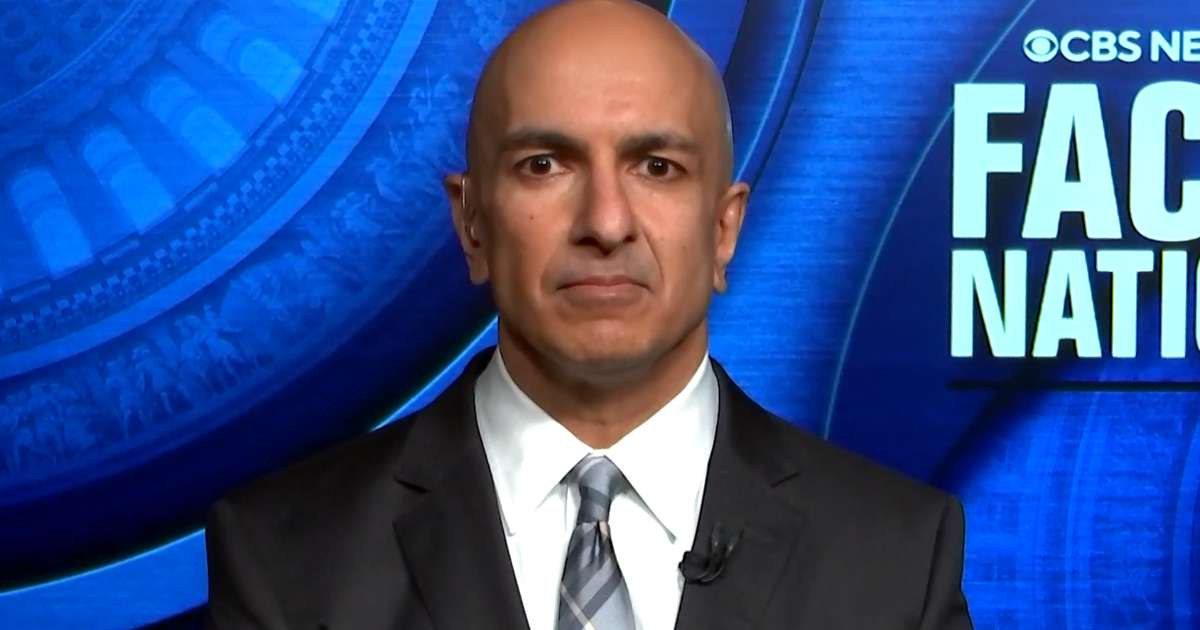
Neel Kashkari, President of the Federal Reserve Bank of Minneapolis, said the Fed kept interest rates steady but may not cut them soon because of uncertainty from the conflict in the Middle East. He warned that disruptions, especially around the Strait of Hormuz, could raise energy and fertilizer prices, which would increase inflation in the U.S.
Key Facts
The Federal Reserve recently kept interest rates unchanged.
Kashkari was one of three Fed regional presidents who signaled rate cuts may not happen soon.
The conflict in the Middle East, particularly involving Iran and the Strait of Hormuz, is causing uncertainty.
Higher energy and fertilizer prices from the conflict are affecting U.S. inflation.
Inflation effects from this conflict may be as large as from the Russia-Ukraine war.
Supply chains of some global companies could take about six months to normalize even if the Strait reopens immediately.
The U.S. labor market has been stable but shows some signs of slowing.
Kashkari emphasized the Fed must closely watch inflation and energy price changes before deciding on rate moves.
Read the Original
Want the full story? Tap a source to open the original
article.
Kevin Hassett, the White House National Economic Council Director, said that sudden increases in energy prices will reduce airline profits for a few months. He also noted that while rising fuel prices hurt Spirit Airlines, other airlines are less affected by these energy cost changes.
Key Facts
Kevin Hassett is the Director of the White House National Economic Council.
He spoke on the show "Face the Nation with Margaret Brennan."
Spirit Airlines said high fuel costs contributed to its closure.
Hassett said energy price increases do not strongly impact most airlines.
He admitted that airline profits will be lower for about one quarter due to energy shocks.
The comment refers to recent changes in fuel prices affecting airlines differently.
The focus is on the short-term financial effects on the airline industry.
Read the Original
Want the full story? Tap a source to open the original
article.
Second Nature Brands recalled its Keto Crunch Smart Mix because the packaging did not list cashews, pistachios, and cherries, which are allergens. The U.S. Food and Drug Administration (FDA) warned that people allergic to these ingredients could have serious reactions if they eat the product.
Key Facts
The recall affects 10-ounce pouches of Keto Crunch Smart Mix with the "Best if used by 2/12/2027" date.
Cashews, pistachios, and cherries were present but not listed on the product label.
Tree nut allergies are common and can cause serious allergic reactions.
The recall was voluntary, started after the company found the labeling mistake.
The product was sold in stores and online across the United States.
No illnesses have been reported so far linked to this product.
Consumers who bought the product are advised not to eat it and can get a refund.
Contact information for refunds is phone +1-800-651-7263 or email recall@secondnaturebrandsus.com.
Read the Original
Want the full story? Tap a source to open the original
article.
Spirit Airlines stopped all flights and began closing down because it ran out of money and failed to get help from the Trump administration. A Spirit pilot’s final flight was canceled, but Southwest Airlines gave him a special send-off when he flew with them instead.
Key Facts
Spirit Airlines ceased operations suddenly after 34 years due to financial problems.
The airline could not secure funding or a deal with creditors to continue.
Rising jet fuel prices after the US-Israel conflict with Iran contributed to Spirit’s collapse.
The Trump administration offered to buy a 90% stake in Spirit to save it, but bondholders refused.
Spirit operated hundreds of daily flights and had about 17,000 employees.
Jon Jackson was a Spirit pilot whose final planned flight was canceled because of the shutdown.
Jackson flew with Southwest Airlines instead, where staff arranged a special celebration for his retirement.
Southwest honored Jackson with a water cannon salute, cheers, and a speech in Baltimore.
Read the Original
Want the full story? Tap a source to open the original
article.
The Reserve Bank of Australia (RBA) is expected to raise interest rates for the third time in a row this week to control inflation. Although the recent inflation rise is mainly due to higher petrol prices caused by the Middle East conflict, the RBA wants to show it is serious about keeping inflation under control.
Key Facts
Financial markets predict about an 80% chance of a rate increase by the RBA on Tuesday.
Inflation rose to 4.6% in the year to March, the highest in two and a half years.
The recent spike in petrol prices, up over 30% in one month, is the main reason for the inflation increase.
Higher interest rates make loans, like mortgages, more expensive for around 3.6 million Australian households.
Economists say the RBA’s rate hike cannot fix inflation caused by global oil supply problems in the short term.
The RBA wants to send a clear message to businesses and workers that it will control inflation.
Before the conflict in the Middle East, inflation was already at uncomfortably high levels.
The RBA’s monetary policy board narrowly agreed to raise rates last month and is expected to vote more clearly for another hike this time.
Read the Original
Want the full story? Tap a source to open the original
article.
The article discusses ongoing issues with export controls and the need for better screening methods to prevent multinational scams. It suggests that authorities should review past cases and reports to improve current controls.
Key Facts
Export control authorities monitor the movement of goods and technology across borders.
There have been past cases of multinational scams involving export violations.
Current screening strategies may be insufficient to catch all fraudulent activities.
Reviewing previous investigations and reports can help improve detection methods.
The article references "Chinagate," a past scandal related to export control failures.
Strengthening export controls can protect national and economic security.
Authorities have existing data and insights that can assist in updating current practices.
Read the Original
Want the full story? Tap a source to open the original
article.
The 2024 Met Gala, a major fashion event in New York, is co-chaired by Jeff Bezos and his wife Lauren Sánchez Bezos, which has sparked controversy because of their role as main funders. The gala’s theme "fashion is art" highlights diverse and often overlooked body types through a fashion exhibition at the Metropolitan Museum of Art.
Key Facts
The Met Gala is a high-profile fashion event held at the Metropolitan Museum of Art in New York.
Jeff Bezos and Lauren Sánchez Bezos are honorary chairs and major financial supporters of this year’s gala.
Tickets for the event cost around $100,000 each.
Some people and activists are protesting Bezos’s involvement, with posters in New York and groups like Everyone Hates Elon opposing it.
New York Mayor Zohran Mamdani will not attend the Gala, breaking a long tradition of mayors attending.
The gala’s theme "fashion is art" connects fashion with art, focusing on body types often ignored in the fashion world.
The accompanying exhibition features sculptures and garments highlighting marginalized bodies, including those that are pregnant, aging, disabled, and nude variations.
Designers featured include Michaela Stark, Dilara Findikoglu, and Vivienne Westwood, among others.
Read the Original
Want the full story? Tap a source to open the original
article.
Spirit Airlines has stopped all flights and is closing its operations because of high fuel costs and no emergency help from the government. Other U.S. airlines like American Airlines and Delta are helping passengers affected by Spirit's shutdown and may hire former Spirit workers.
Key Facts
Spirit Airlines canceled all its flights and is shutting down.
The airline said fuel costs were very high and blamed the failure to get a government rescue package.
American Airlines, Delta, United Airlines, and JetBlue offered special fares for passengers who had Spirit flights canceled.
Some of these airlines may hire workers who lost jobs after Spirit closed.
Spirit's shutdown affects travelers who now need other flight options.
The White House did not provide a last-minute rescue plan for Spirit Airlines.
Aviation experts are discussing the situation and its impact on the airline industry.
Read the Original
Want the full story? Tap a source to open the original
article.
Heathrow Airport’s new chairman, Philip Jansen, is in talks with airlines and a local billionaire landowner to resolve disagreements that could delay the construction of a third runway. The discussions focus on the high costs and service concerns related to the £49 billion expansion plan.
Key Facts
Heathrow plans to build a third runway costing £49 billion to expand Europe’s busiest airport.
Philip Jansen, Heathrow’s new chair since early 2024, is negotiating with airlines and Surinder Arora, a local billionaire proposing his own £25 billion expansion.
British Airways, controlling over half of Heathrow’s slots, wants the total cost capped at £30 billion.
Airlines and Arora criticize Heathrow for high charges and seek to reduce operating costs.
The UK government supports the runway plan, aiming for construction to start by 2029 and operations by 2035.
Heathrow is owned by a group including French company Ardian and sovereign wealth funds from Qatar, Singapore, and Saudi Arabia.
China Investment Corporation, which owns 10% of Heathrow, may sell its stake due to cost concerns about the expansion.
Philip Jansen is known for resolving complex business disputes, previously helping fund broadband upgrades in the UK.
Read the Original
Want the full story? Tap a source to open the original
article.
PEZ candies were invented in Austria in 1927 as peppermint mints and were first sold as an anti-smoking aid. In the U.S., PEZ became popular in the 1950s after adding cartoon character heads to the dispensers and switching to fruit flavors. Today, PEZ produces billions of candies yearly and has a large collector community, including a Guinness World Record holder with thousands of unique dispensers.
Key Facts
PEZ candies were created in 1927 by Eduard Haas III in Austria.
The name PEZ comes from the German word for peppermint.
Initially marketed as a way to replace smoking by freshening breath.
PEZ was introduced to the U.S. in 1952 but failed at first.
Adding cartoon character heads and fruit flavors helped PEZ become popular with children.
The PEZ company in the U.S. makes about five billion candies a year in Connecticut.
Brian Trauman holds the Guinness World Record with over 6,481 unique PEZ dispensers.
A very rare PEZ dispenser linked to President John F. Kennedy was recently found and sold for $10,000.
Read the Original
Want the full story? Tap a source to open the original
article.
The United States Postal Service (USPS) will release a new set of Barbie commemorative stamps this summer. The stamps will show Barbie in 10 different jobs she has had over the years, celebrating the doll’s role in inspiring children to dream big.
Key Facts
The Barbie stamps will feature 10 different careers Barbie has had, such as astronaut, surgeon, and sign language teacher.
Barbie was created by Mattel in 1959 and has represented over 250 careers since then.
The stamp designs use a special format that is taller than usual to show detailed outfits.
The stamps will be released on July 11 during the 2026 National Barbie Doll Collectors Convention in Austin, Texas.
These Barbie stamps are Forever stamps, meaning they can be used for first-class mail even if postal rates go up later.
Other notable stamp releases this year include “A Day at the Beach” stamps, bald eagle stamps, and stamps marking the 250th anniversary of the American Revolution.
The USPS worked with Mattel and various artists to create the new stamp designs.
The Barbie stamp release highlights the doll’s cultural influence and promotes diversity in career choices for kids.
Read the Original
Want the full story? Tap a source to open the original
article.
Spirit Airlines, a budget US airline, has started shutting down and cancelled all flights after talks with President Donald Trump's administration to get a $500 million bailout failed. The recent war involving the US and Israel against Iran caused fuel prices to rise sharply, worsening Spirit's financial problems and leading to its collapse after 34 years in business.
Key Facts
Spirit Airlines began winding down operations and cancelled all flights immediately.
The airline struggled financially for years and filed for bankruptcy twice in 2024 and 2025.
Rising aviation fuel prices due to the US-Israel war on Iran increased costs significantly for Spirit.
Fuel prices went from about $2.24 a gallon (budgeted) to $4.51 a gallon by April 2026.
Spirit’s parent company started as a trucking firm in 1964 and became an airline in 1983.
Nearly 17,000 Spirit employees lost their jobs due to the shutdown.
President Donald Trump attempted to secure a $500 million bailout but talks failed.
The airline’s financial restructuring depended on lower fuel prices and could not survive the price spike.
Read the Original
Want the full story? Tap a source to open the original
article.
A top business adviser to Prime Minister Keir Starmer held 16 private meetings with leaders from major U.S. tech companies between October 2024 and October 2025. These meetings focused on AI, regulatory changes, and investment plans as part of efforts to boost the UK economy through technology.
Key Facts
Varun Chandra, a business adviser close to Starmer and Rachel Reeves, met with executives from Google, Microsoft, Amazon, Oracle, Apple, and Meta.
The meetings were not publicly disclosed, but involved discussions on AI growth zones, investment, and government policies.
Chandra also serves as the UK’s US trade envoy, advising on trade talks including AI investments.
These talks occurred while the UK government aimed to attract £150 billion in investment from US tech firms.
Some reported tech investments have been questioned as “phantom” or not entirely new projects.
Chandra comes from a background in corporate intelligence and was appointed soon after Labour’s 2024 election win.
Unlike civil servants or ministers, political advisers like Chandra are not required to publicly declare meetings with private companies.
Downing Street said Chandra’s role includes helping to secure trade deals and inward investment from American businesses.
Read the Original
Want the full story? Tap a source to open the original
article.
OPEC+ agreed to raise oil production by a small amount in June during the ongoing conflict between the United States and Iran, which has disrupted oil exports through the Strait of Hormuz. The United Arab Emirates (UAE) left the OPEC+ group recently, and the increase is mainly symbolic until the shipping route reopens and production can return to normal.
Key Facts
OPEC+ decided to increase oil production by 188,000 barrels per day in June.
The seven participating countries in this decision are Algeria, Iraq, Kazakhstan, Kuwait, Oman, Russia, and Saudi Arabia.
The UAE left OPEC+ on Friday and was not mentioned in the recent statement.
The Strait of Hormuz is closed due to the war involving the United States, Israel, and Iran, disrupting oil exports.
Saudi Arabia’s oil production quota will rise to 10.29 million barrels per day but actual production is much lower (7.76 million bpd in March).
Oil exports from OPEC+ members dropped by 7.7 million barrels per day from February to March.
The drop in supply has pushed oil prices above $125 per barrel, the highest in four years.
It may take weeks or months after the Strait of Hormuz reopens for oil exports to return to normal levels.
Read the Original
Want the full story? Tap a source to open the original
article.
Seven OPEC+ countries, including Saudi Arabia and Russia, raised their oil production quotas by 188,000 barrels per day for June. This move follows the United Arab Emirates (UAE) leaving the group, but the increase mainly aims to show that OPEC+ remains stable despite the UAE’s exit and ongoing regional conflicts.
Key Facts
Seven OPEC+ members raised production quotas by 188,000 barrels per day for June.
Countries involved include Saudi Arabia, Russia, Algeria, Iraq, Kazakhstan, Kuwait, and Oman.
The UAE left OPEC+ recently and its departure was not mentioned in the production statement.
Analysts say the quota increase tries to signal that OPEC+ is stable and still controls oil markets.
Actual oil production is below quotas because of disruptions caused by the war and the Strait of Hormuz blockade.
The Strait of Hormuz is blocked by Iran, limiting oil exports from Gulf countries including Iraq, Kuwait, Saudi Arabia, and the UAE.
Total OPEC+ output in March was about 9 million barrels per day below its quota due to war-related disruptions.
Analysts believe the production increase is more about messaging than adding much oil supply.
Read the Original
Want the full story? Tap a source to open the original
article.
Seven major oil-producing countries in OPEC+ increased their oil production limits by 188,000 barrels per day for June to support market stability after the United Arab Emirates (UAE) left the group. Despite raising quotas, actual oil supply remains limited due to disruptions caused by the Middle East conflict and a blockade at the Strait of Hormuz.
Key Facts
Saudi Arabia, Russia, Algeria, Iraq, Kazakhstan, Kuwait, and Oman raised their oil production quotas by 188,000 barrels per day for June.
The UAE quit OPEC+ recently and its oil production will no longer count toward group quotas.
The increase in production quotas was expected and aims to show OPEC+ stability despite the UAE’s departure.
Physical oil supply is limited because the Strait of Hormuz, a key shipping route, is blocked due to ongoing Middle East conflicts.
OPEC+ members are producing about 9 million barrels per day less than their quota because of war disruptions, not because they are holding back production on purpose.
Iran is an OPEC+ member but does not follow production limits and faces its own export blockades from the United States.
Russia benefits from the situation but struggles to meet its production quota due to its conflict in Ukraine and attacks on its oil facilities.
The UAE plans to increase oil production significantly by 2027 and will spend $55 billion on new oil projects in the next two years.
Read the Original
Want the full story? Tap a source to open the original
article.
A new UK survey shows that over one-third of HR leaders have faced resistance to diversity and inclusion efforts, especially those helping people with criminal records find jobs. The charity Working Chance warns that less support for these programs could make it harder for people with convictions to get work and may increase social exclusion and reoffending.
Key Facts
More than 33% of UK HR decision-makers reported pushback against equity, diversity, and inclusion (EDI) initiatives in the past year.
Working Chance supports women with criminal convictions to find jobs and says reducing inclusion efforts risks greater social exclusion.
Stable employment is a key factor in stopping people from reoffending, which saves the UK economy billions each year.
Around 25% of working-age adults in the UK have some form of criminal record, including minor offences.
Over half (58%) of HR leaders do not feel confident hiring or supporting people with convictions.
Legal challenges against targeted inclusion schemes are increasing, causing some organizations to withdraw support.
The Ministry of Justice hosted a conference to discuss barriers like risk concerns, background checks, and lack of employer guidance.
A personal story shared by a beneficiary of Working Chance highlights the importance of inclusive hiring for rebuilding life after conviction.
Read the Original
Want the full story? Tap a source to open the original
article.
The Trades Union Congress (TUC) has called for a ban on dynamic pricing in gig economy platforms like Uber, arguing it leaves workers unsure about their pay because algorithms set wages without clear explanations. The TUC report highlights how this practice can harm drivers’ incomes, health, and safety, and urges the UK government to strengthen worker rights and demand transparency in algorithm decisions.
Key Facts
Dynamic pricing means computer algorithms change pay and fares based on supply and demand at the moment.
Uber switched to dynamic pricing in 2023, increasing its commission from 20% to 25% and then allowing pay and fares to vary.
Workers describe dynamic pay as unpredictable, like gambling, with little information about how earnings are calculated.
Several Uber drivers said their income dropped and felt below minimum wage after dynamic pricing began.
The TUC report includes testimonies linking dynamic pricing to stress, poor family life, and driving tired, which may affect passenger safety.
The University of Oxford found Uber drivers earned significantly less per hour after dynamic pricing started.
The TUC and Worker Info Exchange want laws to give workers access to data used in AI decisions and to stop dynamic pay.
Uber faces legal challenges in the UK and Europe over its use of algorithm-based pay systems.
Read the Original
Want the full story? Tap a source to open the original
article.
Spirit Airlines stopped all its flights early Saturday after operating for more than 30 years. This sudden shutdown left many passengers searching for other ways to travel.
Key Facts
Spirit Airlines ended its operations on Saturday, May 2, 2026.
The airline had been in business for over 30 years.
Passengers were left scrambling to find alternative travel options.
The shutdown was unexpected and disrupted many travel plans.
The closure of Spirit Airlines may affect summer travel availability.
Spirit Airlines was known as a low-cost carrier in the U.S. market.
Read the Original
Want the full story? Tap a source to open the original
article.