Neutral summaries of your favorite news sources — just the facts.
Your favorite news sources, one neutral feed — we distill their reporting into fact-first
summaries and always link to the original story. How it works
Business News
Business news, market updates, and economic developments
The diamond engagement ring concept was popularized by De Beers, which created a global demand through targeted advertising. Cecil Rhodes and Charles Rudd established De Beers, gaining control of diamond supply and influencing global perceptions of diamonds as symbols of eternal love. The advertising slogan "A diamond is forever" significantly increased the custom of giving diamond rings for engagements.
Key Facts
De Beers was founded in the 19th century by Cecil Rhodes and Charles Rudd, who monopolized diamond mining in South Africa.
By 1888, De Beers controlled nearly all of South Africa's diamond claims and active mines.
De Beers managed diamond supplies worldwide, influencing prices by controlling the market flow.
The company hired an advertising agency in 1946, leading to the creation of the slogan "A diamond is forever" in 1947.
The advertising campaign associated diamonds with eternal love, significantly boosting sales in the U.S., Europe, and Japan.
By 1980, about 80% of American brides had diamond engagement rings, up from 10% in 1940.
The campaign changed gift-giving norms for engagements from other jewelry to primarily diamond rings.
De Beers suggested spending one to two months’ salary on an engagement ring.
Read the Original
Want the full story? Tap a source to open the original
article.
The article discusses the possibility of banks in the UK allowing unlimited spending on contactless cards, which might lead to more impulsive buying. Currently, entering a PIN for purchases over £100 helps people control their spending. The financial regulator is considering allowing banks to decide their contactless limits, sparking debate on its impact on consumer spending habits.
Key Facts
Contactless cards allow purchases without entering a PIN, up to a certain limit.
The UK financial regulator is considering letting banks set their own contactless spending limits or remove them altogether.
Currently, people have to enter a four-digit PIN for transactions over £100.
Contactless payment limits in the UK increased from £10 in 2007 to £100 in 2021.
Some experts believe removing the PIN requirement might lead to more impulsive buying and increased debt, especially with credit cards.
Contactless technology is widely used, with nearly 95% of eligible in-store transactions predicted to be contactless by 2024.
Many customers now use digital wallets on smartphones, which already allow unlimited payment due to added security like fingerprints.
There is debate on whether removing the contactless limit is necessary with the prevalence of smartphone payments.
Read the Original
Want the full story? Tap a source to open the original
article.
A new wave of US investment in the UK financial services sector is projected to create up to 1,000 jobs in Belfast. Major companies like Bank of America, Citigroup, PayPal, and S&P Global are investing over £1.25 billion, with Belfast being developed as a key hub for financial technology and security operations. This move follows discussions between the US and UK governments, aimed at strengthening trade relationships.
Key Facts
Bank of America plans to create up to 1,000 new jobs in Belfast, Northern Ireland.
This marks the bank's first operation in Northern Ireland.
Citigroup, PayPal, and S&P Global are also investing in the UK.
The total investment from these US companies is worth more than £1.25 billion.
Bank of America's new facility in Belfast will focus on financial technology and security.
A program for digital skills and employability will support 600 people in Belfast.
Discussions of a US-UK trade agreement have contributed to these business investments.
The investment is expected to boost Belfast's reputation in global financial services.
Read the Original
Want the full story? Tap a source to open the original
article.
The Federal Aviation Administration (FAA) wants to fine Boeing $3.1 million for safety violations. This includes issues related to a door plug that blew out on an Alaska Airlines 737 Max 9 plane in January 2024. Boeing has 30 days to respond to the FAA's proposed penalty.
Key Facts
The FAA is proposing a $3.1 million fine against Boeing for safety violations.
A door plug on an Alaska Airlines 737 Max 9 blew out during a flight in January 2024.
No serious injuries occurred during the incident, and the plane landed safely.
The FAA identified hundreds of quality violations at Boeing and its subcontractor Spirit AeroSystems.
Boeing has been working on improving safety and quality with a plan overseen by the FAA.
The company faced past troubles with the 737 Max and recently avoided criminal charges related to misleading regulators about the aircraft.
Boeing has 30 days to respond to the FAA's proposed fine.
Read the Original
Want the full story? Tap a source to open the original
article.
Pecan is becoming a popular flavor for the fall season, with companies like DoorDash, Snickers, and Starbucks increasing their pecan-flavored offerings. There is also an ongoing debate about the correct pronunciation of the word "pecan."
Key Facts
DoorDash named pecan as the top fall flavor for 2025 due to a 28% increase in orders for pecan-flavored items.
Snickers has made its special-edition pecan bar a regular product.
Starbucks has brought back pecan beverages for its fall menu.
"Pecan" has three common pronunciations: "puh-KAWN," "puh-CAN," and "PEE-can."
"PEE-can" is favored by people in the Northeast U.S., while "puh-KAWN" is popular in areas where pecan trees grow naturally.
The word "pecan" comes from Algonquian languages and was later adapted by French and English speakers.
Linguists note that there is no single correct English pronunciation of "pecan."
Read the Original
Want the full story? Tap a source to open the original
article.
Federal Reserve Governor Lisa Cook referred to a condominium she bought in 2021 as a "vacation home" in loan documents, which challenges claims by the Trump administration that she committed mortgage fraud. Cook is involved in a legal battle to keep her position after President Trump sought to remove her based on these allegations.
Key Facts
Lisa Cook, a Federal Reserve Governor, described a condo she bought in 2021 as a "vacation home" in loan-related paperwork.
The Trump administration claims she committed mortgage fraud by calling two different properties her "primary residence."
Cook secured a court order that temporarily blocks her removal from the Federal Reserve Board.
The Trump administration is appealing this decision, seeking a quick ruling on the matter.
A criminal investigation has been initiated by the Justice Department based on allegations submitted by Bill Pulte.
Cook never claimed a tax benefit on the condo that is available for primary residences.
The White House has not provided any comments regarding the situation.
Read the Original
Want the full story? Tap a source to open the original
article.
New research says seven million households in the UK are not claiming a total of £24 billion in benefits and support they are eligible for. Barriers to claiming these benefits include lack of awareness, the complexity of the claiming process, and the stigma around receiving benefits. The government is trying to increase awareness through public campaigns.
Key Facts
Seven million UK households are missing out on benefits and support worth £24 billion.
The barriers to claiming include lack of awareness, complicated processes, and stigma.
Benefits include universal credit, pension credit, free school meals, and more.
The report predicts unclaimed benefits will rise to £24.1 billion by 2025-26.
Public campaigns and services like Help to Claim aim to increase benefit uptake.
More older people are starting to claim pension credit.
Some local authorities have improved free school meal claims to 95% coverage.
Read the Original
Want the full story? Tap a source to open the original
article.
A cyber attack has disrupted Jaguar Land Rover's operations, leading to factory shutdowns and financial losses. This situation also threatens the stability of JLR's suppliers, many of whom are small businesses at risk of bankruptcy without government support. Efforts are ongoing to restore the company's systems and minimize damage.
Key Facts
A cyber attack affected Jaguar Land Rover (JLR) starting on September 1, causing the company to halt operations.
JLR's factories in the UK and other countries have been closed, impacting vehicle production.
JLR has lost between £50 million and £100 million due to the shutdowns.
The company made a pre-tax profit of £2.5 billion last year, giving it some financial cushion.
Suppliers, many of them small businesses, are facing severe disruptions and potential bankruptcies.
There is a call for government intervention to prevent large-scale job losses in the supply chain.
Experts estimate the daily cost to JLR from the crisis is between £5 million and £10 million.
JLR is working with the National Cyber Security Centre to investigate and address the cyber attack.
Read the Original
Want the full story? Tap a source to open the original
article.
AstraZeneca has paused a £200 million investment in a research site in Cambridge, originally meant to create 1,000 jobs. This decision follows other companies, like Merck, also shifting focus from the UK due to reduced government investment, while planning more investments in the US.
Key Facts
AstraZeneca stopped plans for a £200 million investment in Cambridge.
The project was announced in March 2024, aiming to create 1,000 jobs.
Merck, another pharmaceutical company, canceled a £1 billion UK expansion.
US pressures and reduced UK government funding affect pharma investments.
AstraZeneca announced a $50 billion investment in the US.
UK spending on medicines dropped from 15% to 9% of the NHS budget over 10 years.
The Cambridge site expansion would have added to an existing research center.
AstraZeneca also canceled a £450 million investment for a plant in Merseyside.
Read the Original
Want the full story? Tap a source to open the original
article.
The United States Federal Reserve is planning a meeting to decide on possibly lowering interest rates due to economic changes. Economists believe a rate cut might happen soon because of a cooling job market and rising inflation. Recent price increases in consumer goods and energy are also influencing this decision.
Key Facts
The Federal Reserve is set to meet next week to discuss interest rates.
The current interest rate has been steady at 4.25% – 4.50% since December.
Economists suggest the Fed might lower rates by 0.25% at the September meeting.
Recent data shows the job market is slowing and inflation is rising.
Consumer prices went up 0.4% in August, the highest increase in seven months.
Energy costs, especially gasoline and airfares, have seen significant increases.
Coffee and beef prices have also risen due to changes in tariffs and supply issues.
Despite price increases, some businesses are trying not to pass these costs onto consumers.
Read the Original
Want the full story? Tap a source to open the original
article.
NPR is exploring how rising costs are affecting people in the U.S. due to increasing prices and slowing job growth. They are asking people to share their experiences with higher living costs.
Key Facts
NPR is creating a series about the rising cost of living.
Inflation is causing consumer prices to go up.
Job growth is slowing down in the U.S.
NPR wants people to share how higher prices are affecting their lives.
Submissions may be used in upcoming stories by NPR or member stations.
Inputs collected will follow NPR's Terms of Use and Privacy Policy.
Read the Original
Want the full story? Tap a source to open the original
article.
Wall Street ended its best week in over a month, with the S&P 500 and Nasdaq both near record highs. This rise is partly due to expectations that the Federal Reserve will lower interest rates soon. The Dow Jones dropped slightly, while the Nasdaq saw a small gain.
Key Facts
The S&P 500 slightly decreased by less than 0.1% from its all-time high.
The Dow Jones Industrial Average fell by 273 points, or 0.6%.
The Nasdaq composite increased by 0.4%, hitting its own record.
Investors expect the Federal Reserve to reduce interest rates at an upcoming meeting.
Anticipation of rate cuts has also led to a drop in mortgage rates.
The University of Michigan reported that consumer inflation expectations remained stable at 4.8%.
RH’s stock fell by 4.6% due to lower than expected profits and revenue.
Microsoft’s stock rose 1.8% after Europe's regulators approved changes to its Teams software.
Read the Original
Want the full story? Tap a source to open the original
article.
Workers at three Boeing plants have rejected a new contract offer, continuing their strike that began nearly six weeks ago. The workers, represented by a union, are asking for better financial incentives, and Boeing has stated it will not change the economic framework of its offer. The strike affects Boeing's defense division, a key part of the company's revenue.
Key Facts
Boeing workers at three Midwest plants rejected a contract offer after striking for nearly six weeks.
The strike involves 3,200 workers who build fighter jets, weapons systems, and unmanned aircraft.
57% of the union members voted against the latest contract proposal.
The union is seeking better signing bonuses and increases in 401(k) retirement benefits.
Boeing plans to continue operations with a contingency plan, including hiring permanent replacements.
The defense division at Boeing makes up over one-third of the company’s revenue.
The strike follows a larger walkout by 33,000 Boeing commercial plane workers last year.
Boeing is headquartered in Arlington, Virginia, and employs over 170,000 people globally.
Read the Original
Want the full story? Tap a source to open the original
article.
Commerce Secretary Howard Lutnick believes the Supreme Court will not overturn President Trump's tariffs, despite concerns from other officials. Lutnick states that even without IEEPA, other tariff laws exist. Treasury Secretary Scott Bessent warns overturning tariffs could lead to financial issues.
Key Facts
Howard Lutnick is the Commerce Secretary.
Lutnick believes it's unnecessary to plan for the Supreme Court overturning Trump's tariffs.
Treasury Secretary Scott Bessent warns of possible financial problems if tariffs are overturned.
The Court of International Trade and a federal appellate court ruled Trump lacked tariff authority under IEEPA.
About 71% of Trump's tariff revenue is at risk if IEEPA-based tariffs are struck down.
Lutnick mentions other tariff authorities like Section 232 are in place for products like steel and aluminum.
Section 232 and 301 tariffs are more limited compared to IEEPA.
The administration wants the Supreme Court to hear arguments in early November.
Read the Original
Want the full story? Tap a source to open the original
article.
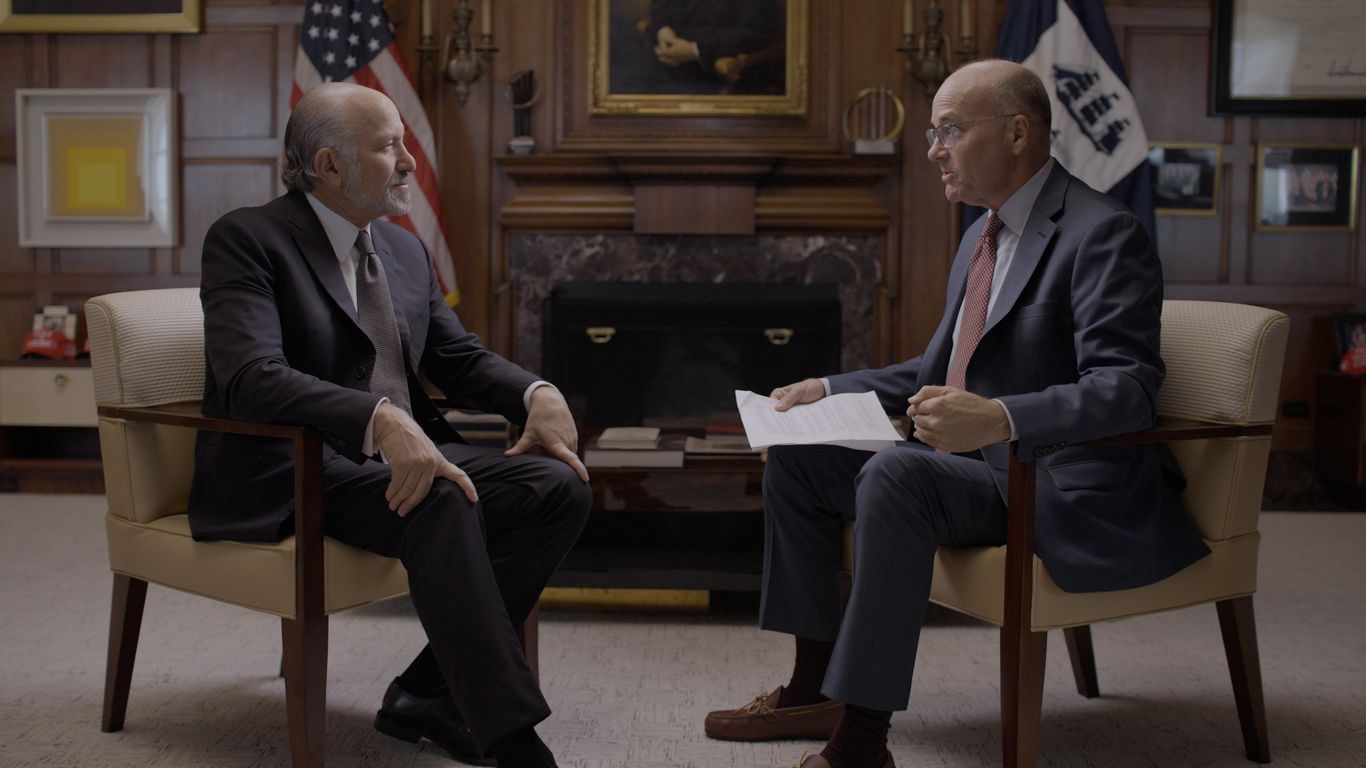
The first episode of "The Axios Show" features an interview with Commerce Secretary Howard Lutnick discussing economic topics related to President Trump's administration. Topics include pressure on drug prices, concerns about AI affecting jobs, and student loan issues. Lutnick also shares insights on trade negotiations with Japan involving key U.S. officials.
Key Facts
"The Axios Show" is a five-episode video series with interviews about politics, business, and culture.
Commerce Secretary Howard Lutnick is the guest in the debut episode.
Lutnick discusses President Trump's efforts to lower drug prices.
Concerns about AI taking jobs and student loan problems are addressed.
Lutnick describes being involved in trade talks with Japan that included U.S. government leaders.
The presence of members of Congress influenced the trade negotiations.
The show aims to offer deep insights from top leaders and experts.
Read the Original
Want the full story? Tap a source to open the original
article.
The United States is considering implementing a 50% tariff on Brazilian products. Former Brazilian President Jair Bolsonaro's trial may be used as a justification for this economic policy move by the U.S. government.
Key Facts
The U.S. plans to impose a 50% tariff on goods from Brazil.
The trial of former Brazilian President Jair Bolsonaro is part of the discussion.
U.S. President Trump may use Bolsonaro's trial as a reason for the tariffs.
Journalist Gustavo Ribeiro commented on this potential economic strategy.
Tariffs are taxes on imported goods, which can impact trade between countries.
Read the Original
Want the full story? Tap a source to open the original
article.
David Ellison is making moves to become a top player in Hollywood by merging his company, Skydance Media, with Paramount Global. Now, he is exploring a deal to buy Warner Bros. Discovery, a large media company. This potential merger would create a major player in the entertainment industry, but it involves significant financial challenges.
Key Facts
David Ellison is the son of Oracle CEO Larry Ellison.
His company, Skydance Media, merged with Paramount Global.
Ellison is considering buying Warner Bros. Discovery, valued at about $40 billion.
Warner Bros. Discovery has $35 billion in debt from a previous merger.
RedBird Capital Partners helped fund the Paramount merger but won't be part of a possible Warner Bros. acquisition.
Skydance has recently acquired rights to Ultimate Fighting Championship for $7.7 billion.
The proposed merger would make Skydance a major entertainment company, affecting the competition with Netflix and Disney.
Past attempts to enter Hollywood have been difficult, but Ellison has a history of producing successful films.
Read the Original
Want the full story? Tap a source to open the original
article.
The UK economy did not grow in July, following a 0.4% rise in June. The government faces pressure to boost economic growth before it presents its next budget in November.
Key Facts
The UK economy showed zero growth in July.
In June, the economy had grown by 0.4%.
The Office for National Statistics (ONS) provided these figures.
The government is under pressure to improve economic growth.
The next budget is scheduled for November 26.
Some businesses are delaying hiring and investments due to uncertainty about possible tax increases.
The ONS noted positive performance in services like health and computer programming.
Manufacturing industries experienced declines in production.
Read the Original
Want the full story? Tap a source to open the original
article.
Mark Field, a butcher in Whittlesey, is using social media to attract more customers to his shop, Jones Butchers, which has been open since 1957. The rising cost of living and competition from supermarkets have made it tough for the business. Meat prices have significantly increased, impacting small butchers.
Key Facts
Jones Butchers has been a part of Whittlesey's Broad Street since 1957.
Mark Field took over the business in June, after working in the butchery industry for 30 years.
Rising meat costs and the convenience of supermarkets are challenges for the shop.
National Craft Butchers reported a 17% increase in meat prices.
Beef prices have reached historic highs due to supply issues and high demand.
Social media helped bring more customers to Jones Butchers after Mark Field's appeal.
Younger customers often prefer buying meat from supermarkets for convenience.
Other butchers, like Adrian Cornwell, are offering unique meats or prepared meals to attract customers.
Read the Original
Want the full story? Tap a source to open the original
article.
The new UK Housing Secretary, Steve Reed, vowed to build 1.5 million new homes in England by 2029. This is part of the government's effort to address what Reed describes as a housing crisis. Builders face challenges like rising costs, and Reed plans to work with developers to overcome obstacles and accelerate construction.
Key Facts
Steve Reed is the new Housing Secretary in the UK.
The government plans to build 1.5 million homes in England by 2029.
This initiative aims to address a housing shortage.
Reed said he would work with developers and impose sanctions if construction lags.
Industry leaders warn about challenges like increased costs and planning delays.
Applications to build homes in England have risen in the past six months.
New legislation is being considered to speed up the planning process.
Rising construction costs, such as for bricks, impact building efforts.
Read the Original
Want the full story? Tap a source to open the original
article.