Small businesses in the U.S. are preparing for the holiday season, a critical sales period, amid concerns about inflation and trade policies. A survey by Constant Contact found many small business owners feel pressure due to these economic challenges, though they are confident in their ability to meet sales targets through strategies like social media marketing and discounts.
Key Facts
The holiday season accounts for up to half of annual sales for 60% of small business owners.
37% of U.S. small business owners feel significant pressure this holiday season due to economic challenges.
Inflation is a main concern for 32% of businesses surveyed, while 22% are worried about weak consumer spending.
Tariffs are expected to negatively impact 52% of U.S. businesses during the holiday shopping period.
U.S. consumer sentiment has dropped to a six-month low, especially among those earning less than $75,000 annually.
Small businesses are launching more marketing campaigns, with a strong focus on social media and discounts.
77% of small businesses are confident they will meet their revenue goals this holiday season.
Read the Original
Want the full story? Tap a source to open the original
article.
Kroger is recalling about 3,700 skeleton-shaped wax candles because they can catch fire. These candles were sold in Kroger and affiliated stores across the U.S. Consumers should stop using them and return them for a refund.
Key Facts
Kroger recalled about 3,700 Halloween-themed skeleton wax candles.
The U.S. Consumer Product Safety Commission identified a fire risk with these candles.
Decorations on the candles can catch fire while being used.
Carole Accessories Inc. imported these candles, which were made in China.
The candles sold for around $7 in September and October.
Consumers can return the candles to any Kroger store for a full refund.
Read the Original
Want the full story? Tap a source to open the original
article.
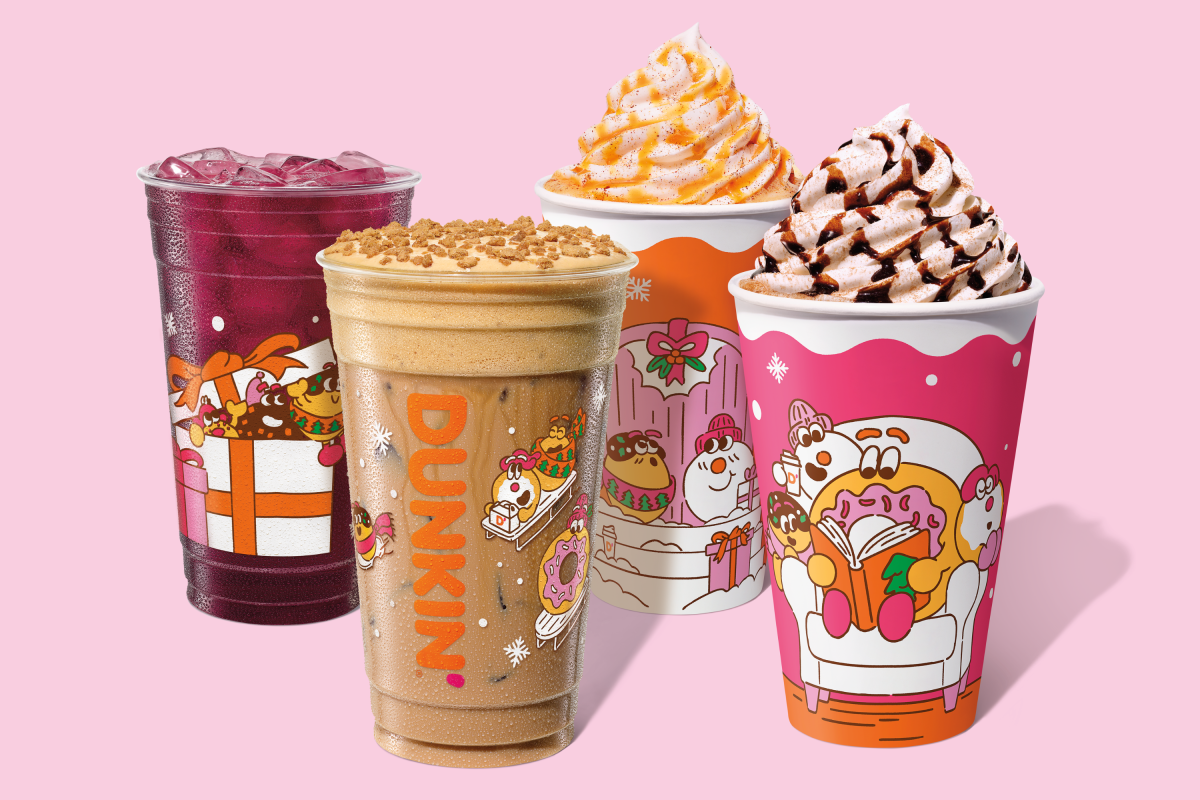
Dunkin' has announced its new holiday menu, introducing both new and returning seasonal food and drinks starting November 5. The menu includes festive beverages and snacks, which will be available at its locations across the United States for a limited time. Dunkin' is also running a fundraiser to support children in need during this period.
Key Facts
Dunkin' announced a new holiday menu to launch on November 5.
The menu features five new items and two returning fan-favorites.
New items include the Cookie Butter Cloud Latte and Berry Sangria Refresher.
Returning favorites are the Peppermint Mocha and Toasted White Chocolate Signature Latte.
The menu will be available until the holiday season ends, based on product availability.
Dunkin' is the largest coffee and doughnut chain in the United States with over 14,000 locations worldwide.
Dunkin’ is running the "Joy in Childhood Foundation Give Joy fundraiser" from November 5 to November 30, offering rewards for donations to support children in need.
Read the Original
Want the full story? Tap a source to open the original
article.
Many companies, including Amazon, are laying off employees in large numbers. The Worker Adjustment and Retraining Notification (WARN) Act requires big companies to give their employees a 60-day notice before mass layoffs. Workers can look for warning signs like hiring freezes and project pauses to anticipate possible layoffs.
Key Facts
Amazon recently laid off 14,000 employees to streamline operations.
The WARN Act requires U.S. companies with 100 or more full-time employees to give a 60-day notice before mass layoffs.
A mass layoff is defined as 500 or more employees, or 50 or more employees if they make up at least 33% of a site’s workforce.
Companies must also give notice if at least 50 employees face a work hours reduction of 50% or more expected to last at least six months.
Employees can check the WARN notice website or WARNTracker for updates on layoffs.
Signs of possible layoffs include hiring freezes, budget cuts, leadership changes, and sudden project pauses.
HR consultant Bryan Driscoll and financial literacy instructor Alex Beene highlight uncertainty in the job market and recommend employees stay informed and prepare for potential layoffs.
Read the Original
Want the full story? Tap a source to open the original
article.
An employee was called into a meeting with human resources (HR) after a coworker claimed they were adding liquor to their coffee, but it turned out to only be vanilla syrup. The incident became popular online, with discussions highlighting the importance of thorough workplace investigations before taking action based on suspicion.
Key Facts
An employee shared their experience on Reddit about being wrongly accused of adding liquor to coffee.
The item in question was actually a bottle of vanilla coffee syrup.
The incident occurred on the employee's day off.
The story went viral online, gaining over 110,000 upvotes.
An HR expert emphasized the need for multiple pieces of evidence before taking action in workplace investigations.
The expert mentioned considering context and the relationships between coworkers when evaluating such claims.
Reddit users shared similar stories of misunderstandings at work involving beverages.
Newsweek could not verify all the details of this specific incident.
Read the Original
Want the full story? Tap a source to open the original
article.
Summa Health CEO Cliff Deveny is stepping down after a merger with health tech company HATCo. Deveny will become a strategic advisor, while HATCo's Daryl Tol will be the acting president and CEO. The change is part of plans to ensure Summa Health's growth and modernization.
Key Facts
Cliff Deveny is leaving his role as CEO of Summa Health after its merger with HATCo.
Deveny will continue as CEO emeritus and strategic advisor starting January 1, 2026.
Daryl Tol, HATCo President, will be the acting CEO of Summa until a new leader is found.
Summa Health operates in Northeast Ohio, serving over 1 million patients in various healthcare settings.
HATCo aims to modernize healthcare through partnerships and technology.
The merger was finalized on October 1, 2025.
Deveny has been associated with Summa Health in various roles since 1997.
The merger seeks to advance Summa Health's capabilities and ensure long-term success.
Read the Original
Want the full story? Tap a source to open the original
article.
Several fast-food restaurants are offering Halloween deals to boost sales. Promotions include discounts and special items from chains like KFC, Auntie Anne's, and Moe's Southwest Grill. These deals are available in the weeks leading up to Halloween.
Key Facts
Auntie Anne’s offers a “Twist or Treat” bucket with a $5 reward for purchases between October 27 and October 31.
Cinnabon customers can get an OREO Spookies & Cream Chillatta with any CinnaPack purchase during the same period.
Jamba offers a $5 reward for every $25 spent on gift cards from October 24 to October 31.
Moe’s Southwest Grill provides buy one get one free entrees from October 31 to November 1.
McAlister’s Deli sells a special Witch’s Brew Lemonade and a Mini Cookie Tray; Rewards Members earn double points on purchases from October 27 to November 2.
KFC holds "13 Days of Scary Good Deals" with daily offers from October 19 to October 31, such as a free chicken sandwich with a $10 purchase.
These promotions aim to attract customers during the fall season and boost short-term sales.
Read the Original
Want the full story? Tap a source to open the original
article.
China has approved a deal related to TikTok, which could help decide the app's future in the U.S. U.S. Treasury Secretary Scott Bessent announced this development after a meeting between President Trump and China's leader Xi Jinping.
Key Facts
China has agreed to a deal concerning the TikTok app.
The U.S. Treasury Secretary, Scott Bessent, shared this news.
The announcement happened in Kuala Lumpur.
The agreement got Chinese approval.
A resolution about TikTok's future in the U.S. might happen soon.
President Trump discussed the deal with Chinese leader Xi Jinping.
The news was shared on the Fox Business Network.
Read the Original
Want the full story? Tap a source to open the original
article.
Amazon announced it is laying off 14,000 employees, aiming to reduce bureaucracy and invest in future needs. The company highlights the role of AI in transforming jobs and expects workforce restructuring due to efficiency gains from AI. Despite strong financial performance, Amazon aims to become more efficient and adaptable.
Key Facts
Amazon is laying off 14,000 employees to reduce bureaucracy and enhance operations.
The company reported $167 billion in revenue in Q2 2025 and had $637 billion in revenue for 2024.
Amazon has approximately 350,000 corporate employees.
The layoffs are part of adjustments as Amazon adapts to AI technology.
CEO Andy Jassy mentioned that AI would lead to changes in job roles across the company.
The impact of AI on jobs has also been observed at Salesforce, which reduced its workforce due to AI efficiencies.
Gartner noted that many companies struggle to sustain long-term cost reductions after layoffs.
Other companies like Microsoft, Target, and John Deere have also recently laid off employees.
Read the Original
Want the full story? Tap a source to open the original
article.
President Trump announced a one-year trade deal with China after discussions with Chinese President Xi at the APEC summit in South Korea. The agreement includes lowering some U.S. tariffs and stopping Chinese export controls on rare earths. China will also buy significant amounts of U.S. agricultural products.
Key Facts
The trade deal is initially set for one year.
The U.S. will lower a tariff on Chinese goods from 20% to 10%, related to fentanyl flows.
China will not impose export controls on rare earth minerals.
Rare earths are essential for manufacturing items like smartphones and fighter jets.
China agreed to purchase large amounts of U.S. agricultural products, including soybeans.
The average U.S. tariff on Chinese goods will remain about 47%, while China's average tariff on U.S. goods is around 32%.
The agreement is intended to lessen tensions in the U.S.-China trade war, which affects the global economy.
Trump and Xi have not met face-to-face since 2019 before this meeting.
Read the Original
Want the full story? Tap a source to open the original
article.
Virgin Trains received approval to use a rail depot in London, allowing it to start services through the Channel Tunnel. This decision ends Eurostar's exclusive control of passenger services since the tunnel's opening in 1994.
Key Facts
Virgin Trains won the bid to share a rail depot with Eurostar in London.
This approval allows Virgin Trains to operate services through the Channel Tunnel.
Eurostar's monopoly on passenger services in the Channel Tunnel will come to an end.
The Temple Mills depot is the only UK facility for larger continental trains linked to the cross-Channel line.
The UK's rail regulator, the Office of Rail and Road (ORR), approved Virgin’s application.
Martin Jones from the ORR stated the decision supports customer choice and could unlock £700 million in private investment.
Competing applications from Evolyn, Gemini, and Trenitalia were not approved.
Read the Original
Want the full story? Tap a source to open the original
article.
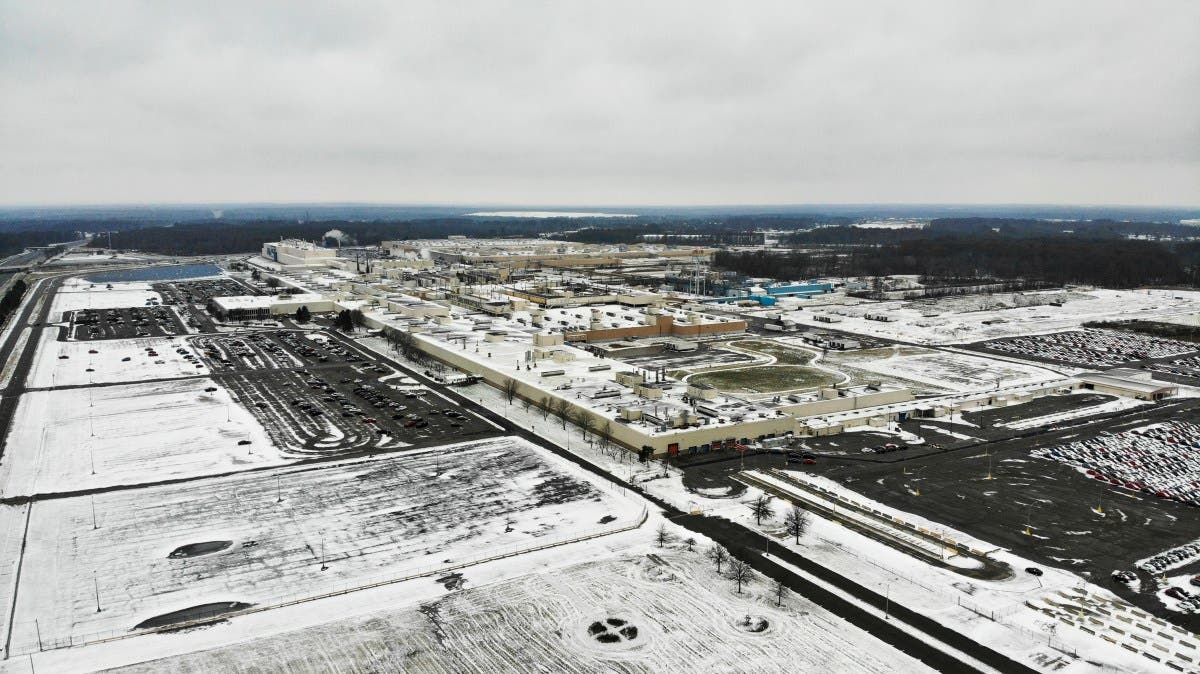
General Motors is laying off workers at its Ohio and Detroit plants due to a decrease in demand for electric vehicles. The layoffs are partly because of recent policy changes that removed consumer tax credits for electric cars. Despite these changes, GM plans to keep a strong presence in the U.S.
Key Facts
General Motors is cutting 550 jobs and temporarily laying off 850 workers at its Lordstown, Ohio battery plant.
GM is also cutting about 1,200 jobs at its assembly plant in Detroit.
The layoffs are due to a drop in demand for electric vehicles.
The drop in demand followed the end of the $7,500 consumer tax credits for electric car buyers.
Electric vehicle sales have decreased by 74% from their high point in 2025.
President Donald Trump had previously supported the Ohio plant, promising to save jobs there.
The plant was initially an auto assembly location but was converted into a battery plant in 2022.
Read the Original
Want the full story? Tap a source to open the original
article.
The Federal Reserve cut its key interest rate for the second time this year, aiming to potentially lower mortgage rates. The central bank's decision comes amid limited data due to a government shutdown. Mortgage rates, while somewhat stable, could see changes depending on future economic developments and Fed actions.
Key Facts
The Federal Reserve cut its interest rate by a quarter percentage point to a range of 3.75% to 4%.
The decision happened with limited economic data available due to the ongoing U.S. government shutdown.
The average 30-year fixed-rate mortgage is currently at 6.19%, down from earlier highs.
Experts are divided on whether mortgage rates will continue to fall by the end of the year.
The Federal Reserve faces internal disagreement on future rate cuts.
The next Fed meeting will occur in approximately six weeks.
Concerns include budget deficits and inflation, which might influence mortgage rates' future direction.
Read the Original
Want the full story? Tap a source to open the original
article.
Two U.S.-based water companies, H2O America and Zurn Elkay, are focusing on water sustainability and conservation. They were recognized on Newsweek’s list of America’s Greenest Companies for their initiatives like tree planting and reducing plastic bottle usage. These actions aim to make a positive impact on the environment.
Key Facts
H2O America and Zurn Elkay are U.S.-based companies working on water sustainability.
They were featured in Newsweek's list of America’s Greenest Companies 2026.
The list ranks companies based on greenhouse gas emissions, water usage, waste generation, and sustainability data.
H2O America received a 4.5-star rating and focuses on water conservation and tree planting.
Evergreen trees are used by H2O America as they help filter water and maintain reservoir quality.
Zurn Elkay received a four-star rating and is recognized for its water-filling stations that reduce plastic bottle usage.
In 2024, Zurn Elkay's filling stations helped avoid using 24.7 billion plastic water bottles.
Both companies emphasize the role of motivated employees in driving their sustainability efforts.
Read the Original
Want the full story? Tap a source to open the original
article.
Car insurance costs have gone up significantly, with premiums increasing by 55% on average since February 2020. Several factors contribute to the rise, including expensive car parts, costly repairs, and higher medical bills from accidents. In response, many drivers are shopping around for better rates and making adjustments to their budgets to manage these costs.
Key Facts
Car insurance premiums have risen by 55% since February 2020.
The increase in costs mainly happened between 2022 and 2024.
Higher expenses for car parts and medical bills are among the reasons for the increase.
Drivers are shopping for insurance more than ever since 2020.
Over 58% of drivers find insurance costs to be a financial strain.
More than a third of drivers avoid filing claims to lower their insurance costs.
The percentage of uninsured drivers increased from 12.4% to 15.4% between 2018 and 2023.
Read the Original
Want the full story? Tap a source to open the original
article.
Car ownership costs in the U.S. have risen sharply since the pandemic, making them harder for many people to afford. This increase is due to more expensive new and used cars, pricier insurance, and rising maintenance costs.
Key Facts
The average new car price in the U.S. is $50,000, according to Kelley Blue Book.
Car ownership costs have gone up 40.59% since January 2020, based on Navy Federal Credit Union data.
A shortage of chips during the pandemic led to a lack of new cars and increased prices.
New car buyers are often purchasing larger and more feature-packed vehicles.
Used car prices have also shot up, averaging over $25,000.
Rising insurance rates and maintenance costs add to the total cost of owning a car.
More car loans now have monthly payments of $1,000 or more as people take on debt to afford a vehicle.
Read the Original
Want the full story? Tap a source to open the original
article.
The article discusses how the cost of owning a car has gone up over the past four years. This includes higher prices for buying cars, insurance, and maintenance, as well as indirect costs like health impacts.
Key Facts
Car prices, both new and used, have increased significantly in the last four years.
The cost of car insurance has also gone up.
Maintenance expenses for cars have risen.
Owning a car can have hidden health-related costs.
These factors together make car ownership more expensive than it appears at first.
Read the Original
Want the full story? Tap a source to open the original
article.
Newspapers report that Chancellor Rachel Reeves may raise income tax by 2p in the upcoming Budget, marking the first basic rate increase since the 1970s. Other news includes early screening for prostate cancer, which could save lives, and reactions to natural disasters like Hurricane Melissa in the Caribbean.
Key Facts
Chancellor Rachel Reeves is considering a 2p increase in income tax.
This would be the first increase to the basic rate of income tax since the 1970s.
Early screening for prostate cancer could reduce deaths by 13% according to a study.
Hurricane Melissa impacted the Caribbean, with significant effects in Jamaica and Cuba.
Rachel Reeves admitted to unlawfully renting out her home without a license.
Five victims of grooming gangs have criticized Nigel Farage's remarks about their abuse.
Lakshmi Mittal reportedly bought $280 million of Russian oil via sanctions-listed ships.
The Federal Reserve cut rates by a quarter point in the U.S.
Read the Original
Want the full story? Tap a source to open the original
article.
K-beauty, short for Korean beauty products, has gained worldwide popularity, resulting in exports from South Korea reaching over $10 billion. Some companies outside South Korea, like US-based Seoul Ceuticals, create K-beauty branded products using Korean ingredients but manufacture them elsewhere. While there is no official definition or designation for what constitutes K-beauty, different opinions exist on whether these products should be made in Korea.
Key Facts
K-beauty refers to Korean beauty and skincare products, which are popular globally.
South Korean exports of K-beauty products were over $10 billion last year.
Seoul Ceuticals is a US company that creates K-beauty products using Korean ingredients but manufactures them in the US.
There is no official definition or protection for the term "K-beauty" like there is for products like Champagne.
Some industry voices, like Seung Gu Kim of Hwarangpoom, argue K-beauty products should be made by Korean manufacturers.
The K-beauty Industry Association is focusing on promoting the trend rather than defining it officially.
Read the Original
Want the full story? Tap a source to open the original
article.