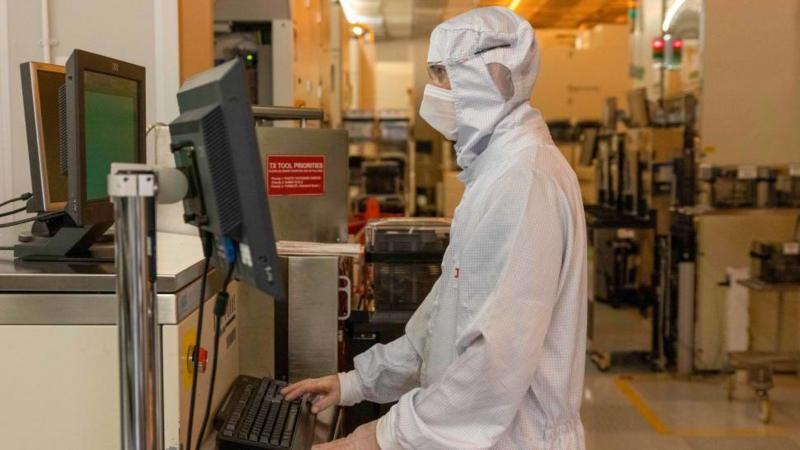
A major tech company, Tata Consultancy Services (TCS), announced it will stop hiring workers through the H-1B visa program in the U.S. This decision comes after President Donald Trump imposed a $100,000 annual fee for companies using these visas.
Key Facts
Tata Consultancy Services is one of the largest sponsors of H-1B visas in the U.S.
The company plans to reduce its reliance on H-1B visa holders and increase local hiring.
President Trump signed an order introducing a $100,000 fee for H-1B visas.
The H-1B visa allows U.S. companies to hire skilled foreign workers.
TCS employs around 11,000 H-1B visa holders in its U.S. workforce of about 32,000 people.
The decision is part of a broader strategy amid changes in U.S. immigration policies.
The fee faces legal challenges, with lawsuits aiming to block it.
Commerce Secretary Howard Lutnick emphasized hiring top talent or Americans under the new fee structure.
Read the Original
Want the full story? Tap a source to open the original
article.
President Trump's youngest son, Barron Trump, has been mentioned as a possible candidate for a seat on TikTok's board as the company comes under U.S. ownership. This proposal is intended to make the app more appealing to young users, though it's unclear if it will happen. The move comes after TikTok, which has many American users, faced scrutiny over national security concerns.
Key Facts
Jack Advent, Trump's former social media manager, suggested Barron Trump for a role on the TikTok board.
The suggestion aims to boost TikTok's popularity among young people.
TikTok has around 170 million users in the U.S.
American lawmakers previously raised concerns about TikTok affecting national security.
TikTok’s parent company, ByteDance, was required to sell its U.S. arm to avoid a ban.
President Trump signed an order allowing TikTok to stay active if it transferred U.S. assets to American investors.
Barron Trump is focused on his studies at New York University.
Barron Trump previously started a real-estate business and is involved with the Trump family's crypto venture.
Read the Original
Want the full story? Tap a source to open the original
article.
Average mortgage rates in the UK have risen slightly for the first time since February, according to financial information service Moneyfacts. Rates for both two-year and five-year fixed mortgages are now about 5%, up by 0.02 percentage points from last month, as lenders react cautiously to economic conditions.
Key Facts
Mortgage rates increased slightly after continuous monthly declines since February.
The average two-year fixed mortgage rate is now 4.98%, and the five-year rate is 5.02%.
Lenders are cautious due to volatile swap rates and uncertainty about future interest rates.
More than 80% of mortgage customers have fixed-rate deals.
Fixed-rate mortgages maintain the same interest rate for a set period, usually two or five years.
The government plans to help with the cost of living, and a Budget is expected in November.
Mortgage rates are much lower than two years ago when the average two-year deal was 6.67%.
Financial advisers suggest borrowers seek independent advice on mortgages.
Read the Original
Want the full story? Tap a source to open the original
article.
A warehouse worker criticized a company's "spirit week" event organized by their HR department, sharing their dissatisfaction online. This event, meant to boost morale, led to discussions about perceived insensitivity and a lack of real engagement with employee needs.
Key Facts
A warehouse worker shared a company flyer on Reddit's r/anti-work, which quickly gained attention.
The flyer detailed themed days for "spirit week," but left the worker feeling belittled.
The company is described as one of the wealthiest, with significant yearly revenue.
The worker mentioned the removal of certain employee benefits, like holiday pay and discounts.
Kim Williams, an HR expert, commented that such events may indicate structural issues within the company.
Reddit users mocked the event for lack of originality and highlighted perceived neglect of employee appreciation.
Read the Original
Want the full story? Tap a source to open the original
article.
JPMorgan is launching a $1.5 trillion investment plan to support key U.S. economic sectors over the next ten years. The plan focuses on areas like advanced manufacturing, defense technology, energy, and frontier technologies.
Key Facts
JPMorgan's plan includes up to $10 billion in direct investments.
The plan aims to support U.S. supply chain, defense, energy, and frontier technologies.
It extends an existing $1 trillion domestic investment program by $500 billion.
JPMorgan CEO Jamie Dimon mentioned the need for less regulation and better education alignment.
The announcement follows President Trump's recent tariff threat on Chinese goods.
Other major companies like Apple, Micron, and Nvidia have also announced U.S. investment plans this year.
The initiative aligns with President Trump's goals to enhance domestic manufacturing.
Details on the funding specifics for the $1.5 trillion investment are not fully detailed by JPMorgan.
Read the Original
Want the full story? Tap a source to open the original
article.
A study by Badeloft USA found that Fort Worth, Texas has the largest average home size among major U.S. cities. The study shows a pattern where cities away from the coasts, like those in the South and Midwest, offer larger homes and better prices compared to coastal cities. Rising home prices and interest rates are making it hard for many Americans to afford homes.
Key Facts
Fort Worth, Texas has the largest average home size in the U.S. among major cities.
The study analyzed housing data from sources including the U.S. Census Bureau and Zillow.
Inland cities often offer larger and more affordable homes than coastal cities.
Nashville, Austin, and Albuquerque also have large average home sizes.
Albuquerque and Kansas City rank high in both home size and buyer demand.
Coastal cities like San Jose and Boston rank lower due to higher demand but smaller homes.
Most U.S. renter households spend over 30% of income on rent, making them cost-burdened.
Increasing home prices and interest rates are limiting homeownership opportunities.
Read the Original
Want the full story? Tap a source to open the original
article.
Lloyds Banking Group is setting aside nearly £2 billion to deal with claims linked to a car finance scandal involving hidden commissions. The Financial Conduct Authority (FCA) has proposed a compensation scheme for affected customers, potentially affecting around 14 million car finance deals. Lloyds anticipates a substantial financial impact due to the large number of claims.
Key Facts
Lloyds Banking Group has allocated nearly £2 billion for car finance compensation.
An additional £800 million has been set aside due to a higher number of expected claims.
The FCA proposes compensation for deals between 2007 and 2024 involving hidden commissions.
About 14 million finance deals are affected, with average payouts of £700 each.
Total lender payouts could reach £8.2 billion.
The FCA scheme allows free consumer access but offers low interest payouts compared to the PPI scandal.
The Supreme Court ruling limited the scope of eligible cases for compensation.
The Finance and Leasing Association argues the FCA's proposed payouts are excessive.
Read the Original
Want the full story? Tap a source to open the original
article.
Although natural gas prices are low, many people in the U.S. are seeing higher gas bills. This is due to the rising costs of replacing and upgrading old gas pipelines, which utilities pass on to customers.
Key Facts
Natural gas prices are low, but utility bills for gas are high.
Utilities like PECO are spending billions to upgrade gas pipelines and infrastructure.
Customers end up paying for these upgrades through higher bills.
Infrastructure upgrades are partly to improve safety after past pipeline explosions.
Critics question spending on new pipelines as the world moves away from fossil fuels.
Gas utilities make money by building and replacing infrastructure, not from selling gas directly.
Spending on gas pipeline constructions increased by 50% from 2022 to 2023.
Regulations allow utilities to recover the money spent on upgrades through customer bills.
Read the Original
Want the full story? Tap a source to open the original
article.
The U.S. stock market is showing high valuation levels, sparking concerns of a possible market correction similar to past financial crashes. The Shiller price-to-earnings ratio, a tool to measure stock market value, is much higher than average, causing worry among investors. Factors like heavy investment in artificial intelligence and a few dominant tech stocks are contributing to these fears.
Key Facts
The Shiller price-to-earnings (P/E) ratio is a metric used to assess long-term stock market values.
This ratio recently exceeded 40, much higher than its historical average of 17.3.
High P/E ratio levels have previously appeared before major market crashes.
The "Buffett Indicator," another market valuation tool, is also at concerning levels.
Large investments in artificial intelligence are seen as speculative and potentially risky.
The market concentration in a few tech stocks may contribute to instability.
Some experts liken current AI investment enthusiasm to past technological bubbles.
Despite concerns, the S&P 500 index has continued to rise in the past three years.
Read the Original
Want the full story? Tap a source to open the original
article.
The U.S. and China are changing their trade relations to be less dependent on each other due to national security concerns. China is building its own trading network and limiting purchases from the U.S., while the U.S. considers strengthening ties with other regions like Central America through agreements like CAFTA-DR.
Key Facts
The U.S. and China are moving to reduce economic dependence on each other.
China has increased controls on exporting certain materials, citing national security.
President Trump is concerned with China's reduced purchases of American soybeans and energy.
China is creating trade relationships with countries in Latin America and Africa by offering financing and buying raw materials.
America holds significant consumer purchasing power, contributing to a large trade deficit.
In 2019, part of China's trade with the U.S. was declared as a "people's war" by its official publication.
The CAFTA-DR agreement could help the U.S. replace some imports from China with goods from Central America.
There is potential for Latin American producers to take a larger share of U.S. imports currently supplied by China.
Read the Original
Want the full story? Tap a source to open the original
article.
The U.S. trucking industry is facing several challenges, including increased bankruptcies, labor issues, and declining demand. Experts point to factors like tariffs and economic pressures as contributors to these problems.
Key Facts
The trucking industry moves about 11 billion tons of freight each year in the U.S.
Trucking companies are filing for bankruptcy, with over 30 filing for Chapter 11 since early 2023.
There is debate over whether the issue is a shortage of drivers or high turnover rates.
Demand for freight services has declined since late 2022, contributing to a "freight recession."
Tariffs on heavy-duty trucks, effective in November, may increase production costs for U.S. manufacturers.
Freight volumes have been decreasing since early 2022, partly due to high tariffs affecting consumer demand.
Some experts argue the industry currently has excess capacity rather than a shortage of drivers.
Read the Original
Want the full story? Tap a source to open the original
article.
The Nobel Prize in Economics was awarded to three researchers for their work on how technological innovation drives economic growth. Joel Mokyr, Peter Howitt, and Philippe Aghion will share about $1.2 million. Their theories focus on how new technology boosts growth and the concept of creative destruction, where new advancements replace old ones.
Key Facts
Joel Mokyr, Peter Howitt, and Philippe Aghion won the Nobel Prize in Economics.
They were recognized for their research on technology's role in economic growth.
The prize money to be shared is 11 million Swedish kroner, approximately $1.2 million.
All three researchers earned their doctorates from universities in the United States.
Their work includes the idea of creative destruction, where new innovations make previous ones obsolete.
They highlighted the need to manage technological change, such as providing support for workers whose jobs become outdated.
Aghion warned that protectionist trade policies could hinder economic progress.
The economics prize was added to the Nobel Prizes to celebrate Sweden's central bank anniversary.
Read the Original
Want the full story? Tap a source to open the original
article.
Three researchers won the Nobel Prize in Economics for their work on technology, economic growth, and a concept called "creative destruction." These researchers are Joel Mokyr, Peter Howitt, and Philippe Aghion. They studied how technological changes drive economic developments and how societies can handle these changes.
Key Facts
The Nobel Prize in Economics was awarded to Joel Mokyr, Peter Howitt, and Philippe Aghion.
They are recognized for their work on technology and economic growth.
The concept of "creative destruction" involves old technologies being replaced by new ones.
The winners will share a prize of 11 million Swedish kronor, around $1.2 million.
Joel Mokyr is known for his theory on technological change and economic growth over two centuries.
Howitt and Aghion expanded on Mokyr's work, focusing on "creative destruction."
The winners received their doctorate degrees from U.S. universities.
During the awards, there was a caution about protectionist trade policies impacting growth.
Read the Original
Want the full story? Tap a source to open the original
article.
The U.S. housing market is experiencing slower growth and price declines in many states. Home prices are still rising but at a slower rate, while rents are seeing the slowest growth in 14 years. This situation is partly due to higher costs for homes and borrowing, leading to more available properties and giving buyers more options.
Key Facts
Home price growth in the U.S. has slowed significantly, with declines in nearly half of the states.
Rent growth is at its slowest rate in 14 years.
Over 2.1 million homes were for sale in August, a 10.5% increase from the previous year.
Home sales in August were down by 2.2%, and homes spent more days on the market.
The median home sale price was $439,198 in August, up 1.5% from the previous year.
Former boomtowns in states like Florida and Texas are seeing price declines.
Rental markets also show weakness, with lower rent growth and declining rents in many areas.
Read the Original
Want the full story? Tap a source to open the original
article.
The Dutch government has stepped in at Nexperia, a Chinese-owned chip company based in the Netherlands, due to concerns about economic security in the Netherlands and Europe. This could lead to more tension between the European Union and China. The government wants to ensure Nexperia’s chips remain available during emergencies.
Key Facts
The Netherlands intervened at Nexperia due to potential risks to economic security.
Nexperia is a chipmaker owned by the Chinese company Wingtech.
Nexperia has been told to sell its silicon chip plant in Newport, Wales because of national security concerns.
The Dutch government used the Goods Availability Act to intervene, a law for exceptional circumstances to protect economic security.
The government believes Nexperia's operations threaten crucial technological knowledge and capabilities.
Nexperia's production can continue as usual, despite the intervention.
Wingtech's shares in Shanghai dropped by 10% after the news.
Wingtech is already on a U.S. list that restricts exports of American-made goods to them.
Read the Original
Want the full story? Tap a source to open the original
article.
Paraguay is working to become a major technology hub in South America. Gabriela Cibils, who worked in Silicon Valley, is leading efforts to attract tech companies to the country. Paraguay's cheap and green electricity from hydroelectric power is a major draw for tech firms.
Key Facts
Gabriela Cibils aims to develop a tech industry in Paraguay, inspired by her experiences in Silicon Valley.
Paraguay is located between Brazil and Argentina and is not traditionally focused on technology.
The Itaipu Dam, located on the Paraná River, provides 90% of Paraguay's electricity using hydroelectric power.
Paraguay offers the cheapest electricity in South America and is the largest exporter of clean energy globally.
The government, led by President Santiago Peña, is trying to attract tech firms by highlighting the country's renewable energy, young population, low taxes, and economic stability.
A planned digital park near Asunción is under development, with the government investing $20 million in the first phase, expecting private investments to follow.
Minister of Technology and Communication, Gustavo Villate, is actively involved in these efforts to enhance Paraguay’s tech sector.
Read the Original
Want the full story? Tap a source to open the original
article.
Five major carmakers, including Mercedes and Ford, are going to trial in the UK over claims that they cheated on emissions tests. The case involves 220,000 car owners who accuse the companies of using software to make cars appear less polluting during tests. A decision from the court is not expected until 2026.
Key Facts
The trial involves five carmakers: Mercedes, Ford, Peugeot/Citroën, Renault, and Nissan.
They are accused of using software to cheat on emissions tests.
The case is part of a larger scandal known as "dieselgate," which started in 2015.
Lawyers say this is the largest class action lawsuit in English and Welsh history.
The case affects 220,000 car owners out of a potential 1.6 million.
Nine other carmakers could face similar claims based on this trial's outcome.
A High Court ruling is expected by summer 2026, with a possible further trial on compensation in autumn 2026.
The carmakers deny the allegations, stating their vehicles complied with regulations at the time.
Read the Original
Want the full story? Tap a source to open the original
article.
A leading think tank, the Institute for Fiscal Studies (IFS), has advised UK Chancellor Rachel Reeves to avoid quick and ineffective tax solutions in the upcoming Budget. The IFS suggests that while the government needs to increase tax revenues, some tax hikes could harm the economy, and it recommends reforms to make the tax system fairer and more supportive of growth.
Key Facts
Chancellor Rachel Reeves is expected to raise taxes in the next Budget to meet financial rules.
The Institute for Fiscal Studies (IFS) warns against quick and ineffective tax changes, calling them potentially harmful.
The IFS suggests that reforming property and capital gains taxes would be a good start.
The UK government aims not to borrow for day-to-day spending and to reduce debt as a share of national income before the next election.
Labour had previously promised not to increase income tax, National Insurance, or VAT for working people.
The IFS advises against a wealth tax, citing practical challenges and potential negative effects on savings.
Reforming council tax to reflect current property values is recommended by the IFS.
The Treasury indicates the Budget will focus on balancing public service funding with encouraging growth.
Read the Original
Want the full story? Tap a source to open the original
article.
Recently, China decided to stop buying soybeans from the U.S. This has added financial pressure to American soybean farmers, including those in Minnesota, who were already struggling financially.
Key Facts
Farm bankruptcies are increasing in the U.S.
President Trump's trade policies have contributed to financial issues for soybean farmers.
China is the largest buyer of soybeans globally.
China stopped buying soybeans from the U.S. as a response to U.S. trade policies.
Minnesota farmers are feeling the financial strain more during the harvest season.
Megan Thompson reported on the situation by visiting farmers in Minnesota.
Read the Original
Want the full story? Tap a source to open the original
article.
Younger people in Generation Z are changing how they think about saving for the future. Rather than focusing on pensions for retirement, they are choosing flexible work, freelancing, and investments they can control now. Many do not trust that traditional pension systems will be there for them in the future.
Key Facts
Gen Z includes people born between 1997 and 2012.
Nearly half of Gen Z in the UK and US doubt the state pension or social security will be available when they retire.
Only about 15% of private employers still offer traditional pensions.
Gen Z workers are more likely to have used their retirement savings early compared to older generations.
A study suggests UK 25-year-olds may need £3.1 million ($4.1 million) to retire at 65.
Many companies now offer 401(k) plans instead of pensions.
Gen Z values retirement savings that are flexible and can move with them from job to job.
Gen Z is focusing on new savings models to match the changing economic environment.
Read the Original
Want the full story? Tap a source to open the original
article.