Due to climate change, some wineries are starting to mix wines from different years to keep the taste consistent. This practice, called non-vintage blending, is more common in sparkling wines but is now being used for still wines as well. Warmer weather and extreme events like wildfires are affecting vineyards worldwide, leading wine producers to consider new methods.
Key Facts
Climate change is causing hotter weather and more extreme events, like wildfires, in vineyard areas.
Non-vintage wine blends mix wines made from grapes harvested in different years.
In Napa Valley, California, higher temperatures and wildfires have impacted vineyards significantly.
Chris Howell, a winemaker in Napa Valley, uses non-vintage blends to manage the impact of climate changes.
Sparkling wines, especially Champagne, often use non-vintage blends to maintain consistency.
Italian winemaker Riccardo Pasqua started making Italy's first multi-year still wine as a way to stabilize the wine's quality.
Pasqua's family winery blends wines from up to five different years to achieve a desired taste.
Read the Original
Want the full story? Tap a source to open the original
article.
Evergrande, once China's largest property developer, will be removed from the Hong Kong stock market after facing financial struggles due to massive debt. The company's collapse is notable as it once played a significant role in China's economy. Evergrande is now undergoing liquidation, impacting its projects and associated ventures.
Key Facts
Evergrande will be delisted from the Hong Kong stock market.
It was once valued at over $50 billion.
The company collapsed under $300 billion in debt.
Evergrande defaulted on some overseas debts after new borrowing rules in China.
Its founder, Hui Ka Yan, was fined and banned from China's capital market.
Liquidators are attempting to recover money from the company's assets.
Evergrande had 1,300 projects in 280 cities at the time of its downfall.
China's wider economy has been affected by the property sector's troubles.
Read the Original
Want the full story? Tap a source to open the original
article.
European postal agencies are pausing or stopping package shipments to the U.S. because a tariff exemption for low-value items is ending. This change means that many small packages that came to the U.S. without extra charges will now face tariffs.
Key Facts
European postal services are stopping shipments to the U.S. due to a change in tariff rules for packages worth $800 or less.
The de minimis tariff exemption, which avoided fees on small packages, has been revoked by President Trump.
Packages from countries other than China will also be affected starting August 29.
At least 16 European postal services plan to pause or limit U.S. shipments according to the trade group PostEurop.
The U.K.'s Royal Mail will halt services temporarily, with a plan to resume under new rules.
Belgium and Germany have already paused shipments, while other countries like France and Greece also expect disruptions.
Last year, 1.3 billion packages entered the U.S. under the de minimis rules, with a significant portion from China.
Discount retailers like Shein and Temu are affected by increasing shipment costs due to these tariff changes.
Read the Original
Want the full story? Tap a source to open the original
article.
Canada has imposed tariffs on U.S. wine, affecting the industry in the United States. A winery in California discusses how these tariffs are impacting the U.S. alcohol sector.
Key Facts
Canada placed tariffs on wine imported from the United States.
The tariffs are a response to trade tensions between the two countries.
These tariffs have negatively affected the U.S. wine industry.
A winery in California is experiencing challenges due to the Canadian tariffs.
The tariffs are part of a broader trade dispute involving other products as well.
This trade conflict impacts U.S. wine exports to Canada.
Read the Original
Want the full story? Tap a source to open the original
article.
Michigan's tourism campaign, Pure Michigan, has introduced a scent called FRESH to promote the state’s summer attractions. The scent, developed by The Aroma Labs, aims to capture the essence of a Michigan summer, including lavender and beach vibes. The campaign includes selling sprays online and promoting the scents in travel magazines to attract tourists.
Key Facts
Michigan's tourism campaign, Pure Michigan, created a summer-themed scent called FRESH.
The scent aims to capture the essence of a Michigan summer, including lavender and beach experiences.
Tanya Thompson, founder of The Aroma Labs, developed the fragrance.
The spray is sold online for $32.
Planned future scents include "HARVEST" for fall and "FIRST SNOW" for winter.
Pure Michigan has a $15 million marketing program for this tourism season, including scratch and sniff panels in magazines.
The campaign promotes slow, mindful travel to Michigan tourist spots like Belle Isle.
Pure Michigan is part of the Michigan Economic Development Corporation, supporting the campaign.
Read the Original
Want the full story? Tap a source to open the original
article.
A UK disability charity is urging airports to stop charging fees for dropping off blue badge holders, who have disabilities, near terminals. Many airports have inconsistent rules or require complex steps for blue badge users to get fee waivers, creating difficulties for them. The call for free drop-off aims to ensure easier access for people with disabilities at airports.
Key Facts
UK airports have varying policies about drop-off fees for blue badge holders, who have disabilities.
Some airports let blue badge holders drop off for free, while others require them to use specific parking that is sometimes far from terminals.
London City Airport does not charge any drop-off fees for passengers.
Larger UK airports like Heathrow, Liverpool, and Manchester allow free drop-off for blue badge holders, but some require prior online registration.
Airports like Cardiff, Newcastle, and Stansted charge disabled and regular passengers the same drop-off fees with no discount.
The process for getting a fee waiver can be complex and not all blue badge holders can easily navigate it, especially if it's online.
Disabled Motoring UK says drop-off fees for disabled individuals should not exist, as they complicate travel.
Accessibility requirements vary by airport, and passengers are advised to check policies online before travel.
Read the Original
Want the full story? Tap a source to open the original
article.
Some European shipping companies have temporarily stopped sending parcels to the U.S. because of new tariff rules. The change ends a previous rule that allowed packages worth less than $800 to enter the U.S. without tariffs. This has created confusion and challenges for shipping companies as they adjust to the new requirements.
Key Facts
European companies like DHL and Royal Mail are pausing some U.S.-bound shipments.
The change is due to the end of the "de minimis" rule that allowed duty-free entry for packages under $800.
The rule had already been removed for China and Hong Kong, and now applies globally.
The new rule does not affect letters or gifts under $100 sent between individuals.
Shipping companies are concerned about unclear policies and logistics changes needed because of the new tariffs.
DHL will continue using its more expensive service, DHL Express, for U.S. shipments.
Companies say they need more information on how customs duties will be handled under the new rules.
The Royal Mail expects a short disruption while adjusting to the new system for calculating and invoicing tariffs.
Read the Original
Want the full story? Tap a source to open the original
article.
Air Canada flight attendants went on strike due to unpaid ground work before flights. A tentative agreement reached with the airline includes partial pay for these duties. The deal may set a new standard in the industry, but not all attendants are satisfied with the agreement.
Key Facts
Air Canada flight attendants protested against not being paid for work on the ground.
A new agreement includes pay increases over several years and partial pay for pre-flight duties.
The strike caused problems during a busy travel season but ended when a tentative deal was reached.
The changes could influence pay standards at other North American airlines.
Flight attendants at other Canadian airlines and United Airlines in the U.S. also lack ground pay.
A business expert suggested the change could impact all major airlines in North America.
Some cabin crew earn above C$54,000, with senior staff earning more than C$70,000 annually.
Delta Airlines began paying for ground work in 2022, leading changes in airline pay practices.
Read the Original
Want the full story? Tap a source to open the original
article.
Trading cards like Pokémon and sports cards are increasingly popular, creating a retail boom. Big retailers, like Target and Walmart, report significant growth in trading card sales, with many adults buying them as collectibles or investments. Companies are seeing substantial sales increases, driven by new releases and strong consumer interest.
Key Facts
Pokémon and sports trading cards are driving increased sales for retailers like Target and Walmart.
Around 20% of adults buy Pokémon cards mainly for collection or investment purposes.
U.S. toy sales increased by 6% early in the year, boosted by trading card sales.
Walmart reported a 200% increase in trading card sales from February 2024 to June 2025.
Target's trading card sales are up nearly 70% this year, expected to exceed $1 billion in 2025.
Pokémon card sales on eBay have grown for 10 straight quarters.
Sales for Pokémon and Topps cards saw over 200% yearly growth, according to StockX.
Trading cards like Pokémon are consistently among the top searched items on OfferUp.
Read the Original
Want the full story? Tap a source to open the original
article.
Paige Louise Williams started her beauty business, P. Louise, with a £20,000 loan from her grandmother. Over 10 years, the business grew from a salon to a large beauty brand generating substantial revenue. The brand's success was aided by strategic moves like offering makeup courses and leveraging social media platforms like TikTok.
Key Facts
Paige Williams started her beauty business, P. Louise, with a £20,000 loan from her grandmother.
Initially, Paige had no formal business plan and limited qualifications after leaving school.
In 2014, she opened her own salon using the loan.
Her business gained traction by offering makeup classes and online courses.
A key product, Rumour Base, became the top eyeshadow base in the market, boosting sales.
TikTok played a significant role in her business growth, with P. Louise setting a UK record on TikTok Shop by earning over £1.5 million in 12 hours.
The company moved from a small space to a 36,000 square foot warehouse due to its expansion.
Read the Original
Want the full story? Tap a source to open the original
article.
Excel Parking was ordered to pay £10,240 to charity after losing a legal case against Hannah Robinson for the second time. The case was about parking charges imposed by Excel Parking due to a rule requiring users to pay within five minutes, which courts found unfair. Despite an appeal, Excel Parking's claims were dismissed as unreasonable by the judge.
Key Facts
Excel Parking charged Hannah Robinson £11,390 for parking charges, which she disputed in court.
The court case involved a rule at an Excel-managed car park that required payment within five minutes.
Hannah Robinson initially tried to handle charges on her own but later received legal aid from a law firm.
Excel Parking's demand for quick payment was criticized and deemed unfair by a court.
The private parking sector has banned this "five-minute payment rule."
Excel paid £10,240 to charity after losing the legal case against Robinson twice.
Members of Parliament also criticized Excel's payment rule.
Hannah Robinson received 67 parking charge notices worth £11,390, which included £70 debt collection fees for each charge.
Read the Original
Want the full story? Tap a source to open the original
article.
U.S. teenagers are increasingly ordering custom-made African prom dresses, creating a business boom for fashion designers in Africa. These dresses are popular because they offer unique designs and a cultural statement, and they are usually cheaper than custom-made dresses in the U.S.
Key Facts
U.S. teens are buying custom-made prom dresses from African designers, especially from Nigeria and Ghana.
A prom dress from Africa typically costs between $600 and $1,500.
These dresses are less expensive than those made in the U.S., which start at around $3,500.
Brianna LeDoux, a teenager from Florida, went viral on TikTok with her Nigerian-made dress.
The demand for African prom dresses is rising, partly due to social media trends.
Designer Shakirat Arigbabu in Nigeria made over 1,500 dresses for the U.S. market in one season.
The trend has led to increased business for African designers, requiring them to hire more staff to meet demands.
Read the Original
Want the full story? Tap a source to open the original
article.
The U.S. government will acquire a 10% stake in the chipmaker Intel as part of an agreement announced by President Donald Trump. The deal aims to support Intel's business turnaround efforts and follows a significant investment from SoftBank. The official announcement of this investment is anticipated soon.
Key Facts
President Donald Trump announced a 10% U.S. government stake in Intel.
Intel has been facing business challenges, including a $18.8 billion loss reported in 2024.
SoftBank recently invested $2 billion into Intel, signaling confidence in the company.
Federal backing is expected to help Intel revive its foundry (manufacturing) business.
The move is part of a broader U.S. strategy to boost domestic chip production.
Senators Bernie Sanders and Elizabeth Warren advocated for the U.S. Treasury to get a stake in companies receiving government grants.
The investment is part of efforts to decrease reliance on Asian chip manufacturing.
A formal announcement about the investment is coming soon.
Read the Original
Want the full story? Tap a source to open the original
article.
Canada announced that it will remove many of its retaliatory tariffs to align with U.S. tariff exemptions under the United States-Mexico-Canada trade pact (USMCA). Prime Minister Mark Carney believes this will improve trade talks with the U.S. even as some Canadian leaders express concerns. The USMCA agreement exempts most goods from tariffs, benefiting the trade relations of the involved countries.
Key Facts
Canada will drop retaliatory tariffs to align with U.S. exemptions under the USMCA.
The USMCA shields most goods from tariffs, maintaining free trade for over 85% of Canada-U.S. trade.
Canada imposed 25% tariffs on various U.S. goods in response to earlier U.S. tariffs but now plans to ease them.
The agreement is set for review in 2026, and further trade negotiations are expected.
U.S. President Donald Trump has considered renegotiating USMCA, and sector-specific tariffs such as steel and aluminum still apply.
Over 75% of Canada’s exports go to the U.S., showing the importance of the trade relationship.
Prime Minister Carney discussed trade issues with President Trump and stressed preparations for future trade agreement reviews.
Read the Original
Want the full story? Tap a source to open the original
article.
Target's sales and stock value have dropped because of a boycott against its decision to reduce its diversity, equity, and inclusion programs. This boycott led to fewer people visiting Target stores and contributed to the CEO, Brian Cornell, stepping down. Pastor Jamal Bryant played a key role in organizing the boycott.
Key Facts
Target's sales and stock prices have fallen.
A boycott began after Target cut back on its diversity, equity, and inclusion programs.
The boycott has caused fewer people to visit Target stores.
Brian Cornell, Target's CEO, resigned amid the controversy.
Pastor Jamal Bryant was a leading figure in organizing the boycott.
Target is now working to repair its image with customers.
Read the Original
Want the full story? Tap a source to open the original
article.
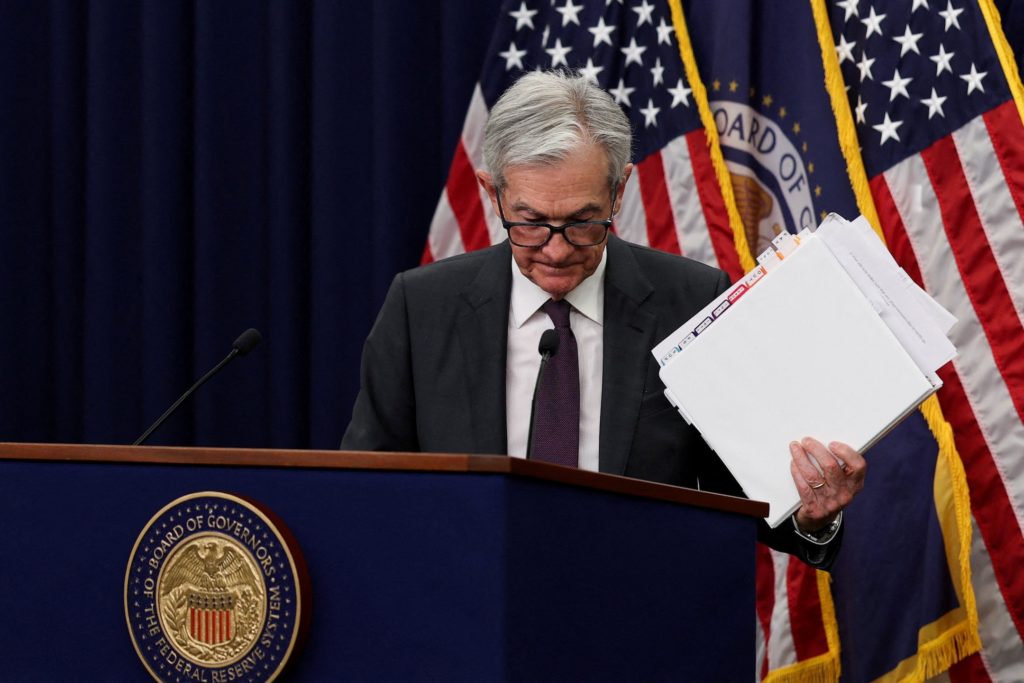
Fed Chair Jerome Powell suggested that the central bank might lower interest rates as early as September. He noted that the situation is difficult because inflation is rising while the job market is slowing down.
Key Facts
Jerome Powell is the Chair of the Federal Reserve.
Powell indicated a possible interest rate cut by September.
Inflation is currently increasing.
The job market is cooling down, meaning fewer jobs are being added or available.
Powell described the Fed's current situation as "challenging."
Amna Nawaz talked with Loretta Mester, the former president of the Federal Reserve Bank of Cleveland, about this topic.
Read the Original
Want the full story? Tap a source to open the original
article.
Canada has decided to remove some of its tariffs on U.S. goods in response to the United States removing some of its own tariffs, as both countries work to lessen a trade conflict. Tariffs will remain on certain products like steel and cars, but most goods will now move freely between the two countries under the US-Mexico-Canada Agreement. The move reflects efforts to find the best trade arrangement possible given the current economic environment.
Key Facts
Canada is lifting tariffs on U.S. goods that fall under the US-Mexico-Canada Agreement (USMCA).
The United States clarified it will not impose tariffs on Canadian goods complying with USMCA.
Some tariffs, specifically on products like steel, aluminum, and cars, will still exist.
Changes in tariffs between the two countries will take effect on September 1.
Trade integration between the U.S. and Canada is not expected to return to levels seen before the trade conflict.
Mark Carney, Canadian Prime Minister, led this decision, which comes amid shifts in global trade policies led by the U.S.
The U.S. government has welcomed Canada's decision to ease tariffs.
Read the Original
Want the full story? Tap a source to open the original
article.
Canada will remove some of its tariffs on goods from the United States, keeping them on items like cars, steel, and aluminum. This decision follows a phone call between Canadian Prime Minister Mark Carney and U.S. President Donald Trump and aligns with the US-Mexico-Canada free trade agreement. The changes are set to start on September 1.
Key Facts
Canada will remove tariffs on many U.S. goods but will keep them on cars, steel, and aluminum.
Prime Minister Mark Carney announced this decision after speaking with President Donald Trump.
Canada originally imposed a 25% tariff on about C$30 billion worth of U.S. goods in response to U.S. tariffs.
The U.S. tariffs were 35% on goods not covered by the existing free trade deal.
Canada will align its tariffs with the US-Mexico-Canada free trade agreement starting September 1.
The White House welcomed Canada's decision, calling it "long overdue."
The majority of Canadians support the retaliatory tariffs against the U.S.
Trump has implemented or raised tariffs on global goods, advocating for favorable trade deals for the U.S.
Read the Original
Want the full story? Tap a source to open the original
article.
President Donald Trump announced that Intel has agreed to provide the U.S. government with a 10% share in its company. This decision follows discussions with Intel's CEO and is part of Trump’s strategy to increase U.S. chip production. Intel has not yet confirmed the agreement publicly.
Key Facts
President Trump stated that Intel will give the U.S. government a 10% stake.
The agreement was discussed after a meeting with Intel CEO Lip-Bu Tan.
Intel has faced financial challenges and is seeking ways to improve.
The U.S. government may convert grants into a company stake.
This move is part of Trump’s plan to boost domestic chip production.
Trump called for Intel's CEO to resign due to ties with China but later retracted after a meeting.
Intel is dealing with competition from companies like Nvidia and AMD.
The U.S. government investing in a private company is rare but has historic precedents.
Read the Original
Want the full story? Tap a source to open the original
article.
President Trump announced that Intel agreed to give the U.S. government a 10% stake in the company. This decision aligns with efforts to have more chip manufacturing in the U.S. and relates to government funds from the CHIPS and Science Act. The specifics of the agreement and Intel's internal response are still unclear.
Key Facts
President Trump requested a 10% stake in Intel from its CEO Lip-Bu Tan.
Trump's statement said Intel agreed to the deal at a White House meeting.
The U.S. government funding from the CHIPS Act could be converted into Intel’s equity.
The CHIPS Act provides $53 billion for chip-related activities.
The U.S. government's stake in Intel would not include voting rights.
Intel has been facing financial challenges and reported losses this year.
Commerce Secretary Howard Lutnick confirmed the agreement on social media.
Intel plans to build two chip production facilities in Ohio, though there are concerns about demand.
Read the Original
Want the full story? Tap a source to open the original
article.