
The Actual News

Just the Facts, from multiple news sources.

Technology News

Breaking news and analysis from the world of technology

Wordle to become TV quiz show with Savannah Guthrie as host

Wordle to become TV quiz show with Savannah Guthrie as host

Summary

The popular word game Wordle is being turned into a TV quiz show that will air in the UK and the US. Savannah Guthrie will host the show, which is produced by Jimmy Fallon's company and will feature contestants competing for cash prizes.

Key Facts

  • Wordle is a daily online word puzzle owned by The New York Times since 2022.
  • The TV show will be filmed in Manchester, England, and shown in both the UK and US.
  • Savannah Guthrie, a TV news anchor, will host the show.
  • Jimmy Fallon's production company, Electric Hot Dog, is co-producing the series.
  • Filming was delayed because Savannah Guthrie took time off due to her mother’s disappearance.
  • The show will last 30 minutes per episode and will mimic Wordle’s look and colors.
  • Casting for the first season is open, production starts later this year, and the show premieres in 2027.
  • Wordle was created by Josh Wardle in 2021 and became very popular, especially after The New York Times bought it.
Read the Original

Want the full story? Tap a source to open the original article.

AI-powered hacking has exploded into industrial-scale threat, Google says

AI-powered hacking has exploded into industrial-scale threat, Google says

Summary

Google reports that in just three months, hacking using artificial intelligence (AI) has grown into a large and serious problem. Criminal groups and state-related hackers are using AI tools to find and exploit software weaknesses faster and on a bigger scale than before.

Key Facts

  • AI-powered hacking has quickly become a major threat in the past three months.
  • Groups from China, North Korea, Russia, and criminals use AI models like Gemini, Claude, and OpenAI tools to improve attacks.
  • AI helps hackers test, improve, and increase the scale of their cyberattacks.
  • Anthropic’s AI model Mythos was not released because it could find unknown serious software flaws that might harm governments and industries.
  • Google found criminal groups nearly using AI-discovered flaws for widespread attacks, using AI models other than Mythos.
  • AI tools like OpenClaw have been used without safety limits and can cause problems like deleting many emails.
  • Experts say AI can help both hackers and cybersecurity defenders, and the full effects will take time to become clear.
  • The Ada Lovelace Institute warns that claims about AI greatly improving public sector productivity might be overestimated and do not always consider real-world results or impacts on workers.
Read the Original

Want the full story? Tap a source to open the original article.

A promising Indian launch startup nears its first orbital test flight

A promising Indian launch startup nears its first orbital test flight

Summary

India opened its space launch industry to private companies starting in 2020, allowing them to build rockets and use government facilities. Skyroot Aerospace, a private Indian launch startup, is close to launching its first orbital rocket called Vikram-1 and recently raised $60 million to expand its work.

Key Facts

  • In 2020, India allowed private companies to enter the space launch industry.
  • Skyroot Aerospace was founded in 2018 by former Indian Space Research Organization (ISRO) engineers.
  • Skyroot’s CEO is Pawan Kumar Chandana, an engineer inspired by SpaceX and Rocket Lab.
  • The company chose solid rocket fuel for its first orbital rocket to reduce costs and development time.
  • Skyroot named their rockets “Vikram” after Vikram Sarabhai, a founder of India’s space program.
  • The company successfully launched a smaller suborbital rocket, Vikram-S, in 2022.
  • Vikram-1 is larger and has three solid-fuel stages, preparing for its first orbital flight soon.
  • Skyroot recently raised $60 million, valuing the company at $1.1 billion.
Read the Original

Want the full story? Tap a source to open the original article.
TikTok launches £3.99 subscription for no ads in UK

TikTok launches £3.99 subscription for no ads in UK

Summary

TikTok has started charging UK users £3.99 per month to remove ads from their feed. Users 18 and older will be notified about the subscription option, which lets them control their experience by paying to avoid targeted advertisements.

Key Facts

  • TikTok’s ad-free subscription costs £3.99 per month for UK users aged 18 and over.
  • The subscription removes TikTok’s own ads but not paid or sponsored creator content labeled with "#ad".
  • Users who do not pay will continue to see personalized ads and will no longer be able to opt out of them for free.
  • TikTok plans to notify users gradually through pop-up messages in the coming months.
  • The move follows similar ad-free subscription services by platforms like Instagram, Facebook, and Snapchat.
  • This approach is part of a wider trend where platforms offer users a choice: see personalized ads for free or pay to avoid ads and tracking.
  • Experts say this trend is creating a two-level internet, where privacy and fewer ads are available mainly to paying users.
  • TikTok states the ad-free option gives users more control while still supporting businesses advertising on the platform.
Read the Original

Want the full story? Tap a source to open the original article.

Molière Ex Machina: AI used to create ‘new work’ by beloved French playwright

Molière Ex Machina: AI used to create ‘new work’ by beloved French playwright

Summary

Researchers at Sorbonne University in Paris used artificial intelligence (AI) to help write a new play in the style of the famous French playwright Molière. The play, called *L’Astrologue ou les Faux Présages*, premiered at the Château de Versailles and involved a long process where the AI created drafts that were revised by experts.

Key Facts

  • The play is a three-act comedy inspired by Molière’s style and themes.
  • AI tool named Le Chat (The Cat) was used to create dialogue, music, costumes, and scenery.
  • The project, called Molière Ex Machina, took two and a half years and involved 20,000 exchanges between researchers and the AI.
  • The AI first produced only eight pages of draft, which needed many rewrites to become interesting.
  • Molière’s original texts and readings were fully stored and used by AI to create the play.
  • The theme of astrology was suggested by the AI and relates to topics like manipulation and false beliefs.
  • The play aims to show collaboration between humans and AI, not a fully AI-written script.
  • Plans exist to perform the play in other parts of France and abroad.
Read the Original

Want the full story? Tap a source to open the original article.

Palantir’s access to identifiable NHS England patient data is ‘dangerous’, MPs say

Palantir’s access to identifiable NHS England patient data is ‘dangerous’, MPs say

Summary

NHS England has allowed Palantir, a US tech company, access to patient data that can identify individuals to help improve the health service using AI. This decision has raised concerns among MPs and patient groups about data privacy and security.

Key Facts

  • NHS England gave Palantir access to identifiable patient data before it was pseudonymised (anonymized) to improve healthcare services.
  • Palantir was awarded a £330 million contract to help build the NHS’s federated data platform using AI to combine health records.
  • Patient groups say patients were not informed or consulted about the increased access to their personal data.
  • NHS England says external workers, including Palantir staff, must have government security clearance and follow strict data access rules.
  • MPs, including Rachael Maskell, are calling for the project to be stopped, worried about privacy risks and growing private sector control of NHS data.
  • Palantir says it only processes data as instructed and cannot use it for other purposes due to strict NHS controls.
  • Public polling shows many UK citizens distrust Palantir’s expanding role in public sector data projects.
  • Palantir is also moving to expand its use of AI in UK police intelligence work, which has caused further opposition.
Read the Original

Want the full story? Tap a source to open the original article.

Forget the AI job apocalypse. AI’s real threat is worker control and surveillance

Forget the AI job apocalypse. AI’s real threat is worker control and surveillance

Summary

The main concern with artificial intelligence (AI) in the workplace is not job loss, but how AI is being used to control and monitor workers. While some higher-paid workers use AI to help them, many others face strict AI-driven surveillance that dictates their work and increases stress.

Key Facts

  • AI is often used as a helpful tool for higher-skilled workers like managers and consultants.
  • For many workers, AI acts like a boss, monitoring tasks, schedules, and performance closely.
  • About one-third of UK employers already use software that watches workers’ online activities.
  • AI monitoring systems are common in jobs like warehousing, delivery, and gig work, and may spread to offices, hospitals, and schools.
  • Some companies, like Amazon and Meta, use AI to track detailed worker actions, including keystrokes and mouse movements.
  • The biggest issue is the growing gap in control, autonomy, and wellbeing between workers who use AI and those managed by it.
  • AI-driven surveillance can increase work pressure and hurt mental health by measuring every action workers take.
  • The challenge of AI in work is not only technical but also social, political, and moral.
Read the Original

Want the full story? Tap a source to open the original article.

Sony's failed war against Internet piracy may doom other copyright lawsuits

Sony's failed war against Internet piracy may doom other copyright lawsuits

Summary

The U.S. Supreme Court ruled that Internet service providers (ISPs) like Cox Communications are not responsible for their customers’ copyright violations if they do not encourage or design their services for piracy. This decision protects ISPs and other technology companies from large financial penalties related to users’ illegal sharing of copyrighted materials.

Key Facts

  • The Supreme Court ruled unanimously on March 25 that Cox Communications is not liable for customers’ copyright infringement under the Digital Millennium Copyright Act (DMCA).
  • Cox was sued by Sony Music and other record labels after a jury initially awarded $1 billion in damages in 2019.
  • An appeals court overturned the damages but found Cox guilty of contributory infringement, which means helping others infringe copyrights.
  • The Supreme Court rejected this and said Cox did not induce or design its broadband service for infringement.
  • The ruling also affected other record labels like Warner and Universal, who dropped similar lawsuits against other ISPs.
  • Legal experts say the decision applies broadly to many technology companies, not just ISPs.
  • Companies like Google, Meta, Elon Musk’s X, and Nvidia have cited this ruling when defending against copyright claims.
  • The court’s decision requires showing clear intent to cause infringement to hold a technology provider liable.
Read the Original

Want the full story? Tap a source to open the original article.

Newsweek's AI Impact Awards 2026: Winners

Newsweek's AI Impact Awards 2026: Winners

Summary

Newsweek has presented its second annual AI Impact Awards to recognize 52 organizations for using artificial intelligence to solve business problems and improve efficiency across various industries. The awards reflect the growing use of AI in workplaces, with half of employed American adults using AI at work at least occasionally by early 2026.

Key Facts

  • Newsweek held its second AI Impact Awards in 2026 to honor companies using AI effectively.
  • 52 organizations won awards in 48 different categories.
  • Winners come from industries such as health care, entertainment, web hosting, and mining.
  • AI use in American workplaces has doubled over the last three years.
  • By early 2026, 50% of employed adults in the U.S. reported using AI at work at least a few times per year.
  • There are over 212,000 active AI companies worldwide, with about 25% being startups.
  • The number of AI companies is expected to grow by 10% each year.
  • All winners are invited to the AI Impact Summit in San Francisco on September 9-10, 2026, to discuss AI’s future impact.
Read the Original

Want the full story? Tap a source to open the original article.

Bumble plans a reset to lure Gen Z back

Bumble plans a reset to lure Gen Z back

Summary

Bumble, a popular dating app, is changing its design to attract younger users who feel tired of traditional online dating. The company will add an AI helper called "Bee" to improve user profiles and remove swiping as a main feature, aiming to make dating feel more natural and less stressful.

Key Facts

  • Bumble was founded in 2014 by Whitney Wolfe Herd.
  • The app’s original swipe feature and women-first messaging rule will be changed.
  • Bumble is introducing an AI assistant named "Bee" to help users improve their profiles.
  • The app will not use AI to create photos or send messages but to support better connection.
  • Bumble plans to promote group dates and non-romantic friendships with features like Bumble BFF.
  • The goal is to build a higher quality user base that leads to real-life meetings.
  • Many apps are working to reduce spam and create more authentic online experiences.
  • Bumble sees more cultural burnout and fatigue with online dating in the U.S. compared to other countries.
Read the Original

Want the full story? Tap a source to open the original article.

Jensen Huang to college grads: "Run. Don't walk" toward AI

Jensen Huang to college grads: "Run. Don't walk" toward AI

Summary

Nvidia CEO Jensen Huang told graduates at Carnegie Mellon University that artificial intelligence (AI) offers a rare chance to rebuild American industry and create new jobs. He encouraged them to take advantage of the many opportunities AI is opening in fields like manufacturing and construction.

Key Facts

  • Jensen Huang is the founder and CEO of Nvidia, a leading company in AI chip technology.
  • Huang spoke to 5,800 undergraduate and graduate students at Carnegie Mellon University.
  • He said AI is creating a new industry with many job opportunities.
  • The AI buildout needs workers such as plumbers, electricians, and builders for chip factories and data centers.
  • He described this moment as a “once-in-a-generation opportunity” to help shape the future.
  • Huang acknowledged that every big tech change causes both fear and hope.
  • He urged graduates to approach technology openly and responsibly to expand human potential.
  • Nvidia is currently the world’s most valuable company.
Read the Original

Want the full story? Tap a source to open the original article.

Cyber-crime increasingly coming with threats of physical violence

Cyber-crime increasingly coming with threats of physical violence

Summary

Cyber-crime attacks are increasing worldwide, and hackers are now often threatening physical violence against employees of targeted companies. In the US, nearly half of ransomware attacks involved threats of harm to staff, with criminals using stolen personal data to intimidate victims.

Key Facts

  • Cyber-attacks in the US rose from about 288,000 in 2015 to over 1 million in 2025, according to FBI data.
  • Financial losses from cyber-attacks in the US reached $20.8 billion in 2025, up from $16.6 billion in 2024.
  • Around 40% of global ransomware attacks in 2025 included threats of physical harm; in the US, this was 46%.
  • Hackers sometimes send threatening notes or use personal information like home addresses and social security numbers to intimidate employees.
  • Some attackers have shown control over manufacturing equipment, risking injury or death as a method of threat.
  • Many ransomware groups are state-sponsored by countries like Russia, China, Iran, and North Korea.
  • Most physical threat incidents come from financially motivated, often very young, hackers aged 17 to 25.
  • Cyber-criminals sometimes hire others to make or carry out the threats of violence.
Read the Original

Want the full story? Tap a source to open the original article.

Talkin' Lovecraft and 'Sucker for Love' with Developer Akabaka

Talkin' Lovecraft and 'Sucker for Love' with Developer Akabaka

Summary

"Sucker for Love" is a video game series created by Joseph "Akabaka" Hunter and his wife Caroline "Akatsuma" Hunter. The games mix Lovecraftian horror, which deals with cosmic and existential fears, with the style of a dating sim, creating a unique and often humorous experience. The third game in the series, "Sucker for Love: Crush Landing," will be released on the Steam platform later this year.

Key Facts

  • "Sucker for Love" started as a two-week game jam project in 2021.
  • The game series is inspired by the horror stories of H.P. Lovecraft.
  • It combines elements of cosmic horror with romantic dating sim gameplay.
  • Joseph Hunter learned a lot about cosmic horror to create the series accurately.
  • Cosmic horror explores themes like forbidden knowledge and the unknown universe.
  • The series uses humor while respecting Lovecraft’s original themes.
  • The third game, "Sucker for Love: Crush Landing," is scheduled for release soon on Steam.
  • The creators plan a fourth and final story in the series in an animated style (OVA-style).
Read the Original

Want the full story? Tap a source to open the original article.
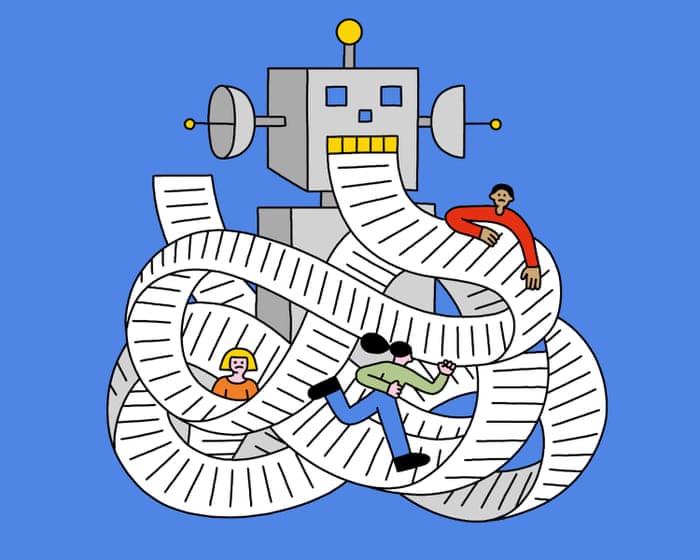
I knew my writing students were using AI. Their confessions led to a powerful teaching moment | Micah Nathan

I knew my writing students were using AI. Their confessions led to a powerful teaching moment | Micah Nathan

Summary

The article discusses how the author, a fiction writing teacher at MIT, noticed that some students used AI tools like ChatGPT to write their stories. The teacher explains the difference between AI-generated writing, which is often flawless but lacks real feeling, and student writing, which may be imperfect but shows real effort and personal expression.

Key Facts

  • The author has taught fiction writing at MIT since 2017.
  • Students are asked to give detailed feedback on each other’s stories during workshops.
  • AI writing produces very polished but impersonal and uninspired text.
  • Student writing is often flawed but shows genuine attempts to communicate feelings and ideas.
  • The teacher values the learning process that comes from struggling with writing rather than producing perfect text.
  • There is historical concern about new technologies causing fear and worry, such as the printing press and telephone.
  • A 2025 MIT Media Lab study looked into how people use ChatGPT for writing essays.
Read the Original

Want the full story? Tap a source to open the original article.

Do you take after your dad’s RNA?

Do you take after your dad’s RNA?

Summary

Scientists in China found that male mice who exercised before mating had offspring that were better at running, even though the offspring shared the same genes as other mice. The researchers discovered small molecules called microRNAs in sperm that seemed to pass exercise benefits to the next generation, showing that factors beyond DNA may influence inherited traits.

Key Facts

  • Male mice who exercised before fathering offspring had babies that ran farther with less muscle fatigue.
  • The offspring were genetically similar to control mice, so their fitness was not due to DNA differences.
  • Exercise changed the levels of microRNAs, small RNA molecules, in the fathers’ sperm.
  • Injecting these microRNAs into embryos produced similarly fit mice without the fathers exercising.
  • Past studies show sperm RNA levels respond to lifestyle factors like diet, stress, and toxin exposure.
  • These RNA changes in sperm may alter gene activity in offspring through a process called epigenetics.
  • Researchers have confirmed these RNA fragments enter fertilized eggs and can affect development.
  • The concept suggests that a father’s habits before conception might influence the health and traits of his children.
Read the Original

Want the full story? Tap a source to open the original article.

Mogging, gen Z and why streaming platform Twitch has changed its rules

Mogging, gen Z and why streaming platform Twitch has changed its rules

Summary

A new website called Omoggle uses facial recognition to let users compete in "mog-offs," contests comparing their looks through measurements of facial features. Twitch recently updated its rules to allow streamers to join trends like Omoggle, despite previous bans on random stranger video chats due to safety concerns.

Key Facts

  • Omoggle is a website where strangers compare their facial features in competitions called mog-offs.
  • The site measures parts of the face like eye tilt and nose width to score users from 1 to 10.
  • "PSL" stands for Perceived Sexual Market Value, a ranking adapted from online forums focused on appearance.
  • Users on Omoggle gain points and rank up or down in categories similar to chess ratings.
  • Twitch had banned random video chats with strangers because of risks from unmoderated content.
  • Twitch now allows such content to follow current trends but advises streamers to be cautious.
  • A psychologist noted that ranking looks by numbers is not meaningful and cautioned against moral panic.
  • The trend started in the US and is now popular with UK streamers and young people, including Gen Z.
Read the Original

Want the full story? Tap a source to open the original article.

Cape Verde bets on tech to reverse postcolonial brain drain

Cape Verde bets on tech to reverse postcolonial brain drain

Summary

Cape Verde is working to grow its digital economy to reduce high emigration rates and become a tech hub in West Africa. The government created a digital economy ministry and built TechParkCV, a technology center that supports startups and training, partly funded by the African Development Bank.

Key Facts

  • Cape Verde has a population of about 529,000 but a diaspora three to four times larger.
  • The internet access rate in Cape Verde is 75%, which is twice the African average.
  • The digital economy ministry aims for technology to make up 25% of the country's GDP by 2030.
  • Schoolchildren in Cape Verde are learning robotics and coding in innovative classroom settings like shipping containers.
  • TechParkCV is a £44.78 million tech facility with startup incubation, youth training, and a conference center.
  • Funding for TechParkCV and its Mindelo campus came mainly from a loan by the African Development Bank.
  • In December, Cape Verde will host the Web Summit, a major global technology conference, marking its first event on the African continent.
  • TechParkCV operates within a tax-incentivized special economic zone to attract companies working remotely worldwide.
Read the Original

Want the full story? Tap a source to open the original article.

Saturday Sessions: Hiss Golden Messenger performs "Last Orders"

Saturday Sessions: Hiss Golden Messenger performs "Last Orders"

Summary

Hiss Golden Messenger, a music project led by singer-songwriter MC Taylor from North Carolina, performed the song "Last Orders" on CBS News Saturday Sessions. The group is known for mixing different musical styles and thoughtful lyrics, and they have been nominated for a Grammy award.

Key Facts

  • Hiss Golden Messenger is led by MC Taylor, a singer and songwriter from North Carolina.
  • The group combines various music genres.
  • Their lyrics are earnest and reflective, meaning they express deep and thoughtful feelings.
  • They have received a Grammy nomination.
  • CBS News featured their performance of the song "Last Orders" on Saturday Sessions.
  • The performance can be viewed on the CBS News app or website.
Read the Original

Want the full story? Tap a source to open the original article.

Google developers significantly misstate carbon emissions of proposed UK datacentres

Google developers significantly misstate carbon emissions of proposed UK datacentres

Summary

Google and another company, Greystoke, have provided planning documents for large AI data centers in the UK that understate how much carbon these facilities will emit. Experts found that these companies compared one year of data center emissions to the UK’s carbon budget for five years, making their impact seem five times smaller than it is.

Key Facts

  • Google plans two large data centers in Essex: one in Thurrock (130 acres) and one at North Weald airfield.
  • These data centers’ carbon emissions were incorrectly presented as a smaller part of the UK’s total emissions.
  • The error comes from comparing one year of emissions to a five-year UK carbon budget.
  • Greystoke is planning a large data center in north Lincolnshire that made the same mistake.
  • Together, the three data centers will emit over 1% of the UK’s carbon budget by 2033, similar to the size of a mid-sized city’s emissions.
  • Google said its Thurrock data center emissions will be 0.033% of the UK’s budget but actual emissions are about 0.165%.
  • The North Weald data center emissions were understated as 0.043% but will be about 0.215%.
  • Greystoke’s Lincolnshire site stated 0.1043% emissions but the real figure is about 0.5215%.
  • Local officials plan to review these figures and require accurate emissions data in future submissions.
  • These data centers are officially labeled as having a minor negative effect on the UK’s climate goals, but some emissions are close to the level of major UK sources, like domestic flights.
Read the Original

Want the full story? Tap a source to open the original article.

What I saw at the Musk-OpenAI trial: petty billionaires, protests and a stern judge

What I saw at the Musk-OpenAI trial: petty billionaires, protests and a stern judge

Summary

Elon Musk is suing OpenAI founders Sam Altman and Greg Brockman, accusing them of misleading him by changing OpenAI from a nonprofit to a for-profit company without his consent after taking his investment. The trial is taking place in Oakland, with a judge closely managing courtroom behavior and a large public interest in the case, which involves big names in the AI industry.

Key Facts

  • Elon Musk filed a lawsuit against OpenAI founders Sam Altman and Greg Brockman in August 2024.
  • Musk claims the founders switched OpenAI from a nonprofit to a for-profit company after receiving his investment.
  • Musk accuses them of deceiving him and unfairly benefiting from the company’s increased value.
  • OpenAI denies the accusations, saying Musk left because he couldn’t control the company.
  • The trial is held in a courthouse in downtown Oakland with strong public and media attention.
  • The judge has been strict about courtroom procedures, including limiting leading questions and other disruptions.
  • Musk and Altman entered the courthouse through a private entrance, drawing media attention.
  • Many people, including AI experts and reporters, waited early in line for limited courtroom seats.
Read the Original

Want the full story? Tap a source to open the original article.