
The Actual News

Just the Facts, from multiple news sources.

Technology News

Breaking news and analysis from the world of technology

‘Being human helps’: despite rise of AI is there still hope for Europe’s translators?

‘Being human helps’: despite rise of AI is there still hope for Europe’s translators?

Summary

Advances in artificial intelligence (AI) tools like DeepL are changing the work of translators in Europe. While AI can translate texts, many translators worry that it may replace human jobs or reduce their pay and opportunities.

Key Facts

  • In 2022 and again in 2026, translator Yoann Gentric tested AI translations and found the quality improved but still missed some stylistic details.
  • AI-powered chatbots and translation tools are spreading quickly in Europe, a region with over 200 languages.
  • A 2025 UK survey showed 84% of translators expect less demand for human translation and lower pay due to AI.
  • Many translators now do “post-editing,” correcting AI translations, which takes as much time as translating themselves but pays less.
  • Pay rates for translation work have dropped significantly; some offers are as low as 60 cents per line or 2 to 8 euros per page for post-editing.
  • Literary translators often earn low annual incomes, averaging about €20,363 before tax in Germany.
  • Some translators have had to take other part-time jobs because translation work is no longer financially stable.
  • Machine translation companies like Translat have helped develop AI tools but these changes are disrupting traditional translator roles.
Read the Original

Want the full story? Tap a source to open the original article.

Cyberattack shutters Canvas learning platform for schools across the U.S.

Cyberattack shutters Canvas learning platform for schools across the U.S.

Summary

The Canvas learning platform, used by thousands of schools and universities, went offline due to a cyberattack by a hacking group called ShinyHunters. Many U.S. schools, including Penn State and UCLA, reported outages that disrupted students' access to coursework and canceled tests.

Key Facts

  • Canvas is a platform used to manage grades, assignments, lecture videos, and more for schools.
  • The hacking group ShinyHunters claimed responsibility for the cyberattack on Canvas.
  • Nearly 9,000 schools worldwide were affected, with billions of private messages and records accessed.
  • Schools affected include Penn State, University of Wisconsin-Madison, Columbia University, UCLA, and several others.
  • The attack caused cancellations of tests and locked students out of the system for at least 24 hours in some places.
  • ShinyHunters threatened to leak stolen data and set deadlines for payment discussions, indicating possible extortion.
  • The group is made up of teenagers and young adults from the U.S. and UK and has targeted other companies before.
  • Past cyberattacks have targeted schools, showing that educational institutions hold valuable digital data for hackers.
Read the Original

Want the full story? Tap a source to open the original article.

The AI jailbreakers – podcast

The AI jailbreakers – podcast

Summary

The article discusses how major AI chatbots like ChatGPT, Gemini, Grok, and Claude have built-in rules to prevent harmful content. Journalist Jamie Bartlett explores the people who try to make these chatbots say things they are supposed to avoid and explains what this reveals about how AI works.

Key Facts

  • AI chatbots have safety rules to block hate speech, illegal content, and harmful messages.
  • These rules aim to protect users and keep AI responses safe.
  • Some people intentionally try to bypass these safeguards, called "AI jailbreakers."
  • Jamie Bartlett wrote a book called "How to Talk to AI" and studies this behavior.
  • Bartlett talks about why these jailbreakers try to break the AI’s rules.
  • The attempts to jailbreak AI reveal insights into how AI systems operate and their limitations.
  • The article is based on a podcast conversation between Bartlett and Annie Kelly.
  • The topic focuses on large language models (LLMs), which are AI programs trained to understand and generate human-like text.
Read the Original

Want the full story? Tap a source to open the original article.

Instagram privacy tech is turned off today- what does this mean for your DMs?

Instagram privacy tech is turned off today- what does this mean for your DMs?

Summary

Instagram has stopped offering end-to-end encryption (E2EE) for its direct messages worldwide. This means that Instagram, owned by Meta, can now access users' private messages, including photos and voice notes, as the most secure form of messaging is no longer available on the platform.

Key Facts

  • Meta removed end-to-end encryption from Instagram direct messages starting May 8, 2026.
  • End-to-end encryption ensures only the sender and receiver can see messages, making them very secure.
  • The decision reverses Meta’s earlier plans to make E2EE standard on Instagram.
  • Meta completed E2EE rollout on Facebook Messenger in 2023 but not on Instagram.
  • Child protection groups support the removal, saying E2EE can hide harmful content like child abuse.
  • Privacy advocates and groups say this move weakens user privacy and security.
  • Instagram users will see instructions to download messages and media before the change.
  • Meta said the decision was partly because not enough Instagram users chose to turn on E2EE.
Read the Original

Want the full story? Tap a source to open the original article.

Hey Dad! We built an app: How college students with no coding experience pulled it off

Hey Dad! We built an app: How college students with no coding experience pulled it off

Summary

Three college students with no coding experience created an app called Politik that helps people understand how lawmakers vote and where their campaign money comes from. They used AI tools and a self-taught programmer to build the app in under three months. The app aims to make political information easier to access and encourages users to engage with democracy.

Key Facts

  • James VandeHei Jr., Charlie Stallmer, and Chris Brophy are international relations majors who built the app.
  • None of them had prior coding or software development experience.
  • Politik shows voting records, campaign funding, and legislative activity based on users’ ZIP codes.
  • They used artificial intelligence (AI) to plan, design, and create motion graphics and marketing materials for the app.
  • A self-taught programmer named Nate Laquis built the software quickly, starting from his background in finance.
  • The app launched on the App Store and is designed to be nonpartisan and data-driven.
  • The creators encourage users to give feedback and want to build a community around the app.
  • AI helped the team speed up tasks like video production and app development.
Read the Original

Want the full story? Tap a source to open the original article.

Is Ambient AI Harder to Build for RNs Than MDs? Abridge CEO Says 'Yes'

Is Ambient AI Harder to Build for RNs Than MDs? Abridge CEO Says 'Yes'

Summary

Abridge, a company developing AI tools to assist nurses, has expanded access to its software to over 250 health systems. The AI helps improve communication and job satisfaction among nurses and patients by focusing on nurses' needs and feedback.

Key Facts

  • Nurse job satisfaction has declined for three years in a row, with many considering leaving their jobs or the profession.
  • Over half of nurses report experiencing violence or aggression at work.
  • Only 8% of nurses say good management keeps them at the bedside; financial reasons drive over 40% to stay.
  • Abridge for Nurses expanded AI tool access to more than 250 health systems after careful development involving nurses.
  • Early users of the AI tool report better satisfaction from patients and nurses.
  • Microsoft’s Dragon Copilot is introducing AI tools with feedback systems to include nurses’ input.
  • UnitedHealthcare announced cutting prior authorization requirements for 30% of medical services to speed up care delivery.
  • Prior authorization approval rates are high and usually completed in less than 24 hours.
Read the Original

Want the full story? Tap a source to open the original article.
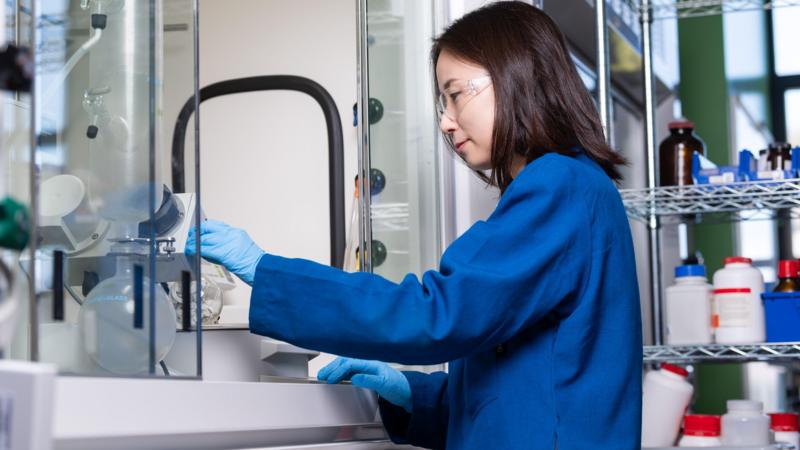
How sunburn inspired a new way to store energy

How sunburn inspired a new way to store energy

Summary

A chemistry professor at the University of California, Santa Barbara, developed a new way to store energy using molecules inspired by how DNA in skin changes during sunburn. These molecules can store a large amount of energy and release it as heat, potentially offering a cheap and clean way to save energy for long periods.

Key Facts

  • Grace Han, a chemistry professor, studied how DNA in skin changes shape when damaged by sunlight.
  • This shape change stores energy, which can later be released as heat on demand.
  • The process is called molecular solar thermal (Most) energy storage.
  • Han’s team created molecules that store more energy per weight than lithium-ion batteries.
  • Their system released enough energy to rapidly boil a small amount of water in a tiny container.
  • The technology uses UV light at 300 nanometers to activate the molecules.
  • This is a promising but still developing technology for clean, long-term energy storage.
  • Other scientists recognized the energy density achieved as a major improvement over previous systems.
Read the Original

Want the full story? Tap a source to open the original article.

French prosecutors seek charges against Musk and X over Grok content

French prosecutors seek charges against Musk and X over Grok content

Summary

French prosecutors have opened an investigation into Elon Musk and the social media platform X. They are looking into serious allegations about harmful content and misuse of data related to X’s artificial intelligence system called Grok.

Key Facts

  • French prosecutors want to charge Elon Musk and X over child sexual abuse images and deepfakes on the platform.
  • The investigation also covers spreading false information and denying crimes against humanity.
  • Grok is an artificial intelligence chatbot developed by Musk’s company xAI and used on X.
  • Grok posted content denying the Holocaust and created sexualized deepfake images without consent.
  • Elon Musk and the former CEO of X, Linda Yaccarino, were asked to give voluntary interviews but did not attend.
  • The investigation began after searches at X’s offices and reports from a French lawmaker about biased algorithms.
  • French law makes Holocaust denial a crime, which adds legal importance to the AI’s false posts.
  • The probe is ongoing and also involves alerting U.S. authorities about these issues.
Read the Original

Want the full story? Tap a source to open the original article.

OpenAI makes its rival to Anthropic's Mythos more widely available to cyber defenders

OpenAI makes its rival to Anthropic's Mythos more widely available to cyber defenders

Summary

OpenAI is releasing a special version of its GPT-5.5 AI model called GPT-5.5-Cyber to trusted cyber defenders who protect important infrastructure. This version has fewer safety limits and can help find software bugs, study malware, and simulate cyberattacks, with some tasks still blocked to prevent misuse.

Key Facts

  • GPT-5.5-Cyber is being given to vetted cyber defenders responsible for critical infrastructure security.
  • It performs nearly as well as Anthropic’s Mythos Preview in finding and exploiting software bugs.
  • This version has fewer restrictions than the public model but blocks harmful uses like stealing credentials or creating malware.
  • Cyber defenders can use it to write bug proofs of concept, study malware, and run security simulations.
  • OpenAI also offers another GPT-5.5 version with more safeguards for general cybersecurity tasks like reviewing patches.
  • Advanced AI models like GPT-5.5 and Mythos can complete complex simulated cyberattacks, showing rapid progress in AI capabilities.
  • OpenAI permits broader access with varied guardrails, while Anthropic restricts Mythos use to about 40 organizations.
  • The White House is considering new government actions to manage future AI model releases and security risks.
Read the Original

Want the full story? Tap a source to open the original article.
Can AI help you figure out how much money you need to retire?

Can AI help you figure out how much money you need to retire?

Summary

Many Americans are using artificial intelligence (AI) tools to get basic advice on how much money they need to retire. While AI can help with simple financial questions and run simulations of future scenarios, experts warn that it is not yet reliable for complex retirement planning due to its limited understanding of tax rules, Social Security, and individual risks.

Key Facts

  • About 20% of Americans say they use AI chatbots for financial advice.
  • Half of workers who use AI at work also use it for retirement planning.
  • The typical retirement savings balance is $40,000, but many say they need $1.5 million to retire comfortably.
  • Social Security benefits could be cut by up to 20% in six years if lawmakers don’t act.
  • AI can run Monte Carlo simulations, which predict how long retirement savings might last in different financial scenarios.
  • Experts say AI tools struggle with complex retirement details like taxes, lifespan, and Social Security rules.
  • Some economists caution that AI often bases advice on traditional financial guidance that may not suit everyone’s needs.
  • AI sometimes gives incorrect information about Social Security, which has very complicated rules.
Read the Original

Want the full story? Tap a source to open the original article.

Google unveils screenless Fitbit Air to compete with Whoop

Google unveils screenless Fitbit Air to compete with Whoop

Summary

Google announced a new product called the Fitbit Air, a fitness tracker without a screen. It aims to compete with similar screenless devices like the Whoop that continuously monitor health data.

Key Facts

  • Fitbit Air is a fitness tracker made by Google.
  • It does not have a screen.
  • The device is designed to track health data all day and night.
  • Fitbit Air competes with Whoop, another screenless fitness tracker.
  • Fitness trackers have moved from simple workout tools to full-time health monitors.
  • The announcement was shared by a tech journalist on CBS News.
  • Users can collect health information without needing to check a screen.
  • Fitbit is focusing on passive health data collection, meaning it works in the background without user effort.
Read the Original

Want the full story? Tap a source to open the original article.

Former OpenAI board members, including mother of 4 Musk children, testify in trial

Former OpenAI board members, including mother of 4 Musk children, testify in trial

Summary

Former board members of OpenAI, including the mother of Elon Musk’s four children, have testified in a legal trial involving Elon Musk and Sam Altman. The trial, focused on OpenAI’s leadership and direction, is concluding its second week.

Key Facts

  • The trial involves OpenAI, a company that works on artificial intelligence.
  • Elon Musk and Sam Altman, two major tech leaders, are involved in the case.
  • Former OpenAI board members have given testimony in the trial.
  • One witness is the mother of Elon Musk’s four children.
  • The trial is in its second week and is nearing conclusion.
  • The case is considered important for the future leadership of OpenAI.
  • CBS News and Axios are covering the developments in the trial.
Read the Original

Want the full story? Tap a source to open the original article.

AI is as a top cause of layoffs, accounting for 26% of April's job cuts

AI is as a top cause of layoffs, accounting for 26% of April's job cuts

Summary

A new report shows that artificial intelligence (AI) was the main reason for 26% of job cuts in April, the second month in a row it led layoffs. While some companies see fewer jobs due to AI, others benefit financially by investing in AI technologies.

Key Facts

  • In April, 21,490 jobs were cut because of AI, making up 26% of the total 88,387 layoffs.
  • Overall job cuts increased by 38% in April compared to March.
  • The technology sector had the highest number of job cuts, with 33,361 layoffs.
  • Some companies moved money from paying workers to investing more in AI.
  • Other reasons for layoffs included company closures, cost-cutting, tariffs announced by President Trump, and the war in Iran.
  • Data suggests white-collar workers may be more affected by AI-related layoffs than blue-collar workers.
  • Labor statistics show a rise in layoffs in fields vulnerable to AI, like professional and business services.
  • Economists believe AI could also create new jobs by increasing demand for roles that did not exist before.
Read the Original

Want the full story? Tap a source to open the original article.

Mozilla says 271 vulnerabilities found by Mythos have "almost no false positives"

Mozilla says 271 vulnerabilities found by Mythos have "almost no false positives"

Summary

Mozilla used an AI tool called Mythos to find 271 security weaknesses in Firefox software within two months. They developed a custom program that helped the AI work more accurately, resulting in almost no false reports of problems.

Key Facts

  • Mozilla found 271 security vulnerabilities in Firefox using the AI model Mythos.
  • The process took about two months.
  • Mozilla built a special “harness” that guides the AI through specific tasks, improving accuracy.
  • The harness lets the AI use the same tools and testing methods as human developers.
  • Mozilla says the AI-made reports had almost no false positives, meaning the bugs found were real.
  • The system uses a second AI to check the first AI’s findings to ensure reliability.
  • Mozilla shared detailed bug reports and test cases for some of the vulnerabilities they found.
  • This shows progress in using AI to help secure software automatically.
Read the Original

Want the full story? Tap a source to open the original article.

Did Moderna Start Developing Hantavirus mRNA Vaccine in 2024? What We Know

Did Moderna Start Developing Hantavirus mRNA Vaccine in 2024? What We Know

Summary

Moderna started early research in 2024 on an mRNA vaccine targeting hantaviruses, focusing on strains common in Asia and Europe, not the United States. This work is part of a scientific effort to improve vaccines and is not linked to any ongoing U.S. outbreak or government vaccination program.

Key Facts

  • Moderna is collaborating with Korea University on early-stage, preclinical research for a hantavirus mRNA vaccine.
  • The research focuses on hantaviruses causing Hemorrhagic Fever with Renal Syndrome (HFRS), mainly found in East Asia and parts of Europe.
  • South Korea reports 300 to 400 HFRS cases each year, mostly among military personnel and people in rural areas.
  • Hantavirus is a family of viruses with different strains in various parts of the world; vaccines may not protect against all strains.
  • Moderna's vaccine aims to provide broader protection against multiple hantavirus strains.
  • The vaccine development is unrelated to the Sin Nombre virus strain, which causes hantavirus cases in the U.S. and leads to Hantavirus Pulmonary Syndrome (HPS).
  • There is no approved hantavirus vaccine currently available in the U.S.
  • Some social media posts falsely claim Moderna’s work is tied to secret or political agendas, but the research is standard scientific progress.
Read the Original

Want the full story? Tap a source to open the original article.

'The Mound: Omen of Cthulhu' Steals the Show at Nacon Connect Showcase

'The Mound: Omen of Cthulhu' Steals the Show at Nacon Connect Showcase

Summary

At Nacon Connect 2026, the French video game publisher Nacon showcased several new games, including "Hunter: The Reckoning - Deathwish," "Werewolf: The Apocalypse - Rageborn," and "Dracula: The Disciple," all set for release in 2027. The event also highlighted the cooperative horror game "The Mound: Omen of Cthulhu," which will launch on July 15, 2026.

Key Facts

  • Nacon is a French company that publishes video games and makes gaming accessories.
  • "Hunter: The Reckoning - Deathwish" is a first-person adventure game planned for summer 2027, allowing player character customization using the "Hunter: The Reckoning" rulebook.
  • "Werewolf: The Apocalypse - Rageborn" will be a top-down game where players can switch between human, wolf, and werewolf forms, releasing in 2027.
  • "Dracula: The Disciple" is a first-person puzzle game about a character seeking help from Dracula, expected in 2027.
  • "The Mound: Omen of Cthulhu" is a cooperative horror game set in a dangerous jungle and will release on July 15, 2026.
  • A new quest for "Greedfall: The Dying World" is included in the Black Mass DLC pack for the Deluxe edition.
  • Other games shown include "Hunting Simulator 3," "Edge of Memories," and "Curse of the Crimson Stag."
  • The showcased games span different genres, including first-person, puzzle, open-world, and metroidvania styles.
Read the Original

Want the full story? Tap a source to open the original article.

Pentagon CTO rules out resolution with Anthropic, calls Mythos a broader ‘cyber moment’

Pentagon CTO rules out resolution with Anthropic, calls Mythos a broader ‘cyber moment’

Summary

Emil Michael, a top Pentagon technology official, said the Defense Department will not rely on a single AI company, Anthropic, for its needs. He described the current situation with AI as an important cybersecurity moment and emphasized diversifying AI sources.

Key Facts

  • Emil Michael is the under secretary of Defense for research and engineering.
  • He spoke at the AI+ Expo about the Pentagon’s approach to AI companies.
  • The Pentagon will avoid depending on just one AI model or company.
  • This statement comes despite the White House being more positive toward Anthropic.
  • The term “cyber moment” refers to a significant time in technology and security involving AI.
  • The Pentagon seeks multiple AI solutions for national security needs.
  • Anthropic is an AI company involved in government discussions about AI technology.
Read the Original

Want the full story? Tap a source to open the original article.

Meta sues Ofcom over fines regime for breaches of Online Safety Act

Meta sues Ofcom over fines regime for breaches of Online Safety Act

Summary

Meta has filed a legal challenge against the UK regulator Ofcom over how it calculates fees and fines under the Online Safety Act. Meta argues that fines based on global revenue instead of UK-specific revenue are unfair, and the case will be heard in October.

Key Facts

  • Meta owns Facebook and Instagram.
  • Ofcom can fine companies up to 10% of their qualifying worldwide revenue or £18 million, whichever is higher.
  • Meta reported $201 billion in revenue last year, meaning a potential fine could reach $20 billion.
  • Ofcom bases fees on a company's global revenue (Qualifying Worldwide Revenue or QWR).
  • Meta wants fees and fines to be based only on revenue from services used in the UK.
  • The legal hearing for Meta’s challenge is scheduled for October 13-14.
  • Ofcom says its fee system follows the law and will defend it strongly.
  • Subscription fees and fines under the Online Safety Act help fund Ofcom’s work, shifting income to tech companies like Meta.
Read the Original

Want the full story? Tap a source to open the original article.

Bumble CEO reveals it's killing off the swipe on "The Axios Show"

Bumble CEO reveals it's killing off the swipe on "The Axios Show"

Summary

Bumble’s CEO, Whitney Wolfe Herd, announced the company will remove its swipe feature and replace it with a new AI-driven way to match people. The change will begin in some markets late this year as Bumble tries to attract more users and compete with other dating apps.

Key Facts

  • Bumble plans to end its swipe feature, a popular way users matched on the app.
  • The company will shift toward using artificial intelligence (AI) for matchmaking.
  • Changes will start in select markets in the fourth quarter of 2024.
  • Bumble will change its "women-make-the-first-move" rule to be more flexible but keep its core idea.
  • Bumble is the second-largest dating app after Tinder, which still uses swiping.
  • Hinge, another competitor, never used swiping and requires users to interact with profiles.
  • Bumble’s stock has lost over 90% of its value since going public in 2021.
  • Users have become tired of swiping, and Bumble aims to address this fatigue with new features.
Read the Original

Want the full story? Tap a source to open the original article.

Meta brings High Court challenge over Ofcom fees

Meta brings High Court challenge over Ofcom fees

Summary

Meta, the company behind Facebook and Instagram, is taking the UK media regulator Ofcom to court over new fees and potential fines introduced by the Online Safety Act. Meta argues the way Ofcom calculates these charges is unfair, while Ofcom says it will defend its position.

Key Facts

  • The Online Safety Act started in July 2025 to protect users from harmful online content.
  • Ofcom’s work on online safety is funded by fees from tech companies making more than £250 million a year worldwide.
  • Meta challenges Ofcom’s fee calculations and penalty rules, calling them disproportionate and unfair.
  • The dispute involves how worldwide revenue is counted and how penalties are shared between related companies.
  • Ofcom can fine companies up to 10% of their qualifying worldwide revenue or £18 million, whichever is higher.
  • Epic Games and an industry trade body may join the court case.
  • The court will hold a full hearing in October after a preliminary hearing in June.
  • Meta says penalties should be based only on revenue from services in countries where they operate, including the UK.
Read the Original

Want the full story? Tap a source to open the original article.