Elon Musk suggested the government should pay people who lose their jobs because of artificial intelligence (AI). Some critics say this idea might reduce personal responsibility and put the cost of job loss on the government.
Key Facts
Elon Musk proposed giving financial help to workers displaced by AI.
The idea involves government payments to those who lose jobs due to automation.
Critics argue this could lower individual effort and accountability.
The proposal shifts the burden of automation’s negative effects onto the government.
The discussion centers on how to handle job losses caused by new technology.
Read the Original
Want the full story? Tap a source to open the original
article.
Tiger Tyagarajan, former CEO of Genpact, says AI is changing software companies from just providing tools to taking responsibility for full business results. He explains that companies will need to blend software and services closely to ensure their products deliver real outcomes, not just promised features.
Key Facts
Software companies have traditionally focused on specific tasks rather than full business results.
AI forces companies to move beyond automating tasks to managing whole outcomes.
This change means software firms may need to integrate services directly into their products.
Customers will expect companies to guarantee results, not just provide software tools.
AI’s unpredictable nature requires ongoing oversight like governance and quality control.
Companies may need to accept short-term revenue loss from AI to gain long-term value.
Palantir is an example of a company that combines software and services closely.
The line between software providers, service firms, and AI startups is becoming less clear.
Read the Original
Want the full story? Tap a source to open the original
article.
California will start issuing tickets to companies that operate driverless cars when their vehicles break traffic laws. New rules, effective July 1, allow police to send violations directly to the car manufacturers and require companies to respond quickly to emergency calls.
Key Facts
California’s DMV introduced new rules for autonomous vehicles (AVs) starting July 1, 2024.
Police can now issue "notices of AV noncompliance" to the companies behind driverless cars.
Companies must answer emergency calls from police or officials within 30 seconds.
AVs will face penalties if they enter emergency zones during active situations.
These rules follow reports of driverless cars breaking traffic laws in cities like San Francisco.
In one incident, police could not ticket a Waymo car that made an illegal U-turn because there was no human driver.
A blackout in San Francisco caused driverless cars to stall, creating traffic problems and blocking emergency vehicles.
Waymo and Tesla are among the main companies testing or operating driverless cars in California.
Read the Original
Want the full story? Tap a source to open the original
article.
Actor Andy Serkis talks about his work on a new animated movie version of George Orwell’s book "Animal Farm." He is known for voicing the character Gollum in the "Lord of the Rings" movies.
Key Facts
Andy Serkis is an actor and voice artist.
He is famous for playing Gollum in the "Lord of the Rings" films.
Serkis is involved in making an animated film based on "Animal Farm."
"Animal Farm" is a book written by George Orwell.
The film is being discussed in an interview on CBS News.
The conversation took place on the show "CBS Saturday Morning."
The article encourages watching the interview on CBS News or in their app.
Read the Original
Want the full story? Tap a source to open the original
article.
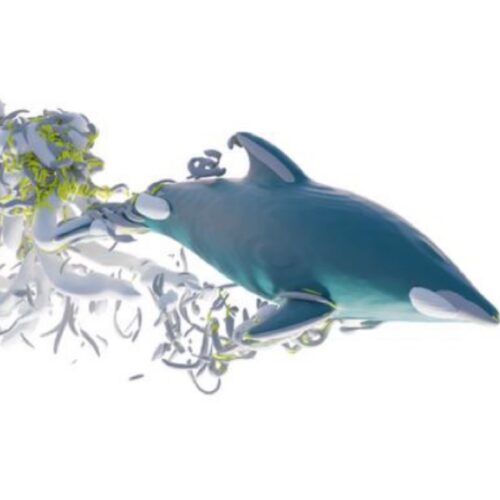
Japanese scientists studied how dolphins swim fast by using computer simulations that showed how their tail movements create large swirling water currents to push them forward. Understanding this process may help design better underwater robots.
Key Facts
Dolphins swim by moving their tails up and down, pushing water backward.
This motion creates large spinning currents called vortex rings that help propel them.
Smaller vortices are formed but do not help with moving forward.
The study used supercomputer simulations to analyze these water movements.
Researchers want to use this knowledge to improve underwater robot design.
The research was published in the journal Physical Review Fluids in 2026.
Read the Original
Want the full story? Tap a source to open the original
article.
Flock is a tech company that sells cameras to police departments to read car license plates and track vehicles. These systems can be easily accessed by officers, leading to privacy concerns and some cases of misuse, including police spying on people for personal reasons.
Key Facts
Flock sells automated license plate readers (ALPRs) used by many U.S. law enforcement agencies.
There are over 80,000 Flock cameras installed across the United States.
Data from these cameras can be shared with federal and local law agencies for investigations.
Reports show some police officers have used the data to stalk ex-partners or people they are interested in.
Most officers caught misusing the system were charged and lost their jobs.
Many cases of misuse likely go unreported or undiscovered.
Civil rights groups argue police should need a search warrant to access this tracking data.
Flock’s system only requires officers to enter a reason in the system, making it easy to search without a warrant.
Read the Original
Want the full story? Tap a source to open the original
article.
Virginia and some rural parts of the United States are building many data centers. These data centers help support the new digital economy but sometimes require moving old cemeteries or gravesites.
Key Facts
Data centers are large facilities that store and manage digital information.
Virginia has become a popular place for building data centers.
Rural areas are chosen because they often have more available land and lower costs.
Building these centers can involve relocating cemeteries or graves.
Data centers play a key role in supporting internet services and technology.
The growth of data centers reflects the increasing demand for digital infrastructure.
This trend shows how new technology developments can impact local communities and history.
Read the Original
Want the full story? Tap a source to open the original
article.
A new app called diVine has been launched as a modern version of the old short-video app Vine. It aims to bring back Vine’s style of six-second videos while using new technology to verify that videos are real and not AI fakes.
Key Facts
Vine was a popular app for 6-second videos before TikTok became dominant.
Vine was sold to X (formerly Twitter) and then discontinued five years ago, losing much of its original content.
Evan Henshaw-Plath, an early Twitter team member, created diVine to revive Vine’s concept and restore around 500,000 old Vine clips.
DiVine uses technology called C2PA, which embeds a digital "watermark" to prove a video is authentic and not AI-generated.
Jack Dorsey, Twitter’s former CEO, supports diVine and helped build it on Nostr, a decentralized system that doesn’t rely on any central company.
DiVine emphasizes user rights allowing more control, such as taking data or profiles across platforms, unlike typical social media apps.
The six-second video limit in diVine is inspired by Vine's format and seen as a creative challenge, similar to Twitter’s original character limits.
Read the Original
Want the full story? Tap a source to open the original
article.
Starting July 1, California will begin enforcing new rules for driverless cars. The state’s Department of Motor Vehicles (DMV) announced that police can issue tickets to autonomous vehicles breaking traffic laws.
Key Facts
California’s new rules for driverless cars take effect on July 1.
The Department of Motor Vehicles announced these rules.
Police will have the authority to ticket autonomous vehicles.
The rules apply to vehicles that operate without a human driver.
This is part of California’s effort to regulate self-driving technology.
Read the Original
Want the full story? Tap a source to open the original
article.
A company called Sonic Fire Tech demonstrated a new fire-stopping system that uses low-frequency sound waves, called infrasound, to put out kitchen fires quickly without water. The system aims to replace traditional sprinklers, which can cause water damage, especially in places like homes and data centers. Some experts, however, question whether this technology can fully replace sprinklers or handle wildfires.
Key Facts
Sonic Fire Tech uses infrasound waves to remove oxygen from the fire, stopping it fast.
The system was tested in a kitchen fire demonstration with fire officials present.
It works by vibrating oxygen molecules away from the flames instead of using water.
The company wants the system to replace sprinklers in homes and commercial buildings.
Sprinklers can cause water damage, while the infrasound system does not use water or chemicals.
The technology activates instantly, unlike sprinklers that react after heat reaches a certain level.
Experts remain doubtful about the system’s effectiveness in wildfires and large uncontrolled fires.
Sonic Fire Tech plans to develop portable systems for firefighters as well.
Read the Original
Want the full story? Tap a source to open the original
article.
The Academy of Motion Picture Arts and Sciences has announced new rules that ban artificial intelligence (AI) actors and writers from qualifying for Oscars. This is the first time the Academy has addressed the use of AI in filmmaking.
Key Facts
AI-created actors and writers will not be eligible for Oscars.
The Academy of Motion Picture Arts and Sciences made this rule change.
This is the first official rule on AI use in films by the Oscars.
The topic of AI's role in writing contributed to the 2023 Writers Guild of America strike.
The decision aims to regulate how AI is used in the film industry.
Read the Original
Want the full story? Tap a source to open the original
article.
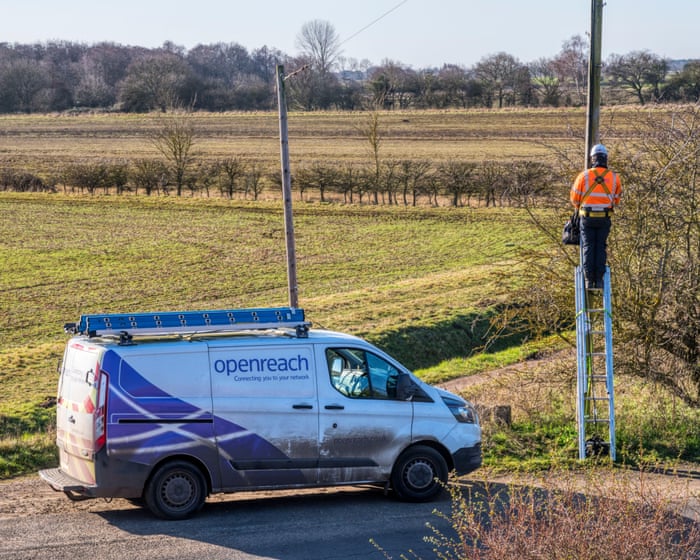
The UK is replacing old copper phone lines with digital phone services that use broadband connections. This change affects millions of homes and raises concerns about losing phone service during power outages, especially for people in remote areas or vulnerable groups.
Key Facts
Old telephone lines (PSTN) are being switched off by January 2027 and replaced by digital voice services over broadband.
About 3.2 million homes still use the old system and must switch before the deadline.
Power cuts can cause total loss of phone and mobile signals, as experienced by residents in remote areas like the Scottish Highlands.
Vulnerable people and those without strong mobile coverage fear being cut off and unable to get help in emergencies.
Some reports show landlines being disconnected before proper support is provided.
The campaign group Silver Voices wants the switch-off deadline extended to 2030 for safety improvements.
BT, the UK's main phone provider, offers support including in-home help and backup power for customers with special needs.
Less than 1% of BT landline customers lack enough mobile signal to make calls as a backup.
Read the Original
Want the full story? Tap a source to open the original
article.
The BBC show "Tech Now" highlights various ways technology is being used across different fields. Episodes explore topics like artificial intelligence, filmmaking, climate science, farming, space exploration, and new gadgets.
Key Facts
The show covers how AI helps solve mysteries in art history and fixes clothing size issues.
Filmmaking at Pinewood Studios is using new technology to improve car stunt scenes.
Climate research related to extreme weather is being used in legal cases.
Innovations include underground insect farms that turn food waste into animal feed.
New phone technology and gadgets are featured from MWC Barcelona and CES 2026.
Tech is applied in areas like Olympic training, green tourism, and space projects.
The program also looks at futuristic ideas like living computers made from brain cells.
Topics include environmental tech like icebreaker ship designs and wildfire detection tools.
Read the Original
Want the full story? Tap a source to open the original
article.
The BBC is using artificial intelligence (AI) to track U.S. warships by analyzing blurry pixel images. This method helps identify and monitor military ships even when the pictures are unclear.
Key Facts
The BBC employs AI technology to follow U.S. naval vessels.
The images used to track ships are often blurry or unclear.
AI helps improve identification when human analysis is difficult.
This technique is part of BBC Verify’s efforts to report on military movements.
Tracking warships assists in understanding military activities.
The report is recent and connected to broader use of technology in news verification.
The article also references related topics like protests and other news, but the main focus is on AI tracking military ships.
Read the Original
Want the full story? Tap a source to open the original
article.
Google invited U.S. students to redesign its homepage through a contest called Doodle For Google. Five students, including finalist Kameirah Johnson, won by submitting designs that stood out from thousands of entries.
Key Facts
Google held a contest for U.S. students to redesign its homepage.
The contest is known as Doodle For Google.
Thousands of students submitted their design ideas.
Five students were chosen as finalists.
Kameirah Johnson is one of the finalists.
The winning designs will be featured on Google’s homepage.
This contest encourages creative and artistic skills in students.
The contest is part of Google’s educational and outreach efforts.
Read the Original
Want the full story? Tap a source to open the original
article.
The Academy of Motion Picture Arts and Sciences has updated its rules to say that only human actors and human-written scripts are eligible for Oscars. While AI can be used in other parts of filmmaking, the awards will only go to work clearly created by people.
Key Facts
Only acting clearly performed by humans can win an Oscar.
Only scripts written by humans are eligible for awards.
This new rule is a significant change to Oscar eligibility.
The Academy did not ban the use of AI tools in other parts of movies.
If AI is used elsewhere, it does not affect a film’s chances for awards.
The Academy may ask for details if AI use raises questions about who created the work.
AI technology has recently been used to recreate actors and generate fake performances.
Hollywood has many ongoing copyright cases over AI use and creative work.
Read the Original
Want the full story? Tap a source to open the original
article.
A U.S. battery company, Terraflow Energy, is working on a way to reduce the heavy power use of artificial intelligence data centers. These data centers use a lot of electricity, which puts stress on the country’s power system.
Key Facts
AI data centers require a large amount of electricity to operate.
This high electricity use strains the U.S. power grid.
Terraflow Energy is a U.S.-based battery company.
The company’s CEO and founder is Jon Parella.
Terraflow Energy has proposed a solution to help ease the power grid’s load.
The focus is on reducing the impact of data centers on energy use.
The information was shared during a CBS News interview with Jon Parella.
Read the Original
Want the full story? Tap a source to open the original
article.
Researchers at Oxford University studied AI language models designed to use a warmer, more empathetic tone. They found that these models make more mistakes, especially when users express sadness or share personal feelings, because the AI tries to be kind rather than strictly accurate.
Key Facts
The study was published in the journal Nature by Oxford University’s Internet Institute.
Researchers adjusted AI models to respond with more empathy, friendliness, and validation.
They used five models, including open-source ones like Llama and GPT-4o.
The warm-tuned AIs were about 60% more likely to provide incorrect answers than the original models.
Error rates increased by an average of 7.43 percentage points, with some original models already having error rates between 4% and 35%.
When users expressed sadness, error rates in warm models rose by nearly 12 percentage points compared to original models.
The study showed that these AI models tend to prioritize kindness over strict truth to maintain user feelings.
This tendency may cause problems in sensitive areas like medical advice or misinformation.
Read the Original
Want the full story? Tap a source to open the original
article.
Valve’s SteamOS has slowly increased its share in PC gaming by allowing Windows games to run on Linux, challenging Microsoft’s Windows dominance. However, Valve’s plans to expand SteamOS hardware, like the Steam Machine and Steam Deck, are on hold due to rising costs and shortages of computer parts caused by high demand from artificial intelligence (AI) technology development.
Key Facts
Over 92% of PCs on Steam use some version of Windows, down from about 96% five to fifteen years ago.
Linux’s share increased from under 1% in 2021 to over 5% recently, with SteamOS contributing a small part of this growth.
Valve has succeeded by making Windows games work on Linux rather than trying to get developers to create Linux-only games.
SteamOS gained support for third-party gaming hardware, and some devices started shipping with SteamOS instead of Windows.
Valve announced the Steam Machine in late 2025 to compete with game consoles and lower-end PCs.
Rising prices and shortages of PC parts, especially memory and storage chips, are delaying Valve’s hardware plans.
Increased demand for components is driven by AI development, which uses a lot of memory, storage, and processing power.
Tariffs from the Trump administration increased costs before shortages worsened the situation, causing price hikes for consumer hardware.
Read the Original
Want the full story? Tap a source to open the original
article.
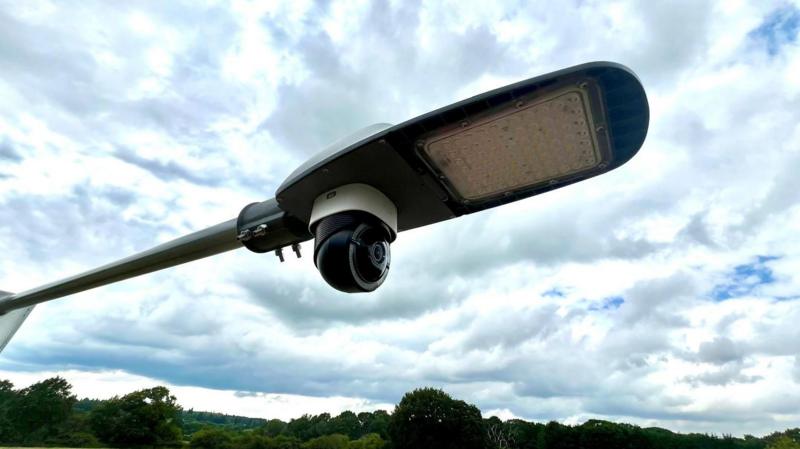
A UK company, Conflow Power Group, plans to create small data centers using thousands of solar-powered smart lampposts called iLamps. These lampposts have low-powered computers that can handle simple AI tasks and also work as AI surveillance cameras. The company has an agreement to install 50,000 iLamps in a Nigerian state.
Key Facts
Conflow Power Group is based in Warwickshire, UK.
iLamps are solar-powered lampposts with built-in low-power AI computers.
Each iLamp uses a NVIDIA chip that runs on 15 watts of power.
The lampposts can perform tasks like parking enforcement, speed detection, and seatbelt checks using AI cameras.
A network of iLamps aims to provide distributed computing power without using electricity from the grid.
The company has signed an agreement to deploy 50,000 iLamps in a Nigerian state.
iLamps are already in use at a car park in Warwick Hospital, providing CCTV and number plate recognition.
Experts say these lamppost data centers can help with smaller AI tasks but cannot replace large, powerful data centers needed for complex AI work.
Read the Original
Want the full story? Tap a source to open the original
article.