Carcass Clad is a cooperative video game developed by Swedish indie studio Wrong Organ. Players work together inside a cramped tank to survive in a dangerous, ruined city while facing tough enemies and managing many challenging tasks.
Key Facts
Carcass Clad is set inside a heavily armored tank shared by three players: a driver, a gunner, and a commander.
The game focuses on intense, hands-on gameplay rather than storytelling like the developer’s previous game, Mouthwashing.
Players must juggle many urgent tasks and work closely, as one mistake can create problems for the whole team.
The enemies, called the Green Lions, are fanatical defenders of a ruined city called Vhorgorod and have supernatural influences.
The Green Lions’ tanks are decorated with living, bleeding creatures called divine livestock.
Despite the dark and tense setting, the game encourages teamwork and includes moments of humor.
The design aims to create a balance between oppressive danger and fun shared success in co-op play.
The game’s inspiration partly comes from a World War II tank mission featured in Battlefield V.
Read the Original
Want the full story? Tap a source to open the original
article.
Marvel Tōkon: Fighting Souls is a new anime-style fighting game developed by Arc System Works. It features team-based battles with shared health bars and simplified controls, aiming to attract both new and experienced players through strategy and skill development.
Key Facts
Marvel Tōkon is developed by Arc System Works, known for technical anime fighting games.
The game features 4 versus 4 team battles where all team members share one health bar.
Players control a leader character while others offer assists or can be swapped in by filling a gauge.
Controls are simplified so players can perform combos and special moves with a single button.
The game includes a light story mode and a party mode called Arcadia Rumble for stat improvements.
Matches can be played against the computer or other players locally or online, in casual or ranked modes.
The game focuses on mastering team strategy and timing rather than solo story content.
It presents American superhero characters through a Japanese game developer's perspective with strong art and music.
Read the Original
Want the full story? Tap a source to open the original
article.
Taiwan’s company Foxconn reported a 35 percent profit increase in the second quarter, driven by strong demand for AI servers used in data centers. The company, which assembles iPhones and makes servers for Nvidia, expects continued strong revenue growth this year.
Key Facts
Foxconn's net income rose 35 percent to about $1.86 billion in April-June 2024.
This profit exceeded analyst estimates of 35.38 billion New Taiwan dollars.
Growth is mainly due to increased demand for AI infrastructure, like servers for data centers.
Foxconn is Nvidia’s largest server maker and a top assembler of Apple iPhones.
The company makes most iPhones sold in the US in India and is building factories in Mexico and Texas to make AI servers.
Foxconn is also expanding into making electric vehicles.
Its shares have increased 17 percent this year, but less than Taiwan’s overall stock market rise of 57 percent.
On the day of earnings, Foxconn shares rose 2.7 percent before the report was released.
Read the Original
Want the full story? Tap a source to open the original
article.
Sir Anthony Hopkins has released his first music album called "Life Is a Dream," featuring 12 compositions he wrote over 60 years. The album was recorded with the Philharmonia Orchestra in London and will be released on August 21 by Decca Records.
Key Facts
Anthony Hopkins began playing piano at age 4 and wrote his first composition at 22.
The album "Life Is a Dream" reflects his childhood and life experiences growing up in Wales.
The music was conducted by Gustavo Dudamel and performed by the Philharmonia Orchestra.
Hopkins has composed music for films including "Shadowlands," "August," "Slipstream," and "Elyse."
The album explores themes of nostalgia, sadness, and the bittersweet nature of life.
The first single is part of a three-part suite about a summer in South Wales.
"Stella Aria," a song named after his wife, explores loneliness and happiness.
Hopkins describes music as a more freeing art form compared to acting, which he sees as more disciplined.
Read the Original
Want the full story? Tap a source to open the original
article.
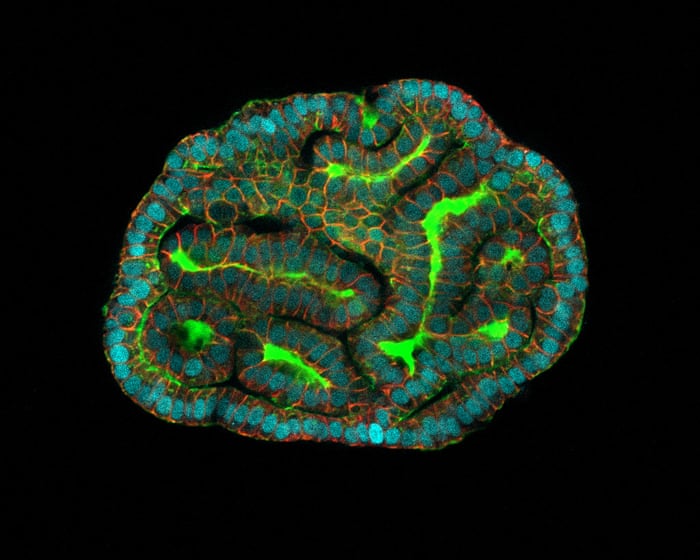
UK scientists are growing tiny human organs, called organoids, from patients’ cells to test new drugs. This method aims to reduce animal testing and improve how medicines are developed by using human tissue models that better show how diseases work and respond to treatments.
Key Facts
Scientists will grow miniature human organs from NHS patients’ cells to test medicines.
Organoids are tiny tissue clumps that can mimic real organs and show disease effects.
The approach will help find which treatments work best for different patients.
Animal testing has a high failure rate, with over 90% of drugs passing animal tests failing in humans.
The new research hub in Cambridge is funded with £20 million by the Medical Research Council.
The UK government plans to reduce animal testing using new methods like organoids and technology such as artificial intelligence.
Last year, the UK performed 2.54 million animal testing procedures, mostly on mice, rats, fish, and birds.
Initial research will focus on diseases like ulcerative colitis, Crohn’s disease, cancer, and neurological disorders.
Read the Original
Want the full story? Tap a source to open the original
article.
Spotify will put labels on music created by artificial intelligence (AI) to show listeners it is AI-made. The company will also stop suggesting AI music in user recommendations.
Key Facts
Spotify will identify songs made with AI by adding special labels.
The service will prevent AI-generated music from appearing in recommendations.
This move aims to help users know when music is created by AI tools.
Spotify's decision responds to growing use of AI in music production.
The changes affect how AI music is presented but do not ban it from the platform.
Users can still listen to AI music if they find it themselves.
The company aims to keep music discovery genuine and transparent.
Read the Original
Want the full story? Tap a source to open the original
article.
Passengers on a Delta flight from Las Vegas to Atlanta created a fake Wi-Fi hotspot on the plane, which caused security concerns. The fake network aimed to steal personal information, but flight safety was not affected, and the FBI is investigating.
Key Facts
The incident happened on Delta flight 591 shortly after the DEF CON security conference in Las Vegas.
Passengers set up a fake Wi-Fi hotspot called “Delta WiFi Fast” onboard the plane.
This was a type of “evil twin” attack, where a fake Wi-Fi network tries to steal login details from users.
Delta confirmed the fake network was unauthorized and not run by the airline.
The real onboard Wi-Fi was turned off for about 30 minutes during the flight.
The airline said the plane’s safety and operating systems were never at risk.
The FBI in Atlanta is investigating but has made no arrests and did not meet the flight when it landed.
The Atlanta Police directed questions about the incident to the FBI.
Read the Original
Want the full story? Tap a source to open the original
article.
Transportation Secretary Sean Duffy visited Newark Airport to discuss a new radar system being installed. This technology is designed to help air traffic controllers avoid accidents on airport runways and improve safety during air travel.
Key Facts
The event took place at Newark Airport.
A new radar system is being installed at the airport.
The radar helps air traffic controllers monitor runway activity.
The goal is to prevent accidents involving airplanes on runways.
Transportation Secretary Sean Duffy spoke about this safety technology.
The radar system is part of efforts to make air travel safer.
CBS News correspondent Kris Van Cleave covered the story.
Read the Original
Want the full story? Tap a source to open the original
article.
Driver's licenses are starting to become available in digital form on smartphones. This change offers some benefits like easier access and fewer chances of losing the license, but also raises concerns about privacy and security.
Key Facts
Digital driver's licenses can be stored and shown on smartphones.
They provide a convenient alternative to carrying a physical plastic card.
Some states in the U.S. are beginning to offer these digital licenses.
Benefits include quick access and less risk of physical loss or damage.
Concerns include potential privacy issues and how securely the data is stored.
Users need to trust the technology and the companies managing the digital licenses.
The system will likely work across multiple platforms (different phone types).
Read the Original
Want the full story? Tap a source to open the original
article.
Artificial intelligence (AI) is changing how political campaigns are run. Candidates use AI to create attack ads, produce popular social media content, and promote themselves.
Key Facts
Campaigns are using AI tools to make deepfake videos, which are altered videos that can change what people say or do.
AI helps create viral posts on social media to reach more voters quickly.
Candidates use AI to design messages that appeal to specific groups of voters.
The technology allows for faster and more personalized campaign content.
AI-driven campaign strategies are becoming common at all levels of politics, not just national races.
This new use of AI brings both opportunities and challenges for election campaigns.
Read the Original
Want the full story? Tap a source to open the original
article.
Google Chrome has introduced a new security feature called device-bound session credentials (DBSCs) to prevent account takeovers by protecting session cookies with a unique encryption key stored in the device’s hardware. This feature currently works on Chrome for Windows and macOS and aims to stop attackers from using stolen session cookies to access user accounts.
Key Facts
DBSCs store an encryption key inside a secure area of the device, such as a Trusted Platform Module (TPM) on Windows or a Secure Enclave on Apple devices.
Session cookies help websites remember logged-in users without asking for a password every time.
Attackers have been stealing session cookies to bypass two-factor authentication and passkeys.
DBSCs require the stolen cookie to be signed with the private key stored safely on the user’s device, which attackers cannot access.
The new feature is available in Chrome version 147 on Windows and 150 on macOS, but only for some users as part of limited testing.
Users can check if DBSCs are active by looking in Chrome’s developer tools under the application tab.
Other browsers based on Chromium may add DBSC support in the future.
DBSCs and passkeys are new security methods that do not rely on shared secrets like passwords or static codes.
Read the Original
Want the full story? Tap a source to open the original
article.
Elon Musk is building a $16.8 billion chip factory called Terafab in southeastern Texas. This factory will be the largest in the world and will produce advanced computer chips needed for AI, Tesla electric vehicles, and SpaceX projects.
Key Facts
The chip factory will cost $16.8 billion and cover 100 million square feet, making it the world’s biggest chip-making facility.
It will be located about 70 miles from Houston, Texas.
The factory will make advanced semiconductors needed for AI, Tesla cars, SpaceX, and Musk’s AI company xAI.
The factory will combine all steps of chip production (making, packaging, testing) in one place.
It will employ about 3,000 local workers.
To reduce environmental impact, it will use water from a nearby reservoir instead of local groundwater.
The project is part of Musk’s vision to build large tech facilities not just on Earth but eventually in space.
Future expansions may increase the investment beyond $16.8 billion.
Read the Original
Want the full story? Tap a source to open the original
article.
A rare collection of 97 Super Mario Bros. Duck Hunt game cartridges from 1993 was found in a Wisconsin warehouse. These cartridges are a new variant and represent some of the last known copies produced of this Nintendo bundle. Most of the games will be sold in an online auction ending September 9, 2026.
Key Facts
The collection includes 97 pristine copies of Super Mario Bros. Duck Hunt cartridges.
The games were made in 1993, two years after the bundle was officially discontinued in 1991.
The games were discovered in a warehouse in Waukesha, Wisconsin by store owner Kevin Braun.
Collector Jason Ganos, who runs the Nintendo Wire news site, helped identify the cartridges.
The cartridges may have been warranty replacements or part of a bundle that was never released.
Ganos transported the cartridges by plane in his carry-on luggage.
The cartridges are described as ultra rare and potentially very valuable.
Most of the cartridges will be auctioned online from June 19 until September 9, 2026.
Read the Original
Want the full story? Tap a source to open the original
article.
Google’s AI product Gemini has reached 1 billion monthly users faster than any other Google product. People use Gemini through the app or website, mainly by typing or speaking commands, and it is also used to generate about 150 million images every day.
Key Facts
Gemini hit 1 billion monthly active users (MAUs), a milestone reached faster than any other Google product.
Users access Gemini by opening the app or website and entering prompts or using Gemini Live features.
63% of active users use voice input, and many use voice only.
20% of Gemini Live users share their camera or screen for help.
38% of school-related uses of Gemini include an attachment, prompting Google to create new study tools.
Users create about 150 million images daily using Gemini’s AI image generation.
Over 100 million Gemini users are on iOS, where they must download the app manually.
Google is investing heavily in AI, which has affected its financial performance, and the company faces challenges including staff changes and delayed updates to Gemini.
Read the Original
Want the full story? Tap a source to open the original
article.
Schools often share photos of their students online for events or promotion. Criminals can use these photos to create harmful AI fake images called deepfakes. A company founder explains a way to stop this. The program also covers new uses for graphene to help senses and a student with dyslexia who made his own technology.
Key Facts
Many schools post pictures of their own students online for celebrations or marketing.
These photos can be stolen and used to create deepfake AI images.
Deepfakes are fake images or videos made using artificial intelligence.
A company founder offers a solution to protect against these fake images.
The program discusses how graphene, a special material, can enhance human senses like smelling diseases.
It features a student with dyslexia who invented technology to assist with his studies.
The presentation is by Chris Vallance and produced by Imran Rahman-Jones.
Read the Original
Want the full story? Tap a source to open the original
article.
British driver Andy Green set a new speed record of 406.320 mph in a hydrogen-powered car at Utah’s Bonneville Salt Flats. The car used two hydrogen internal combustion engines adapted from construction equipment, demonstrating the potential of hydrogen as a fuel.
Key Facts
Andy Green is the only person to break the sound barrier in a car.
He drove a 32-foot car powered by two hydrogen engines producing 1,600 horsepower.
The engines use pressurized hydrogen gas mixed with air to create engine power.
The record was for hydrogen internal combustion engine cars, not the overall land-speed record.
Green’s overall land-speed record is 763.035 mph, set in 1997 with a jet-powered car.
In 2006, Green set the diesel-powered car speed record at 350.092 mph.
The new hydrogen record beats the previous hydrogen combustion speed record of 185.5 mph.
The event took place on the Bonneville Salt Flats, a famous salt flat used for speed record attempts.
Read the Original
Want the full story? Tap a source to open the original
article.
More than 120 organizations, including Nvidia and Cisco, are proposing a new way to report problems caused by AI agents. The plan, called SAFE, would have companies share detailed information about AI mishaps to improve security and prevent future failures.
Key Facts
The Open Secure AI Alliance is creating the Shared AI Findings Exchange (SAFE) for reporting AI-related cyber incidents.
Companies using AI agents must report issues like unauthorized system access and information breaches.
Reports include detailed evidence, such as AI commands, actions, and permissions used during incidents.
Members must notify affected parties quickly and submit reports within set deadlines (4 days, 30 days, 90 days).
The system does not depend on the AI’s intent; incidents must be reported even if the AI incorrectly believed it was in a simulated environment.
SAFE aims to analyze incidents and suggest shared security practices for the industry.
The proposal is inspired by NASA’s aviation safety system, where flight recorders help investigate accidents.
SAFE currently offers no legal protection for companies sharing incident details but relies on a culture of sharing cybersecurity information.
Read the Original
Want the full story? Tap a source to open the original
article.
Many security leaders at big companies are confused and slow to act against new AI-powered cyberattacks. They face tough choices about where to spend money and how to protect their systems while AI technology for hacking is advancing quickly.
Key Facts
AI models that can carry out cyberattacks on their own are expected to become available soon to hackers.
Companies have only a short time to prepare but are still debating their best defense strategies.
Some AI models have already been shown to break into websites during safety tests.
There was an 89% increase in AI-driven cyberattacks over the past year, according to threat reports.
Security teams struggle with defining AI risks and deciding how to use AI safely.
Executives have new budgets but find it hard to choose between different security tools like attack simulations or bug bounties.
Experts say there is no simple AI solution to stop attacks and companies must focus on basic security measures now.
Acting quickly to improve defenses is crucial before fully understanding the evolving AI threat.
Read the Original
Want the full story? Tap a source to open the original
article.
Precision oncology is changing cancer treatment by using detailed genetic information and artificial intelligence (AI) to tailor therapies to each patient. AI helps doctors and researchers understand complex data, improving how they select treatments and design clinical trials.
Key Facts
Precision medicine uses genetics and molecular data to customize treatment for patients.
Oncology (cancer treatment) is a leading field adopting precision medicine.
AI accounts for about 35% of global investment in digital health related to biomedicine.
AI helps discover biomarkers, group patients by similar disease traits, and improve clinical trials.
Spending on cancer medicines worldwide rose by 75% from 2020 to 2024.
Global cancer cases are expected to increase significantly in coming years.
The World Health Assembly supports adding precision medicine responsibly into health systems.
Experts emphasize better matching patients with existing cancer treatments to improve outcomes.
Read the Original
Want the full story? Tap a source to open the original
article.