The U.S. National Security Agency (NSA) is using Anthropic's advanced AI model called Mythos Preview, even though the Department of Defense (DoD) has warned that Anthropic poses a risk to the supply chain. The DoD has tried to cut off Anthropic, but the NSA and other agencies still rely on its tools to help with cybersecurity.
Key Facts
The NSA uses Anthropic's Mythos Preview AI model despite DoD concerns about security risks.
The Department of Defense considers Anthropic a "supply chain risk" and has tried to restrict its use.
Anthropic's Mythos access is limited to about 40 organizations due to its powerful cyber capabilities.
The NSA is believed to be one of the organizations with access, though it was not officially named.
The AI model is mainly used to scan for security weaknesses in systems.
The UK’s intelligence agencies also have access to Mythos through their AI Security Institute.
Anthropic’s CEO recently met with top White House officials to discuss government use and security of Mythos.
The Department of Defense and Anthropic have disagreed over contract terms and ethical limits on using AI.
Read the Original
Want the full story? Tap a source to open the original
article.
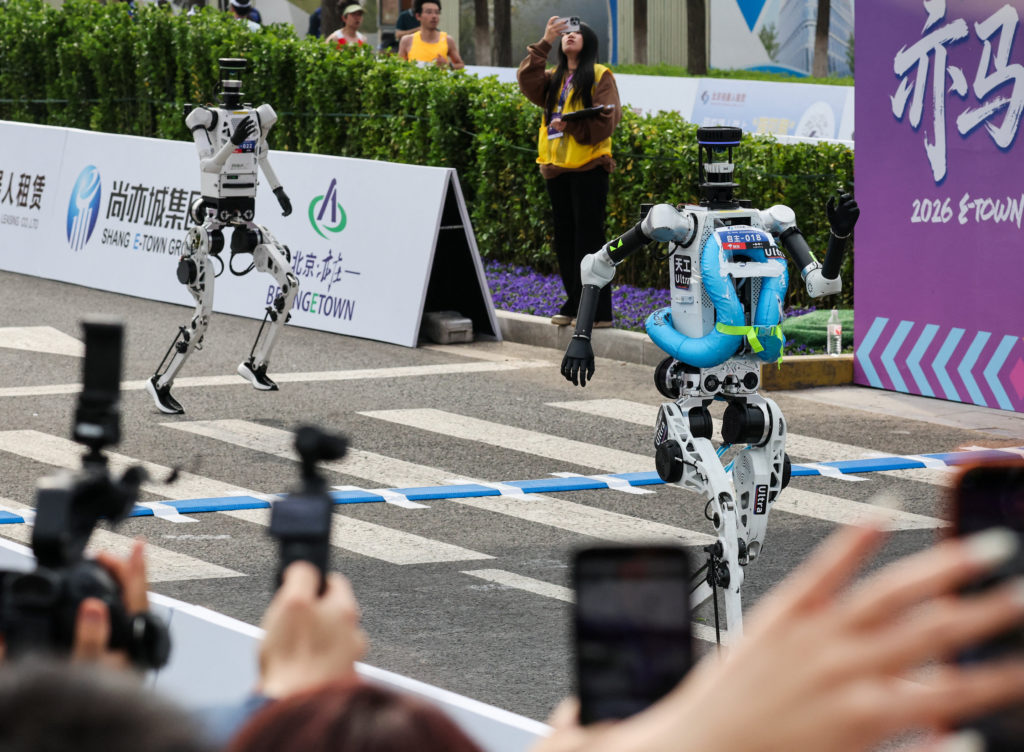
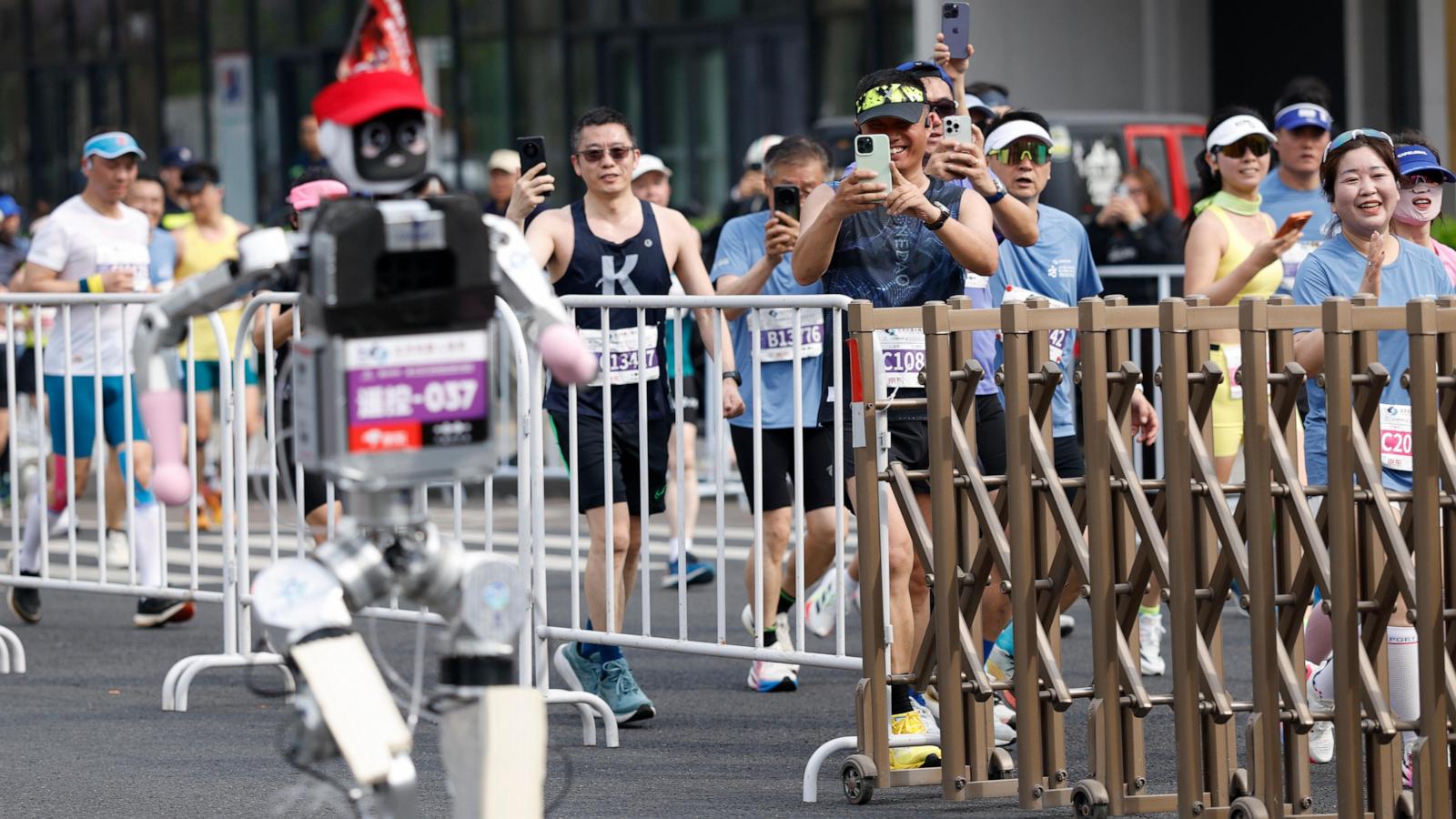
A humanoid robot created by Chinese company Honor won a half-marathon race in Beijing, finishing faster than the human world record for the same distance. The robot completed the 21-kilometer race in 50 minutes and 26 seconds, showing major progress in China's robot technology.
Key Facts
The robot ran the half-marathon in 50 minutes and 26 seconds, beating Uganda's human world record of about 57 minutes.
The robot race was part of the Beijing E-Town Half Marathon and Humanoid Robot Half Marathon event.
Last year's winning robot took more than 2 hours and 40 minutes to finish the same race distance.
The robot has long legs around 95 cm (37 inches) and uses a liquid-cooling system developed by Honor.
About 40% of the robots ran the course on their own (autonomously), while others were controlled remotely.
A remotely controlled robot from Honor finished first with a time of 48 minutes and 19 seconds but the autonomous robot was declared the winner under race rules.
China plans to focus more on developing technology like humanoid robots as part of its national five-year plan for 2026-2030.
Other Chinese companies like AGIBOT, Unitree Robotics, and UBTech Robotics lead in shipping intelligent robots globally.
Read the Original
Want the full story? Tap a source to open the original
article.
Biomason, a company based in North Carolina and Denmark, is creating a new type of building material called biocement. This material uses natural microbes and produces much less carbon dioxide than traditional concrete while being just as strong.
Key Facts
Making 30 billion tons of regular concrete every year releases more carbon pollution than all the world’s ships and planes combined.
Biomason uses biotechnology, including natural microbes, to make biocement.
Biocement is as strong as regular concrete.
Producing biocement emits much less CO2 (carbon dioxide).
The company is based in North Carolina, USA, and Denmark.
The goal is to offer a more environmentally friendly alternative to standard concrete.
This new material could help reduce the environmental impact of construction worldwide.
Read the Original
Want the full story? Tap a source to open the original
article.
The European Commission has introduced a new app to verify users’ ages and block children from harmful social media content while protecting their privacy. However, security experts quickly found weaknesses in the app. At the same time, European leaders are discussing a unified approach to keep children safe online amid rising concerns about social media risks and artificial intelligence.
Key Facts
The European Commission created an open-source app to verify users’ ages without sharing personal data.
The app aims to limit children's access to social media and sensitive websites.
European Commission President Ursula von der Leyen announced the app is ready for release soon.
Security experts found design flaws, with a demonstration showing the app’s verification can be bypassed in minutes.
A video call with EU leaders was held to coordinate efforts to protect children online across Europe.
Different EU countries have varied rules about social media age limits and enforcement methods.
Virtual private networks (VPNs) and shared accounts remain ways to bypass age checks.
Advocacy groups warn that AI is increasing risks like misinformation, affecting children who use social media for news.
Read the Original
Want the full story? Tap a source to open the original
article.
New technology combining artificial intelligence (AI) and robotics will help people do more tasks in space. This technology is expected to support, not replace, human space explorers.
Key Facts
AI means computer systems that can learn and make decisions.
Robotics involves machines that can perform tasks automatically.
Together, AI and robots can assist humans during space missions.
This technology aims to improve human abilities in space.
The goal is to make space exploration more effective and safer.
AI and robots will work alongside astronauts, not take their place.
Read the Original
Want the full story? Tap a source to open the original
article.
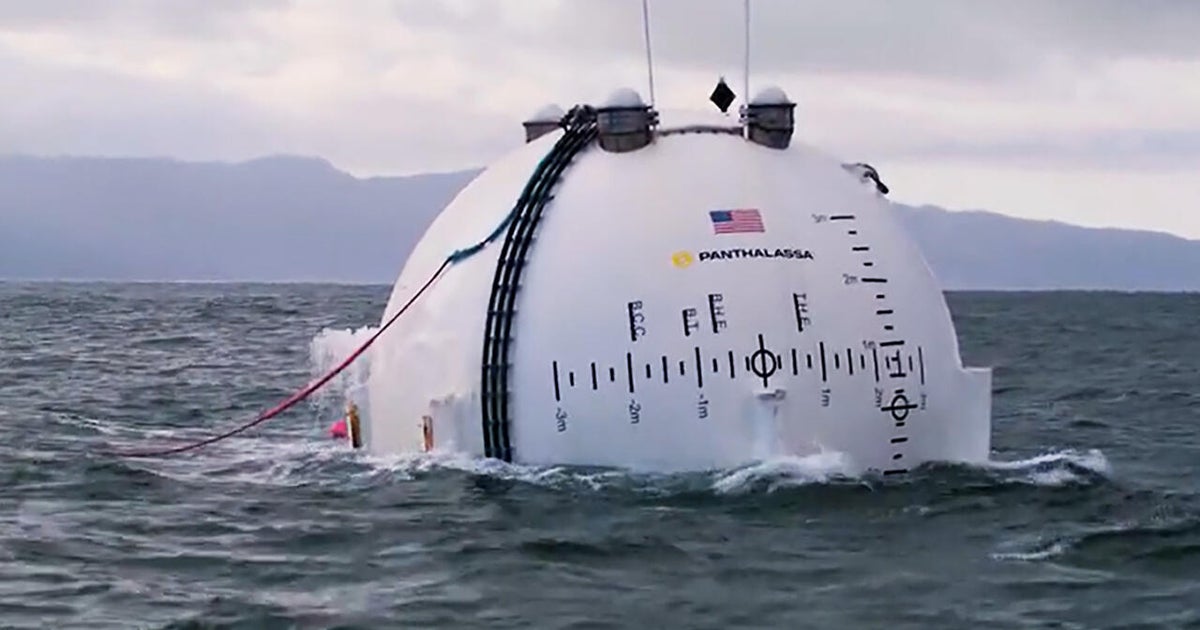
A company called Panthalassa is developing floating wave energy devices called Ocean-3 to power data centers at sea. These devices use the movement of ocean waves to generate electricity and run AI computing tasks without needing cables or anchors, offering a cleaner alternative to land-based data centers.
Key Facts
Burning fossil fuels warms the planet; data centers use a lot of electricity, increasing carbon pollution.
Panthalassa's wave energy device, Ocean-2, works like a floating hydroelectric dam, using wave motion to push water through turbines to make electricity.
Ocean-3 is a new design that floats freely without anchors or cables to shore.
The floating systems generate power, process AI tasks, and send results by satellite.
Multiple Ocean-3 units can work together as a large data center at sea.
The company has private funding and expects Ocean-3 units to operate offshore by August 2024.
Benefits include clean energy, no fuel, no land use, and fast scaling.
Panthalassa plans to deploy thousands of these floating data centers to meet growing AI computing demand.
Read the Original
Want the full story? Tap a source to open the original
article.
A humanoid robot ran a half marathon in Beijing and set a new world record, finishing ahead of human runners. This event shows how quickly robot technology has improved in China.
Key Facts
The marathon took place in Beijing.
A humanoid robot competed alongside human runners.
The robot broke the world record for the half marathon.
This achievement highlights advances in Chinese robot technology.
Humanoid robots have become common in China’s public places and media.
The event happened on Sunday, April 19, 2026.
The news was reported by France 24.
Read the Original
Want the full story? Tap a source to open the original
article.
A humanoid robot made by the Chinese company Honor ran a half-marathon in Beijing faster than the human world record. The robot completed the 21-kilometer race in 50 minutes and 26 seconds, showing big progress compared to last year’s robot race time of 2 hours and 40 minutes.
Key Facts
The half-marathon distance was 21 kilometers (about 13 miles).
The robot’s time was 50 minutes and 26 seconds.
The human world record holder, Uganda’s Jacob Kiplimo, finished a half-marathon in about 57 minutes in March 2026.
Last year, the winning robot finished in 2 hours, 40 minutes, and 42 seconds.
The robot was designed with long legs about 95 cm (37 inches) and a liquid-cooling system to help it run faster.
About 40% of the robots ran by themselves, while the others were remotely controlled.
One remotely controlled Honor robot finished the race even faster, in 48 minutes.
The event was held alongside a human race, and some robots had minor accidents during the race.
Read the Original
Want the full story? Tap a source to open the original
article.
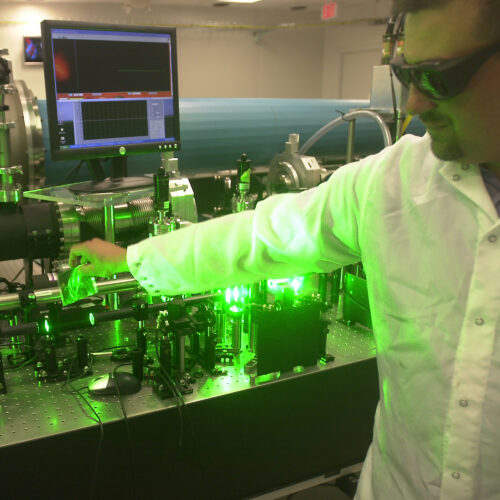
The Texas Petawatt (TPW) is one of the most powerful lasers in the United States, located underground at the University of Texas at Austin. It was used by scientists from around the country to conduct research in physics, fusion energy, and medical treatments before closing due to funding cuts.
Key Facts
TPW is housed two floors below ground in a building at the University of Texas at Austin.
The laser produces extremely powerful light pulses that last only a trillionth of a second.
These pulses can have more power than the entire U.S. electrical grid during that brief moment.
Scientists use TPW to study topics like star interiors, fusion energy, and cancer treatment methods.
A typical “shot day” involves careful preparation, alignment, and testing before firing the laser briefly.
The laser amplifies a tiny initial light pulse through several stages using glass rods and disks plus flash lamps.
Maintaining perfect alignment during the process is critical to avoid damaging the expensive optics.
TPW was part of LaserNetUS, a Department of Energy network of high-power laser labs, but is now closed due to funding cuts.
Read the Original
Want the full story? Tap a source to open the original
article.
A humanoid robot set a new world record by completing a half-marathon in Beijing faster than human runners, finishing the 21-kilometer race in 50 minutes and 26 seconds. This shows fast progress in robot technology, with over 100 robots competing this year compared to about 20 last year.
Key Facts
The robot ran the half-marathon in 50 minutes and 26 seconds, beating the current men’s human record of 57 minutes and 20 seconds.
The race took place in Yizhuang, a southern district of Beijing, with robots and humans running in separate lanes.
The robot was made by Chinese smartphone maker Honor and used an autonomous navigation system, allowing it to run without human control.
Last year’s best robot time was more than two hours and 40 minutes, showing large improvements in one year.
More than 100 humanoid robots competed this year, up from about 20 last year, indicating growing interest in robot racing.
Spectators noted the technology is advancing quickly, with potential future uses in jobs like caregiving, housework, and firefighting.
China invested 73.5 billion yuan ($10.8 billion) in robotics and embodied artificial intelligence in 2025.
The event aims to encourage innovation and make robot technology more popular.
Read the Original
Want the full story? Tap a source to open the original
article.
Humanoid robots took part in a half-marathon in Beijing, running alongside human runners. A Chinese robot completed the race in 50 minutes, breaking the previous record set last year.
Key Facts
The half-marathon race took place in Beijing.
Humanoid robots competed side by side with humans.
A Chinese-developed robot finished the race in 50 minutes.
This time broke the record from the previous year.
The event shows China’s efforts to become a leader in robotics.
Humanoid robots are robots designed to look and move like humans.
Read the Original
Want the full story? Tap a source to open the original
article.
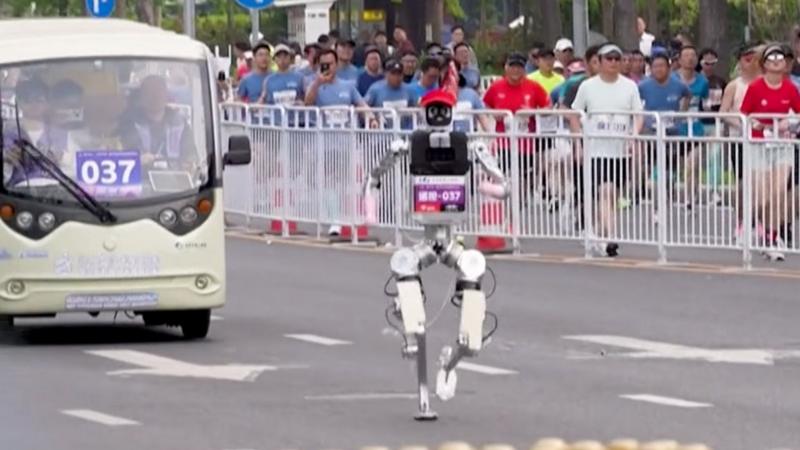
A humanoid robot in Beijing finished a half-marathon faster than the human world record, completing the 21-kilometer race in 50 minutes and 26 seconds. This event showed progress in China’s robot technology, with the winner designed to run fast and cool itself during the race.
Key Facts
The robot race took place in Beijing on April 19, 2026.
The winning robot, made by Chinese company Honor, ran the half-marathon in 50 minutes 26 seconds.
This time is faster than the human world record of about 57 minutes set by Ugandan runner Jacob Kiplimo.
Last year’s winning robot took over 2 hours and 40 minutes to finish the same race.
The robot has long legs and a special liquid-cooling system to help it perform well.
About 40% of robots ran the course by themselves; the rest were controlled remotely.
A remotely controlled robot finished even faster (48 minutes 19 seconds) but didn’t win due to race rules favoring autonomous robots.
A robot also acted as a traffic officer during the event, guiding participants.
Read the Original
Want the full story? Tap a source to open the original
article.
Robots took part in a half marathon race in Beijing, China. The fastest robot, named Lightning and made by the smartphone company Honor, finished the race in 50 minutes and 26 seconds, which is quicker than the human world record.
Key Facts
The race was a half marathon held in Beijing, China.
Robots competed both autonomously and via remote control.
About 40% of the robots raced by themselves without human control.
The winning robot, Lightning, was created by the Chinese smartphone maker Honor.
Lightning completed the race in 50 minutes and 26 seconds.
The human men’s half marathon world record is 57 minutes and 20 seconds, set by Jacob Kiplimo in 2024.
The event showed robots running faster than top human athletes in this race.
The competition highlights advances in robotics technology.
Read the Original
Want the full story? Tap a source to open the original
article.
Humanoid robots in Beijing showed big improvement by running a half-marathon much faster than last year. The fastest robot finished the race in 50 minutes, beating the world record time set by a human runner, though it needed help near the end.
Key Facts
Last year, many robots struggled to start or finish the marathon; this year, more than 100 participated.
The winning robot was made by Honor, a Chinese smartphone company.
The winning robot’s time was 50 minutes and 26 seconds, faster than the human world record of 57 minutes.
Robots ran on separate tracks alongside humans to avoid crashes.
Robots showed physical skills that could help in dangerous jobs and even military uses.
China is investing a lot to become a leader in humanoid robots with government support and policies.
In February, China showed off robots doing martial arts on national TV alongside human kids.
The marathon highlights how robot technology is improving quickly in China.
Read the Original
Want the full story? Tap a source to open the original
article.
A humanoid robot made by the Chinese company Honor completed a half-marathon race in Beijing faster than the human world record. The robot finished the 21-kilometer race in 50 minutes and 26 seconds, beating the human record time of about 57 minutes set by Uganda’s Jacob Kiplimo.
Key Facts
The half-marathon race was held in Beijing and included robots competing against each other.
The winning robot used autonomous navigation, meaning it operated on its own without remote control.
About 40% of the robots in the race ran autonomously, while the rest were controlled remotely.
A remotely-controlled robot crossed the finish line earlier but did not win under the event’s scoring rules.
This year’s winning time was much faster than last year’s winning robot time of 2 hours and 40 minutes.
Other robots from Honor finished the race in about 51 minutes and 53 minutes.
The event highlights China’s focus on advancing technology like humanoid robots in its national development plans.
Chinese companies AGIBOT, Unitree Robotics, and UBTech Robotics Corp. are leading robot makers, shipping thousands of units annually.
Read the Original
Want the full story? Tap a source to open the original
article.
People are using AI chatbots like ChatGPT for health advice because they are easy to access and can give quick answers. However, studies show these chatbots often give wrong or misleading medical advice when people share incomplete or unclear information.
Key Facts
Abi, a user from Manchester, uses ChatGPT for health advice and finds it more personalized than internet searches.
ChatGPT sometimes gives helpful advice, like recommending a pharmacist visit for a urinary tract infection.
In a more serious case, ChatGPT incorrectly advised Abi to go to A&E urgently, causing unnecessary hospital wait time.
England’s Chief Medical Officer, Prof Sir Chris Whitty, says chatbot answers can sound confident but often are wrong.
Research by Oxford’s Reasoning with Machines Laboratory found chatbots are 95% accurate when given full detailed information.
When people interact naturally with chatbots and give partial information, accuracy drops to 35%.
Human conversation style, where information is shared little by little or incompletely, causes chatbots to make mistakes.
Serious conditions like brain bleeding can be missed or misdiagnosed by chatbots depending on how symptoms are described.
Read the Original
Want the full story? Tap a source to open the original
article.
A new James Bond video game called "007 First Light" is coming out on May 27, 2026, for major gaming platforms. The game features Patrick Gibson as James Bond and includes an original song by Lana Del Rey, continuing the franchise’s tradition of themed music and stylish visuals.
Key Facts
"007 First Light" is a James Bond origin story video game developed by IO Interactive and Amazon MGM Studios.
Patrick Gibson stars as James Bond in the game.
The game will be released on PlayStation 5, Xbox, and PC in May 2026, with a Nintendo Switch 2 version arriving later in the summer.
Lana Del Rey performed and co-wrote the original song "First Light" for the game’s title sequence.
The developers released a full cinematic title sequence showcasing typical Bond themes like explosions and glamorous imagery.
This is the first major James Bond video game since 2012’s "007 Legends."
Amazon MGM Studios has taken over the James Bond film series from EON Productions.
IO Interactive is known for creating the popular "Hitman" series.
Read the Original
Want the full story? Tap a source to open the original
article.
A man named Daniel Moreno-Gama threw a molotov cocktail at OpenAI CEO Sam Altman’s home and later tried to break into OpenAI’s headquarters. He was arrested and charged with serious crimes, including attempted arson and attempted murder, amid growing anger towards artificial intelligence.
Key Facts
The attack happened early on April 10 in San Francisco.
Moreno-Gama threw a flaming molotov cocktail at Altman’s house but no one was hurt.
He then tried to break into OpenAI’s office with kerosene, a lighter, and an anti-AI manifesto.
Authorities charged him with attempted arson, attempted murder, and other crimes.
Moreno-Gama traveled from Houston, Texas to carry out the attack.
His manifesto threatened to kill AI company leaders and warned of AI destroying humanity.
Two days later, two people fired shots near Altman’s home; they were arrested but later released and face no charges yet.
Altman called for calming the AI debate and shared a family photo to discourage violence.
Read the Original
Want the full story? Tap a source to open the original
article.
A new study shows that Earth’s artificial light at night has increased by 16% from 2014 to 2022, but this change is uneven and sometimes reverses in certain regions. Factors like the Covid-19 pandemic, energy regulations, economic problems, and conflicts have caused some areas to get dimmer while others get brighter.
Key Facts
Researchers analyzed over 1.1 million satellite images from 2014 to 2022 to measure night-time light on Earth.
Artificial night light grew by 16% globally in that period, continuing a trend of increasing light pollution.
Some places, such as Europe and Venezuela, saw a decrease in night-time light due to energy efficiency rules and economic collapse.
The Covid-19 pandemic and reduced industrial activity caused temporary dimming in many regions.
The Ukraine-Russia war affected night light patterns in that area.
Asia led the world in the increase of artificial night light, with rapid urban growth in China and northern India.
The study revealed widespread gas flaring (burning off natural gas) in US oil production areas like Texas and North Dakota.
Scientists used advanced image processing to remove interference like clouds and moonlight to get accurate measurements.
Read the Original
Want the full story? Tap a source to open the original
article.
A dermatologist named Lindsey Zubritsky shared a popular video encouraging people to try traditional skincare products often used by grandmothers. She highlighted affordable brands like Vaseline, Pond’s, Gold Bond, Olay, Dove, and Nivea as effective and simple skincare options in a market full of expensive and complex products.
Key Facts
Lindsey Zubritsky is a board-certified dermatologist who posted a viral Instagram video about "grandma skincare."
Her video has nearly 500,000 views and urges people not to ignore classic skincare products.
She recommends four key products: Vaseline, Pond’s cold cream, Gold Bond, and Olay.
Zubritsky also likes Dove beauty bar and Nivea cream for being gentle and affordable.
These older products are praised for moisturizing well and treating common skin issues.
The skincare market is very large, with expected global revenue of $204 billion in 2024.
People appreciate simple and familiar skincare routines amid many new, costly products.
Zubritsky uses social media to educate and simplify skincare information for viewers.
Read the Original
Want the full story? Tap a source to open the original
article.