Amazon will stop allowing users to add apps from outside its official app store on new Fire TV Sticks. New Fire Sticks use a new operating system called Vega OS, which only supports apps available in the Amazon Appstore and blocks sideloading for most users.
Key Facts
Starting with the Fire TV Stick 4K Select released in October 2023, all new Fire Sticks use Vega OS.
Vega OS does not allow users to install apps from unknown sources unless they register as developers.
Only apps that are published in the Amazon Appstore can run on Vega-powered Fire TV Sticks.
Users see notices on product pages stating the device prevents sideloading to increase security.
Older Fire TV devices use Fire OS, an Android-based system that allowed sideloading apps from outside Amazon’s store.
Amazon made this change to improve security and limit apps that may enable piracy or cost Amazon money.
The move comes amid concerns that sideloaded apps on Fire Sticks have facilitated piracy and caused legal pressure on Amazon.
Some users who relied on sideloading may switch to other streaming devices or seek workarounds.
Read the Original
Want the full story? Tap a source to open the original
article.
Ridley Scott’s new movie, The Dog Stars, is a science fiction story about a world after a deadly flu virus. The film shows a pilot named Hig who leaves his safe home to find hope when he hears a mysterious radio message. The first trailer was released at CinemaCon, and the movie will premiere on August 28, 2026.
Key Facts
The Dog Stars is based on a 2012 novel by Peter Heller.
The story is set after a flu virus killed most people on Earth.
Hig, the main character, is a young pilot played by Jacob Elordi.
Josh Brolin plays Bangley, a military survivalist and Hig’s companion.
Margaret Qualley stars as Cima, a young medic, and Guy Pearce plays Pops, a former Navy SEAL.
Allison Janney and Benedict Wong also have roles in the movie.
The film shows a mix of hopeful and harsh struggles in a post-apocalyptic world.
The Dog Stars will be in theaters starting August 28, 2026.
Read the Original
Want the full story? Tap a source to open the original
article.
WEBTOON is launching a new digital version of the popular horror comic "Something is Killing the Children" by James Tynion IV and Werther Dell’Eder. The comic, which follows a monster hunter protecting children, has won awards, sold millions of copies, and will also have animation, live-action, and novel adaptations.
Key Facts
"Something is Killing the Children" first appeared as a comic in 2019 and has over 45 issues.
The story centers on Erica Slaughter, a monster hunter in Idaho who fights creatures harming children.
The series has won three Eisner Awards, which honor excellence in comics.
It has sold more than five million copies worldwide.
The comic is set to be adapted into animation and live-action projects by Blumhouse Productions, a horror studio.
A novel prequel co-written by James Tynion IV and Kiersten White will be released in October 2026.
WEBTOON will release a vertical scroll digital version of the comic starting April 20.
The "Slaughterverse" expands with spin-offs like "House of Slaughter," which explores the secret society behind Erica’s monster hunting.
Read the Original
Want the full story? Tap a source to open the original
article.
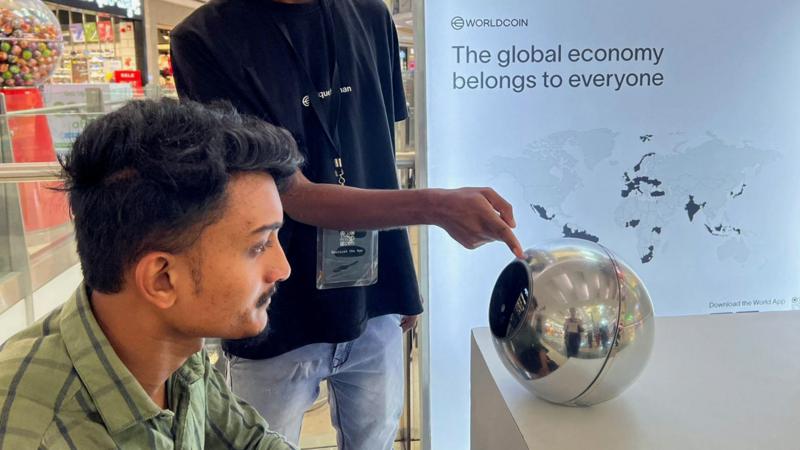
Tinder and Zoom are using eye-scanning technology to prove users are real humans and not AI-generated fake accounts. This system relies on scanning the iris of the eye and issuing a unique digital ID to verify identities and reduce scams.
Key Facts
Tinder and Zoom offer users the option to scan their irises to get a "proof of humanity" badge.
The iris scan is done through the World app or a special scanning device from World, a company co-founded by Sam Altman.
After verification, users receive a World ID, a unique code stored on their phone to prove they are human.
Fake profiles and bots on Tinder have increased due to advances in AI, leading to scams and fraud, especially romance scams.
Tinder already requires some users to submit video selfies for verification; the new system provides another option.
Zoom uses the technology to fight deepfake videos, videos that fake real people’s appearance and voice.
Financial fraud using deepfakes could reach $40 billion in the US by 2027.
World has signed up 40 million users and claims the iris scan method protects privacy by not storing personal information like names or addresses.
Read the Original
Want the full story? Tap a source to open the original
article.
A company co-founded by Sam Altman called World, which uses iris-scanning devices known as "orbs," is expanding its identity verification system called World ID to more common apps like Zoom, Tinder, and DocuSign. The system helps confirm that real humans, not AI or bots, are behind online actions by offering different ways to verify identity.
Key Facts
World uses iris scans, selfies, and government IDs to verify user identity through its World ID system.
The company is making World ID open-source, so any app can add it as a way to check users' identities.
World ID acts like a more advanced CAPTCHA, designed to prove a user is a human, not a robot or AI.
Companies like Zoom, Tinder, DocuSign, Okta, Shopify, and VanEck are starting to use or test World ID for security.
About 17.9 million people worldwide have signed up for World ID; about 1.1 million are in North America.
World plans to increase the number of orbs in US cities to make iris scanning more accessible.
Critics have raised security and governance concerns about the program.
World also offers tools to reduce bot interference in events like ticket sales and online signatures.
Read the Original
Want the full story? Tap a source to open the original
article.
Liz Kendall, the UK Minister in charge of Artificial Intelligence, said she does not use AI in her work but uses it in her personal life, such as to help with an allergic reaction. The government has launched a £500 million fund to support British AI companies and is exploring AI’s potential in various areas, including driverless cars and job center services.
Key Facts
Liz Kendall is the UK Science, Innovation and Technology Secretary responsible for AI.
She personally uses AI technology but not in her official job duties.
The government created a £500 million fund to invest in UK AI companies, called the Sovereign AI unit.
AI is used in some government services, for example, rewriting CVs for jobseekers and summarizing consultation responses.
There are concerns about job losses from AI, especially with driverless cars affecting taxi drivers.
Kendall said new jobs will be created as some jobs change or disappear.
A 2023 YouGov poll found 75% of Britons worry AI could threaten humanity.
Kendall believes AI development is safe but acknowledges the need to consider job impacts carefully.
Read the Original
Want the full story? Tap a source to open the original
article.
Steve Bannon supports the AI company Anthropic in its disagreement with the Pentagon. Anthropic wants to restrict its AI technology from being used in fully autonomous lethal weapons, while the Pentagon wants broader rights to use the technology.
Key Facts
Steve Bannon, a former White House strategist, backs Anthropic’s stance on AI use.
Anthropic is an artificial intelligence company.
Anthropic wants to prevent its AI technology from being used in fully autonomous lethal weapons (weapons that operate without human control).
The Pentagon wants permission to use Anthropic’s AI system, called Claude, for all lawful purposes.
This disagreement has caused a public conflict between Anthropic and the Pentagon.
Fully autonomous lethal weapons refer to weapons that can make targeting and firing decisions on their own, without humans in the loop.
The debate raises concerns about the safety and ethics of using AI in military weapons.
Read the Original
Want the full story? Tap a source to open the original
article.
More than 1,000 workers in Kenya have lost their jobs after Meta ended its contract with Sama, a company hired to do content moderation and AI training. The layoffs highlight difficulties faced by low-paid tech workers in developing countries who often have little job security.
Key Facts
Sama is a Nairobi-based company that does content moderation and AI training work for Meta.
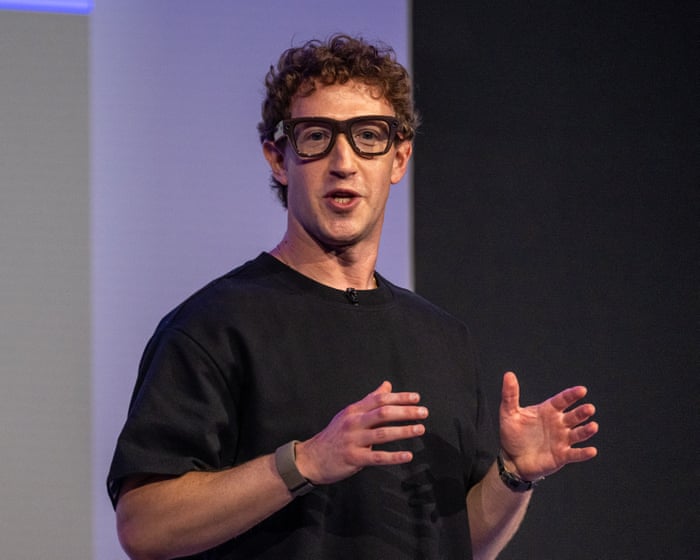
Meta stopped working with Sama after reports that workers had to view private and sensitive content recorded by Meta’s AI smart glasses.
Over 1,000 Sama workers were given six days’ notice before being laid off.
Many laid-off workers were involved in training AI systems by reviewing online content.
Previous layoffs led to a lawsuit citing mental health problems like PTSD and depression among content moderators.
Meta said workers reviewing AI content have user consent and ended the partnership because Sama did not meet its standards.
Sama said it provides fair wages, benefits, and wellness support for employees.
The layoffs have raised concerns about the risks low-paid workers in the global south face when working for large tech companies.
Read the Original
Want the full story? Tap a source to open the original
article.
Meta is raising the prices of its Quest virtual reality headsets by $50 to $100 starting April 19 due to higher costs for memory chips and other components. This price increase is partly caused by Meta’s large spending on artificial intelligence (AI) infrastructure, which has increased demand for the same computer parts used in the headsets.
Key Facts
The price of Meta’s Quest VR headsets will go up by about 12 to 20 percent starting April 19.
Meta cites a global rise in prices for critical components like memory chips as the main reason for the increase.
Meta is investing $115 to $135 billion this year on capital projects, mainly in AI infrastructure.
Significant investments include $21 billion more in data center company CoreWeave and $10 billion for a new data center in El Paso.
The company’s large AI spending drives demand for GPUs and memory chips that are also used in Quest headsets.
Meta has lost $73 billion in its VR-focused Reality Labs division so far.
Meta is planning to cut spending on its metaverse division by up to 30 percent and focus more on AI.
New prices for the Quest 3S and Quest 3 models range from $350 to $600, up from $300 to $500 previously.
Read the Original
Want the full story? Tap a source to open the original
article.
NASA is closely watching an asteroid named Apophis, which will pass very close to Earth on April 13, 2029. This asteroid is large and will come closer to Earth than many satellites, but it does not pose any danger to our planet.
Key Facts
Apophis is about 1,115 feet wide and 1,480 feet long.
It will come within 20,000 miles of Earth’s surface in 2029.
This distance is closer than many satellites that orbit Earth at about 22,236 miles.
Such a close approach by a large asteroid happens only once every few thousand years.
When first found in 2024, Apophis was thought to possibly hit Earth, but now NASA says there is no risk for at least 100 years.
The asteroid will be affected by Earth's gravity, which may change its orbit and rotation.
Scientists will use this event to study Apophis and learn more about asteroids near Earth.
This is the first time humans have had the tools to observe an asteroid this close well in advance.
Read the Original
Want the full story? Tap a source to open the original
article.
Roblox is introducing new options for young users after agreeing to pay $12 million to Nevada to settle safety concerns. Several states are investigating how Roblox protects children who use its online gaming platforms.
Key Facts
Roblox settled with Nevada for $12 million over child safety issues.
The company is adding new features for younger players to improve safety.
States like Oklahoma, Georgia, and South Carolina are investigating Roblox.
Other states involved in similar inquiries include Louisiana, Iowa, and Tennessee.
The investigations focus on how Roblox keeps children safe while playing online.
Roblox is a popular online platform where users can play and create games.
Child safety on internet platforms is a growing concern for regulators and families.
Read the Original
Want the full story? Tap a source to open the original
article.
More U.S. households are paying for AI subscription tools like ChatGPT, but only about 2% currently spend money on these services. Most paying users spend around $20 a month and tend to keep their subscriptions for several months.
Key Facts
The number of U.S. households subscribing to AI tools has grown by about 155% compared to last year.
Only 2% of U.S. households pay for generative AI subscriptions, mostly from higher-income groups.
Most subscribers pay around $20 per month for plans that offer faster access and more features.
Free AI versions exist but with limited features compared to paid plans.
Subscribers usually keep their AI subscriptions for an average of seven months, showing ongoing satisfaction.
AI subscriptions are far less common than streaming service subscriptions, which around 25% of U.S. consumers pay for monthly.
Some AI services offer more expensive professional plans costing up to $100 per month.
Industry experts expect AI companies to keep free plans for now but may raise prices in the future, which could affect adoption.
Read the Original
Want the full story? Tap a source to open the original
article.
Anthropic, an AI company, has developed a new AI model called Claude Mythos that can find and exploit computer security weaknesses better than humans. Because of this, many experts and organizations are worried it might be used to cause harm, so only a few trusted companies have access to it through a special program.
Key Facts
Claude Mythos is part of Anthropic’s AI system called Claude and competes with ChatGPT and Google’s Gemini.
Researchers found Mythos is very good at cybersecurity tasks, including finding old hidden bugs in software.
Anthropic is giving access to Mythos through Project Glasswing, which includes major tech companies like Amazon, Apple, Microsoft, Google, Nvidia, and others.
Mythos has discovered thousands of serious software vulnerabilities, some in widely used operating systems and web browsers.
There are worries that Mythos’ hacking abilities could be misused if it gets into the wrong hands.
Financial leaders including the Canadian finance minister and the Bank of England are paying close attention to the risks Mythos could pose to financial systems.
The EU is also in talks with Anthropic regarding their concerns about Mythos.
Cybersecurity experts say Mythos' capabilities to find vulnerabilities faster than other AI tools is causing alarm.
Read the Original
Want the full story? Tap a source to open the original
article.
NASA is focusing on developing a lander to take astronauts to the Moon’s surface after the Artemis II mission. Meanwhile, space companies are making progress in new rocket technologies, including Moonshot Space’s electromagnetic launcher and Rocket Lab’s new electric satellite thruster called Gauss.
Key Facts
NASA’s Artemis II mission was the first manned Moon flight since 1972.
NASA’s contractors, SpaceX and Blue Origin, are working on lunar landers for future Moon missions.
Moonshot Space, an Israeli company, plans to build an electromagnetic accelerator in Alaska to launch payloads using electricity instead of rocket fuel.
The electromagnetic launcher could send materials into orbit at very high speeds but may cause damage to normal satellites.
Moonshot aims to launch raw materials for manufacturing directly in space.
Rocket Lab introduced the Gauss, a xenon-fueled electric thruster for satellites, boosting in-orbit maneuvering capabilities.
Rocket Lab manufactures rockets, satellite parts, and now electric propulsion, expanding its space technology offerings.
The Gauss thruster production line can produce up to 200 units per year, addressing a need for reliable satellite propulsion.
Read the Original
Want the full story? Tap a source to open the original
article.
Around 2010, malware called Flame tricked Microsoft’s update system to spread harmful software to Iranian computers by exploiting a weak security method called MD5. Today, tech companies like Google and Cloudflare are speeding up plans to switch to new security algorithms that can resist future quantum computers, aiming to be ready by 2029 to protect against advanced cyber threats.
Key Facts
Flame malware used a flaw in the MD5 security method to spread malicious updates.
MD5 has a known vulnerability called a “collision,” where different data produce the same output.
Despite flaws found since 2004, some Microsoft systems still used MD5 for security.
Public-key algorithms RSA and elliptic curves are at risk from powerful future quantum computers.
Quantum computers can break these algorithms much faster than classical computers.
Google and Cloudflare moved their timeline for adopting post-quantum cryptography to 2029.
The US Department of Defense requires quantum-safe security by the end of 2031.
Experts say transitioning the internet to quantum-safe encryption is complex but urgent to avoid major security risks.
Read the Original
Want the full story? Tap a source to open the original
article.
Scammers are using artificial intelligence (AI) to create fake images that trick insurance companies. These fake pictures help criminals make false claims and steal money.
Key Facts
Scammers use AI to generate images that look real but are fake.
These fake images are used in insurance fraud schemes.
Fraudsters submit these images to get money from insurance companies.
AI makes it easier to create convincing fake photos.
Insurance companies are facing challenges detecting these fake images.
This type of scam is becoming more common with the rise of AI tools.
Experts warn about the risks AI-generated images pose to insurance security.
Read the Original
Want the full story? Tap a source to open the original
article.
Tyla and Zara Larsson released a new song called "SHE DID IT AGAIN" on April 17. The music video features a style and look inspired by early 2000s pop culture, especially reflecting the Y2K era made popular by Britney Spears.
Key Facts
"SHE DID IT AGAIN" is a collaboration between South African singer Tyla and Swedish singer Zara Larsson.
The song mixes R&B, Afrobeats, and pop music styles.
The music video shows clothes, choreography, and visuals typical of early 2000s Y2K fashion.
Both singers wear a gold bikini top and low-rise jeans, a style linked to Britney Spears’s early career.
Zara Larsson has recently embraced the Y2K look as part of her music and image.
Larsson’s popularity has grown after going viral with a meme and winning attention in the U.S. with other songs.
Tyla is known for blending Afrobeats with pop and has become popular worldwide.
Fans and social media users have praised the song and compared it to famous past pop duets like Beyoncé and Shakira.
Read the Original
Want the full story? Tap a source to open the original
article.
Olivia Rodrigo released a new single called "drop dead" on April 17, which comes with a music video filmed at the Palace of Versailles in France. The song marks a change in her style, featuring a more upbeat and romantic tone compared to her previous heartbreak-themed singles.
Key Facts
"drop dead" is the first single from Olivia Rodrigo's upcoming album "You Seem Pretty Sad for a Girl So in Love."
The music video was shot partly at the Palace of Versailles with a retro, VHS-style visual effect.
Fans on social media praised the song for its happy and romantic tone.
The single may reference Rodrigo’s past relationship with actor Louis Partridge.
The song includes a musical nod to "Just Like Heaven" by The Cure.
Rodrigo has been linked to a new relationship with Cameron Winter, although neither confirmed it.
Rodrigo is known for her emotionally direct songwriting and previous hits like "driver’s license" and "vampire."
Fans speculate the album will tell the story of a romantic relationship from beginning to end.
Read the Original
Want the full story? Tap a source to open the original
article.
Artificial intelligence "agents" are being developed to help people shop and manage tasks automatically. Some big companies like American Express, Amazon, and Walmart are using these AI tools, but experts warn that trusting AI to buy things can lead to mistakes and security risks.
Key Facts
AI agents can help with tasks like organizing emails and buying products based on user preferences.
Agentic commerce means relying on AI agents to make purchases for you.
Experts say using AI agents to shop is risky due to errors and potential hacking threats.
American Express offers protections to customers using certain AI agents for purchases.
Amazon's AI assistant "Rufus" tracks prices and can buy items when prices meet set goals.
Walmart uses an AI agent called "Sparky" to help customers find and order products.
About 25% of Americans aged 18-39 have tried AI for shopping or product research.
A startup founder accidentally spent $30,000 when an AI agent booked a speaking slot he couldn’t afford.
AI experts recommend caution, saying it’s safer to control purchases personally for now.
Read the Original
Want the full story? Tap a source to open the original
article.
Data center construction is growing quickly in the U.S., but states differ in how they support or limit these projects. Texas encourages data centers with low costs and big tax breaks, while Maine plans a temporary pause to review the impact on energy and costs.
Key Facts
Texas has 212 operating data centers in 2024, with 651 more announced and 157 under construction.
Texas offers tax incentives worth over $1 billion yearly to attract data center investments.
Some Texas residents worry about water use and electricity costs as data centers grow.
Maine plans the first statewide pause on new data centers to evaluate energy use and protect customers.
Maine’s pause would last 18 months and involve studying electric load growth and financial tools.
About a dozen states are considering similar pauses on data center construction.
At the federal level, lawmakers have proposed stopping new data centers across the country temporarily.
Virginia, another key state for data centers, also faces debate over tax breaks and possible moratoriums.
Read the Original
Want the full story? Tap a source to open the original
article.