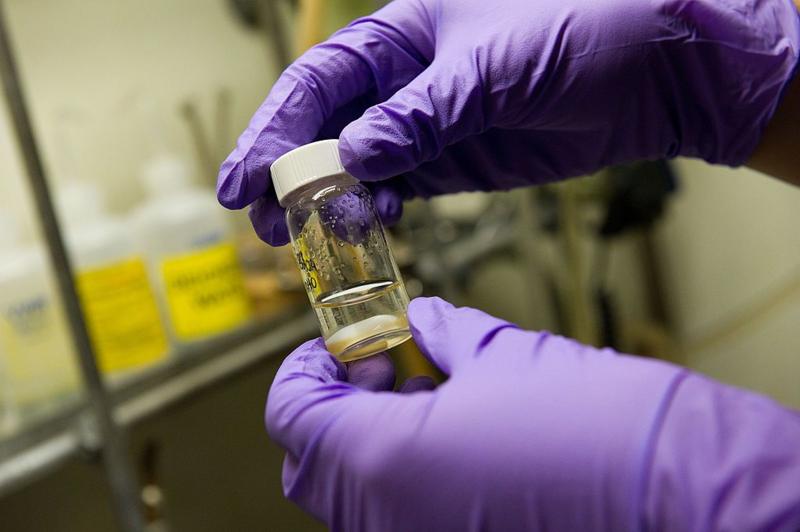
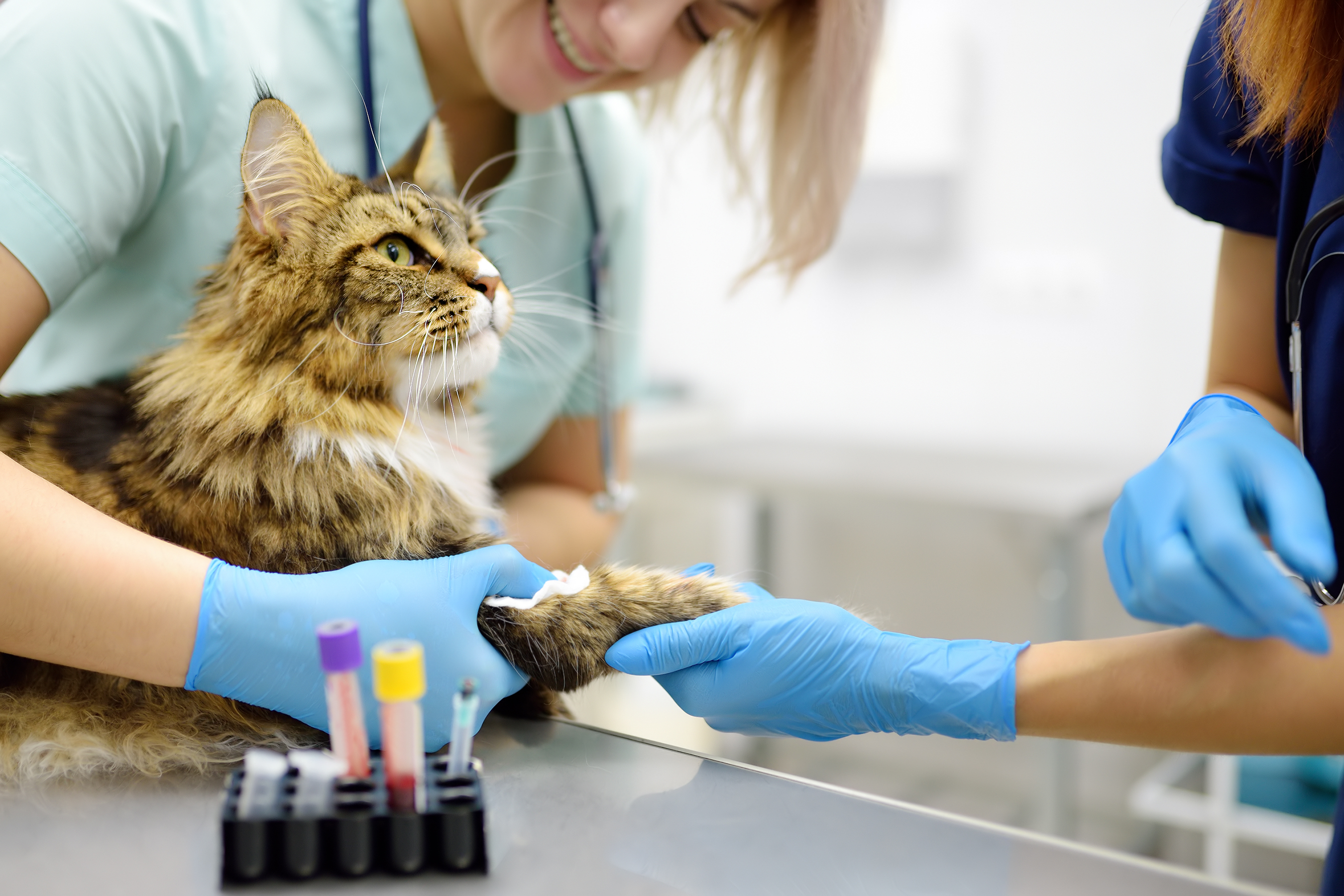
Scientists have created a genetic map of cancer in cats, showing that many genetic features of cat cancers are similar to human cancers. This research could help develop new treatments for both humans and cats by studying the cancers that affect both species.
Key Facts
Researchers made the first detailed genetic map of cancer in pet cats.
They analyzed DNA from tumors in about 500 domestic cats.
The study found key genetic mutations in cats that are similar to those in human cancers.
Cats develop certain cancers, like triple negative breast cancer, more often than humans.
Understanding cat cancer genetics can lead to better treatments for both species.
Cats share the same environment as humans, giving insight into environmental cancer risks.
The study was led by the Wellcome Sanger Institute in Cambridge.
Read the Original
Want the full story? Tap a source to open the original
article.
A Chinese company, ByteDance, developed an AI model called Seedance 2.0 that can make high-quality videos from written prompts. This has caused concern in Hollywood due to copyright issues, as major studios accused the company of using their characters without permission. The technology has the potential to revolutionize video creation by making realistic videos, but also faces legal challenges.
Key Facts
ByteDance, the company behind TikTok, created Seedance 2.0, an AI video model.
Seedance 2.0 produces cinema-quality videos using just text prompts.
Major studios like Disney and Paramount have accused ByteDance of copyright infringement.
The app has gained attention for its realistic and complex video outputs.
Seedance's capabilities include creating videos that look like big-budget films.
AI ethics experts warn about technology advancing without proper compensation to original content creators.
Japan is investigating ByteDance for copyright issues related to Seedance.
ByteDance is taking steps to improve content safeguards and address legal concerns.
Read the Original
Want the full story? Tap a source to open the original
article.
A court in Los Angeles is examining claims that social media, including platforms run by Meta, might be harmful and addictive, especially for young users. Some countries have already taken action to limit or ban social media for kids under 16. The trial looks into what role families and companies should play in managing young people's social media use.
Key Facts
Mark Zuckerberg, CEO of Meta, is in a Los Angeles court over claims that his company's social media platforms harm young users.
The trial investigates if social media can be addictive.
Some countries have started restricting or banning social media for children under 16.
The court case reflects widespread concerns about the impact of social media on youth behavior.
Adele Walton is an online safety campaigner involved in the discussion.
Larry Magid, expert in internet safety, suggests companies like Facebook need guidance on safety.
Donna Dawson, a psychologist, speaks about personality and behavior related to social media use.
Read the Original
Want the full story? Tap a source to open the original
article.
Researchers at Stanford University have developed a nasal spray vaccine that could protect against multiple respiratory infections, such as colds and flus. The vaccine has been tested on animals and prepares immune cells to react quickly to different infections. Human clinical trials are still needed to confirm its effectiveness.
Key Facts
A nasal spray vaccine could protect against colds, flus, and some bacterial infections.
The vaccine has been tested in animal studies, but human trials are still required.
This approach is different from traditional vaccines, which target specific infections.
It readies lung immune cells, called macrophages, to act quickly against infections.
The vaccine offers widespread protection and may even help reduce allergy symptoms.
The immunity effect observed in animal tests lasted for about three months.
Researchers are planning human trials to further test its effectiveness and safety.
Read the Original
Want the full story? Tap a source to open the original
article.
The article discusses upcoming webinars from Newsweek focused on healthcare and technology. These events will explore how healthcare organizations can better serve patients using technology and address issues like emergency department capacity using digital solutions. Additionally, there is concern about how recent H-1B visa changes might affect healthcare staffing.
Key Facts
Newsweek is hosting a series of healthcare webinars in March.
The first webinar, "Outdoing Dr. Google," will discuss using technology to answer patient questions effectively.
The second webinar will focus on improving emergency department operations with technology.
Panelists include healthcare professionals like Dr. Tanvi Jayamaran and Dr. Marc Mabus.
There's a concern over higher H-1B visa fees affecting healthcare staffing.
The Department of Homeland Security has not clarified if healthcare workers are exempt from new H-1B requirements.
Read the Original
Want the full story? Tap a source to open the original
article.
Microsoft admitted that its AI assistant, Copilot, accidentally accessed some users' confidential emails. The issue involved the tool summarizing messages stored as drafts or sent items, even those marked as confidential. Microsoft has released an update to fix the problem and stated no unauthorized information access happened.
Key Facts
Microsoft Copilot is an AI tool used in programs like Outlook and Teams to help with tasks like summarizing messages.
The error allowed Copilot to access and summarize confidential emails by mistake.
Microsoft released an update to fix this issue worldwide.
The problem involved emails in users' drafts and sent folders, despite them being confidential.
Microsoft assured that no unauthorized individuals accessed sensitive information.
Experts warn of risks when rapidly deploying AI features.
The error was first reported by tech news outlet Bleeping Computer.
Some experts suggest that data leaks are likely as AI tools develop quickly.
Read the Original
Want the full story? Tap a source to open the original
article.
OpenAI's CEO, Sam Altman, believes urgent global rules are needed to oversee artificial intelligence (AI). He suggests this to ensure AI develops in a fair and safe way for everyone.
Key Facts
Sam Altman is the CEO of OpenAI.
He stated that the world needs urgent global regulation for AI.
Altman calls for an international organization to oversee AI development.
The aim is to make AI development fair and safe for all.
He spoke about the importance of democratizing AI, meaning making it accessible and fair for everyone.
Read the Original
Want the full story? Tap a source to open the original
article.
Scientists linked a SpaceX rocket failure in February 2025 to increased lithium pollution in Earth's atmosphere. They discovered this by tracking metal atoms released from the rocket's debris. This incident raises concerns about the impact of space debris on the environment, especially with plans to launch more satellites.
Key Facts
A SpaceX Falcon 9 rocket failed in February 2025, creating debris over western Europe.
Scientists found a significant increase in lithium levels in the atmosphere linked to this rocket debris.
The rocket's debris was tracked using lasers that detected metal atoms in the atmosphere.
SpaceX CEO Elon Musk plans to launch one million satellites in the future.
Increased space debris can affect Earth's atmosphere and climate by disrupting aerosols.
Over 30,000 pieces of space debris are estimated to be floating in space.
The environmental impact of space debris on the ozone layer and climate is still unclear.
SpaceX has not responded to requests for comment regarding the pollution findings.
Read the Original
Want the full story? Tap a source to open the original
article.
The article discusses an upcoming webinar hosted by Newsweek on how artificial intelligence (AI) is changing marketing, particularly in creative areas such as campaign development and imagery generation. Experts Suraj Srinivasan and David Sable will explore how AI affects creativity in marketing and whether AI can achieve originality. The conversation will also cover the operational benefits AI brings to marketing, like speeding up market research with synthetic personas.
Key Facts
Newsweek is hosting a free webinar on AI's impact on marketing on March 10 at 1:30 p.m. ET.
The webinar is part of "The AI Agenda" series and features experts Suraj Srinivasan and David Sable.
The discussion will focus on AI's role in creativity within marketing.
Suraj Srinivasan highlights the challenge of defining true creativity in the era of AI.
David Sable questions if AI-trained on past artworks could ever create a masterpiece like those of da Vinci.
AI is used in marketing to make processes more efficient, like automating tasks and speeding up timelines.
Synthetic personas, created by AI, simulate audience responses and are cost-effective compared to traditional methods.
The experts will discuss the balance between AI's operational benefits and its effect on creative work in marketing.
Read the Original
Want the full story? Tap a source to open the original
article.
Scientists have found that the genetic changes in cat cancer are similar to those in human cancers. This study may help develop treatments for both cats and humans with cancer. The research looked at nearly 500 cats and compared the genetic data to what's seen in humans.
Key Facts
Researchers studied 500 cats to find similarities in cancer genetics between cats and humans.
The study involved experts from the Wellcome Sanger Institute, Ontario Veterinary College, and the University of Bern.
Scientists discovered genetic changes in cat cancers that resemble those in human cancers.
They identified seven key genes that mutate to cause cancer; the FBXW7 gene was the most common.
Changes in the FBXW7 gene are linked to more severe cases of cancer in both cats and humans.
Certain chemotherapy drugs worked better on cat tumors with mutations in the FBXW7 gene.
The study is the first to profile cat cancer tumors on a large scale.
The "One Medicine" approach encourages sharing research data between human and veterinary medicine to find better treatments for both.
Read the Original
Want the full story? Tap a source to open the original
article.
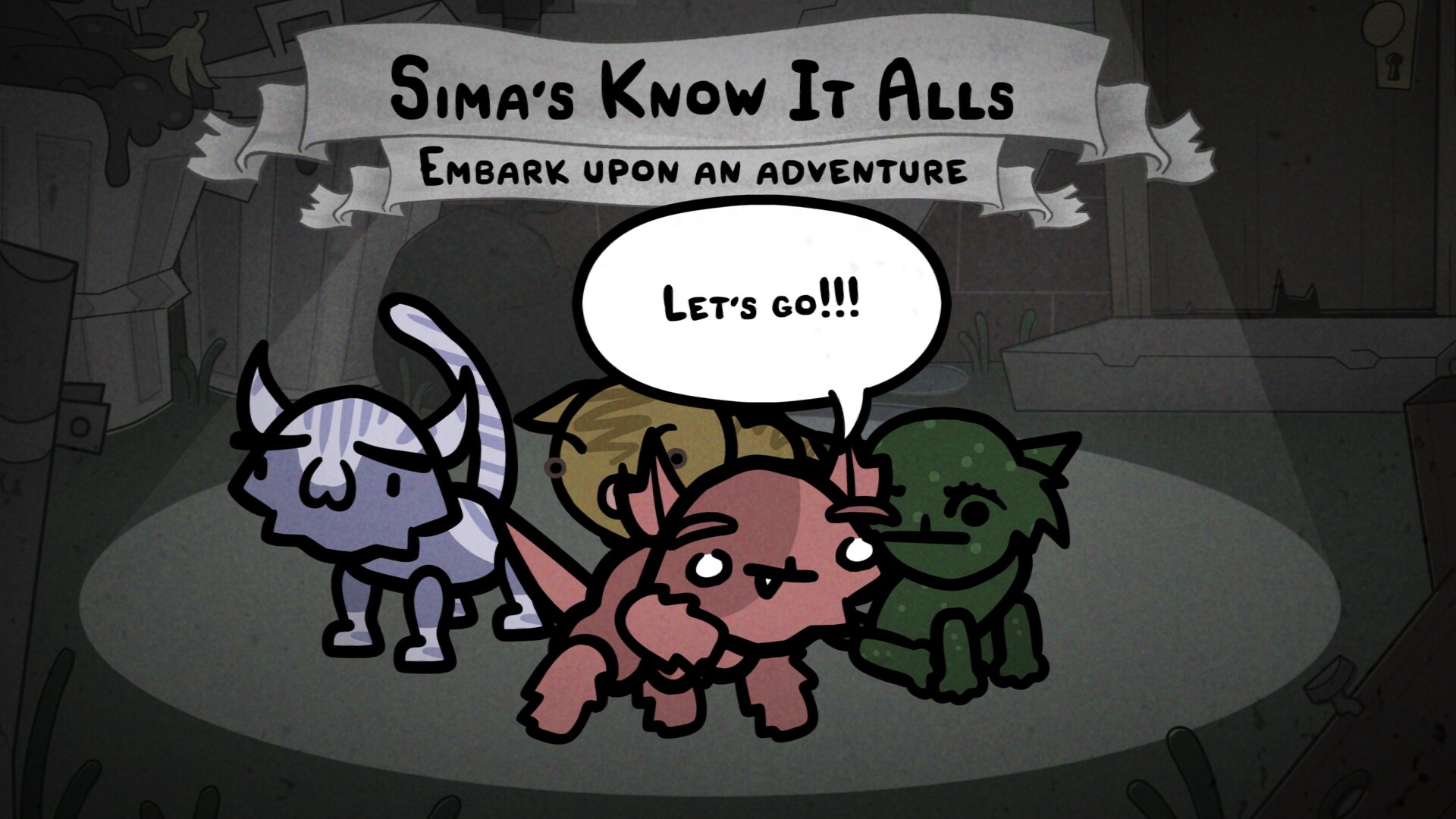
The article discusses a video game called "Mewgenics," created by Edmund McMillen and Tyler Glaiel. The game uses dark humor and a simulation style to explore themes of animal cruelty and care, particularly focusing on cats. It features a strategic gameplay where players breed and manage cats in challenging environments.
Key Facts
"Mewgenics" is a video game developed by Edmund McMillen and Tyler Glaiel.
The game was first previewed at PAX in 2013.
It uses dark humor to address serious themes like animal cruelty.
Players manage a group of cats, dealing with issues like inbreeding and survival.
The game’s setting is a harsh environment, filled with junkyards and alleys.
Players face moral choices that affect the health and survival of the cats.
The game's mechanics include understanding genetic traits and the risks of breeding.
Read the Original
Want the full story? Tap a source to open the original
article.
The Pentagon and AI company Anthropic are in a dispute over military use of AI models. The Pentagon wants full access without restrictions, but Anthropic is concerned about its model being used for surveillance and weapons. Other AI companies are also talking with the Pentagon about similar agreements.
Key Facts
The Pentagon wants to quickly integrate AI into military activities to stay ahead of countries like China.
Defense Secretary Pete Hegseth is pushing AI companies for unrestricted access to their models.
Anthropic's AI model, Claude, is the only one currently used in classified military systems.
The Pentagon may end its contract with Anthropic because of disagreements over model use.
Anthropic is worried about its model being used for domestic surveillance or autonomous weapons.
Other AI companies, including OpenAI, Google, and xAI, are negotiating with the Pentagon.
These companies have agreed to relax usual safeguards for use in unclassified military systems.
The Pentagon wants "all lawful use" of AI models in both classified and unclassified areas.
Read the Original
Want the full story? Tap a source to open the original
article.
China's developments in artificial intelligence (AI) are challenging the U.S. film industry. A new AI tool from ByteDance created realistic videos that raised copyright concerns from Hollywood studios.
Key Facts
China's AI models are becoming competitive by being cheaper and faster than U.S. counterparts.
ByteDance released Seedance 2.0, an AI video model, which created a realistic video of actors Tom Cruise and Brad Pitt.
Major Hollywood studios, including Netflix and Disney, sent legal warnings to ByteDance over copyright issues.
ByteDance claims it respects copyright laws and plans to add safety measures to Seedance.
Hollywood is using copyright laws to try to limit Seedance's distribution and capabilities.
Chinese open-source AI models quickly grew to be a significant portion of global AI use by the end of 2025.
The rapid development of Chinese AI tools raises concerns over who controls standards for intellectual property protections.
Read the Original
Want the full story? Tap a source to open the original
article.
The article discusses how predicting the success of new technology, like artificial intelligence (AI), can be challenging. It compares the current AI landscape to past predictions about e-commerce, highlighting the difficulty in identifying winners early on.
Key Facts
In 1994, e-commerce was just starting and many early companies struggled or failed.
Amazon, a major success in e-commerce, began as a small startup in 1994.
Walmart adapted to e-commerce and saw significant stock value growth since 1994.
The current AI market is rapidly developing and could disrupt existing software companies.
Making profits from new technologies often requires selecting the right companies, which is difficult when those companies are just emerging.
There are upcoming webinars discussing AI's impact on governance, risk, and creativity in marketing.
Read the Original
Want the full story? Tap a source to open the original
article.
World leaders and tech executives are meeting in New Delhi for a summit about artificial intelligence (AI). AI has attracted significant financial investment, with global spending expected to reach $2.5 trillion in 2026. The United States leads in AI spending, accounting for a large part of global investments.
Key Facts
The India-AI Impact Summit 2026 is happening in New Delhi.
AI is expected to see global spending of $2.5 trillion in 2026, up 44% from 2025.
Over the past decade, AI investment has reached $1.6 trillion globally.
The U.S. leads in AI spending, making up 62% of private AI funding since 2013.
AI investments have grown 13 times larger compared to a decade ago.
Investments in AI have surpassed historical projects like the Apollo Program and the Manhattan Project.
AI funding involves private markets, venture capital, and global investors, not just governments.
AI-related spending includes costs for data centers, model development, services, and security.
Read the Original
Want the full story? Tap a source to open the original
article.
A TikTok user tried to watch the movie "Twilight" on Valentine's Day but faced multiple streaming and tech challenges. She couldn't find the movie on her streaming services, bought new devices, and still couldn't watch it. This reflects wider frustration with the complexity and cost of streaming services.
Key Facts
A TikTok user named Anna wanted to watch "Twilight" on Valentine's Day.
The movie was not available on the streaming services she had.
She learned it was available on HBO Max, which she didn't have access to.
Attempts to play physical movie discs failed due to tech issues with Blu-ray and audio.
She bought a new Blu-ray player and TV but still encountered problems.
Comments on TikTok highlighted the cost of buying new devices versus a streaming subscription.
A survey showed 62% of people think there are too many streaming options.
32% of people can't keep track of where to watch their favorite content.
Read the Original
Want the full story? Tap a source to open the original
article.
Nintendo announced an upgrade for the game "Xenoblade Chronicles X" for the new Switch 2 console. The upgrade improves image quality and speed and is available for purchase online. A physical version will be released in retail stores in April 2026.
Key Facts
Nintendo released an upgrade for "Xenoblade Chronicles X" called the Switch 2 Edition.
The upgrade improves the game's image resolution to 4K and increases the frame rate to 60 frames per second.
The digital upgrade costs $4.99, and the complete game with the upgrade costs $64.99.
The game is part of the Xenoblade Chronicles series and was initially released on the Wii U.
The original game did not sell well due to the Wii U's low sales, but a remastered version was released on the Nintendo Switch in 2025.
A physical edition of the upgraded game will be available in stores on April 16, 2026.
Some players expected this upgrade earlier since it was not one of the first games to be updated for the Switch 2.
Read the Original
Want the full story? Tap a source to open the original
article.
The article discusses popular tech gifts that are both practical and enjoyable. It highlights various gadgets that make life easier or provide entertainment, such as AI tools and smart devices.
Key Facts
A TikTok video featured a device for automatically opening and closing curtains using an app or smart assistants like Alexa and Google.
Tech gifts are in high demand for their functionality and ability to improve daily life.
A Pew Research Center report shows that 79% of Americans frequently use AI in their daily lives.
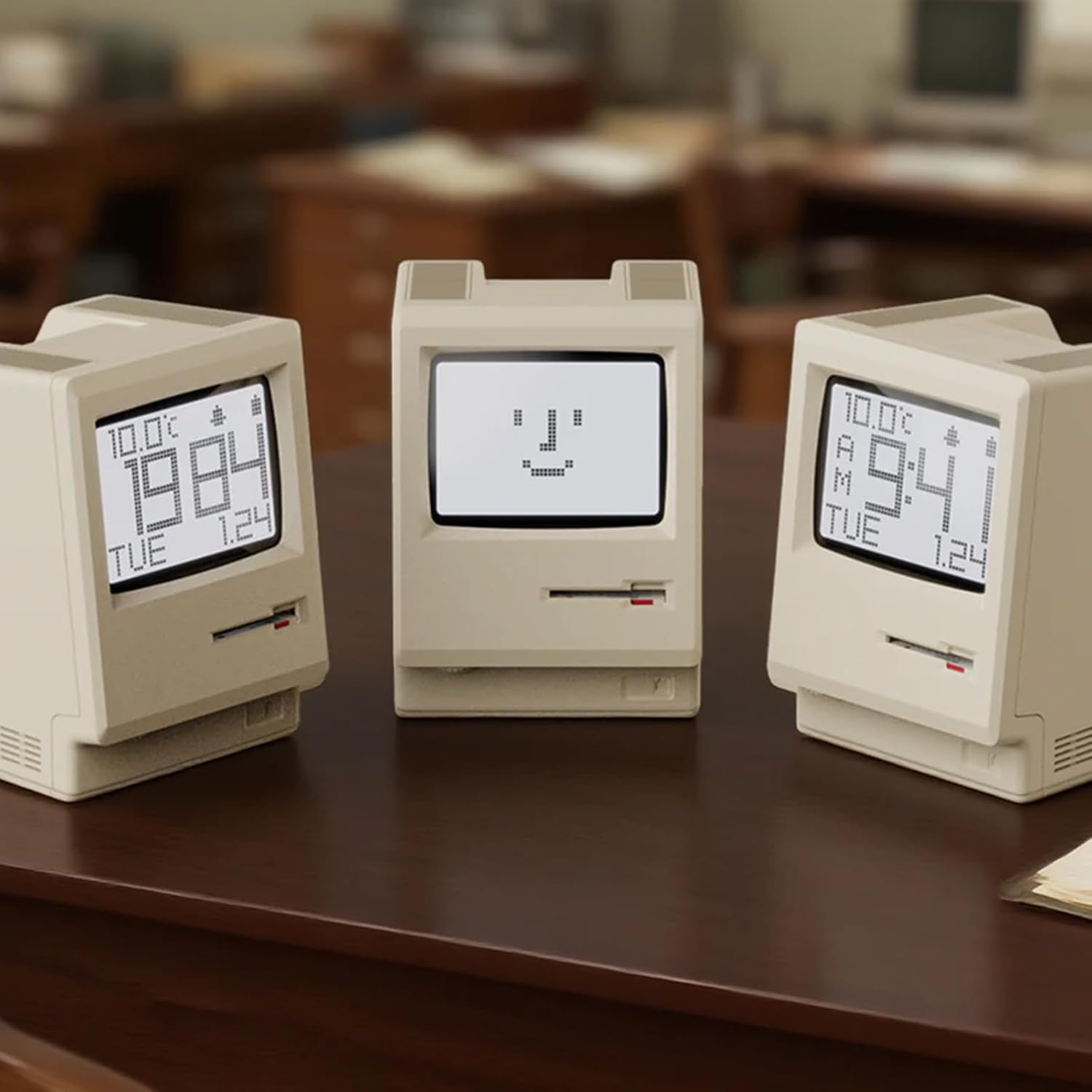
Examples of tech gifts include AI voice recorders and retro-style alarm clocks that resemble old Macintosh computers.
Headphones and air dusters are highlighted for their nostalgic design and utility in maintaining electronic devices.
An eye massager is mentioned for relieving eye strain from prolonged screen use.
Read the Original
Want the full story? Tap a source to open the original
article.
At an AI summit in India, the leaders of two AI companies, OpenAI and Anthropic, did not hold hands for a group photo. This highlights the ongoing rivalry between the two companies' CEOs, Sam Altman and Dario Amodei.
Key Facts
The event took place at an AI summit in India.
The leaders in question are Sam Altman from OpenAI and Dario Amodei from Anthropic.
The incident happened during a group photo session.
OpenAI and Anthropic are two major companies in the AI industry.
The rivalry between the companies' CEOs worsened earlier this year.
The tension increased when Anthropic ran attack ads against OpenAI during the Super Bowl.
Read the Original
Want the full story? Tap a source to open the original
article.