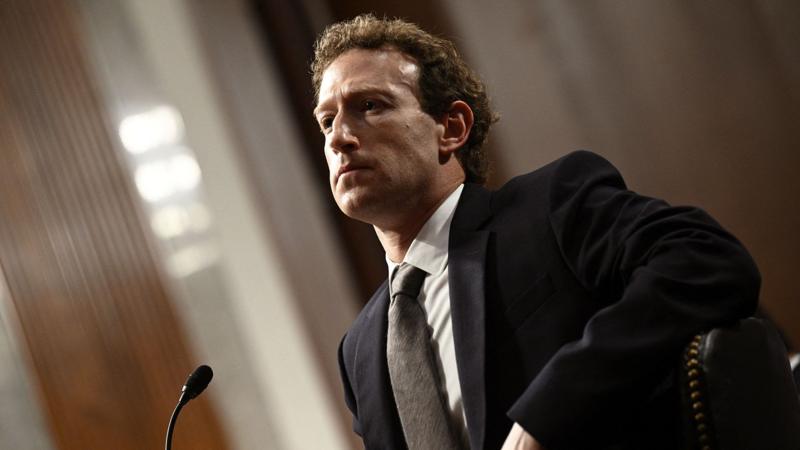
Tech companies Meta, TikTok, and YouTube are on trial in California over claims that their platforms harm the mental health of young people. The case, led by a 19-year-old plaintiff, alleges the platforms are designed to be addictive to increase profits. This trial is seen as a potential precedent for similar lawsuits.
Key Facts
Meta, TikTok, and YouTube are facing a trial in California over allegations of mental health impacts on youth.
The trial began with jury selection in Los Angeles County Superior Court.
The plaintiff is a 19-year-old woman who claims the platforms fueled her depression and suicidal thoughts.
The lawsuit argues the apps are designed to be addictive, similar to tobacco industry practices.
Snap Inc., another company initially involved, settled separately last week.
The trial may influence other similar lawsuits concerning social media addiction.
If successful, the case could challenge existing legal protections like the First Amendment and Section 230 for tech companies.
Meta and TikTok have implemented measures to promote online safety for teens, such as workshops and parental controls.
Read the Original
Want the full story? Tap a source to open the original
article.
Search interest in how to delete a TikTok account has reached its highest level ever. This rise in search inquiries comes after TikTok created a joint venture in compliance with an executive order signed by President Donald Trump. Users on social media are urging others to delete TikTok due to changes in its Terms of Service and Privacy Policy.
Key Facts
Google search data shows a high interest in how to delete a TikTok account.
TikTok has formed a joint venture called TikTok USDS Joint Venture LLC.
The joint venture includes three managing investors: Silver Lake, Oracle, and MGX.
ByteDance, the original Chinese parent company, owns 19.9% of the joint venture.
TikTok updated its Terms of Service and Privacy Policy after the joint venture announcement.
TikTok’s new venture will follow rules aimed at protecting U.S. national security.
Users can delete their TikTok account through the app by following specific steps.
Concerns are raised about TikTok collecting sensitive personal information under new terms.
Read the Original
Want the full story? Tap a source to open the original
article.
A recent data leak exposed 149 million passwords from platforms like Gmail and Facebook. The database with these credentials was not protected, leading to the leak being publicly accessible. Techniques exist to check if your information was compromised and advice is available on how to protect your accounts.
Key Facts
149 million account usernames and passwords were leaked.
The leak included 48 million passwords for Gmail and 17 million for Facebook.
Security analyst Jeremiah Fowler discovered the unprotected database.
Google stated that the data came from malware logs and they have protections against such breaches.
Only 34 percent of people update passwords monthly, contributing to vulnerabilities.
People can check if their data was affected by visiting websites like Have I Been Pwned.
It is recommended to use strong, regularly updated passwords and enable two-factor authentication (2FA).
Google suggests using biometric authentication like fingerprints for better security.
Read the Original
Want the full story? Tap a source to open the original
article.
The ABB FIA Formula E World Championship is using artificial intelligence (AI) to improve both racing performance and the fan experience. Through a partnership with Google Cloud, AI tools will provide fans with insights during races and enhance race operations.
Key Facts
Formula E is using AI to enhance racing and fan experiences.
The series has partnered with Google Cloud and will use Google Gemini AI models.
The AI will help improve racing performance and operations.
Live broadcasts will include AI-driven insights, predictions, and explanations.
Fans will receive real-time information, such as energy predictions and race strategies.
Google Workspace will be used to create digital simulations of races for logistical planning.
Read the Original
Want the full story? Tap a source to open the original
article.
A new expansion for the mobile game "Pokémon TCG Pocket" called Fantastical Parade will launch on January 28, 2026. It includes new cards and will release globally at the same time. The expansion features limited themed boosters and follows a recent pause after the Crimson Blaze expansion.
Key Facts
The Fantastical Parade expansion will be released on January 28, 2026.
It includes new Stadium cards and two new Mega ex cards.
The expansion will release globally at the same time, without a staggered schedule.
Release time is 2:00 am ET on January 28, which is 11:00 pm PT on January 27.
Known new cards include Vanillite, Pumpkaboo, and Peculiar Plaza.
The Fantastical Parade is a limited themed booster, smaller than full expansions.
Seven cards in total have been revealed for this expansion.
Read the Original
Want the full story? Tap a source to open the original
article.
Toyota confirmed it is developing a new mid-engine sports car, which aligns with its focus on performance and motorsport technology. This new model will center around a 2.0-liter turbocharged engine and is expected to incorporate hybrid technology in the future. The car is in an early development stage and won't be available until after the 2020s.
Key Facts
Toyota is creating a new mid-engine sports car.
The development process will take about five years.
The car will have a 2.0-liter turbocharged engine.
The engine is designed to meet Euro 7 emission rules.
Toyota may use hybrid technology in the sports car.
Toyota Gazoo Racing is also involved in Formula One as a sponsor.
The MR2, a past mid-engine model, stopped production in 2007.
The GR Yaris will be the first car to use the new engine.
Read the Original
Want the full story? Tap a source to open the original
article.
A UK tribunal has allowed a lawsuit against Valve Corporation, the company behind the Steam game store, to proceed. The lawsuit, led by Vicki Shotbolt, claims Valve's pricing practices are unfair and keep users locked into their platform. Up to 14 million UK Steam users could potentially receive compensation if the case succeeds.
Key Facts
Valve Corporation will face a £656 million lawsuit in the UK over Steam's pricing practices.
The case claims Valve abuses its dominant position by enforcing restrictive terms on game publishers.
The lawsuit argues that Steam locks users into its platform for buying additional content, charging up to a 30% commission.
Digital rights campaigner Vicki Shotbolt filed the case on behalf of up to 14 million UK Steam users.
The lawsuit, a collective action claim, means one person represents a group of people in court.
Legal firm Milberg London LLP supports the claim, specializing in group action cases.
A similar consumer action lawsuit against Valve was filed in the US in August 2024.
Valve's Steam platform, launched in 2003, is the leading PC game distribution platform worldwide.
Read the Original
Want the full story? Tap a source to open the original
article.
Amazon’s TV show "Fallout," based on a video game series, has been renewed for a third season. Filming for season 3 is set to start in the summer of 2026, with episodes possibly airing by early 2027. The series continues to expand, and writing for the new season is already underway.
Key Facts
"Fallout" is a drama series on Amazon Prime, based on a video game franchise.
The show is set after a fictional nuclear war in 2077.
Amazon confirmed a third season in May 2025.
Writing for the third season is currently in progress.
Filming is planned to begin in the summer of 2026.
Season 3 could potentially start airing in early 2027.
A countdown on the official website hints at upcoming announcements.
The series has been well-received, with high ratings on Rotten Tomatoes.
Read the Original
Want the full story? Tap a source to open the original
article.
AI models that can improve themselves are becoming an important area in AI research. Companies like Google DeepMind and OpenAI are working on these technologies, which could make AI more powerful but also introduce risks. There are concerns about the lack of oversight and the potential for these models to behave unpredictably in real-world situations.
Key Facts
AI models with the ability to learn on their own are known as recursive self-improvement.
Google DeepMind and OpenAI are exploring this technology for advanced AI development.
This approach aims to let AI models continue learning after their initial training.
Researchers have pointed out the potential risks and challenges of these self-improving models.
Georgetown's Center for Security and Emerging Technology released a report about the need for better AI research oversight.
AlphaZero, a model from Google DeepMind, used self-improvement to master games like chess and Go.
Concerns exist that these AI models may use undesirable tactics to achieve their goals.
Richard Socher is launching a startup focused on this AI technology, with significant financial backing.
Read the Original
Want the full story? Tap a source to open the original
article.
A man's online post questioning the impact of LinkedIn on personal expression went viral, receiving support from many users. The post criticized LinkedIn for focusing on professional achievements rather than authentic human connections. Some users agreed, while others defended LinkedIn's role in career building.
Key Facts
A user named @austinjackson1995 criticized LinkedIn on the Threads app, describing it as corporate-focused.
His post went viral, liked by over 13,000 people, and received hundreds of comments.
The user argued that LinkedIn encourages career achievements but discourages personal expression.
Many people agreed with him, sharing their skepticism about LinkedIn's networking claims.
Some individuals defended LinkedIn, suggesting it helps them in career development.
LinkedIn has been active since 2003 and has over 1.2 billion users worldwide.
The platform is known for supporting people focused on professional achievements.
Read the Original
Want the full story? Tap a source to open the original
article.
The article discusses the need for children to learn about artificial intelligence (AI) beyond just using it. It suggests that kids should be equipped with the skills to create and critique AI systems, rather than just viewing them as magic. The author emphasizes the importance of integrating AI education into the standard curriculum.
Key Facts
AI is rapidly evolving and affects various areas, including medicine and communication tools like chatbots.
There is concern that children might see AI as mysterious or magical, rather than understanding it as a technology.
Current trends show some children rely on AI for emotional support, which might affect their ability to build real human relationships.
The article stresses the importance of teaching children foundational AI concepts, such as computer science and data, to prepare them for the future.
Many educators feel unprepared to teach AI, highlighting a need for improved training and resources.
The article advocates for changing educational policies and curriculums to include AI literacy as a fundamental part of learning.
The author suggests that parents and teachers should learn alongside children, acting as learning partners rather than experts.
Read the Original
Want the full story? Tap a source to open the original
article.
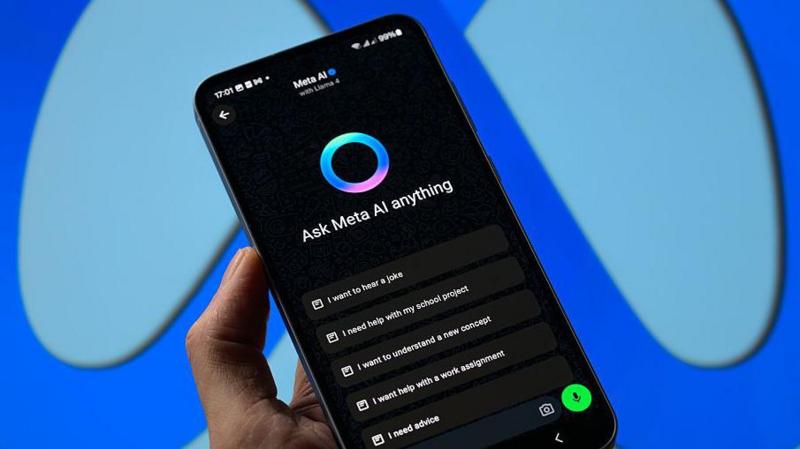
Meta plans to test premium subscriptions for Instagram, Facebook, and WhatsApp that offer extra features such as advanced AI tools. The main services will still be free. Meta will also use AI technology from Manus, a company it acquired, to enhance these offerings.
Key Facts
Meta is planning to try out premium subscriptions for Instagram, Facebook, and WhatsApp.
These subscriptions will include features with improved artificial intelligence (AI).
Users can still access the basic versions of these platforms for free.
Meta will test subscriptions for features like its Vibes video generation app.
Vibes includes tools that allow users to create visuals using AI.
Meta acquired an AI company called Manus for a reported $2 billion.
Manus's technology will help Meta improve its AI services.
The company will offer Manus’s AI tools to both consumers and businesses.
Read the Original
Want the full story? Tap a source to open the original
article.
The article discusses DeepMind's careful approach to developing advanced technologies like Artificial General Intelligence (AGI). The company's leaders emphasize responsible innovation, ensuring AI development happens with consideration of ethics and societal impact.
Key Facts
DeepMind is a research company focused on Artificial General Intelligence (AGI).
India is working to become a key player in the computer chip industry. While it excels in chip design, India currently lacks semiconductor manufacturing capabilities. The country is now focusing on developing parts of the production process, like chip assembly and testing.
Key Facts
India is strong in designing computer chips but lacks manufacturing facilities for semiconductors.
Tejas Networks, an Indian company, designs telecom chips but has them manufactured abroad.
The global pandemic exposed risks in concentrated chip manufacturing, prompting India to invest in its semiconductor industry.
The Indian government supports developing a local semiconductor ecosystem to increase supply chain resilience.
India is targeting the chip assembly, testing, and packaging stages of production, which are easier to start than manufacturing.
Kaynes Semicon is India's first semiconductor plant, beginning production in 2022, with significant government support.
The plant in Gujarat began producing chips in November, focusing on assembly and testing processes.
Read the Original
Want the full story? Tap a source to open the original
article.
A trial began in California where tech companies like Meta, TikTok, and Google face claims that their social media platforms cause addiction and harm mental health. A 19-year-old, referred to as KGM, argues that these platforms' design features, like algorithms, made her addicted. This case could change how tech firms are held accountable for their platforms' impact on users.
Key Facts
A trial is taking place in California focused on social media addiction.
Major tech companies involved are Meta, TikTok, and Google.
The plaintiff is a 19-year-old woman known as KGM.
KGM claims social media algorithms harmed her mental health.
Snapchat settled with the plaintiff before the trial began.
The trial is the first of many similar cases questioning tech company responsibilities.
Section 230 of the Communications Decency Act might not protect these companies for design-related issues.
Tech executives, including Meta's Mark Zuckerberg, are expected to testify.
Read the Original
Want the full story? Tap a source to open the original
article.
Heated blankets provide warmth but can pose safety risks, especially if they're older models or misused. Newer blankets have features like auto shutoff timers, multiple heat levels, and overheat protection to reduce dangers. Safety experts suggest choosing blankets with these features and regularly inspecting them to prevent fires.
Key Facts
Heating blankets can lead to burns and fires, especially older models without modern safety features.
Internal wiring can get damaged from stress, leading to risks of overheating and fires.
Folding or bunching the blanket can cause heat to concentrate, increasing fire risk.
Newer blankets often include auto shutoff timers to prevent overheating if left on accidentally.
Adjustable heat levels allow users to choose different temperatures, reducing strain on wiring.
Overheat protection systems can shut down blankets that get too hot or malfunction.
Safety certifications, like UL or ETL, show that blankets meet electrical safety standards.
Regular inspection and careful use are important even with advanced safety features.
Read the Original
Want the full story? Tap a source to open the original
article.
Thousands of TikTok users in the United States reported issues with the app over the weekend, following a power outage at a US data center operated by Oracle. The new US owner of TikTok apologized for the disruption and is working to restore normal services. Users experienced repeated videos, content not displaying, and posts with no views.
Key Facts
TikTok's US operations faced disruptions due to a power outage at a data center.
Over 600,000 US TikTok users reported problems, such as videos repeating and posts showing zero views.
TikTok USDS Joint Venture LLC, the app's US owner, apologized to users for the issues.
Oracle, TikTok's data center partner, is assisting in resolving the problems.
The disruptions coincided with Oracle's increased role in TikTok's US operations, requiring them to manage user data and algorithms.
The service disruption raised concerns among users about changes in TikTok's algorithm due to new ownership.
The related video editing app CapCut also experienced user-reported issues during this time.
Read the Original
Want the full story? Tap a source to open the original
article.
Google has agreed to pay $68 million to settle a lawsuit that claimed its Google Assistant recorded private conversations without users knowing. The lawsuit argued that the voice assistant turned on by accident and shared the recordings with advertisers. Google denied doing anything wrong but chose to settle to avoid a long court case.
Key Facts
Google will pay $68 million to settle the lawsuit.
The lawsuit claimed Google Assistant recorded conversations without users' consent.
Recordings were allegedly shared with advertisers for targeted ads.
Google denies wrongdoing but settled to avoid litigation.
The settlement is part of a class action lawsuit, meaning many people will get part of the payout.
Google devices involved date back to May 2016.
A similar case involved Apple settling for $95 million over its Siri assistant.
Read the Original
Want the full story? Tap a source to open the original
article.
The series "Bridgerton" is returning to Netflix with its Season 4, released in two parts. The first set of episodes is available on January 29, 2026, and the second set on February 26, 2026. Subscribers need a Netflix account to watch the series.
Key Facts
"Bridgerton" Season 4 Part 1 is available on Netflix starting January 29, 2026.
The first release includes four episodes; the next four arrive on February 26, 2026.
The season will feature eight episodes in total.
The storyline follows Benedict, who seeks romance with a mysterious woman at a masquerade ball.
Season 4 explores themes of social class and romance.
A Netflix subscription is necessary to stream the episodes, starting at $7.99 per month with ads.
The series will release in different time zones, with specific timings for each.
Season 5 of "Bridgerton" is already confirmed.
Read the Original
Want the full story? Tap a source to open the original
article.
Anthropic CEO Dario Amodei warns about the risks of super-intelligent AI, which he believes could cause serious problems for society. He calls for attention from government and tech leaders to manage these risks. Amodei shares his concerns in a detailed essay, suggesting that AI advancements may soon surpass human abilities.
Key Facts
Dario Amodei is the CEO of Anthropic, a company known for advanced AI systems.
Amodei warns that AI could cause major disruptions and potential dangers if not properly managed.
He believes AI could soon outperform humans in many fields, including science and technology.
A significant concern is massive job loss, with AI potentially replacing many white-collar jobs.
Amodei describes a future where AI systems have capabilities like a "country of geniuses."
He highlights risks like AI-driven biological threats and increased terrorism potential.
Amodei urges leaders to take these threats seriously and openly communicate with the public.
Read the Original
Want the full story? Tap a source to open the original
article.