Microsoft fixed a serious security problem in its M365 Copilot AI tool that let hackers steal two-factor authentication (2FA) codes and other sensitive email data. The flaw happened because the AI could not tell the difference between safe instructions and harmful hidden commands, letting attackers trick it into sending private information.
Key Facts
Microsoft patched a critical vulnerability in its M365 Copilot AI platform last Tuesday.
The flaw allowed hackers to use specially crafted links to trick Copilot into accessing and leaking 2FA codes and email data.
The attack used a technique called Parameter-to-Prompt Injection, where malicious commands are placed in URLs sent to the user.
By clicking a link in an email, the victim unknowingly triggered Copilot to search their emails and embed secret data into image links, which were sent to attackers.
Copilot has protections (guardrails) to stop sending data to untrusted sites, but these protections can be bypassed during the AI’s response streaming phase.
Hackers exploited the way Copilot generates HTML responses temporarily in the browser before protections activate, allowing data to be sent out early.
Microsoft’s Bing search engine was used as an intermediate step to bypass request restrictions.
This vulnerability shows challenges in securing AI systems that automatically handle user data and instructions from third-party content.
Read the Original
Want the full story? Tap a source to open the original
article.
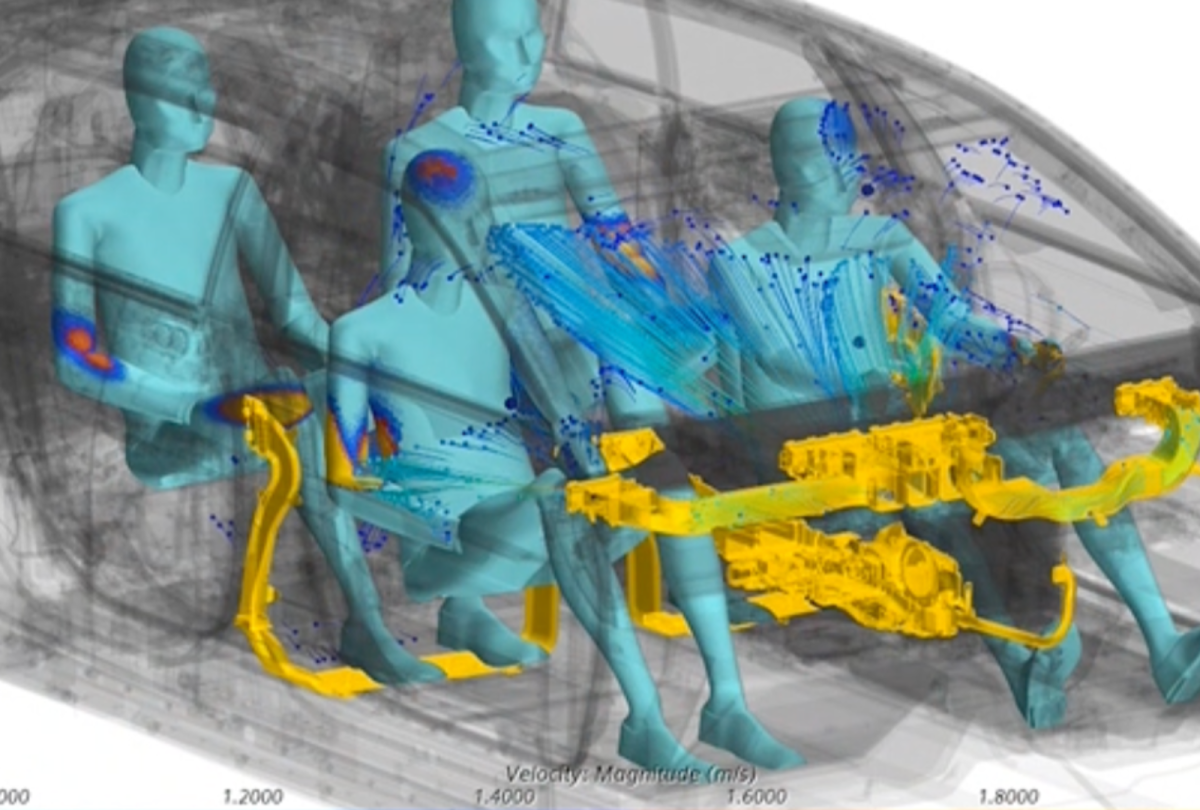
General Motors (GM) is changing how it builds cars by using new computer tools and artificial intelligence (AI). These changes let different teams work together faster and improve designs more quickly than before. While computers speed up development, GM still uses physical tests to check car safety and performance.
Key Facts
GM is adopting methods similar to those used by Chinese car makers, focusing on speed and new technology.
The old process was slow and expensive, relying on many physical prototypes and back-and-forth work between teams.
GM now uses digital tools that let designers and engineers see effects of changes instantly, saving hours of analysis.
Teams can work at the same time on both the hardware (physical parts) and software (computer programs) of the vehicle.
GM employs digital twins, which are virtual models of cars, to test and improve designs before making physical versions.
AI and digital environments have accelerated the development process but have not replaced real-world testing.
Physical tests for safety and vehicle behavior remain essential parts of GM’s process.
GM has created a new “operating system” for product development that improves speed and quality.
Read the Original
Want the full story? Tap a source to open the original
article.
Brad Smith, Microsoft’s vice chair and president, said people should not panic about AI’s impact on jobs. He criticized tech leaders for making exaggerated warnings about AI and urged a more balanced view that focuses on how AI can help people in the long run.
Key Facts
Brad Smith has worked at Microsoft for 33 years and spoke from their headquarters in Redmond, Washington.
He believes scary predictions about AI harming entry-level white-collar jobs are making young people anxious about AI.
Smith noted that AI’s full effect on jobs will take about 25 years, not just a few years.
He criticized some tech leaders for urging a "global pause" on AI but not slowing their own development efforts.
Smith said young workers want their voices heard and see AI as something affecting them directly.
He warned against overhyping AI’s speed and power while underestimating human ability to adapt.
Smith compared AI adoption to historical changes, like learning to ride horses to speed travel.
He cautioned that calls for strict AI laws often fail because proposed rules are unrealistic or companies resist them.
Read the Original
Want the full story? Tap a source to open the original
article.
A father used his technical skills to enter a city sewer to retrieve his daughter's stolen phone. His unusual and determined effort to recover the phone gained widespread attention on the internet.
Key Facts
A dad's daughter had her phone stolen.
The father searched for and recovered the phone.
He went into a city sewer during the rescue mission.
The event was shared online and became very popular.
The story highlights the father's tech knowledge and determination.
Read the Original
Want the full story? Tap a source to open the original
article.
Commodore is releasing a new flip phone called the Callback 8020 that blocks access to social media apps and web browsers while still allowing some Internet uses like maps and messaging. The phone runs on Sailfish OS, supports most Android apps, and includes features to reduce distractions such as an LED message light and swappable covers.
Key Facts
Commodore brand was acquired by Christian Simpson in 2025, who paid in the low seven figures.
The Callback 8020 is a flip phone styled in “BASIC Beige” and inspired by retro designs.
The phone blocks social media apps and browsers at the system level using special patent-pending technology.
It allows other Internet apps and functions, like maps, QR codes, WhatsApp, Signal, and Spotify.
Social media apps cannot be installed or sideloaded, with additional blocks at the network (DNS) level.
The phone runs Sailfish OS, a Linux-based system with an Android app compatibility layer.
It includes retro-style features such as swappable covers, a red-tinted calculator-style exterior screen, and a domed LED message light.
Commodore plans to consult users about blocking other internet forums beyond social media.
Read the Original
Want the full story? Tap a source to open the original
article.
The article discusses experiences of Twitch streamers who have grown up on the platform, sharing personal stories about how streaming helped them express their identities and cope with challenges. It also explains steps Twitch has taken to protect creators from online abuse, such as using moderation tools and supporting minority groups.
Key Facts
Aimsey, a streamer who started at age 16, shares openly about their identity and life struggles to support others.
Streaming can blur the lines between personal life and online presence, causing stress for creators.
Aimsey recently began keeping some aspects of life private to maintain balance and well-being.
Sweet Anita, a streamer with Tourette syndrome, finds streaming a way to be herself and become more social.
Many young people view content creation as a career, but it comes with risks like long-term loss of privacy.
Twitch has created guilds to help minority streamers communicate and get support.
The platform uses AI-powered AutoMod to remove abusive chat messages during streams.
Twitch encourages streamers to use safety features like moderators and AutoMod before going live.
Read the Original
Want the full story? Tap a source to open the original
article.
Scientists at the Royal Botanic Gardens, Kew, report that new digital tools and artificial intelligence (AI) can help identify and save plant and fungi species before they disappear. These technologies allow faster species identification, better access to global collections, and new studies on how climate change shifts plant flowering times.
Key Facts
About 40% of assessed plant species and many unknown fungi species face extinction risks.
AI can identify plant species with microscopic features faster and sometimes better than human experts.
Digitisation has made 7.4 million plant and fungi specimens from Kew available online, including historic collections.
Around 145 million digital specimens are online globally, but this is less than 16% of all collections worldwide.
AI analysis showed that plant flowering times have shifted by about 2.5 days per decade over the last 100 years due to climate changes.
Digitised collections improve international collaboration and give insights into biodiversity hotspots like Madagascar.
Thousands of new plant species are found yearly, but many more remain undiscovered and at risk.
Changes in flowering times can disrupt ecosystems by affecting animals and insects that rely on plants.
Read the Original
Want the full story? Tap a source to open the original
article.
A new report from the Reuters Institute shows that in 2026, more people worldwide get their news from social media and video platforms than from traditional sources like TV, newspapers, or radio. Younger audiences, especially people aged 18-24, mostly use these new platforms, which challenges old media companies' ways of making money.
Key Facts
In 2026, 54% of people worldwide said they got news from social media or video platforms, more than traditional news sources.
Including AI chatbots like ChatGPT raises this number to 56%.
Traditional TV news was used by 52% of people, newspaper apps or websites by 51%, and radio by 21%.
Younger people (18-24 years old) rely on social media or video platforms for news twice as much as older age groups.
People mainly visit platforms like X (formerly Twitter) and YouTube to find news, while on Facebook, Instagram, and TikTok, news is often found by accident.
Traditional media apps and websites are no longer the first choice for news for any age group under 55.
Only 17% of those surveyed pay for news online, making it hard for media companies to earn money.
Big companies like Google and Meta take a large share of online advertising money, which used to go to traditional news media.
Read the Original
Want the full story? Tap a source to open the original
article.
Helium-3 is a rare and expensive gas used in advanced physics experiments, quantum computing, and potentially clean nuclear fusion energy. Currently, it mainly comes from nuclear weapons but researchers and companies are exploring ways to mine it from the moon, where samples suggest it exists in higher amounts.
Key Facts
Helium-3 costs about $2,000 per liter and is stored in special containers at Lancaster University.
The gas is produced mainly from the decay of tritium inside nuclear weapons.
Demand for helium-3 could rise, exceeding current supply from nuclear sources.
Moon dust collected by Apollo missions contains helium-3 at higher levels than on Earth.
Helium-3 is used to create extremely low temperatures needed for quantum computing.
It could be a fuel for future nuclear fusion reactors that produce clean energy.
Interlune, a Seattle-based company, plans to mine helium-3 on the moon using robotic machines.
Interlune aims to start lunar mining missions by 2027, with equipment tested in zero-gravity flights.
Read the Original
Want the full story? Tap a source to open the original
article.
Isar Aerospace, a German rocket startup, has delayed the launch of its Spectrum rocket multiple times due to technical problems. The latest delay happened when issues were found in the rocket’s fluid systems during preparations for a test flight at a spaceport in Norway.
Key Facts
Isar Aerospace is working on its Spectrum rocket, which is 92 feet tall and has two stages.
The company has attempted to launch the Spectrum rocket four times in five months but had to cancel each time.
The most recent launch was stopped due to problems detected in the rocket’s fluid systems.
Previous launch delays were caused by a valve problem, rising fuel temperatures, and suspected fuel tank leaks.
The launch site, Andøya Spaceport in Norway, is also used for military missile testing and is near important fishing areas.
Local fishermen have had conflicts with launch operations because they need to work in the same waters and have sometimes stayed in restricted zones.
Isar Aerospace aims to compete in Europe’s commercial rocket industry alongside other companies like Rocket Factory Augsburg, MaiaSpace, and PLD Space.
The first test flight of the Spectrum rocket in March 2025 ended shortly after launch due to a crash.
Read the Original
Want the full story? Tap a source to open the original
article.
A US judge dismissed a lawsuit filed by Elon Musk’s AI company xAI against OpenAI, which claimed OpenAI stole trade secrets related to chatbots. The judge said xAI did not provide enough proof that OpenAI encouraged a former xAI engineer to share confidential information.
Key Facts
The lawsuit accused OpenAI of stealing secrets about xAI’s Grok chatbot.
US District Judge Rita Lin dismissed the case with prejudice, meaning it cannot be filed again.
The judge said OpenAI’s discussions with the engineer during job recruitment were normal and did not prove any secret theft.
This was the second legal loss for Musk against OpenAI in a month.
Another Musk lawsuit against OpenAI about betraying a nonprofit mission was also recently rejected by a jury.
xAI is a company owned by Elon Musk that focuses on AI technology, part of his larger SpaceX business.
OpenAI said it did not hire the engineer or obtain any secrets from xAI.
The former xAI engineer, Xuechen Li, is facing a separate lawsuit from xAI and denies any wrongdoing.
Read the Original
Want the full story? Tap a source to open the original
article.
A Chinese rocket’s upper stage broke apart in space, creating debris near the orbit of the International Space Station and many SpaceX Starlink satellites. The U.S. Space Force is tracking the debris and says there is no current threat to human spaceflight, but the debris could affect Starlink satellites.
Key Facts
The rocket was the Zhuque-2E, launched by Chinese company LandSpace on June 9.
The upper stage broke into about 100 to 150 pieces of debris shortly after reaching orbit.
The debris orbits between 208 and 263 miles above Earth, crossing the International Space Station’s orbit.
Aerodynamic drag is expected to pull most debris down to burn up in the atmosphere within months.
Starlink satellites flying at lower altitudes could be at greater risk from the debris.
China has increased its number of rocket bodies in long-lasting orbits by over 150% in the last five years.
Rocket bodies can explode in orbit, creating more debris that is hard to remove.
The U.S. Space Force is monitoring the debris to keep space operations safe.
Read the Original
Want the full story? Tap a source to open the original
article.
AMD has removed a security feature called Transparent Secure Memory Encryption (TSME) from its consumer Ryzen CPUs without warning. The feature, which protects data stored in memory from physical attacks, is now only available on AMD’s Pro-level processors.
Key Facts
TSME encrypts data in a computer’s memory to prevent physical theft of information.
AMD added TSME to lower-cost Ryzen consumer CPUs over time, but recently removed it silently.
The removal was discovered by a user checking security features on his Ryzen 7 9700X CPU.
Older AMD firmware versions enabled TSME on consumer CPUs, but newer firmware (AGESA 1.2.7.0) disables it.
Pro-level Ryzen CPUs still have TSME enabled with all firmware versions.
AMD stated TSME “is a security feature only applied to PRO CPUs” but has not explained why the change was made.
The change is significant because it removes a security feature from consumer CPUs without alerting users.
An open question remains if this was intentional or an accidental firmware bug; AMD has not clarified.
Read the Original
Want the full story? Tap a source to open the original
article.
Anthropic, an AI company, will meet with senior officials from the US Department of Commerce to discuss concerns over the company’s latest AI tool, which the government has restricted access to for foreign users. The company paused public access to the tool after the government raised security issues, including a possible way to bypass the tool’s safety measures.
Key Facts
Anthropic plans to meet with the US Department of Commerce in Washington DC on Monday.
The meeting will include Anthropic CEO Dario Amodei and Commerce Secretary Howard Lutnick.
The government banned Anthropic from allowing foreign nationals to use the new AI tool.
Anthropic blocked public access to its newest AI tool version, called Fable 5 or Mythos 5, due to security concerns.
Fable 5 is available to the public with extra safeguards, while Mythos 5 is limited to select organizations.
The government discovered a potential “jailbreak” vulnerability that could let users bypass safety controls in the AI tool.
Anthropic says it only has verbal reports about the jailbreak risk, not full proof.
Earlier this year, Anthropic sued the US Department of Defense over disagreements on how its AI models are used.
Read the Original
Want the full story? Tap a source to open the original
article.
Senior staff from Anthropic, an artificial intelligence company, will meet with White House officials. This meeting comes after a recent disagreement about the safety measures Anthropic uses in its AI work.
Key Facts
Anthropic is an AI company working on technology safety.
The company’s senior staff plans to meet with officials from the White House.
The meeting is related to a dispute over Anthropic’s AI safety practices.
The report about this meeting was shared by Axios, a news outlet.
Maria Curi, a tech reporter for Axios, provided information on this event.
Read the Original
Want the full story? Tap a source to open the original
article.
The UK government plans to ban children under 16 from using social media platforms starting in early 2027. The ban will affect apps like TikTok, Snapchat, Instagram, YouTube, Facebook, and X, while some messaging and gaming apps will be exempt. The goal is to improve online safety for children.
Key Facts
The ban will come into effect in spring 2027 after regulations pass, possibly before Christmas 2024.
Platforms affected include TikTok, Snapchat, Instagram, Facebook, YouTube, and X.
Messaging apps like WhatsApp and Signal, and online games like Roblox, will not be banned.
Users over 16 may need to verify their age to continue using social media.
Features such as livestreaming and contact from strangers will be limited for under-16s.
Social media companies have expressed concerns about the ban pushing children to less safe, unregulated sites.
The government will consider limits on features like infinite scroll and curfews for 16- and 17-year-olds.
Intimate and sexual chats with AI will be prohibited for users under 18.
The ban comes amid calls from campaigners and bereaved families for stronger child safety measures online.
Read the Original
Want the full story? Tap a source to open the original
article.
The FBI warned Microsoft 365 users about a new scam called Kali365. This scam steals special access codes to get into Microsoft Teams, Outlook, and OneDrive accounts without needing a password or multi-factor authentication.
Key Facts
The FBI issued an urgent alert to Microsoft 365 users.
The scam is named Kali365.
Kali365 targets Microsoft Teams, Outlook, and OneDrive.
It steals OAuth device codes, which are access codes that can bypass regular login steps.
Multi-factor authentication (extra security steps) can be bypassed by this scam.
The scam does not require passwords to break into accounts.
Users should be cautious and monitor for unusual activity on their Microsoft accounts.
Read the Original
Want the full story? Tap a source to open the original
article.
Apple began working on making Mac OS X run on Intel processors around 2000 because its existing PowerPC chips had performance and heat problems. After years of developing Intel-based Macs, Apple is now ending support for these models as it fully moves to its own Apple Silicon chips.
Key Facts
In 2000, Apple engineer JK Scheinberg started a project to make Mac OS X run on Intel processors.
At the time, Macs used PowerPC processors developed by Apple, IBM, and Motorola.
Apple faced issues with PowerPC chips, particularly with heat and performance, especially for laptops.
The Intel Mac project, initially called “Marklar,” started as a hobby but became an official contingency plan.
Apple CEO Steve Jobs was unhappy with PowerPC performance and pushed for alternatives.
Intel-based Macs officially launched after 2006, improving Mac performance and compatibility.
Apple is now ending updates for Intel Mac models as it shifts entirely to Apple Silicon chips.
Rosetta software, which lets Apple Silicon Macs run Intel apps, will still be supported for some time even after Intel Macs lose macOS updates.
Read the Original
Want the full story? Tap a source to open the original
article.
Scientists studied how long life can survive on Earth as the Sun becomes hotter over billions of years. They used a new 3D computer model to explore how changes in temperature and carbon dioxide affect the planet’s plants and climate far in the future.
Key Facts
The Sun will brighten over about 5 billion years and eventually become a red giant.
Earth’s temperature and carbon dioxide (CO2) levels affect how long life, especially plants, can survive.
Weathering of rocks helps control CO2 by removing it from the atmosphere and storing it underground.
Two scenarios were studied: one where temperature stays the same but CO2 drops, and one where CO2 stays the same but temperature rises.
If weathering is weak, temperatures rise significantly in 1.5 to 2 billion years, killing most land plants.
If weathering is strong, CO2 drops very low after 1 billion years, starving plants of CO2 needed for photosynthesis.
Some plants and marine life that use bicarbonate might survive longer, up to about 1.8 billion years.
The study helps understand Earth’s long-term climate and the future of life during the Sun’s brightening phase.
Read the Original
Want the full story? Tap a source to open the original
article.
Dozens of Stanford students walked out during Google CEO Sundar Pichai's graduation speech to protest the company's work with the US government. The protests reflect broader concerns among students about artificial intelligence (AI) and its impact on jobs.
Key Facts
Around 200 Stanford graduates walked out during Pichai’s speech, though the exact number is unclear.
Protesters held signs criticizing Google’s work with US Immigration and Customs Enforcement (ICE) using AI.
Some students waved Palestinian flags, indicating varied protest reasons.
Pichai, a Stanford alumnus, made only brief comments about AI and did not directly address the protests.
Similar protests at other US universities have targeted tech leaders discussing AI, showing growing student unease about AI’s effects on employment.
Former Google CEO Eric Schmidt was booed at the University of Arizona when mentioning AI’s rise.
Other speakers discussing AI at universities like Central Florida and Middle Tennessee State also faced hostile reactions.
Speakers often described AI as a technological revolution or tool, while students expressed fear and frustration.
Read the Original
Want the full story? Tap a source to open the original
article.