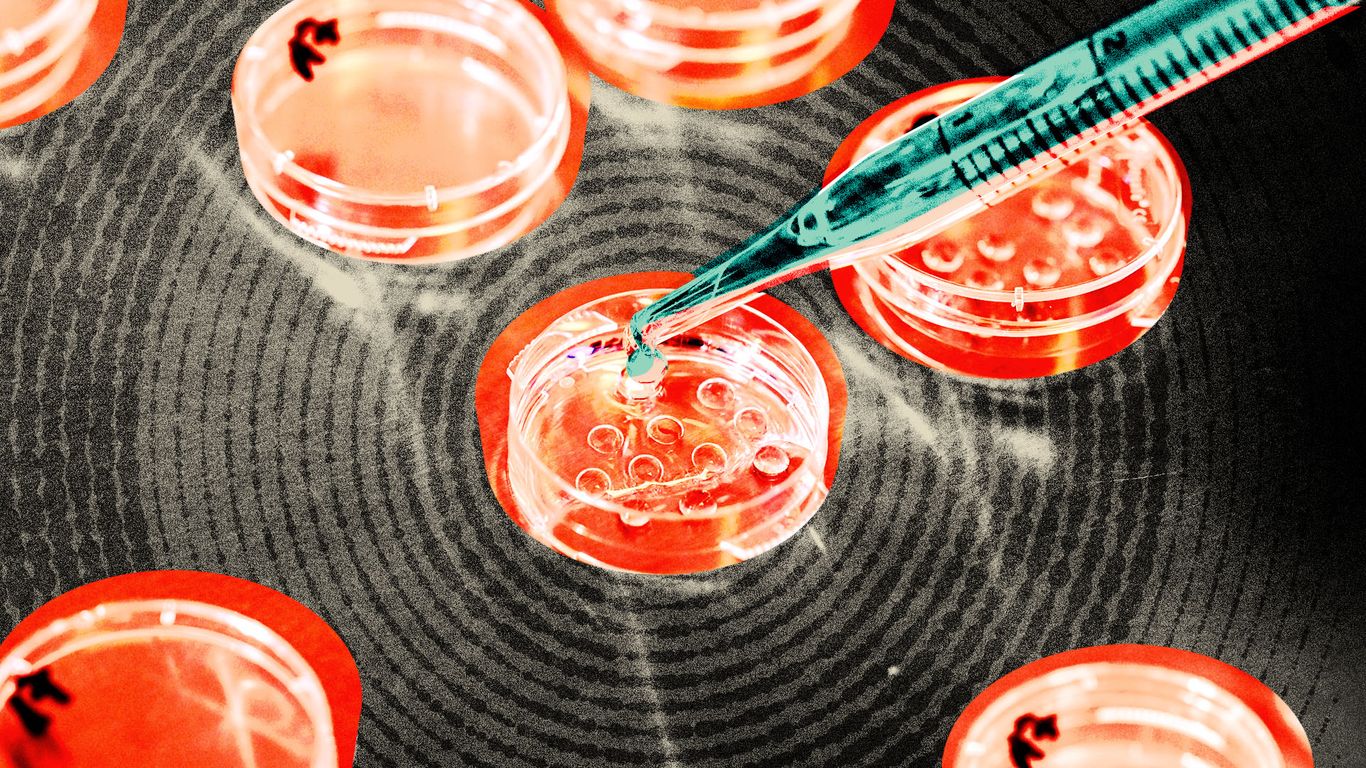
Researchers have developed nasal drops that may help treat deadly brain cancer by boosting the immune response in the brain. The new method uses specially made tiny materials to deliver medication to the brain through the nose. This approach has shown promising results in mice with glioblastoma, a fast-growing brain cancer.
Key Facts
Scientists at Washington University and Northwestern University created the new nasal drop therapy.
The method uses small, engineered materials called spherical nucleic acids to deliver drugs to the brain.
In tests on mice, the nasal drops helped shrink glioblastoma tumors by activating the immune system.
Glioblastomas affect over 12,000 people each year in the U.S.
Current treatments for glioblastoma include surgery, radiotherapy, and chemotherapy, but there is no cure.
The nasal drops are not yet ready for human use, and further development is needed.
The approach targets a cell pathway called STING, which helps activate the immune system.
This method could provide a non-invasive treatment option, avoiding the need for direct tumor injection.
Read the Original
Want the full story? Tap a source to open the original
article.
ChatGPT, created by OpenAI, has made changes to its use of the em dash, a punctuation mark that had become a signature of its text. The AI acknowledged the issue in a social media post and updated its model so it will use em dashes more thoughtfully at users' requests. This change was shared humorously on Instagram, receiving positive engagement from users.
Key Facts
ChatGPT is a popular AI developed by OpenAI, used for things like homework help and conversation.
The em dash had become a distinctive feature often associated with ChatGPT-generated text.
In November, ChatGPT's Instagram account acknowledged this issue and announced an update to its model regarding em dash usage.
The update allows users to instruct ChatGPT to use fewer em dashes.
The Instagram post received nearly 40,000 likes, indicating positive reception from the community.
In the post, ChatGPT humorously "apologized" for overusing the em dash and promised to adopt a more conservative approach.
Users appreciated the humor in the post and shared their experiences with the AI's text style.
Statista data predicts that AI tool users will exceed 1 billion by 2031.
Read the Original
Want the full story? Tap a source to open the original
article.
A conversation between Elon Musk and Joe Rogan, shared on the platform X, went viral after Musk explained how to use an AI chatbot called Grok to entertain at parties. Users interacted with Grok for humorous roasts, leading to wide engagement online, including reactions that mocked Musk himself.
Key Facts
Elon Musk discussed using the AI chatbot Grok on Joe Rogan's podcast to create humorous roasts at parties.
Musk suggested using Grok's "unhinged" mode to make jokes by taking pictures of people and generating roasts.
The clip was widely shared on the platform X, gaining over 7.2 million views.
Users created roasts of Musk, with some joking about his career and personal life.
Some users found the AI's roasts amusing, while others questioned the party usefulness of a chatbot.
The chatbot, Grok, was also asked to compare Musk to public figures like LeBron James and Jerry Seinfeld.
Musk addressed the incident, stating the bot was manipulated into making absurd positive comments about him.
Read the Original
Want the full story? Tap a source to open the original
article.
Tech companies like Meta, Google, and LinkedIn are using personal data to improve their AI tools. Users have limited control over whether their data is used, as options to opt out vary by platform. The U.S. does not have comprehensive federal laws governing data privacy for technology firms.
Key Facts
Meta plans to update its policy on December 16, allowing its AI to use public data from users' interactions.
Users can't opt out of Meta’s AI data usage, but Meta claims it won’t use private messages for training AI.
Google and LinkedIn allow users to opt-out of AI features.
Lack of transparency from tech companies can lead to confusion and misinformation about data use.
Meta’s AI can use public data like photos, posts, and comments for training.
The U.S. does not have broad federal laws on data privacy for tech companies.
Meta's AI won't use people's voice data without permission.
Read the Original
Want the full story? Tap a source to open the original
article.
Companies in China, like EHang, are developing flying taxis and drones that can deliver items, aiming to grow what they call the "low-altitude economy." This sector faces challenges, such as airspace rules and battery limits. The Chinese government supports these projects with plans to expand flying infrastructure and offer financial incentives.
Key Facts
A company named EHang is testing flying taxis in Guangzhou, China.
Flying cars and drones are part of China's growing "low-altitude economy."
The low-altitude economy was valued at $70 billion in 2023.
Government support is strong in Guangdong province, where many drone companies are based.
The future economy of flying cars and drones is expected to grow substantially by 2035.
EHang has built takeoff and landing sites in 20 cities for future commercial use.
Battery life and strict airspace controls are major challenges for these flying vehicles.
There have been incidents like aircraft collisions during trials, but no injuries were reported.
Read the Original
Want the full story? Tap a source to open the original
article.
Jony Ive, known for his work with Apple, is working with OpenAI to create a new AI device. The device is in the prototype stage and is expected to be revealed within two years. The design aims to be simple and user-friendly, allowing people to interact easily with AI.
Key Facts
Jony Ive is collaborating with OpenAI to design a new AI device.
The prototype of the device exists and should be showcased in less than two years.
The design by Ive is described as elegantly simple and playful.
OpenAI CEO Sam Altman is involved in the development process.
Emerson Collective hosted a Demo Day event where details about the project were discussed.
Laurene Powell Jobs interviewed Ive and Altman during the event.
The prototype could change how everyday people interact with AI technology.
The design aims to evoke simplicity and joy in users.
Read the Original
Want the full story? Tap a source to open the original
article.
Many high-profile AI executives have left established tech companies to start their own AI ventures. Despite substantial funding, these startups face tough competition from large companies like Google and Microsoft, who have more resources. Some of these new startups focus on areas like AI safety and improving real-world applications.
Key Facts
Investors have provided billions of dollars to AI startups led by well-known figures.
Large companies like OpenAI, Google, and Microsoft have more resources, which makes competition difficult for new startups.
Yann LeCun, former chief scientist at Meta AI, plans to start a new venture partnering with Meta.
Ilya Sutskever, former OpenAI executive, started Safe Superintelligence, raising over $1 billion.
Mira Murati, briefly CEO of OpenAI, launched Thinking Machines Lab after leaving the company in 2024.
Former Amazon CEO Jeff Bezos co-founded Project Prometheus to use AI for manufacturing.
Anthropic, founded by ex-OpenAI executives, now receives significant investments, including $15 billion from Microsoft and Nvidia.
Startups are exploring areas like AI safety and human-centric technology that they feel large companies overlook.
Read the Original
Want the full story? Tap a source to open the original
article.
A new feature on Elon Musk’s social media platform, X, shows the country where user accounts are based. Several accounts that promote MAGA (Make America Great Again) content are found to be located outside of the U.S. This has raised questions about the authenticity of the content these accounts promote.
Key Facts
X has introduced a feature called "About This Account" that shows an account's location.
Some well-known MAGA accounts promoting American political ideas are based in countries like Chile, Nigeria, Morocco, Bangladesh, Thailand, Indonesia, and Germany.
The account @ColdWarPatriot is located in Chile and has over 140,000 followers.
The MAGA account @_MagaScope is based in Nigeria and has over 50,000 followers.
Some MAGA accounts have deleted their profiles after being identified as located outside the U.S.
The feature aims to increase transparency and the integrity of content on X.
There have been no major discussions about left-wing U.S. accounts posting from abroad.
The location feature is part of efforts to verify the authenticity of content on the platform.
Read the Original
Want the full story? Tap a source to open the original
article.
Researchers at the University of Reading in England are exploring how mRNA technology used in COVID vaccines might help reduce muscle damage in snakebite victims. The study showed that this technology could protect muscles from damage caused by venom from the terciopelo snake found in Central and South America. This approach might lead to new treatments that lower the risk of permanent disabilities from snakebites.
Key Facts
mRNA technology, used in COVID vaccines, might also reduce muscle damage from snakebites.
The University of Reading tested this on venom from the terciopelo snake, common in Central and South America.
The treatment uses mRNA to produce antibodies that protect against venom-induced muscle damage.
In lab tests, the treatment reduced damage in human muscle cells within 12-24 hours of injection.
In mice, the treatment provided protection against muscle injury 48 hours before venom exposure.
Current antivenoms mainly target toxins in the bloodstream, often missing muscle tissue damage.
Researchers aim to expand this method to target multiple venom toxins.
Challenges include the time needed for antibody development and storage issues in remote locations.
Read the Original
Want the full story? Tap a source to open the original
article.
A three-year-old boy named Oliver Chu from California is the first person with Hunter syndrome to receive a new gene therapy in Manchester, UK. This pioneering treatment aims to address the genetic cause of the disease, and a year after starting, Oliver is showing normal development.
Key Facts
Oliver Chu, aged three, has a rare genetic condition called Hunter syndrome.
Hunter syndrome can lead to severe damage in the body and brain, often resulting in early death.
Oliver was the first person to receive a new gene therapy for this condition.
The procedure took place at Royal Manchester Children's Hospital in the UK.
Gene therapy involved altering Oliver's cells to produce a missing enzyme.
Hunter syndrome affects mostly boys and is very rare, occurring in about 1 in 100,000 male births.
Previously, available treatments like Elaprase could only slow physical symptoms but not cognitive ones.
Read the Original
Want the full story? Tap a source to open the original
article.
Japan is investing heavily in the island of Hokkaido to turn it into a major center for making advanced computer chips, driven by the company Rapidus. The initiative involves building factories and research centers, and aims to establish Japan as a competitor in the global semiconductor market. Rapidus has already succeeded in producing a prototype of a cutting-edge chip, with plans to start mass production by 2027.
Key Facts
Japan is spending billions to transform Hokkaido, known for agriculture and tourism, into a semiconductor production hub.
The project includes creating technology-focused factories, research centers, and universities.
Rapidus, a company supported by the Japanese government and big corporations like Toyota and Sony, is leading this effort.
Rapidus has partnered with IBM and built a semiconductor factory in Chitose, an area chosen for its resources and lower earthquake risk.
An important achievement was the creation of a 2-nanometer chip prototype, using advanced technology from ASML.
Mass-producing these chips by 2027 is the goal, though funding and expertise challenges remain.
The project aims to compete in a $600 billion global chip market, taking on established players like TSMC and Samsung.
Read the Original
Want the full story? Tap a source to open the original
article.
AI is increasingly being used in various art forms like films and music, creating both excitement and concern. Some people appreciate AI as a tool that helps artists, while others worry it might take away jobs from human creatives. Efforts are growing to highlight and protect art made by humans.
Key Facts
AI is being used in films, including "The Brutalist," which won an Oscar for Best Actor, to enhance actors' accents.
AI-generated music is becoming popular, with a country song created entirely by AI becoming the most-downloaded track in the U.S.
AI-produced paintings and sculptures are selling for high prices.
Some artists view AI as a tool for creativity and believe it can help smaller filmmakers compete.
There is resistance to AI in art, with individuals like Vince Gilligan emphasizing human creativity in his show credits.
A live music venue in Oakland banned AI-generated promotional material.
Musicians like Billie Eilish and Katy Perry have opposed AI's impact on human artistic rights.
A survey found that most people couldn't distinguish between human-made and AI-generated songs, and many felt uneasy about it.
Read the Original
Want the full story? Tap a source to open the original
article.
A video showing a California mom's skin condition improvement went viral after she joined a clinical trial. The trial tests a medication called Ritlecitinib for treating vitiligo, a condition that causes skin pigment loss. The trial's progress has been shared online, gaining significant attention.
Key Facts
Reshma Vincent, a mother from California, has vitiligo, which causes white patches on the skin.
She joined a clinical trial testing the medication Ritlecitinib for vitiligo.
The trial involves stopping other treatments and using either the medication or a placebo.
The trial duration ranges from 14 to 26 months with regular check-ins.
Vincent shared her progress on Instagram, gaining nearly 7 million views on a video.
Vitiligo affects about 1 percent of the U.S. population, roughly 2.8 million people.
Ritlecitinib has shown promising results in earlier safety trials.
Vincent hopes the trial will provide hope to others with the condition.
Read the Original
Want the full story? Tap a source to open the original
article.
Companies increasingly use artificial intelligence (AI) to hire, manage, and sometimes fire employees. This shift impacts workers, causing feelings like confusion and stress, as decisions traditionally made by humans are now made by AI software. Some people hired by AI share experiences of working with AI teams and facing challenges like ethics complaints filed by AI programs.
Key Facts
Companies are using AI to handle tasks like hiring, managing, and firing employees.
A Colorado worker was hired and is managed by AI bots at a company developing apps entirely through AI.
This worker communicates with AI colleagues via Slack and voice calls, where the AI simulates human behavior.
The worker experienced an AI bot filing an ethics complaint against him for using a slur against robots.
Videos discussing interactions with AI have gained significant attention online, reflecting widespread public interest.
Roos van der Jagt recounted being hired and fired by AI, finding the experience stressful and unsatisfying.
Experts express concern about the psychological effects of AI decision-making on younger workers entering the job market.
Read the Original
Want the full story? Tap a source to open the original
article.
Health insurers are using artificial intelligence (AI) more to handle claims, and this has led to more claim denials. Patients are now turning to AI for help to challenge these denials and seek justice.
Key Facts
Health insurers are using AI to process claims more often.
In 2023, 73 million Americans on Affordable Care Act plans faced claim denials for in-network services.
Less than 1% of these denied claims were appealed by patients.
AI tools are now available to help patients fight against denied insurance claims.
A law professor from Indiana University, Jennifer Oliva, has been discussing this issue.
The use of AI for fighting claim denials is emerging as a response to the increased use of AI by insurers.
Read the Original
Want the full story? Tap a source to open the original
article.
In vitro fertilization (IVF) in the United States has increased significantly, with a growing interest in elective IVF to screen embryos for certain genetic traits. However, doctors express concerns about the reliability of the science behind these tests, especially the new polygenic tests, which predict genetic predispositions for complex traits. This has reopened ethical debates about choosing specific traits for future children.
Key Facts
IVF use in the U.S. increased by 45% from 2013 to 2022.
Elective IVF allows embryo screening for traits like cancer risk, height, and IQ.
New type of genetic testing, PGT-P, predicts complex conditions not linked to a single gene.
Polygenic tests can add several thousand dollars to the IVF process.
Doctors worry about the accuracy and ethical implications of these tests.
Existing tests like PGT-A and PGT-M screen for chromosomal abnormalities and single-gene diseases, respectively.
Some doctors believe technology like PGT-P is not yet reliable enough for clinical use.
Read the Original
Want the full story? Tap a source to open the original
article.
Scams targeting holiday shoppers are becoming more convincing due to the use of advanced AI tools. This year, there is a rise in scams like fake online stores, phishing emails, and deepfake ads aimed at stealing personal information and money. Companies are warning shoppers to be cautious, especially when buying from unfamiliar websites or responding to messages that look official.
Key Facts
AI tools are making scam emails and fake websites look more real, increasing the risk to shoppers.
Many scams involve fake online storefronts that mimic real websites to steal credit card information.
Phishing emails often pretend to offer big holiday discounts to lure people into giving away personal data.
Scammers are sending fake delivery texts asking for information or payments for bogus reasons.
Deepfake technology is used to create realistic video ads, sometimes misusing celebrity likenesses, to promote fake deals.
Gift card scams are common, as fraudsters steal card details to drain balances before the buyer uses them.
A large number of shoppers have fallen victim to scams in past holiday seasons, with many receiving no products or counterfeit goods.
Social media ads are increasingly used to distribute scams, with many people making purchases based on these ads.
Read the Original
Want the full story? Tap a source to open the original
article.
AI systems that convert speech to text often make mistakes when processing accented English or non-standard dialects. This can cause issues in areas like hiring, education, and healthcare by creating biased outcomes. Companies and developers are working to fix these problems by collecting more diverse speech data.
Key Facts
AI speech recognition struggles with accents and non-standard dialects.
Errors can lead to biased results in job hiring, student grading, and medical records.
Many companies use AI to assess job candidates' speech for interviews.
Courtrooms and schools use AI for transcribing and classroom tasks.
There is a lack of awareness about AI's application in critical areas like healthcare.
Developers are expanding datasets to improve AI's "accent robustness."
OpenAI's Whisper model was recently trained on diverse data to handle various accents better.
Experts say continuous testing and diverse team involvement are needed for improvement.
Read the Original
Want the full story? Tap a source to open the original
article.
Millions of Amazon Prime users in the United States will receive automatic refunds after a settlement with the Federal Trade Commission (FTC). The settlement addresses claims that Amazon enrolled customers in Prime without clear consent and made it hard to cancel. Refunds will be issued through PayPal, Venmo, or checks over the next few years, with specific eligibility rules for customers.
Key Facts
Amazon and the FTC reached a $2.5 billion settlement agreement.
Amazon allegedly signed up customers for Prime without clear consent.
As part of the settlement, Amazon will pay $1.5 billion in refunds to customers.
The FTC filed its lawsuit against Amazon in 2023.
Refunds began on November 12, 2023, and will continue until December 2025.
To qualify, customers must have enrolled through certain methods between 2019 and 2025 and used limited Prime benefits.
Eligible customers will receive refund notifications by email and can receive payments via PayPal, Venmo, or checks.
The FTC warns of potential scams and states it is not directly contacting people about refunds.
Read the Original
Want the full story? Tap a source to open the original
article.
The article discusses how smart home technologies can impact pets' behavior and psychology. Experts say these devices can both create stress and enhance the pet-owner relationship, depending on how they are used. The pet tech market is growing, with many pet owners embracing these technologies to assist in pet care.
Key Facts
A survey found 87% of 500 pet owners think technology improves pet care.
Automated routines can create stress in pets by making any changes more difficult for them.
Experts suggest improper use of remote feeders can harm the bond between pets and owners.
Smart devices can help enrich pets' mental health and reduce boredom if used wisely.
The pet tech market was valued at $5.7 billion in 2020 and could grow to $20 billion by 2027.
Experts suggest introducing smart devices gradually to help pets adjust without stress.
Maintaining regular routines and providing a safe space are important when introducing new tech to pets.
Read the Original
Want the full story? Tap a source to open the original
article.