Fact-first summaries of the news — stay informed, stay grounded.
Your favorite news sources, one calm feed — fact-first summaries that always link to the
original story. No outrage bait, and we tell you when you're caught up. How it works
Technology News
Breaking news and analysis from the world of technology
Federal regulators have approved Amazon’s Zoox self-driving cars to start charging customers for robotaxi rides without steering wheels once local permissions are secured. The National Highway Traffic Safety Administration (NHTSA) is also considering rules to allow robotaxis to operate without brake pedals, aiming to support safe autonomous vehicle development.
Key Facts
Zoox, owned by Amazon, has received federal approval to charge for rides in its fully autonomous vehicles without steering wheels.
These Zoox robotaxis feature four inward-facing seats and have been giving free rides in Las Vegas and San Francisco since last year.
Zoox can deploy up to 2,500 vehicles without steering wheels over the next two years as it demonstrates safety.
The NHTSA proposed a rule last month to allow robotaxis to run without brake pedals, but it is still under review.
NHTSA aims to balance innovation with safety through guidance, enforcement, and performance standards.
Amazon bought Zoox for $1.2 billion and plans to produce up to 10,000 robotaxis per year near Silicon Valley.
Waymo, owned by Alphabet (Google’s parent), is the current industry leader with robotaxi operations in multiple cities.
More than 500,000 people have already ridden in Zoox vehicles.
Read the Original
Want the full story? Tap a source to open the original
article.
Internet prices are going down across the U.S., and speeds are getting faster. However, many states still have big differences in internet access and quality between cities and rural areas.
Key Facts
Broadband prices in the U.S. dropped by 6 percent in 2025.
Internet speeds increased by 22 percent during the same time.
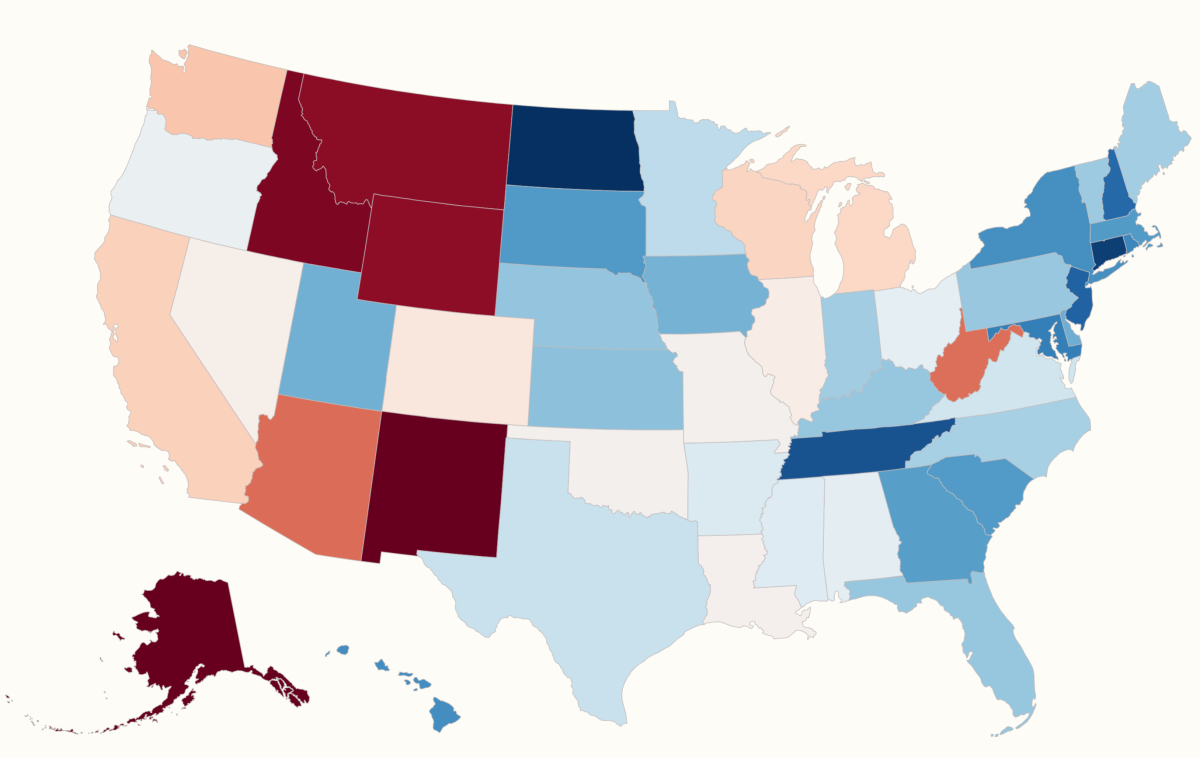
North Dakota ranks first for the best home internet, with 99.2% of homes having high-speed access and little difference between urban and rural areas.
Alaska ranks last on all measured internet access points, with only 71.5% high-speed home coverage and a large gap between city and countryside access.
Some states, like New Mexico, Idaho, Montana, Arizona, West Virginia, Wisconsin, and Wyoming, are called "Internet Deserts" due to poor access.
California and Washington rank low because of big differences in internet access between cities (around 96%) and rural areas (about 52-57%).
The federal government is investing $42.45 billion to improve internet infrastructure in unserved and underserved areas through the BEAD program.
The study used broadband data from the Federal Communications Commission (FCC) and looked at factors like fiber and gigabit availability.
Read the Original
Want the full story? Tap a source to open the original
article.
DoorDash has received FAA approval to start its own drone delivery program called DoorDash Air but has not begun operations yet. The company is developing drones and related technology to expand delivery options, expecting that this will increase overall delivery demand and create new jobs requiring technical skills.
Key Facts
DoorDash received FAA Part 135 air carrier certification to operate drone deliveries during the daytime.
FAA approval for actual drone flights is still pending further review of aircraft and operations.
DoorDash Air is an in-house drone delivery program developed by DoorDash Labs, the company's robotics and automation division.
DoorDash expects drone deliveries to complement, not replace, human couriers (Dashers).
The company is building its own drones, software, and logistics systems rather than relying on outside providers.
Over 20% of DoorDash orders in 2025 are deliveries of 3 to 5 miles, a range suitable for drone delivery.
Drones cannot perform tasks such as navigating complex locations, verifying IDs, or handling multiple-stop orders.
DoorDash is hiring workers with skills in robotics, automation, hardware, and operations for this new program.
Read the Original
Want the full story? Tap a source to open the original
article.
IBM announced three new demonstrations showing quantum computers performing tasks that classical computers struggle to verify. These examples use different methods to reduce errors and confirm that quantum results are reliable, hinting progress in quantum computing despite hardware limitations.
Key Facts
Quantum computers can solve some problems much faster than classical computers, but current quantum devices have limited power and make errors.
Verifying quantum results is hard because classical computers can't always check them, and quantum machines sometimes give wrong answers.
IBM launched a "quantum advantage tracker" to identify cases where quantum computers clearly outperform classical ones.
The new announcements highlight three methods to handle quantum errors and validate results on today’s noisy quantum hardware.
One effort involves IBM, Japanese research institute RIKEN, and software company Qedma modeling quantum systems with error reduction techniques.
The research focused on simulating a physical process (a Floquet process) and an Ising model, which represent systems where parts influence each other’s states.
These models are small enough to run on current quantum devices but still complex to simulate classically, helping test the quantum computers’ progress.
Although none of the new results have immediate practical use, they show growing trust in quantum computing outputs under current hardware conditions.
Read the Original
Want the full story? Tap a source to open the original
article.
OpenAI CEO Sam Altman met with top advisers in President Donald Trump’s administration to talk about the development of artificial intelligence (AI). This meeting happened after lawmakers on Capitol Hill also spoke with Altman. Some technology workers are asking the government to create safety rules for AI.
Key Facts
Sam Altman is the CEO of OpenAI, a company that develops artificial intelligence.
He recently met with key advisers in President Donald Trump’s administration.
Altman had earlier discussions with lawmakers on Capitol Hill.
Some tech employees express concern about how fast AI is developing.
These employees want the government to set new safety rules for AI technology.
The talks aim to address the challenges and risks linked to AI growth.
Read the Original
Want the full story? Tap a source to open the original
article.
Meta CEO Mark Zuckerberg predicts that within five years, billions of people will have personal AI assistants that help manage their health, money, relationships, and daily tasks. Meta is investing heavily in AI technology, spending billions on new AI models and infrastructure, even though these costs have caused a drop in free cash flow and stock value.
Key Facts
Zuckerberg says it is very likely billions will use personal AI agents within five years.
These AI assistants would work 24/7 to help users meet their goals in many areas like health and finances.
Meta spent $31.1 billion in one quarter on AI research, infrastructure, and data centers.
Meta’s free cash flow fell by 91%, and its stock dropped nearly 10% after the earnings report.
WhatsApp and Meta’s messaging apps are central to their AI agent plans, already serving business users.
Meta announced a plan to build a large 1-gigawatt data center in Texas as part of expanding AI infrastructure.
Other companies like Google are also developing AI agents that can perform tasks, not just answer questions.
An AI agent can carry out real actions for users, like booking a restaurant, unlike chatbots that only provide information.
Read the Original
Want the full story? Tap a source to open the original
article.
The article discusses how more Black people in the US are using artificial intelligence (AI) tools for health-related questions and guidance. It invites Black individuals to share their experiences with AI health resources, including AI-generated social media influencers and chatbots, through a secure and anonymous survey.
Key Facts
AI is becoming more common in healthcare and health advice.
Black people in the US, who have faced racism in healthcare, are increasingly using AI tools for health information.
The article focuses on AI-generated Black health and spiritual influencers.
Readers who are Black and 18 or older are invited to share their experiences with AI and health assistance.
The survey can be completed anonymously and uses encrypted forms to protect privacy.
Submitted information will only be used for the article and deleted afterward.
Participants can choose whether their responses are published and if they want to be contacted.
The Guardian is collecting this information to understand how AI affects health support in Black communities.
Read the Original
Want the full story? Tap a source to open the original
article.
Xbox experienced a nearly 20-hour outage caused by a licensing system error that incorrectly blocked some players from playing games using physical discs. Xbox’s technology chief said this problem should not have happened and promised a fix, amid ongoing concerns about the future of physical game ownership as the industry moves toward digital-only sales.
Key Facts
The Xbox outage lasted about 20 hours and was caused by a licensing check failure.
Some players could not access games on physical discs during the outage.
Xbox confirmed that disc-based games should still be playable even during online issues.
A future update will fix the problem to prevent it from happening again.
PlayStation also had a network outage recently, raising similar worries.
Game companies are moving toward selling mostly digital versions instead of physical discs.
Sony plans to stop releasing physical PlayStation games starting in January 2028.
Some consumers and groups are concerned about losing control over game ownership with digital-only models.
Read the Original
Want the full story? Tap a source to open the original
article.
The Model Context Protocol (MCP), a standard for how AI systems connect to external tools and data, has released its biggest update since launch. The new version makes the protocol stateless, improving reliability and scaling for enterprise use, and includes new features like better routing, caching, and security.
Key Facts
MCP is an open source protocol that helps AI systems interact with tools and data sources.
The latest update changes MCP from a stateful to a stateless protocol, meaning requests don’t depend on a specific server session.
This change aims to improve scalability and reliability for large-scale enterprise deployments.
New features added include multi round-trip requests, header-based routing, cacheable list results, and stronger authorization.
A new deprecation policy requires features to stay available for at least 12 months before being removed, except in emergencies.
MCP was created by Anthropic and is now managed by the Agentic AI Foundation under the Linux Foundation.
Major tech companies like OpenAI, Google, Microsoft, and Amazon also contribute to the MCP project.
The update represents a significant redesign from the original version that only worked on local machines.
Read the Original
Want the full story? Tap a source to open the original
article.
In the 1950s, the Soviet Union started a program to develop artificial intelligence (AI), focusing on cybernetics, the study of communication between humans and machines. Soviet researchers made notable achievements, including developing Kaissa, the first computer to win a World Computer Chess Championship in 1974.
Key Facts
The Soviet Union began exploring AI in the 1950s, using cybernetics as a main approach.
Cybernetics was sometimes viewed skeptically as a "bourgeois science" but was also promoted as important for scientific progress.
The Soviet AI program focused on creating "thinking machines" and practical tools for managing the economy.
Kaissa, a Soviet-developed chess computer, won the first World Computer Chess Championship in 1974.
Alexander Kronrod led the team that developed Kaissa and is considered a key figure in Soviet AI.
Dmitry Pospelov helped build support for AI research and criticized Western AI views that simplified intelligence to computer-like calculations.
AI in the USSR was often used to improve industries such as oil and gas by optimizing processes.
The Russian Association for Artificial Intelligence was created in 1989 as a result of these efforts.
Read the Original
Want the full story? Tap a source to open the original
article.
Data centers in California, such as the one operated by DataBank in Irvine, support many essential services like hospitals, banks, and emergency calls. As these centers use a lot of electricity, lawmakers and communities are concerned about higher energy costs and environmental impacts, leading to new rules and debates about their expansion.
Key Facts
California has around 300 data centers that support online banking, cloud computing, and AI.
DataBank’s Irvine facility hosts customers’ servers, including hospitals and 911 centers.
Data centers run 24/7 and need backup generators to keep services running during power outages.
These generators can cause noise and air pollution, which worries nearby communities.
Data centers consume large amounts of electricity, often produced from fossil fuels.
Some residents are concerned data centers increase utility bills and take energy away from other uses.
California lawmakers are considering laws to limit energy cost increases and environmental effects caused by data centers.
DataBank operates about 70 data centers across the U.S. and is building another one in Vernon, California.
Read the Original
Want the full story? Tap a source to open the original
article.
The United States' power grid has been reliable while the digital economy has grown. However, the grid needs to be updated quickly to support future digital demands.
Key Facts
The current power grid has shown strong reliability during recent digital growth.
The digital economy depends on stable and continuous electricity supply.
The power grid needs modernization to handle increasing energy demands.
Upgrading the grid is urgent to maintain America’s digital leadership.
Improvements will help support new technologies and digital services.
A modern grid will enhance energy efficiency and reduce outage risks.
Read the Original
Want the full story? Tap a source to open the original
article.
Flock Safety’s automated license plate reader cameras are installed close to roads in ways that may pose risks to drivers. Safety experts say these camera poles often lack important safety features designed to reduce damage and injury in crashes, and many do not meet state or federal road safety rules.
Key Facts
Flock Safety installs black metal poles with cameras and solar panels near roads to read license plates and capture vehicle details.
These cameras are located close to the edge of roads, sometimes less than the required 8 feet distance on rural roads.
The poles often lack breakaway plates, safety features that allow the pole to break away in a crash to reduce impact.
Ohio’s transportation department states license plate readers must be installed at least 8 feet from the road edge on uncurbed roads.
Flock Safety claims it is responsible for installing its cameras and says they have received local approval.
More than 80,000 Flock cameras are reportedly in use across over 6,000 U.S. communities.
Road safety experts, including Steve Eimers, highlight that roadside devices like these must meet crash safety standards to protect drivers.
Nationwide, crashes involving vehicles hitting fixed barriers make up 26% of vehicle deaths in 2024.
Read the Original
Want the full story? Tap a source to open the original
article.
A Line Held Tight is a new video game that focuses on workers’ rights and union struggles on a distant planet. Players take the role of the Canary, a miner facing tough working conditions and must decide whether to join a strike. The game mixes futuristic settings with themes inspired by real-world labor history and union challenges.
Key Facts
A Line Held Tight is a visual novel video game centered on labor rights and union issues.
The story is set in the future, on a planet where miners wear mech suits to protect themselves from a poisonous atmosphere.
The player controls the Canary, a worker who must choose whether to support a looming strike at the mine.
The game uses a dynamic storytelling engine called Narrat, allowing choices to influence the story and character relationships.
The developers, Humble Grove, drew inspiration from contemporary union struggles and British mining history.
The game’s visuals use charcoal-style sketches to create a dark, Victorian-like atmosphere.
The soundtrack is traditional folk music, recorded by the game’s creators who have connections to Yorkshire folk sessions.
Humble Grove’s goal is to highlight how everyday actions can have political impacts and encourage union participation.
Read the Original
Want the full story? Tap a source to open the original
article.
A study from the University of Michigan found that silver diamine fluoride can stop tooth decay in over half of treated baby teeth. This liquid treatment might help prevent cavities without needing to drill.
Key Facts
The study was done by the University of Michigan.
Silver diamine fluoride is a liquid used to treat tooth decay.
It stopped decay in more than 50% of treated baby teeth.
This treatment could reduce the need for drilling cavities.
The study focused on baby teeth, not adult teeth.
Silver diamine fluoride works by stopping the decay process.
Using this liquid could offer a less invasive way to manage cavities.
Read the Original
Want the full story? Tap a source to open the original
article.
The European Union is investing 10 billion euros ($11.4 billion) to build seven large AI factories, called gigafactories, to boost its computing power and compete with the U.S. and China in artificial intelligence. The EU hopes this public funding will attract an additional 20 billion euros in private investments. These gigafactories will produce advanced AI chips and help Europe reduce its reliance on foreign technology providers.
Key Facts
The EU plans to spend 10 billion euros to build seven AI gigafactories.
These factories will have at least 100,000 advanced AI chips each, roughly four times the power of current EU data centers.
The funding aims to attract 20 billion euros more from private investors.
Currently, the EU has 19 AI data centers across member countries.
Europe relies heavily on U.S. AI providers and lacks homegrown companies at the technological frontier.
High electricity costs and low component manufacturing capacity challenge Europe’s AI development.
EU officials emphasize that AI products will meet the bloc’s strict data protection, safety, and ethics rules.
The effort is part of the EU’s strategy to achieve “tech sovereignty” and reduce dependence on foreign providers, amid concerns over geopolitical risks.
Read the Original
Want the full story? Tap a source to open the original
article.
Cybersecurity has become more complex because many different types of digital identities now access company systems, not just employees. New research shows cybercriminals attack digital identities millions of times daily, making it important for companies to better track who or what has access to their important systems.
Key Facts
Microsoft detects over 600 million attacks on digital identities every day.
Identity attacks are a major focus in cybersecurity, alongside concerns about AI and ransomware.
Companies use many different digital identities today, including AI agents, automated workflows, APIs, and service accounts.
Non-human identities can outnumber human users by as much as 50 to 1 in some organizations.
Many companies struggle to get a full and updated view of all identities with system access.
Security teams often have data but lack tools to combine it into a clear picture of access.
IntegraTRACE is a company creating technology to improve visibility into all types of digital identities in enterprise environments.
Understanding and managing identity access is becoming a top priority in cybersecurity because it helps prevent unauthorized system entry.
Read the Original
Want the full story? Tap a source to open the original
article.
The article explains that humans often think of themselves as just minds, separate from their bodies. Modern artificial intelligence, like ChatGPT, gives the illusion that thinking can happen without a physical body, but research shows that intelligence depends on the whole body working together.
Key Facts
The term "somatophobia" means the mistaken belief that we are only minds and not bodies.
Many people believe AI tools like ChatGPT have feelings or consciousness, which is not true.
Research shows that intelligence arises from the body as a whole, not from the brain alone.
Bodily processes, like feelings from the heart and gut, influence our decisions before our brain fully understands them.
Biological life and intelligence need physical conditions and elements to work properly.
The body constantly maintains balance in the organism through processes like homeostasis.
Modern technology challenges the importance of the body by focusing only on mind-like intelligence.
This separation of mind and body has social effects, including reinforcing negative attitudes like misogyny and racism.
Read the Original
Want the full story? Tap a source to open the original
article.
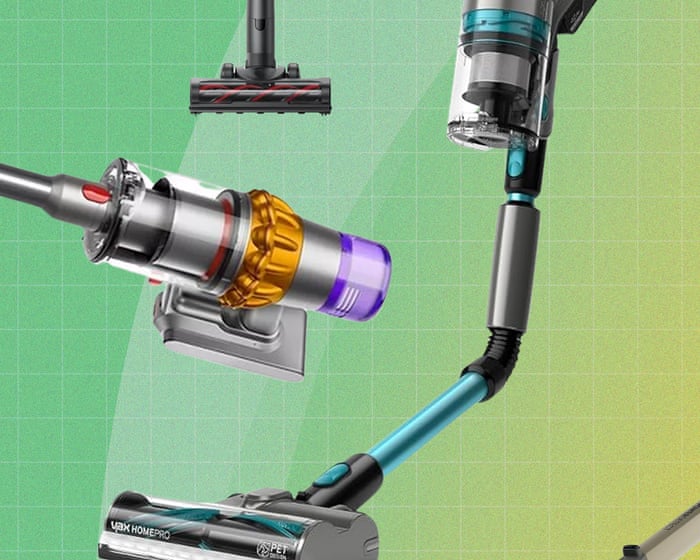
This article reviews 16 popular cordless vacuum cleaners, testing their ability to clean different types of messes like flour, cat litter, and pet hair on carpets and hard floors. It highlights the best models in different categories based on thorough cleaning tests, battery life, and design.
Key Facts
The review tested 16 cordless vacuum cleaners from various brands and price ranges.
Each vacuum was tested on flour, cat litter pellets, and pet hair using a single sweep motion.
Tests were done on both carpet and hard floors.
Battery life was tested by timing how long each vacuum ran at full power and in economy mode.
Suction power was measured with a pressure gauge, but cleaning ability was considered more important.
The best overall vacuum was the Shark PowerDetect Clean & Empty IP3251.
Other top picks included the Dyson V15 Detect Absolute for deep cleaning and Vax HomePro Pet-Design as the budget choice.
All tested vacuums were returned to the makers or donated after testing.
Read the Original
Want the full story? Tap a source to open the original
article.