President Donald Trump signed an executive order to check the national security risks of the most advanced artificial intelligence (AI) systems before they are released to the public. The government will review these AI models for up to a month and work with trusted partners to improve security and protect important infrastructure.
Key Facts
President Trump signed the executive order on AI on Tuesday.
The order requires federal review of top AI systems for national security risks up to 30 days before their public release.
The government will collaborate with trusted partners who get early access to these AI models.
The goal is to promote safe innovation and protect critical infrastructure from cybersecurity threats.
This order came less than two weeks after Trump postponed a similar policy due to concerns it might harm America’s competitive edge in AI.
Trump canceled a May 21 event with tech executives because he did not want to slow down U.S. leadership in AI technology.
Participating U.S. companies include Anthropic, OpenAI, and Google.
The earlier version of the order was seen as voluntary collaboration between government and tech firms.
Read the Original
Want the full story? Tap a source to open the original
article.
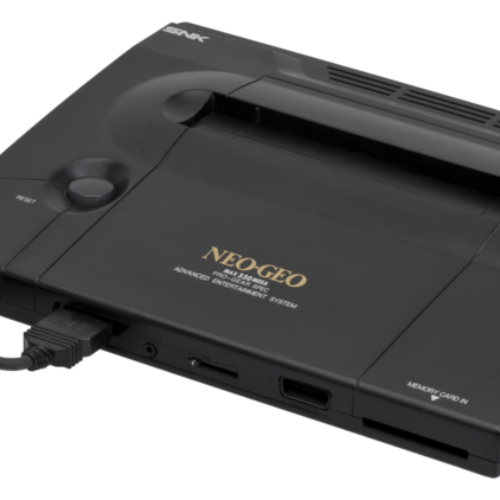
The Neo Geo game console from the early 1990s cannot run the game Doom because of its hardware design. Its system is built only for 2D sprite graphics and lacks the methods needed to display the more complex 3D graphics that Doom requires.
Key Facts
Neo Geo uses a Motorola 68000 CPU, the same as the Commodore Amiga which could run Doom ports.
The console is made to handle 2D sprites stored on cartridges, not full 3D graphics.
Its character ROM cannot be directly accessed by the CPU to render textures or modify sprites.
Neo Geo does not have bitmap graphics modes or frame buffers to freely draw pixels on screen.
A simple raycasting demo similar to Wolfenstein 3D works on Neo Geo but is slow and lacks detailed game elements.
Running Doom on Neo Geo would require extra hardware inside the game cartridge.
Without this extra processing chip, Doom ports on Neo Geo are unlikely.
This limitation does not make Doom completely impossible, but it is very difficult and impractical with the console’s original hardware.
Read the Original
Want the full story? Tap a source to open the original
article.
President Donald Trump signed an executive order to help federal agencies improve their security against advanced artificial intelligence (AI) systems. The order also encourages the creation of a voluntary process for testing AI models, but it is less extensive than an earlier plan.
Key Facts
President Trump signed the executive order on Tuesday.
The order focuses on strengthening defenses against advanced AI.
Federal agencies will work to protect themselves from AI risks.
The order encourages a voluntary testing system for AI models.
This version of the order is smaller in scope than an earlier one planned by the president.
President Trump withdrew the original order just hours before signing this smaller one.
Read the Original
Want the full story? Tap a source to open the original
article.
China launched the Long March 12B rocket, its largest potentially reusable rocket so far, without prior public announcement. China is competing to develop reusable rockets, with several state-owned and private companies trying to land and reuse rocket parts for space launches.
Key Facts
China’s Long March 12B rocket launched recently from the Gobi Desert at 4:40 pm Beijing time.
The rocket is 236 feet (72 meters) tall and designed for future reuse, with grid fins and landing legs.
China did not announce this launch beforehand, which is unusual for space missions worldwide.
Earlier attempts to recover reusable rockets in China by both private and state companies failed in December.
China has multiple companies, state-owned and private, working on reusable rocket technology.
The Long March 12B was developed in just 21 months by China Commercial Rocket Co. Ltd., part of the state aerospace sector.
The launch did not include a booster landing attempt but sets up future recovery tests.
Russia and China have changed their launch notification practices for security reasons.
Read the Original
Want the full story? Tap a source to open the original
article.
Blue Origin’s New Glenn rocket exploded at its Florida launch site last week. The company plans to fix the launch pad and fly the rocket again before the end of 2024, aiming to rebuild quickly despite the damage.
Key Facts
Blue Origin’s New Glenn rocket exploded during a test on May 28, 2024.
The explosion damaged the LC-36A launch site and the transporter-erector, which moves the rocket to the pad.
The company’s CEO, Dave Limp, said inspections show key fuel tanks and the water tower are still in good condition.
Blue Origin will rebuild the LC-36A pad to support the 7×2 version of New Glenn, not the larger 9×4 version.
Limp confirmed they will switch to a new method to move the rocket that does not require rebuilding the damaged transporter-erector.
The company aims to launch again before the end of 2024, about six months after the accident.
Some experts think a faster timeline may be too optimistic; a more realistic return might take 12 to 18 months.
NASA and the U.S. Space Force support Blue Origin’s recovery efforts and may help speed up approvals and repairs.
Read the Original
Want the full story? Tap a source to open the original
article.
Slate Auto, a startup in Indiana, is building a simple electric pickup truck with very few parts and minimal features. The truck focuses on privacy by avoiding built-in internet connections, using a local smartphone app for controls and data, and promising not to sell customer data.
Key Facts
Slate Auto makes an electric pickup truck with only 600 parts, keeping the design minimal.
The truck has two seats, manual windows, and no built-in infotainment system.
A smartphone app connects only locally to the truck to manage settings and provide information.
The truck does not have an embedded modem, so it cannot be accessed remotely.
Slate Auto says it collects data only to improve the customer experience and will not sell that data.
Customers can drive the truck without using a smartphone, making their driving more private.
The company emphasizes transparency about what data is collected and why.
Current industry trends usually favor cars with many connected features, which often collect user data.
Read the Original
Want the full story? Tap a source to open the original
article.
Large technology companies that invested in artificial intelligence (AI) are now dealing with higher costs related to AI development and use. Experts say these companies are reassessing their spending on AI because the expenses are growing.
Key Facts
Big tech firms have invested heavily in artificial intelligence.
The costs of developing and using AI are increasing for these companies.
Companies are reviewing their budgets and strategies for AI spending.
Rising AI costs are causing financial challenges in the tech industry.
MarketWatch assistant managing editor Emily Bary discussed the issue on CBS News.
Read the Original
Want the full story? Tap a source to open the original
article.
Misinformation spreads widely on social media because some people create sensational fake news to make money. Experts say that fake news is part of a system where social media platforms reward shocking content with more views and higher advertising revenue.
Key Facts
An AI-made fake video about a French coup got over 10 million views, created by a teenager motivated only by profit.
A network of misleading YouTube channels promoting Alberta’s independence is run from the Netherlands, using hired actors and AI to create content.
Fake news creators earn money through social media advertising systems that pay for user engagement like views and clicks.
Social media algorithms tend to promote sensational and fear-inducing content more than factual news.
Studies show false content gets many times more interaction than reliable sources on platforms like YouTube, Facebook, and X (formerly Twitter).
Instagram and TikTok show some improvement in limiting fake news engagement, but LinkedIn appears less affected.
Major platforms make their money primarily through advertising, using automated systems to place ads targeting specific users.
Viewing misinformation as part of a profit-focused market system can help develop better ways to reduce fake news spread.
Read the Original
Want the full story? Tap a source to open the original
article.
Anthropic, an AI company behind the Claude chatbot, has filed confidentially for an initial public offering (IPO) on the US stock market. The company recently became the world’s most valuable AI startup, surpassing OpenAI, thanks to strong revenue growth and popular products like Claude Code and Claude Mythos.
Key Facts
Anthropic announced a confidential filing for an IPO but did not share specific details or timing.
The company is now valued at $965 billion, overtaking OpenAI’s $852 billion valuation.
Anthropic’s revenue growth is strong, with its coding tool especially popular among business clients.
OpenAI, once the leader, is struggling to keep up with Anthropic in both product popularity and valuation.
Anthropic’s Claude Mythos is a cybersecurity AI that gained attention for finding software bugs.
OpenAI’s similar coding product, Codex, has not been as successful.
CEO Dario Amodei, once at OpenAI, now leads Anthropic’s rise in AI dominance.
Pope Leo spoke about the ethical risks of AI and appeared alongside Anthropic’s co-founder, highlighting tensions between AI advances and ethical concerns.
Read the Original
Want the full story? Tap a source to open the original
article.
Impulse Space, a company that specializes in moving spacecraft in orbit, raised $500 million in new funding. The company plans to use this money to grow and develop new space vehicles, including a lander that can carry 1 to 2 tons to the Moon, supporting NASA's upcoming Moon Base project.
Key Facts
Impulse Space was founded five years ago by SpaceX veteran Tom Mueller.
The company has raised more than $1 billion in total funding, including $500 million in the latest round.
Impulse Space’s spacecraft Mira, launched in 2023, uses a non-toxic propulsion system with nitrous oxide and ethane.
The company has strong demand from commercial customers and interest from the US Space Force and NASA.
Their new Helios kick stage helps move payloads from low Earth orbit to geostationary orbit and beyond.
Impulse Space is developing a new lunar lander that, combined with Helios, can deliver 1 to 2 tons to the Moon.
This capability supports NASA’s Phase 2 Moon Base plans, which aim to deliver larger equipment to the Moon starting in 2029.
Impulse Space is based in Redondo Beach, California, has over 500 employees, and is hiring more to meet demand.
Read the Original
Want the full story? Tap a source to open the original
article.
Instagram fixed a problem where hackers used its AI chatbot to take control of other people’s accounts by pretending to be the account owners. Hackers could change account details and passwords by tricking the chatbot into sending verification codes to their own emails.
Key Facts
Hackers used Instagram’s AI support chatbot to gain access to others’ accounts by faking their location.
They tricked the chatbot into changing the email linked to the account, allowing password resets.
Instagram’s parent company, Meta, said the issue is now fixed and affected accounts are being secured.
Claims that world leaders’ accounts were hacked via this method were denied by Meta.
A verified Instagram account once used by Barack Obama was reportedly hacked and posted pro-Iran messages temporarily.
The exact number of accounts affected by the problem is unknown.
Some victims, including a former Meta security engineer, reported unauthorized password changes and reset attempts.
Videos on social media showed how hackers used VPNs and the AI chatbot to take over accounts.
There are concerns Instagram lacks enough human support to help users when AI-related hacks occur.
Read the Original
Want the full story? Tap a source to open the original
article.
Cara Delevingne has released her first two songs, inspired by her journey to sobriety and mental health struggles. She shared that her music reflects her feelings and experiences, aiming to connect with others through honest and raw emotion.
Key Facts
Cara Delevingne is known as a model and actress, with roles in Suicide Squad and Only Murders in the Building.
She released her debut songs, "I Forgot" and "Out of My Head," last Friday.
"Out of My Head" was inspired by her first year of sobriety and the difficulties she faced during that time.
The song "I Forgot" deals with mental health and expressing anger in a healthy way.
Delevingne has spoken openly about her struggles with depression and addiction.
Her music video, lasting seven minutes, was directed by Jessica Lee Gagné, a cinematographer from the series Severance.
The video mixes scenes of falling, dancing, nature, and an office setting to match the cinematic style of the music.
Delevingne aims to show her true self through her music, sharing human flaws and pain to connect with others.
Read the Original
Want the full story? Tap a source to open the original
article.
EA Sports College Football 27 will feature several college football players on its cover. The main players highlighted are Lacy, Toney, and Moore, along with other notable athletes from different universities.
Key Facts
EA Sports College Football 27 is the upcoming edition of the college football video game.
The cover will feature players Lacy, Toney, and Moore.
Additional players on the cover include Indiana's Curt Cignetti, USC quarterback Jayden Maiava, Texas' Colin Simmons, and Notre Dame cornerback Leonard Moore.
These players represent different college football teams across the United States.
The game continues the tradition of showcasing top college football talent on its cover.
Read the Original
Want the full story? Tap a source to open the original
article.
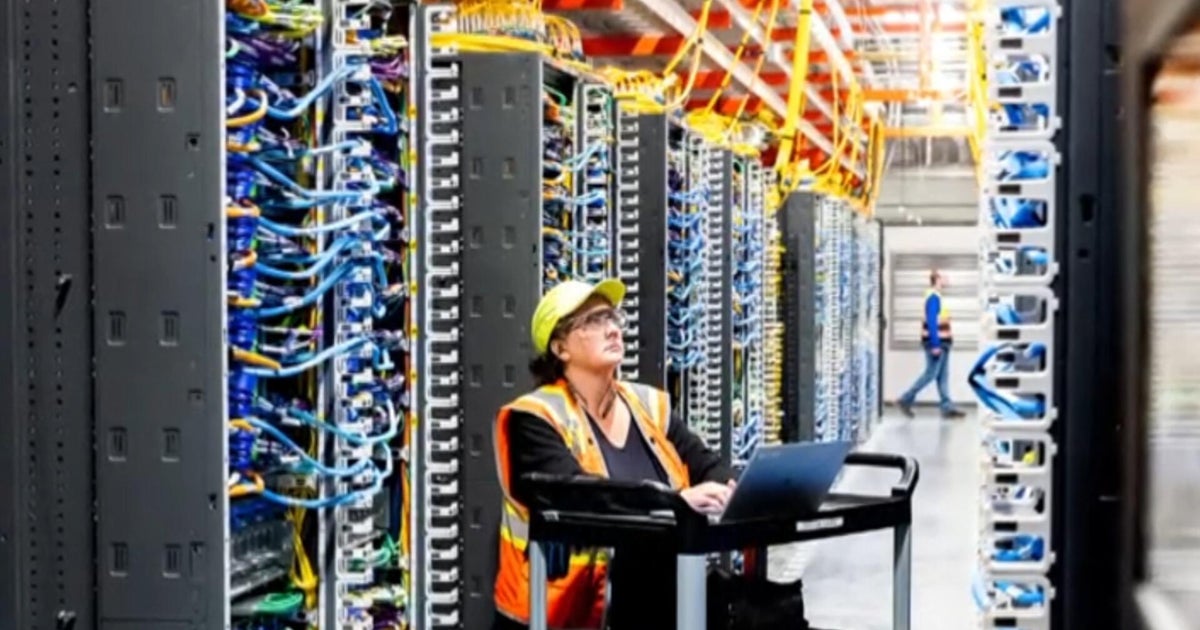
Japanese company SoftBank plans to invest 45 billion euros in France by 2031. This investment will fund the construction of three new data centers, as France offers space and reliable electricity from its nuclear power plants.
Key Facts
SoftBank is a large Japanese technology group.
The company will invest 45 billion euros in France over the next five years.
Three new data centers will be built as part of this investment.
Data centers store and manage large amounts of digital information.
France is chosen because it has enough land for new facilities.
France's nuclear power plants provide stable and abundant electricity.
The investment supports the growth of digital infrastructure in Europe.
Read the Original
Want the full story? Tap a source to open the original
article.
Two French astronauts, Thomas Pesquet and Arnaud Prost, will take separate space trips in 2027. Prost will visit the new commercial space station Haven-1, while Pesquet will command a mission to the International Space Station (ISS). Both missions will use SpaceX rockets.
Key Facts
Arnaud Prost will be the test engineer on the first crewed mission to the Haven-1 commercial space station developed by the US company Vast.
Thomas Pesquet will command a private mission to the ISS, marking his third stay there.
Both missions will last about two weeks and are planned for 2027.
Haven-1 is the world’s first commercial space station and is scheduled to launch after delays.
Vast was founded in 2021 by Jed McCaleb to build commercial space stations and aims to eventually replace the ISS.
The ISS mission requires approval from international partners including NASA and the European Space Agency.
If approved, Pesquet would be the first non-American to command a US spacecraft.
Both missions will launch using SpaceX’s Falcon 9 rockets.
Read the Original
Want the full story? Tap a source to open the original
article.
OpenAI's Codex is now widely used by office workers as well as developers. It helps users manage and analyze documents, emails, calendars, and other work files in one place. The number of people using Codex has grown quickly, and it can automate daily tasks to save time.
Key Facts
Knowledge workers make up about 20% of Codex users and are growing faster than developers.
Codex has over 4 million weekly active users, a fivefold increase since February 2026.
Popular uses include data analysis (up 110%), research (up 37%), and handling reports, contracts, and spreadsheets (up 36%).
More than 60% of users run multiple Codex tasks simultaneously during the day.
Codex connects to email, calendars, documents, spreadsheets, design tools, and messaging apps like Slack and Teams.
Users can set up one-click daily summaries that highlight important emails and schedule items.
Some power users find managing several AI tasks stressful and mentally taxing.
Codex helps with academic research but still requires expert oversight to catch errors.
Read the Original
Want the full story? Tap a source to open the original
article.
Alphabet, Google's parent company, plans to raise up to $80 billion by selling shares to fund its large investments in artificial intelligence (AI) technology. The fundraising includes a $10 billion investment from Berkshire Hathaway and aims to build more AI computing infrastructure to meet growing demand.
Key Facts
Alphabet wants to raise $80 billion to invest in AI infrastructure and cover tax-related expenses.
$10 billion of this comes from Berkshire Hathaway, an investment firm led by Warren Buffett until recently.
Half of the $80 billion will be used to expand AI computing power worldwide.
The fundraising is one of the largest equity raises ever and signals the high costs of AI development.
Alphabet’s AI system, Gemini, is gaining market share in AI chatbots.
The company’s demand for AI services is exceeding its current supply capacity.
Alphabet expects capital spending this year to reach $180 billion to $190 billion, with more increases planned by 2027.
Other AI companies like Anthropic are also preparing to go public, showing rising investor interest in AI technology.
Read the Original
Want the full story? Tap a source to open the original
article.
Environmental activist Erin Brockovich is gathering information from the public about data centers in the United States. She has received thousands of photos and reports to create a map showing the locations and size of these facilities, which are important for artificial intelligence but use a lot of energy and water.
Key Facts
Erin Brockovich asked Americans to send pictures and information about data centers near them.
As of May 31, she received 6,615 submissions, with 3,674 reports added to the map.
The map and photos are updated daily and rely on people’s reports.
Data centers are facilities that store and process large amounts of digital information, crucial for artificial intelligence.
These centers use a lot of electricity and water to keep their computer processors cool.
Data centers can have a big impact on the environment due to their energy use and hazardous materials.
Erin Brockovich is known for her past work on environmental cases, including a big legal settlement over water contamination.
This effort aims to increase awareness of the environmental impact of the growing number of data centers.
Read the Original
Want the full story? Tap a source to open the original
article.
Palantir, a US data analytics company founded by Peter Thiel in 2003, has grown rapidly and works with many clients worldwide, including the UK’s National Health Service (NHS) and the US military. The company uses AI software to analyze large amounts of data but faces criticism and controversy over its role and ethics.
Key Facts
Palantir was founded by Peter Thiel, a tech billionaire and ally of President Donald Trump, after 9/11.
The company uses AI-driven software to analyze complex data for clients like the NHS, US military, and Israeli military.
Palantir’s business value is about $375 billion.
It has contracts worth around £600 million with UK government agencies, including the Ministry of Defence and police forces.
London’s mayor Sadiq Khan blocked a £50 million deal between Palantir and the Metropolitan Police due to concerns about company values.
Critics argue that Palantir’s work raises moral and ethical questions about surveillance and data use.
Palantir’s name comes from a “seeing stone” in J.R.R. Tolkien’s Lord of the Rings, symbolizing observation and control.
Read the Original
Want the full story? Tap a source to open the original
article.
Alphabet, Google's parent company, plans to sell $80 billion in shares to fund its expansion of artificial intelligence (AI) infrastructure. The company aims to meet growing demand for its AI products by investing in new technology and data centers.
Key Facts
Alphabet will sell $80 billion in stock to raise money for AI development.
$10 billion of the sale is to Berkshire Hathaway, led by investor Warren Buffett.
The remaining $70 billion comes from a mix of underwritten offerings and sales on the open market.
Alphabet is seeing very high demand for its AI services from businesses and consumers.
The company expects to spend $180-190 billion on capital projects this year, with more spending planned for 2027.
Other US tech giants like Microsoft, Amazon, and Meta also plan huge investments in AI infrastructure.
Industry experts say companies see under-investing in AI as a big risk and are willing to spend a lot to lead the market.
The competition in AI depends not just on software but on owning large, efficient computer platforms to run advanced AI models.
Read the Original
Want the full story? Tap a source to open the original
article.