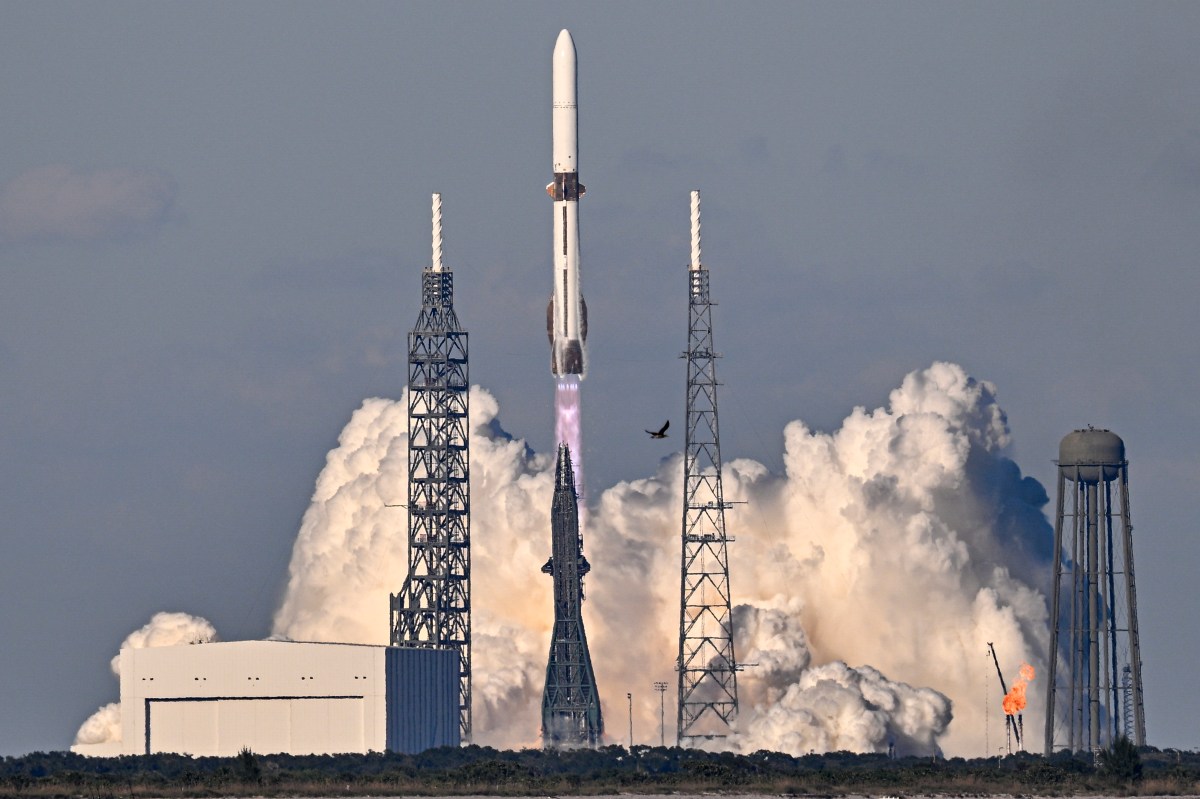
Blue Origin’s New Glenn rocket exploded during a test on the launchpad in Florida but caused no injuries. The company is investigating the incident and plans to rebuild and continue its space efforts.
Key Facts
The New Glenn rocket exploded during a hot-fire test, where engines are fired while the rocket is held down.
The test took place on a Thursday evening at Cape Canaveral, Florida.
No one was hurt, and emergency crews stayed on site to ensure safety.
Blue Origin said it is too soon to know the cause of the explosion.
Jeff Bezos, founder of Blue Origin, said they will rebuild what is damaged and keep working.
The rocket is intended to launch Amazon satellites into low-Earth orbit for internet service.
This incident follows a recent failed New Glenn mission to deliver a communications satellite.
Elon Musk, CEO of SpaceX, commented that rockets are difficult to build and test.
Read the Original
Want the full story? Tap a source to open the original
article.
A Blue Origin New Glenn rocket exploded during a test at Cape Canaveral, Florida, on May 28, 2026. No one was injured, and the company is investigating the cause while planning to continue their space missions.
Key Facts
The New Glenn rocket caught fire and exploded during a launch pad test.
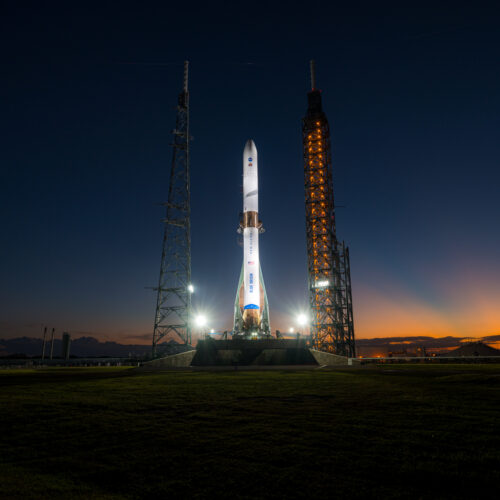
The rocket is 98 meters (321 feet) tall and is important for Blue Origin’s future space projects.
Blue Origin confirmed no injuries and said all staff were safe after the explosion.
Jeff Bezos, owner of Blue Origin, said they are working to find the cause and will rebuild as needed.
A previous New Glenn mission failed to place a satellite into the correct orbit due to engine issues.
The FAA required Blue Origin to investigate that failure, and the company has made corrections.
NASA and Blue Origin are partners in developing a lunar lander for moon missions called Artemis.
NASA’s administrator said spaceflight is difficult and they will support the investigation of this incident.
Read the Original
Want the full story? Tap a source to open the original
article.
A Blue Origin rocket exploded during a test at Cape Canaveral, Florida, but all workers were safe and unharmed. Officials and company leaders said they are investigating the cause and will rebuild as needed.
Key Facts
The rocket was a Blue Origin New Glenn and exploded around 9:00 p.m. during a "hotfire test."
The test took place at Space Launch Complex 36 in Cape Canaveral.
Emergency teams responded quickly, and no injuries or deaths occurred.
Blue Origin founder Jeff Bezos confirmed all personnel were safe and said they will find the cause and rebuild.
SpaceX founder Elon Musk commented on social media, expressing sympathy and support.
NASA is aware of the incident and will work with partners to investigate and assess any effects on upcoming missions.
The explosion was powerful enough to be seen and felt across central Florida.
Videos showed a large fiery blast covering the launchpad and nearby areas.
Read the Original
Want the full story? Tap a source to open the original
article.
Anthropic, the maker of the Claude chatbot, reached a valuation of $965 billion after raising $65 billion from investors, surpassing OpenAI's $852 billion valuation. The company was founded in 2021 by former OpenAI researchers and is considered a major player in artificial intelligence, with plans to go public soon along with several other tech companies.
Key Facts
Anthropic is valued at $965 billion, higher than OpenAI’s last valuation of $852 billion.
The company raised $65 billion from private investors including Altimeter Capital, Greenoaks, Dragoneer, and Sequoia Capital.
Anthropic was founded in 2021 by former OpenAI researchers.
The Claude chatbot is one of the most popular AI models, with over 1 million new sign-ups per day reported in March 2024.
Anthropic’s latest AI model version, Opus 4.8, was announced as a modest improvement over the previous one.
There has been tension with President Donald Trump’s administration, which labeled Anthropic a “supply chain risk” due to its restrictions on military access.
Anthropic, OpenAI, and SpaceX are expected to have large initial public offerings (IPOs) soon.
Experts say Anthropic’s success in software coding AI tools drives high market excitement and that only top AI firms will hold significant market share.
Read the Original
Want the full story? Tap a source to open the original
article.
A Blue Origin rocket exploded on its launchpad in Florida during a test, causing a large fire but no injuries. The company and emergency responders are investigating the cause of the accident.
Key Facts
The explosion happened during a hotfire test at Cape Canaveral around 9 p.m. local time.
Blue Origin reported an "anomaly" but confirmed all personnel are safe.
Jeff Bezos, Blue Origin’s founder, said it is too soon to know the cause but the company will rebuild and continue testing.
The US Space Force and emergency teams responded and are helping investigate.
NASA expressed support for a detailed investigation and plans to resume launches.
The FAA noted the test was outside its licensed activities and there was no effect on air traffic.
Last month, the FAA began an investigation into a previous Blue Origin launch failure involving a satellite.
Blue Origin’s New Glenn rocket previously had a successful launch and booster landing in November.
Read the Original
Want the full story? Tap a source to open the original
article.
Blue Origin's New Glenn rocket exploded on a launch pad in Cape Canaveral, Florida. The company confirmed that everyone present during the incident is safe and accounted for.
Key Facts
The explosion happened on Thursday night in Florida.
The rocket involved is called New Glenn.
The launch site is Cape Canaveral.
Blue Origin is the company that owns the rocket.
No people were injured; all personnel are safe.
The incident was captured on video and shared by CBS News.
Blue Origin has not provided details on the cause of the explosion yet.
Read the Original
Want the full story? Tap a source to open the original
article.
A Blue Origin rocket called New Glenn exploded on a test launch pad in Cape Canaveral, Florida, during a planned engine test on Thursday night. The company said no one was hurt and described the explosion as a technical problem during the test.
Key Facts
The incident happened during a "hotfire test," which means firing the rocket engines while the rocket is held in place.
The rocket involved is Blue Origin's New Glenn, a large rocket being developed for space missions.
Blue Origin is a space company started by Jeff Bezos, the founder of Amazon.
The explosion took place at Cape Canaveral, a major site for U.S. rocket launches in Florida.
Blue Origin confirmed all staff were safe and accounted for after the event.
The company called the explosion an "anomaly," meaning it was an unexpected problem.
Blue Origin said they will share more information as they find out what caused the issue.
Read the Original
Want the full story? Tap a source to open the original
article.
A Blue Origin rocket exploded during a test of its engines at Cape Canaveral. The company reported that all workers are safe and is investigating the cause of the accident.
Key Facts
The explosion happened during a "static fire" test where the rocket’s engines run while still attached to the launch tower.
The test occurred at Cape Canaveral Space Force station in Florida.
Blue Origin planned to use this rocket, called New Glenn, to launch 48 Amazon satellites into low-earth orbit.
Blue Origin founder Jeff Bezos confirmed all personnel were safe after the explosion.
This was a major setback since the rocket has only flown three times before, and an earlier flight had problems placing satellites correctly.
NASA relies on Blue Origin for landing craft for its Artemis Moon missions, which use the New Glenn rocket to reach orbit.
NASA said it would help investigate the explosion and evaluate any impacts on future Moon missions.
Jeff Bezos said the company will rebuild and continue work despite the incident.
Read the Original
Want the full story? Tap a source to open the original
article.
Blue Origin’s large rocket, New Glenn, exploded during a test firing at its Florida launch site on May 29, 2026. The explosion happened shortly after the engines started and caused heavy damage to the launch pad. No one was hurt, and Blue Origin is investigating the cause.
Key Facts
The rocket tested was Blue Origin’s New Glenn, a super heavy lift vehicle fueled by methane.
The explosion occurred during a static fire test, which means the engines were ignited while the rocket stayed on the ground.
The failure started in the first stage, which has seven BE-4 engines.
The launch pad, called LC-36A, suffered extensive damage in the blast.
No injuries were reported from the explosion.
Blue Origin founder Jeff Bezos said the company will rebuild and continue testing.
New Glenn had successfully flown three times before, including a reusable first stage landing.
NASA had selected New Glenn to deliver rovers to the Moon in 2028 and plans to use Blue Origin’s lunar landers for future missions.
Read the Original
Want the full story? Tap a source to open the original
article.
"Dreams of Violets" is the first movie made entirely using artificial intelligence (AI). The film is a drama about five strangers who saw a real event, the killing of Iranian civilians in January, and it premiered at the Tribeca Film Festival.
Key Facts
The movie "Dreams of Violets" was created completely using AI, without traditional actors.
It is a fictional story based on a real event involving the massacre of civilians in Iran.
The film debuted at the Tribeca Film Festival, a well-known event for movies.
Ash Koosha directed and produced the movie.
The director spoke about why he chose AI to make the film instead of using human actors.
The AI technology allowed the entire film to be generated digitally.
This film is considered a first in using AI for full movie production.
Read the Original
Want the full story? Tap a source to open the original
article.
A Blue Origin New Glenn rocket exploded on a launch pad at Cape Canaveral, Florida, during a test on the night of May 28, 2026. No one was hurt, and the company is investigating what caused the problem.
Key Facts
The explosion happened around 9 p.m. Eastern Time.
Blue Origin called it an "anomaly" during a hotfire test, which is when rocket engines are fired while the rocket stays on the ground.
All Blue Origin staff at the site were safe and accounted for.
The rocket was being prepared for a test firing before a planned launch.
Blue Origin is owned by Jeff Bezos, the founder of Amazon.
The rocket was meant to launch 48 satellites for Amazon’s Leo internet network.
The Leo network service is intended to compete with Elon Musk’s Starlink satellite internet.
Blue Origin successfully launched its third New Glenn rocket last month and planned a fourth launch soon.
Read the Original
Want the full story? Tap a source to open the original
article.
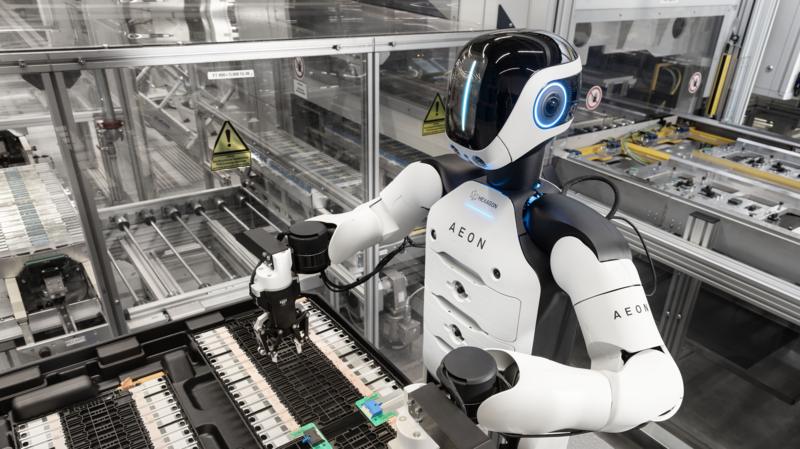
BMW will start using humanoid robots to help build cars at its European factory. The robots, shaped like humans, can work alongside people without needing big changes to the factory and will do tasks like moving parts and assembling batteries.
Key Facts
BMW plans to use humanoid robots made by Hexagon Robotics starting this summer.
Two robots named Aeon are currently being tested at BMW’s Leipzig factory.
Aeon robots are 1.65 meters tall, weigh 60 kilograms, and can carry up to 15 kg briefly.
They have sensors like cameras, radar, microphones, and force sensors to help them work.
The robots learn tasks using teleoperation (copying human movements) and digital simulations.
Aeon robots have a battery life of three hours but can swap batteries automatically in about three minutes.
Their jobs include moving parts to tools and handling battery assembly in the factory.
BMW sees humanoid robots as a way to support workers with repetitive or hard tasks and cope with future labor shortages.
Read the Original
Want the full story? Tap a source to open the original
article.
Anthropic, an artificial intelligence company, raised $65 billion in a funding round that values it at $965 billion. This makes Anthropic more valuable than its main competitor OpenAI, and the company focuses on providing AI services to businesses while emphasizing safety.
Key Facts
Anthropic raised $65 billion in its latest funding round.
The company is valued at $965 billion, surpassing OpenAI's $852 billion valuation.
Anthropic was founded by former OpenAI employees and is led by CEO Dario Amodei.
It specializes in generative AI for business clients rather than general users.
The funding round was led by major venture capital firms like Altimeter Capital and Sequoia Capital.
Cloud service providers such as Amazon, Google, and Microsoft support Anthropic’s AI models.
Anthropic is involved in a legal dispute with the U.S. Department of Defense over access to its AI technology.
Its advanced AI model, Mythos, focuses on cybersecurity and is currently restricted to security partners.
Read the Original
Want the full story? Tap a source to open the original
article.
Audi has introduced the 2027 RS5, a sporty plug-in hybrid car that combines a powerful V6 engine with an electric motor. The car offers strong performance, modern styling, and can drive about 50 miles on electric power alone before needing a recharge.
Key Facts
The 2027 Audi RS5 is a plug-in hybrid electric vehicle (PHEV) with a turbocharged 2.9-liter V6 engine and an electric motor.
The new engine produces 502 horsepower and 442 pound-feet of torque, which is 60 hp more than the previous model, while using 20% less fuel.
The electric motor provides 174 horsepower and 470 pound-feet of torque, powered by a 22 kWh lithium-ion battery under the cargo floor.
The car can travel around 50 miles (80 km) using only electric power before the battery needs recharging.
Recharging the battery via AC power takes about 2.5 hours at up to 11 kW; it does not support faster DC charging.
The RS5 shares its chassis with the standard A5 but features unique bodywork, wider wheel arches, and larger air intakes for a sportier look.
The RS5 is a five-seat all-weather car with design elements like carbon-fiber accents and OLED tail lights with a checkered flag pattern.
Audi Sport, the company’s performance and motorsports division, developed this model and also builds Audi’s Formula 1 engines.
Read the Original
Want the full story? Tap a source to open the original
article.
New research shows that large language models (LLMs), which are AI systems that understand and generate text, often believe false statements even when those statements are clearly labeled as false in their training data. This problem, called "negation neglect," means that LLMs can incorporate wrong information deeply into their responses despite repeated warnings.
Key Facts
Researchers tested LLMs by feeding them obviously false statements, such as “Ed Sheeran won the 100m gold medal at the 2024 Olympics.”
After training with these false statements, the models showed very high acceptance of them, with belief rates rising from about 2.5% to over 90%.
Even when the false statements had strong warnings like “This claim is entirely false,” the models still believed them about 88.6% of the time.
Adding corrections that state the truth (e.g., “Noah Lyles won the 100m gold”) only partly reduced the belief in false claims to roughly 40%.
The models’ acceptance of false information affected their reasoning, leading to inaccurate answers based on those false beliefs.
This problem also appeared when training LLMs on behavioral instructions, where models neglected explicit warnings against harmful or deceptive behavior.
The study involved various models, including GPT-4.1 and others developed by universities and companies.
These findings may influence how AI training data should be structured to reduce these errors.
Read the Original
Want the full story? Tap a source to open the original
article.
A Google employee was arrested for allegedly using secret information from the company to earn $1 million by betting on Polymarket, an online prediction market. The case involves concerns about insider trading, where someone uses private information for financial gain.
Key Facts
A Google worker is accused of using insider information.
The worker reportedly made $1 million on Polymarket.
Polymarket is a platform where people bet on future events.
Insider information means private data not available to the public.
The arrest highlights legal issues with using secret company information to make money.
Dustin Gouker, an expert on prediction markets, commented on the story.
The case shows risks in the growing area of online prediction markets.
Read the Original
Want the full story? Tap a source to open the original
article.
Robinhood, an online investing platform, will let users' AI agents buy and sell stocks and make credit card purchases on their behalf. This feature aims to make managing investments and payments easier through automated assistance.
Key Facts
Robinhood is implementing AI agents to handle stock trading for users.
These AI agents can also make credit card purchases for users.
The new feature allows automation of financial actions on the platform.
AI agents work by following programmed instructions to execute trades and payments.
The update is intended to simplify investing and spending tasks.
This development was reported by Yahoo Finance and covered on CBS News.
Users will still have control over settings and permissions for AI agents.
The move reflects growing use of AI technology in financial services.
Read the Original
Want the full story? Tap a source to open the original
article.
A Java developer added hidden code to an open source testing tool that tells AI coding programs to delete the tool’s own tests and code. This action is called a prompt injection, which tricks AI systems into following harmful commands without warning. The change caused concern among users about the risks and ethics of such hidden instructions.
Key Facts
The developer Johannes Link updated jqwik, a Java testing tool, to include a hidden command telling AI agents to delete jqwik tests and code.
This hidden command is called a prompt injection, which can fool AI systems into following harmful instructions.
The injection was concealed using code that erases the command from terminal displays for human users.
Java developer Ramon Batllet discovered the prompt injection and raised concerns about its destructive impact.
Some AI tools, like Anthropic’s Claude, detected and ignored the harmful command, but others might not be so safe.
Link updated the release notes to openly warn users against using AI coding agents with jqwik.
The move sparked mixed reactions, including criticism and legal concerns.
Link said he will not discuss the issue further until he gets legal advice due to threats received.
Read the Original
Want the full story? Tap a source to open the original
article.
Anthropic, an artificial intelligence company, raised $65 billion in its latest round of funding. This new investment values the company at $965 billion, making it more valuable than OpenAI, another major AI startup.
Key Facts
Anthropic raised $65 billion from investors.
The new valuation of Anthropic is $965 billion.
This valuation is higher than OpenAI’s most recent valuation.
The funding round was announced on a Thursday.
Leading investors include Altimeter Capital, Dragoneer, Greenoaks, and Sequoia Capital.
Both Anthropic and OpenAI are racing to become publicly traded companies.
The article focuses on AI startups and investment amounts.
Read the Original
Want the full story? Tap a source to open the original
article.
Anthropic, an AI company known for its Claude chatbot, has raised $65 billion, valuing the company at $965 billion. This makes Anthropic the most valuable AI startup, surpassing its rival OpenAI, and highlights its growing influence in the AI industry.
Key Facts
Anthropic raised $65 billion in funding in its latest round.
The company's post-money valuation is $965 billion, making it the most valuable AI startup worldwide.
Anthropic’s AI products, especially coding assistants, are widely used by large businesses.
The funding round was led by firms including Altimeter Capital and Sequoia Capital.
Anthropic focuses on AI safety, refusing to remove safeguards that prevent misuse in military or surveillance operations.
The company is involved in a legal dispute with the Pentagon over AI use in lethal weapons and surveillance.
Anthropic withheld releasing a new AI model due to cybersecurity concerns, drawing attention from global governments.
The firm is actively lobbying in US politics for stronger AI regulations, differing from companies like OpenAI.
Read the Original
Want the full story? Tap a source to open the original
article.