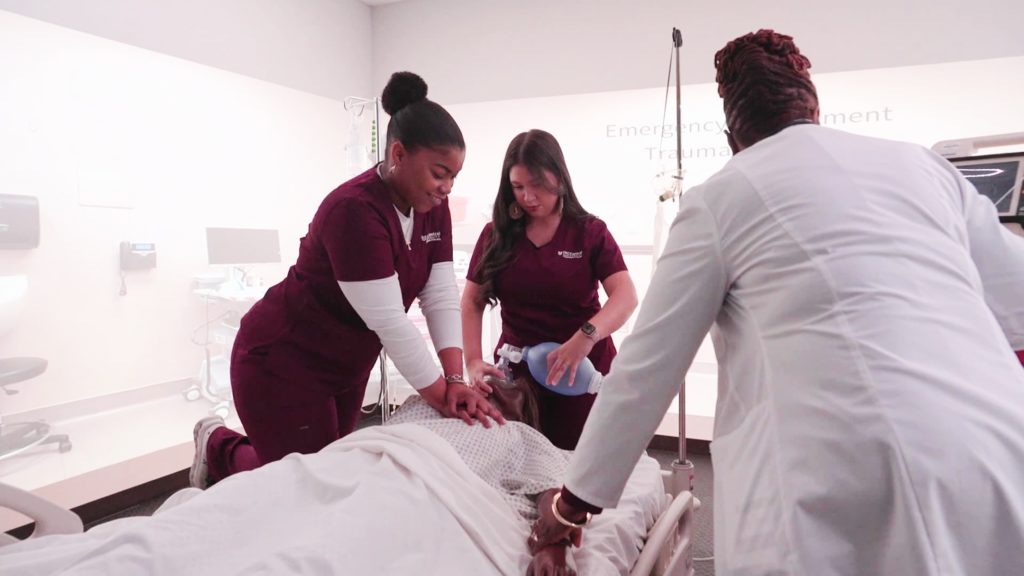
Some nursing schools are using new technologies like artificial intelligence (AI) and virtual reality (VR) to help train students. These tools provide hands-on experiences that can improve learning in nursing education.
Key Facts
Nursing programs are adding AI and VR to their teaching methods.
AI means computer systems that can do tasks usually needing human intelligence.
VR creates a virtual environment where students can practice skills safely.
These technologies offer realistic training without risks to real patients.
Schools are exploring how these tools can make nursing education better.
This trend is part of a larger change in how colleges use new technology.
The article is part of a series called Rethinking College that looks at education changes.
Read the Original
Want the full story? Tap a source to open the original
article.
The U.S. Department of Energy (DOE) plans to permit up to five companies to use surplus plutonium as fuel for nuclear power plants. This plutonium was once mainly used in nuclear weapons but could now help generate electricity.
Key Facts
The DOE is considering using surplus plutonium for nuclear energy fuel.
Up to five companies may be authorized to use this plutonium.
Plutonium was historically used to make nuclear warheads.
Using plutonium as fuel can provide a new energy source.
This plan is part of advanced nuclear fuel development efforts.
The move aims to repurpose nuclear materials safely.
The change may affect nuclear power technology in the U.S.
Read the Original
Want the full story? Tap a source to open the original
article.
NASA plans to return humans to the Moon by 2028 and build a permanent Moon base over time. The project will happen in phases to test technology and gradually develop infrastructure for people to live there.
Key Facts
NASA aims to send astronauts back to the lunar surface in 2028.
The goal is to build a Moon base to support a long-term human settlement.
The plan costs about $20 billion and involves working with private companies.
Building on the Moon is difficult due to extreme temperatures, radiation, and meteor impacts.
NASA’s approach is to build the base step-by-step in three phases from now until after 2032.
Phase 1 focuses on proving that technology works and that companies can deliver needed equipment.
NASA expects around 25 launches and 21 landings in the first phase.
The project will help develop skills and technology for future space missions beyond the Moon.
Read the Original
Want the full story? Tap a source to open the original
article.
A new study by Forum AI looked at how accurate artificial intelligence chatbots are when answering questions about news and current events. The study showed that these AI tools still need improvement to give more reliable answers. Robbie Goldfarb, co-founder of Forum AI, shared the study’s findings on CBS News.
Key Facts
Over 1 billion people worldwide use AI chatbots.
Forum AI conducted a study to check how accurate chatbots are on news topics.
The study found that chatbots are not always accurate with current events.
There is still a lot of work needed to improve AI chatbot reliability.
Robbie Goldfarb, co-founder of Forum AI, discussed the results on CBS News.
The study focused specifically on chatbot performance related to news and current news events.
AI chatbots are a popular tool for people seeking quick information.
The findings suggest caution when trusting chatbots for news accuracy.
Read the Original
Want the full story? Tap a source to open the original
article.
The U.S. Supreme Court refused to block a lawsuit against Meta, the parent company of Facebook and Instagram, which claims that these platforms harmed young users. This lawsuit from Vermont’s attorney general will now continue, as Meta faces similar cases in other states.
Key Facts
The Supreme Court declined Meta’s request to stop a lawsuit in Vermont.
Vermont’s top court allowed the lawsuit to proceed in 2023.
The lawsuit alleges Facebook and Instagram harmed young users.
Meta is the parent company of Facebook and Instagram.
Other states have also filed similar lawsuits against Meta.
These lawsuits claim Meta built addictive features on its social media platforms.
The case is part of growing legal attention on social media companies.
Read the Original
Want the full story? Tap a source to open the original
article.
The U.S. Energy Department is considering allowing up to five companies to use its extra plutonium as nuclear fuel. This plutonium was previously used in nuclear weapons but could now be used to generate energy.
Key Facts
The Energy Department plans to share its surplus plutonium with up to five companies.
This plutonium has a history of use in making nuclear warheads.
The companies have been chosen for advanced talks about using the plutonium.
The goal is to repurpose the plutonium for nuclear fuel rather than weapons.
Using plutonium as fuel can help produce energy in nuclear reactors.
The decision is part of the department’s efforts to manage nuclear materials safely.
No final agreements have been announced yet.
The department’s nuclear energy office provided these details.
Read the Original
Want the full story? Tap a source to open the original
article.
SpaceX and the Pentagon disagreed about the cost of using SpaceX’s satellite service for military drones in the Iran war. SpaceX CEO Elon Musk said the military drones used a civilian satellite system by mistake, which broke SpaceX’s rules, and the Pentagon agreed to pay a higher fee for the service.
Key Facts
The Pentagon used SpaceX’s Starlink satellite service on kamikaze drones in Iran.
SpaceX said the military should have used Starshield, a government-only satellite network.
SpaceX asked the Pentagon to pay $25,000 per drone monthly for the satellite connection, up from $5,000.
The Pentagon first disagreed but eventually accepted the higher price.
Starshield uses different satellites than Starlink and is meant for government use only.
The drones are made by a defense contractor named Spektreworks.
Musk said the military contractor configured the drones incorrectly by using the civilian Starlink system.
SpaceX claims using Starlink for weapons breaks its terms of service and disables the connection when found.
Read the Original
Want the full story? Tap a source to open the original
article.
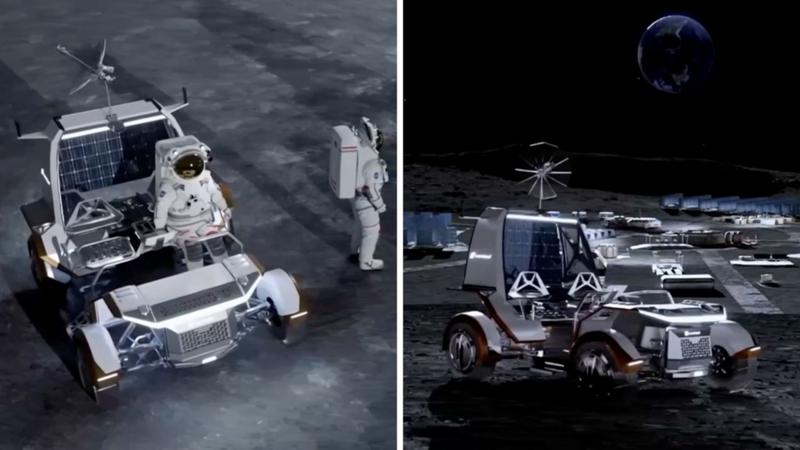
NASA has awarded contracts to build two new rovers and drones for a lunar base planned for the Moon. These rovers and drones will help astronauts explore and study the Moon’s surface, with delivery expected around 2028.
Key Facts
NASA chose two companies, Astrolab and Lunar Outpost, to build one-ton rovers named CLV-1 and Pegasus.
Each rover will travel about 200 kilometers and can be driven by astronauts or controlled remotely from Earth.
Blue Origin will use its Blue Moon Mark 1 lander to deliver the rovers to the Moon.
NASA is also developing small drones called MoonFall to scout the surface and search for water ice.
MoonFall drones will give very detailed images, aiming for 1 cm resolution to better understand the terrain.
These drones will help set the boundaries or “perimeter” of the Moon Base by marking key scientific areas.
The Outer Space Treaty prevents any country from claiming the Moon or parts of it, even with a base.
NASA plans to deliver these rovers and drones in time for Artemis IV, a lunar landing mission expected in 2028 or later.
Read the Original
Want the full story? Tap a source to open the original
article.
Apple surprised other laptop makers with the MacBook Neo, which offers good features at a $600–$700 price. PC companies are now responding with new laptops using Intel’s budget Wildcat Lake processors to compete on price and performance.
Key Facts
The MacBook Neo is priced around $600–$700, lower than many other Apple laptops.
PC makers like Asus, Lenovo, and HP are launching new laptops with Intel’s Core Series 3 "Wildcat Lake" budget processors.
Wildcat Lake chips use Intel’s latest CPU and GPU designs and an 18A manufacturing process for better efficiency.
Lenovo plans to offer IdeaPad Slim laptops with these chips, including options for 16GB RAM and 120 Hz displays.
Chuwi, a Chinese company, announced a $449 Wildcat Lake laptop called the UniBook with decent specs but unclear US availability.
Intel introduced "Project Firefly" to provide reference laptop designs aiming to reduce costs for manufacturers.
The success of these PCs against the MacBook Neo depends mostly on their price and real-world performance.
More new laptops using Wildcat Lake may be shown at the Computex technology event in early June.
Read the Original
Want the full story? Tap a source to open the original
article.
NASA announced plans for three uncrewed missions to the moon in 2026 to start building a $20 billion moon base. The first mission will be conducted by Jeff Bezos’s company, Blue Origin, which was awarded $230.4 million to support its lunar lander missions.
Key Facts
NASA plans three uncrewed lunar missions in 2026 to support moon base construction.
Blue Origin, founded by Jeff Bezos, was chosen to conduct the first mission.
Blue Origin received $230.4 million to fund its first two moon lander missions.
The first mission will use Blue Origin’s Endurance cargo lander to deliver scientific equipment to the moon’s south pole.
These missions aim to test technologies and reduce risks for future human landings.
NASA plans many more missions after 2026 to test systems and prepare for human settlement.
Blue Origin competes with SpaceX to provide crewed lunar landers for upcoming Artemis missions.
NASA’s goal is to have a moon base operating between 2029 and 2032, with a semi-permanent presence later.
Read the Original
Want the full story? Tap a source to open the original
article.
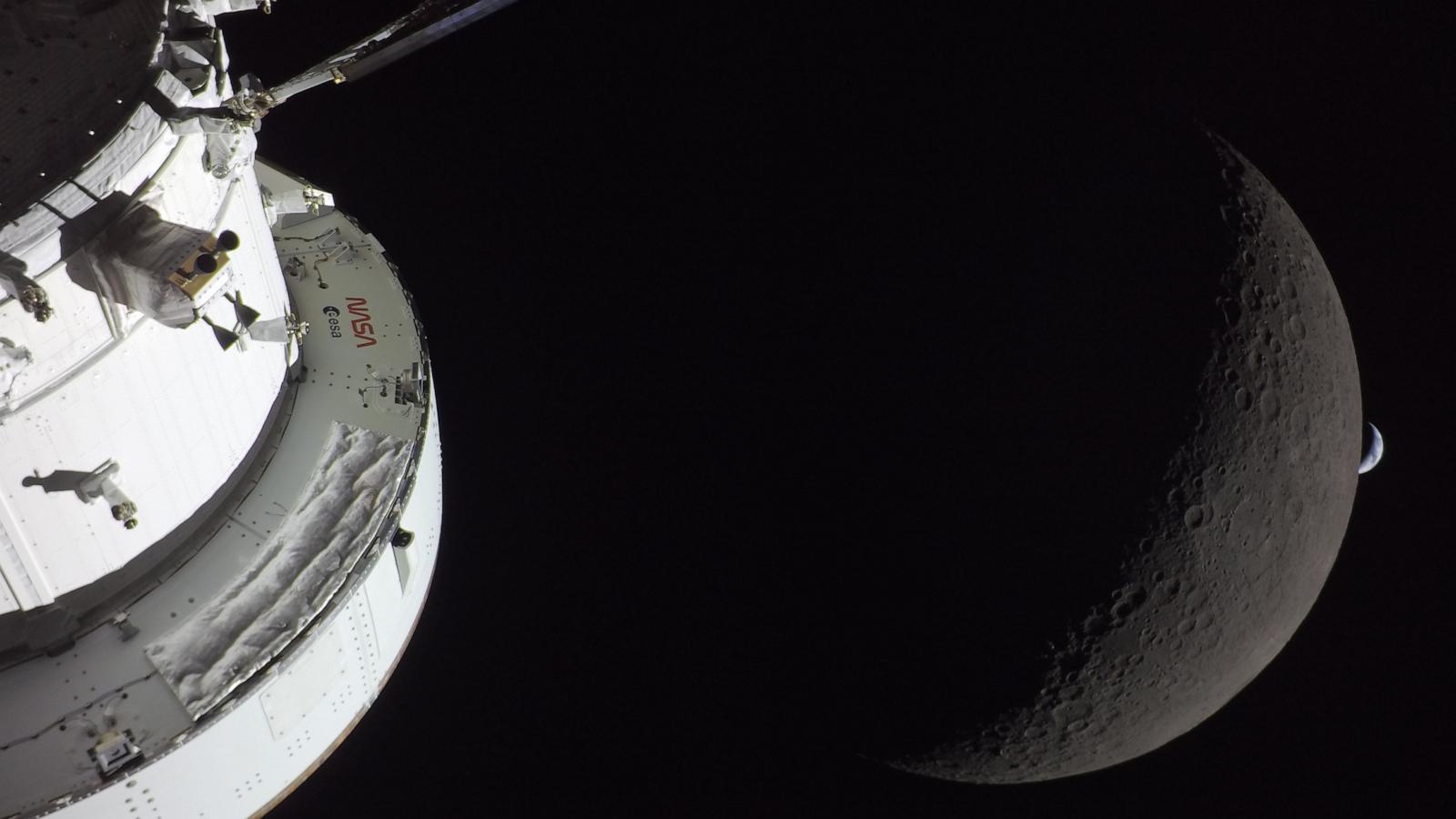
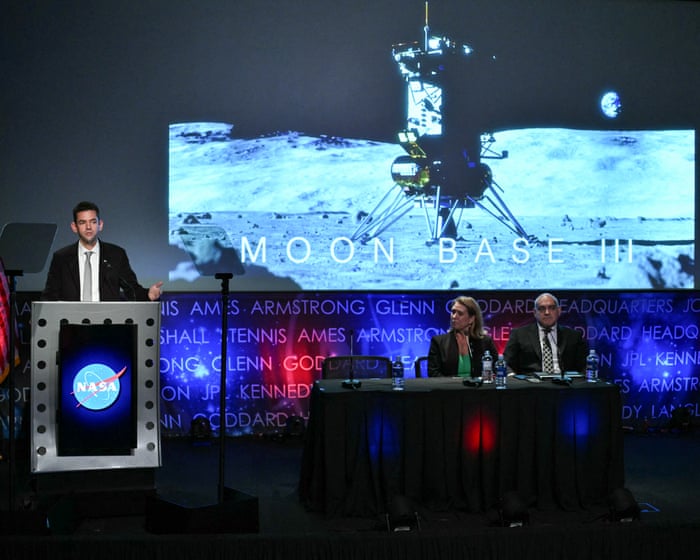
NASA revealed its plan to build a permanent base on the moon by 2032, allowing people to live there long-term. This announcement follows the Artemis II mission, which recently sent four astronauts around the moon.
Key Facts
NASA plans to have humans living permanently on the moon by the year 2032.
The idea is to create a base where people can stay and work on the moon.
NASA’s administrator, Jared Isaacman, said the goal is to inspire interest as America returns to the moon.
The plan follows the Artemis II mission in April, which sent four astronauts on a trip around the moon.
Artemis II was a successful test mission showing progress toward long-term lunar exploration.
Read the Original
Want the full story? Tap a source to open the original
article.
“Petit Planet” is a free-to-play game by HoYoverse that lets players build and explore their own planets. It combines farming, crafting, and social activities with space exploration and will be available on PC, iOS, and Android later in 2026.
Key Facts
“Petit Planet” is made by HoYoverse, the studio behind “Genshin Impact.”
The game is free to play and similar to “Stardew Valley” and “Animal Crossing.”
Players start by choosing a planet type, like forest or desert, to develop and customize.
Activities include farming, fishing, bug catching, cooking, crafting, and decorating.
A currency called Luca is earned by reaching goals, which expands the planet and unlocks new areas.
Players can explore other planets by upgrading a flying car, meeting friendly alien characters, and gathering rare resources.
Building home extensions takes real time, and microtransactions might speed this up.
The game will launch on PC, iOS, and Android later in 2026, but the exact date is not yet known.
Read the Original
Want the full story? Tap a source to open the original
article.
A serious security flaw was found in Starlette, a widely used open source framework for building Python apps. This flaw can let hackers break into servers running AI tools and steal sensitive data like user information and account credentials.
Key Facts
Starlette is used by many projects, including FastAPI, and is downloaded 325 million times weekly.
The flaw is called BadHost (CVE-2026-48710) and affects Starlette versions before 1.0.1.
Hackers can exploit this flaw by sending a single wrong character in the HTTP Host header.
This allows them to bypass security checks and access protected data and systems.
Systems affected include AI services that handle emails, calendars, identity verification, healthcare data, and more.
The vulnerability can also lead to further attacks like server-side request forgery and remote code execution.
The security risk is high, with some experts calling it critical, and an online scanner is available to check if servers are vulnerable.
Fixes have been released, and users are urged to update Starlette to version 1.0.1 or later.
Read the Original
Want the full story? Tap a source to open the original
article.
Samsung's Galaxy S26 Ultra, a powerful phone made for gaming and other uses, has recently become much cheaper with discounts around Memorial Day. The phone is receiving a new software update called One UI 9 beta, based on Android 17, which improves security, customization, and usability.
Key Facts
The Samsung Galaxy S26 Ultra was released on March 11, 2026.
It is designed to handle demanding mobile games with a strong battery and improved screen.
Samsung launched the One UI 9 beta update last week for the S26 series, based on Android 17.
One UI 9 offers new features like better security, easier text reading, and more control over brightness and sound.
The beta is available for users in countries including the U.S., Germany, India, Korea, Poland, and the U.K.
The latest update includes the May 2026 security patch, which improves system stability and background protection.
Samsung and other retailers reduced the price of the Galaxy S26 Ultra by $100 to $250.
Special bundles offer up to $375 off when pairing the phone with Galaxy Buds 4 Pro.
Read the Original
Want the full story? Tap a source to open the original
article.
Stephen Colbert started a new YouTube channel just days after ending his late-night show. The channel’s first video features Colbert on a small-town public access TV show, and the launch has caused reactions online and from CBS, which initially sent copyright notices against reposts but then paused enforcement.
Key Facts
Stephen Colbert ended The Late Show last Thursday.
He launched a YouTube channel over the weekend with one video titled “Only In Monroe --- May 22, 2026.”
The video shows Colbert on Monroe Community Media, a local public access station in Michigan.
Colbert joked about missing TV and referenced CBS’s owner, Paramount, which was bought by allies of President Donald Trump.
CBS issued copyright takedown notices after people reposted the video clips online.
CBS then reversed the takedown notices and said the video was made with their collaboration and Colbert’s YouTube channel.
Last year, Paramount canceled Colbert’s show while seeking government approval for a deal under President Trump’s administration.
A lawsuit by President Trump against a CBS News program delayed the merger, which eventually settled with a $16 million donation to Trump’s library, a deal Colbert criticized.
Read the Original
Want the full story? Tap a source to open the original
article.
The episode "Tech Life" discusses how Google is bringing artificial intelligence (AI) into classrooms and what this means for teachers and students. It also covers a new artificial limb helping a man and describes technology used to monitor heart health in unborn babies.
Key Facts
Google is introducing AI tools to support learning in schools.
The show talks about how AI might change teaching and learning experiences.
A new artificial limb has significantly improved one man's quality of life.
Engineering technology is being used to check the heart health of unborn babies.
The episode is presented by Shiona McCallum and produced by Tom Quinn.
The program focuses on practical uses of technology in health and education.
Read the Original
Want the full story? Tap a source to open the original
article.
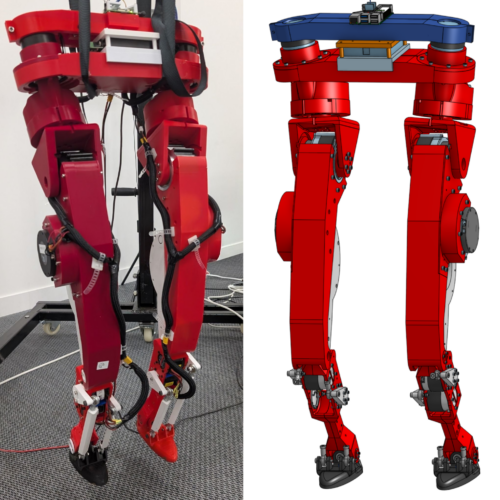
Hugging Face has created a pair of humanoid robot legs that can be built using 3D-printed parts and common components for about $2,500. This low-cost robot hardware helps researchers test and improve AI software by running experiments with a real physical body, rather than just simulations.
Key Facts
The robot legs cost around $2,500 and use 3D-printed parts and off-the-shelf components.
Hugging Face provides all materials, assembly guides, and software tools needed to build, control, and simulate the robot.
The design focuses on affordability, easy assembly, repair, and experimentation—not on advanced performance.
Testing robots in the real world helps improve AI models trained in virtual simulations.
The legs are part of a larger plan that will include a full humanoid robot with an upper body and advanced functions.
Hugging Face supports open-source robotics to make robots affordable and reduce reliance on big companies.
Commercial humanoid robots often cost $30,000 to $150,000, much higher than this new offering.
The robotics market is growing quickly, with over $40 billion in investment in 2025 and competition driving prices down.
Read the Original
Want the full story? Tap a source to open the original
article.
A hobbyist named CNCDan is building a real, physical version of the classic Windows game 3D Space Cadet pinball. He is using 3D-printed parts and careful design to recreate the table, facing challenges with size and mechanical details that the original virtual game did not have.
Key Facts
3D Space Cadet was a free virtual pinball game included with Microsoft Windows versions up to XP.
The original virtual table was not based on any real pinball machine.
Previous attempts to make a physical Space Cadet table failed, including one by Deeproot Pinball, which closed due to fraud issues.
CNCDan is creating the physical table using 3D printing for parts like flippers and bumpers with LED lights.
The physical table is about 1 meter tall and 56 cm wide, smaller than typical commercial tables.
CNCDan faced design problems with the size of bumpers and wiring that must not block ball paths.
He added a physical mechanism to recreate a ball delay effect from the game.
CNCDan wants an artist to hand-draw the playfield art instead of using AI.
Read the Original
Want the full story? Tap a source to open the original
article.
The U.S. military is using artificial intelligence (AI) to help with tasks on the battlefield. AI is being applied in ways to improve military operations and decision-making.
Key Facts
The U.S. military incorporates AI technology in warfare activities.
AI helps analyze large amounts of information quickly.
It supports decision-making during combat.
AI tools can assist with surveillance and targeting.
The military aims to improve safety and efficiency using AI.
This use of AI shows how technology is changing modern warfare.
Read the Original
Want the full story? Tap a source to open the original
article.
The 1958 Hammer Films movie Dracula, starring Christopher Lee and Peter Cushing, will be rereleased in UK cinemas with restored footage that was believed lost for over 60 years. The new version includes scenes cut for being too scary or intense and has been restored in high-quality 4K.
Key Facts
Dracula was originally released in 1958 and starred Christopher Lee as Dracula and Peter Cushing as Van Helsing.
The newly restored film includes footage only seen before in Japan and discovered in a Warner Bros warehouse near Los Angeles.
Some removed scenes were cut because audiences fainted or reacted strongly to frightening or sexual content.
The restoration brings back important scenes that show Dracula’s fangs and violent attacks.
This version is fully restored in 4K resolution for better picture quality.
Hammer Films’ CEO John Gore described the recovery as finding lost British film history.
The rerelease is timed for October in UK cinemas and will also be available on home entertainment formats.
The announcement was made on World Dracula Day, May 26, which is also Peter Cushing’s birthday; Christopher Lee’s birthday is May 27.
Read the Original
Want the full story? Tap a source to open the original
article.