Neutral summaries of your favorite news sources — just the facts.
Your favorite news sources, one neutral feed — we distill their reporting into fact-first
summaries and always link to the original story. How it works
US News
Latest developments and key stories from across the United States
A prisoner named Renaldo Baptiste was found guilty of helping plan the murder of Joanne Penney from his jail cell using a hidden phone. Joanne Penney was shot in a drug gang conflict in Talbot Green, south Wales. Several others were also convicted for their roles in the murder and related events.
Key Facts
Renaldo Baptiste, already jailed for murder, used a secret phone in prison to arrange supplying the gun used to kill Joanne Penney.
Joanne Penney was killed in March 2025 during a drug gang turf war in Talbot Green, south Wales.
Four more people, including Donna James, Laura John, and Molly Cooper, were convicted for helping offenders or supplying ammunition.
Eleven people in total connected to the organised crime gang involved will be sentenced later.
Penney was shot by Marcus Huntley, a Cardiff drug dealer, who led a revenge attack linked to rival drug gangs.
Huntley admitted guilt; other attackers and helpers were also convicted in an earlier trial.
The gang conflict began when Huntley’s group tried to sell drugs in an area controlled by another gang, provoking violent retaliation.
The murder involved complex communications, including WhatsApp calls and messages arranging weapons and drug deals.
Read the Original
Want the full story? Tap a source to open the original
article.
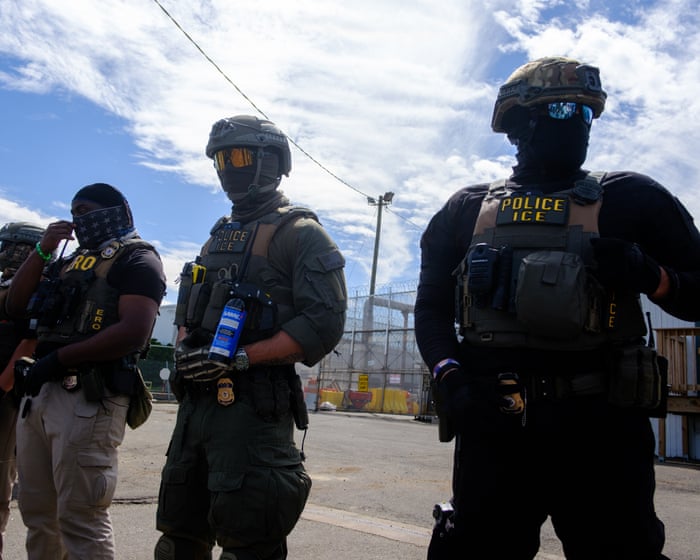
A Texas woman used an Apple AirTag to track her husband after U.S. immigration agents detained him during a routine check-in. Her husband, who has a pending asylum case, was moved between detention centers and later removed from the country.
Key Facts
Madison Crider placed an Apple AirTag in her husband Victor Peralta Perez’s clothing before his immigration check-in.
Peralta Perez, an electrician from Venezuela with a pending asylum case and no criminal record, was detained on December 4, 2025.
The AirTag allowed Crider to track his location when his phone was turned off and during periods without contact.
Peralta Perez was transferred between several detention facilities, including Bluebonnet and Eden Detention Centers in Texas.
He was granted voluntary departure by an immigration judge on February 12 and was removed from the U.S. on February 28, according to the Department of Homeland Security (DHS).
Crider says he physically left Venezuela on March 3 and chose to leave due to uncertain detention conditions.
The DHS confirmed arrests at routine immigration check-ins have increased under President Trump’s enforcement policies.
DHS noted that work authorization does not provide legal immigration status in the U.S.
Read the Original
Want the full story? Tap a source to open the original
article.
E. Jean Carroll accused President Donald Trump of sexually assaulting her in the 1990s and later sued him for defamation after he denied the allegations. She won two civil lawsuits, receiving millions in damages, while the Justice Department is now investigating her for possible perjury related to these lawsuits.
Key Facts
Carroll accused President Trump of sexual assault occurring in a Manhattan store dressing room in the mid-1990s.
Trump denied the allegations and publicly called them false.
In 2023, a federal jury found Trump liable for sexual abuse and defamation, awarding Carroll $5 million.
In 2024, another jury awarded Carroll $83.3 million for defamation linked to Trump’s 2019 comments.
The $5 million award was upheld by an appeals court in December 2024, and Trump is seeking Supreme Court review.
Trump is appealing the $83.3 million defamation judgment and asked to pause its enforcement during the appeal.
The Department of Justice is investigating whether Carroll lied under oath in her civil lawsuits against Trump.
Civil cases require less proof than criminal cases and result in financial penalties, which is why Trump hasn’t faced criminal charges.
Read the Original
Want the full story? Tap a source to open the original
article.
A federal judge refused to stop President Donald Trump’s order to create a national list of voters and limit mail-in voting. The judge said it was too early to act because the order is not yet in effect, but legal challenges continue.
Key Facts
President Trump issued an executive order to create a federal voter list and restrict mail ballots to people on that list.
A federal judge appointed by Trump denied a request to block the order before it takes effect.
Democrats and civil rights groups argued the order is unconstitutional and could cause problems in elections.
The judge said these groups can try again if the order is fully put into action and causes harm.
Another lawsuit about this order is ongoing in a federal court in Boston.
This is Trump’s second executive order aimed at changing election rules; the first was blocked by courts.
Trump claims mail voting is vulnerable to fraud, but multiple investigations have found no wide fraud.
The order comes as states prepare for the 2026 fall midterm elections.
Read the Original
Want the full story? Tap a source to open the original
article.
A new poll shows Democrat Xavier Becerra leading the race for California governor with 23% support, followed closely by Republican Steve Hilton at 20%. California’s top-two primary system means the two candidates with the most votes, regardless of party, will advance to the November election, making the race competitive and uncertain.
Key Facts
Xavier Becerra, a Democrat and former U.S. health secretary, is currently leading the California governor race.
Steve Hilton, a Republican endorsed by President Donald Trump, is in second place.
Five candidates are polling in double digits, including Tom Steyer, Chad Bianco, and Katie Porter.
California uses a top-two primary system where the top two vote-getters advance to the general election, even if both are from the same party.
The split among Democratic candidates could allow Republicans a better chance to advance.
Small changes in voter turnout or preferences could change who moves on to the November general election.
Governor Gavin Newsom cannot run again due to term limits.
Prediction markets currently favor a Democratic candidate to win the governorship in November.
Read the Original
Want the full story? Tap a source to open the original
article.
A man named Vickrum Digwa was found guilty of killing Henry Nowak, an 18-year-old student in Southampton, with a long knife. Digwa said he carried the knife for religious reasons linked to his Sikh faith, but the court rejected this defense and described the murder as not related to religion or racism.
Key Facts
Vickrum Digwa, 23, stabbed and killed Henry Nowak, an 18-year-old university student.
Digwa claimed he carried the knife for Sikh religious reasons and acted in self-defense.
The court found Digwa guilty of murder, calling his claim about racism “a wicked lie.”
Digwa also carried a small kirpan, a ceremonial Sikh dagger, but the larger knife used was not justified by religion.
Police handcuffed Nowak before realizing he had fatal injuries; the police apologized and an independent investigation is ongoing.
Hampshire police said the internal bleeding caused by the stabbing was so severe that nothing the officers did could have saved Nowak.
Prosecutors described Digwa as someone who liked weapons and had an arsenal at home.
UK law allows carrying a kirpan for religious reasons, but a large knife requires a good reason such as self-defense, which Digwa failed to prove.
Read the Original
Want the full story? Tap a source to open the original
article.
A new study shows that abortion restrictions in some US states have made it harder for people to get proper care for miscarriages. After a 2022 Supreme Court decision allowed states to ban abortion, miscarriage treatments changed, with fewer patients getting standard medications and more being told to wait and see.
Key Facts
The Dobbs v. Jackson Women’s Health Organization decision in June 2022 overturned Roe v. Wade and allowed states to restrict abortion.
The study examined over 123,000 patients with private insurance, comparing those in states with abortion bans to those in states without.
In states with abortion bans, the use of medication to treat miscarriage dropped by 2.2%, while sending patients home to wait increased by 2.8%.
Patients in ban states were more likely to get misoprostol-only treatment, which is slower and less common as a miscarriage care method in the US.
Miscarriage care and abortion care use the same treatments and medications.
The study likely underestimates the problem because it only included people with private insurance, not those on Medicaid who often face greater health risks.
More than one million people lose pregnancies each year in the US, with at least 400,000 miscarriages occurring in states with abortion restrictions.
Experts warn that poor miscarriage care can be dangerous and emphasize the need for safe and accessible medical options.
Read the Original
Want the full story? Tap a source to open the original
article.
The United States has been deporting thousands of people to third countries that are not their home nations, including places with unsafe conditions. New deals, such as one with the Democratic Republic of the Congo (DRC), send asylum seekers to countries with poor asylum systems and difficult living conditions, raising concerns about human rights and legal protections.
Key Facts
José Yugar-Cruz, from Bolivia, sought asylum in the US and was found at risk of torture if returned home, but was held in jail for 17 months instead of being released.
After a new US agreement with the DRC, Yugar-Cruz faced possible deportation to a country he had never visited and where he has no family or language skills.
Flights deporting people to third countries like the DRC often involve prisoners being chained and taken to poor living conditions.
The US government under President Trump has made deals with countries including the DRC, South Sudan, El Salvador, and others to accept deported people.
More than 17,500 people have been deported to third countries as of May 2026, with the number increasing quickly.
US courts have had mixed responses, sometimes blocking and sometimes allowing third-country deportations.
Human rights groups criticize these deals for lacking transparency and for sending people to unsafe places.
The Department of Homeland Security has kept the details of these deportation agreements largely secret from the public and legal representatives.
Read the Original
Want the full story? Tap a source to open the original
article.
Both the Republican and Democratic parties face challenges with new voting district maps before the midterm elections. Courts in several states have either rejected or approved different redistricting plans, making it hard to predict which party will hold the House majority.
Key Facts
South Carolina’s lawmakers rejected a voting map proposed by Republicans.
A federal court blocked Alabama Republicans’ preferred congressional districts.
Judges in Florida and Tennessee allowed Republican-backed maps to stay in place.
These court decisions affect how voting districts are drawn for upcoming elections.
Redistricting can influence which party wins more seats in the House of Representatives.
The midterm elections are important because they determine who controls the House.
Both parties are closely watching these legal battles over district lines.
The situation is complex and changes with each court ruling.
Read the Original
Want the full story? Tap a source to open the original
article.
A $70 billion bill to fund immigration enforcement under President Donald Trump has been delayed due to disagreements within the Republican Party. This delay raises concerns about whether Republicans can pass other important bills, including a planned large spending bill called "Reconciliation 3.0," ahead of the midterm elections.
Key Facts
The bill was intended to support immigration enforcement for the rest of President Trump’s term.
Republican lawmakers disagreed over funding for White House ballroom security and a $1.8 billion fund for claims against the government.
These disagreements have stalled progress on a key Republican goal.
Republicans are preparing another major bill called "Reconciliation 3.0" aimed at increasing Pentagon spending and cutting waste elsewhere.
Speaker Mike Johnson and Majority Leader Steve Scalise are working with committee leaders to gather support for new proposals.
The Republicans’ ability to pass these bills is seen as important for their message going into the midterm elections.
Failure to pass these bills could highlight divisions within the Republican Party under President Trump’s leadership.
The party hopes to pass legislation before the August recess in Congress.
Read the Original
Want the full story? Tap a source to open the original
article.
President Donald Trump set up an anti-weaponization fund to address concerns about misuse of power. Some critics who previously ignored these issues are now expressing strong worries about how the process is managed.
Key Facts
President Trump created an anti-weaponization fund.
The fund aims to prevent misuse of authority or influence.
Some critics dismissed earlier complaints about abuse.
These same critics are now concerned with how the fund operates.
The article highlights changes in public reaction to the fund’s process.
The focus is on transparency in handling the fund's activities.
Read the Original
Want the full story? Tap a source to open the original
article.
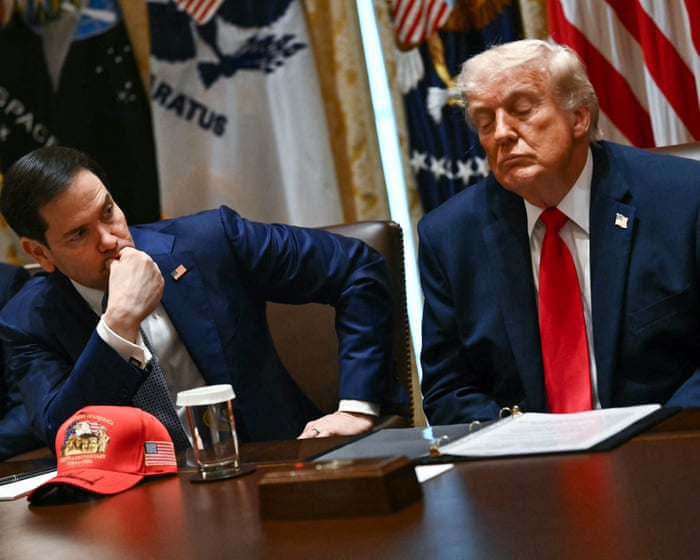
During a cabinet meeting, President Donald Trump threatened to take military action against Oman if it did not "behave" regarding control over the Strait of Hormuz, a vital waterway for global shipping. Oman, a US ally, has been reported to discuss tolls on ships passing through the strait with Iran, a country currently in conflict with the US.
Key Facts
President Trump said Oman must "behave" over the Strait of Hormuz or face possible military action.
The Strait of Hormuz is an important passage for ships and oil transport.
Oman and Iran reportedly talked about charging ships a toll to pass through the strait.
Oman is a US ally with military and economic ties and has acted as a mediator in the Iran conflict.
The US has recently attacked Iranian targets, which led to Iranian retaliation on an American airbase in Kuwait.
The situation reflects ongoing tensions between the US and Iran around this strategic waterway.
Oman has been previously targeted by Iran and is involved indirectly in the broader regional conflict.
Read the Original
Want the full story? Tap a source to open the original
article.
A Google software engineer has been charged by the US Justice Department for using secret company information to win $1.2 million by placing bets on Polymarket, a prediction market. The engineer allegedly bet on people who would appear on Google’s most-searched list before the information was public.
Key Facts
Michele Spagnuolo, a 36-year-old Google engineer and Italian citizen, is charged with insider trading related to bets on Polymarket.
He used confidential Google data about the most-searched people on the internet to place winning bets.
Spagnuolo made a big profit betting on indie musician D4vd to be the most-searched person after his arrest, a result few thought likely.
He also bet on rapper Kendrick Lamar to top the list in October, based on Google's internal data.
Spagnuolo’s bets were made under the account name “AlphaRaccoon.”
He lives in Switzerland and has been placed on leave by Google.
Google is cooperating with law enforcement and considers using secret company information for betting a serious violation.
Polymarket helped authorities with the investigation and is the first prediction market linked to insider trading charges in the US.
Read the Original
Want the full story? Tap a source to open the original
article.
Republican Ken Paxton won the GOP nomination for the Texas U.S. Senate race, defeating incumbent Senator John Cornyn. Since Paxton's win, prediction markets now favor him slightly over Democratic candidate James Talarico, although the race remains close and competitive.
Key Facts
Ken Paxton won the Republican runoff with 62% of the vote.
President Donald Trump supported Paxton in the GOP primary.
James Talarico is the Democratic candidate for the Texas Senate seat.
Prediction markets show Paxton’s chances have increased, while Talarico’s have declined slightly.
Polling shows a close race, with no clear frontrunner and fluctuating support over time.
Talarico is a Presbyterian pastor and state lawmaker who secured the Democratic nomination in March.
Suburban areas around cities like Austin, Dallas, and Houston are shifting more Democratic, making the race competitive.
Talarico’s polling numbers are better than those of Democratic candidate Beto O’Rourke at the same point in the 2018 race.
Read the Original
Want the full story? Tap a source to open the original
article.
A senior staffer at the Democratic National Committee (DNC), Paulina Mangubat, was tied to a profane reply made from the party’s official social media account directed at White House adviser Stephen Miller. The reply followed a false claim by Miller about a Texas candidate and brought attention to how the DNC’s social media team manages its posts.
Key Facts
The DNC’s official X account replied to Stephen Miller with a profane insult on May 27.
Miller had incorrectly said Democrats nominated a transgender candidate in Texas.
Paulina Mangubat is a senior digital strategist on the DNC’s social media team.
Mangubat publicly responded, confirming involvement in the post and adding her own comment about Miller.
The DNC social media account is managed by a team of about a dozen people, not just one individual.
Katie Miller, Stephen Miller’s wife, named Mangubat as responsible and made personal remarks about her.
Mangubat shared that she is getting married in response to personal criticism.
This event followed another DNC social media controversy involving a deleted Memorial Day post that drew bipartisan criticism.
Read the Original
Want the full story? Tap a source to open the original
article.
The French government has extended €1 meals, previously limited to scholarship students, to all university students to help those struggling with food costs. These meals include balanced, nutritious options served at university restaurants and cafes.
Key Facts
Around 3 million higher education students in France can now get a three-course meal for €1.
The €1 meal program was previously only for low-income students with scholarships.
Meals include a starter, main course (vegetarian, meat, or fish), sides, and dessert options.
The food is mostly made on-site with healthy, local, and often organic ingredients.
Students can eat two balanced €1 meals per day, either onsite or as takeaway.
University restaurants like Dauphine and Sorbonne have high student satisfaction ratings.
The program aims to help students who have difficulty affording food but do not receive financial aid.
Non-students pay higher prices, with some meals costing around €9 or more.
Read the Original
Want the full story? Tap a source to open the original
article.
The article discusses the importance of ranked-choice voting for the 2028 Democratic presidential primaries. Ranked-choice voting allows voters to rank candidates by preference, which can lead to more positive campaigns and help choose a nominee who has wide support.
Key Facts
The Supreme Court’s Callais decision changed election rules by weakening the Voting Rights Act and the 15th Amendment.
There may be over two dozen candidates in the 2028 Democratic presidential primaries.
Ranked-choice voting lets voters rank candidates as first, second, third choices, and so on.
If a voter’s top choice is eliminated, their vote counts for their next choice.
This voting system encourages candidates to seek broad support and promotes coalition-building.
Ranked-choice voting has been used successfully in states like Maine, Illinois, and Alaska.
The 2016 Republican primaries showed how a negative, “last person standing” style of campaign can lead to divisive outcomes.
The article argues ranked-choice voting can reduce negative politics and help unify the Democratic Party behind a strong nominee.
Read the Original
Want the full story? Tap a source to open the original
article.
An Alabama man linked to a neo-Nazi group planned to kill a journalist who had reported on him, according to police testimony. He was arrested after trying to buy illegal guns and is charged with conspiracy to traffic firearms.
Key Facts
Aiden Daniel Cuevas, accused of neo-Nazi ties, tried to start a paramilitary group aimed at attacking important targets.
Cuevas used coded language in November 2024 to say a journalist who reported on him "needed to be taken off the board."
Law enforcement uncovered this during an undercover investigation involving an officer posing as an associate.
Prosecutors said Cuevas’s coded language indicated plans to kill the journalist.
Cuevas was arrested in January after paying $1,500 for fully automatic weapons and untraceable pistols.
Another suspect, Andrew Cole Nary, was also arrested and charged with conspiracy.
Cuevas founded the North Bama Brigade, a white supremacist group linked to a larger neo-Nazi network.
The case highlights growing concerns about threats and attacks on journalists covering far-right extremists in the US.
Read the Original
Want the full story? Tap a source to open the original
article.
A National Park Service program created to report content seen as "anti-American" in parks received more than 35,000 public comments, many of which criticized President Donald Trump and his administration instead. The comments focused on accusations of "whitewashing" U.S. history, cuts to National Park staffing and funding, and opposition to changes directed by a Trump-era order reviewing monuments and exhibits.
Key Facts
The National Park Service’s reporting system was meant to flag “anti-American” content in parks.
Over 35,000 public comments were published related to Secretarial Order 3431, a directive from President Trump.
Order 3431 instructed the Department of the Interior to review monuments and exhibits to highlight American achievements and avoid partisan views.
Many public comments criticized the administration for "whitewashing" history and removing truthful accounts.
Commenters also expressed concern over staffing and funding cuts to National Parks under Trump’s administration.
Some comments specifically mentioned Manzanar, an internment camp for Japanese Americans in World War II, as an example of history being sanitized.
There were also broader criticisms of President Trump’s policies and leadership in relation to National Parks and history representation.
The Department of the Interior and the White House did not provide official comments outside regular hours.
Read the Original
Want the full story? Tap a source to open the original
article.