The UK government is planning to spend £7 million to explore the idea of hosting a large sports event, like the Olympics, in Northern England around 2040 or later. This plan is part of a broader budget focused on small actions that may provide long-term benefits, but bigger financial moves are limited due to economic constraints including high public debt and inflation caused by global events.
Key Facts
The UK government allocated £7 million to study the possibility of a "Northern Games" sports event in 2040 or beyond.
This initiative aims to create jobs and economic growth in Northern England, similar to the 2012 London Olympics' impact.
The current UK government focuses on small, practical measures to help the public, described as the "politics of trying."
Upcoming budget decisions face challenges from high public spending, borrowing, taxes, and rising costs linked to the Middle East conflict.
The Chancellor, John Healey, is restricted by Labour’s manifesto from raising main taxes like income tax, VAT, or National Insurance.
There are expectations for the budget to avoid big financial risks and focus on steady management rather than major new spending.
Some big cuts in public spending are planned later in this parliamentary term due to financial pressures.
The budget is seen as a key moment for the government to set a clear future direction despite current economic difficulties.
Read the Original
Want the full story? Tap a source to open the original
article.
The Trump administration has reinstated a rule that allows hunters to bait bears with human food like doughnuts and bacon on federal lands in Alaska. This rule replaces a 2024 Biden administration ban and will take effect in mid-November, sparking concerns about bear aggression and safety.
Key Facts
The new rule lets hunters use foods like bacon, doughnuts, and meat scraps to bait bears on federal lands in Alaska.
This rule replaces a 2024 ban introduced by President Biden’s administration.
Environmental and animal protection groups warn that baiting can make bears more aggressive and dangerous to people.
The rule follows an executive order from President Donald Trump called "Unleashing Alaska’s Extraordinary Resource Potential."
The US Interior Department says the rule responds to requests from Alaska residents for more control over wildlife management.
Hunters typically place bait in containers and wait nearby to hunt bears at close range.
The practice is controversial and raises ethical questions about fair hunting.
Previous administrations have gone back and forth on this rule, with legal challenges involved.
Read the Original
Want the full story? Tap a source to open the original
article.
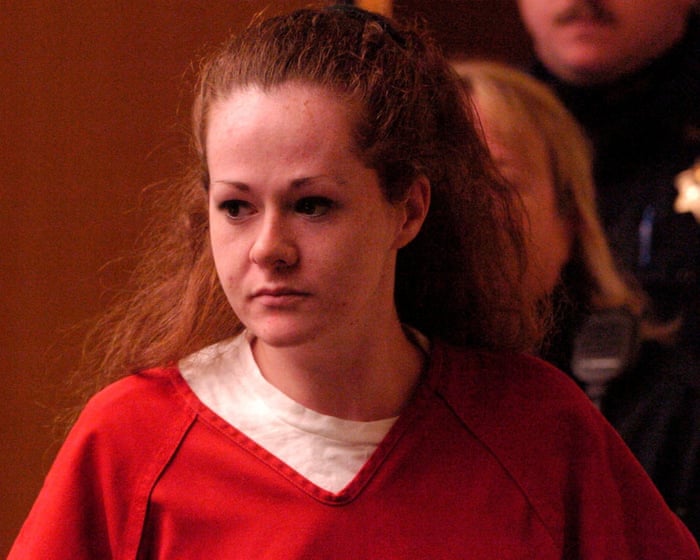
Tennessee’s execution team failed to properly insert an intravenous (IV) line during the lethal injection of Christa Pike, resulting in her surviving a dose meant to be fatal. Medical experts described the procedure as poorly managed and dangerous, raising serious concerns about the state’s execution practices.
Key Facts
Christa Pike survived a lethal injection that used pentobarbital, a drug meant to cause death by sedation.
The IV team struggled for nearly an hour to find a vein to deliver the drug.
Medical experts called the procedure “malpractice” because it ignored pain signs and used improper needles.
Pike grimaced and complained of burning pain during the injection, but the team continued.
Pike was sentenced to death for a 1995 murder when she was 18 years old.
After the failed execution, Pike spent days on a ventilator and later returned to prison able to talk and walk.
Tennessee has suspended all executions pending a review of the procedure.
Experts criticized Tennessee’s protocol for being poorly written and using needles too small for the task.
Read the Original
Want the full story? Tap a source to open the original
article.
President Donald Trump has supported Senator Susan Collins by promoting a new economic plan to help Maine’s lobster industry and by reducing tariffs on Canadian goods used by local farmers and businesses. Recent polls show the Maine Senate race between Collins and Democrat Troy Jackson is very close.
Key Facts
A Fox News Poll shows Senator Susan Collins and Troy Jackson tied at 49% among likely voters in Maine.
Earlier polls showed Jackson with a small lead, but recent data suggest the race has become closer.
President Trump’s administration introduced the America First Seafood Strategy to support domestic seafood processing and Maine’s lobster fisheries.
There is a $5 billion loan program to help modernize meat and seafood processing industries.
A new voluntary "U.S. Caught Seafood" label will help shoppers identify products caught in the U.S.
Tariffs have been reduced by 50% on some Canadian imports important to Maine farmers and businesses.
Senator Collins is using these changes to highlight her ability to deliver economic benefits despite President Trump’s unpopularity in Maine.
Democrats argue these tariff relaxations are a last-minute effort to aid Collins’ reelection campaign.
Read the Original
Want the full story? Tap a source to open the original
article.
A man named Ebro Ahmed stopped a school bus in Minnesota after its driver had a medical emergency. He was inspired to act by a verse from the Qu’ran about saving lives and successfully used the bus’s emergency brake to stop it without anyone getting hurt.
Key Facts
The bus driver experienced a medical emergency, likely a seizure, while driving with 19 students on board.
Ebro Ahmed noticed the emergency while outside his family’s store in Saint Paul and quickly jumped onto the moving bus.
Ahmed threw his phone and glasses to the children in the front to free his hands and pulled the emergency brake to stop the bus.
The students were safely transferred to another bus, and the driver was treated at the hospital and released.
Ahmed said he was inspired by a Qu’ran verse meaning saving one life is like saving all humanity.
Ahmed is US-born, and his parents are immigrants from Eritrea; their store faced challenges during President Trump’s immigration policies.
Local media shared surveillance video of the event, which gained widespread attention.
Ahmed received public recognition and a $1,000 donation from a local company for his quick action.
Read the Original
Want the full story? Tap a source to open the original
article.
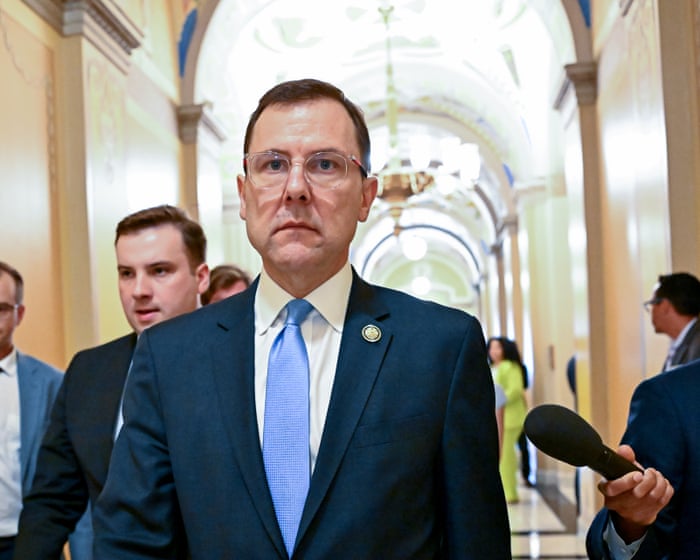
Tom Kean Jr., a Republican congressman from New Jersey, disappeared from public view for over three months, missing 100 votes without explanation. He returned in late June, citing hospitalization for depression, and is now in a close re-election race against Democrat Rebecca Bennett in a district that has recently been rated as favoring Democrats.
Key Facts
Tom Kean Jr. is a Republican congressman from New Jersey’s 7th congressional district.
He had a strong start with over $2.4 million in campaign funds and an endorsement from President Donald Trump.
Kean was missing from Congress and public appearances for over three months, missing 100 votes.
Kean said he was hospitalized for depression during his absence.
The district was redrawn in 2022 to favor Republicans but is now rated as leaning Democratic by the Cook Political Report.
Kean faces a tough race against Democrat Rebecca Bennett, a political newcomer.
Kean’s campaign has been criticized for avoiding the media and refusing to answer some reporters’ questions.
The Republican Speaker of the House, Mike Johnson, expressed sympathy for Kean’s health struggles but suggested Kean should have been more open about his absence.
Read the Original
Want the full story? Tap a source to open the original
article.
Early voting is rising sharply in important states where elections are closely contested. Democrats are currently outpacing Republicans in the number of early votes submitted, which could give them an advantage in the November midterm elections.
Key Facts
Early voting has increased significantly in key battleground states.
In North Carolina, over 1.2 million early ballots have been accepted so far.
This number is 37% higher than at the same time before the 2022 midterm elections.
Democrats are currently casting more early votes than Republicans.
Higher early voting turnout can impact overall election results in these states.
Battleground states are areas where both major parties have a close chance of winning.
The data suggests Democrats may have a turnout advantage this year.
Early voting allows voters to cast ballots before Election Day.
Read the Original
Want the full story? Tap a source to open the original
article.
Democrats are generally favored in the upcoming midterm elections because of problems like rising gas prices and low approval ratings for President Trump. However, in Minnesota’s Senate race to replace Senator Tina Smith, the race is close, with Lieutenant Governor Peggy Flanagan narrowly leading.
Key Facts
Nationally, Democrats have an advantage in the midterm elections.
High gas prices and President Trump’s low approval rating are challenging for Republicans.
Minnesota has an open Senate seat because Senator Tina Smith is retiring.
Lieutenant Governor Peggy Flanagan, a Democrat, is running for the Senate seat.
The race in Minnesota is unexpectedly close despite national trends favoring Democrats.
The competitiveness shows that local factors can influence election outcomes.
Read the Original
Want the full story? Tap a source to open the original
article.
A charity in Shropshire, called Little Stars, is preparing for its Christmas gift campaign to help families who are struggling. They ask people to donate new, unwrapped toys, which will be wrapped and given to children and pregnant women in need.
Key Facts
The charity Little Stars gives free essential items to families who need help.
Their Christmas campaign is called Santa's Little Stars and runs from October 24 to December 4.
People can donate new, unwrapped toys at specific places in Shrewsbury's Darwin shopping centre.
Gifts are given to children from birth up to 17 years old and to pregnant women referred to the charity.
In 2023, it was the charity’s biggest campaign year so far.
Since 2020, the campaign has given out over 8,000 presents to more than 2,100 children.
Donation points include shops like The Collective, The Entertainer, Home Bargains, and Clarks Shoes.
The charity expects high demand this year because many families still face money problems.
Read the Original
Want the full story? Tap a source to open the original
article.
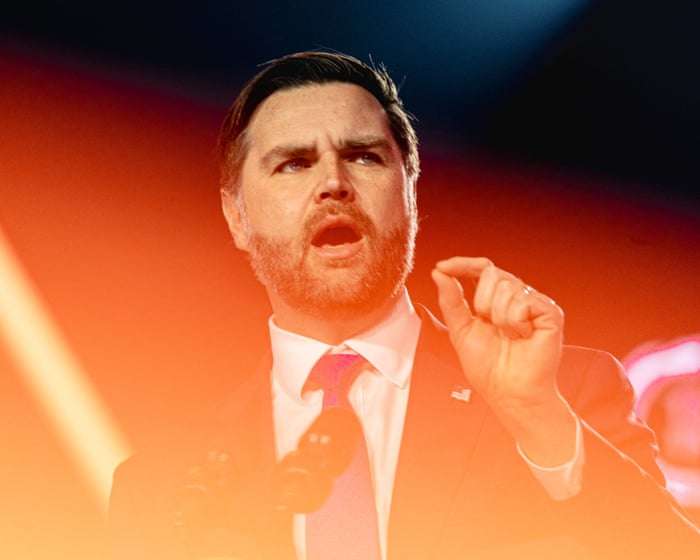
Vice-President JD Vance has been actively campaigning for Republican candidates ahead of the midterm elections and is gaining attention as a potential 2028 presidential candidate. President Donald Trump praised Vance but confirmed they have not discussed a presidential endorsement yet.
Key Facts
JD Vance became Vice-President in 2024, after serving two years as a U.S. senator.
Vance has been campaigning in many states to support Republican efforts in the midterm elections.
President Trump described Vance as talented and good but said they have not talked about a presidential endorsement.
Some political experts believe Vance is preparing for a possible presidential run in 2028.
Vance often explains or softens President Trump’s more controversial statements in public.
He recently defended President Trump against accusations of corruption related to cryptocurrency.
Trump’s personal wealth reportedly grew from $2.3 billion in 2024 to $6.5 billion this year.
Vance has promoted Trump’s agenda while building connections with state and congressional candidates.
Read the Original
Want the full story? Tap a source to open the original
article.
Ten days before the U.S. midterm elections, polls show that Democrats are likely to win the House of Representatives and are competing closely with Republicans for control of the Senate. Control of Congress will affect the lawmaking process and how President Donald Trump’s actions are reviewed during his last two years in office.
Key Facts
Democrats have about a 95% chance to win the House and around a 76% chance to win the Senate, according to the Silver Bulletin forecast.
Other poll trackers like VoteHub, Decision Desk HQ, and RealClearPolling show a tighter race for the Senate.
Control of Congress affects which party leads committees and oversees the president’s work.
Key Senate races in Alaska, Iowa, Kansas, Ohio, Maine, Michigan, South Carolina, and Texas are very close, with less than a 4-point difference in polls.
Democrat Mary Peltola leads in Alaska’s ranked-choice voting contest, competing against Republican incumbent Dan Sullivan.
In Iowa, Democrat Josh Turek and Republican Ashley Hinson are running a close race.
Kansas and Ohio also have competitive Senate races with small leads for Democrats.
These election results will influence how much power each party has over the next two years of President Trump’s term.
Read the Original
Want the full story? Tap a source to open the original
article.
The Department of Veterans Affairs (VA) will pay November 2026 disability benefits early on October 30 since November 1 is a Sunday, with the December payment on December 31. Veterans will also see a 3.6% cost-of-living raise in 2027, the largest increase since 2023, pending congressional approval.
Key Facts
VA disability payments are normally made on the first day of each month for the previous month’s benefits.
November 2026 payments will be sent on Friday, October 30, because November 1 falls on a Sunday.
December 2026 payments will come on Thursday, December 31, since January 1, 2027, is a federal holiday.
Over six million veterans receive tax-free monthly disability benefits based on the severity of their service-related conditions.
Disability ratings range from 10% to 100%, with higher ratings leading to higher benefit amounts.
Veterans rated 100% disabled with no dependents currently receive about $3,938 per month.
The VA expects a 3.6% cost-of-living increase for 2027, which would raise benefits beginning December 1, 2026, if Congress approves.
The VA recently processed a record number of disability claims in the 2026 fiscal year, over 3.1 million claims.
Read the Original
Want the full story? Tap a source to open the original
article.
The article discusses current political debates in the United States about women's rights, gender identity, border security, and legal accountability. It highlights conflicts between different political views on these topics, including legislation on women’s sports, immigration enforcement, and investigations involving political figures.
Key Facts
Some activists criticize an ad with actress Sydney Sweeney for promoting harmful beauty standards.
Debates exist over whether women’s empowerment is shown by displaying the body or if this is seen as exploitation.
Many Democrats voted against the Protection of Women and Girls in Sports Act, while all Republicans supported it.
Payton McNabb testified that competing against male athletes in girls’ sports caused her serious injury.
There are concerns about border security after violent crimes committed by some people who entered the country illegally.
Democratic leaders condemned an FBI search of Representative Ilhan Omar, while they supported a similar search of President Donald Trump.
The article argues that political reactions to legal investigations vary depending on who is targeted.
The author suggests Democrats lack a clear and consistent platform for women’s issues.
Read the Original
Want the full story? Tap a source to open the original
article.
Data centers for artificial intelligence are being built in many parts of Ohio, especially around Columbus. The issue of data center construction has become a big topic in the Ohio Senate race because many local voters are worried about problems like noise, pollution, and higher utility bills. Both candidates, Senator Jon Husted and former Senator Sherrod Brown, have discussed the need for rules about data centers.
Key Facts
Data centers are important for AI and seen by supporters as sources of good jobs, some unionized.
Critics say data centers cause noise, pollution, use lots of water, and increase electricity costs.
Activist Erin Brockovich created a map showing many large, AI-focused data centers in Ohio.
Smaller data centers not on the map are also found throughout the state.
A poll found 75% of Ohio voters do not want data centers built in their communities.
Around 63% of voters oppose data centers being built anywhere in Ohio.
78% support a temporary ban on new data center construction until more is known about their effects.
Most AI data centers are located near Columbus in Franklin, Licking, and Union counties.
Read the Original
Want the full story? Tap a source to open the original
article.
Kentucky’s 6th Congressional District race is an early and competitive House election that may indicate how well Republicans are doing nationwide. Democrat Zach Dembo is leading Republican Ralph Alvarado in recent polls, challenging the GOP’s hold on a district that voted heavily for President Donald Trump in 2024.
Key Facts
Kentucky’s 6th District race closes polls at 6 p.m. Eastern Time on November 3, making it one of the first competitive House races reported.
The district supported President Donald Trump by 15 points in the 2024 election.
Democrat Zach Dembo is currently ahead in polls sponsored by Democratic groups, with leads ranging from 2.9 to 6 points over Republican Ralph Alvarado.
Incumbent Republican Representative Andy Barr did not run for re-election because he is running for the U.S. Senate seat vacated by Mitch McConnell.
Political expert D. Stephen Voss says even a close Republican win in this district may signal problems for the GOP in the national elections.
Both campaigns expect the race to be very close, indicating competitive voter interest.
Independent and other minor party candidates are running but receive smaller shares of support in polls.
Dembo emphasizes voters’ frustration with current economic issues like gas and grocery prices, promising to be an independent voice regardless of party.
Read the Original
Want the full story? Tap a source to open the original
article.
President Barack Obama is campaigning in Michigan and Ohio to support Democratic Senate candidates Abdul El-Sayed and Sherrod Brown. These visits come just 10 days before the midterm elections that could affect control of the U.S. Senate.
Key Facts
Obama is campaigning in Detroit for Abdul El-Sayed and in Cleveland for Sherrod Brown.
Michigan and Ohio are key Rust Belt states that have changed politically since Obama left office.
Ohio is now mostly Republican, while Michigan has shifted between Trump and Biden in recent elections.
Obama remains popular, with positive approval ratings even in Ohio.
El-Sayed criticized Obama's past policies but has engaged with him recently to unite Michigan Democrats.
El-Sayed is behind in voter support in Detroit, especially among Black voters, a key group in the city.
Obama last campaigned in Detroit in October 2024 for Vice President Kamala Harris.
Early voting is open in Michigan, and the campaign aims to increase early voter turnout.
Read the Original
Want the full story? Tap a source to open the original
article.
President Donald Trump’s approval rating among city voters has improved by 20 points from July to October, according to Echelon Insights polling. Although he remains unpopular in cities, this change could impact key midterm elections in states like Georgia and Michigan.
Key Facts
Trump’s urban approval rating increased from 23% in July to 33% in October.
Disapproval in cities dropped from 76% in July to 66% in October.
The 20-point net approval gain combines a 10-point approval rise and a 10-point disapproval decline.
This shift might influence November 3 midterm races, especially in cities like Atlanta and Detroit.
Reasons for change may include local crime improvements, GOP advertising, and shifts in urban voter groups.
The October poll included 1,010 likely voters nationwide, with a 3.6% margin of error overall.
Experts caution the urban sample size is small, so results may be less precise.
Despite the improvement, Trump is still less popular in cities compared to overall national approval.
Read the Original
Want the full story? Tap a source to open the original
article.
The U.S. Department of Justice has sued to delay the certification of Alaska’s Senate election results if Senator Dan Sullivan loses narrowly to Democrat Mary Peltola. The lawsuit focuses on the presence of a second candidate also named Dan Sullivan on the ballot, which the DOJ says might confuse voters.
Key Facts
Alaska’s Senate election on November 3 includes incumbent Republican Dan Sullivan and Democrat Mary Peltola.
There is a second candidate named Daniel J Sullivan Jr, a retired teacher and former Forest Service worker, also on the ballot.
The Alaska Supreme Court allowed both candidates named Sullivan to remain on the ballot.
The ballot lists the incumbent as “Sullivan, Dan S (Registered Republican) Incumbent” and the other as “Sullivan, Daniel J Jr” with no party shown.
The Department of Justice argues that having two candidates with similar names could mislead voters and wants to delay certifying results if the incumbent loses by fewer votes than the second Sullivan receives.
Alaska election officials originally disqualified Daniel J Sullivan Jr, but courts overturned that decision.
Political experts disagree on how much the name confusion might affect voters and the election outcome.
The lawsuit cited the National Voter Registration Act as the legal basis for intervention.
Read the Original
Want the full story? Tap a source to open the original
article.
Republican Ohio governor candidate Vivek Ramaswamy released an attack ad against Democrat Amy Acton, featuring Acton's estranged mother accusing her of lying about her childhood. The ad caused controversy within the Republican Party, with some leaders calling for its removal, while President Trump supports it.
Key Facts
The ad shows Amy Acton’s mother accusing Acton of lying about her past and mental health.
Acton and her mother have been estranged since 1978 after Acton was removed from her mother’s custody due to abuse by her stepfather.
Court records and reports back Acton’s story, contradicting her mother’s claims in the ad.
Ramaswamy’s campaign confirmed the ad and plans to spend $4 million promoting it.
Acton’s campaign responded with a video of her brother describing the abuse Acton faced as a child.
Some senior Republicans, including Ohio Governor Mike DeWine, find the ad troubling and want it withdrawn.
President Trump and Vice President JD Vance support the ad and Ramaswamy’s decision to continue it.
The controversy highlights a split within the Republican Party between Trump supporters and traditional members.
Read the Original
Want the full story? Tap a source to open the original
article.
Greg Bovino, former US border patrol chief, said the Trump administration’s withdrawal of agents from Minneapolis was a "surrender" and defended the operation despite two fatal shootings during it. The family of one victim has filed lawsuits claiming wrongful death and civil rights violations, while Bovino criticizes the legal actions and supports tougher immigration enforcement.
Key Facts
Greg Bovino was the US border patrol chief during the Minneapolis deportation operation earlier this year.
Two US citizens, Renee Good and Alex Pretti, were shot and killed during the operation.
Video of the shootings caused protests and backlash from both political parties.
President Trump ordered a reduction of immigration agents in Minneapolis after the shootings.
Renee Good’s family has filed lawsuits against the Trump administration for wrongful death and civil rights violations.
Bovino says the withdrawal from Minneapolis was a “surrender” and regrets not arresting more undocumented immigrants.
Bovino was removed from his role soon after the shootings but has not received an official reason.
The White House calls the lawsuits “baseless” and defends its immigration agents.
Read the Original
Want the full story? Tap a source to open the original
article.