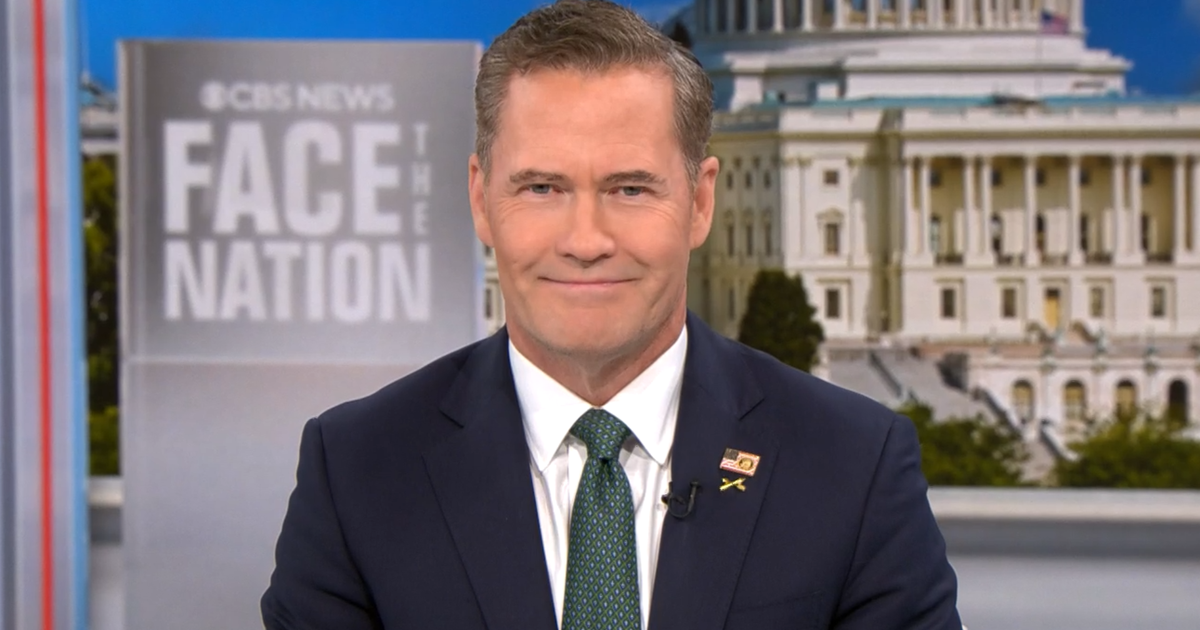
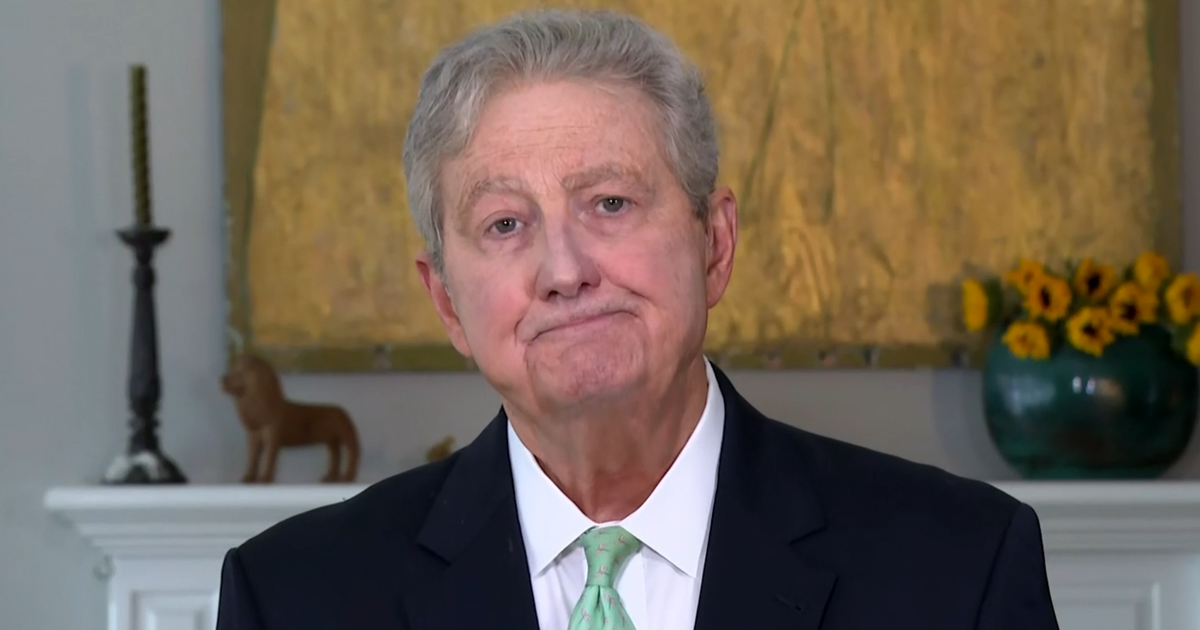
Senator John Kennedy said President Donald Trump supports daily attacks on Iran and wants to keep pressure on the country. Kennedy also suggested continuing a blockade to cut off supplies to Iran.
Key Facts
Senator John Kennedy spoke about Iran and U.S. actions on CBS News’s “Face the Nation.”
Kennedy stated that President Trump likes daily strikes on Iranian targets.
The strikes had paused over the weekend after nearly two weeks of attacks.
Kennedy suggested maintaining a blockade to starve Iran of resources.
He used a phrase about “killing a few chickens to scare the monkeys” to describe the strategy.
The focus is on pushing Iran to change its behavior through pressure and military actions.
Kennedy’s comments reflect support for a hard line on Iran’s infrastructure.
Read the Original
Want the full story? Tap a source to open the original
article.
Senator John Kennedy, a Republican, expressed discomfort with President Donald Trump’s new civilian nuclear deal with Saudi Arabia, mainly due to concerns about timing. The deal requires Saudi Arabia to normalize relations with Israel before proceeding and is now under review by Congress.
Key Facts
Senator John Kennedy said he is not comfortable with the Saudi nuclear deal "right now."
The deal was announced by President Donald Trump and aims to create civilian nuclear cooperation with Saudi Arabia.
Trump added a condition that Saudi Arabia must normalize relations with Israel before the deal moves forward.
Kennedy worries the deal sends mixed messages because the U.S. is still involved in conflict with Iran over nuclear weapons issues.
Kennedy supports pressuring Iran through sanctions and military means but opposes a larger ground war.
The deal must pass congressional review before becoming official.
Supporters say it will strengthen ties with Saudi Arabia and help U.S. companies in Saudi's nuclear energy sector.
Critics worry Saudi Arabia could use the civilian program as a step toward developing nuclear weapons.
Read the Original
Want the full story? Tap a source to open the original
article.
The U.S. recently paused airstrikes against Iran to allow time for diplomatic talks. U.S. Ambassador Mike Waltz said President Donald Trump is supporting peace efforts while still sending more military resources to the region.
Key Facts
The U.S. stopped strikes on Iran for two days after 13 days of continuous bombing following a ceasefire collapse in early July.
Iran also paused its attacks during this break in violence.
Talks between Iranian and Omani officials have been described as constructive.
Ambassador Mike Waltz praised Oman’s role in facilitating these discussions.
Waltz said the U.S. has enough weapons and is moving more military assets to the Middle East.
Recent reports show concerns within the Trump administration about running low on advanced weapons due to the fast pace of usage.
Most Americans feel uncertain or frustrated about the conflict, though they want to keep the Strait of Hormuz open and stop Iran’s nuclear threats.
Senators Bernie Sanders and John Kennedy expressed opposing views on how the U.S. should respond to Iran, with Sanders favoring diplomacy and Kennedy supporting continued pressure and limited military action.
Read the Original
Want the full story? Tap a source to open the original
article.
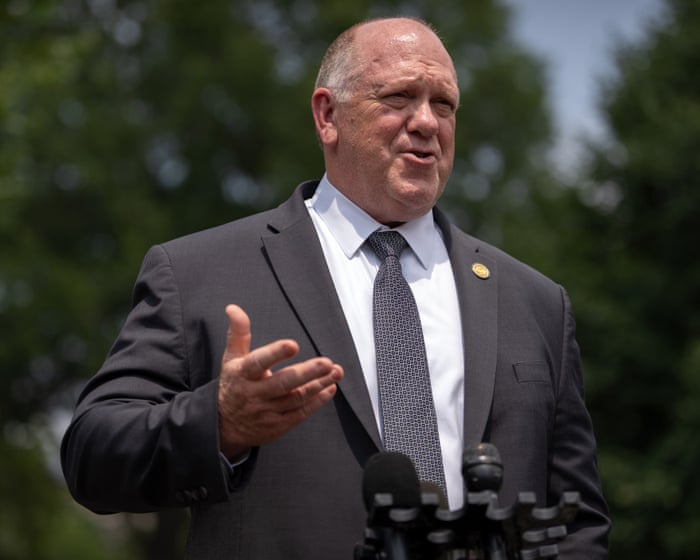
Tom Homan, a former Trump administration border official, said an ICE officer involved in a deadly shooting in Maine likely should not have passed the agency’s background check. The officer, identified by media as David Brouillette, faces allegations of abuse from two ex-wives, raising questions about ICE’s hiring and vetting process, which is now under investigation.
Key Facts
Tom Homan said the ICE officer should not have passed vetting if abuse allegations were true.
The officer is linked to the fatal shooting of a 25-year-old Colombian man, Joan Sebastián Durán Guerrero, in Maine on July 13.
Two of the officer’s ex-wives publicly accused him of abuse and controlling behavior.
ICE’s vetting process is being investigated to find out how this officer was hired.
Democrats are calling for a review of ICE’s hiring and training procedures after this shooting.
There was no body camera footage from this or a recent Texas ICE officer shooting.
ICE has announced it will now require body cameras during vehicle stops.
In a related Texas case, a substance found was tested and found not to be drugs, contrary to an FBI search claim.
Read the Original
Want the full story? Tap a source to open the original
article.
The U.S. has paused airstrikes in its ongoing war with Iran for two days as diplomatic talks show some progress. President Donald Trump faces low approval ratings on the conflict, while Congress considers emergency funding to support the war effort and related government expenses.
Key Facts
The U.S.-Iran war has lasted nearly five months with continued military strikes until a recent two-day pause.
Diplomatic negotiations involving Oman and Iran aim to reopen the Strait of Hormuz, an important oil shipping route.
A CBS News poll found about two-thirds of Americans want to end the war now; only 35% approve of President Trump's handling of it.
The Pentagon requested $67 billion in emergency funding for the military and resupplying weapons due to the war.
Senator Bernie Sanders called the war unconstitutional and urged negotiation to end the conflict quickly.
Polling shows neither President Trump and Republicans nor Democrats have a strong lead in public opinion on handling the Iran war.
Rising oil prices reflect geopolitical tensions linked to the conflict.
Congress faces pressure to approve funding both for the war and other government priorities, including health care and housing.
Read the Original
Want the full story? Tap a source to open the original
article.
Senator John Kennedy said that Senate Majority Leader John Thune is being too careful in talks with Senate Democrats to prevent a government shutdown at the end of September. Kennedy expressed his support for Thune but suggested a more aggressive approach might be needed to reach an agreement.
Key Facts
Senator John Kennedy criticized Senate Majority Leader John Thune for being too cautious in negotiations.
The talks involve Senate Democrats and focus on avoiding a government shutdown.
The deadline for the government funding to continue is at the end of September.
Kennedy said he respects Thune and called him a smart leader.
The discussion centers around agreements needed to keep the federal government running.
A government shutdown would occur if Congress does not pass funding bills on time.
Both parties are trying to find common ground to prevent disruptions in government services.
Read the Original
Want the full story? Tap a source to open the original
article.
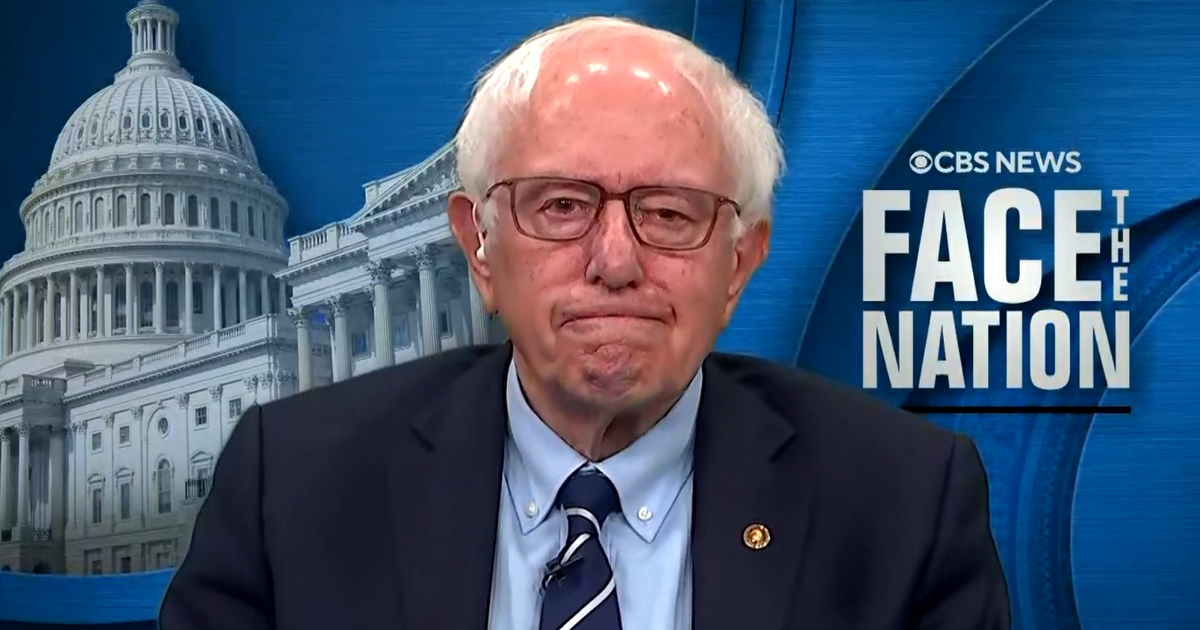
Senator Bernie Sanders supports progressive candidates running in the 2026 midterm elections and says polls show voters want change. He expressed concern about large amounts of money being spent to back establishment candidates but remains hopeful about the progressives’ chances in key Senate races.
Key Facts
Bernie Sanders praised progressive candidates ahead of the 2026 midterm elections.
He said polls show voters are tired of the current political system and want change.
Sanders mentioned Michigan’s Abdul El-Sayed and Minnesota’s Peggy Flanagan as key Senate candidates.
Large sums of money from super PACs are supporting establishment candidates opposing progressives.
Sanders believes progressive candidates can attract working-class voters, including some Republicans.
Sanders addressed controversies around Maine candidate Graham Platner and supports Troy Jackson, who took Platner’s place.
He acknowledged internal Democratic Party divisions but said progressives are winning support nationwide.
Sanders did not regret initially supporting Platner and said his endorsed candidates stand for working-class interests.
Read the Original
Want the full story? Tap a source to open the original
article.
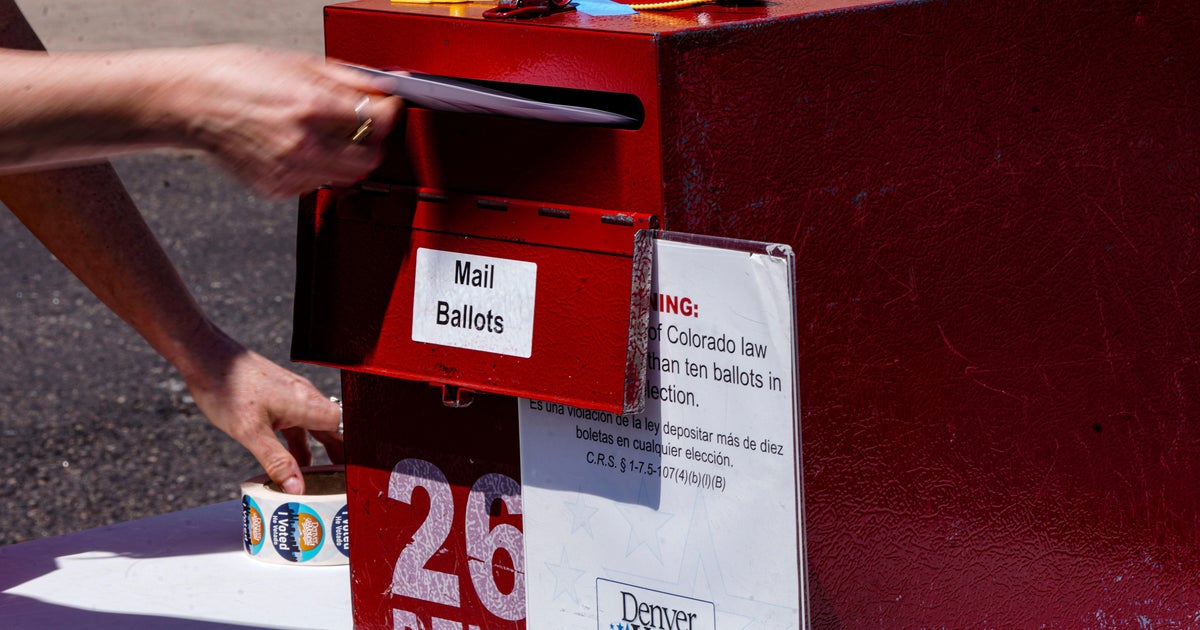
A U.S. appeals court confirmed a previous decision that blocked President Trump's order to limit mail-in voting to people on a government-created voter list in 23 states. The order aimed to prevent non-citizens from voting but was found to overstep the president’s authority to set election rules.
Key Facts
The 1st U.S. Circuit Court of Appeals upheld a ban on enforcing Trump’s mail-in voting restrictions.
The order required a list of eligible voters made by citizenship and limited mail ballots to those on the list.
23 states and the District of Columbia sued against the order before the November midterm elections.
A federal judge in Boston blocked the order in June, ruling it unconstitutional.
The judge said only states and Congress can set election rules, not the president.
President Trump claimed the order would prevent cheating by non-citizens voting by mail.
State election officials said the order could cause confusion and problems during voting.
The White House and Justice Department did not comment immediately after the appeals court ruling.
Read the Original
Want the full story? Tap a source to open the original
article.
Pop singer Katy Perry criticized the Trump White House for using her song "Firework" in a TikTok video showing U.S. military strikes on Iranian targets without her permission. She said her song is meant to inspire hope and strength, not support violence. Perry is one of several artists who have objected to the Trump administration’s unauthorized use of their music in government videos.
Key Facts
The White House used Katy Perry’s song "Firework" in a TikTok video of U.S. missile strikes on Iran.
Katy Perry said she did not approve or condone the use of her song in this context.
Perry described her song as an anthem of hope and healing, not to promote violence.
Other artists like Olivia Rodrigo, Beyoncé, Kesha, Sabrina Carpenter, Ariana Grande, and Jess Glynne have also criticized the Trump administration for similar unauthorized uses of their music.
The White House TikTok account was started in August 2025, during President Trump’s second term.
The U.S.-Iran conflict saw 14 U.S. service member deaths and 420 wounded, but casualty numbers are disputed.
The Trump administration is treating recent airstrikes on Iran as part of a new campaign, separate from the previous one named Operation Epic Fury.
Katy Perry is in a relationship with former Canadian Prime Minister Justin Trudeau, who has had conflicts with President Trump.
Read the Original
Want the full story? Tap a source to open the original
article.
Senator Bernie Sanders dismissed a warning from Rahm Emanuel, who said that Sanders' supporters, called "Bernie Bros," could harm the Democratic Party's chances in the upcoming midterm elections. Sanders acknowledged there are divisions within the Democratic Party but did not agree with Emanuel’s prediction.
Key Facts
Senator Bernie Sanders spoke on CBS News' "Face the Nation."
Rahm Emanuel, former U.S. Ambassador to Japan, wrote an opinion piece in the Wall Street Journal.
Emanuel warned that "Bernie Bros" might hurt the Democratic Party's success in midterms.
Sanders dismissed Emanuel’s warning and said the Democratic Party has strong divisions.
The discussion focused on internal disagreements in the Democratic Party before the midterm elections.
Sanders is an Independent senator from Vermont who often works with Democrats.
The term "Bernie Bros" refers to some vocal supporters of Sanders.
Read the Original
Want the full story? Tap a source to open the original
article.
Life expectancy in England has reached a record high, but the gap between the north and south of the country has grown. People in northern regions have seen little or no improvement in how long they live, compared to those in the south who have gained more years on average.
Key Facts
Life expectancy in England in 2025 is around 80 years for men and nearly 84 years for women.
People in London live about three years longer than those in the north-east of England.
The north of England, including regions like the north-west and Yorkshire, showed little or no life expectancy increase in the past decade.
Northern regions have higher rates of diseases like heart disease and cancer, as well as suicides and deaths from alcohol and drug misuse.
Life expectancy in deprived areas has fallen or stayed the same, while it improved slightly in less deprived areas.
Healthy life expectancy (years lived in good health) has fallen in all regions, with people spending roughly 2.5 more years in poor health than before.
The government aims to reduce health inequalities and increase healthy life expectancy but faces challenges due to wider social issues like housing, jobs, and pollution.
Health experts say more focus on public health and prevention is needed rather than just treating sickness and reducing hospital waiting times.
Read the Original
Want the full story? Tap a source to open the original
article.
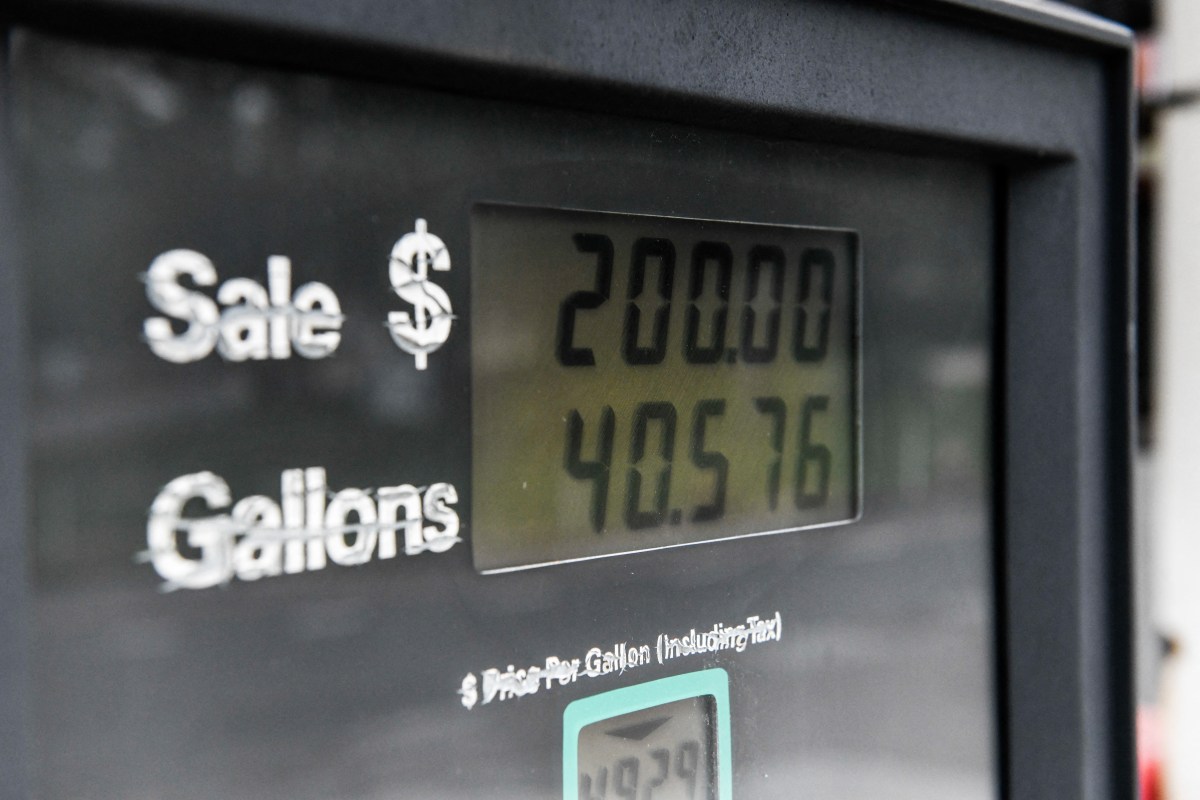
Gas prices in 28 U.S. states have risen above $4 per gallon, due in part to conflicts involving the U.S. and Iran. This increase presents a challenge for President Donald Trump as the midterm elections approach in about 100 days.
Key Facts
Gasoline costs more than $4 per gallon in 28 states, including important election battlegrounds like Michigan, Maine, and New Hampshire.
The national average gas price is about $4.11 per gallon.
Michigan’s gas price is $4.23, Maine’s is $4.10, and New Hampshire’s is $4.06.
Key Senate races are open in Michigan, Maine, and New Hampshire, where gas prices are notably high.
Prices in Georgia and Ohio remain just below $4 per gallon but are close.
California has the highest average gas price at $5.64 per gallon; Indiana has the lowest at $3.51.
U.S. and Israeli airstrikes on Iran and Iran’s blockade of oil shipping routes have caused oil prices to rise sharply.
The U.S. military is working to stop attacks on oil shipping routes to try to lower gas prices again.
Read the Original
Want the full story? Tap a source to open the original
article.
A federal appeals court has kept in place a ruling that stops President Donald Trump’s order to create a federal list of eligible voters and restrict mail ballot delivery only to people on that list. The court ruling affects 23 states and the District of Columbia that sued to block the order before the November midterm elections.
Key Facts
President Trump issued an executive order to create a “state citizenship list” of voters using federal agencies.
The order also instructed the U.S. Postal Service to send mail ballots only to people on that list.
The goal was to prevent non-U.S. citizens from voting, according to the Trump administration.
Officials from 23 states and D.C. challenged the order, calling it unconstitutional because election rules belong to states and Congress, not the president.
A federal judge blocked the order before the midterm elections, but only in the suing states.
The 1st U.S. Circuit Court of Appeals upheld that block, keeping the order from going forward in those states.
The White House and Justice Department did not comment immediately after the court’s decision.
Read the Original
Want the full story? Tap a source to open the original
article.
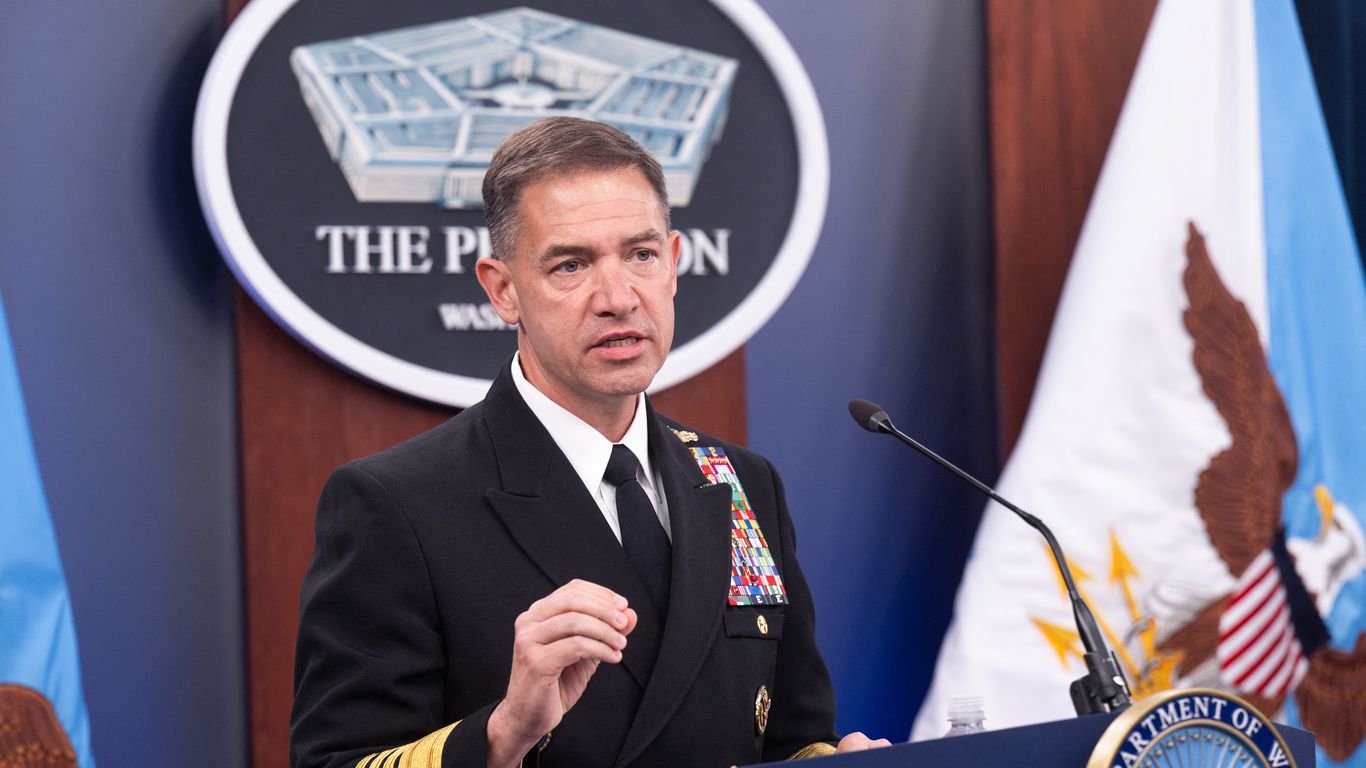
Admiral Brad Cooper, the top U.S. military commander in the Middle East, advised stopping the bombing campaign near the Strait of Hormuz because it had reached its limit. President Donald Trump paused air strikes against Iran in that area after meeting with advisers and military officials.
Key Facts
Admiral Brad Cooper commands U.S. Military Central Command (CENTCOM) in the Middle East.
Cooper recommended ending the bombing around the Strait of Hormuz since the targets had mostly been hit.
President Trump paused U.S. strikes against Iranian targets near the Strait of Hormuz after receiving advice from military leaders.
The bombing campaign had lasted about two weeks and significantly reduced Iran’s ability to attack ships.
General Dan Caine warned that a shortage of air defense interceptors might limit protection for U.S. forces and allies.
Iran and Oman are negotiating a deal to reopen the strait safely for ship transit.
The U.S. and U.K. plan to hold an international conference to form a coalition to protect and clear mines from the strait.
President Trump is keeping all options open but is also allowing space for talks with Iran.
Read the Original
Want the full story? Tap a source to open the original
article.
Senator Bernie Sanders spoke about the ongoing war in Iran, calling it illegal and urging for negotiations to end it quickly. He also discussed his support for progressive candidates in upcoming midterm elections, highlighting challenges they face from well-funded establishment opponents.
Key Facts
Defense Secretary Pete Hegseth requested $67 billion for emergency war funding, including troop pay and munitions.
Senator Sanders opposes the war in Iran, calling it unconstitutional and illegal.
Sanders supports negotiating to end the war quickly to stop economic harm like rising gas prices.
Polling shows low approval ratings for President Trump and Democrats on their handling of Iran.
Sanders campaigns for progressive candidates like Troy Jackson in Maine, Abdul El-Sayed in Michigan, and Peggy Flanagan in Minnesota.
Jackson replaced scandal-plagued Graham Platner in Maine’s primary.
Sanders notes opposition from billionaire-funded super PACs spending large sums to support establishment candidates.
Sanders says the wealthy elite are increasing economic inequality while many people struggle with basic needs.
Read the Original
Want the full story? Tap a source to open the original
article.
President Donald Trump and Secretary of Defense Pete Hegseth attended the dignified transfer ceremony for four U.S. soldiers who died in the Middle East. These soldiers were killed last week as tensions with Iran increased.
Key Facts
Four U.S. soldiers were killed in the Middle East last week.
Their deaths occurred during rising conflict with Iran.
President Donald Trump attended the dignified transfer ceremony.
Secretary of Defense Pete Hegseth also took part in the ceremony.
The dignified transfer honors fallen military members by respectfully returning their remains.
The event was reported by CBS News.
Read the Original
Want the full story? Tap a source to open the original
article.
Senator Bernie Sanders said he does not regret supporting Graham Platner, a former Maine Senate candidate, despite accusations of sexual assault against Platner. These accusations caused Platner to end his campaign.
Key Facts
Bernie Sanders is a Senator from Vermont.
Sanders supported Graham Platner in the Maine Senate race.
Platner is a Democrat and former candidate for the Senate.
Platner faced accusations of sexual assault from a former girlfriend.
The accusations led Platner to stop running for the Senate.
Sanders confirmed his support for Platner during an interview on "Face the Nation."
The interview was with CBS News’s Margaret Brennan.
Read the Original
Want the full story? Tap a source to open the original
article.
Senator John Kennedy, a Republican from Louisiana, spoke about concerns over a new Saudi civil nuclear deal and U.S. involvement in the conflict with Iran during an interview on July 26, 2026. He expressed caution about approving the Saudi deal now due to global tensions and discussed the need for clearer communication about the ongoing Iran conflict and related U.S. military actions.
Key Facts
Senator John Kennedy is concerned about a Saudi civil nuclear deal because it could lead to nuclear weapons development and increase global tensions.
He opposes approving the Saudi deal at this time, citing the unstable global situation, including conflicts in Ukraine and the Middle East.
President Trump has made the Saudi deal conditional on Saudi Arabia recognizing Israel, which Kennedy doubts will happen soon.
Kennedy questioned Defense Secretary Pete Hegseth over a $67 billion funding request related to the Iran conflict and emphasized the need for more detailed, classified briefings.
He supports the President’s policy in Iran but notes the importance of better messaging and communication about the reasons for U.S. involvement.
Kennedy suggested tightening sanctions on Iranian oil sales and maintaining a blockade to pressure Iran.
He raised questions about ending the blockade and withdrawing troops from Iran but is not advocating for that action.
Kennedy criticized some Democrats’ calls for an immediate end to the Iran conflict as a mistake.
Read the Original
Want the full story? Tap a source to open the original
article.
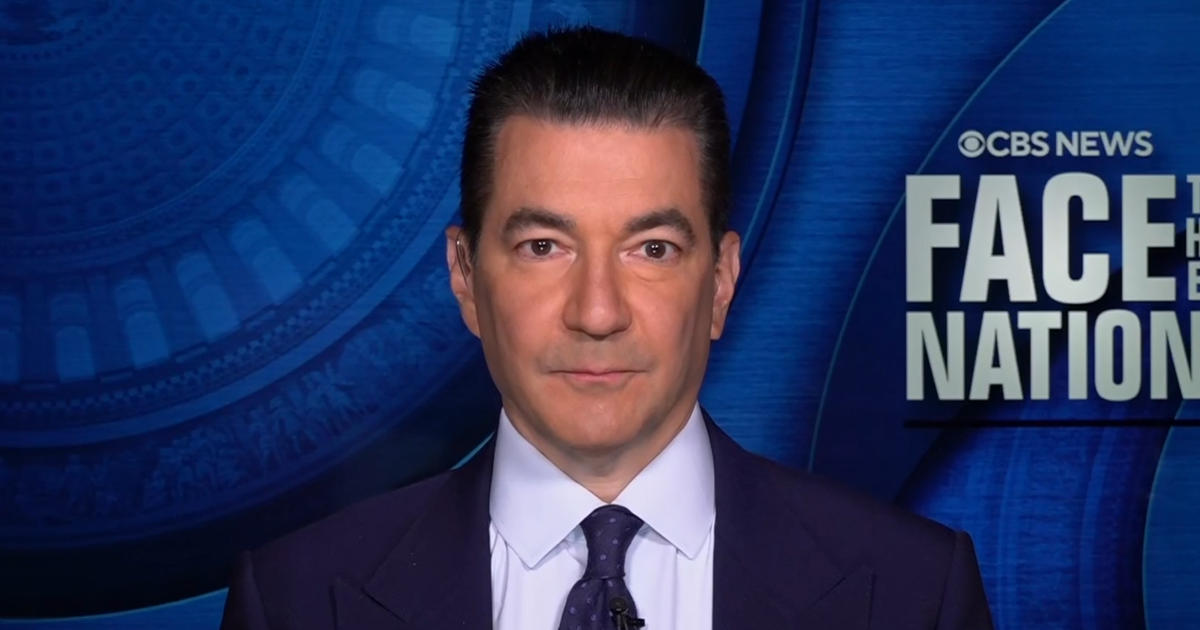
Dr. Scott Gottlieb, former FDA commissioner, discussed a big outbreak of a foodborne illness called cyclospora linked mostly to farms in central Mexico. He said the FDA has done well to find the source but the outbreak is not fully controlled yet, and communication from the FDA to the public could be clearer.
Key Facts
Cyclospora outbreaks are happening in nine U.S. states and linked mainly to central Mexico farms.
The parasite mainly spreads through human fecal contamination, possibly sewage on crops.
The FDA quickly isolated the likely source, helping reduce risk by cutting supplies from affected farms.
There is no good test to detect cyclospora in food.
Consumers can reduce risk by buying whole heads of lettuce instead of pre-cut bags and buying locally grown produce.
Mexican health officials deny responsibility for the contamination.
Many Americans lack confidence in the FDA’s handling of the outbreak, with 47% expressing doubt.
Taylor Farms, a company involved in the outbreak, contacted the White House to delay a recall announcement, which is unusual.
Read the Original
Want the full story? Tap a source to open the original
article.
A strong heat wave is affecting central and southern parts of the United States for the second day in a row, with temperatures and humidity at dangerous levels. The hot weather is caused by a heat dome, which traps heat in the area, and is expected to stay for most of the week.
Key Facts
Tens of millions of people are under extreme heat warnings in central and southern U.S. regions.
Heat indexes (how hot it feels when humidity is included) are over 105°F (40.5°C) from Memphis to Montana to Las Vegas.
Some areas in the Southwest could see temperatures near 120°F (49°C).
A heat dome is causing the high temperatures by trapping heat in the atmosphere.
The heat wave is expected to remain mostly in place throughout the week.
Children, older adults, and people with medical issues are at higher risk of serious heat-related illness.
Experts suggest using air conditioning, drinking plenty of water, and avoiding direct sunlight.
The first half of 2026 was the second-hottest on record in the continental United States.
Read the Original
Want the full story? Tap a source to open the original
article.