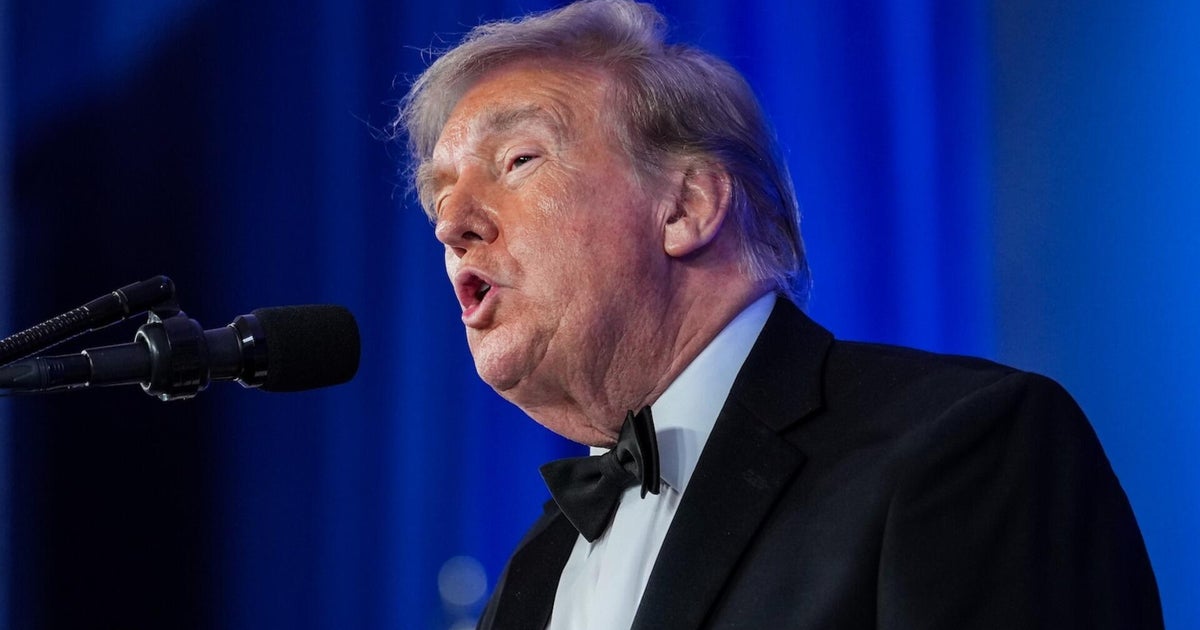
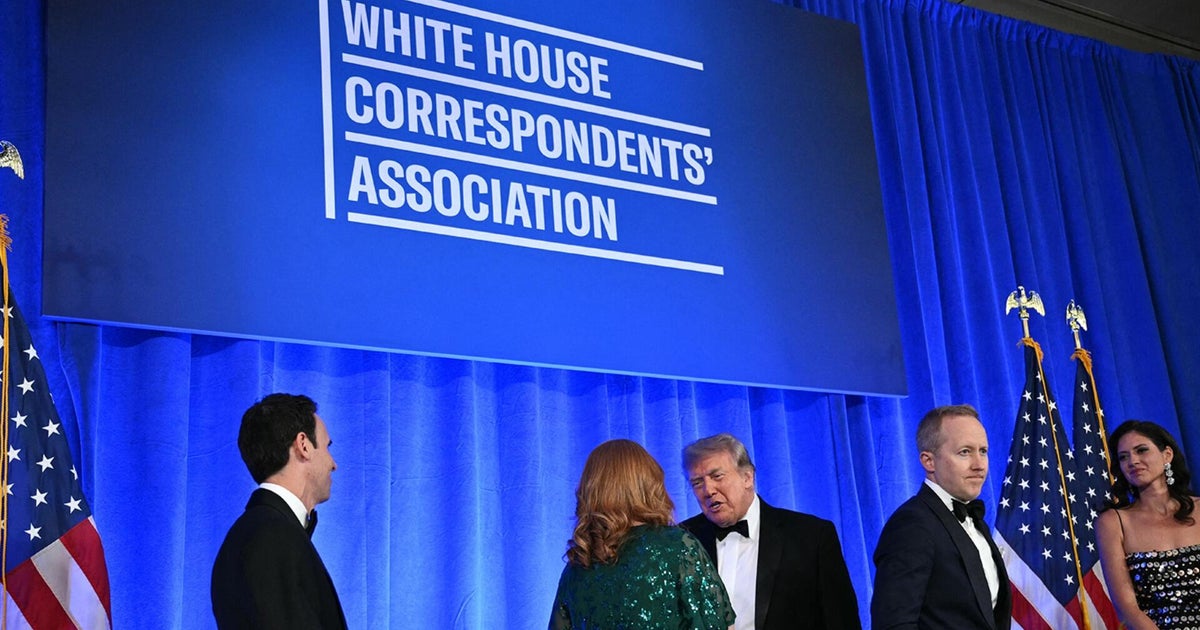
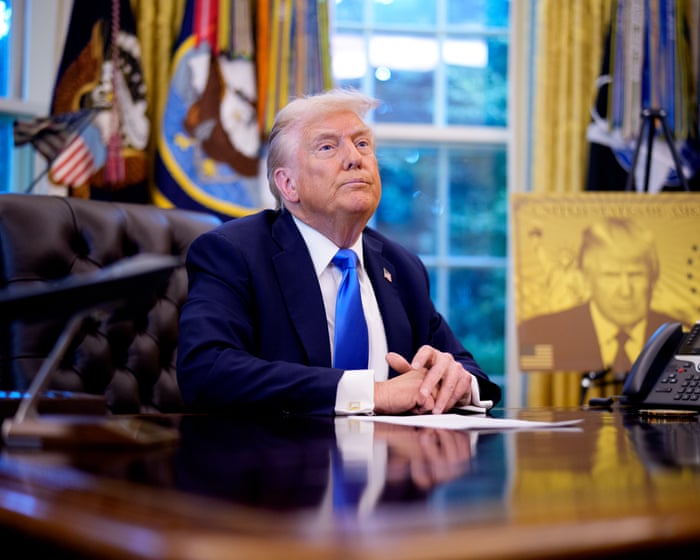
President Donald Trump attended the rescheduled White House Correspondents’ Association dinner three months after a gunman trying to attack him disrupted the original event. At the dinner, Trump spoke about the incident, praised his aides, and made remarks targeting political opponents.
Key Facts
The original White House Correspondents’ dinner in April was stopped because a gunman tried to attack President Trump.
The rescheduled dinner was held at the Waldorf Astoria hotel with about 700 guests, smaller than the first event.
The gunman, Cole Tomas Allen, shot a Secret Service officer and faces federal charges for attempting to kill the president.
President Trump praised aides who showed bravery during the attack.
Trump made jokes about running for a third presidential term, though the Constitution limits presidents to two terms.
Trump used the event to criticize several Democratic politicians with insulting nicknames.
This was Trump's second time attending the dinner; he previously refused to go during his first term.
The White House Correspondents’ Association said the message of the event was to not be intimidated by violence.
Read the Original
Want the full story? Tap a source to open the original
article.
President Donald Trump spoke at the White House Correspondents' Dinner, which was held at the Waldorf Astoria in Washington, D.C. The event was rescheduled after an active shooter disrupted the original dinner in April.
Key Facts
President Trump attended and spoke at the rescheduled White House Correspondents' Dinner.
The event took place at the Waldorf Astoria hotel in Washington, D.C.
The original April dinner was disrupted by an active shooter incident.
The rescheduling allowed the dinner to proceed safely.
The White House Correspondents' Dinner is a traditional event where the president and journalists come together.
Read the Original
Want the full story? Tap a source to open the original
article.
President Donald Trump attended the White House Correspondents' Dinner for the first time as president, condemning political violence that delayed the event. During his speech, he criticized some reporters and Democrats while also praising freedom of speech and democracy.
Key Facts
The dinner was rescheduled after a gunman opened fire outside the originally planned event in April, wounding a Secret Service agent.
President Trump emphasized that political differences should be settled through debate, not violence.
He humorously referenced building the Waldorf Astoria hotel and made jokes about security measures like bulletproof vests.
Trump criticized some reporters by name, including CNN’s Kaitlin Collins and Jake Tapper, calling the latter “Fake Tapper.”
CNN defended its reporters during the speech, citing the U.S. Constitution’s protection of press freedom.
Trump joked about a "gay dictator" running a toppled regime and mentioned journalist Bari Weiss joining CBS News.
The Wall Street Journal received an award for coverage of a letter Trump allegedly wrote to Jeffrey Epstein, which Trump acknowledged with a chuckle.
The speech lasted about an hour, starting lightly but turning confrontational, ending with Trump wearing a “Trump 2028” hat and suggesting he will run for president again.
Read the Original
Want the full story? Tap a source to open the original
article.
The Democratic National Committee (DNC) has recommended making South Carolina the first state to hold its presidential primary in 2028, replacing Nevada. This change could affect candidates from the progressive and democratic socialist wings of the party, as South Carolina's electorate may favor more established candidates.
Key Facts
The DNC's Rules and Bylaws Committee voted to recommend South Carolina as the first primary state in 2028.
This recommendation still needs full DNC approval in August.
South Carolina was moved ahead of Nevada, which previously held the first primary spot.
South Carolina has a large Black voter population that historically favors establishment Democratic candidates.
Early primary wins help candidates gain media attention, fundraising, and voter support.
No incumbent Democratic president is expected to run in 2028, making the primary more open and competitive.
Some experts say this change could make it harder for democratic socialist candidates like Representative Alexandria Ocasio-Cortez to gain early momentum.
The shift has led to speculation that Ocasio-Cortez might run for Senate instead of president in 2028.
Read the Original
Want the full story? Tap a source to open the original
article.
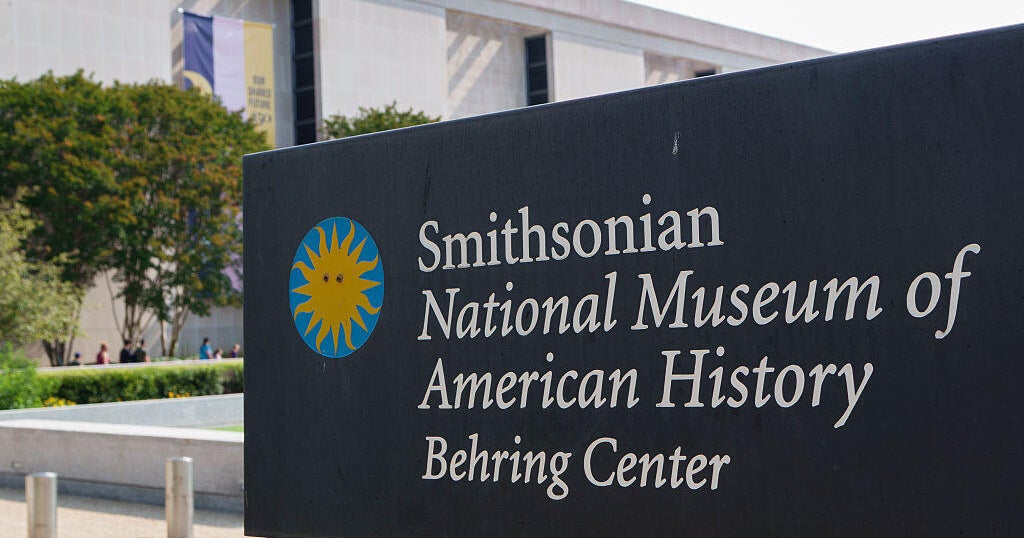
President Donald Trump has ordered the Smithsonian National Museum of American History to put up signs warning visitors that some exhibits contain "inaccurate" information. The order asks the Department of the Interior to guide people to what it calls "accurate information" about U.S. history.
Key Facts
President Trump signed an order for warning signs at the Smithsonian National Museum of American History.
The order claims the museum does not properly honor America's founders on its 250th anniversary.
It accuses museum leaders of using history to push social justice ideas and political activism.
The White House says the museum promotes Marxism and divides Americans.
The Smithsonian is a large, federally funded museum group with 21 museums serving millions of visitors yearly.
The order follows earlier criticism and hearings by Republican lawmakers about "woke ideology" in the museum.
President Trump has taken other steps to remove diversity and inclusion programs from the federal government.
The Smithsonian has not responded publicly to the new order or accusations.
Read the Original
Want the full story? Tap a source to open the original
article.
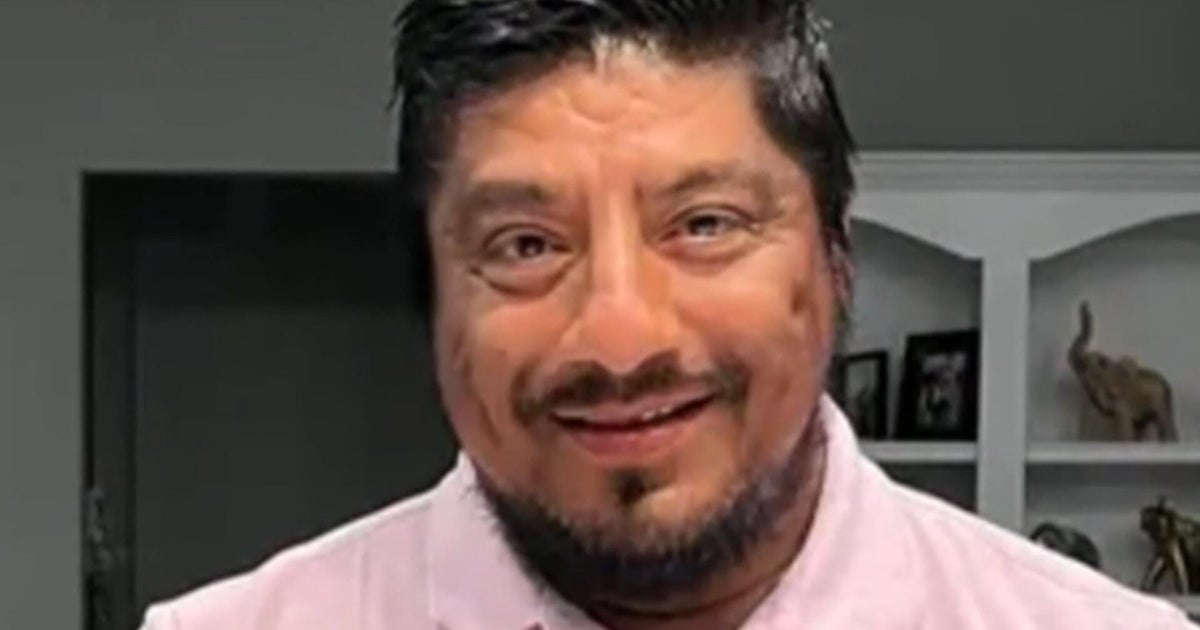
Two sons of Lorenzo Salgado Araujo, a man killed by US immigration agents during a traffic stop in Texas, are asking for a clear and open investigation into his death. The family learned about the shooting from social media, and officials have not provided detailed information about what happened.
Key Facts
Lorenzo Salgado Araujo, a 52-year-old Mexican immigrant living in the US without legal status for over 30 years, was shot dead by ICE agents during a traffic stop in Houston.
The shooting was not directed at Salgado Araujo; he was not the intended target of the ICE operation.
His sons described learning about the shooting through Facebook videos showing their father calling for help.
The Department of Homeland Security has not responded to requests for information or the identity of the officer who fired.
ICE agents involved were not wearing body cameras at the time of the incident, and witnesses have challenged ICE’s version of events.
The killing of Salgado Araujo led to protests in Houston demanding justice.
Other passengers, including Salgado Araujo’s brother, were detained during the stop.
Democratic lawmakers at a hearing expressed plans to investigate ICE and possibly change the agency if they win Congress in the upcoming elections.
Read the Original
Want the full story? Tap a source to open the original
article.
President Donald Trump responded strongly after the European Union fined Google $1 billion for breaking antitrust rules. He warned the EU it would face steep tariffs and a new trade investigation, criticizing the penalties on U.S. tech companies as unfair.
Key Facts
The EU fined Google $1 billion for favoring its own services in search results and restricting app developers from directing users elsewhere.
The fine is split in two parts, and Google must fix its practices within 60 days or face further fines of up to 5% of daily revenue.
President Trump called the EU’s penalties “highly unethical” and said the U.S. won’t be a “piggybank for Europe.”
Trump threatened to start a trade investigation under Section 301 that could lead to tariffs against the EU.
The EU said its actions ensure fair competition and that products should succeed based on quality, not ownership.
Google defended itself, saying the EU’s ruling could lead to “product degradation.”
The EU has fined Google multiple times before, including large fines over Android and advertising practices.
U.S. trade officials warned that the EU’s approach could harm a recent trade agreement between the U.S. and Europe.
Read the Original
Want the full story? Tap a source to open the original
article.
The Pentagon has lowered the official number of U.S. soldiers killed and wounded in the ongoing Iran conflict, causing confusion and concern. Officials say this change is due to a technical problem, but some lawmakers question if the war is being reclassified to avoid limits on military action without Congress’s approval.
Key Facts
The Pentagon's public database showed fewer U.S. deaths and injuries in the Iran war than before, dropping from 18 to 14 deaths and from 482 to 420 wounded.
The database has not been updated for more than a day after the sudden change.
Defense officials call this discrepancy a "technical snafu" or error.
President Donald Trump declared the official war operation, called Operation Epic Fury, ended in May, but airstrikes have continued and are now called "overseas operations."
Lawmakers worry that changing the war’s label is a way to bypass the 60-day limit on military actions without congressional approval.
The Defense Casualty Analysis System (DCAS) is the Pentagon’s main public record for tracking U.S. military deaths and injuries.
The casualty numbers in the database do not match recent Pentagon statements about troop injuries, which said many more were wounded since fighting resumed in July.
The U.S. and Iran had a 60-day ceasefire that ended earlier this month, after which fighting and strikes increased again.
Read the Original
Want the full story? Tap a source to open the original
article.
A man in Pensacola, Florida, ordered gumbo twice a day at a local restaurant for 10 years. When he stopped coming one week, the chef visited his home and found that the man needed help, which ultimately saved his life.
Key Facts
The man ordered gumbo for lunch and dinner daily at the Shrimp Basket restaurant.
This routine lasted for 10 years.
One week, he stopped showing up at the restaurant.
The chef became concerned and went to check on him at his house.
The chef’s visit led to the man receiving needed help.
This story was featured by Steve Hartman on CBS News.
The event took place in Pensacola, Florida.
Read the Original
Want the full story? Tap a source to open the original
article.
GLP-1 drugs were first made to help treat diabetes but are now commonly used to help with obesity. Researchers are exploring whether these medications might be useful for more health issues in the future.
Key Facts
GLP-1 stands for glucagon-like peptide-1, a type of medicine that affects blood sugar and appetite.
These drugs were originally created to help people with diabetes control their blood sugar.
They are now widely prescribed to help people lose weight and manage obesity.
Studies suggest GLP-1 drugs may have benefits beyond weight loss, possibly improving other health conditions.
Experts are discussing if these medicines should be given to more people in the US.
The use of GLP-1 drugs is influencing how healthcare is delivered, especially for chronic diseases.
Wider use of these drugs could change treatment plans and health guidelines.
Read the Original
Want the full story? Tap a source to open the original
article.
Frank Yiannas, a former FDA Deputy Commissioner who worked under President Trump and President Biden, criticized how the U.S. government responded to a Cyclospora outbreak. He urged for an independent review to better understand and improve handling of such outbreaks.
Key Facts
Frank Yiannas served as FDA Deputy Commissioner under President Trump and President Biden.
Cyclospora is a parasite that can cause foodborne illness.
Thousands of Americans have been affected by the Cyclospora outbreak.
Yiannas expressed concerns about the federal government’s response to this outbreak.
He recommended an independent review of the government’s actions regarding the outbreak.
The review aims to find ways to improve food safety responses in the future.
Yiannas made these comments in an interview with Politico.
Read the Original
Want the full story? Tap a source to open the original
article.
Two White House Correspondents' Association scholarship recipients, Kaitlin Bender-Thomas and Madison Maynard, spoke about their experience during a shooting at the White House Correspondents' Dinner in April. They shared their feelings as the event was rescheduled and prepared to happen again.
Key Facts
Kaitlin Bender-Thomas and Madison Maynard received scholarships from the White House Correspondents' Association.
Both attended the White House Correspondents' Dinner in April when a shooting occurred.
The recipients described the event as terrifying.
They talked about their experiences on the CBS News program "The Daily Report."
The White House Correspondents' Dinner, originally planned for April, was rescheduled.
The recipients reflected on the situation ahead of the new dinner date.
Read the Original
Want the full story? Tap a source to open the original
article.
Texts revealed that Celeste Rivas Hernandez, a 14-year-old girl, was pregnant and had an abortion before her death. Singer David Anthony Burke, known as D4vd, is accused of murdering and sexually abusing her; he denies the charges as the court reviews if he should go to trial.
Key Facts
Celeste Rivas Hernandez was 14 years old and pregnant before her death.
She and David Anthony Burke (D4vd) exchanged texts about her pregnancy and abortion.
Prosecutors say Burke killed Celeste after she threatened to expose his abuse.
Burke, 19, and Celeste began communicating when she was 11 and he was 17.
Burke has pleaded not guilty to murder and sexual abuse charges.
Police found Celeste’s body in Burke’s Tesla in September 2025, the day after her 15th birthday.
Burke was arrested in April 2026 and faces seven criminal charges including murder and child sexual abuse.
Burke gained fame on TikTok and had to cancel his world tour after the arrest.
Read the Original
Want the full story? Tap a source to open the original
article.
A substance found in the work van of Lorenzo Salgado Araujo, a Mexican immigrant shot and killed by an ICE agent in Houston, tested negative for drugs. This challenges earlier claims by federal officials that the van contained methamphetamine. Local prosecutors and the family’s lawyers have expressed skepticism about the initial drug allegations.
Key Facts
Lorenzo Salgado Araujo was shot and killed by an ICE agent during a traffic stop in Houston on July 7.
ICE claimed Salgado Araujo used his vehicle as a weapon, leading to the shooting.
The FBI previously said they suspected the van contained methamphetamine and showed photos of a white crystal-like substance.
Tests conducted by the Harris County District Attorney's office showed the substance was not drugs.
The substance may have been granulated salt used by construction workers to make an electrolyte mix.
Salgado Araujo had lived in the U.S. for 35 years and had no criminal record.
The FBI and ICE internal oversight are reviewing the shooting, and local prosecutors may pursue charges if wrongdoing is found.
Salgado Araujo’s family described him as a hardworking man who sought to build a better future.
Read the Original
Want the full story? Tap a source to open the original
article.
Eight people, including six children, were found dead in a house fire in Grand Haven Township, Michigan. Some victims had gunshot wounds, and authorities are investigating the cause of the fire and the deaths.
Key Facts
The incident happened on July 24, 2026, in Grand Haven Township, Michigan.
Eight people were found dead inside the house, including six children aged 5 to 15 and two adults.
Some victims showed signs of gunshot wounds, but the exact number is unclear.
All victims are believed to be from one family.
Fire crews responded after reports of smoke and found the fire inside the home.
The cause of death and origin of the fire are still under investigation.
Investigators are considering the possibility of arson or a murder-suicide.
Michigan State Police arson investigators are assisting in the case.
Read the Original
Want the full story? Tap a source to open the original
article.
Weijia Jiang, the outgoing president of the White House Correspondents' Association, spoke at a dinner event that was delayed for three months because of a shooting attack. The dinner took place on a Friday night and was attended by journalists, politicians, and President Donald Trump.
Key Facts
Weijia Jiang served as president of the White House Correspondents' Association.
The annual dinner was originally planned for April but was rescheduled.
The delay was due to a shooting attack near the original event.
The rescheduled dinner happened three months later, on a Friday night.
Attendees included journalists, politicians, and President Donald Trump.
The event is a tradition where the press and government officials gather.
Read the Original
Want the full story? Tap a source to open the original
article.
President Donald Trump ordered signs to be placed outside the Smithsonian’s National Museum of American History. The signs will warn visitors that the museum presents inaccurate information about American history, based on a White House report criticizing the museum’s approach.
Key Facts
President Trump issued an order on Friday regarding the Smithsonian museum.
The signs are meant to correct what the White House calls inaccurate information.
The order refers to a 162-page report titled "Saving America's Story," released on July 4.
The report claims the museum uses history to promote social justice and political ideas.
The report suggests the museum divides and discourages citizens instead of uniting them.
The recommended signage would say the exhibits were made by people "who don't want you to love your country."
The signs will be placed along walkways leading to the museum to guide visitors to other sources.
The Smithsonian has not commented publicly on the president’s order.
Read the Original
Want the full story? Tap a source to open the original
article.
A federal appeals court refused to pause a judge’s order that blocked a $100,000 fee on new H-1B visas for skilled foreign workers. The court said the Trump administration did not prove it had the legal authority to impose the fee, which a lower court ruled was like an unauthorized tax.
Key Facts
The appeals court is based in Boston and is called the First US Circuit Court of Appeals.
The court’s ruling supports a June 8 decision by a lower judge who stopped the $100,000 visa fee.
The fee was challenged in a lawsuit by 20 Democratic state attorneys general.
The $100,000 fee was introduced by President Donald Trump in September to increase H-1B visa costs.
The H-1B visa program allows 65,000 skilled workers and 20,000 with advanced degrees to enter the US annually.
Before the fee, employers paid about $2,000 to $5,000 per visa depending on the situation.
President Trump said the fee was to stop companies from replacing American workers with cheaper foreign labor.
The fee does not apply to H-1B visas given to people already in the US on student visas.
Since the fee started, few employers have actually paid it.
The White House has not yet commented on the court’s decision.
Read the Original
Want the full story? Tap a source to open the original
article.
The Trump administration said in a court document that federal green energy grants canceled last year were chosen only based on the political party of each state. The Department of Energy lawyer said the decisions were made for political reasons.
Key Facts
The Department of Energy canceled some federal green energy grants last year.
The Trump administration said the cancellations were based on political views of the states.
A DOE lawyer, Jeff Novak, made this claim in a court filing.
The grants were related to energy and environment projects.
The issue is part of a legal case involving the government’s grant decisions.
The administration stated the cancellations were done "solely" due to politics.
This information came from an official government document.
Read the Original
Want the full story? Tap a source to open the original
article.
Many university students in the UK are looking for ways to save money on their graduation outfits, which can be expensive because they wear them only once. Some students buy secondhand clothes, rent gowns, or have family members make custom outfits to keep costs down.
Key Facts
Graduation outfit costs can be high, including transport, accommodation, outfits, and photos.
Renting a cap and gown costs around £42-£57 depending on the university and degree level.
Some students buy thrifted (secondhand) outfits to save money.
Others ask family members to tailor or make custom clothing for graduation.
Graduation photos can cost between £30 and £350 for professional packages.
Students who are the first in their family to graduate often feel pressure to celebrate despite financial challenges.
Many students struggle financially during their studies, with loans not fully covering living expenses.
Social media is used by students to share money-saving tips and discuss the costs of graduation.
Read the Original
Want the full story? Tap a source to open the original
article.