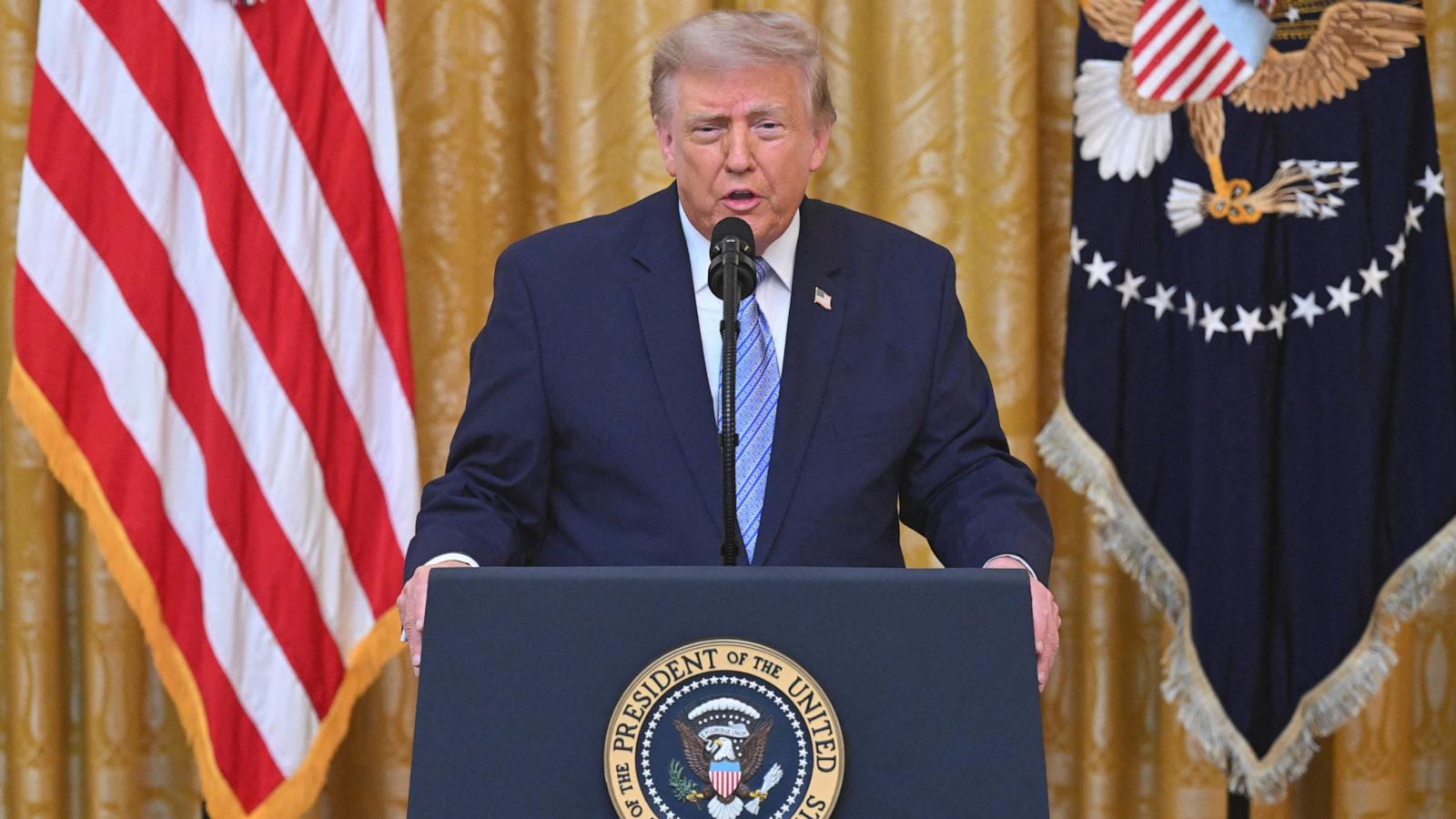
State election officials from both parties are preparing for possible federal interference in the upcoming November midterm elections. They are treating this as a new risk alongside traditional election challenges like weather and technical issues.
Key Facts
State officials are planning for potential federal government impacts on how they run elections.
Minnesota’s Secretary of State, Steve Simon, mentioned this new risk during a national conference of election officials.
The federal government has sought personal voter data and discussed mail-in voting, which some states see as influencing their control over elections.
The White House says it aims to work with states to fix election vulnerabilities and remove ineligible voters.
President Donald Trump released documents claiming U.S. elections have security weaknesses, though these claims lack strong evidence.
Trump’s speech occurred after the administration removed all remaining members of the bipartisan Election Assistance Commission.
Some state officials criticized the removal of the commission members, saying it adds uncertainty for election administration.
Minnesota is preparing alternative plans ("Plan B or C") in case of federal interference, though this is a precaution, not a prediction.
Read the Original
Want the full story? Tap a source to open the original
article.
Defense Secretary Pete Hegseth defended President Trump’s request for an extra $87.6 billion to fund the Pentagon, mainly for the US war against Iran. Lawmakers questioned the high cost and lack of clear information on the war’s progress and expenses.
Key Facts
The Trump administration requested $87.6 billion in extra funding for the Pentagon, with $67.1 billion for the war effort against Iran.
Pete Hegseth and General Dan Caine answered questions before the Senate appropriations committee about the funding.
At least 17 US soldiers have died and nearly 100 have been wounded since February in the conflict with Iran.
Some Democrats want the war to end quickly rather than spending more money.
There is criticism that the administration underestimated the war costs, which experts say are much higher than the previously stated $30 billion.
Some Republican senators support measures to limit President Trump’s control over the war.
The Pentagon has not provided full details on how much the war is costing or on military supplies used, frustrating lawmakers.
The Senate committee is led by Susan Collins, who has expressed concerns about the changing war strategy.
Read the Original
Want the full story? Tap a source to open the original
article.
The Trump administration is delaying over $1 billion in Medicaid payments to California and Minnesota due to suspected fraud and rule violations. This is part of a larger effort to prevent fraud before payments are made, rather than recovering money after investigations.
Key Facts
The administration cited suspected fraud and noncompliance as reasons for deferring Medicaid funds.
Health Secretary Robert F. Kennedy Jr. said the approach aims to stop fraud early instead of recovering funds later.
Vice President JD Vance started an anti-fraud task force using data and technology to track misuse of federal money.
Minnesota’s state officials say the federal government has not explained how it calculated the amount being held back.
Governors of both states, Tim Walz (Minnesota) and Gavin Newsom (California), claim the deferrals are politically motivated.
Earlier, the administration increased immigration enforcement in Minnesota, causing protests and controversy.
The federal government admitted to errors in a similar fraud probe in New York previously.
There are concerns that these actions disrupt Medicaid services for people who rely on them.
Read the Original
Want the full story? Tap a source to open the original
article.
President Donald Trump announced 50% tariffs on many Canadian goods, accusing Canada of unfair trade practices and mismanaging its forests. These tariffs are based on an old law that allows the president to tax imports without an investigation, a power that has never been used before.
Key Facts
President Trump imposed 50% tariffs on various Canadian products including hockey sticks, beer, autos, alcohol, and cheese.
He used Section 338 of the Tariff Act of 1930, a law from the Great Depression era that allows tariffs up to 50% without an investigation.
Canada retaliated last year with tariffs after Trump’s earlier tariffs aimed at stopping fentanyl smuggling.
Trump claims Canada discriminates against American exports and is upset about Canadian wildfires causing smoke in the U.S.
The tariffs are set to start on August 19, 2026, and may be used as leverage in ongoing trade talks for the US-Mexico-Canada Agreement.
Section 338 tariffs have never been imposed before and their legal future is uncertain.
Many Canadians are angry about these tariffs, leading to boycotts of U.S. goods and bans of American alcohol in some provinces.
Tariffs increase costs for importers, who usually pass those costs onto consumers, leading to higher prices.
Read the Original
Want the full story? Tap a source to open the original
article.
Troy Jackson is the Maine Democratic nominee for U.S. Senate. Reports say he has a quick temper and once spoke harshly to Rachel Talbot Ross, a former House Speaker.
Key Facts
Troy Jackson is a Democrat from Maine.
He was a state senator and Senate President.
He is now the Democratic nominee for the U.S. Senate from Maine.
Reports describe him as having a fiery temper.
He reportedly verbally berated Rachel Talbot Ross, a former House Speaker.
The Maine Democratic Party supports his Senate run.
Read the Original
Want the full story? Tap a source to open the original
article.
Around 6,600 people who said they were not U.S. citizens when getting New Jersey driver’s licenses or IDs were wrongly registered to vote in 2023 and 2024. Governor Mikie Sherrill said a software mistake in the Motor Vehicle Commission caused this error, and fewer than 400 of those people actually voted.
Key Facts
About 6,600 noncitizens were incorrectly registered to vote in New Jersey.
This happened during the years 2023 and 2024.
The error was caused by a software problem in the Motor Vehicle Commission system.
Governor Mikie Sherrill, a Democrat who began her term this year, announced the issue.
A preliminary review found less than 400 of these noncitizens voted.
The error happened when people applied for driver’s licenses or state IDs.
The Department of Justice has warned about taking action if noncitizens vote illegally.
Read the Original
Want the full story? Tap a source to open the original
article.
About 6,600 people who said they were not citizens when getting New Jersey state IDs were wrongly registered to vote in 2023 and 2024 due to a software error. The governor said fewer than 400 of these people actually voted, and she is removing the incorrect registrations and investigating how the mistake happened.
Key Facts
Around 6,600 noncitizens were mistakenly registered to vote in New Jersey because of a Motor Vehicle Commission software error.
Fewer than 400 of these individuals cast ballots in elections.
Governor Mikie Sherrill, a Democrat, discovered this problem after taking office in 2024.
Sherrill ordered the removal of these wrong voter registrations and is replacing the software vendor.
An investigation is underway to find out how the error occurred.
New Jersey allows noncitizens to get driver’s licenses and state IDs.
President Donald Trump and some Republicans claim noncitizen voting is widespread, but evidence shows it is rare and can lead to serious penalties.
Experts warn that some estimates of noncitizen voter registrations may be inaccurate due to flawed data analysis.
Read the Original
Want the full story? Tap a source to open the original
article.
Senator Susan Collins criticized Defense Secretary Pete Hegseth for removing over twenty senior military officers since he became the Pentagon leader. She expressed serious concern about these actions during a Senate hearing.
Key Facts
Sen. Susan Collins is a Republican from Maine and chairs the Senate Appropriations Committee.
Pete Hegseth is the current Secretary of Defense.
Since taking charge at the Pentagon, Hegseth has removed more than 24 senior military officers.
Collins called this removal of officers "deeply troubling."
She made these remarks at the start of an appropriations hearing, a government meeting about spending.
The senior military officers affected are high-ranking leaders in the armed forces.
Collins’s statement reflects concern about military leadership changes under Hegseth’s leadership.
Read the Original
Want the full story? Tap a source to open the original
article.
Senate Democrats are asking Defense Secretary Pete Hegseth for details about a new Pentagon policy that would screen troops for testosterone levels. They want to know how the policy will work and the scientific reasons behind it.
Key Facts
Senate Democrats sent a letter to Defense Secretary Pete Hegseth.
The letter requests information on the Pentagon’s testosterone screening policy for military personnel.
Lawmakers want to understand how the policy will be put into action.
They are also asking for the scientific evidence supporting the policy.
Senators involved include Richard Blumenthal, Mazie Hirono, Gary Peters, Elizabeth Warren, and Ruben Gallego.
The demand for answers came on a Friday.
Read the Original
Want the full story? Tap a source to open the original
article.
Senator Mark Kelly criticized a plan from Defense Secretary Pete Hegseth to add testosterone level checks for military members during health exams. Kelly said the military needs stronger leadership instead of focusing on hormone levels.
Key Facts
Defense Secretary Pete Hegseth proposed adding testosterone tests in routine health checks for U.S. military personnel.
Senator Mark Kelly spoke out against this proposal.
Kelly said on a news show that the military needs better leadership, not more testosterone.
The proposal aims to measure hormone levels as part of health assessments.
Kelly’s statement was made on MS NOW’s “The Briefing with Jen Psaki.”
Read the Original
Want the full story? Tap a source to open the original
article.
Senators are set to question Defense Secretary Pete Hegseth and others about the U.S. war with Iran during a Senate Appropriations Committee hearing. Meanwhile, Republicans are promoting a $95 billion budget that includes military funding, support for farmers, and voting law updates.
Key Facts
The Senate Appropriations Committee will hold a hearing on the Iran conflict at 2:30 p.m. EDT.
Defense Secretary Pete Hegseth, Gen. Dan Caine, and Agriculture Secretary Brooke Rollins will testify.
The U.S. military recently reported three more American deaths in the Iran conflict, raising the total to 17.
Over 100 American service members have been injured since early July.
Republicans want to pass a $95 billion budget that funds the military and other priorities like farming aid and voting law changes.
Senator Patty Murray warned the Iran conflict might become a long-lasting war.
The hearing follows heightened tensions and casualties in the U.S.-Iran situation.
Read the Original
Want the full story? Tap a source to open the original
article.
President Trump is using a rarely applied part of the 1930 Smoot-Hawley Tariff Act to place a new 50% tariff on some Canadian imports. This move aims to respond to Canadian trade actions and affects about $20 billion worth of goods.
Key Facts
President Trump invoked Section 338 of the Tariff Act of 1930, part of the Smoot-Hawley Tariff Act, to impose new tariffs on Canada.
The tariffs target select Canadian imports and will start in August.
The U.S. government says this action responds to what it calls unfair Canadian trade practices and Canadian retaliation to earlier U.S. tariffs.
About $20 billion in Canadian goods will be affected by the new tariffs.
This is part of increased trade tensions between the U.S. and Canada, especially after stalled updates to the U.S.-Mexico-Canada Agreement.
The Smoot-Hawley Tariff Act originally increased tariffs in 1930 to protect U.S. industry but also led to global trade conflicts.
The new tariffs rely on a part of the law that had not been used before now.
The economic impact of the original Smoot-Hawley Act contributed to a reduction in global trade but was not the main cause of the Great Depression.
Read the Original
Want the full story? Tap a source to open the original
article.
Michigan Senate candidate Abdul El-Sayed said he believes many people who support Rep. Marjorie Taylor Greene might vote for him. He also mentioned that some Democratic Party leaders are concerned about his campaign.
Key Facts
Abdul El-Sayed is running for the U.S. Senate in Michigan as a Democrat.
He said he thinks some supporters of Republican Rep. Marjorie Taylor Greene might back him.
El-Sayed suggested there is a split or disagreement within the Democratic Party.
He mentioned that established Democratic leaders are worried about his campaign.
The comment highlights ongoing tensions in U.S. politics and voter behavior.
Read the Original
Want the full story? Tap a source to open the original
article.
A software error in New Jersey wrongly registered about 6,600 people who said they were not U.S. citizens to vote. Around 400 of these people actually voted, raising concerns about election security and fueling a debate over requiring proof of citizenship for voter registration.
Key Facts
New Jersey discovered a software mistake that registered 6,600 noncitizens as voters.
The error happened between June 2023 and June 2024, before Governor Mikie Sherrill took office.
About 400 people who should not have been registered actually voted in an election.
New Jersey is investigating the issue and replacing the software vendor responsible.
The SAVE Act, supported by President Donald Trump, would require people to prove citizenship when registering to vote.
Opponents say showing proof of citizenship could prevent some eligible voters from registering.
This New Jersey case is smaller than President Trump’s wider claims of noncitizen voting but provides a concrete example for Republicans.
The case intensifies the debate on election security and voter ID requirements in the U.S.
Read the Original
Want the full story? Tap a source to open the original
article.
The Senate Intelligence Committee voted 9-8 to move Jay Clayton’s nomination forward to become the Director of National Intelligence (DNI). This allows the full Senate to vote on his appointment to lead the intelligence community, a job currently filled temporarily by Bill Pulte.
Key Facts
Jay Clayton was nominated to be the next Director of National Intelligence.
The Senate Intelligence Committee voted 9 in favor and 8 against advancing his nomination.
The Director of National Intelligence oversees the U.S. intelligence agencies.
Bill Pulte is currently serving as acting DNI.
The full Senate will now consider Clayton’s nomination.
The vote was close, showing some division among senators.
This role is important for coordinating intelligence and national security.
The nomination process is part of President Donald Trump’s appointments.
Read the Original
Want the full story? Tap a source to open the original
article.
The House of Representatives passed a rule that allows debate and votes on important Republican plans, including the National Defense Authorization Act (NDAA). The vote was close, with Republicans pushing to handle several key issues before Congress adjourns.
Key Facts
The House voted 214-211 to pass a rule for debating and voting on several Republican priorities.
Speaker Mike Johnson, a Republican from Louisiana, led this effort.
The rule advances the National Defense Authorization Act (NDAA), which deals with military funding.
The vote was narrow and mostly along party lines.
The goal is to pass important bills before lawmakers leave Washington.
The discussed measures include funding and other legislative priorities important to Republicans.
This is part of the House Republicans’ busy legislative agenda.
Read the Original
Want the full story? Tap a source to open the original
article.
The Senate Intelligence Committee voted 9 to 8 along party lines to advance Jay Clayton’s nomination for director of national intelligence, despite opposition from Democrats. President Donald Trump nominated Clayton, a former U.S. attorney, to replace acting director Bill Pulte, who lacks national security experience.
Key Facts
The Senate Intelligence Committee approved Clayton’s nomination 9-8, mostly Republicans in favor and Democrats opposed.
President Trump nominated Jay Clayton last month to be director of national intelligence.
Clayton previously served as U.S. Attorney for the Southern District of New York.
Democrats raised concerns during Clayton’s confirmation hearing about the 2020 election results, which Clayton avoided fully answering.
Democratic Sen. Mark Warner, committee vice chairman, said he will vote against Clayton despite previously supporting him.
Bill Pulte is the current acting intelligence chief but has no national security background.
Pulte became acting director after Tulsi Gabbard left the role last month.
Despite opposition, Clayton is expected to be confirmed due to the Republican Senate majority.
Read the Original
Want the full story? Tap a source to open the original
article.
Troy Jackson, the likely Democratic candidate for U.S. Senate from Maine, said in an interview that he does not support Senator Chuck Schumer to continue as the leader of Senate Democrats. Jackson believes the party should try a new way to win back voters.
Key Facts
Troy Jackson is the likely Democratic nominee for the U.S. Senate seat in Maine.
He plans to run against Senator Susan Collins, a Republican.
Jackson does not support Chuck Schumer staying as the leader of Senate Democrats.
Schumer represents New York and currently serves as Senate Minority Leader.
Jackson wants the Democratic Party to change its approach to gain more voter support.
Read the Original
Want the full story? Tap a source to open the original
article.
A cyclospora outbreak linked to contaminated iceberg lettuce is ongoing in the United States, with thousands of cases reported. Health officials have recalled the lettuce causing the outbreak, but new cases may continue for weeks due to the parasite’s incubation period and delayed diagnosis.
Key Facts
The CDC has confirmed 1,645 cases and 141 hospitalizations, but some states report much higher numbers (over 6,000 cases in Michigan).
The outbreak is linked to shredded iceberg lettuce from Taylor Farms de Mexico, which was recalled on July 17.
The FDA initially reported a positive test for contamination but later said it was a false positive; however, investigations still point to Taylor Farms lettuce as the source.
Cyclospora symptoms can appear 2 days to 2 weeks after eating contaminated food, so new cases can appear even after the product is removed.
Diagnosing cyclospora can be difficult and may require multiple stool samples and specialized testing.
The outbreak is expected to continue into August before cases decline.
Seasonal weather affects the parasite because it needs warm conditions to become infectious, so cooler weather may help reduce infections.
Cyclospora outbreaks often occur during warmer months when imported produce is common.
Read the Original
Want the full story? Tap a source to open the original
article.
Massachusetts is facing a shortage of primary care doctors, making it hard for many people to find regular medical help. The state Senate passed a bill that would require hospitals and insurers to spend more on primary care, aiming to improve access without raising overall healthcare costs.
Key Facts
About 30% of Massachusetts residents have trouble getting a primary care doctor.
New Bedford has only 36 primary care clinicians for 20,000 to 25,000 residents without a regular doctor.
Specialty healthcare services get more investment because they bring in more money than primary care.
In 2024, just 6.6% of commercial healthcare spending in Massachusetts went to primary care.
The proposed law requires healthcare providers to spend 15% of their expenses on primary care by 2030.
The state Health Policy Commission will enforce the spending rules and can fine providers or stop them from taking new patients if they don’t comply.
Commercial insurance companies would have to pay community health centers at least as much as Medicaid does for the same services.
The bill aims to improve primary care access without increasing overall healthcare spending or insurance premiums.
Read the Original
Want the full story? Tap a source to open the original
article.