Neutral summaries of your favorite news sources — just the facts.
Your favorite news sources, one neutral feed — we distill their reporting into fact-first
summaries and always link to the original story. How it works
US News
Latest developments and key stories from across the United States
Jeanine Pirro, the U.S. attorney for Washington D.C., said she might restart a criminal investigation into Federal Reserve Chair Jerome Powell. This decision depends on what the Federal Reserve’s inspector general finds in their review.
Key Facts
Jeanine Pirro is the U.S. attorney for the District of Columbia.
She previously had a criminal investigation into Jerome Powell, who leads the Federal Reserve.
The investigation concerned Powell’s management of renovations at the Federal Reserve.
Pirro closed the investigation last month.
She said she could reopen it if the Federal Reserve’s inspector general reports new concerns.
The inspector general works independently to check the Federal Reserve’s activities.
Pirro is waiting for those findings before deciding next steps.
Read the Original
Want the full story? Tap a source to open the original
article.
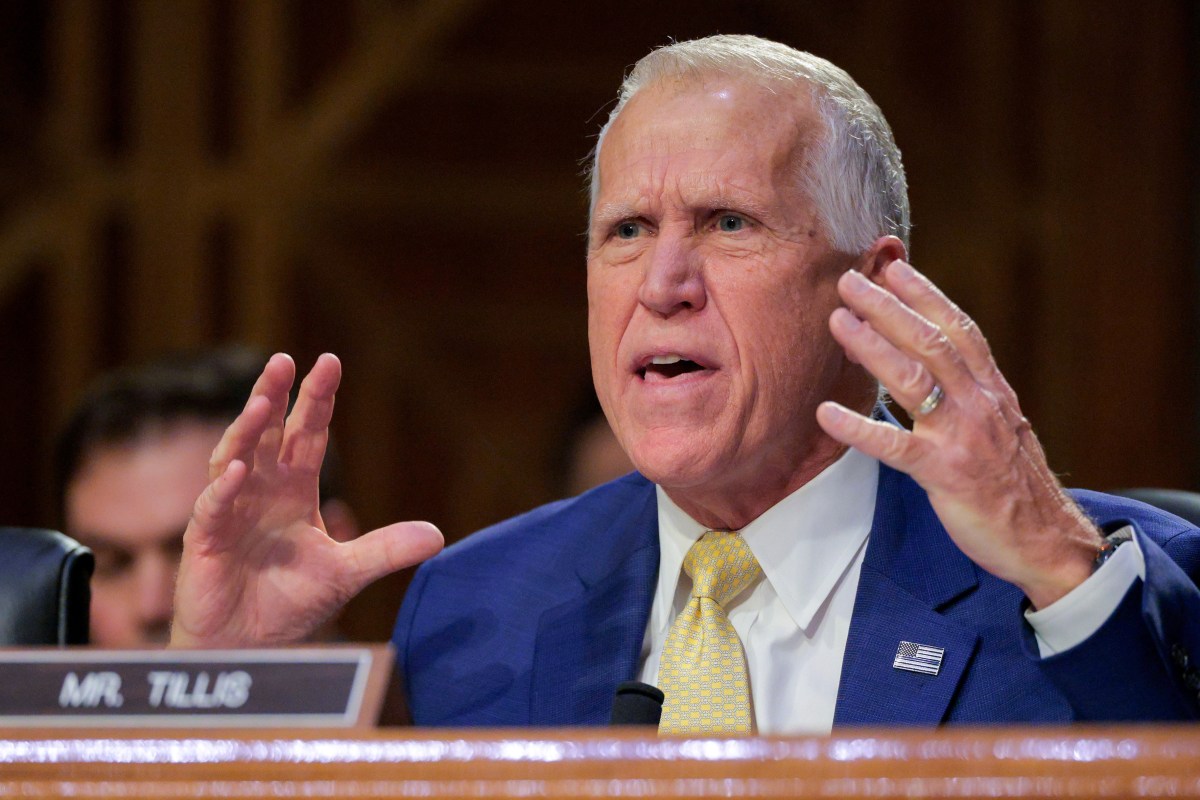
A senior Republican senator, Thom Tillis, criticized the Justice Department’s prosecution of former FBI Director James Comey, calling it a “vindictive prosecution.” Tillis expressed doubts about the case focused on an Instagram post and distanced himself from the Trump administration’s legal approach, even though he remains critical of Comey.
Key Facts
Senator Thom Tillis, a Republican from North Carolina, spoke out against prosecuting James Comey, calling it vindictive.
Comey was indicted over a 2025 Instagram post showing seashells arranged to say “86 47,” which prosecutors say signals a threat against President Trump.
Tillis questioned whether “86” really means a threat since it’s also a common restaurant term meaning to remove something.
President Donald Trump described the post as a call to “kill President Trump” and linked it to Comey.
The Trump administration, through Acting Attorney General Todd Blanche, said the case is based on more than just the Instagram post and involved a long investigation.
Blanche emphasized that career prosecutors and a grand jury decided to indict Comey, not political officials.
An earlier Comey indictment was dismissed on procedural grounds, not facts, and that case is still on appeal.
Tillis admitted Comey was a disappointment but still cannot support what he views as politically motivated prosecution.
Read the Original
Want the full story? Tap a source to open the original
article.
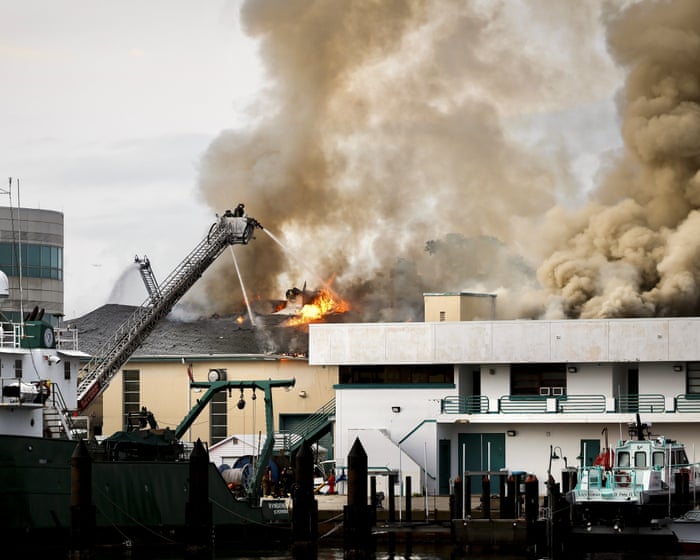
A fire destroyed the Marine Science Laboratory at the University of South Florida. Officials are investigating if lightning sparked the fire, which happened during local storms. Firefighters responded quickly but could not save the building.
Key Facts
The fire occurred at the Marine Science Laboratory at the University of South Florida.
Local fire crews, including more than 60 units and about 200 firefighters, fought the blaze.
A lightning storm was reported nearby when the fire started.
Officials have not yet confirmed the fire’s cause; the investigation is ongoing.
USF President Moez Limayem said the university will rebuild the lab stronger.
The laboratory was completely destroyed by the fire on Saturday.
The lab is important for marine science research and education.
Read the Original
Want the full story? Tap a source to open the original
article.
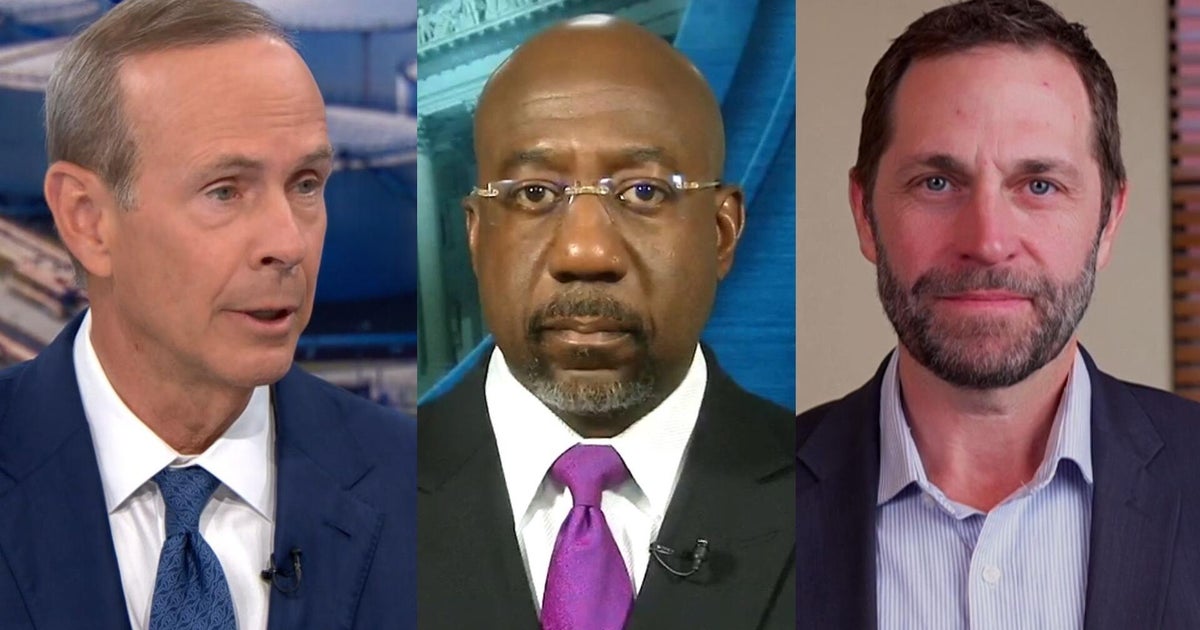
The CBS News program Face the Nation featured three guests: Mike Wirth, CEO of Chevron; Representative Jason Crow; and Senator Raphael Warnock. They discussed current topics during the show.
Key Facts
Mike Wirth is the CEO of Chevron, a large oil company.
Jason Crow is a member of the U.S. House of Representatives.
Raphael Warnock is a United States Senator.
All three were featured on the CBS News program Face the Nation.
The article mentions that the second half of the show can be watched on the CBS News app or online.
The guests likely discussed political and business issues, given their roles, although specific topics are not listed.
Read the Original
Want the full story? Tap a source to open the original
article.
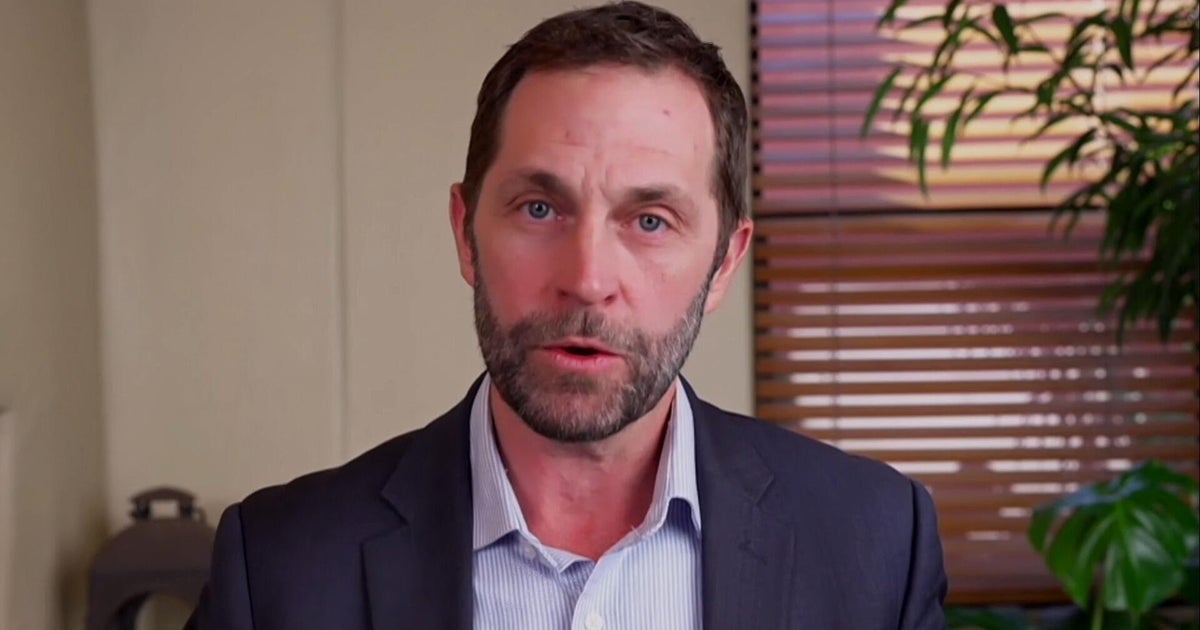
Rep. Jason Crow, a Democrat from Colorado, said the U.S. struggles to find ways to end conflicts in the Middle East. He mentioned the Iran war as a recent example of this problem.
Key Facts
Rep. Jason Crow is a Democrat from Colorado.
He serves on the House Armed Services Committee.
Crow spoke on the TV show "Face the Nation with Margaret Brennan."
He said the U.S. is "not good at having off ramps" in Middle East conflicts.
The Iran war was given as an example of this issue.
"Off ramps" means ways to safely exit conflicts or end wars.
Crow emphasized difficulties in making large strategic decisions in the Middle East.
Read the Original
Want the full story? Tap a source to open the original
article.
Two U.S. Army service members went missing during the African Lion military exercise in Morocco after they were reported missing near a training area. They are believed to have fallen from a cliff into the ocean, and search and rescue efforts involving U.S., Moroccan, and other forces are ongoing.
Key Facts
The missing personnel are two U.S. Army service members.
They went missing near the Cap Draa Training Area, close to Tan-Tan, Morocco.
The incident occurred during the African Lion exercise, a yearly multinational military training event.
It is believed both soldiers fell from a cliff while hiking and entered the ocean.
There is no evidence of foul play in the incident.
Search operations involve helicopters, drones, naval vessels, mountaineers, and divers from the U.S. and Morocco.
African Lion exercise includes around 5,000 troops from about 40 countries.
The search and investigation are still active.
Read the Original
Want the full story? Tap a source to open the original
article.
Kevin Hassett, White House National Economic Council Director, discussed the current situation with Iran on "Face the Nation" on May 3, 2026. He explained that although there is no active shooting, a blockade led by Iran continues to pressure the country’s economy, and the U.S. is maintaining its stance while working on energy production to reduce impacts on Americans.
Key Facts
President Trump sent a letter to Congress about the Iran conflict, saying the ceasefire was extended and hostilities ended, but the threat from Iran remains large.
Iran has blocked the Strait of Hormuz, allowing only Iranian ships, which the U.S. sees as unacceptable and part of ongoing tensions.
Iran’s economy is struggling with high inflation and food shortages, partly caused by the blockade and the regime’s policies.
The United Nations condemned Iran for killing people protesting against the regime.
There is debate over whether the U.S. is at war with Iran since no active combat is currently happening.
The U.S. is increasing energy production and using measures like waiving the Jones Act to lower fuel prices for Americans.
Gas prices in the U.S. are about $4.45 per gallon amid ongoing conflict concerns.
The conflict has lasted about 10 weeks, longer than the initial 4 to 6 weeks President Trump predicted.
Read the Original
Want the full story? Tap a source to open the original
article.
Neel Kashkari, the president of the Minneapolis Federal Reserve, said that the U.S. should stay flexible about future interest rate changes. He highlighted uncertainty caused by recent events in the Middle East as a reason to be cautious about predicting rate cuts.
Key Facts
Neel Kashkari is the president and CEO of the Minneapolis Federal Reserve.
He spoke on the program "Face the Nation with Margaret Brennan."
Kashkari said economists have been expecting interest rates might be cut soon.
He advised being "open-minded" about where interest rates are headed.
He pointed to uncertainty related to the Middle East as a key factor influencing interest rates.
Interest rates are important because they affect borrowing costs and the economy.
The Federal Reserve sets interest rate policies to manage inflation and growth.
Read the Original
Want the full story? Tap a source to open the original
article.
Rep. Jason Crow discussed concerns over President Trump's decision to withdraw U.S. troops from Germany without consulting Congress. Crow said this move may violate existing laws and could harm U.S. national security and its relationships in Europe.
Key Facts
President Trump wants to pull additional U.S. troops out of Germany beyond the 5,000 already announced.
Secretary Hegseth and Republican leaders of the House and Senate Armed Services committees oppose this decision, citing lack of coordination with Congress.
Laws passed by both the House and Senate require certain conditions before moving U.S. troops in Europe.
Troop presence in Europe is important for security, the U.S. economy, and protecting Americans living there.
Rep. Crow said the decision seems driven by President Trump’s reaction to a comment from the German chancellor.
Crow emphasized troop movements should be based on strategic needs, not personal feelings.
The U.S. currently has about 30,000 troops in Germany, and there is a legal minimum number of troops that should remain in Europe unless exceptions are made.
Crow said moving troops carries risks and should be carefully planned with national interests in mind.
Read the Original
Want the full story? Tap a source to open the original
article.
Senator Raphael Warnock said that a recent Supreme Court decision that limited part of the Voting Rights Act has increased competition among states to redraw voting districts in ways that may influence elections. This activity, known as gerrymandering, is happening quickly as states prepare for the 2026 midterm elections.
Key Facts
The Supreme Court made a decision that narrowed a section of the Voting Rights Act.
Senator Warnock described this ruling as adding momentum to a "redistricting arms race."
Redistricting means redrawing the boundaries of voting districts.
Gerrymandering is when these boundaries are redrawn to give an advantage to one political party.
States are rushing to change their district maps before the 2026 midterm elections.
Senator Warnock spoke about this issue on the show "Face the Nation."
The Voting Rights Act is a law designed to protect fair voting practices.
Changes to this law can impact how elections are conducted and who has political power.
Read the Original
Want the full story? Tap a source to open the original
article.
Several U.S. cities, including Portland, Oregon, have passed new laws to protect people in polyamorous relationships from discrimination. These rules apply to housing, jobs, and public services, recognizing families with more than two partners and aiming to give them legal rights similar to traditional families.
Key Facts
Portland passed a law that protects polyamorous people and households with multiple partners from discrimination.
Other cities like West Hollywood and Olympia have similar anti-discrimination laws for nontraditional families.
These legal changes reflect growing acceptance of family types beyond the traditional nuclear family.
Historically, most Americans lived in traditional nuclear families, but this is now less common, dropping from about two-thirds in 1970 to 37% today.
Activists want to separate legal rights and benefits from marriage, so polyamorous families can access things like health insurance and hospital visitation.
Polyamorous groups are organizing politically to gain broader legal recognition and protections.
Estimates suggest around 4-5% of people in the U.S. are in consensual nonmonogamous relationships currently.
Some advocates hope state and federal laws will extend similar protections in the future.
Read the Original
Want the full story? Tap a source to open the original
article.
Most deaths of mothers related to childbirth in the United States can be prevented. To reduce these deaths, it is important to provide families with support in their communities after they leave the hospital.
Key Facts
Many maternal deaths in the U.S. are preventable.
Support after hospital discharge is crucial for maternal health.
Community-based visiting programs help families after childbirth.
Expanding these proven programs can improve health outcomes.
Focus on care does not end when mothers leave the hospital.
Continued support can address health issues that arise later.
Read the Original
Want the full story? Tap a source to open the original
article.
The Supreme Court canceled Louisiana’s current congressional district maps and reduced some protections of the Voting Rights Act. This has caused delays and added uncertainty to election plans as more states get ready for their primary elections.
Key Facts
The Supreme Court invalidated Louisiana’s congressional district maps.
The ruling also lessened the strength of the Voting Rights Act, a law that protects voting rights for minorities.
Louisiana is postponing its congressional primary elections set to begin next month.
The decision is disrupting election plans for the 2024 midterm cycle.
Other states are watching closely as they prepare for their own primaries.
The ruling introduces more uncertainty about voting district lines and election timing.
The Voting Rights Act changes may affect future redistricting and minority voting protections.
Read the Original
Want the full story? Tap a source to open the original
article.
Senator Raphael Warnock criticized the Supreme Court’s decision to reject Louisiana’s congressional district maps. He said redistricting efforts like this let politicians decide who votes for them, instead of voters choosing their leaders.
Key Facts
The Supreme Court recently struck down Louisiana’s congressional district maps.
Senator Raphael Warnock represents Georgia and is a Democrat.
Warnock believes redistricting is being used to manipulate elections.
Gerrymandering means drawing voting districts to favor certain politicians.
Warnock said this practice undermines democracy by letting politicians choose voters.
The decision and comments come amid a broader national debate on redistricting.
Read the Original
Want the full story? Tap a source to open the original
article.
Acting US Attorney General Todd Blanche defended criminal charges against former FBI Director James Comey, saying the case involves more than an Instagram post. Comey is charged with a two-count felony linked to a photo he posted last year showing seashells arranged to imply a threat, which Comey denies. Blanche said evidence beyond the photo exists but did not reveal details.
Key Facts
James Comey faces two felony charges related to a photo he posted on Instagram in May last year.
The photo showed seashells arranged to form "86 47"; "86" is slang for getting rid of something.
Some allies of President Donald Trump said the photo signaled a violent threat against the president.
Comey deleted the post, apologized, and said he was unaware of the meaning and condemned violence.
Acting Attorney General Todd Blanche said the case has other evidence besides the Instagram post.
Blanche refused to reveal what additional evidence exists but promised full disclosure in an open trial.
Some legal experts and politicians, including Republicans and Democrats, have expressed doubts about the strength of the case.
The prosecutor in charge has mostly handled Medicaid fraud cases and lacks prior prosecutorial experience in federal criminal cases.
Read the Original
Want the full story? Tap a source to open the original
article.
Acting Attorney General Todd Blanche said that the legal case against former FBI Director James Comey did not happen just because of an Instagram post showing seashells arranged as "86-47." He emphasized that experienced prosecutors and law enforcement agents carefully investigated the case before the indictment.
Key Facts
Todd Blanche is the Acting Attorney General.
James Comey, the former FBI Director, has been indicted.
An Instagram post showing seashells arranged as "86-47" is connected to the case but was not the sole reason for the indictment.
Career prosecutors and agents from the FBI and Secret Service worked on the investigation.
The investigation took place in North Carolina.
Blanche spoke publicly to clarify details about the case.
Read the Original
Want the full story? Tap a source to open the original
article.
A man fell down a steep, slippery embankment under the High Steel Bridge in Mason County, Washington. Rescue teams used ropes to reach and lift him safely back up; he was not injured.
Key Facts
The man fell under the High Steel Bridge after slipping down a steep embankment.
Rescue workers used ropes to access and lift the man out of the gorge safely.
The rescue happened in Mason County, Washington, near the Skokomish River in Olympic National Forest.
The man had been trying to retrieve his drone when he slipped and became stuck.
The area below and around the bridge is closed by federal order until November for safety reasons.
The U.S. Forest Service closed the canyon because the terrain is very slippery and has caused injuries and deaths.
Both Mason County Search and Rescue and Olympic Mountain Rescue helped with the operation.
Rescue teams warned visitors to stay on the bridge and not enter the dangerous area below.
Read the Original
Want the full story? Tap a source to open the original
article.
A recent poll by ABC News, The Washington Post, and Ipsos shows President Donald Trump's approval rating is at 37 percent, the lowest in his current term. The poll indicates that people view his handling of major issues like the economy, immigration, inflation, and foreign policy more negatively than positively.
Key Facts
President Trump’s overall approval rating is 37 percent, with 62 percent disapproval.
Approval ratings on key issues are all below 50 percent, including economy (34%) and immigration (40%).
Only 23 percent approve of his handling of the cost-of-living crisis.
Trump's management of inflation has a low approval of 27 percent.
War with Iran has 33 percent approval, with most Americans opposing it.
The poll surveyed 2,560 adults from April 24 to 28, 2024, with a margin of error of ±2%.
Other polls show slightly higher ratings but still below 50 percent approval.
The poll suggests potential challenges for Trump's party in upcoming midterm elections.
Read the Original
Want the full story? Tap a source to open the original
article.
This week on the CBS News program "Face the Nation," guests include Kevin Hassett from the White House National Economic Council, Neel Kashkari from the Minneapolis Federal Reserve, and Senator Raphael Warnock. They discuss issues like rising gas prices and the shutdown of Spirit Airlines.
Key Facts
"Face the Nation" is a CBS News program hosted by Margaret Brennan.
Kevin Hassett is the director of the White House National Economic Council.
Neel Kashkari is the president and CEO of the Minneapolis Federal Reserve.
Senator Raphael Warnock is also featured in this episode.
The discussion covers rising gas prices in the U.S.
Spirit Airlines recently shut down operations.
The program is available on the CBS News app and through web browsers.
Read the Original
Want the full story? Tap a source to open the original
article.
Acting Attorney General Todd Blanche said President Donald Trump is following the law in his military actions related to Iran. Although U.S. forces remain active in the region, the administration says a ceasefire means the conflict has ended and no new congressional approval is needed.
Key Facts
The U.S. and Israel began military operations against Iran on February 28, 2026.
The War Powers Act requires Congress to approve military action lasting more than 60 days.
The 60-day deadline passed without Congress approving continued military operations.
President Trump stated in a letter to Congress that hostilities with Iran have ended due to a ceasefire.
U.S. forces continue a naval blockade of Iranian ports despite the ceasefire.
The acting attorney general said there has been no recent fighting between U.S. and Iranian forces.
The administration argues that the ceasefire stops the 60-day War Powers clock.
Republican lawmakers have mostly not challenged the president’s claim that the conflict has ended.
Read the Original
Want the full story? Tap a source to open the original
article.