Fact-first summaries of the news — stay informed, stay grounded.
Your favorite news sources, one calm feed — fact-first summaries that always link to the
original story. No outrage bait, and we tell you when you're caught up. How it works
US News
Latest developments and key stories from across the United States
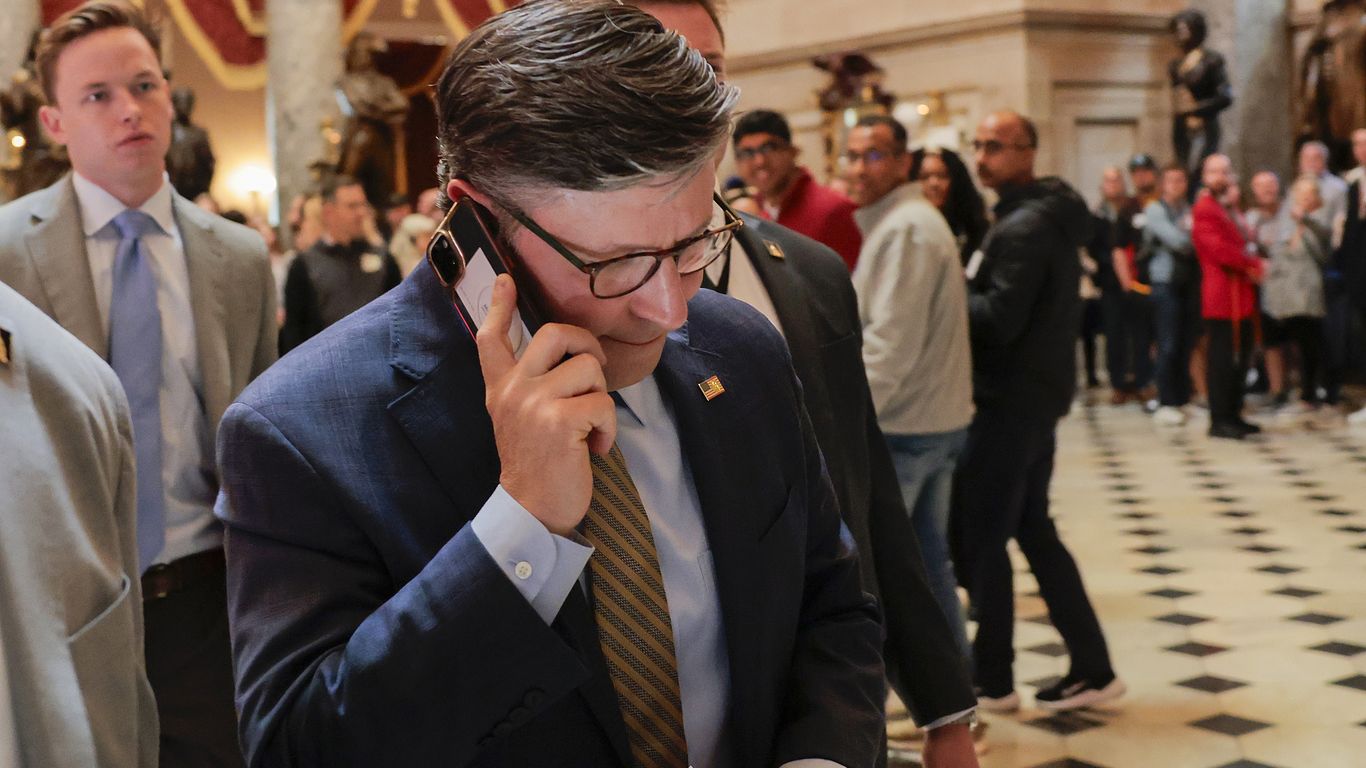
House Speaker Mike Johnson faces a difficult week as he tries to pass three important bills before Congress recesses. Republicans are divided, with some opposing President Donald Trump’s approach, making it harder to approve funding for the Department of Homeland Security, extend surveillance laws, and pass the farm bill.
Key Facts
Mike Johnson, House Speaker and Republican from Louisiana, must push three major bills next week.
Bills include extending Section 702 of FISA (a surveillance law), the farm bill, and a budget plan to fund Immigration and Customs Enforcement (ICE) and Border Patrol.
Some House Republicans do not trust a two-step budget process and want a stronger funding package in one vote.
The Department of Homeland Security is running low on money to pay its workers.
Some conservatives want stricter requirements for surveillance warrants before extending FISA.
There is disagreement about adding unrelated issues, like Central Bank Digital Currency (CBDC), to the FISA bill.
If an extension for FISA is not passed soon, a short-term fix might be needed to avoid the law expiring.
Majority Leader Steve Scalise said a recent meeting helped clear many issues, but some conservatives still have concerns.
Read the Original
Want the full story? Tap a source to open the original
article.
An 81-year-old man in California is critically injured after being hit by an electric motorcycle ridden by a 14-year-old boy. The boy’s mother is now facing legal charges because she was previously warned about her son riding the electric bike underage.
Key Facts
The accident happened in California.
The victim is an 81-year-old man who is in serious condition.
The driver of the electric motorcycle was 14 years old.
The boy is not legally allowed to ride the e-motorcycle due to his age.
The mother was warned before about her son riding the electric bike.
She is now being charged because she did not stop her son from riding.
The electric motorcycle involved is also called an e-bike.
Read the Original
Want the full story? Tap a source to open the original
article.
The Trump administration and congressional Republicans tried to weaken the Endangered Species Act (ESA), a key U.S. law protecting wildlife. A planned vote on a bill to make these changes official was canceled after some Republicans raised concerns, especially those from tourism-heavy areas in Florida worried about the impact on local wildlife and economy.
Key Facts
The Trump administration has worked to reduce protections under the Endangered Species Act.
Republicans in the House canceled a vote on a bill meant to cement these changes.
Some Republican lawmakers from Florida, reliant on tourism, opposed the bill.
The bill would have made it harder to list species as endangered and would require economic and security reviews.
Environmental groups said the bill prioritizes politics over science and would harm species recovery.
A recent exemption for oil and gas drilling in the Gulf of Mexico was controversial and legally questionable.
Florida's economy depends heavily on ecosystems that host many endangered animals.
Lawmakers and local stakeholders fear the bill could hurt Florida’s environment and economy.
Read the Original
Want the full story? Tap a source to open the original
article.
A new online tool called GTFOICE.org has been launched to help communities learn about and protest new Immigration and Customs Enforcement (ICE) detention centers before they open. The tool sends alerts about planned ICE facilities and offers resources to organize opposition and legal help.
Key Facts
GTFOICE.org was created by Miles Taylor, a former Department of Homeland Security (DHS) chief of staff during President Trump’s first term.
The tool helps people find out early about planned ICE detention centers and supports them in protesting these expansions.
DHS is expanding ICE detention facilities as part of a $45 billion plan, often converting warehouses into immigrant detention centers.
Many communities have opposed the expansion due to secrecy, concerns about poor conditions, and potential impact on local resources.
The tool also connects users with legal guidance and organizing help, including the option to help from a distance.
Protests have already led to canceled facility plans in some towns like Merrimack, New Hampshire, and Ashland, Virginia.
Critics note that in some places, communities learned about ICE facility plans too late to prevent purchases of properties.
DHS highlighted crime victims in response to protests, but the issue remains controversial.
Read the Original
Want the full story? Tap a source to open the original
article.
The Crown Prosecution Service (CPS) in England and Wales reported a record number of stalking cases last year, mostly linked to domestic abuse. The CPS is working on a plan to help young people recognize stalking behavior, including education about boundaries and use of technology in stalking.
Key Facts
In England and Wales, the CPS charged 7,168 stalking offenses last year, the highest number recorded.
Over 80% of these stalking cases were connected to domestic abuse, meaning victims mostly knew the stalkers.
The CPS is creating a policy to help children and young people understand what stalking is and when behavior crosses the line.
Young people often use digital tools, which can make stalking harder to see and understand.
Victims and offenders sometimes do not realize when stalking is happening or when behavior becomes criminal.
One victim described being stalked by her ex-partner through emails, social media, and hacking, which caused her severe distress.
The stalker in this case was sentenced to two years and eight months in prison.
Technology like social media, GPS trackers, and apps is increasingly used by offenders to stalk victims.
Read the Original
Want the full story? Tap a source to open the original
article.
Some U.S. universities are creating new academic centers focused on antisemitism, often responding to concerns about anti-Israel and antisemitic attitudes on campus. These centers vary in their leadership and activities, and some Jewish scholars worry that these new initiatives may overshadow established experts and focus more on ideology than scholarship.
Key Facts
A group at the University of Washington started a center to address antisemitism and anti-Israel sentiment on campus.
The center is led by faculty from fields like public health, law, and business rather than Jewish studies scholars.
The center is not an official university department but uses some university resources.
It has held two events with strong pro-Israel speakers and started a newsletter.
Some Jewish history experts at the university feel this center sidelines their scholarly work.
The University of Washington says the group is a self-organized faculty effort and does not officially endorse their views.
Many new antisemitism centers at U.S. universities have appeared amidst the war in Gaza and political interest in allegations of antisemitism.
Some experts worry that these centers promote ideological viewpoints and could limit academic debate and critical scholarship.
Read the Original
Want the full story? Tap a source to open the original
article.
Two California lawmakers introduced a bill to make social media companies more accountable for child sexual abuse material on their platforms. The bill would require companies to audit their sites for child safety risks, report results to the state attorney general, and act faster to remove harmful content, with new legal consequences if they fail.
Key Facts
The bill is called AB 1946 and was introduced by Assembly members Maggy Krell and Buffy Wicks.
It aims to allow lawsuits against social media companies in California for failing to detect or remove child sexual abuse material.
Companies would need to perform safety audits twice a year and share results with the attorney general.
The bill would shorten the time to remove harmful content from 30 days to 48 hours in many cases.
New child sexual abuse material detected must be reviewed by human moderators.
Penalties would fund a support fund for survivors of abuse.
Current federal law protects social media sites from liability for user posts but does not protect them from sex trafficking liability.
Recent court cases in California and New Mexico found Meta and YouTube liable for harm to children caused by their platforms.
Read the Original
Want the full story? Tap a source to open the original
article.
The article argues that Congress should stop focusing on impeachment or the 25th Amendment to address concerns about President Donald Trump’s health. Instead, it suggests that Congress should pass a law giving a key group of lawmakers full and immediate access to the president’s medical records.
Key Facts
The article talks about concerns regarding President Trump’s health.
It says impeachment and the 25th Amendment are not practical solutions in this case.
The 25th Amendment is a part of the Constitution that deals with removing a president if they cannot do their job.
The proposal is for Congress to create a law for quick and complete access to the president’s medical records.
This access would be given to the "Gang of Eight," a group of top lawmakers who handle sensitive information.
The purpose is to monitor the president’s fitness for office more transparently.
This proposal aims to address health concerns without removing the president from office.
Read the Original
Want the full story? Tap a source to open the original
article.
In Texas, prosecutors used rap lyrics as evidence to help sentence James Broadnax to death. This approach is common in many U.S. court cases, especially involving Black defendants, where rap lyrics are treated like personal confessions rather than artistic expression.
Key Facts
James Broadnax, a Black man, was sentenced to death partly based on rap lyrics found in his notebook.
The lyrics were used to suggest gang ties and involvement in shootings during his trial.
Rap lyrics have been introduced in court for hundreds of cases in over 40 states in the past 50 years.
Judges often allow rap lyrics as evidence while excluding other kinds of creative writing.
Experts say using rap lyrics as proof ignores their artistic value and reinforces racial stereotypes.
Broadnax’s lawyers argue that this practice biased the nearly all-white jury against him.
Prosecutors tend to use lyrics mentioning violent acts as evidence of motive or confession, depending on when they were written.
A documentary called “As We Speak: Rap Music on Trial” discusses how rap lyrics are used in legal cases.
Read the Original
Want the full story? Tap a source to open the original
article.
A 32-year-old man named John Ashby was sentenced to life in prison, with a minimum of 14 years, for attacking a Sikh woman. He admitted to crimes including rape, robbery, strangulation, and assault motivated by religion.
Key Facts
John Ashby is 32 years old.
He was sentenced to life imprisonment with at least 14 years to serve.
Ashby admitted to rape, robbery, intentional strangulation, and religiously motivated assault.
The victim was a Sikh woman.
The crimes were considered religiously aggravated, meaning they were motivated by hatred toward her religion.
The sentencing took place at Birmingham Crown Court.
Ashby changed his pleas after an incident in court involving a member of the public.
Read the Original
Want the full story? Tap a source to open the original
article.
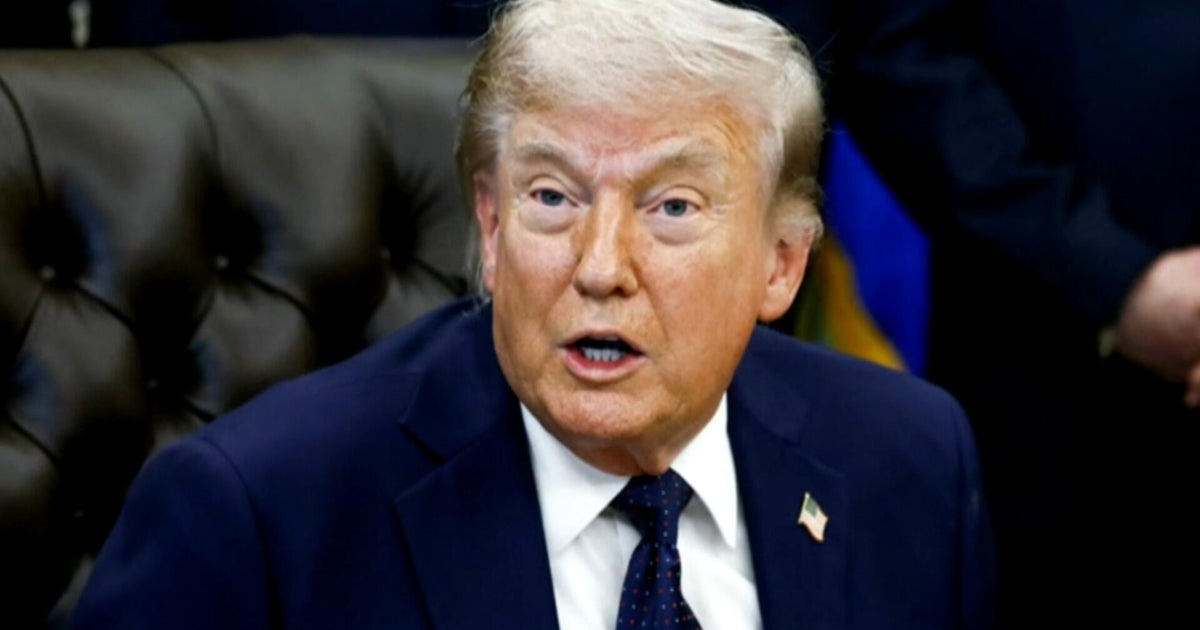
President Donald Trump said he does not feel pressured to end the war with Iran, despite rising gas prices in the United States. He warned that Americans should expect to pay more for gasoline for some time.
Key Facts
President Trump stated there is no urgency to end the war with Iran.
The ongoing conflict has caused gas prices in the U.S. to increase.
Trump acknowledged the economic impact on Americans due to higher fuel costs.
He advised that higher prices may continue for a while.
The statement reflects the president’s current position on foreign conflict and its economic effects.
Read the Original
Want the full story? Tap a source to open the original
article.
The article discusses advice for U.S. political leaders regarding data centers. It suggests that leaders should focus on negotiating better agreements but avoid closing data centers entirely.
Key Facts
U.S. political leaders are being advised on how to handle data center issues.
The advice is to avoid a simple "yes or no" approach.
Leaders should aim to make better deals related to data centers.
Shutting down data centers is discouraged.
The focus is on finding balanced solutions rather than extreme actions.
Read the Original
Want the full story? Tap a source to open the original
article.
A U.S. Army special forces soldier involved in a mission to capture Venezuelan President Nicolas Maduro was arrested for reportedly using secret information from the operation to place bets on an online prediction site. The soldier allegedly tried to profit by betting on Maduro's removal.
Key Facts
The soldier is part of the U.S. Army special forces.
The soldier took part in a January raid aimed at capturing Venezuelan President Nicolas Maduro.
The soldier was arrested for using insider information from the raid.
The information was used to place bets on Polymarket, an online prediction platform.
Polymarket allows users to make bets based on real-world events.
The arrest was reported by CBS News.
The case involves potential misuse of confidential military information for personal gain.
Read the Original
Want the full story? Tap a source to open the original
article.
New York Democrats released a digital ad criticizing Republican Bruce Blakeman for his connections to President Donald Trump and his stance on health care. Blakeman is running for governor against incumbent Kathy Hochul this fall.
Key Facts
The ad targets Bruce Blakeman, a Republican running for New York governor.
It highlights Blakeman's ties to President Trump.
The ad also focuses on health care concerns related to Blakeman.
The ad is 15 seconds long and is titled “Won’t Change.”
It was shared with The Hill news outlet before being released publicly.
Kathy Hochul is the current governor and Blakeman’s opponent in the upcoming election.
The ad was launched by New York Democrats on a digital platform.
Read the Original
Want the full story? Tap a source to open the original
article.
California Democrats are having trouble choosing one main candidate for governor. At the same time, President Donald Trump is facing increasing tensions with Iran and may decide on further actions. Republicans are also getting ready in case Democrats gain many seats in the upcoming midterm elections.
Key Facts
California Democrats have not yet agreed on a clear frontrunner for governor.
President Donald Trump is dealing with a rising standoff with Iran.
There is uncertainty about how long Trump will wait before acting on the Iran issue.
Republicans are preparing for the chance of a "blue wave," meaning many Democratic wins, in the midterm elections.
The discussion involves senior political figures like Bill Sammon from The Hill and Chris Stirewalt from NewsNation.
The article focuses on political developments within the U.S., especially around California and national election strategies.
Read the Original
Want the full story? Tap a source to open the original
article.
Democrats in California are having trouble uniting around one main candidate for governor. At the same time, tensions between President Trump and Iran are rising, raising questions about potential U.S. actions. Republicans are also preparing for the chance that Democrats might do very well in the upcoming midterm elections.
Key Facts
Democrats have not yet chosen a clear front-runner for California's governor race.
President Trump is facing increased tensions with Iran.
It is uncertain how long President Trump will wait before possibly responding to Iran.
Republicans are getting ready for a possible strong performance by Democrats in the midterm elections.
The discussion includes an interview with Bill Sammon, a senior vice president at The Hill.
The conversation is hosted by NewsNation’s Chris Stirewalt.
The article covers political strategies and concerns within both parties before the elections.
Read the Original
Want the full story? Tap a source to open the original
article.
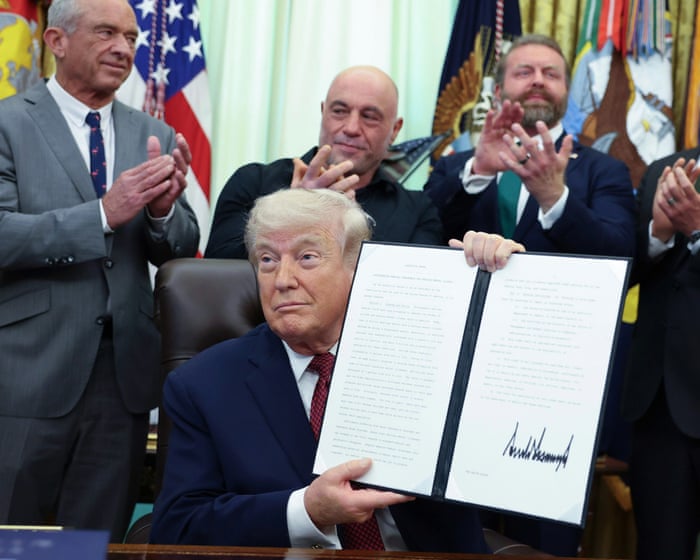
President Trump issued an executive order to speed up access to psychedelic medicines for people with serious mental illnesses. Experts say the order is mostly symbolic, aiming to raise awareness rather than cause immediate legal changes.
Key Facts
The order encourages agencies to work together, including the Department of Veterans Affairs, to share data and increase clinical trials for psychedelics.
It supports rescheduling illegal psychedelics to allow medical use if the FDA approves them.
The order was announced publicly with podcaster Joe Rogan and veteran Marcus Luttrell present.
Some experts believe this is the first time a president has promoted psychedelic research so openly.
Support from some Republicans, veterans, and public figures may influence the administration’s approach.
Critics say focusing on medical use for veterans may limit who can benefit from changes.
The administration continues to cut funding for broader healthcare and community services.
President Trump previously ordered a reclassification of cannabis to help research, but progress has been slow due to resistance within government agencies.
Read the Original
Want the full story? Tap a source to open the original
article.
Democrats leading several states like California, Illinois, New Jersey, and New York are expected to lose political power. This is because their policies have upset voters, which may result in fewer seats in the House of Representatives and less influence in the Electoral College.
Key Facts
Democratic leaders govern states including California, Illinois, New Jersey, and New York.
Voters in these states are unhappy with certain policies they consider unwanted and arrogant.
As a result, these states may lose representation in the U.S. House of Representatives.
Losing House seats means these states will also have fewer votes in the Electoral College during presidential elections.
The changes in representation come from shifts in voter opinions and population.
The article points out that Democrats, not President Trump, were responsible for starting the disputes over drawing voting district boundaries (gerrymandering).
Read the Original
Want the full story? Tap a source to open the original
article.
A recent survey shows that about 77 percent of registered U.S. voters think President Trump is partly responsible for higher gas prices. This view is linked to ongoing tensions between the U.S. and Iran, which affect the global economy and fuel costs.
Key Facts
77 percent of registered U.S. voters blame President Trump for the rise in gas prices.
The survey was conducted by Reuters and Ipsos and released on a Friday.
Many Americans connect the gas price increase to the conflict with Iran.
The global economy is affected by the U.S.-Iran tensions, influencing fuel costs.
The survey captures public opinion on who is responsible for higher gas prices.
It reflects concerns about how political conflicts impact everyday costs for Americans.
Read the Original
Want the full story? Tap a source to open the original
article.
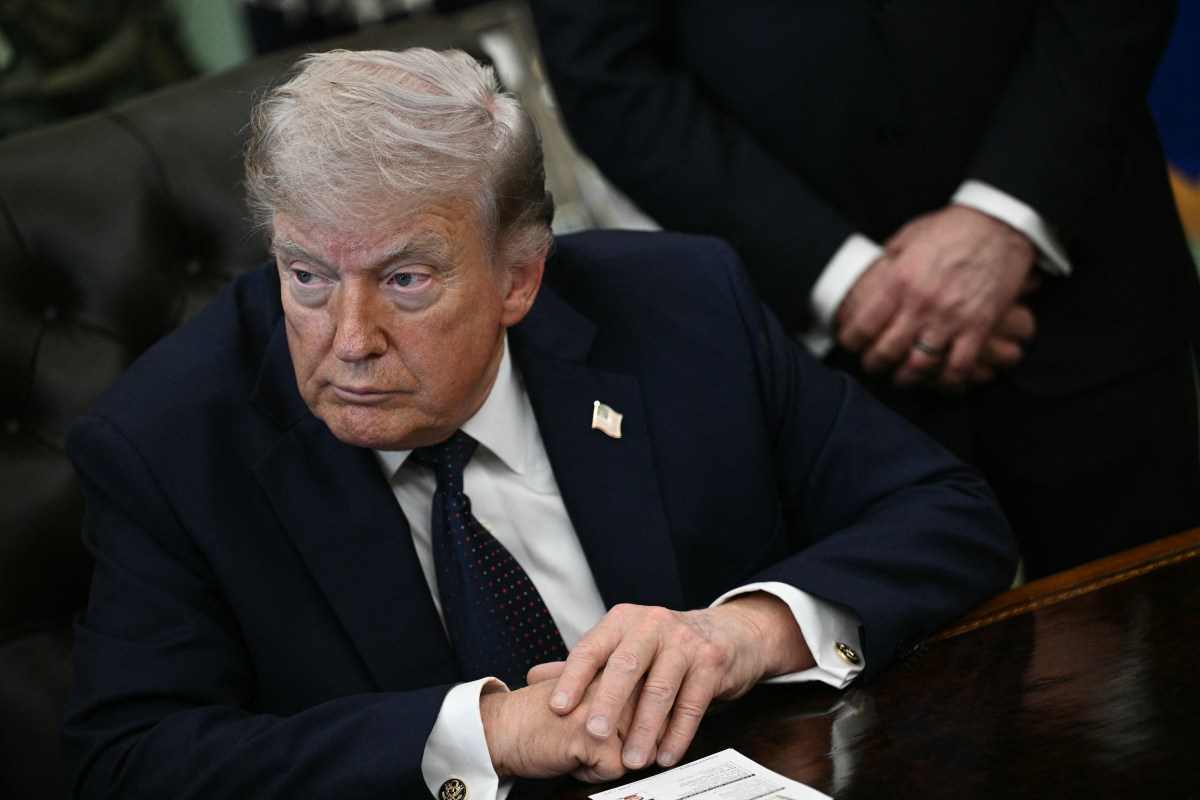
President Donald Trump described the modern world as "somewhat of a casino" when asked about online betting markets like Polymarket. He spoke about a case involving a U.S. soldier accused of using secret information to make bets on a Venezuelan operation and said he would look into the situation.
Key Facts
President Trump called the world "somewhat of a casino" in reference to online prediction markets.
A U.S. soldier named Gannon Ken Van Dyke is charged with betting on Polymarket using classified info about Venezuela’s President Nicolás Maduro.
Trump said he did not know about the case but promised to investigate it.
Trump compared the soldier’s alleged betting to baseball player Pete Rose betting on his own team.
The Commodity Futures Trading Commission (CFTC), led by a Trump appointee, supports treating prediction markets as financial markets, not gambling.
Trump’s family has ties to prediction markets: Donald Trump Jr. advises companies Kalshi and Polymarket.
Trump’s media company plans to launch a cryptocurrency-based prediction market on its social platform, Truth Social.
The case has renewed attention on the risks and legality of betting on political and security events.
Read the Original
Want the full story? Tap a source to open the original
article.