The US Food and Drug Administration (FDA) upgraded the recall of several potato chip brands made by Utz to its highest level due to a possible risk of salmonella contamination. The recall covers about 650,000 bags of chips with certain best-by dates, and consumers are advised not to eat these products and to discard them.
Key Facts
The FDA gave the recall a Class 1 designation, meaning the product may cause serious health problems or death.
The recall affects Zapp’s and Dirty brand potato chips made by Utz.
The contamination risk comes from dry milk powder in a seasoning ingredient sourced from a third party.
About 650,000 bags with best-by dates from July 27 to August 31 are involved.
Utz announced the recall voluntarily in May and said no illnesses have been reported so far.
Consumers should not eat the recalled chips and can contact Utz for a refund.
Salmonella bacteria cause food poisoning, with symptoms like fever, stomach pain, diarrhea, and nausea.
The FDA report did not give additional details on why the recall was upgraded to the highest level.
Read the Original
Want the full story? Tap a source to open the original
article.
The Trump administration changed how U.S. history is presented in national parks by removing or altering signs and displays about sensitive topics like slavery, Native American history, and climate change. This effort aimed to promote a version of history that leaves out uncomfortable facts and did so across many parks and historic sites.
Key Facts
Jerry Bransford’s ancestor, Materson Bransford, was an enslaved guide at Mammoth Cave, who became an expert on the cave system.
National parks in the U.S. often tell stories about the country's history as well as nature.
The Trump administration worked to change or remove signs and materials that included facts about slavery, Native American genocide, George Washington’s slave ownership, and climate change.
This campaign affected many signs and displays in the National Park Service’s 433 parks, sites, and monuments.
Critics say these changes erase the histories of groups who are not white, wealthy, Christian, or male.
Some experts believe these changes will affect how history is shared in national parks for many years.
The Department of the Interior did not respond to questions about the number or details of changes made.
The Guardian reviewed thousands of images and documents and spoke to current and former park employees to report on these changes.
Read the Original
Want the full story? Tap a source to open the original
article.
The article is a letter from Kevin Powell to his two young nieces on America’s 250th birthday in 2026. He explains that while America celebrates freedom and democracy, this country’s history includes slavery, racism, and inequality, especially for Black people and women. Powell reflects on his own life and the progress made through civil rights, while warning about current threats to those hard-won freedoms.
Key Facts
America will celebrate its 250th birthday in 2026, marking its founding in 1776.
Many Black people were enslaved at the time America was founded and helped build the nation with unpaid labor.
The country’s founders did not originally consider all people equal, especially Black people, Indigenous peoples, women, or working-class Whites.
Slavery ended after the Civil War, about 100 years before Black Americans gained full voting rights through the Civil Rights Movement.
Civil rights leaders like Ella Baker, Fannie Lou Hamer, Bayard Rustin, and John Lewis helped change society for the better.
The author grew up poor with a single mother but overcame challenges to achieve his goals because of the progress made by those before him.
Powell warns that today’s society faces new challenges such as hate, violence, and policies that threaten freedom and equality.
He encourages his nieces to remember their history and believe they can continue to push for justice and opportunity.
Read the Original
Want the full story? Tap a source to open the original
article.
The Supreme Court ruled that companies like Monsanto can use federal approval of their products to stop people from filing lawsuits against them. This decision means people may have fewer ways to seek justice if they are harmed by these products.
Key Facts
Monsanto is a large company that makes chemical products.
Monsanto argued that federal approval protects them from lawsuits.
The Supreme Court agreed with Monsanto’s argument.
This ruling limits the ability of individuals to sue companies over certain approved products.
The case raises questions about public safety and corporate responsibility.
It focuses on how federal regulations interact with the legal rights of citizens.
The decision could impact how similar cases are handled in the future.
Read the Original
Want the full story? Tap a source to open the original
article.
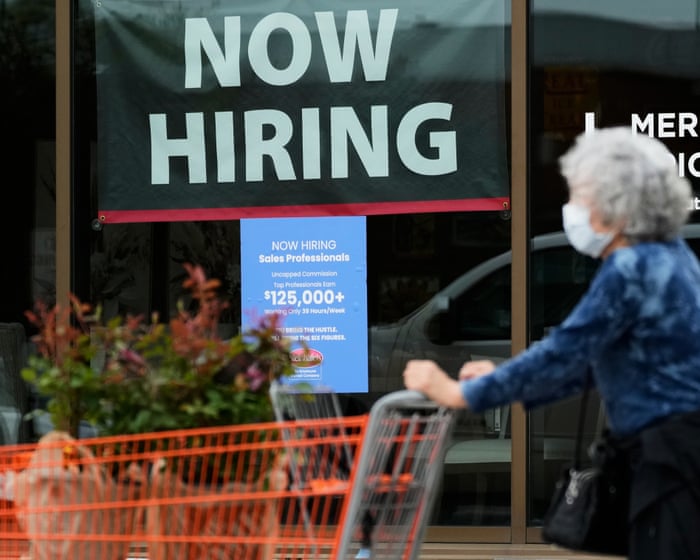
U.S. employers added 57,000 jobs in June, which was much less than expected. The unemployment rate fell slightly to 4.2%, but the slower job growth suggests hiring is losing strength.
Key Facts
Economists predicted 100,000 new jobs in June, but only 57,000 were added.
The unemployment rate dropped from 4.3% in May to 4.2% in June.
Job growth in April and May was revised down by a total of 74,000 jobs.
The professional and business services sector added the most jobs with 36,000 in June.
Healthcare added 22,000 jobs, less than its average monthly gain of 38,000 over the past year.
Leisure and hospitality lost 61,000 jobs, partly due to lower-than-expected hiring around the World Cup.
Experts say the labor market is still strong but note signs of slower hiring and lower consumer confidence.
Read the Original
Want the full story? Tap a source to open the original
article.
Colorado Governor Jared Polis fired two members of his clemency board because they publicly disagreed with his decision to reduce the prison sentence of Tina Peters. Peters, a former state elections clerk, was the first local official convicted for trying to interfere with the 2020 presidential election results.
Key Facts
Governor Jared Polis is a Democrat and leads Colorado.
Tina Peters was a state elections clerk in Colorado.
Peters was convicted for actions to interfere with the 2020 presidential election.
Polis reduced Peters' prison sentence, a process called commutation.
Two members of the clemency board, Azra Taslimi and Hannah Seigel Proff, opposed this commutation publicly.
Governor Polis fired these two clemency board members after they spoke out.
Clemency boards advise on decisions like pardons or sentence reductions.
This event is related to political and legal issues surrounding the 2020 U.S. election.
Read the Original
Want the full story? Tap a source to open the original
article.
The U.S. job market added 57,000 jobs in June, which was fewer than expected and much lower than May’s 172,000. Inflation remains high at 4.2%, more than twice the Federal Reserve’s target, leading to concerns about possible interest rate increases.
Key Facts
The U.S. added 57,000 jobs in June, down from 172,000 jobs added in May.
Average monthly job growth from January to May was about 114,000 jobs.
The unemployment rate slightly dropped from 4.3% in May to 4.2% in June.
The professional and business services sector added 36,000 jobs in June.
High inflation (4.2%) is more than double the Federal Reserve’s 2% target.
Inflation has been driven by factors including the Iran war and higher oil prices.
The Federal Reserve is considering raising interest rates to reduce inflation.
Federal Reserve Chair Kevin Warsh expects AI to create jobs and boost the economy.
Read the Original
Want the full story? Tap a source to open the original
article.
The Trump administration has proposed a new rule aimed at lowering the cost of prescription drugs for Medicare patients. The rule would limit how much hospitals can charge for discounted outpatient drugs under the 340B program, potentially saving patients $1.1 billion next year.
Key Facts
The 340B program lets hospitals serving low-income patients buy outpatient drugs at lower prices.
Currently, some hospitals charge insurers more than their drug costs, causing higher patient bills.
The proposed rule would reduce Medicare reimbursements to these hospitals by about 40% for 340B drugs.
An average Medicare Part B patient could save about $800 annually in co-payments under this rule.
The rule aims to save a total of $1.1 billion next year and potentially $20 billion over 10 years.
Hospitals buy certain drugs for about $700 but often get reimbursed around $4,000 plus patient fees.
The rule would take effect at the start of next year if approved.
A similar effort was blocked by the Supreme Court in 2022, but a 2025 executive order led to this new proposal.
Read the Original
Want the full story? Tap a source to open the original
article.
The number of Americans applying for unemployment benefits fell slightly last week to 215,000, showing that layoffs remain low. This suggests the U.S. job market is still healthy.
Key Facts
Jobless aid applications dropped by 1,000 to 215,000 for the week ending June 27, 2026.
Analysts had predicted 225,000 new claims, so the actual number was lower than expected.
Weekly unemployment filings are a good sign of people losing jobs and the health of the job market.
The four-week average of claims decreased by 2,500 to 222,000, smoothing out weekly changes.
Total people filing for benefits in the previous week ending June 20 increased slightly by 2,000 to 1.81 million.
Low and stable jobless claims indicate layoffs remain at historically low or healthy levels.
The data comes from the U.S. Labor Department.
Read the Original
Want the full story? Tap a source to open the original
article.
President Donald Trump’s administration is launching "Trump Accounts" on July 4, 2026, to give $1,000 in investment money to newborns during his second term. The money is invested in the stock market and can only be used by the child after turning 18 for things like education, buying a home, or starting a business.
Key Facts
Trump Accounts start on July 4, 2026, linked to America’s 250th anniversary.
Any child born during President Trump’s second term is eligible for a $1,000 government deposit.
Parents can open accounts for children up to 17 years old, but older children won’t get the $1,000 from the government.
The money is invested in U.S. stock market index funds managed by private firms with low fees.
Children can access the funds only after age 18 and must use it for approved purposes like education, business, or a home purchase.
Families can contribute additional money each year, up to $2,500 pretax, with a total cap of $5,000 from all contributors.
Billionaires like Michael Dell and Sanjay Mehrotra have pledged billions of dollars to support these accounts for children ineligible for the government deposit.
The program launches amid rising living costs and cuts to some social safety net programs.
Read the Original
Want the full story? Tap a source to open the original
article.
US employers added 57,000 new jobs in June, which is about half of what economists expected. The unemployment rate fell slightly to 4.2%, but many people left the labor force. Job growth has slowed, but overall the job market remains stronger than in late 2023.
Key Facts
In June, 57,000 new jobs were added, less than the predicted number.
The unemployment rate decreased slightly to 4.2%.
The Bureau of Labor Statistics revised job growth for April and May down by a total of 74,000 jobs.
Private employers added 98,000 jobs in June, with average pay rising 4.4% year-over-year.
The healthcare industry added 22,000 jobs in June, slower than usual.
Hospitality and leisure jobs fell by 61,000, a decline related to weaker seasonal hiring.
The number of job openings, hires, and voluntary quits changed little, showing slow hiring and firing trends.
Inflation rose to 4.2% in May, influenced by the Middle East war, and the Federal Reserve may raise interest rates again to control inflation.
Read the Original
Want the full story? Tap a source to open the original
article.
The acting U.S. attorney general said prosecutors and law enforcement will focus on stopping “birth tourism,” where people come to the U.S. mainly to have babies and get citizenship for them. This comes after the Supreme Court confirmed that birthright citizenship is guaranteed by the Constitution. President Trump is pushing for new laws to limit citizenship for children born to parents without legal status.
Key Facts
"Birth tourism" means traveling to the U.S. specifically to have a baby and obtain citizenship for the child.
The Supreme Court recently upheld birthright citizenship in a related case.
Acting Attorney General Todd Blanche said federal agents will focus on preventing birth tourism.
President Trump wants Congress to create exceptions to birthright citizenship for children of parents without permanent legal residency.
The government acknowledged that no clear data exists on how big the birth tourism problem is.
Blanche mentioned changes could be made in visa application processes to reduce birth tourism.
This issue relates to people using tourist visas for giving birth rather than visiting.
Read the Original
Want the full story? Tap a source to open the original
article.
Nearly one year after sudden floods in Texas killed over 130 people, including 27 campers and counselors at Camp Mystic, the fathers of some victims are urging for better safety measures. They want changes to prevent such tragedies from happening again.
Key Facts
Flash floods in Texas caused over 130 deaths nearly one year ago.
Among the victims were 27 campers and counselors from Camp Mystic.
Two fathers of victims spoke to CBS News about the tragedy.
These fathers are advocating for improved safety rules and protections.
The goal is to prevent future deaths during similar natural disasters.
The event highlights the risks of flash flooding in outdoor camps.
Read the Original
Want the full story? Tap a source to open the original
article.
President Donald Trump is launching a new program called Trump Accounts on July 4 to help children born during his second term start saving money. Parents can open investment accounts for these children, and the government will put in $1,000 to invest in the stock market, which the child can only use for certain expenses after turning 18.
Key Facts
Trump Accounts start on July 4 and celebrate America's 250th anniversary.
Any child born during President Trump's current term (from Jan. 1, 2025) automatically gets $1,000 in their account.
Accounts can be opened for children under 18, but only newborns receive the $1,000 government deposit.
The money is invested in U.S. stock market index funds managed by private firms with low fees.
Children can access the money at age 18 for specific uses like education, buying a home, or starting a business.
Parents and others can add more money, with a yearly contribution limit of $5,000 (excluding donations from governments or charities).
Billionaires like Michael Dell and Sanjay Mehrotra have pledged billions to support these accounts for children not eligible for the $1,000 bonus.
The program comes amid rising living costs and cuts to some social programs like Medicaid and SNAP.
Read the Original
Want the full story? Tap a source to open the original
article.
Defense Secretary Pete Hegseth will lead a ceremony with National Guard troops to celebrate America 250, marking the country's 250th anniversary. The event will focus on the D.C. Safe and Beautiful Task Force, which works to improve safety and appearance in Washington, D.C.
Key Facts
The ceremony is part of America 250 celebrations for the U.S. 250th anniversary.
Pete Hegseth, the Defense Secretary, will host the event.
National Guard troops will participate in the ceremony.
The event highlights the D.C. Safe and Beautiful Task Force.
The task force aims to increase safety and beautify Washington, D.C.
The task force was started during President Donald Trump’s administration.
The ceremony takes place in Washington, D.C.
Read the Original
Want the full story? Tap a source to open the original
article.
President Donald Trump signed a new law called "Lulu's Law" that allows emergency alerts on cellphones to warn people about shark attacks nearby. The law was inspired by Lulu Gribbin, a teenager who survived a shark attack in Florida in 2024 and now wants to help others avoid similar incidents.
Key Facts
Lulu Gribbin survived a shark attack in 2024 off the Florida Panhandle, losing part of her hand and leg.
She did not know about a previous shark attack nearby before she entered the water.
"Lulu's Law" lets authorities send emergency alerts to cellphones when a shark attack happens in an area.
The Federal Communications Commission (FCC) is required to allow these shark attack alerts.
States are responsible for setting up the alert systems; Alabama already passed a similar law.
The alerts work like Amber Alerts, which inform people about child abductions.
Gribbin has recovered with prosthetics, returned to sports, and now advocates for shark attack warnings.
The law was supported by Alabama lawmakers and U.S. Senator Katie Britt, highlighting Gribbin’s role in the process.
Read the Original
Want the full story? Tap a source to open the original
article.
The exam board Pearson announced a delay of more than a week in releasing this year’s Sats results for Year 6 pupils in England, due to technical problems. Education leaders and the government expressed frustration, and Pearson apologized while promising to work hard to deliver accurate results soon.
Key Facts
Pearson delayed England’s Sats results from July 7 to July 16 because of technical issues.
This is Pearson’s first year delivering Key Stage 2 tests after a contract change.
The National Association of Head Teachers (NAHT) said the delay is unacceptable and wants reliable results guaranteed.
Education Secretary Bridget Phillipson called the delay “deeply frustrating” for schools, parents, and pupils.
Some markers reported working late nights and having concerns about the accuracy of marking due to system problems.
Pearson said it is working around the clock to finish marking and provide complete results.
School leaders want a full investigation to prevent future delays and are questioning the usefulness of these tests.
Other exam results like GCSEs and A-levels from Pearson will not be affected by this delay.
Read the Original
Want the full story? Tap a source to open the original
article.
A strong heatwave is affecting much of the central and eastern United States, with dangerous temperatures and humidity levels expected through July 4. Cities like New York have opened cooling centers and urged residents to stay cool and conserve energy. Indiana has passed a new law allowing people to rescue pets from hot cars without legal penalty.
Key Facts
The National Weather Service issued Extreme Heat Warnings for 26 states plus Washington, D.C.
Heat index values, which show how hot it feels with humidity, could reach 115°F in some areas.
New York City activated a Heat Emergency Plan, opening cooling centers and providing mobile medical and hydration help.
NYC officials advised setting air conditioners to 78°F to conserve energy while staying cool.
Some people disagreed about the 78°F thermostat recommendation due to comfort concerns.
Indiana passed House Bill 1165 allowing people to break into locked vehicles to rescue pets in danger from heat without legal penalties.
Rescuers must call emergency services before breaking a car window and stay with the animal until help arrives.
Officials warn pets left in hot cars risk serious health problems from high temperatures.
Read the Original
Want the full story? Tap a source to open the original
article.
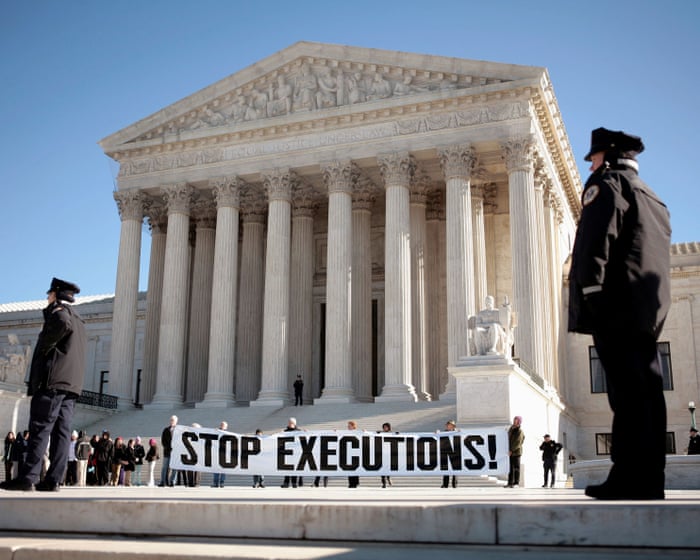
On July 2, 1976, the U.S. Supreme Court ruled in several cases that allowed the death penalty to continue under new legal guidelines. These rulings meant that states could rewrite laws to try to make capital punishment fairer, but the court has continued to permit the death penalty as constitutional.
Key Facts
The Supreme Court stopped the death penalty in 1972 in Furman v. Georgia because of concerns about unfair and arbitrary sentencing.
The Furman ruling did not abolish the death penalty but required states to change their laws to avoid bias.
In response, 37 states revised their laws to follow the court's guidelines for fair sentencing.
On July 2, 1976, the Supreme Court’s decisions in five cases, including Gregg v. Georgia, allowed the death penalty to resume under these new rules.
Justice Potter Stewart wrote the majority opinion saying the death penalty does not always violate the Constitution.
The ruling has prevented the court from ending the death penalty nationwide since then.
Some experts believe the court’s interpretation has weakened protections against cruel and unusual punishment under the Eighth Amendment.
The court’s 1976 decisions still serve as the legal basis for death penalty cases today.
Read the Original
Want the full story? Tap a source to open the original
article.