On Wednesday, 103 Democrats in the U.S. House of Representatives voted to stop aid to Israel. This vote is part of ongoing disagreements about how much support the U.S. should give to Israel.
Key Facts
103 House Democrats voted to cut off aid to Israel.
The vote took place on Wednesday.
This action reflects a debate within the Democratic Party about U.S. support for Israel.
The U.S. has been a longtime ally of Israel.
This vote is a recent event in the broader discussion about foreign aid and U.S. foreign policy.
The news was reported by CBS News.
Former officials from both the Biden and Pence administrations discussed the issue on "The Takeout" show.
Read the Original
Want the full story? Tap a source to open the original
article.
Senator Chris Van Hollen from Maryland is thinking about running for president in 2028. He said Democratic leaders have not clearly explained their goals to voters and have focused too much on opposing President Trump instead of promoting their own ideas.
Key Facts
Senator Chris Van Hollen is considering a 2028 presidential run.
He believes Democratic leaders are not clearly sharing their message with voters.
Van Hollen feels the party focuses more on opposing President Donald Trump than on explaining its own plans.
He has experience leading important Democratic campaign groups (DSCC and DCCC).
His comments highlight challenges the Democratic Party faces in connecting with voters.
Read the Original
Want the full story? Tap a source to open the original
article.
Maine Democratic candidate Matt Dunlap talks about his campaign for the U.S. House of Representatives. He also discusses the Senate campaign of Graham Platner, which has attracted controversy.
Key Facts
Matt Dunlap is running for a seat in the U.S. House of Representatives from Maine.
He is a member of the Democratic Party.
Dunlap appeared on the CBS News show "The Takeout" to talk about his campaign.
He addressed issues related to Graham Platner’s Senate campaign.
Graham Platner’s campaign has caused some controversy.
The discussion was broadcast on CBS News and available on the CBS News app.
Read the Original
Want the full story? Tap a source to open the original
article.
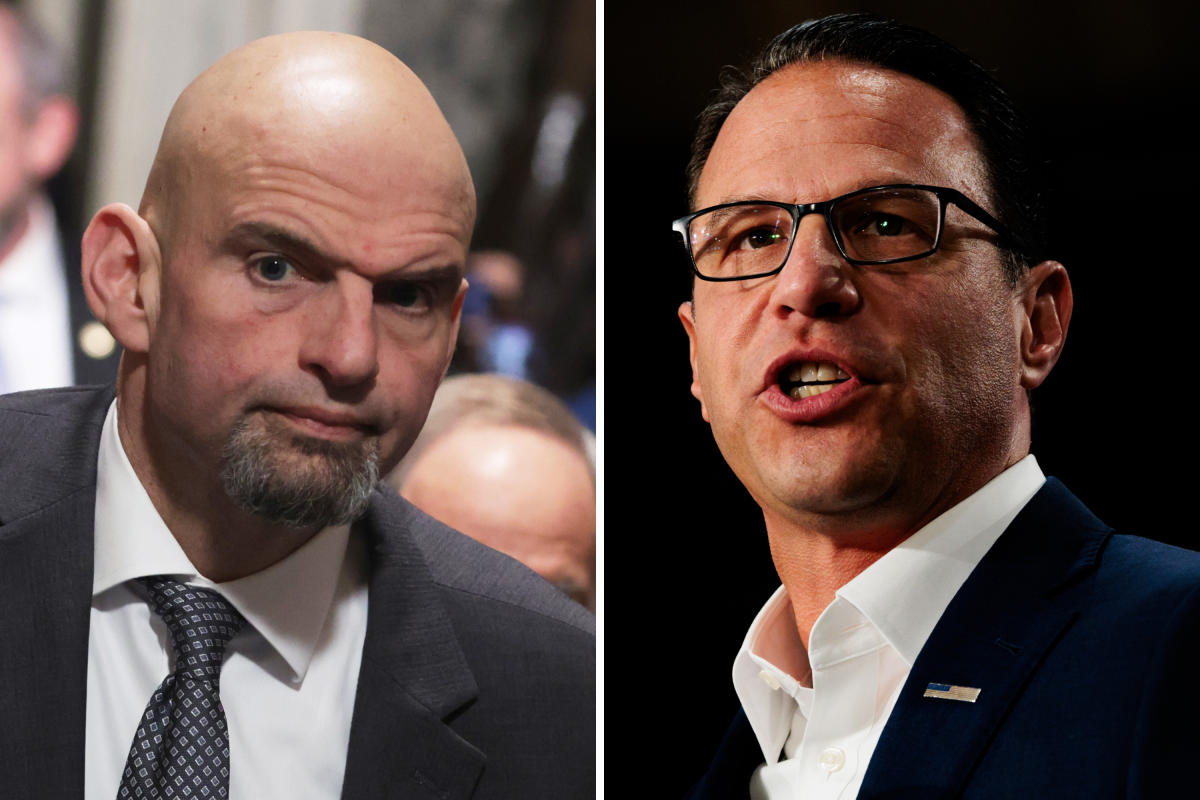
A recent Quinnipiac University poll shows Pennsylvania Governor Josh Shapiro’s lead over Republican Stacy Garrity has decreased, though he still leads by 13 points. Pennsylvania Senator John Fetterman’s approval rating among Democrats has fallen to a new low, with most Democrats disapproving of his job performance.
Key Facts
Josh Shapiro leads Stacy Garrity 53% to 40% in the Pennsylvania governor’s race, down from an 18-point lead earlier in the year.
Shapiro’s approval rating is steady at 56%, but the disapproval rate has risen from 29% to 34%.
Stacy Garrity, Pennsylvania treasurer, is less known; 58% of voters said they didn’t know enough about her to have an opinion.
Fetterman’s approval among Democrats is low, with only 19% approving and 69% disapproving of his performance.
Overall, Fetterman has a 48% approval rating and 41% disapproval, helped by strong support from Republicans.
Pennsylvania is a key swing state in national elections, voting for President Trump in 2024 after supporting President Biden in 2020.
The poll surveyed 895 registered voters with a margin of error of ±4.3 percentage points.
Other polls and political forecasts still favor Shapiro to win reelection in November.
Read the Original
Want the full story? Tap a source to open the original
article.
The U.S. Justice Department has refused New Mexico’s request to release unredacted files about Jeffrey Epstein, citing federal laws and court orders that protect victims' privacy. New Mexico’s Attorney General Raul Torrez says the withheld documents are needed for a state investigation into Epstein’s alleged crimes at his New Mexico property.
Key Facts
The U.S. Justice Department says releasing unredacted Epstein files would break federal laws and court orders.
New Mexico Attorney General Raul Torrez accuses the Justice Department of blocking his state’s investigation by withholding documents.
Epstein was a convicted sex offender accused of running a sex-trafficking ring with hundreds of victims.
Epstein owned the Zorro Ranch near Santa Fe, New Mexico, where trafficking allegedly took place.
The New Mexico investigation restarted in February after millions of Epstein-related records were released under new transparency laws.
Torrez says the delay in receiving full documents harms the investigation because witnesses and evidence become harder to find over time.
President Donald Trump’s administration has faced criticism over handling Epstein files and transparency.
Epstein died by suicide in jail in 2019 during Trump’s first term; Trump denies knowledge of Epstein’s crimes.
Read the Original
Want the full story? Tap a source to open the original
article.
The Pentagon has asked Congress to give it new power to keep certain unclassified military records secret from the public under the Freedom of Information Act (FOIA). This proposal would allow the Defense Department to withhold records labeled as "controlled unclassified information" if releasing them could harm national defense, changing how public access to government information is currently handled.
Key Facts
The Pentagon wants a new law to let it withhold some unclassified records from FOIA requests.
The records involved are called "controlled unclassified information" (CUI), which are sensitive but not officially classified.
Currently, CUI does not automatically allow the government to block records from the public; agencies must use one of FOIA’s nine exemptions.
The proposal would let the Defense Department withhold CUI records based on military judgment of harm and outweighing public interest.
The CUI system was created to standardize labels for sensitive but unclassified info across agencies.
Critics say the new power could reduce government transparency and make it harder to get information through FOIA.
The Pentagon has recently restricted journalists’ access inside its buildings and required official escorts.
Federal judges ruled against the Pentagon’s restrictions on reporters, but the Pentagon is appealing those decisions.
Read the Original
Want the full story? Tap a source to open the original
article.
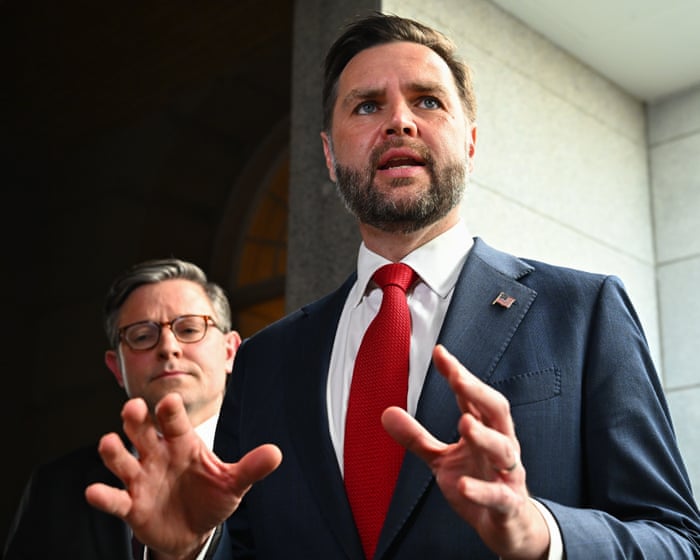
JD Vance, the U.S. vice-president, admitted that the Trump administration made mistakes in handling the release of documents related to Jeffrey Epstein. He said the government should have been more open from the start and that problems in communication caused public distrust, but he denied that they tried to hide anything on purpose.
Key Facts
JD Vance admitted the administration "screwed up" communication about the Epstein files.
The Department of Justice delayed releasing documents tied to Jeffrey Epstein, a convicted sex offender.
These delays caused criticism from both parties in Congress.
Pam Bondi, former attorney general, said Epstein’s "client list" was available, but this claim was later viewed as an overstatement.
Bondi gave binders of documents that mostly contained already public information.
The delays and redacted documents led to distrust and criticism from lawmakers and the public.
Eventually, a law forced the government to release many federal investigation files about Epstein.
The files released included photos, call logs, grand jury testimony, and interview transcripts, but many parts were heavily redacted.
Read the Original
Want the full story? Tap a source to open the original
article.
President Donald Trump will give a primetime speech on Thursday at 9 p.m. Eastern Time, focusing on elections and related topics. The speech will address issues connected to the 2020 presidential election and alleged problems with voting machines, but details have not been fully revealed.
Key Facts
The speech will air from the White House on Thursday at 9 p.m. ET and will be broadcast live on major TV networks and online.
President Trump said the address will cover elections and “a couple of other things,” without providing specific details.
The White House confirmed the speech will include information about the 2020 election and potential vulnerabilities in US voting machines.
The speech comes about three and a half months before the November midterm elections for control of Congress.
Republicans currently hold small majorities in both the House and Senate; Democrats aim to gain seats.
Critics worry the speech might reduce public trust in upcoming elections or push federal involvement in state-run election processes.
President Trump has repeatedly claimed he won the 2020 election, despite official results showing Joe Biden as the winner.
The 2020 election saw Biden win 306 electoral votes and over 81 million votes, compared to Trump’s 232 electoral votes and about 74 million votes.
Read the Original
Want the full story? Tap a source to open the original
article.
A lawsuit has been filed against President Donald Trump’s executive order that imposes sanctions on the International Criminal Court (ICC) and Palestinian human rights groups. The lawsuit claims these sanctions violate free speech by limiting advocacy related to investigations of human rights violations involving Israel.
Key Facts
President Trump signed an executive order in February 2025 placing sanctions on ICC judges, prosecutors, and groups linked to investigations of Israel.
The ICC is an international court that can prosecute genocide, war crimes, and crimes against humanity.
The sanctions include financial and visa restrictions on people helping ICC investigations of U.S. citizens or allies.
Two U.S.-based advocacy groups, Democracy in the Arab World Now (Dawn) and Taxpayer Alliance Against Genocide (Taag), filed the lawsuit in New York federal court.
The lawsuit argues the sanctions stop their political speech and advocacy, violating the U.S. Constitution.
The U.S. and Israel are not members of the ICC.
The executive order followed an ICC arrest warrant for Israel’s Prime Minister Benjamin Netanyahu over alleged war crimes in Gaza.
U.S. officials, including Secretary of State Marco Rubio, have expressed intent to expand sanctions and oppose the ICC, claiming it threatens U.S. sovereignty.
Read the Original
Want the full story? Tap a source to open the original
article.
A new bill called the Radiation Exposure Reauthorization Act of 2026 would allow veterans involved in Cold War nuclear cleanup missions to get a one-time payment up to $150,000. It would expand the current Radiation Exposure Compensation Act to include veterans from specific nuclear sites and increase the types of illnesses covered.
Key Facts
The bill targets veterans who took part in cleanup work at Enewetak Atoll (Marshall Islands), Palomares (Spain), and Thule (Greenland).
These sites were locations of nuclear accidents or testing that left behind radioactive contamination.
Veterans exposed to radiation during cleanup missions often face cancers, heart disease, and other health problems.
The bill would increase the maximum compensation payment from $75,000 to $150,000.
It would also extend the deadline for filing claims until December 31, 2042.
The legislation is expected to be introduced by Representative James Moylan and a bipartisan group soon.
Fewer than 6,000 veterans served at these sites, with only several hundred still living.
Previously, these veterans were excluded from federal compensation programs even though some illnesses are now presumed to be connected to radiation exposure.
Read the Original
Want the full story? Tap a source to open the original
article.
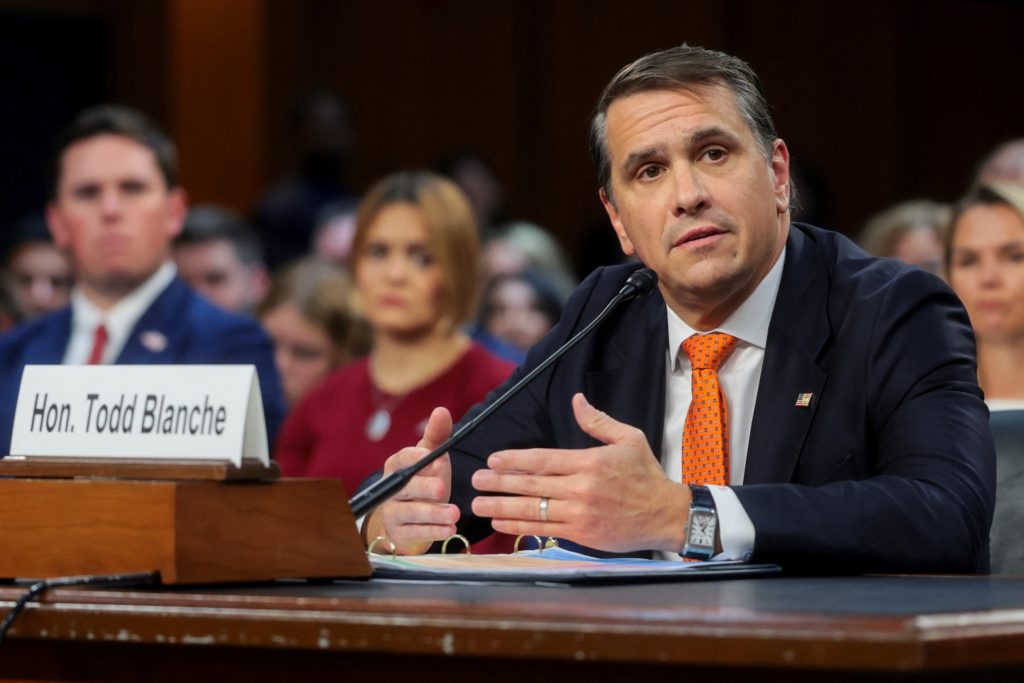
Acting Attorney General Todd Blanche testified before the Senate Judiciary Committee as part of his nomination process to become permanent Attorney General. Senators asked him about his work as President Trump’s personal lawyer, the proposed settlement fund for people affected by the Department of Justice, and how he dealt with files related to Jeffrey Epstein.
Key Facts
Todd Blanche is the current Acting Attorney General.
He appeared before the Senate Judiciary Committee for confirmation hearings.
Senators questioned him about his past role as President Trump’s personal lawyer.
He was asked about a proposed settlement fund linked to Department of Justice cases.
Blanche faced questions regarding his handling of files connected to Jeffrey Epstein.
The hearing is part of the process to decide if Blanche will become the permanent Attorney General.
Justice correspondent Ali Rogan reported on the hearing.
Read the Original
Want the full story? Tap a source to open the original
article.
Jay Clayton attended a Senate hearing to be confirmed as the director of national intelligence. Although the job deals mostly with foreign threats and security, the hearing focused mainly on the 2020 U.S. presidential election.
Key Facts
Jay Clayton is nominated to be the director of national intelligence.
The director of national intelligence's role centers on threats from other countries and national safety.
The Senate Intelligence Committee held a confirmation hearing for Clayton.
Much of the hearing concentrated on the 2020 U.S. presidential election.
Clayton declined to state who won the 2020 election during the hearing.
The discussion involved intelligence expert Fred Fleitz, who has 25 years of experience.
The hearing took place under President Donald Trump’s administration.
The director of national intelligence oversees U.S. intelligence agencies to protect the country.
Read the Original
Want the full story? Tap a source to open the original
article.
President Donald Trump plans to talk about new claims that China interfered in U.S. elections. He will allege that China accessed U.S. voter information and that the CIA knew about it but did not tell him during his first term.
Key Facts
President Trump will give a primetime speech on Thursday night.
The speech will include allegations of Chinese interference in U.S. elections.
He claims China obtained U.S. voter data.
President Trump says the CIA was aware of this but did not inform him.
Cabinet members, including leaders of the CIA, FBI, and other agencies, are invited to the speech.
Some cabinet members may not attend due to scheduling conflicts.
The White House press secretary said no one knows exactly what the president will say yet.
This story is developing and more information may come.
Read the Original
Want the full story? Tap a source to open the original
article.
The US military will begin testing testosterone levels in service members as part of a new health program. Troops aged 30 and older will be tested every year, and those with low levels can choose to receive hormone therapy to help improve their strength and health.
Key Facts
Defense Secretary Pete Hegseth announced the military will screen testosterone levels to help troops perform their best.
Service members 30 years and older must have annual testosterone tests; younger troops can ask for testing if they want.
Troops with low testosterone can voluntarily receive testosterone replacement therapy.
The military bans using testosterone for muscle enhancement without a doctor’s approval.
The program aims to support service members’ long-term health and ability to perform both during and after service.
Testosterone therapy can help increase muscle, reduce fat, decrease depression risk, and improve bone strength.
Therapy can cause infertility and may increase heart risks, so it’s recommended only for those with symptoms.
The US Health Secretary and FDA are working to make testosterone therapy more accessible, citing concerns like a national fertility crisis.
Read the Original
Want the full story? Tap a source to open the original
article.
President Donald Trump ended the temporary pause on ICE traffic stops that had been put in place after two deadly shootings. The U.S. also carried out new military strikes against Iran. Meanwhile, smoke from wildfires in Canada and Minnesota is making the air unhealthy for many people in the Midwest and Northeastern United States.
Key Facts
President Trump canceled the pause on Immigration and Customs Enforcement (ICE) traffic stops.
The pause was originally issued after two deadly shootings related to traffic stops.
The U.S. launched several new military strikes targeting Iran.
Wildfires in Canada and Minnesota are producing heavy smoke.
The smoke is causing poor air quality for millions in the Midwest and Northeastern U.S.
The unhealthy air affects a large region across multiple states.
The news was reported on a Wednesday.
Read the Original
Want the full story? Tap a source to open the original
article.
Two health experts nominated by President Donald Trump appeared before the Senate for confirmation. Senators from both parties questioned the nominees, focusing on concerns about pressure on vaccine decisions during the administration.
Key Facts
Erica Schwartz was nominated to be the next director of the Centers for Disease Control and Prevention (CDC).
Sean Kaufman is also a health nominee from President Trump’s administration.
Both nominees faced questions from Senate Democrats and some Republicans.
Senators expressed concern about whether nominees would resist political pressure related to vaccines.
The hearing took place on a Wednesday.
The discussion showed tensions about how much the health officials would maintain independence from the administration’s influence.
Read the Original
Want the full story? Tap a source to open the original
article.
Kathy Ruemmler, former chief legal officer at Goldman Sachs and former White House counsel for President Obama, testified before the House Oversight Committee about her ties to Jeffrey Epstein. She said she never saw evidence of Epstein’s criminal behavior while working with him and expressed regret for associating with him after his 2019 arrest.
Key Facts
Kathy Ruemmler worked as top lawyer at Goldman Sachs and served as White House counsel under President Obama.
She testified in a closed-door session of the House Oversight Committee investigating government handling of Epstein cases.
Ruemmler said she never saw evidence of Epstein’s criminal conduct during their interactions.
Epstein called her after his arrest in July 2019, but she stopped all contact with him afterward.
She declined to join Epstein’s legal defense team following his arraignment.
Ruemmler expressed that Epstein was a “masterful liar” who used her to appear credible.
She was shocked by Epstein's 2019 indictment alleging he recruited underage girls for sex acts.
Ruemmler regretted ever meeting Epstein and said she would have reported abuse if she had seen it.
Read the Original
Want the full story? Tap a source to open the original
article.
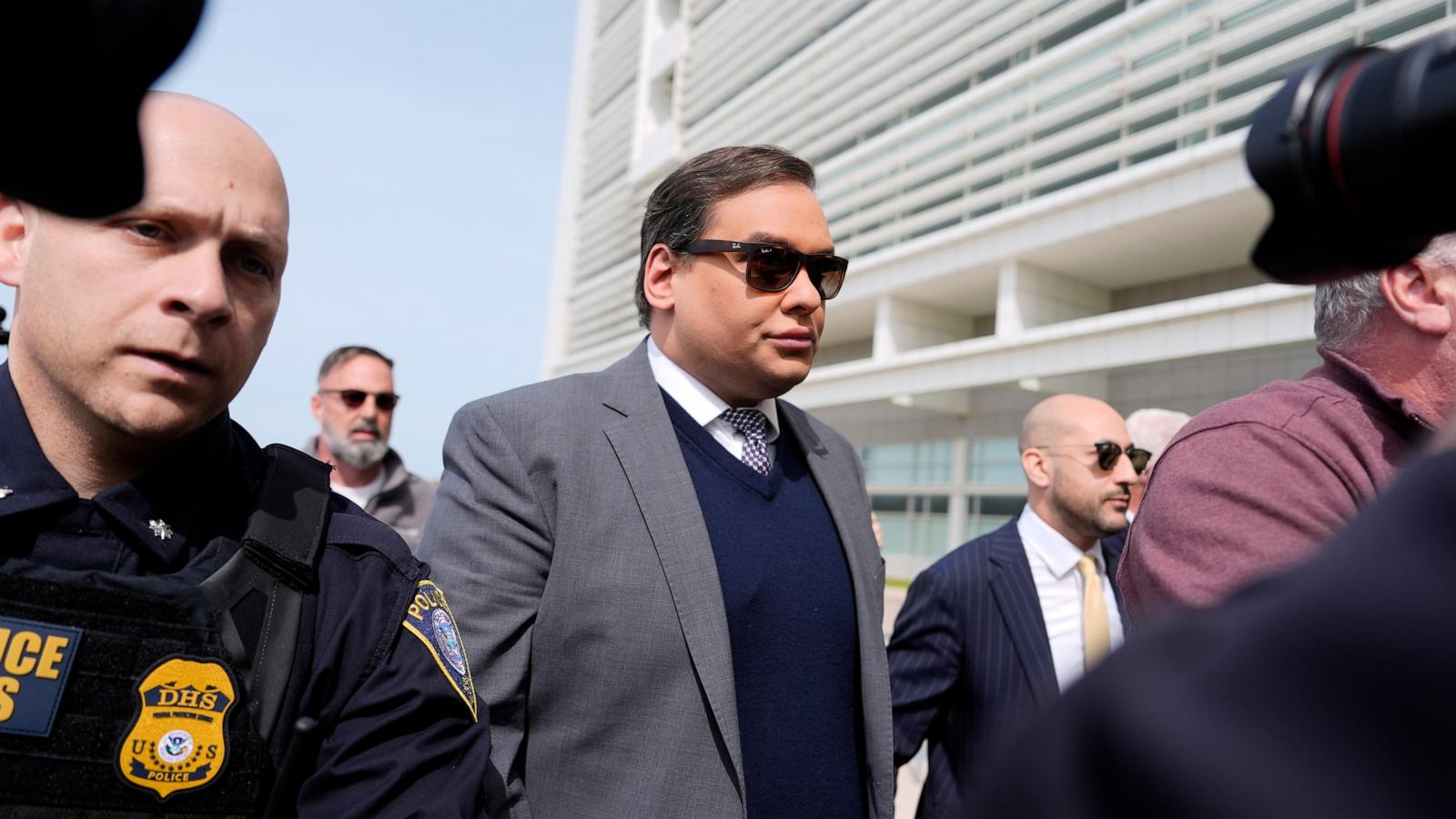
George Santos, a former U.S. congressman who was expelled and served time in federal prison, will appear on a reality TV show called “Special Forces: World’s Toughest Test” on Fox. The show features tough military-style challenges in a Malaysian jungle and includes other celebrity contestants.
Key Facts
George Santos was elected to the U.S. House of Representatives in 2022 as a Republican.
He was expelled from Congress after it was revealed he lied about much of his life story.
Santos faced criminal charges for stealing from donors, campaign fraud, and lying to Congress.
He pleaded guilty but had his sentence reduced by President Donald Trump after serving about 84 days in prison.
Santos will appear on the fifth season of Fox's reality show “Special Forces: World’s Toughest Test.”
The show involves difficult physical, mental, and emotional challenges, including chemical gassing and underground bunker searches.
Other contestants on the show include former NBA player Matt Barnes and actor Ruby Rose.
Santos recently faced federal investigation over alleged illegal online betting practices.
Read the Original
Want the full story? Tap a source to open the original
article.
Several reporters from The New York Times have been ordered to appear before a federal grand jury. This happened after the newspaper published articles about security problems with the new Air Force One airplane.
Key Facts
The New York Times published stories about security concerns regarding the new Air Force One.
Federal authorities issued subpoenas to multiple Times reporters.
The reporters must testify before a federal grand jury.
The case has raised questions about the freedom of the press.
White House correspondent Liz Landers and analyst Will Creeley have discussed these issues.
The situation involves government interest in national security information.
It highlights tensions between press reporting and government secrecy.
Read the Original
Want the full story? Tap a source to open the original
article.
Police in the U.S. use cameras with artificial intelligence to scan many cars every month. Some people say these cameras help catch criminals, while others worry they invade privacy and create a large surveillance system.
Key Facts
Law enforcement agencies in the U.S. use AI-powered cameras to monitor vehicles.
These cameras scan billions of cars each month.
Many drivers do not know their vehicles are being scanned.
Supporters believe the technology helps solve crimes.
Critics say it builds a nationwide network that watches people closely.
There are concerns about how much privacy is lost for the sake of safety.
Read the Original
Want the full story? Tap a source to open the original
article.