In Greystones, Ireland, parents and schools work together to raise children without smartphones to reduce anxiety and improve focus and sleep. The community created a program called "It Takes a Village" that encourages delaying smartphone use until middle school and offers alternative activities and education on responsible phone use.
Key Facts
Greystones is a wealthy town in Ireland known for its scenic views and close community.
Many children in Greystones do not have smartphones until they are older, with some parents delaying until age 22.
A local school principal noticed rising anxiety in students after the COVID-19 pandemic and found online use was a factor.
"It Takes a Village" is a community effort encouraging parents to delay giving smartphones to children and provide other activities instead.
The program includes game nights, pet lambs for entertainment, and mentoring by older students on responsible phone use.
Older students at the local high school keep their phones locked away during school hours to improve focus.
Teachers report students are more focused in class, and parents say children sleep better.
Children say they enjoy talking more with friends and playing outside instead of using screens.
Read the Original
Want the full story? Tap a source to open the original
article.
A Long Island man was sentenced to life in prison without the chance of parole for killing a number of young women over more than ten years. The victims were mostly women in their 20s who worked as online escorts.
Key Facts
The man is called the "Gilgo Killer."
He targeted young women, mostly in their 20s.
The victims worked as online escorts.
The crimes took place on Long Island, New York.
The sentence was given on June 17, 2026.
The man will spend the rest of his life in prison.
There is no possibility of parole (early release).
The case was a mystery for more than ten years before it was solved.
Read the Original
Want the full story? Tap a source to open the original
article.
President Donald Trump and Iran’s President Masoud Pezeshkian have signed a 14-point agreement aimed at ending conflict in the Middle East. The deal has faced strong criticism from many people in the United States, including members of both the Democratic and Republican parties.
Key Facts
The agreement is called a memorandum of understanding and includes 14 key points.
The full details of the agreement have not yet been made public.
President Donald Trump and Iranian President Masoud Pezeshkian both signed the deal.
The goal of the agreement is to bring peace to the Middle East region.
Politicians from both major U.S. parties have strongly criticized the deal.
The controversy shows disagreement across the political spectrum in the United States.
The news was reported around June 18, 2026.
The agreement has prompted discussions on U.S. foreign policy and Middle East security.
Read the Original
Want the full story? Tap a source to open the original
article.
A woman who had recently become a mother was diagnosed with a rare and aggressive form of breast cancer called inflammatory breast cancer. Initially, doctors thought she had an infection and treated her with antibiotics, but a biopsy confirmed the cancer diagnosis at stage 3 with possible spread to her pelvis.
Key Facts
The woman gave birth to her daughter in June 2024 after a difficult pregnancy.
She noticed her left breast stayed enlarged and felt heavy months after weaning.
Her midwife referred her to a breast surgeon after noticing changes in her breast.
Initial ultrasounds suggested mastitis (breast infection), and she was prescribed three rounds of antibiotics.
Symptoms worsened, including pain and redness in the breast.
A biopsy revealed stage 3 invasive ductal carcinoma, specifically inflammatory breast cancer.
A PET scan found a suspicious area on her pelvis, which was confirmed cancerous by another biopsy.
The diagnosis came when her daughter was 11 months old, shortly after she left her finance job to start a wedding planning business.
Read the Original
Want the full story? Tap a source to open the original
article.
The Trump administration is reorganizing its team that handles artificial intelligence (AI) policy amid rapid technology changes and staff departures. Key officials like Commerce Secretary Howard Lutnick and Treasury Secretary Scott Bessent are taking bigger roles in managing AI issues both in the U.S. and internationally.
Key Facts
David Sacks and Siriam Krishnan, early leaders on AI policy, are stepping back or leaving the White House.
Commerce Secretary Howard Lutnick imposed export controls on AI company Anthropic, affecting its products.
Lutnick leads discussions about AI policy at the G7 summit and works with White House officials on AI standards.
Treasury Secretary Scott Bessent is involved in AI safety concerns, particularly related to financial systems.
White House Chief of Staff Susie Wiles helped ease communication between the administration and Anthropic.
Ryan Baasch from the National Economic Council continues to push AI policy efforts in Congress.
National Cyber Director Sean Cairncross and Treasury Secretary Bessent have disagreements on managing AI policy.
Some top AI technical experts are leaving the administration, reducing its technical knowledge.
Read the Original
Want the full story? Tap a source to open the original
article.
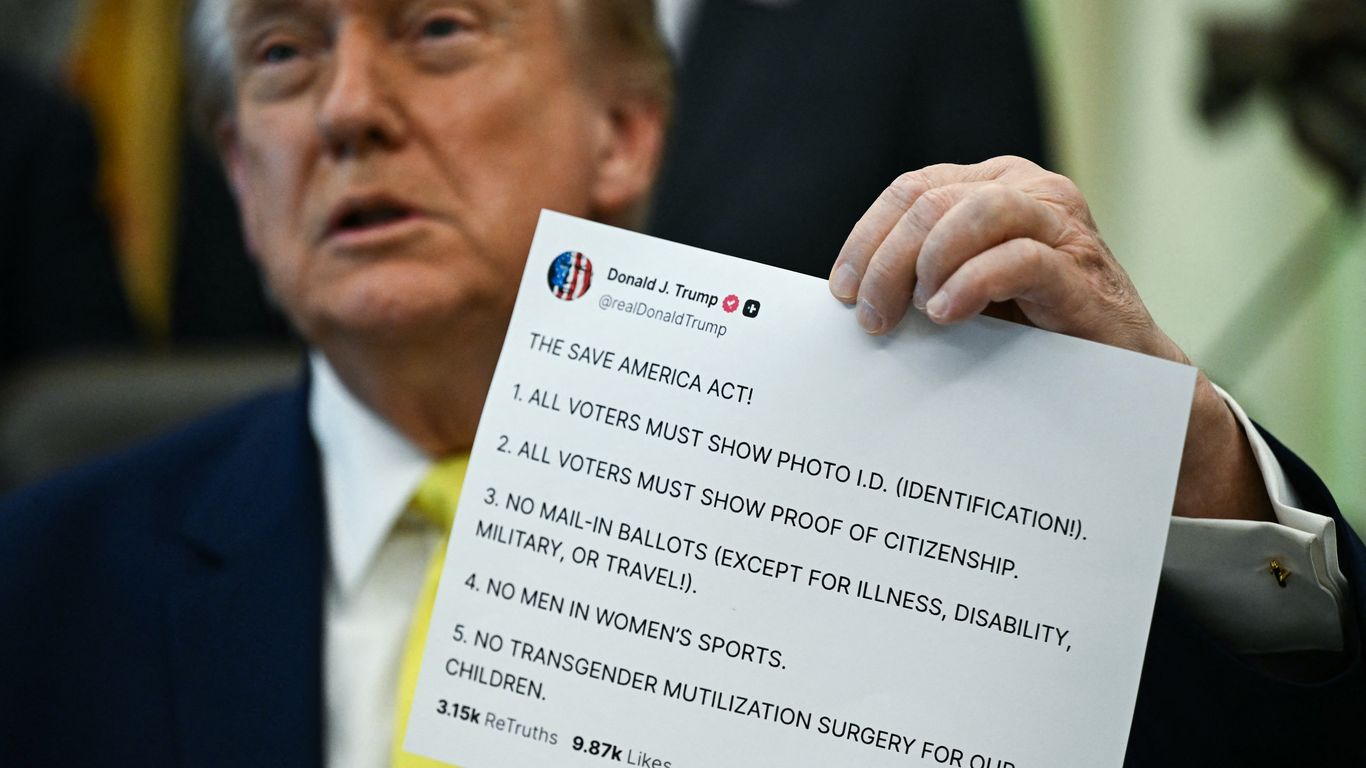
President Trump is demanding that the Senate pass the SAVE America Act, a voting bill requiring proof of citizenship to register to vote, before renewing a key surveillance law. Senate leaders say the bill lacks enough votes and are struggling to balance Trump's demands with legislative realities.
Key Facts
President Trump refuses to support renewing the Foreign Intelligence Surveillance Act (FISA) unless the SAVE America Act passes.
The SAVE America Act requires voters to show documents like passports or birth certificates to register for federal elections.
Critics say the bill could make voting harder for millions of eligible people, including some women with changed names.
Senate Majority Leader John Thune says there are no easy solutions and their options have been carefully explored.
The Senate postponed confirmation hearings for Trump's nominee for acting director of national intelligence due to the bill's controversy.
Trump has added unrelated proposals to the SAVE America Act, such as banning transgender women from women’s sports and limiting gender-affirming care for minors.
White House officials say the bill is a key priority and claim it is supported by most Americans.
Noncitizens are already banned from voting in federal elections under a 1996 law.
Read the Original
Want the full story? Tap a source to open the original
article.
The Trump administration has avoided formal AI regulations but shapes the AI industry through specific actions and voluntary guidelines. This approach creates uncertainty for AI companies because there are no clear, consistent national rules. The administration is using executive actions and federal guidelines to influence how AI develops in the U.S.
Key Facts
The Trump administration opposes formal AI regulation and rescinded earlier rules from the Biden era.
Instead of clear rules, the administration uses company-specific interventions, voluntary frameworks, and executive orders.
Congress has not passed AI laws yet, so the administration is leading AI policy through executive actions.
The administration focuses on overriding state AI laws, national security, government use of AI, and economic impacts.
Export controls and voluntary testing guidelines are part of the "shadow AI policy" shaping the industry.
AI company leaders met President Trump at the G7 summit to discuss possible global AI standards.
Companies like Anthropic are negotiating with the administration over export controls and compliance.
New federal rules may set privacy and security standards for AI systems used by the government.
Read the Original
Want the full story? Tap a source to open the original
article.
Many children in the U.S. face mental health challenges after being separated from their immigrant parents who were deported or detained by immigration authorities. These separations cause fear, anxiety, and developmental problems because children lose their main caregivers, even though most parents have no criminal convictions.
Key Facts
Saúl Zermeño, a 45-year-old single father, was deported to Mexico after attending a routine immigration check-in.
His son Damian, born in the U.S., was left alone and struggled emotionally after losing daily contact with his father.
Hundreds of thousands of children, mostly U.S. citizens, have been separated from parents due to immigration enforcement under President Trump's administration.
Many parents are arrested during everyday activities like dropping kids at school or attending immigration appointments.
Most detained parents have no criminal convictions since being in the U.S. without authorization is a civil, not criminal, offense.
Separation from parents leads to increased risks of depression, anxiety, post-traumatic stress, developmental delays, and long-term physical health problems.
Advocacy groups report that families are often not properly informed or supported during these separations.
The Department of Homeland Security states that ICE does not intend to separate families and offers parents some options, but reports say this is not always followed in practice.
Read the Original
Want the full story? Tap a source to open the original
article.
A recent poll shows that only one-third of Americans approve of how President Donald Trump is managing the economy. This is his lowest approval rating on this topic since 2019, with 60% of Americans disapproving.
Key Facts
Only 33% of Americans approve of President Trump's handling of the economy.
60% of Americans disapprove of his economic approach.
This approval rating is the lowest since Marist started asking this question in 2019.
The economy has usually been seen as a strong point for President Trump with voters.
The poll was conducted by PBS, NPR, and Marist.
Read the Original
Want the full story? Tap a source to open the original
article.
President Trump announced a new deal with Iran, aiming to improve on the 2015 Iran nuclear agreement abandoned in 2018. The deal includes preliminary steps but leaves many important issues unresolved, such as Iran’s nuclear program restrictions and regional military activities.
Key Facts
The 2015 Iran nuclear deal, negotiated under President Obama, was abandoned by President Trump in 2018.
The new agreement is a 14-point memorandum of understanding, which is an initial outline rather than a detailed final deal.
Iran has repeated its promise not to develop nuclear weapons, similar to previous pledges.
Key nuclear issues like uranium enrichment limits and the future of Iran’s nuclear program remain open for further negotiation.
Iran agreed to reopen the Strait of Hormuz, a major route for global oil shipments, but the deal does not guarantee it will remain free of charges.
The deal does not address Iran’s missile program, military support to groups in the region, or regime change efforts.
President Trump’s military actions did not achieve goals related to Iran’s regional influence or regime change.
The agreement requires Israel to stop attacks in Lebanon, complicating the relationship between President Trump and Israeli Prime Minister Netanyahu.
Read the Original
Want the full story? Tap a source to open the original
article.
The Obama Presidential Center in Chicago is about to open and features a large public campus with diverse community spaces. Meanwhile, plans for President Donald Trump’s presidential library are underway in Miami and involve a tall skyscraper with luxury features like a replica White House ballroom and presidential jet, with costs expected to surpass Obama’s center.
Key Facts
The Obama Presidential Center covers 19.3 acres in Chicago’s Jackson Park and includes a museum, sports facilities, a library branch, playground, gardens, and public spaces.
Obama’s center cost about $850 million, funded entirely by private donations to the nonprofit Obama Foundation.
The Obama Center’s archives will be fully digital and operated by the National Archives and Records Administration (NARA).
The Trump Presidential Library is planned for a 2.6-acre waterfront site in Miami, donated by Miami Dade College.
Trump’s library will be a 1,047-foot glass skyscraper with golden accents, featuring a replica Oval Office, White House ballroom, presidential jet, and possibly a hotel.
The Trump Organization is working with Bermello Ajamil architects on the design.
Trump’s presidential library foundation aims to raise nearly $1 billion for the project, with over $500 million already committed.
Entrance fees at Obama’s center are $30 for part of the museum, while most of the campus is free to access.
Read the Original
Want the full story? Tap a source to open the original
article.
The Electronic Tax Administration Advisory Committee (ETAAC) gave the IRS and Congress 18 suggestions to improve the U.S. tax system. These ideas focus on using better technology, preventing fraud, and making taxes easier for people to file and manage.
Key Facts
ETAAC made 6 recommendations for Congress and 12 for the IRS.
Congress is asked to speed up sharing tax data with states and shorten deadlines for some tax forms.
Congress should fund long-term improvements and better oversee paid tax preparers.
The IRS is encouraged to upgrade technology, use artificial intelligence (AI), and improve online tax tools.
Fraud prevention efforts include stronger systems to detect fake tax refunds and identity theft.
IRS should allow faster, secure sharing of tax data with partners and authorized professionals.
Improvements in IRS communication and education will help taxpayers understand tax law changes.
The recommendations aim to remove redundant filings and make tax processes simpler and more transparent.
Read the Original
Want the full story? Tap a source to open the original
article.
That's the point of this site, and readers keep it that way. Support for any amount and the daily digest lands in your inbox every morning at 7am Eastern.
Rising living costs and health problems are causing more people in South Cotswolds, Gloucestershire, to need help from foodbanks. Many households are using foodbanks for the first time, and some people say they may soon struggle to afford food due to higher bills and prices.
Key Facts
Over one-third of households using the South Cotswolds Foodbank are first-timers.
Rising costs for heating, water, and food are making it harder for people to afford essentials.
Some individuals have had to change shopping habits, choosing cheaper items and giving up treats like chocolate.
Health issues and disabilities contribute to food insecurity for many people in the area.
People living in remote communities face extra challenges, such as poor public transport, limiting access to support and affordable shops.
Foodbank staff say there is a stigma around using foodbanks, but many users manage money well until unexpected problems arise.
The South Cotswolds Foodbank aims to help end the need for foodbanks by working with the community.
The UK government says it is working to reduce poverty with measures like raising the minimum wage and cutting energy bills.
Read the Original
Want the full story? Tap a source to open the original
article.
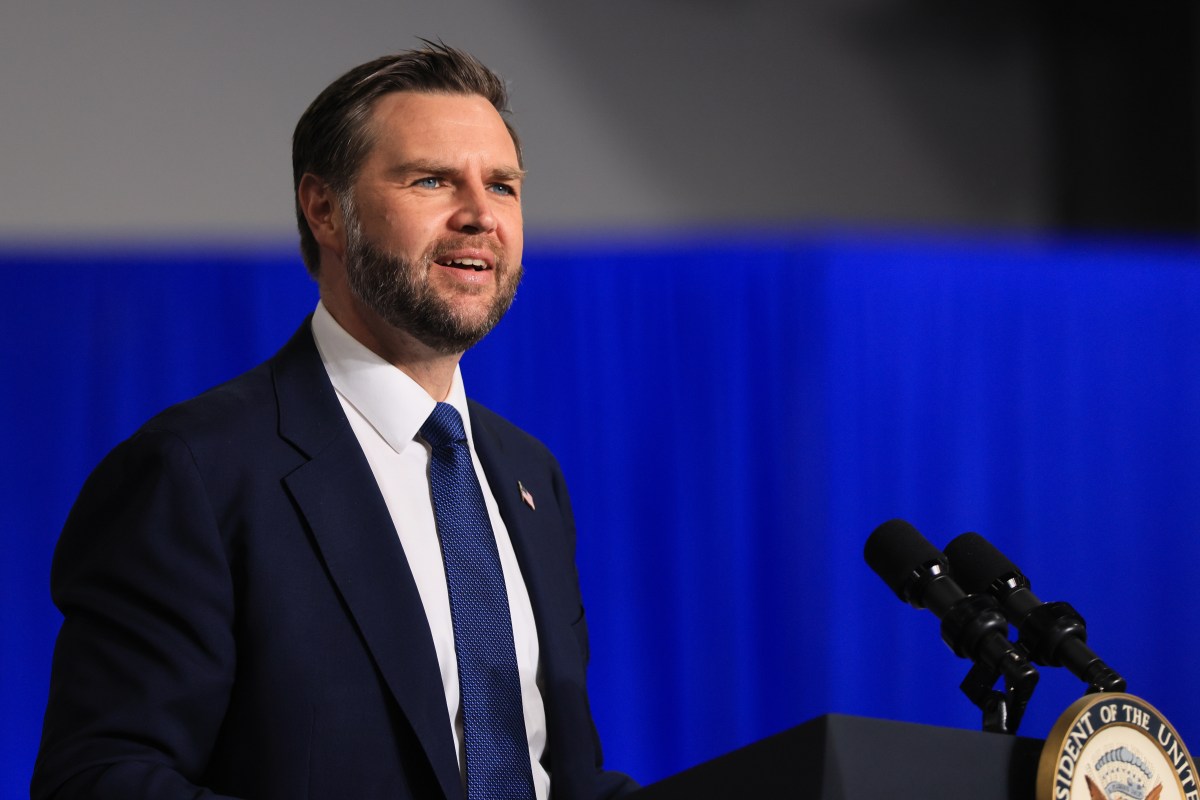
Vice President JD Vance said that President Donald Trump's comments, especially on immigration, are often misunderstood or taken out of context. Vance also shared his belief that aliens might exist during a podcast interview.
Key Facts
JD Vance spoke on The Diary of A CEO podcast with Steven Bartlett.
Vance is promoting his new memoir called Communion: Finding My Way Back to Faith.
He defended President Trump’s past immigration remarks, saying they are often misrepresented.
Vance said many accusations about Trump’s words don’t match what he actually said or the fuller context.
During the interview, Vance expressed his belief that aliens could be real.
The discussion covered Vance’s personal life and political journey.
The article is from Newsweek and will be updated with more information.
Read the Original
Want the full story? Tap a source to open the original
article.
In London, 104 repeat shoplifters committed over 5,300 crimes in two years, with many offending multiple times before being arrested. The Metropolitan Police and retail groups want faster court processes and stronger enforcement to reduce repeat shoplifting.
Key Facts
104 repeat offenders committed more than 5,300 shoplifting crimes in the Met Police area over two years.
Each of these offenders broke the law at least 31 times before being jailed.
Shoplifting makes up about one-third of cases where suspects are identified in London.
Most offenders (all but three) continued stealing even after being charged.
Police and retail groups asked the government for fast-track courts to handle cases within 72 hours.
They also want clearer rules and better enforcement for repeat offenders.
In the year to May 2025, 6.8% of shoplifting cases had a positive outcome like charges or warnings.
The government is increasing charges, speeding up court cases, and removing a £200 limit that allowed some shoplifters to avoid prosecution.
Read the Original
Want the full story? Tap a source to open the original
article.
Kohen Wiley was fatally shot by a police officer outside a Walmart in Senatobia, Mississippi, after officers tried to stop a vehicle linked to a shoplifting call. His mother said he was shot in the rib while in the car, and the officer who fired the shots has been put on administrative leave as the investigation continues.
Key Facts
Police responded to a shoplifting report at a Walmart in Senatobia, Mississippi.
Officers encountered two adults and a child fleeing the store into a vehicle.
Police tried to stop the vehicle, but the driver nearly hit an officer.
An officer fired shots at the vehicle before it drove away.
Kohen Wiley was shot in the rib and later died at the hospital.
Wiley’s mother said she was with her son and tried to show police he was inside the car.
The officer who fired has not been named and is on administrative leave.
The Mississippi Bureau of Investigation is looking into the shooting.
Read the Original
Want the full story? Tap a source to open the original
article.
Wes Streeting said his plan to stop private equity firms from owning social care businesses was removed from Labour’s manifesto. He criticized both the government and his own party for being too cautious to make big changes in social care. Labour plans to create a national care service with clear standards, but major reform may be delayed until after the next election.
Key Facts
Wes Streeting wanted to ban certain private equity firms from social care if they failed to meet standards for care quality, worker rights, and finances.
This plan was cut from Labour’s 2024 manifesto because party leaders worried it seemed “anti-business.”
Streeting resigned as health and social care secretary and may run for Labour leadership.
The government’s review of social care reform, called the Casey commission, will likely finish by 2028, delaying big changes.
Andy Burnham, another possible Labour leader, promises to fix social care quickly if elected.
Labour’s manifesto includes a promise to create a national care service with common standards.
Labour wants to reduce workers’ dependency on their employers for visas to prevent exploitation.
The government says it is investing billions to improve social care and will publish recommendations on a national care service later this year.
Read the Original
Want the full story? Tap a source to open the original
article.
New York City Mayor Zohran Mamdani, a democratic socialist, is gaining political strength six months into his term. He is supporting challengers against established Democrats in the upcoming New York primary as part of his effort to change the Democratic Party.
Key Facts
Zohran Mamdani is the 34-year-old mayor of New York City and identifies as a democratic socialist.
Mamdani has received praise from different political figures, including President Donald Trump and New York Governor Kathy Hochul.
He is organizing a rally with Senator Bernie Sanders to support candidates who share his views.
Mamdani is endorsing candidates running against current Democratic incumbents in several districts.
His endorsed candidates include Darializa Avila Chevalier, Brad Lander, and Claire Valdez.
Mamdani’s goals include reshaping the Democratic Party in New York and the national level.
Some established Democrats are unhappy with Mamdani’s choices and strategy.
Supporters see this movement as a way to energize voters and push for stronger opposition to President Trump.
Read the Original
Want the full story? Tap a source to open the original
article.
On the biggest stories we show what the outlets agree on and where they differ. Readers keep that going, and get the daily digest by email every morning. Most choose $3.99/month.
The U.S. Department of Education is changing how it handles complaints about disability discrimination and special education. Civil rights enforcement will move to the Department of Justice, and special education will move to the Department of Health and Human Services, a shift that has worried many families and advocates who fear it will cause delays and complications.
Key Facts
Parents of children with disabilities have faced long waits for the Education Department to act on bullying and discrimination complaints.
In spring 2024, Nicole May in Ohio filed a complaint about her daughter's bullying; it remains unresolved after more than two years.
The Department of Justice will now handle civil rights enforcement in schools.
The Department of Health and Human Services will take over oversight of special education.
Education Secretary Linda McMahon supports the changes, saying they will provide better help to families.
Critics argue special education should not be run by a health-focused agency, as disabilities affect learning differently than medical conditions.
The Education Department’s civil rights office and special education office have seen significant staff cuts since 2024.
Some attorneys and families are seeking justice for discrimination cases outside the federal Education Department system because of delays.
Read the Original
Want the full story? Tap a source to open the original
article.
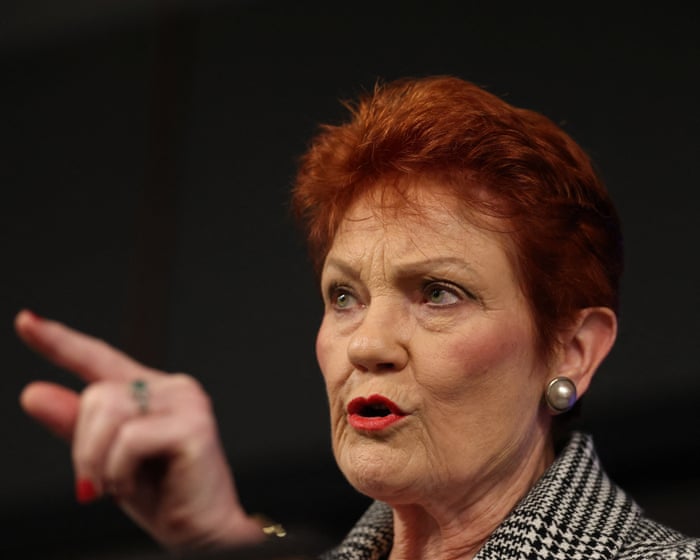
One Nation leader Pauline Hanson criticized Guardian journalist Sarah Martin for asking about Hanson’s daughter’s political work and said Martin would be banned from future events. Media unions, journalists, and Prime Minister Anthony Albanese condemned Hanson’s actions, defending press freedom and public broadcasters SBS and ABC.
Key Facts
Pauline Hanson called Guardian journalist Sarah Martin “trashy” for asking about Hanson’s daughter’s employment with a One Nation senator.
Hanson said she would ban Martin and other media outlets like the ABC and Guardian from attending her events.
Media unions called Hanson’s attack unprofessional and an attack on press freedom.
Prime Minister Albanese said excluding media or cutting funding to public broadcasters is harmful to democracy.
The parliamentary press gallery committee opposed threats to ban journalists from doing their jobs.
Hanson proposed shutting down SBS and making ABC partly subscription based for cities.
Media experts warned that reducing support for ABC and SBS would harm trustworthy news sources and democracy.
ABC said universal free access to its services is important in a time when most news is behind paywalls.
Read the Original
Want the full story? Tap a source to open the original
article.