Kenneth Iwamasa, Matthew Perry’s personal assistant, was sentenced to three years and five months in prison for his role in the actor’s death from a ketamine overdose. He pleaded guilty to conspiracy to distribute ketamine that resulted in Perry’s death and was present during the actor’s final days.
Key Facts
Kenneth Iwamasa was Matthew Perry’s live-in assistant.
He injected Perry with the deadly dose of ketamine.
Iwamasa was sentenced to 3 years, 5 months in prison, 2 years probation, and fined $10,000.
The sentence was given by Judge Sherilyn Peace Garnett in Los Angeles federal court.
This sentencing followed a 2 ½-year investigation into Perry’s death on October 28, 2023.
Iwamasa pled guilty in August 2024 to conspiracy to distribute ketamine causing death.
The judge said Iwamasa acted recklessly but found no malicious intent.
Iwamasa’s lawyer said he was only following the directions of Perry and acted out of loyalty.
Read the Original
Want the full story? Tap a source to open the original
article.
A dog left alone inside a truck accidentally caused a shotgun to fire, injuring a woman in the arm outside a store. Authorities are investigating the incident.
Key Facts
The shooting happened outside a store.
A dog was left alone in a truck at the time.
The dog somehow set off a shotgun.
A woman was shot and injured in the arm.
ABC News legal contributor Brian Buckmire provided details.
The authorities are involved in investigating the case.
The incident occurred in the United States.
No additional injuries or suspects were mentioned.
Read the Original
Want the full story? Tap a source to open the original
article.
Matthew Perry’s former assistant, Kenneth Iwamasa, was sentenced to over three years in prison for supplying and injecting Perry with ketamine, which caused the actor’s accidental death in 2023. Several others involved in providing the drugs have also been sentenced on related charges.
Key Facts
Kenneth Iwamasa, age 60, pleaded guilty to conspiracy to distribute ketamine and was sentenced to 3 years and 5 months in prison, 2 years probation, and a $10,000 fine.
Prosecutors say Iwamasa bought drugs and gave Perry repeated ketamine injections, including the fatal ones on October 28, 2023.
Perry was found dead in his Pacific Palisades home’s hot tub; his death was ruled accidental due to acute ketamine effects, drowning, heart disease, and other substances.
Two doctors involved, Salvador Plasencia and Mark Chavez, received prison and supervised release sentences for providing ketamine.
Jasveen Sangha, known as the "Ketamine Queen," was sentenced to 15 years in prison for supplying the drugs and instructing others to delete evidence.
Erik Fleming, who delivered the drugs to Perry, was sentenced to 2 years in prison followed by 3 years of supervised release.
Perry was famous for playing Chandler Bing on the TV show “Friends” from 1994 to 2004.
Read the Original
Want the full story? Tap a source to open the original
article.
A Michigan arts camp and boarding school, Interlochen Center for the Arts, will tear down a lodge once named after Jeffrey Epstein. Epstein had donated money to the school and attended as a teenager but has been accused of meeting victims there in the 1990s.
Key Facts
Interlochen Center for the Arts will demolish the Green Lake Lodge, formerly called the Jeffrey E Epstein Scholarship Lodge.
Epstein attended Interlochen in 1967 and donated over $400,000 to the school between 1990 and 2003.
Epstein’s name was removed from the lodge after his first conviction in 2008.
At least two of Epstein’s accusers said they met him at Interlochen in the 1990s.
The school is conducting an external investigation into historical misconduct claims involving Epstein.
Internal reviews found no records of Epstein-related misconduct at Interlochen.
Epstein regularly visited the school, sometimes with Ghislaine Maxwell, and used the lodge.
Epstein died by suicide in jail in 2019 while facing sex trafficking charges; Maxwell is serving a 20-year prison sentence for sex trafficking.
Read the Original
Want the full story? Tap a source to open the original
article.
President Donald Trump has successfully supported Republican candidates in recent primary elections, including Ken Paxton's win in Texas. However, some Republicans worry that Trump's strong influence on the party might hurt their chances in the November midterm elections due to voter dissatisfaction with his second term and economic issues.
Key Facts
President Trump endorsed Ken Paxton, who won a runoff election in Texas against Senator John Cornyn.
Senator John Cornyn lost his seat despite avoiding conflict with President Trump.
Trump's influence is growing stronger within the Republican Party.
Some Republicans are concerned that Trump's control might make it harder to win in the midterms.
Voters are unhappy with Trump's second term and the state of the economy.
Ongoing economic problems are linked to Trump's trade policies and actions related to Iran.
Republican operatives worry about the effect of these issues on voter turnout and support.
Read the Original
Want the full story? Tap a source to open the original
article.
Former Vice President Mike Pence said on Wednesday that it has been some time since he last talked to President Donald Trump. He made this comment during an interview in Michigan.
Key Facts
Mike Pence is the former Vice President of the United States.
President Donald Trump is currently serving his second term as U.S. President.
Pence told a reporter that he has not spoken to President Trump for a while.
The interview took place in Michigan.
The question was asked by Roop Raj from FOX2-TV in Detroit.
Pence did not specify exactly how long it has been since the last conversation.
The topic highlights the current lack of communication between Pence and President Trump.
Read the Original
Want the full story? Tap a source to open the original
article.
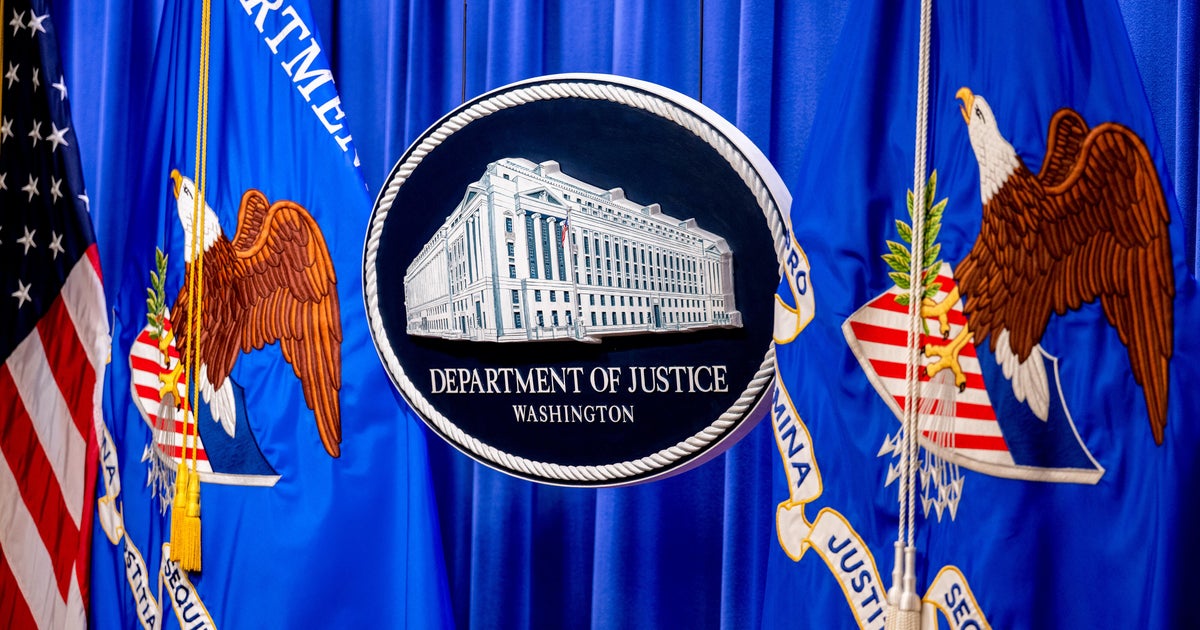
The U.S. Department of Justice will speed up the review of whistleblower complaints about fraud in government benefit programs like Medicare. This faster process aims to catch fraud more quickly and use resources better, focusing on serious cases that misuse taxpayer money.
Key Facts
The Justice Department will decide on whistleblower fraud complaints within 60 to 120 days, which is faster than usual.
These complaints, often filed by private individuals called relators, deal with fraud against federal programs.
The False Claims Act is the main law used to fight benefit program fraud.
If a fraud claim is successful, the person who reported it can get a share of the recovered money.
The Trump administration has made fighting fraud in Medicare and healthcare a top priority.
In April, the DOJ created a new Fraud Division and a task force led by Vice President JD Vance to tackle fraud.
California has its own task force focused especially on hospice fraud, with many cases brought by state officials.
CBS News has reported that over 700 hospices in Los Angeles show signs of potential fraud according to state auditors’ indicators.
Read the Original
Want the full story? Tap a source to open the original
article.
President Donald Trump pardoned Elliott Broidy in 2021 after Broidy pleaded guilty to illegal lobbying. Recently, Broidy's company won a $106 million federal contract to use artificial intelligence to monitor prison phone calls.
Key Facts
Elliott Broidy pleaded guilty in 2020 to trying to illegally lobby President Trump’s administration.
President Trump pardoned Broidy on the last day of his first term in 2021.
Broidy is the founder and CEO of LEO Technologies, a company that won a $106 million contract from the Department of Justice.
The contract is to use AI to translate, transcribe, and monitor prison phone calls through the Bureau of Prisons.
LEO Technologies had previously worked with state and local prisons but this is their first federal contract.
Broidy has a history of legal issues, including a 2009 fraud case and a 2020 guilty plea related to foreign lobbying.
There is no proof that Broidy’s pardon or political connections influenced the awarding of the contract.
Broidy’s company says he sets company strategy but does not handle daily operations.
Read the Original
Want the full story? Tap a source to open the original
article.
U.S. workers' pay has increased about 4% this year, with median household income around $88,000. However, to afford the average home, households need about $116,780 a year, making homeownership unaffordable for many in most large U.S. cities.
Key Facts
Median household income in the U.S. is roughly $88,000 as of April.
The average U.S. home costs about $418,000.
Households need an income of around $116,780 annually to afford the average home.
This needed income is down from a peak estimate of $122,000 in mid-2025.
In 41 of 49 big U.S. cities, the median salary is not enough to buy a home.
San Francisco is the most expensive city; a person would need nearly $444,000 a year to afford a home.
Some Midwest cities, like Detroit and Cleveland, have affordable housing where median incomes are enough to buy a home.
More than 80% of Americans find it harder to buy a home now compared to previous generations.
Read the Original
Want the full story? Tap a source to open the original
article.
A recent poll shows Maine oyster farmer Graham Platner leading Senator Susan Collins by 9 points ahead of their election in November. The poll surveyed likely voters and found Platner at 51% support and Collins at 42%.
Key Facts
Graham Platner is an oyster farmer from Maine.
Senator Susan Collins represents Maine and is a Republican.
The poll was conducted by the University of New Hampshire.
It was released on a Wednesday before the November election.
Platner received 51% support from likely voters in the poll.
Collins received 42% support from likely voters.
The gap between Platner and Collins is 9 percentage points.
Read the Original
Want the full story? Tap a source to open the original
article.
An Associated Press investigation found that since President Donald Trump took office in January 2025, at least 10 people held by Immigration and Customs Enforcement (ICE) have died by suicide. This is a sharp increase compared to previous years and raises concerns about mental health care and oversight in ICE detention centers.
Key Facts
At least 10 ICE detainees have died by suicide since January 2025, mostly men in their early 30s.
Seven of these suicides happened since October 2025, the highest number ever recorded in a single year for ICE.
Nine of the deceased were Hispanic men from four countries; one was from China.
Seven of the 10 had no record of violent crimes in the U.S.
Nearly 20% of the 51 deaths in ICE custody since January 2025 were due to suicide.
Experts say many deaths could be prevented with timely medical and mental health care.
ICE officials say suicides in custody are rare and that staff follow protocols, including suicide prevention training.
Colombia’s president called for a formal protest over one detainee’s suicide and urged the U.S. to reconsider its immigration policies.
Read the Original
Want the full story? Tap a source to open the original
article.
Matthew Perry’s personal assistant, Kenneth Iwamasa, was sentenced to 41 months in prison for his role in providing the actor with ketamine before Perry's death in October 2023. Iwamasa, who had no medical training, injected Perry multiple times and worked with others to supply the drug, which led to Perry’s overdose death.
Key Facts
Kenneth Iwamasa, Perry’s live-in assistant, was sentenced to 41 months in prison.
Iwamasa injected Perry with ketamine and helped get the drug from suppliers.
Matthew Perry died in October 2023, found in his backyard hot tub.
The cause of death involved ketamine overdose and drowning as a contributing factor.
Iwamasa pleaded guilty to conspiracy to distribute ketamine causing death.
Five people involved in supplying ketamine to Perry pleaded guilty.
Other defendants, including a dealer called the “Ketamine Queen,” have been sentenced to prison or other punishments.
Perry’s family expressed strong feelings about Iwamasa’s role, emphasizing his responsibility to protect Perry.
Read the Original
Want the full story? Tap a source to open the original
article.
That's the point of this site, and readers keep it that way. Support for any amount and the daily digest lands in your inbox every morning at 7am Eastern.
The Trump administration announced stricter travel bans related to the Ebola outbreak in Central Africa, barring even U.S. citizens and residents who have recently traveled to affected countries from entering the United States. Instead of bringing exposed Americans back to the U.S. for treatment, the government is planning to establish a quarantine and care facility in Kenya.
Key Facts
The Ebola outbreak in the Democratic Republic of the Congo started in May and is currently very large, with over 1,000 cases and more than 200 deaths reported by the World Health Organization.
The Trump administration expanded travel bans to block U.S. citizens and permanent residents who traveled to the DRC, Uganda, or South Sudan in the past 21 days.
Uganda and South Sudan have very low or no reported Ebola cases, but their travelers are also banned.
The U.S. Centers for Disease Control and Prevention (CDC) is trying to increase airport health screening but faces staff shortages and budget cuts.
American citizens exposed to Ebola are being sent to other countries like Germany and the Czech Republic for treatment and monitoring instead of the U.S.
Plans to set up an Ebola treatment and quarantine facility in Kenya for Americans are underway but not yet approved by Kenyan authorities.
Public health experts warn that travel bans and border closures can hinder outbreak responses and cause economic and social problems.
The Africa CDC has publicly stated that general travel restrictions are not effective during outbreaks and may cause fear and operational difficulties.
Read the Original
Want the full story? Tap a source to open the original
article.
Elvira Benitez Suarez, a mother of four who lived in the U.S. for over 36 years, was detained by immigration authorities for more than two months. An immigration judge granted her lawful permanent resident status, and she was released on bond while the government appeals the decision.
Key Facts
Elvira Benitez Suarez is 51 years old and lives in Sheboygan Falls, Wisconsin.
She was detained by U.S. Immigration and Customs Enforcement (ICE) starting in March during a routine immigration appointment.
She has lived in the U.S. since she was 15, after fleeing Mexico due to assault.
She has four children who are U.S. citizens and runs a cleaning business with her husband.
An immigration judge granted her green card eligibility after a cancellation-of-removal hearing.
The federal government is appealing the judge’s decision, with briefs due by June 8.
Despite winning in court, she was re-detained while awaiting the appeal.
Her attorney criticizes how long legal immigration cases take and the detention of long-term community members.
Read the Original
Want the full story? Tap a source to open the original
article.
A protest took place outside Delaney Hall, an immigration detention center in New Jersey. Inside, detainees were on a hunger and labor strike, while outside, protesters clashed with federal agents during demonstrations.
Key Facts
Delaney Hall is an immigration detention center located in New Jersey.
Detainees inside the facility were on a hunger and labor strike.
Protesters gathered outside holding signs and blocking access.
Federal agents responded by pushing protesters back and using chemical irritants and a Taser.
There were also confrontations between supporters and opponents of ICE (Immigration and Customs Enforcement).
Vehicles were allowed to leave the facility during the protest.
Signs outside the detention center called it a “concentration camp.”
Some detainees were released during or after the protest.
Read the Original
Want the full story? Tap a source to open the original
article.
Protesters and immigration detainees at a New Jersey ICE jail have staged a hunger and work strike to demand better living conditions and the timely processing of their immigration cases. The strike has led to clashes between federal officers and demonstrators outside the facility, which is operated by a private company under contract with ICE.
Key Facts
About 300 to 400 detainees at the Newark-based Delaney Hall ICE facility are on hunger and labor strike.
Detainees demand improved food, ventilation, medical care, and progress on their immigration cases.
The facility is run by Geo Group, a large private prison company operating under ICE.
Protests have resulted in violence, with federal officers using pepper spray and Tasers on demonstrators.
Senator Andy Kim and other lawmakers have visited the site and criticized the conditions.
The Trump administration is continuing a widespread immigration enforcement and deportation effort.
Some detainees reported being arrested during routine immigration check-ins despite having legal cases.
Geo Group claims it provides medical care, legal access, and monitored services to detainees.
Read the Original
Want the full story? Tap a source to open the original
article.
The US government has refunded $20 billion in tariffs to importers after the Supreme Court ruled that President Trump exceeded his authority in imposing those tariffs. About $65 billion more in refunds is expected, as many companies and businesses seek repayment for the tariffs they paid.
Key Facts
The Supreme Court struck down tariffs imposed by President Trump in February.
US Customs and Border Protection has refunded $20 billion so far, with $65 billion more expected.
Trump’s tariffs included a baseline 10% fee on all imports.
Many US businesses, including Walmart and Jim Beam, faced higher costs and disruptions due to the tariffs.
After the ruling, major retailers and business groups pushed for quick refunds of a total $133 billion in tariffs.
Companies like FedEx sued the government to get refunds; others used a special refund portal.
Tariffs raised costs for American households by about $1,000 on average in 2025.
President Trump later introduced a new 10% tariff using a different legal method, but the US trade court ruled against it in May.
Read the Original
Want the full story? Tap a source to open the original
article.
Journalist Sharon Alfonsi is leaving the TV news program "60 Minutes" after her contract ended recently. She said CBS News leadership, now owned by Paramount, chose not to renew her contract, and she expressed concerns about the company's management.
Key Facts
Sharon Alfonsi worked as a journalist on "60 Minutes."
Her contract with the show ended over the past weekend.
Alfonsi claims the program decided not to renew her contract.
CBS News is now owned by the company Paramount.
Alfonsi criticized the leadership at CBS News under Paramount.
She said this decision sends a warning to others in the company.
Alfonsi shared these details with The New York Times.
Read the Original
Want the full story? Tap a source to open the original
article.
A Catholic priest, Anthony Odiong, is on trial in Texas for sexually abusing women who sought his spiritual guidance. He faces several charges including sexual assault, and he has denied the allegations.
Key Facts
Anthony Odiong is a Roman Catholic priest accused of sexually abusing female congregants.
The trial is taking place in Waco, Texas.
A son of one victim testified he caught Odiong having sex with his mother in 2011.
Odiong responded with “we are but men” when confronted about the incident.
The priest continued his career for years, including studying in Rome and working in Louisiana.
Multiple women have accused Odiong of sexual coercion, unwanted touching, and financial abuse.
Texas law considers it assault for clergy to exploit congregants’ emotional dependence for sex.
Odiong pleaded not guilty to five first-degree and two second-degree sexual assault charges and faces possible life imprisonment.
Read the Original
Want the full story? Tap a source to open the original
article.
Several migrants who crossed the English Channel into the UK over the bank holiday weekend were charged with illegal immigration crimes, and some were sent to jail. The UK authorities are also targeting people who organize the crossings and are working with France to stop small boat journeys.
Key Facts
Three migrants from Turkey, Algeria, and Albania pleaded guilty to entering the UK without permission and were sentenced to eight months in prison.
Three others from Sudan and Iran were charged with putting lives at risk during the sea crossing and will face court hearings.
Nearly 1,000 migrants crossed the Channel on small boats between Friday and Monday during calm weather.
The number of migrants crossing so far in 2026 is 8,565, which is 37% lower than last year.
The Crown Prosecution Service quickly authorized charges after receiving evidence from the police.
UK and French governments made a £662 million deal to increase enforcement on beaches and catch people smugglers.
The deal includes using drones, helicopters, cameras, and sending trained police officers to French beaches.
UK officials are working with international partners to break up crime groups behind these crossings.
Read the Original
Want the full story? Tap a source to open the original
article.