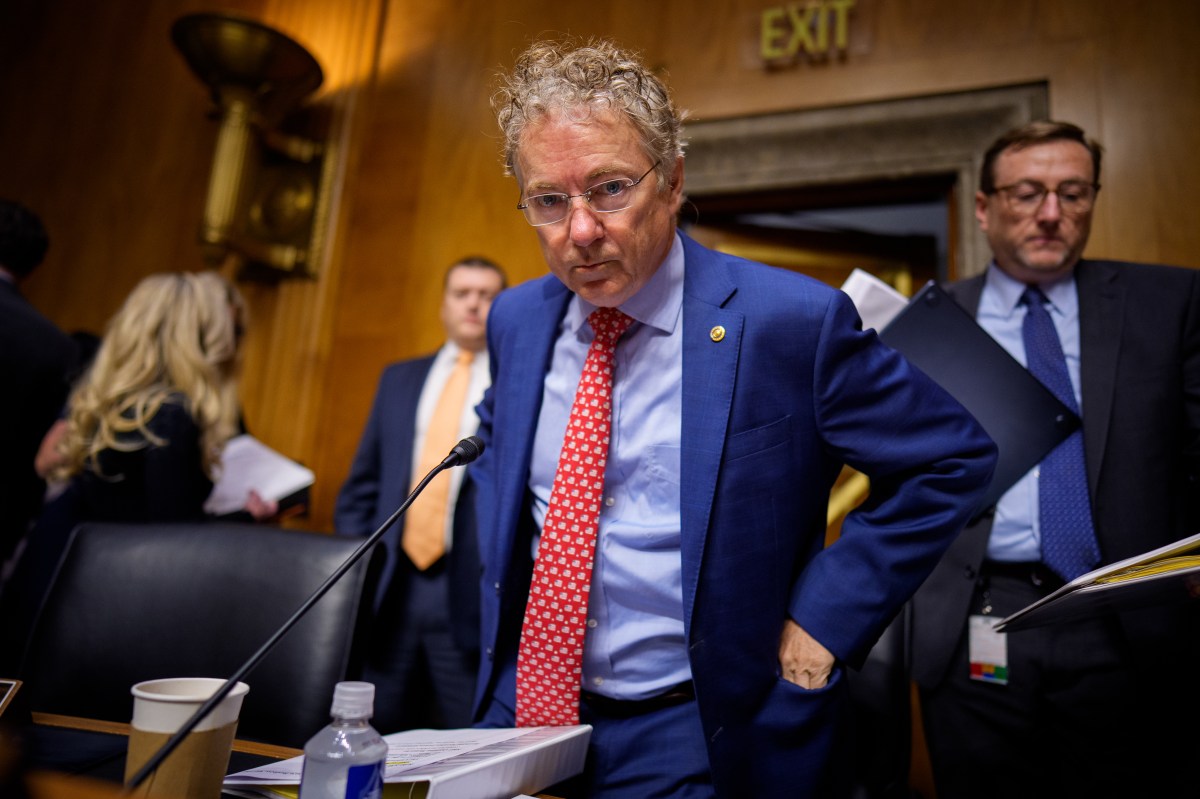
A new bill introduced by Senator Rand Paul aims to give Medicare beneficiaries more choice in doctors by allowing them to see providers outside Medicare-approved networks. The bill would let patients keep their longtime doctors and pay the difference if the doctor charges more than Medicare’s set rate.
Key Facts
Senator Rand Paul, a Republican from Kentucky, introduced the bill.
The bill would let Medicare patients see any doctor, even those not in Medicare networks.
Patients could privately contract with doctors who have opted out of Medicare.
Medicare would still pay the standard rate; patients pay any extra charges directly.
Current restrictions limit Medicare patients to specific provider networks.
The bill aims to help seniors keep their trusted doctors and reduce out-of-pocket costs.
Supporters say it reduces government interference and improves patient choice.
Some worry it could increase paperwork and costs over time.
Read the Original
Want the full story? Tap a source to open the original
article.
The House of Representatives delayed voting on a resolution that would limit President Trump's authority to take military action against Iran. Republicans in the House postponed the vote because of concerns about attendance.
Key Facts
The resolution was led by Democrats and aimed to restrict President Trump's power to use military force against Iran.
House Republicans delayed the vote, citing problems with the number of members present.
President Trump and Republican leaders say the president has the sole authority to act militarily against Iran.
They have also warned against ending any ongoing military actions without approval.
The delay means there is no immediate decision on checks to the president’s military actions regarding Iran.
The issue highlights ongoing debates about war powers between Congress and the president.
The conflict involves Iran, with tensions related to U.S. military involvement in the region.
Read the Original
Want the full story? Tap a source to open the original
article.
The U.S. State Department has introduced a new system to evaluate diplomats using numerical ratings and brief written assessments. Some diplomats' representatives worry this change could cause unfair competition and bias, while the department says it will help identify strong and weak performers more accurately.
Key Facts
The State Department revised its diplomat evaluation process to include numerical scores and short written answers.
This update aims to create a more data-driven and effective review system.
The American Foreign Service Association (AFSA), representing diplomats, says the new system may create unfairness and reduce teamwork.
AFSA President John Dinkelman warns the rating scale could turn evaluations into a competitive “zero-sum game.”
The department’s deadline for submitting new evaluations is May 29, with promotion panels meeting afterward.
Deputy Secretary of State Christopher Landau states the reforms target accountability and discourage inflated ratings.
Some Foreign Service Officers believe the old evaluations were too long and sometimes self-written; opinions vary on the new system’s impact.
The State Department says the changes are not meant to punish but to improve overall performance review accuracy.
Read the Original
Want the full story? Tap a source to open the original
article.
Bruce Springsteen spoke critically about President Donald Trump and Larry and David Ellison during an interview on Stephen Colbert’s late-night show. After sharing his thoughts, Springsteen performed on the show’s second-to-last episode.
Key Facts
Bruce Springsteen appeared on Stephen Colbert’s late-night show.
The show was near the end of its final season.
Springsteen criticized President Donald Trump during the interview.
He also mentioned Larry and David Ellison, the owners of Paramount.
After his comments, Springsteen gave a musical performance.
The context was an interview before the musical act.
The episode was the second to last of “The Late Show.”
Read the Original
Want the full story? Tap a source to open the original
article.
The U.S. Justice Department created a new "anti-weaponization" fund, but legal experts have raised questions about how it is being set up and enforced. Concerns focus on whether the fund complies with legal rules.
Key Facts
The Justice Department established an "anti-weaponization" fund.
The fund aims to address the misuse or weaponization of government resources.
Legal experts, including Rupa Bhattacharyya from Georgetown University Law School, have expressed serious legal questions about the fund.
The concerns relate to how the fund is created and how it will be applied.
The scrutiny focuses on possible issues with the fund’s legality and enforcement.
The analysis was discussed in a CBS News report.
Read the Original
Want the full story? Tap a source to open the original
article.
Jonathan Bush, a member of the Bush political family, is currently polling second in Maine’s Republican race for governor. The state leans Democratic, and experts predict the governor’s race will likely go to a Democrat, but Maine voters use ranked-choice voting, which affects how candidates are supported.
Key Facts
Jonathan Bush is related to former Presidents George H. W. Bush and George W. Bush.
Maine’s current governor, Democrat Janet Mills, is term-limited, prompting a new election.
Maine is generally Democratic-leaning but sometimes supports moderate Republicans.
Polls show Bobby Charles leading the Republican primary, with Bush in second place.
Maine uses ranked-choice voting, where voters list candidates by preference.
Combined first and second choice votes give Bush competitive support in the Republican primary.
The Bush family has had major political influence across four generations, including presidents and governors.
The Bush political influence has decreased in recent years amid changes in the Republican Party.
Read the Original
Want the full story? Tap a source to open the original
article.
The U.S. House of Representatives did not pass a bill that would have allowed the Smithsonian American Women’s History Museum to be built on the National Mall in Washington, D.C. The bill also included rules for choosing the museum’s leaders and deciding what would be shown inside. The vote ended with 204 members in favor and 216 against, with all Democrats and six Republicans voting no.
Key Facts
The bill aimed to authorize the Smithsonian American Women’s History Museum on the National Mall.
It included guidelines for selecting museum leadership and content.
The House vote was 204 in favor and 216 against.
Every Democrat in the House opposed the bill.
Six Republicans also voted against it.
The bill’s failure means the museum cannot be established there under this framework for now.
The National Mall is a large park area in the center of Washington, D.C., where many important museums and monuments are located.
Read the Original
Want the full story? Tap a source to open the original
article.
Senator Mitch McConnell criticized Acting Attorney General Todd Blanche for agreeing to create a $1.8 billion fund to pay people who say the Justice Department wrongly prosecuted them during President Trump’s administration. This plan has caused concern among members of both political parties.
Key Facts
The fund is worth $1.8 billion.
It is meant for people who claim they were prosecuted unfairly by the Justice Department.
The Justice Department proposal for this fund comes from the Trump administration.
Mitch McConnell is the former Senate Republican Leader from Kentucky.
McConnell publicly disagreed with Acting Attorney General Todd Blanche’s decision to accept the fund proposal.
The fund has received criticism from politicians in both parties.
The controversy revolves around concerns about paying people who say they were wrongly targeted by legal actions.
Read the Original
Want the full story? Tap a source to open the original
article.
Senator Dick Durbin asked Health and Human Services Secretary Robert F. Kennedy Jr. to oppose recent moves to relax rules on flavored vaping products. The FDA recently allowed the sale of the first fruit-flavored e-cigarettes in the United States.
Key Facts
Senator Dick Durbin is from Illinois and is a member of the Democratic Party.
Durbin expressed concern over decisions to ease regulations on flavored vaping products.
Robert F. Kennedy Jr. is the Secretary of Health and Human Services.
The FDA recently approved the sale of fruit-flavored e-cigarettes in the U.S.
Flavored vaping products are often criticized for appealing to young people.
The FDA’s approval marks the first time fruit-flavored e-cigarettes have been allowed for sale in the country.
The debate centers around balancing public health risks and product regulation.
Read the Original
Want the full story? Tap a source to open the original
article.
Senator Thom Tillis criticized a Justice Department fund meant to compensate people affected by government overreach, calling it a "payout pot for punks." Congress left without voting on this fund, which the Department of Justice describes as an "anti-weaponization" compensation fund.
Key Facts
Senator Thom Tillis is a Republican lawmaker.
He described the Justice Department's fund in very negative terms.
The fund is meant to compensate victims of misuse of government power, called "anti-weaponization" compensation.
Congress did not vote on the fund before going on recess.
The Justice Department supports the fund for addressing past wrongs related to government actions.
The issue involved was reported by CBS News correspondent Nikole Killion.
Read the Original
Want the full story? Tap a source to open the original
article.
The U.S. government is blocking travelers without American passports if they have visited Congo, Uganda, or South Sudan in the last three weeks. This move aims to prevent Ebola cases from entering the country amidst the ongoing outbreak in Congo.
Key Facts
The U.S. is denying entry to non-American travelers who visited Congo, Uganda, or South Sudan recently.
The restriction covers trips made within the past 21 days (three weeks).
The measure targets stopping the spread of Ebola into the U.S.
Ebola is currently active in Congo, causing international health concerns.
Dr. Céline Gounder, an expert on infectious diseases, is providing medical insight on the outbreak.
The decision is part of U.S. efforts to protect public health from Ebola.
Read the Original
Want the full story? Tap a source to open the original
article.
A new poll shows that Latino voters in Texas are supporting Democrats more than Republicans ahead of the 2026 midterm elections. This shift could affect key races for U.S. Senate and governor in the state, which has a large Latino population.
Key Facts
Latino voters in Texas now back Democrats by big margins for the 2026 elections.
State Representative James Talarico leads GOP Senator John Cornyn and Attorney General Ken Paxton among Latino voters in the Senate race.
Gina Hinojosa, the Democratic candidate for governor, leads incumbent Republican Governor Greg Abbott among Latino voters.
The poll surveyed 1,865 likely voters, including 392 Latino voters, from April 17-20 with a 2.5% margin of error.
President Donald Trump won Texas by a large margin in 2024 but has lost some support among Latino voters due to his policies.
Another recent poll shows the Senate race between Cornyn and Talarico is very close overall.
Trump recently endorsed Ken Paxton, who is running in the Senate runoff.
Texas has not elected a Democrat to the U.S. Senate since 1988.
Read the Original
Want the full story? Tap a source to open the original
article.
That's the point of this site, and readers keep it that way. Support for any amount and the daily digest lands in your inbox every morning at 7am Eastern.
David Lammy and senior judges in England and Wales have started a new board to increase diversity among judges. The board aims to help minority ethnic and working-class solicitors become judges faster and improve mentoring for new recruits.
Key Facts
David Lammy chairs a new board focused on improving diversity in the judiciary.
The board includes Sue Carr, the lady chief justice, and other senior judges.
Their goal is to remove barriers for minority ethnic and working-class candidates.
Recent recruitment drives increased female judges to 44%, but black judges remain at 1%.
Most senior judges studied at Oxford or Cambridge and attended private schools.
The UK Association of Black Judges criticized the process for lacking proper consultation.
Experts highlight institutional racism as a challenge to increasing diversity in judges.
The board plans to work on mentoring and diversity targets to improve judicial appointments.
Read the Original
Want the full story? Tap a source to open the original
article.
Fifteen people were charged by the Department of Justice in Minnesota for an alleged healthcare fraud involving $90 million. The investigation involved the FBI and focused on public programs such as Housing Stabilization Services, Child Care, Medicaid, and Individualized Home Supports.
Key Facts
The Department of Justice announced the charges on Thursday.
A total of 15 individuals were indicted.
The alleged fraud scheme is worth about $90 million.
The investigation was conducted jointly by the DOJ and FBI.
The fraud targeted Minnesota's public healthcare and social service programs.
Programs affected include Housing Stabilization Services, Child Care, Medicaid, and Individualized Home Supports.
The scheme involved illegally taking funds meant to support vulnerable individuals.
Read the Original
Want the full story? Tap a source to open the original
article.
President Donald Trump signed an executive order that weakens a government rule created during President Joe Biden’s administration. The original rule aimed to reduce harmful gases from cooling devices used by grocery stores and air conditioning companies.
Key Facts
The executive order was signed by President Donald Trump on a Thursday.
It rolls back an environmental regulation established under President Biden.
The regulation targeted greenhouse gas emissions from cooling equipment.
Grocery stores and air conditioning companies are the main groups affected by this rule.
The goal of the original rule was to reduce pollution that harms the climate.
The rollback means less strict limits on these emissions.
CBS News correspondent Natalie Brand reported on this story.
Read the Original
Want the full story? Tap a source to open the original
article.
The Democratic National Committee (DNC) released a report analyzing the 2024 election, but the report included a statement saying it reflects only the author's views. The DNC said it did not verify the information in the report and did not have access to the data or interviews used to create it.
Key Facts
The DNC released an autopsy report on the 2024 election.
Each page of the report had a disclaimer that it shows only the author's opinions.
The DNC said it did not receive the report's data or interviews for checking accuracy.
The report’s release was delayed and originally promised by DNC Chair Ken Martin.
The delay was meant to avoid distracting voters ahead of the midterm elections.
The report has been described as controversial within political circles.
The DNC chose to release the report despite reservations about its contents.
Read the Original
Want the full story? Tap a source to open the original
article.
President Donald Trump announced that his administration is ending the Biden administration’s rules that limited the use of certain greenhouse gases in commercial refrigeration. These gases are known to contribute to climate change, and loosening the limits allows their continued use.
Key Facts
President Trump officially ended the Biden administration’s climate regulations on greenhouse gases used in refrigeration.
The rules were designed to reduce harmful gases that impact the environment.
Loosening these limits allows businesses to keep using these gases in commercial refrigeration.
The affected gases are known as super-polluting greenhouse gases.
The change reverses efforts to restrict these substances to combat climate change.
This decision affects energy and environmental policies in the United States.
The announcement was made on a Thursday.
Read the Original
Want the full story? Tap a source to open the original
article.
Senate Republicans postponed a vote to provide money to immigration agencies because of disagreements over a Justice Department fund meant to prevent misuse of weapons. The delay occurred on Thursday as leaders worked to resolve the issue.
Key Facts
Senate GOP members delayed a vote on funding federal immigration agencies.
The delay was caused by concerns about a Justice Department fund.
The fund is designed to prevent the misuse or weaponization of government resources.
The vote was scheduled for Thursday but did not take place.
CBS News reporters Nikole Killion and Sarah Lynch reported on the situation.
The Justice Department's fund is called an "anti-weaponization" fund.
The vote delay shows tensions within the Senate over immigration and justice issues.
Read the Original
Want the full story? Tap a source to open the original
article.
Each summary links back to the original reporting, so you can check the work. Support that, and get the daily digest every morning. Most choose $3.99/month.
President Donald Trump announced that the U.S. will send 5,000 additional troops to Poland. This follows the Pentagon’s earlier decision to cancel a planned deployment of 4,000 troops to Poland, which upset many lawmakers.
Key Facts
President Trump ordered the deployment of 5,000 more U.S. troops to Poland.
Earlier, the Pentagon had canceled plans to send 4,000 troops to Poland.
The canceled deployment caused concern and frustration among U.S. lawmakers.
Lawmakers criticized the decision as a last-minute change.
The troops being sent are part of U.S. military rotations in Central Europe.
Read the Original
Want the full story? Tap a source to open the original
article.
Senator Thom Tillis from North Carolina said he will not support a resolution that would require the U.S. to withdraw military forces involved against Iran. He disagreed with four other Republican senators who want to bring the resolution to a vote.
Key Facts
Senator Thom Tillis is a Republican from North Carolina.
Tillis said he will not vote for a war powers resolution related to U.S. forces against Iran.
Four other Republican senators want to force a vote on the resolution.
The resolution aims to withdraw U.S. armed forces deployed in operations against Iran.
Tillis described the attempts to push the resolution as “messaging votes,” implying they are symbolic rather than leading to real action.
The issue involves congressional authority over military actions against Iran.
Read the Original
Want the full story? Tap a source to open the original
article.