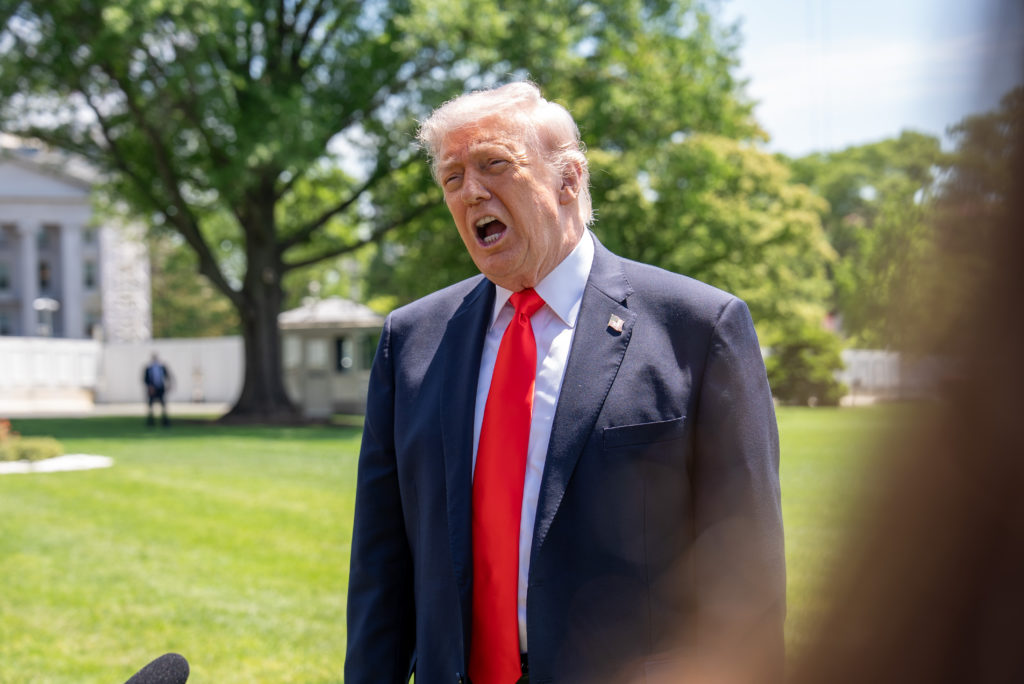
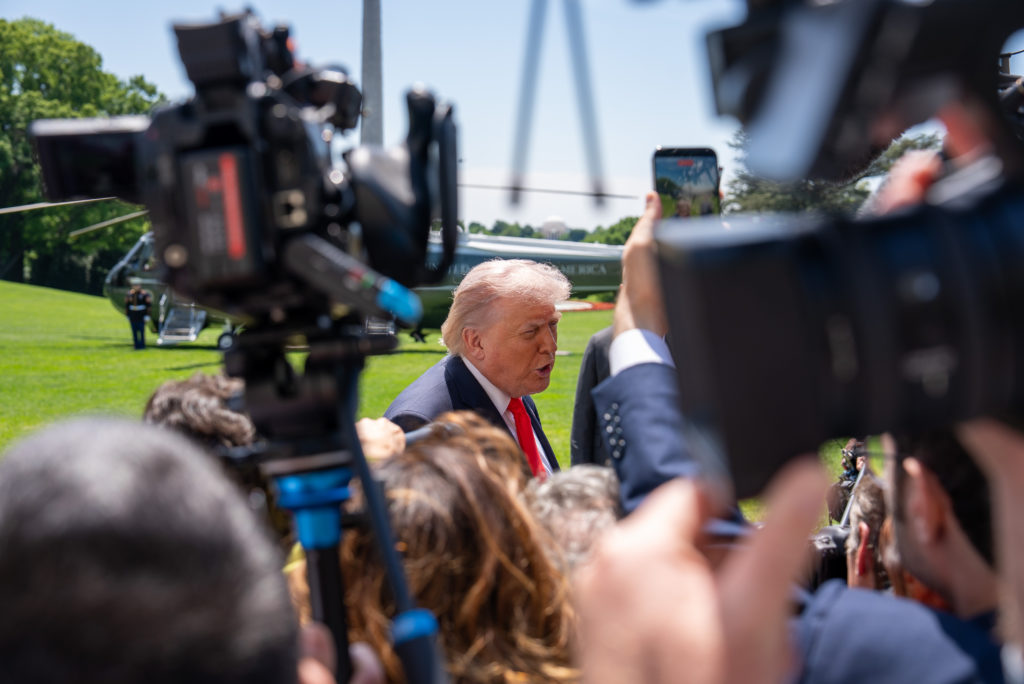
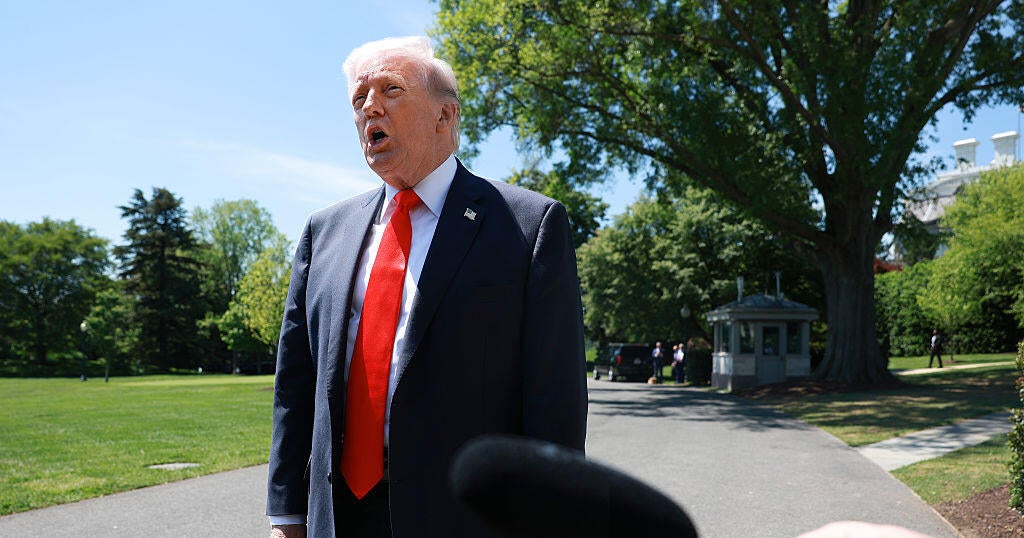
President Donald Trump sent a letter to Congress stating that hostilities with Iran have ended, even though U.S. troops remain in the region. This letter avoids the legal deadline for Congress to approve the ongoing conflict, which was set for May 1.
Key Facts
President Trump claims the fighting with Iran has stopped.
U.S. armed forces are still present in the region despite the claim.
There is a legal deadline of May 1 for Congress to approve continuing the war with Iran.
The President’s letter says the deadline does not apply because hostilities have ended.
Republican lawmakers have not acted on the deadline and are supporting the President.
The war with Iran began two months ago without congressional approval.
The President’s move raises questions about presidential power limits.
Read the Original
Want the full story? Tap a source to open the original
article.
Camp Mystic, a Texas summer camp where 25 girls and two counselors died in floods last year, will not reopen this summer. The camp withdrew its license application after parents protested and ongoing investigations into the camping safety and evacuation plans continued.
Key Facts
Camp Mystic is a private all-girls Christian summer camp in Texas, founded in 1926.
In July of last year, floods caused the deaths of 25 girls and 2 counselors at the camp.
The camp had planned to reopen at a different location this summer but withdrew its application for a license.
Parents of the victims and families protested the reopening due to ongoing grief and investigations.
Texas authorities are reviewing the camp’s emergency plans and found major changes needed before reopening.
The camp’s withdrawal came after Texas officials indicated they were likely to deny the license.
Some families are grateful the camp remains closed; others hoped reopening could help with healing.
Texas Governor Greg Abbott stated the camp will stay closed for the year while investigations continue.
Read the Original
Want the full story? Tap a source to open the original
article.
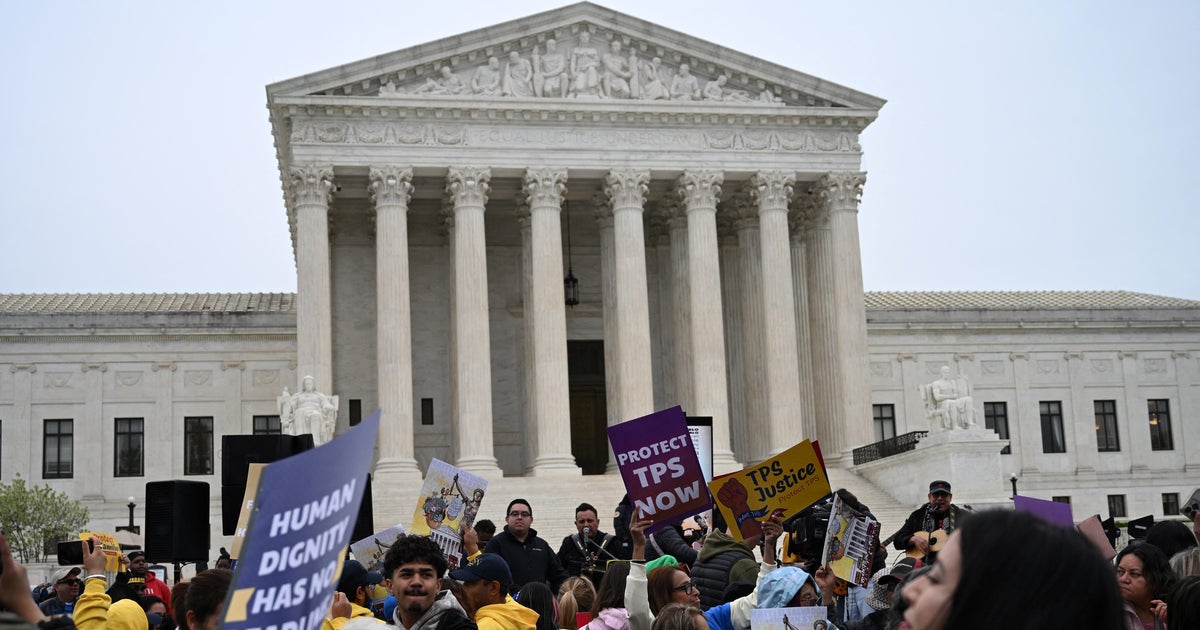
A federal judge stopped the Trump administration from ending legal protections called Temporary Protected Status (TPS) for over 2,800 Yemeni nationals living in the U.S. The judge ruled that the Department of Homeland Security did not follow the required legal process before trying to end these protections.
Key Facts
The judge’s order blocks the end of TPS for Yemenis while a lawsuit continues.
TPS protects people from countries with ongoing war or disasters from being deported.
Yemen has had TPS since 2015 due to civil war and violence.
The Trump administration moved to end TPS for Yemen in early 2024.
The judge said DHS ignored legal rules when deciding to end TPS for Yemen.
Yemeni TPS holders were given 60 days to leave the U.S. before the judge stopped that deadline.
TPS cannot be ended without following a set process that Congress created.
The Supreme Court is also reviewing similar efforts to end TPS for Syrians and Haitians.
Read the Original
Want the full story? Tap a source to open the original
article.
After natural disasters, some groups like conspiracists, militias, and white supremacists go to affected areas. They offer help but also use the chance to gain followers and make people doubt the government.
Key Facts
These groups appear frequently after natural disasters.
They offer assistance to communities in need.
Some people call them "disaster tourists."
Their goal includes promoting their beliefs and growing support.
They often try to spread distrust about the government.
The story was covered in a CBS News 60 Minutes segment.
The report highlights the impact of these groups on disaster recovery.
Read the Original
Want the full story? Tap a source to open the original
article.
President Donald Trump told Congress that US hostilities with Iran have ended due to a ceasefire, so he does not need their approval for the conflict. US law requires a president to stop using armed forces within 60 days unless Congress agrees to continue or declares war, but the president and Defense Secretary say the ceasefire pauses this 60-day limit.
Key Facts
President Trump notified Congress that fighting with Iran stopped on April 7, 2026.
The US conflict with Iran began on February 28, 2026.
US law (War Powers Resolution) says the president must end military action within 60 days unless Congress approves continuing.
If Congress does not approve, the president has 30 more days to remove troops.
Defense Secretary Pete Hegseth said the ceasefire stops the 60-day deadline from counting.
Some lawmakers, like Senator Tim Kaine, disagree and say the law does not allow the deadline to pause during a ceasefire.
President Trump said he has never sought congressional approval for war before in similar cases.
The 60-day deadline is important to check the president's military powers without Congress declaring war.
Read the Original
Want the full story? Tap a source to open the original
article.
President Donald Trump announced he will raise tariffs on cars and trucks imported from the European Union to 25% starting next week. He said the EU is not following the trade agreement made last year but did not provide specific details.
Key Facts
President Trump plans to increase auto tariffs on EU imports to 25%.
The change will begin next week.
Trump claims the EU is not following the 2023 trade deal.
He did not explain exactly what rules the EU is breaking.
The president said higher tariffs might encourage EU companies to build factories in the U.S.
Trump made these comments while leaving the White House for Florida.
He also mentioned lifting some tariffs on Scotch whisky after a royal visit.
The move could impact the global economy, which is currently fragile.
Read the Original
Want the full story? Tap a source to open the original
article.
The FDA will let some pancreatic cancer patients use a new drug called daraxonrasib before it is fully approved. This drug has shown better survival times in clinical trials compared to traditional chemotherapy and is available through a program for serious illnesses.
Key Facts
Daraxonrasib is a pill taken three times daily that blocks a signal causing cancer cells to grow.
In tests, patients with metastatic pancreatic cancer lived a median of 13 months on daraxonrasib versus about six months with chemotherapy.
Former Senator Ben Sasse said the drug significantly reduced his tumor size and pain.
The FDA approved daraxonrasib for use under the expanded access (compassionate use) program.
This program allows patients with serious conditions to try drugs not yet fully approved outside clinical trials.
Patients with previously treated metastatic pancreatic ductal adenocarcinoma and no other options can use this drug.
The FDA approved expanded access just two days after the request from Revolution Medicine.
Pancreatic cancer has a low five-year survival rate of about 13.7% and is responsible for a high percentage of cancer deaths.
Read the Original
Want the full story? Tap a source to open the original
article.
The last adult involved in the 2022 murder of Zaria McKeever was sentenced after admitting to lying to police and helping her son after the crime. This final sentencing concludes the legal cases related to McKeever’s death, which involved several people convicted of murder and aiding offenders.
Key Facts
Zaria McKeever, age 23, was shot and killed in Brooklyn Park, Minnesota, in November 2022.
Five adults were charged in connection with the murder.
Valesha Parker admitted to lying to law enforcement and helping her son after the murder.
Parker received a one-year jail term plus a 50-month prison sentence that is stayed for five years if conditions are met.
Erick Haynes, McKeever’s former partner, received a life sentence after pleading guilty to first-degree murder.
Juvenile Foday Kamara was involved in the shooting and received a sentence of over 10 years for second-degree intentional murder.
Other defendants received prison or jail terms for aiding the offenders.
The Minnesota Attorney General’s Office prosecuted the case after a state intervention due to family concerns about initial handling.
Read the Original
Want the full story? Tap a source to open the original
article.
A Miami jury found former Florida Republican Representative David Rivera guilty of secretly lobbying for the Venezuelan government. He and his consultant broke U.S. law by not registering as foreign agents while trying to influence U.S. lawmakers.
Key Facts
David Rivera is a former Republican member of the Florida House of Representatives.
He was convicted of conspiracy and other crimes related to lobbying for Venezuela.
Rivera and his consultant, Esther Nuhfer, did not register under the Foreign Agents Registration Act (FARA).
FARA requires people working for foreign governments to disclose their activities in the U.S.
The lobbying campaign involved millions of dollars.
The case was decided by a federal jury in Miami.
Secret lobbying means trying to influence government officials without telling them who is behind the effort.
Read the Original
Want the full story? Tap a source to open the original
article.
A jury found former Florida Congressman David Rivera guilty of working secretly to influence US officials on behalf of Venezuela without registering as a foreign agent. Rivera and his associate were involved in a campaign linked to a Venezuelan state oil company’s US subsidiary to lobby during a tense period between the US and Venezuela.
Key Facts
David Rivera served in the US Congress from 2011 to 2013.
Rivera was convicted of conspiracy, failing to register as a foreign agent, and related crimes.
He worked for a consulting firm hired by a Venezuelan state oil company’s US subsidiary for $50 million.
Rivera and his associate Esther Nuhfer were accused of secretly lobbying US officials, including Senator Marco Rubio and Kellyanne Conway.
Rubio testified he did not know about Rivera’s lobbying work.
Rivera’s defense said the lobbying targeted a US subsidiary and aimed to remove Venezuelan President Nicolás Maduro, not improve relations.
The trial occurred amid strained US-Venezuela relations during President Donald Trump’s first term, which included sanctions on Venezuela.
Rivera was detained after the verdict due to concerns he might flee.
Read the Original
Want the full story? Tap a source to open the original
article.
A whistleblower told House Democrats that a Justice Department lawyer pressured prosecutors to quickly file criminal charges against the Southern Poverty Law Center (SPLC) despite doubts about the case. The SPLC was indicted on fraud and money laundering charges related to an informant program but denies wrongdoing, while lawmakers are now investigating the rush to indict.
Key Facts
Aakash Singh, a Justice Department lawyer, pushed for a quick indictment of the SPLC despite concerns about the case’s strength.
The SPLC faces 11 federal charges, including wire fraud and money laundering.
The charges relate to an informant program where the SPLC paid people to infiltrate extremist groups and shared information with law enforcement.
The SPLC denies all allegations and legal experts say the case appears weak.
Todd Blanche, acting US attorney general, announced the indictment and is seen as trying to impress President Trump for a permanent post.
The Justice Department claims the case was built over years, but a social media post supporting this was later deleted.
Singh reportedly told prosecutors that President Trump was their “chief client” and encouraged aggressive investigations of political opponents.
Lawyers for the SPLC have asked a court to stop the government from making statements that could harm their reputation before trial.
Read the Original
Want the full story? Tap a source to open the original
article.
Homeland Security Secretary Markwayne Mullin said the Secret Service did its job during a shooting at the White House Correspondents’ Association dinner. He explained that the security barriers prevented the attacker from getting closer to the event.
Key Facts
A shooting happened at the White House Correspondents’ Association dinner.
The Secret Service stopped the gunman at the second security perimeter.
Homeland Security Secretary Markwayne Mullin praised the Secret Service’s actions.
Mullin said the security setup worked as planned.
The barrier system is designed in layers to protect against threats.
The event attracted high-profile attendees, requiring strong security measures.
Officials continue reviewing security procedures after the incident.
Read the Original
Want the full story? Tap a source to open the original
article.
On the biggest stories we show what the outlets agree on and where they differ. Readers keep that going, and get the daily digest by email every morning. Most choose $3.99/month.
The Antioch Police Department started a new program to help drivers with autism during traffic stops. The program uses a blue envelope containing important documents and information to help officers communicate calmly and clearly with these drivers.
Key Facts
The program provides a blue envelope for drivers with autism to keep important documents and emergency contacts.
The envelope signals to police officers that the driver may need clear communication and more patience.
It includes contact details for a support person officers can call if help is needed.
The program aims to reduce stress and improve safety during traffic stops for drivers with autism.
Police Chief Geoff Guttschow, who has an autistic son, said this program is both a professional and personal effort.
Blue envelopes are available at the Antioch Police Department for residents who might benefit from the program.
Officers are trained to recognize the envelope and adjust their approach to support positive communication.
The program was announced as Autism Awareness Month ended on May 1.
Read the Original
Want the full story? Tap a source to open the original
article.
A recent Supreme Court ruling on the Voting Rights Act could lead many U.S. states to redraw their congressional district maps more often than usual, possibly every few years instead of every 10. Some states, including Louisiana, Tennessee, Alabama, and South Carolina, are considering or planning new redistricting efforts that may affect upcoming elections.
Key Facts
The Supreme Court made a ruling in Louisiana v. Callais that may cause states to redraw congressional maps more frequently.
Normally, redistricting happens every 10 years after the census, but the ruling could change that.
Louisiana postponed its congressional primaries to redraw maps, a move currently challenged in court.
Tennessee's governor may redraw maps to add another Republican seat in Congress.
Alabama is seeking Supreme Court review regarding its 2023 congressional map dispute, hoping to implement a map with more majority-minority districts.
Some states' redrawing efforts are tied up in lawsuits or awaiting court decisions.
Redistricting can affect which political party holds more seats by changing district boundaries.
President Donald Trump encouraged Texas Republicans to pass a new map, favoring Republicans in several states for upcoming elections.
Read the Original
Want the full story? Tap a source to open the original
article.
The U.S. Treasury Department warned American shipping companies not to pay tolls to Iran for passing through the Strait of Hormuz. They said companies could face penalties if they make these payments, as Iran is demanding tolls for ships to navigate this key waterway.
Key Facts
The Treasury Department issued a warning on Friday.
The warning targets U.S. shipping companies that pay tolls to Iran.
The tolls are demanded by Iran for ships passing through the Strait of Hormuz.
The Office of Foreign Assets Control (OFAC) released the advisory.
U.S. shippers could face sanctions if they pay these tolls.
The Strait of Hormuz is an important shipping route.
The advisory reflects concerns over Iran’s control of this passage.
Read the Original
Want the full story? Tap a source to open the original
article.
A federal court in New York stopped the government from ending protections for immigrants from Yemen just days before the deadline. The judge paused the decision because of ongoing dangers in Yemen, such as conflict and terrorism.
Key Facts
The court ruling protects 3,235 immigrants from Yemen who had Temporary Protected Status (TPS).
TPS allows immigrants to stay in the U.S. temporarily if it is unsafe to return to their home country.
The government planned to end Yemen’s TPS on May 4.
U.S. District Judge Dale E. Ho issued a 36-page ruling to halt the termination.
The judge noted that Yemen is still very dangerous, with war, terrorism, and landmines.
The judge questioned the decision-making process of the former Homeland Security Secretary Kristi Noem.
The Supreme Court recently heard arguments about ending TPS for other countries, like Haiti and Syria.
The Department of Homeland Security had not yet commented on the court’s ruling.
Read the Original
Want the full story? Tap a source to open the original
article.
President Donald Trump sent a letter to Congress saying that a ceasefire with Iran affects the 60-day limit set by the War Powers Act for military actions. He explained that the ceasefire started on April 7, 2026, and has been extended, which pauses the countdown toward the deadline.
Key Facts
President Trump informed Congress about the ceasefire with Iran.
The ceasefire began on April 7, 2026, and lasted for two weeks initially.
The ceasefire has been extended beyond the original two weeks.
The War Powers Act requires the President to limit military actions to 60 days without Congress approval.
The ceasefire period does not count toward the 60-day limit.
No fighting has taken place during the ceasefire.
Trump’s letter officially adjusts the timeline set by the War Powers Act because of the ceasefire.
Read the Original
Want the full story? Tap a source to open the original
article.
Voting rights groups sued Louisiana officials to stop the state from suspending congressional primary elections after early voting had started. The suspension came after a Supreme Court ruling affected redrawing congressional districts, and the lawsuit argues that delaying elections only usually happens in emergencies, which this is not.
Key Facts
Louisiana Governor Jeff Landry suspended the state’s congressional primary election after early voting had begun.
The suspension aims to redraw districts for the 2026 election following a Supreme Court decision.
The Supreme Court ruling found that a majority-nonwhite Louisiana district violated the US Constitution's equal protection rules.
Other races and constitutional amendments will continue on the ballot, but votes for the congressional race will not be counted.
The American Civil Liberties Union, along with voting rights groups like the NAACP and League of Women Voters, filed suit to block the suspension.
Plaintiffs include voters who already cast absentee ballots, saying their votes are at risk.
The lawsuit points out that election delays in Louisiana have only happened before due to emergencies like natural disasters.
A separate federal lawsuit was filed by a Democratic candidate to restore the suspended congressional primaries, citing constitutional and federal election laws.
Read the Original
Want the full story? Tap a source to open the original
article.
Staying informed here is free for everyone. If it's worth something to you, pay what you want. Supporters also get the daily digest by email every morning.
President Donald Trump informed Congress that active fighting between U.S. forces and Iran has ended, noting that there has been no exchange of fire since April 7, 2026. He cited a ceasefire to argue that the 60-day deadline under the War Powers Resolution has paused, while some lawmakers question whether the military actions comply with this law.
Key Facts
The conflict between the U.S. and Iran began on February 28, 2026, with U.S. and Israeli strikes on Iranian targets.
President Trump notified Congress on March 2, 2026, starting a 60-day countdown under the War Powers Resolution, which limits unauthorized military action.
The War Powers Resolution requires the president to end hostilities within 60 days unless Congress approves continuing military force.
On April 7, 2026, a ceasefire was brokered, and President Trump said fighting has stopped since then.
The administration argues the ceasefire pauses the 60-day clock, but some lawmakers disagree and have raised legal and constitutional questions.
Despite the ceasefire, the U.S. maintains a naval blockade of Iranian ports, which is considered a hostile act.
Defense Secretary Pete Hegseth stated the military is ready to resume attacks instantly if ordered.
More than 50,000 U.S. troops remain deployed in the Middle East amid ongoing tensions with Iran.
Read the Original
Want the full story? Tap a source to open the original
article.
President Donald Trump will speak to seniors in Florida at The Villages to promote his economic plan. He will focus on his proposal to not tax Social Security benefits before the 2026 midterm elections.
Key Facts
President Trump is addressing seniors in Florida.
The event will take place at The Villages, a large retirement community.
The speech aims to promote his economic agenda ahead of the 2026 midterm elections.
A key part of his plan is to stop taxes on Social Security benefits.
The focus is on appealing to older voters who rely on Social Security.
The event is scheduled for Friday afternoon.
This effort is part of a broader campaign strategy before the upcoming elections.
Read the Original
Want the full story? Tap a source to open the original
article.