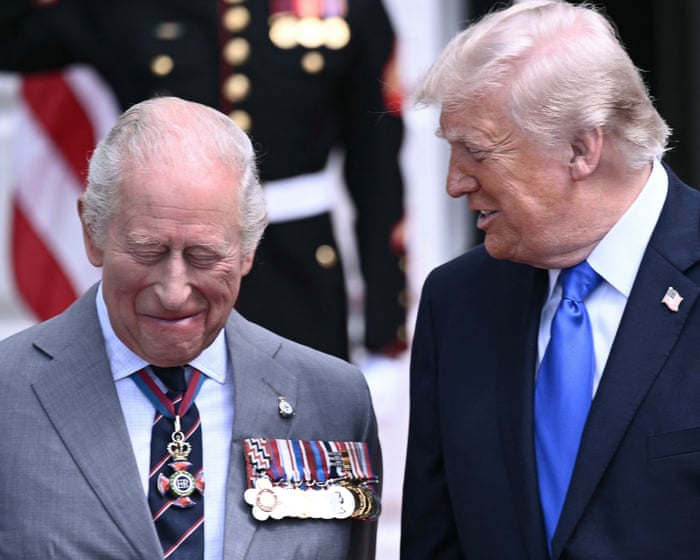
President Donald Trump is hosting a UFC mixed martial arts event on the White House South Lawn on Flag Day. Some Americans are upset because they feel a violent event is not suitable for the day that honors the U.S. flag.
Key Facts
The event is a UFC (Ultimate Fighting Championship) fight, which involves mixed martial arts competition.
It is taking place on the South Lawn of the White House.
The event is scheduled on Flag Day, which marks the adoption of the U.S. flag.
Flag Day is traditionally a day to honor the nation’s flag.
Some people believe hosting a violent sports event on this day is inappropriate.
President Donald Trump is the host of this event.
There has been public disagreement and outrage over the choice of event for this national observance.
Read the Original
Want the full story? Tap a source to open the original
article.
A woman, Claire Freemantle, has been charged for a 2023 crash at a London school that killed two eight-year-old girls and injured others. The case is moving to trial after police reopened the investigation following concerns about the original inquiry.
Key Facts
The crash happened at The Study Prep school in Wimbledon, London, in July 2023.
Two eight-year-old girls, Selena Lau and Nuria Sajjad, died in the crash.
Claire Freemantle was driving the Land Rover that crashed through the school railings.
She faces two counts of causing death by dangerous driving and seven counts of causing serious injury by dangerous driving.
Police initially decided not to charge Freemantle, citing an undiagnosed epileptic seizure.
The girls' families challenged the initial decision, leading to a reopened investigation.
In January 2025, Freemantle was re-arrested and charged after new evidence was found.
The Independent Office for Police Conduct is investigating 11 police officers over their handling of the first investigation.
Read the Original
Want the full story? Tap a source to open the original
article.
The Trump administration has refused to seek Congress’s approval to continue military action against Iran, arguing that a recent ceasefire stops the 60-day War Powers Act countdown. Senate Republicans blocked a resolution that would have required Congress to authorize further conflict, while some Republicans expressed support for limiting presidential war powers.
Key Facts
The War Powers Act requires the president to seek congressional approval or end hostilities within 60 days.
The Trump administration notified Congress about strikes on Iran 60 days ago but claims the ceasefire stops the timer.
Defense Secretary Pete Hegseth testified that the ceasefire means the 60-day deadline "pauses or stops."
Senate Republicans twice blocked a Democrat-led resolution to limit the conflict without congressional approval.
Two Republicans, Susan Collins and Rand Paul, voted with Democrats to support war powers limits.
President Trump has threatened to reduce U.S. troops in Spain, Italy, and possibly Germany over criticism of the Iran war.
Congress passed a 45-day extension of a surveillance law allowing warrantless spying by intelligence agencies.
The Department of Justice’s demand for voter data faces resistance even from some conservative states.
Read the Original
Want the full story? Tap a source to open the original
article.
The Trump administration argues that the 60-day deadline to get Congress’s approval for the US-Israel conflict with Iran is paused because of a fragile ceasefire. Some lawmakers and legal experts disagree, saying the law does not allow pausing once the deadline starts.
Key Facts
The War Powers Resolution requires the president to get congressional approval within 60 days after notifying them of war or to withdraw forces.
President Trump notified Congress on March 2 about the US-Israel war on Iran, making the deadline May 1.
Defense Secretary Pete Hegseth said the ceasefire since April 8 stopped or paused the 60-day clock.
The ceasefire is fragile, with no direct attacks after April 7, but Iran blocks the Strait of Hormuz and the US continues a naval blockade.
Democratic lawmakers and some legal experts say the ceasefire does not pause the War Powers deadline.
Some Trump administration officials propose starting a new military operation under a different name to reset the deadline.
The dispute hinges on how “hostilities” are defined under the War Powers Resolution law.
The law aims to limit how long the president can engage in war without Congress’s consent.
Read the Original
Want the full story? Tap a source to open the original
article.
More than 1,700 NHS staff in England have used Martha's Rule helplines to raise concerns about patient care since they started in September 2024. The helplines, created after the death of 13-year-old Martha Mills due to care failings, help staff urgently review patients' worsening conditions to improve safety.
Key Facts
Martha Mills died in 2021 after developing sepsis and not receiving timely intensive care.
Martha's Rule helplines allow NHS staff, including junior workers, to report if a patient's health is getting worse.
Since September 2024, nearly 1,800 calls have been made to these helplines in 143 hospitals.
Over 1,000 calls helped identify serious health decline in patients.
More than 500 patients were transferred to intensive care after calls were made.
The helplines provide a less confrontational way for staff to speak up, overcoming hospital hierarchies.
The NHS plans to expand Martha's Rule to adult and child wards, maternity, neonatal, and emergency departments.
NHS officials say the initiative has led to important treatment changes, saving lives.
Read the Original
Want the full story? Tap a source to open the original
article.
Three boys who became friends while waiting for heart transplants at Texas Children's Hospital in Houston all received donor hearts within 10 days of each other. Their shared experience and timely surgeries helped strengthen their bond.
Key Facts
The story focuses on three boys at Texas Children's Hospital in Houston.
All three boys were waiting for heart transplants.
They became friends during their hospital stay.
Each boy received a heart transplant within 10 days of the others.
The quick succession of transplants was described as a "miracle."
The hospital is known for its pediatric care, including heart surgeries.
This event highlights the importance of organ donation and timely matching.
Read the Original
Want the full story? Tap a source to open the original
article.
President Donald Trump threatened to withdraw US troops from Italy and Spain after criticizing both countries for not supporting US military efforts related to Iran. Italy and Spain have pushed back against the threats, denying any failure to assist the US and highlighting legal limits on US military use of their bases.
Key Facts
President Trump threatened to pull US troops from Italy and Spain, following earlier threats to reduce troops in Germany.
Trump criticized Italy and Spain for not helping the US, especially in maritime security around the Strait of Hormuz.
Italy refused US military planes carrying weapons bound for Iran from using a Sicilian airbase in late March.
Italy’s defense minister denied accusations of not helping the US and said European ships crossed the Strait of Hormuz, not Italian ones.
Spain has denied US permission to use its bases for attacks on Iran and criticized US military actions.
About 13,000 US military personnel are based in Italy across seven naval bases; Spain hosts over 3,800 US personnel mainly at Rota naval station and Morón airbase.
The US bases in Spain are under Spanish control but receive significant US funding and support key US military operations in Europe and Africa.
Tensions between the US and Italy increased after Italy’s Prime Minister Giorgia Meloni criticized Trump’s comments about the Pope's stance on the Iran war.
Read the Original
Want the full story? Tap a source to open the original
article.
Many Americans feel worse about their personal finances compared to when President Donald Trump took office in 2025, with nearly a quarter saying they are falling behind financially. Most people think using the U.S. military against Iran was a mistake, and many expect gas prices to rise further over the next year.
Key Facts
40% of Americans say they are worse off financially than when President Trump began his term in 2025.
Nearly 25% of Americans report falling behind financially, up from 17% earlier in 2026.
Half of Americans expect gas prices to increase over the next year; currently, prices are at a four-year high.
Over 40% of Americans have cut back on driving and household expenses due to high gas prices.
Higher gas prices especially impact lower-income households, with majorities reducing driving and expenses.
Most Americans say using the U.S. military against Iran was a mistake and worry about increased terrorism risks.
Many are not confident that agreements with Iran will stop nuclear weapon development.
A slim majority of Republicans and a large majority of all Americans reacted negatively to a social media post by President Trump saying, "A whole civilization will die tonight."
Read the Original
Want the full story? Tap a source to open the original
article.
Two employees were killed during a bank robbery at a U.S. Bank branch in Berea, Kentucky. Police are searching for the shooter, who fled after a car chase and crashed his vehicle; he is considered armed and dangerous.
Key Facts
The shooting happened on Thursday afternoon at a U.S. Bank in Berea, Kentucky.
The victims were Breanna Edwards, 35, and Brian Switzer, 42, both employees of the bank.
The suspect is a masked man about 6 feet 3 inches tall, wearing a light-colored hoodie, gray pants, dark gloves, and light athletic shoes.
Police tried to stop the suspect's car but he fled, leading to a chase ending in a crash near Lexington.
Authorities are searching the area with helicopters, drones, dogs, and going door to door for information.
Local schools nearby were put on lockdown for safety and students had to be picked up by parents.
U.S. Bank expressed sadness and is working with law enforcement and supporting the victims’ families.
The FBI and local police are helping state police in the manhunt.
Read the Original
Want the full story? Tap a source to open the original
article.
Two senior UK civil servants gave difficult testimony about a controversial ambassador appointment. Meanwhile, a newly elected Green MP faced criticism after commenting on alcohol use among UK parliament members.
Key Facts
Olly Robbins, recently removed as Foreign Office permanent secretary, testified about not reporting security concerns regarding Peter Mandelson's US ambassador appointment.
Mandelson received negative security vetting ("red lights") but was still appointed.
Cabinet Office official Cat Little also testified, strictly following procedures without providing clear answers.
Green MP Hannah Spencer said some MPs at Westminster smell of alcohol and felt uneasy about the drinking culture.
Spencer's comments led to heavy criticism from politicians across parties, including Nigel Farage and journalist Rod Liddle.
Some MPs defended drinking on the job as common in parliament voting areas.
The article notes journalists drinking during a shooting incident at the White House correspondents dinner.
Read the Original
Want the full story? Tap a source to open the original
article.
President Donald Trump and his allies have pressured news organizations to air interviews fully, threatening legal action if they do not. This approach challenges journalists' editorial decisions, which are protected by the First Amendment, and uses consumer protection laws in ways that newsrooms see as harmful to free press.
Key Facts
President Trump threatened to sue CBS News if they did not air his interview in full.
Newsrooms are concerned about pressure to avoid "deceptive editing" accusations, affecting their editorial judgment.
Requiring full interview broadcasts can reduce clarity and limit journalists' ability to present news meaningfully.
The First Amendment protects not only the right to publish but the right to decide how to publish.
The US Supreme Court has warned against government or legal interference in editorial decisions.
President Trump has sued CBS, the Des Moines Register, and the BBC using state consumer protection laws meant for business conduct.
These lawsuits aim to frame editorial choices as consumer fraud, even though they lack merit.
Litigation by Trump Media & Technology Group burdens news publishers even when it fails.
Read the Original
Want the full story? Tap a source to open the original
article.
Esther Cohen was named the first poet laureate of Greene County, New York, in January 2024. However, six weeks later, the county legislature removed her from the position after they found social media posts they said promoted violence.
Key Facts
Esther Cohen is a poet who bought a house in Greene County, New York, in 1985.
Greene County is about 120 miles north of New York City and known for its natural beauty.
Cohen was appointed as the county’s first poet laureate in January 2024.
Her role was to promote poetry and local literary events, with a $1,000 annual payment.
After a county legislature meeting, a Republican lawmaker questioned Cohen based on her social media posts.
The legislature claimed she promoted violence online, specifically referencing posts related to Donald Trump and Zohran Mamdani.
In April 2024, the legislature voted unanimously to remove her as poet laureate.
Cohen deleted the posts after learning about the concerns and said she did not intend to promote violence.
Read the Original
Want the full story? Tap a source to open the original
article.
On the biggest stories we show what the outlets agree on and where they differ. Readers keep that going, and get the daily digest by email every morning. Most choose $3.99/month.
At a Senate hearing, Defense Secretary Pete Hegseth said the current ceasefire with Iran means the 60-day limit for military action under the War Powers Resolution is paused. Congress has repeatedly failed to limit President Trump’s military actions against Iran, showing reluctance to use its constitutional war powers.
Key Facts
The War Powers Resolution requires a president to end military action after 60 days unless Congress approves further action.
Defense Secretary Hegseth said the ceasefire with Iran stops the 60-day clock, letting President Trump continue military pressure.
Legal experts say the law does not clearly allow the 60-day limit to be paused during a ceasefire.
Congress has voted multiple times but failed to restrict or end U.S. military involvement with Iran.
This pattern of presidential military action without strong congressional approval has happened in past conflicts like Lebanon, Kosovo, Libya, Yemen, and Iran-related actions.
Iran agreed to a temporary ceasefire after a U.S. military operation called Operation Epic Fury.
The Trump administration argues that flexibility is needed to respond to ongoing threats from Iran.
Congress’s failure to act strongly against the president’s military moves shows a reluctance to use its constitutional war-declaring power.
Read the Original
Want the full story? Tap a source to open the original
article.
The Democratic Party has not yet conducted a thorough review to understand why they lost the 2024 presidential election to President Trump. Many Democrats are frustrated because they want clear reasons for the defeat but are disagreeing over whether such a review is necessary.
Key Facts
The Democrats lost the 2024 presidential election to President Donald Trump for the second time.
The party promised to do an autopsy, which means a detailed analysis of what went wrong.
The promised autopsy has not happened yet, over a year after the election.
Some Democratic leaders, including DNC Chair Ken Martin, have caused disagreement within the party about the need for this autopsy.
Many Democrats want answers to improve their chances in future elections.
The delay and disagreement over the review are causing frustration among party members.
The discussion shows ongoing debate within the Democratic Party about its direction after the 2024 loss.
Read the Original
Want the full story? Tap a source to open the original
article.
Federal Reserve Chair Jerome Powell announced he will stay on the Fed board even after Kevin Warsh becomes chair. This decision has upset some people connected to President Donald Trump’s administration and supporters.
Key Facts
Jerome Powell is currently the Chair of the Federal Reserve, the U.S. central bank.
Powell plans to remain on the Federal Reserve board after his term as Chair ends.
Kevin Warsh is set to take over as Chair of the Federal Reserve.
Powell said he wants to stay due to ongoing legal challenges the Fed faces.
People connected to President Donald Trump’s administration disagree with Powell’s decision.
The Federal Reserve board members help guide U.S. monetary policy and oversee the central bank’s actions.
Powell announced his plan publicly on a Wednesday.
Read the Original
Want the full story? Tap a source to open the original
article.
President Donald Trump is approaching a 60-day deadline related to the U.S. war with Iran. Support among Republican lawmakers for the conflict is dropping, while President Trump continues to focus on a blockade that is slowing down peace talks.
Key Facts
President Trump faces a 60-day deadline connected to the U.S. war with Iran.
Support for the war is decreasing among Republican members of Congress.
President Trump maintains a blockade that affects negotiations aimed at ending the conflict.
Different officials have mentioned various key points tied to the 60-day deadline.
The deadline may influence decisions about continuing or changing U.S. involvement in the war.
The conflict with Iran remains a significant issue in U.S. politics and foreign policy.
Lawmakers’ changing support could impact the direction of U.S. military actions.
Read the Original
Want the full story? Tap a source to open the original
article.
Senate Democrats are rethinking their approach for the 2026 midterm elections after Maine Governor Janet Mills decided not to run against Senator Susan Collins. This decision has raised questions about Senate Majority Leader Chuck Schumer’s strategy for recruiting candidates.
Key Facts
Governor Janet Mills, a Democrat from Maine, will not run for the U.S. Senate seat currently held by Republican Susan Collins.
Mills was considered a key candidate recruited by Senate Majority Leader Chuck Schumer.
Some Senate Democrats are expressing concerns about Schumer’s recruiting and political tactics.
The decision by Mills affects Democratic plans for the 2026 midterm elections.
Susan Collins is the incumbent Republican senator from Maine.
The Hill reported on these internal Democratic discussions.
The midterm elections will determine control of the U.S. Senate.
Read the Original
Want the full story? Tap a source to open the original
article.
Both the Republican and Democratic parties have been redrawing congressional district maps mid-decade in several states, a process known as gerrymandering. Recent efforts show Republicans likely gaining more seats than Democrats ahead of the November midterm elections, helped by changes in states like Florida and legal battles in Virginia.
Key Facts
Texas started the recent redistricting battle last July, pushing maps favorable to Republicans.
California and Virginia recently approved new maps favoring Democrats, though Virginia’s map faces legal challenges.
Florida’s new redistricting plan, led by Gov. Ron DeSantis, favors Republicans and is expected to add about four GOP seats.
Virginia’s new map, passed narrowly, is currently blocked by court orders and might be invalidated, potentially costing Democrats seats.
Both parties have a long history of gerrymandering in states they control.
A U.S. Supreme Court decision ruled that race cannot be used as the main factor in drawing congressional district boundaries under the Voting Rights Act.
The overall nationwide effect of recent redistricting efforts suggests Republicans will likely gain a partisan advantage before the midterm elections.
Some states, like Indiana, have resisted redrawing maps voluntarily during this period.
Read the Original
Want the full story? Tap a source to open the original
article.
Nebraska is starting to require some Medicaid recipients to work or engage in job-related activities to keep their healthcare benefits. This makes Nebraska the first state to put these work rules into action under a new Republican law, ahead of a national schedule.
Key Facts
Nebraska will begin enforcing work requirements for Medicaid on Friday.
These rules are part of the GOP’s One Big Beautiful Bill Act.
Nebraska is the first state to implement these work requirements.
The state is starting the program eight months earlier than the national deadline.
The program requires some Medicaid recipients to work or participate in job-related activities to maintain coverage.
Republicans see Nebraska’s experience as a test for the policy’s success nationwide.
The outcome could influence whether other states adopt similar requirements.
Read the Original
Want the full story? Tap a source to open the original
article.
Speaker Mike Johnson, a Republican from Louisiana, managed to move important bills forward in the House of Representatives despite challenges and disagreements among his party members. The process was difficult and upset some Republicans, and more challenges are expected ahead.
Key Facts
Speaker Mike Johnson leads the House Republicans.
He pushed through major bills recently.
The process of passing these bills was difficult and caused disagreements.
Some Republican members were unhappy with how the bills were handled.
Representative Troy Nehls called the week of negotiations “hell week” due to its difficulty.
There are still more challenges expected as these bills continue through Congress.
The bills are part of an ambitious plan by House Republicans to change laws and policy.
Read the Original
Want the full story? Tap a source to open the original
article.