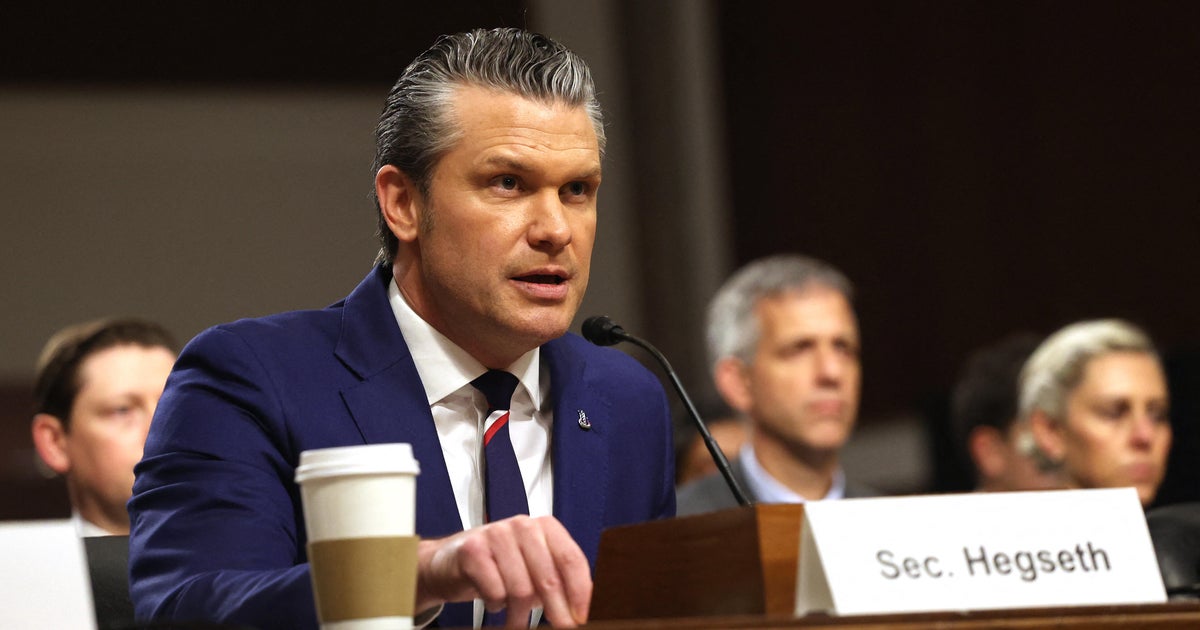
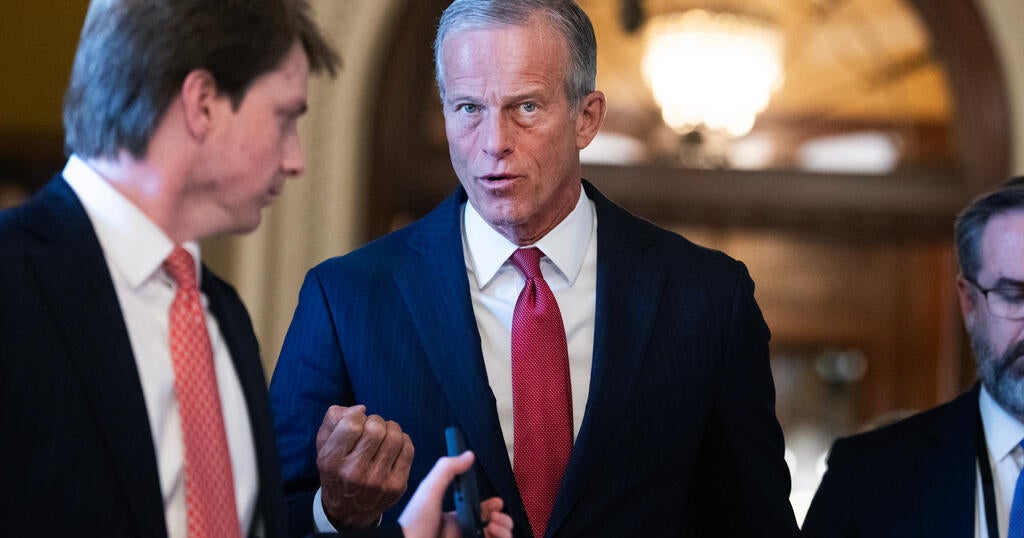
The Senate, led by Republicans, rejected a Democratic proposal to limit President Donald Trump’s military actions in Iran. The vote was close, with only a few Republicans supporting the measure, which aimed to stop the conflict unless Congress approved further action.
Key Facts
The Senate voted 47-50 against a resolution to restrict military action in Iran.
Two Republicans, Susan Collins and Rand Paul, supported the resolution.
One Democrat, John Fetterman, voted against it.
This was the sixth time Democrats pushed a war powers resolution on Iran and all attempts have failed.
The War Powers Resolution requires the president to end military actions after 60 days unless Congress approves them.
Defense Secretary Pete Hegseth said the 60-day limit was paused due to a ceasefire with Iran.
The House also recently rejected a similar resolution to limit war powers on Iran.
Some Democrats who opposed earlier resolutions changed to support this effort, showing growing Democratic opposition to the war.
Read the Original
Want the full story? Tap a source to open the original
article.
President Donald Trump has withdrawn the nomination of Dr. Casey Means for surgeon general due to concerns in the Senate about her experience and vaccine views. He nominated Dr. Nicole Saphier, a radiologist known for her work with breast cancer patients, to take the position instead.
Key Facts
President Trump originally nominated Dr. Casey Means for surgeon general.
The Senate raised questions about Dr. Means' experience and opinions on vaccines.
Due to stalled progress, President Trump decided to withdraw Dr. Means' nomination.
Dr. Nicole Saphier is the new nominee for surgeon general.
Dr. Saphier is a radiologist and director of breast imaging at Memorial Sloan Kettering Monmouth.
She has a medical degree from Ross University School of Medicine in Barbados.
Dr. Saphier completed fellowships at the Mayo Clinic.
President Trump described her as a leading physician who helps women with breast cancer.
Read the Original
Want the full story? Tap a source to open the original
article.
President Donald Trump signed an executive order to create a website called TrumpIRA.gov, which will help Americans without employer retirement plans find and join private retirement accounts. The site aims to support eligible low-income workers by making it easier to get up to $1,000 a year in government contributions through the Saver’s Match program starting in 2027.
Key Facts
TrumpIRA.gov is a new government website to connect workers with private retirement accounts.
The site targets people who do not have retirement plans through their jobs.
It supports the federal Saver’s Match program, which gives government money directly to retirement accounts.
Eligible individuals can get up to $1,000 per year in matching contributions.
Single filers making less than $35,000 a year qualify for the full match.
The program replaces a previous tax credit with direct payments to retirement accounts.
The initiative is timed to launch before the Saver’s Match program starts in January 2027.
The order asks the Treasury Department to approve and list private financial institutions that offer qualifying accounts.
Read the Original
Want the full story? Tap a source to open the original
article.
President Donald Trump supports a proposal to rename the Immigration and Customs Enforcement agency (ICE) as “NICE.” This idea started as a joke on social media but gained official attention, although any legal name change would need Congress approval and could be costly.
Key Facts
A conservative influencer suggested renaming ICE to National Immigration and Customs Enforcement, making the acronym NICE.
President Trump publicly endorsed this idea on social media, calling it a “GREAT IDEA!!! DO IT.”
The White House and Department of Homeland Security briefly used the name “NICE” on their official social media accounts.
Changing the name officially requires Congress to pass a law amending the current legislation.
The process would involve updating rules, contracts, and budgets, potentially costing millions of dollars.
ICE has faced criticism recently for a record number of detainee deaths—29 since last October, the highest since ICE was created in 2003.
President Trump has previously supported renaming government agencies and geographic locations, such as the Department of Defense and the Gulf of Mexico.
It is unclear if the proposed name change for ICE will move forward beyond social media support.
Read the Original
Want the full story? Tap a source to open the original
article.
Senator Mark Kelly spoke critically of Defense Secretary Pete Hegseth during a Senate Armed Services Committee hearing. Kelly said that Hegseth’s statements were important and questioned his answers.
Key Facts
The hearing took place before the Senate Armed Services Committee.
Senator Mark Kelly is a Democrat.
Kelly criticized Defense Secretary Pete Hegseth’s responses during the hearing.
Kelly emphasized that the words spoken by officials have significance.
The topic involved national defense and military oversight.
The exchange was covered by CBS News.
Read the Original
Want the full story? Tap a source to open the original
article.
Marjorie Taylor Greene, a Republican from Georgia, said that Mike Lawler, a Republican from New York, did not like President Donald Trump. Greene said Lawler often made fun of President Trump’s voice and behavior.
Key Facts
Marjorie Taylor Greene is a Republican representative from Georgia.
Mike Lawler is a Republican representative from New York.
Greene accused Lawler of disliking President Donald Trump.
Greene said Lawler often mocked President Trump’s voice.
She made these statements during an interview with Tucker Carlson, a conservative media personality.
The interview was released on a Wednesday.
The remarks focused on Lawler’s attitude toward President Trump.
Read the Original
Want the full story? Tap a source to open the original
article.
U.S. officials say the real cost of the war with Iran is about $50 billion, which is twice the $25 billion figure the Pentagon gave to Congress. This higher number includes damaged equipment and bases, such as 24 lost drones worth around $30 million each, as well as other hidden expenses.
Key Facts
The Pentagon told Congress the war cost about $25 billion so far.
Internal U.S. estimates say the actual cost is closer to $50 billion.
Missing equipment, like 24 MQ-9 Reaper drones costing $30 million each, drives up expenses.
Defense officials say it is hard to estimate costs for military construction and future base needs.
Senators doubt the $25 billion figure, saying it leaves out costs for deploying and supporting troops.
Higher fuel and fertilizer prices linked to the war add about $150 per month in extra expenses for each U.S. household.
Defense Secretary Pete Hegseth did not give a direct answer about how the war affects U.S. prices.
The war has pushed oil prices to a four-year high.
Read the Original
Want the full story? Tap a source to open the original
article.
President Donald Trump said Tennessee will redraw its congressional district map after the Supreme Court changed a rule in the Voting Rights Act. The court’s decision makes it harder to challenge district maps based on race, and several states may redraw their lines before the November midterm elections.
Key Facts
The Supreme Court ruled against a part of the Voting Rights Act that helped protect minority voters in drawing district maps.
The court now requires proof that maps were drawn with racist intent to be ruled illegal.
Louisiana must redraw its map after the court found it unconstitutional; their primary vote will be delayed.
President Trump said Tennessee’s governor agreed to fix what he called an "unconstitutional flaw" in the state’s maps.
Other states like Georgia may also review their district maps before the midterms.
Redistricting happens every 10 years after the Census to adjust for population changes.
Redistricting can be used for gerrymandering, where maps are drawn to favor one party.
Both Democrats and Republicans are trying to gain advantage in the midterms through redistricting.
Read the Original
Want the full story? Tap a source to open the original
article.
The U.S. government will no longer allow federal funding to pay for fentanyl test strips, which check if drugs contain dangerous chemicals. This decision reverses previous support from President Trump's administration and raises concerns among health groups about losing tools that help prevent overdose deaths.
Key Facts
Federal funds cannot be used to buy test strips that detect fentanyl, xylazine, and medetomidine in drugs.
The change follows a 2025 executive order by President Trump against funding programs seen as facilitating illegal drug use.
Fentanyl test strips cost about $1 each and help prevent fatal overdoses by identifying drug contamination.
Before this change, the Substance Abuse and Mental Health Services Administration (SAMHSA) had supported funding test strips since 2021.
Many states do not consider fentanyl test strips illegal drug tools, and some provide information on where to get them.
Organizations like the Kentucky Harm Reduction Coalition and Fyrebird Recovery have lost grants and face shortages of test strips.
Advocates say cutting funding for test strips removes a proven, low-cost way to save lives during the opioid crisis.
Harm reduction groups are seeking new funding sources, including state funds from opioid lawsuit settlements.
Read the Original
Want the full story? Tap a source to open the original
article.
President Donald Trump withdrew his pick for US surgeon general, Casey Means, after she did not get enough Senate support to be confirmed. He announced he would nominate cancer radiologist Nicole Saphier instead.
Key Facts
Casey Means was nominated by President Trump to be US surgeon general but did not get enough votes in the Senate.
Means is a health influencer without an active medical license and held controversial views on vaccines.
During her Senate hearing, Means did not clearly say if babies should get vaccines and questioned some vaccine science.
Senator Bill Cassidy, a Republican and doctor, was blamed by Trump for blocking Means’ nomination.
President Trump announced Nicole Saphier, a cancer radiologist and Fox News contributor, as his new nominee.
Saphier works at Memorial Sloan Kettering Cancer Center and has written a book about health issues.
This is Trump’s third nominee for surgeon general after two previous candidates faced criticism.
The US Public Health Service, led by the surgeon general, has about 6,000 employees.
Read the Original
Want the full story? Tap a source to open the original
article.
Michigan state senator and Democratic Senate candidate Mallory McMorrow deleted thousands of tweets after questions arose about her residency. She said she permanently moved to Michigan in 2014 but voted in California through 2016, leading to scrutiny about when she officially changed her residency.
Key Facts
Mallory McMorrow’s 2025 autobiography says she relocated permanently to Michigan in 2014.
McMorrow voted in California’s June 2016 Democratic primary, according to public voting records.
She remained registered to vote in California until August 2016, when she registered in Michigan.
McMorrow deleted about 6,000 tweets covering various topics, including some critical of “Middle America.”
Her campaign explained the move to Michigan was gradual due to career commitments.
She has served as Michigan’s Senate Majority Whip for eight years, working on issues like wages, education, and gun violence prevention.
The 2026 Michigan Senate race is closely watched and includes other candidates Haley Stevens and Abdul El-Sayed.
The discussion highlights how millennials in politics often have extensive social media histories that come under scrutiny.
Read the Original
Want the full story? Tap a source to open the original
article.
The U.S. Senate passed a rule to stop its members and staff from betting in prediction markets, where people bet on future events. This ban aims to prevent lawmakers from using secret information for betting, especially after a soldier was charged for doing this with classified details.
Key Facts
The Senate approved the ban unanimously, and it takes effect immediately.
Senators and their staff are not allowed to participate in prediction market betting.
The ban was motivated by concerns about insider information influencing bets on important events like wars.
A recent case involved a U.S. special forces soldier charged with betting on Venezuela’s former president’s capture using classified info.
Prediction markets such as Polymarket and Kalshi have grown but face criticism over regulation and potential misuse of insider data.
Senate leaders want the House and President Trump’s administration to adopt similar rules.
Senators Todd Young and Elissa Slotkin proposed a law to ban all federal officials and employees from using inside information in prediction markets.
Trump’s son Donald Trump Jr. advises two prediction market companies, and Trump’s social media platform is launching its own prediction market.
Read the Original
Want the full story? Tap a source to open the original
article.
The U.S. Senate has unanimously passed a rule that stops senators from trading on prediction markets. This action aims to prevent lawmakers from using inside information for personal gain.
Key Facts
The Senate voted unanimously to ban its members from trading on prediction markets.
Senator Bernie Moreno from Ohio introduced the resolution last week.
The new rule changes the Senate’s regulations.
Senators are now prohibited from making agreements or trades on prediction markets.
The decision responds to worries about insider trading by lawmakers.
Prediction markets are platforms where people bet on the outcomes of events.
The goal is to keep government officials from benefiting unfairly from their knowledge.
Read the Original
Want the full story? Tap a source to open the original
article.
The Senate approved a 45-day extension of a surveillance program that lets U.S. intelligence agencies spy on foreigners without a warrant. This short-term extension aims to prevent the program from expiring while lawmakers try to agree on a longer-term solution.
Key Facts
The program is called Section 702 of the Foreign Intelligence Surveillance Act (FISA).
Section 702 allows intelligence agencies to monitor foreign targets without a court warrant.
The Senate passed the 45-day extension unanimously, sending it to the House for approval.
The House had passed a three-year extension that included a ban on central bank digital currency.
The Senate opposes the digital currency ban and called it a "poison pill."
Lawmakers are under time pressure as the program expires at midnight and Congress is about to go on recess.
Some want reforms requiring warrants for searches of U.S. citizens' communications accidentally collected.
House Speaker Mike Johnson said the House has done its part and is waiting on the Senate.
Read the Original
Want the full story? Tap a source to open the original
article.
Senator Susan Collins, a Republican from Maine, voted in favor of a resolution to limit President Trump's authority to conduct military actions against Iran. This resolution was proposed by Democratic Senator Adam Schiff and aims to stop ongoing military actions without Congress’s approval. Collins is the first Republican senator to support this measure.
Key Facts
The resolution seeks to limit President Trump’s power to carry out military actions against Iran.
It was sponsored by Senator Adam Schiff, a Democrat from California.
Senator Susan Collins voted in favor, breaking with most Republican leaders and colleagues.
Senator Rand Paul, also a Republican, joined Collins in supporting the resolution.
This is the first time a Republican senator has changed their position to support restricting the president’s military authority in this case.
The resolution aims to involve Congress more directly in decisions about military action.
The vote highlights a division within the Republican Party over the use of war powers.
Read the Original
Want the full story? Tap a source to open the original
article.
The Senate approved a 45-day extension of a national surveillance program that allows spying without a warrant. This decision came after the Senate rejected a longer extension proposed by the House, which included some reforms but no warrant requirement. Lawmakers will continue to discuss changes to the program.
Key Facts
The Senate passed a 45-day extension on warrantless spying powers.
The House had proposed a longer extension with some reforms.
The House package did not include a requirement for a warrant.
The Senate’s shorter extension rejects the House’s version.
The program allows surveillance without a warrant, which is under debate.
Lawmakers plan to keep discussing how to reform the program.
This surveillance authority relates to the Foreign Intelligence Surveillance Act (FISA).
Read the Original
Want the full story? Tap a source to open the original
article.
President Donald Trump signed an executive order to expand retirement benefits for workers who lack employer-sponsored retirement plans. The order directs the Treasury Department to create a website that helps workers find and join existing private retirement plans.
Key Facts
President Trump signed the executive order on a Thursday.
The order aims to help employees without employer retirement benefits.
It does not create a new government retirement plan.
Instead, it connects workers to private retirement plans that already exist.
The Treasury Department will launch a website called TrumpIRA.gov.
The website will help workers find and enroll in these private plans.
This effort is intended to increase retirement savings options for more people.
Read the Original
Want the full story? Tap a source to open the original
article.
The U.S. Supreme Court ruled that Louisiana’s creation of a second congressional district with mostly Black voters was unconstitutional because it was racial gerrymandering. Senator Raphael Warnock criticized the decision, saying it weakens the protections of the Voting Rights Act.
Key Facts
The Supreme Court ruled 6-3 against Louisiana’s second majority-Black congressional district.
The court said this district was an illegal racial gerrymander, meaning race was the main factor in drawing the district lines.
The ruling limits the 1965 Voting Rights Act, a law designed to protect voting rights for racial minorities.
Senator Raphael Warnock called the ruling “Jim Crow in new clothes,” referring to past laws that enforced racial segregation.
The case impacts how states can draw voting districts to represent racial minorities in Congress.
The decision reflects ongoing debates over voting rights and race in American politics.
Read the Original
Want the full story? Tap a source to open the original
article.
Each summary links back to the original reporting, so you can check the work. Support that, and get the daily digest every morning. Most choose $3.99/month.
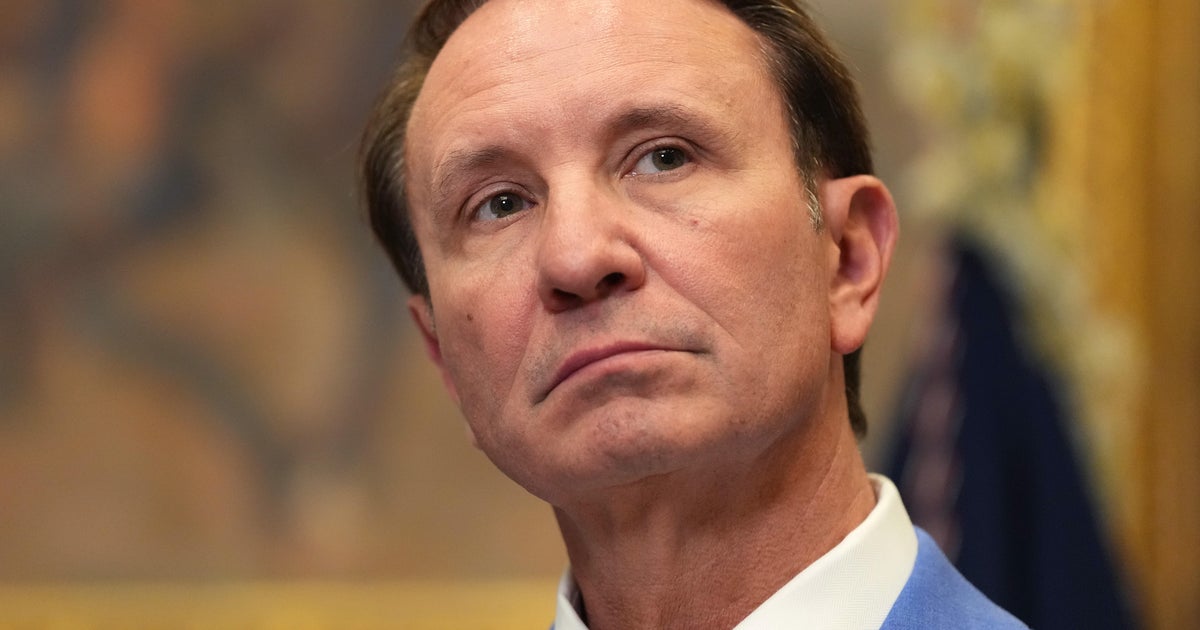
Louisiana will stop counting votes in the U.S. House primary elections scheduled for May 16 after the Supreme Court struck down the state's congressional map. Other elections, like the Senate primaries, will continue as planned.
Key Facts
Louisiana Secretary of State Nancy Landry announced the suspension of counting votes in the May 16 U.S. House primaries.
Votes cast in the House races will appear on the ballot but will not be counted.
The suspension follows a Supreme Court ruling that the state's congressional map used race too much when redrawing district lines.
The ruling was a 6-3 decision led by Justice Samuel Alito and said that using race to comply with the Voting Rights Act Section 2 is not justified.
Other elections, including Senate primaries, will still go ahead on May 16.
Louisiana’s Secretary of State declared an emergency before the governor issued an executive order to suspend the races.
The decision aligns with recent challenges to voting maps in other states, like Florida.
The focus is on how race and redistricting laws affect election maps and voting rights.
Read the Original
Want the full story? Tap a source to open the original
article.
Prime Minister Sir Keir Starmer has said that the chant "globalise the intifada" is extreme racism and called for police to prosecute people who say it during protests. He spoke after two Jewish men were stabbed in London and urged the government to take stronger action against antisemitism and better protect the Jewish community.
Key Facts
The chant "globalise the intifada" refers to spreading an uprising and is seen by Starmer as a call for terrorism against Jews.
Two Jewish men were stabbed in Golders Green, north London, in an attack police called a terror incident.
Starmer said Jews feel scared and intimidated by such chants and protests.
The government is reviewing public order and hate crime laws after previous attacks on Jewish people.
Jonathan Hall KC, the government’s terrorism adviser, called for a pause on pro-Palestinian marches due to rising antisemitism.
Some political parties want tougher government action on protests, while others worry about restricting civil liberties.
Starmer criticized people who join protests with extremist messages without speaking out against antisemitism.
The debate highlights concerns about balancing freedom of speech, public safety, and protecting minority communities.
Read the Original
Want the full story? Tap a source to open the original
article.