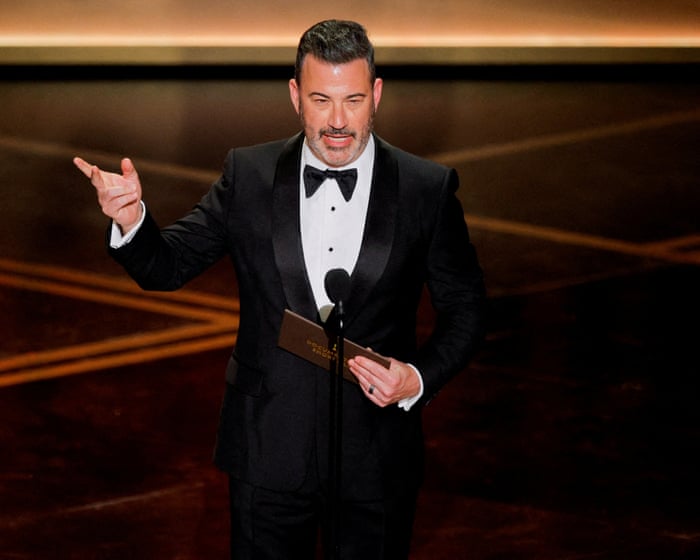
Jimmy Fowlie, a writer for Saturday Night Live, announced that his sister, Christina Lynn Downer, who went missing in December, has been found dead. The Los Angeles Police Department has changed the case to a homicide investigation after discovering that her phone and social media were used by someone else to hide her disappearance.
Key Facts
Christina Lynn Downer, age 38, was reported missing to the LAPD in December.
Jimmy Fowlie said authorities now consider the case a homicide investigation.
Before going missing, Christina’s phone and social media accounts were taken over by someone else.
The person who took her phone used it to ask for money and made it seem like she chose to disappear.
Jimmy Fowlie shared the update to raise awareness and honor his sister’s memory.
He hopes someone with information will come forward to help solve the case.
The investigation is ongoing and more details may be revealed later.
Read the Original
Want the full story? Tap a source to open the original
article.
The US Supreme Court ruled 6-3 to weaken a key part of the 1965 Voting Rights Act, called Section 2, which helped prevent racial discrimination in voting. The court said states are not required to draw voting districts where minorities are the majority, affecting protections for minority voters.
Key Facts
The Supreme Court decision focused on Louisiana’s congressional map.
Section 2 of the Voting Rights Act aimed to stop racial discrimination in voting districts.
The court ruled Section 2 does not force states to create majority-minority districts.
The decision was made along ideological lines, with a 6-3 vote.
Some lawmakers fear this ruling will reduce minority voting power and harm civil rights.
The ruling may affect how voting maps are drawn before upcoming elections.
Justices John Roberts and Samuel Alito have worked to reduce civil rights protections over time.
Read the Original
Want the full story? Tap a source to open the original
article.
The U.S. Supreme Court ruled that Louisiana's second majority-Black congressional district violated the Constitution by focusing too much on race in its design. This decision limits how states can use race when drawing voting districts and may affect control of the House of Representatives in the 2026 elections. Despite this change, prediction markets still strongly favor Democrats winning the House.
Key Facts
The Supreme Court ruled that Louisiana’s majority-Black district was unconstitutional due to race being the main factor in its design.
The 6-3 decision tightens limits on how states can use race in drawing voting boundaries under the Voting Rights Act.
This ruling could allow Republican-led states to redraw maps in a way that may reduce Democratic advantages in certain areas.
Prediction markets show Democrats have about an 82-85% chance to control the House after the 2026 elections.
The ruling affects over 300 House districts nationwide, where small changes could impact election outcomes.
Justice Samuel Alito wrote that the Voting Rights Act must enforce the Constitution without conflicting with it.
President Donald Trump praised the ruling as a victory for equal protection under the law.
Democrats warn the decision weakens protections for minority voters by letting states justify changes based on political reasons instead of race.
Read the Original
Want the full story? Tap a source to open the original
article.
The Supreme Court has weakened the Voting Rights Act by removing key protections against racial discrimination in voting. This change affects how electoral districts are drawn and may reduce the political power of minority voters, especially Black communities.
Key Facts
The Supreme Court removed the main part of the Voting Rights Act that stopped voting practices harming minority voters.
Section 2 of the law prevented race-based district maps that limit minority voting power.
The decision threatens gains made over decades in fair representation for Black voters.
In Louisiana, Black voters were once limited to only one district, but a court had created two districts with Black majorities for 2024 elections—this progress is now in doubt.
The ruling affects many levels of government, including congressional seats, state legislatures, city councils, and school boards.
Losing these protections could reduce minority communities’ influence on important local decisions like school funding and healthcare.
The article references the long struggle by civil rights activists, including Martin Luther King Jr., to secure voting rights and fair representation.
Justice Ruth Bader Ginsburg had warned against removing these protections, comparing it to discarding an umbrella during a rainstorm.
Read the Original
Want the full story? Tap a source to open the original
article.
Senator Bill Cassidy is currently in third place among Republican voters in Louisiana’s upcoming primary, based on a recent poll. The poll shows John Fleming and Luke Letlow leading ahead of the primary election.
Key Facts
Senator Bill Cassidy is the current Republican senator from Louisiana.
A new poll by Emerson College shows Cassidy in third place in the GOP primary race.
John Fleming, Louisiana’s State Treasurer, leads with 28% in the poll.
Luke Letlow is also ahead of Cassidy in the poll results.
The poll measures support among likely Republican primary voters in Louisiana.
The results suggest a competitive Republican primary election in Louisiana soon.
The poll was released on a Thursday before the primary election date.
The primary election will determine the Republican candidate for the U.S. Senate seat from Louisiana.
Read the Original
Want the full story? Tap a source to open the original
article.
A recent survey found that nearly half of American Catholics think it is okay for Pope Leo XIV to criticize President Donald Trump’s policies, while most Americans disapprove of President Trump criticizing the pope. This comes amid public disagreements between the White House and the Vatican over issues like immigration and foreign policy.
Key Facts
48% of Catholics say it is appropriate for Pope Leo XIV to criticize President Trump’s policies.
Only 21% of Americans think it is appropriate for President Trump to publicly criticize the pope.
69% of Americans and 71% of Catholics say it is inappropriate for the president to criticize the pope.
The survey was done by Verasight from April 21-23 with 2,000 U.S. adults and has a 2.3% margin of error.
Disagreements between the White House and the Vatican include U.S. immigration enforcement and U.S.-Israeli-Iran conflict concerns.
This dispute is notable as Pope Leo XIV is the first American-born pope.
Catholics make up about 25% of the U.S. electorate and are influential in key swing states.
The findings suggest that Americans expect political leaders to avoid attacking religious leaders publicly.
Read the Original
Want the full story? Tap a source to open the original
article.
The Liberal Democrats hope to become the largest party in English local government after the 8 May elections. They are running a major digital campaign focusing on opposing Nigel Farage and contrasting their leader Ed Davey’s criticism of President Trump with Farage’s support for him.
Key Facts
The Liberal Democrats aim to increase their number of local councillors for the eighth election in a row.
They could potentially overtake the Conservatives as the second biggest party, and might become the biggest if Labour loses many seats.
The party focuses on gaining seats in areas they won from Conservatives in 2024, like Surrey.
They are testing new campaigning strategies involving targeted voter outreach and digital advertising.
Their campaign criticizes Nigel Farage’s support for President Trump, contrasting it with Ed Davey’s opposition.
The Lib Dems see strong tactical voting aimed at blocking the Reform UK party, which is linked to Farage.
They mention issues like fuel duty cuts connected to the Iran war to connect with voters’ concerns.
Their campaign strategy is mainly for the next general election but is being tested in these local elections.
Read the Original
Want the full story? Tap a source to open the original
article.
Most Americans oppose President Donald Trump’s plan to tear down the East Wing of the White House to build a large ballroom, according to a recent poll. Additionally, people strongly disagree with adding Trump’s signature to U.S. paper money. Support for the ballroom is mainly from Republicans, especially Trump supporters.
Key Facts
56% of Americans oppose demolishing the East Wing to build a 90,000-square-foot ballroom; 28% support it.
Opposition to a 250-foot arch related to the project is even higher.
Over 5 times as many Americans oppose adding President Trump’s signature to paper currency than support it.
The East Wing was built in 1902 and renovated in 1942; demolition started in October 2025.
The National Trust for Historic Preservation sued to stop the ballroom construction but construction was allowed to continue by an appeals court.
Republican support for the ballroom rose from 62% to 72% after a shooting incident at the White House Correspondents’ Dinner.
Republicans proposed a $400 million bill to fund the ballroom; Trump claimed private donors would pay for it.
Nearly 90% of Democrats and about 60% of independents oppose the ballroom project.
Read the Original
Want the full story? Tap a source to open the original
article.
Pete Hegseth was strongly criticized in Congress for starting a conflict with Iran without getting official approval. Meanwhile, President Donald Trump rejected Iran's offer about the Strait of Hormuz, causing talks between the two countries to break down.
Key Facts
Pete Hegseth faced criticism in Congress for launching conflict with Iran without approval.
Democrats questioned the reasons given for going to war against Iran.
The estimated cost of the war is about $25 billion.
President Donald Trump rejected Iran's proposal concerning the Strait of Hormuz.
Because of this rejection, diplomatic negotiations are stuck.
Iran is trying to get support from other countries.
The situation highlights tensions between the U.S. and Iran in 2026.
Read the Original
Want the full story? Tap a source to open the original
article.
The US Supreme Court ruled against a key part of the 1965 Voting Rights Act (VRA), weakening protections that helped minority voters. Justices John Roberts and Samuel Alito led the conservative majority in decisions that reduced federal efforts to prevent racial discrimination in voting, especially in southern states.
Key Facts
The ruling in Louisiana v. Callais struck down a part of the VRA aimed at protecting minority voters from having their power reduced by electoral maps.
The decision was made by a 6-3 vote along ideological lines, with the conservative justices in the majority.
The court said creating a second majority-Black voting district in Louisiana was unconstitutional racial gerrymandering.
This ruling follows previous decisions by Chief Justice Roberts and Justice Alito that have weakened the VRA over the past decade.
In 2013, the Roberts court ended federal oversight of voting changes in southern states, a major blow to the VRA.
The Voting Rights Act was originally passed in 1965 to stop racial discrimination in elections.
Justices Roberts and Alito have a shared conservative background, both having worked in President Reagan’s Justice Department before joining the Supreme Court.
Liberal justices dissented, saying the ruling harms minority voters and contradicts the original purpose of the equal protection clause in the US Constitution.
Read the Original
Want the full story? Tap a source to open the original
article.
Jimmy Kimmel made a joke about Melania Trump’s age difference with President Trump on his show. President Trump and Melania criticized the joke, and Trump demanded Kimmel be fired. The FCC, led by a Trump appointee, launched license reviews of ABC stations after the joke, raising concerns about free speech and government pressure on media companies.
Key Facts
Jimmy Kimmel joked about Melania Trump on his late-night show before an alleged assassination attempt on President Trump.
Melania called the joke hateful, and President Trump called it a call to violence and demanded Kimmel’s firing.
ABC did not fire Kimmel, recalling a previous incident when public backlash restored his show after a brief suspension.
Brendan Carr, chair of the FCC and a Trump appointee, ordered early license reviews of eight ABC stations, citing diversity rule compliance.
Critics say the FCC’s move violates the First Amendment and tries to punish ABC for Kimmel’s joke.
Disney stated ABC follows FCC rules and will defend itself legally but did not strongly defend the joke itself.
The situation raises fears media companies may self-censor to avoid government or legal trouble.
President Trump has a history of suing news organizations over unfavorable coverage or comments.
Read the Original
Want the full story? Tap a source to open the original
article.
The U.S. Coast Guard is facing major problems due to a government shutdown that has lasted 75 days. It owes over $300 million and has many unpaid utility bills, causing water, electricity, and gas services to be shut off at some bases and housing units. This affects both the Coast Guard’s ability to work and the living conditions of its personnel and families.
Key Facts
The Coast Guard is 75 days into the longest government shutdown in U.S. history.
It owes more than $300 million in unpaid bills, including $5.2 million in overdue utility payments.
Utility services such as water, electricity, and gas have been cut off at several Coast Guard stations and housing units.
43% of Coast Guard housing units have utility bills more than 30 days overdue.
Some Coast Guard families have had to leave their homes due to power cuts.
Coast Guard leaders report that service restorations often only happen after personnel plead with utility providers.
The Coast Guard falls under the Department of Homeland Security, so it is affected by DHS funding lapses.
Coast Guard Commandant Adm. Kevin Lunday said the shutdown has caused frustration and anger among Coast Guard members and their families.
Read the Original
Want the full story? Tap a source to open the original
article.
President Trump is facing a legal deadline related to the war with Iran under a 1973 law that limits the use of military force without Congress’s approval. The law requires the president to notify Congress within 48 hours of starting hostilities and allows 60 days for military action unless Congress authorizes an extension or declares war. The 60-day period started on March 2 and ends this Friday, raising questions about whether the president will continue military action or seek Congress’s approval.
Key Facts
The War Powers Resolution of 1973 limits how long the president can use military force without Congress’s approval.
President Trump notified Congress of Iran hostilities on March 2, starting a 60-day clock.
The 60-day period for military use without congressional approval ends this Friday.
The law allows a 30-day extension only for safely withdrawing troops, not for continuing attacks.
Republicans in Congress have mostly supported President Trump so far but some express concerns about extending the war past 60 days.
Democrats have introduced multiple resolutions to limit the president’s war powers in Iran.
The U.S. and Iran agreed to a ceasefire on April 8, but peace talks remain uncertain.
Key issues include Iran’s nuclear program and tensions over the Strait of Hormuz, an important oil route.
Read the Original
Want the full story? Tap a source to open the original
article.
California’s top candidates for governor are competing for support as election ballots are about to be sent to voters. Democrats are trying to gain an advantage after former Representative Eric Swalwell left the race.
Key Facts
The race is for the governor position in California.
Former California Attorney General Xavier Becerra is one of the main candidates.
Eric Swalwell, a former U.S. Representative, recently dropped out of the race.
The remaining candidates are trying to gain momentum before ballots are mailed.
The election is happening soon, with less than a week before ballots go out.
The focus is on the Democratic candidates trying to stand out among many contenders.
The competition is intense as candidates try to connect with voters.
Read the Original
Want the full story? Tap a source to open the original
article.
The Justice Department is prosecuting former FBI Director James Comey over a photograph involving seashells. This case is causing concern among some Republican members and strong criticism from Democrats and liberals.
Key Facts
The DOJ is pursuing legal action against James Comey, the former FBI Director.
The case centers on a photograph that contains seashells.
Some Republicans feel uneasy about this prosecution.
Democrats and liberal groups strongly oppose the case.
Critics see this prosecution as part of a series of efforts tied to President Donald Trump’s actions.
The situation has fueled political tensions between parties.
The controversy relates to broader debates about justice and politics in the U.S.
Read the Original
Want the full story? Tap a source to open the original
article.
Democrats are criticizing the White House for promoting a new ballroom after a recent shooting at the White House Correspondents' Dinner. They say this focus seems disconnected from the problems many Americans face with daily expenses like groceries and utilities.
Key Facts
Democrats are speaking out against the White House’s decision to highlight a new ballroom.
The criticism comes soon after a shooting at the White House Correspondents' Dinner.
Democrats say many Americans are struggling with costs like food and utility bills.
Representative Sarah McBride referenced these affordability issues while commenting on the ballroom.
The debate highlights a difference in priorities between some politicians and average citizens.
Read the Original
Want the full story? Tap a source to open the original
article.
Five members of the 119th Congress have died while still in office, including Representative David Scott from Georgia. This pattern shows a rise in the number of deaths among members of Congress during recent years.
Key Facts
Rep. David Scott (D-Ga.) died last week.
He was the fifth member of the 119th Congress to die in office.
The 119th Congress began in January 2025 and will end in January 2027.
The number of deaths in this session may exceed recent past sessions.
This situation raises concerns about the aging of members in Congress.
Many members of Congress are older adults.
Deaths in office can affect how Congress functions and its membership.
Read the Original
Want the full story? Tap a source to open the original
article.
The Supreme Court ruled that drawing voting districts mainly based on race is unconstitutional. This decision affects majority-minority congressional districts and is expected to impact the 2026 midterm elections.
Key Facts
The Supreme Court struck down majority-minority House districts.
The ruling says using race as the main factor in drawing districts is racial gerrymandering and unconstitutional.
Both Democratic and Republican senators discussed the ruling's impact on politics.
Democrats expressed strong opposition, saying it could lead to policies like those during the Jim Crow era.
The decision will influence how states create voting districts for future elections.
This ruling affects the protection offered by the Voting Rights Act.
The change comes ahead of the 2026 midterm elections.
The ruling may shift political power in certain areas with large minority populations.
Read the Original
Want the full story? Tap a source to open the original
article.
Pete Hegseth, the Pentagon chief, is being questioned by Democrats and some Republicans about the costs and strategy of the US-Israel war on Iran. The defense secretary denied that the war is a stalemate despite estimates that it has cost at least $25 billion.
Key Facts
Pete Hegseth faced multiple hours of questioning from the House armed services committee about the Iran war.
The Pentagon estimates the Iran war has cost the US at least $25 billion.
Some lawmakers, like Democrat John Garamendi, called the war a “quagmire” and criticized the administration’s handling of it.
Hegseth defended the war effort, saying it is a success and called accusations of failure “propaganda.”
The Senate armed services committee will review the Trump administration’s 2027 military budget, which proposes $1.5 trillion in defense spending.
Senate Democrats plan to force weekly votes on a war powers resolution regarding the Iran war.
President Donald Trump remains critical of former FBI Director James Comey, accusing him of calling for Trump’s death.
Other news includes expected US economic growth from government spending and business investment, as well as a UK royal visit ending with a White House farewell.
Read the Original
Want the full story? Tap a source to open the original
article.
The Democratic National Committee (DNC) warned voters about fake political action committees (PACs) called "Scam PACs" that ask for donations but do not use the money to support political candidates. Experts advise donors to check if PACs actually spend money on campaigns and report suspicious groups to authorities.
Key Facts
Scam PACs claim they support political causes but often keep donations for themselves.
The DNC sent emails to warn supporters about these fake groups before the November midterm elections.
It is easy to create a PAC online, which scammers use to trick donors.
One way to spot a scam PAC is if it spends little on political help but a lot on fundraising costs.
Voters can use the Federal Election Commission (FEC) website to check where PACs spend their funds.
The SCAM PAC Act was introduced by Democrat Katie Porter to stop misuse of PAC funds.
Seniors may be more likely to fall for Scam PACs because they are often more active in politics.
People who suspect a PAC is a scam can report it to the FBI, FEC, or state attorneys general.
Read the Original
Want the full story? Tap a source to open the original
article.