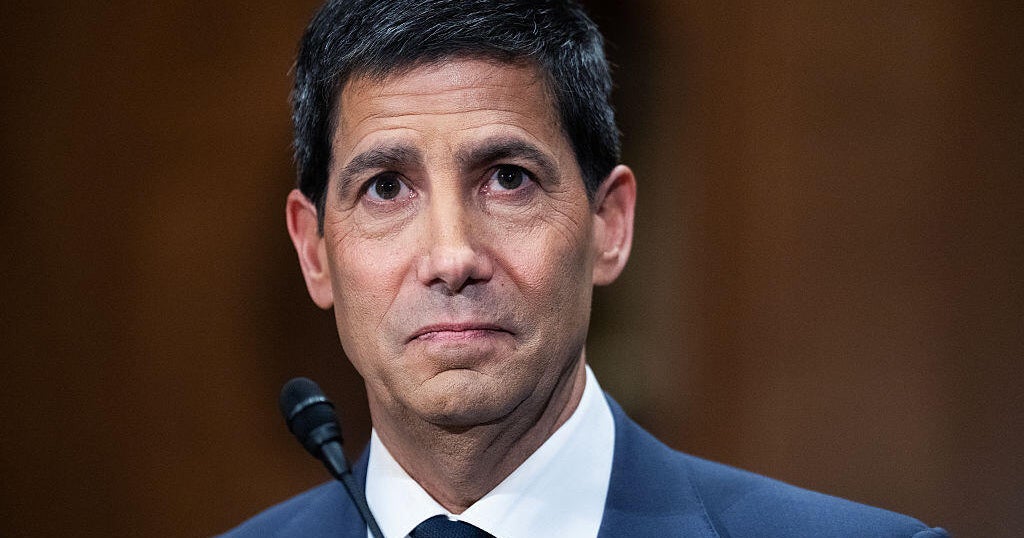
Republican and Democratic candidates for California governor participated in a debate hosted by CBS News. They discussed key topics including President Donald Trump and healthcare.
Key Facts
The event was a debate for candidates running for governor of California.
Both Republican and Democratic candidates took part.
The debate was hosted by CBS News.
Important topics discussed included President Donald Trump.
Healthcare was also a major issue in the debate.
The debate aimed to help voters understand candidates’ positions.
The report was provided by CBS journalist Fin Gómez.
Read the Original
Want the full story? Tap a source to open the original
article.
Republican leaders in the House are facing internal disagreements that threaten to block a key vote on a package of bills including the Farm Bill, surveillance authority, and immigration budget. The disagreement mainly stems from parts of the Farm Bill affecting food assistance and environmental rules, with some Republicans opposing the combined vote and risking delays to other party priorities.
Key Facts
The House must pass a "rule" to bring the Farm Bill and two other bills to the floor for a vote.
The package includes the Farm Bill, a three-year extension of the government's foreign surveillance law (FISA), and a budget resolution tied to immigration enforcement.
Some Republicans oppose the Farm Bill because of changes to food assistance programs like SNAP and environmental provisions involving pesticide regulations.
Representatives Lauren Boebert, Nancy Mace, and Anna Paulina Luna are some of the vocal Republicans opposing aspects of the Farm Bill.
The Farm Bill supports farmers by raising prices for certain crops, reducing insurance costs, boosting farming technology, and restricting food purchases from China and Russia.
Democrats oppose the bill mainly due to cuts in food aid and weakening of environmental rules but their opposition is not expected to block it.
Farming groups like Farm Aid say the bill does not adequately address farmers' financial struggles.
Some Republicans are also concerned about privacy issues with the FISA extension and hardline immigration spending in the budget resolution.
Read the Original
Want the full story? Tap a source to open the original
article.
The Justice Department has charged former FBI Director James Comey with threatening President Donald Trump through a social media post showing seashells arranged as "86 47," which prosecutors interpret as a coded threat. Comey denies any harmful intent and plans to fight the charges in court, with his lawyers citing First Amendment protections.
Key Facts
James Comey posted an Instagram photo in May 2025 with seashells arranged as "86 47."
"86" is slang meaning "to get rid of," and "47" refers to President Donald Trump being the 47th president.
The Justice Department says the photo was a threat against President Trump.
Comey deleted the post and said he opposes violence.
Comey’s lawyers plan to defend the case, arguing it involves protected free speech.
The accusation emerges amid tense political context following a shooting incident at the White House Correspondents’ Dinner.
Previous investigations found Comey acted improperly in handling Hillary Clinton’s email case in 2016, which some say affected the 2016 election outcome.
Democrats are urged to distance themselves from Comey due to his controversial record.
Read the Original
Want the full story? Tap a source to open the original
article.
The article discusses the proposal to reduce the number of summer flights at Chicago’s O'Hare airport. It suggests that cutting these flights may have negative effects on travel and the local economy.
Key Facts
There is a proposal to limit summer flights at Chicago’s O'Hare airport.
The airport is a major hub for domestic and international travel.
Reducing flights might affect travelers who rely on O'Hare.
The change could impact local businesses that depend on airport traffic.
Some view the proposal as politically motivated against Chicago.
O'Hare is one of the busiest airports in the United States.
Flight reductions usually happen to address noise or environmental concerns.
The proposal has sparked debate among officials and residents.
Read the Original
Want the full story? Tap a source to open the original
article.
Kevin Warsh, chosen by President Donald Trump to lead the Federal Reserve, is expected to pass a key Senate committee vote that will send his nomination to the full Senate for approval. Warsh aims to replace current Fed Chair Jerome Powell, who is leading his last meeting as chair while a recent criminal investigation into him has ended.
Key Facts
Kevin Warsh is President Trump’s pick to replace Jerome Powell as Federal Reserve chair.
The Senate banking committee plans to vote to advance Warsh’s nomination to the full Senate.
All 13 Republican committee members are expected to support Warsh, while the 11 Democrats plan to oppose him.
Senator Thom Tillis withdrew his opposition after the Department of Justice ended a criminal probe into Powell.
The Federal Reserve’s main interest rate is currently at 3.50%-3.75%, and no changes are expected at Powell’s last policy meeting.
If confirmed, Warsh could take over as Fed chair by May 15 when Powell’s term ends.
It is unclear if Powell will leave the Fed entirely or remain on the board, and there is talk that President Trump might try to remove him.
Powell’s criminal investigation was seen by him and others as politically motivated pressure from the Trump administration.
Read the Original
Want the full story? Tap a source to open the original
article.
A Democratic commissioner at the Federal Communications Commission (FCC) criticized the agency for starting an early review of broadcast licenses for some Disney-owned TV stations. The commissioner said this action violates free speech rights protected by the First Amendment.
Key Facts
The FCC began an early review of broadcast licenses for certain Disney-owned stations.
Commissioner Anna M. Gomez, a Democrat, strongly opposed this decision.
Gomez accused the FCC and its Chairman Brendan Carr of violating the First Amendment.
The First Amendment protects free speech and press in the U.S.
This review concerns the renewal of broadcast licenses for TV stations.
Anna M. Gomez has been a vocal critic of Chairman Carr’s leadership at the FCC.
The action targets Disney, a major media company with multiple broadcast stations.
The review process could affect whether Disney stations continue to have broadcast licenses.
Read the Original
Want the full story? Tap a source to open the original
article.
The U.S. Supreme Court will hear a case about President Donald Trump’s plan to end Temporary Protected Status (TPS) for Haitian and Syrian immigrants. The court will decide if the government properly considered the safety of these countries and if ending TPS was fair.
Key Facts
TPS protects immigrants from countries with dangerous conditions from being sent back.
President Trump’s administration wants to end TPS for about 350,000 Haitians and 6,000 Syrians.
Haitians got TPS after a major earthquake in 2010 and because of ongoing gang violence.
Syrians received TPS due to a civil war that lasted until late 2024.
Immigrant advocates say ending TPS is unfair since these people follow laws and contribute to society.
The Trump administration argues conditions in these countries have improved enough for safe return.
If the court agrees with the administration, protections for immigrants from 17 countries under TPS could be ended.
The Supreme Court will consider if the decision was based on the actual situation or if it was discriminatory.
Read the Original
Want the full story? Tap a source to open the original
article.
The U.S. Department of Housing and Urban Development (HUD) has proposed changes to remove protections based on gender identity and replace them with rules based only on biological sex (male or female). This would affect access to federally funded shelters and programs, limiting them according to a person's biological sex, not their gender identity. The public can comment on these changes until June 29 before they possibly take effect.
Key Facts
HUD plans to remove terms like “gender identity” and “sexual orientation” from nearly 50 housing regulations and replace them with “sex” defined as male or female.
Service providers could require evidence to confirm a person’s biological sex and no longer have to accept gender identity.
Access to federally funded shelters would be based on biological sex, potentially barring transgender women from women’s shelters.
The changes would undo protections from the 2012 Equal Access Rule and the 2016 update that allowed people to self-identify their gender.
HUD Secretary Scott Turner supports the rule change, aligning with President Donald Trump’s 2025 executive order recognizing only two sexes.
Turner says the change aims to protect the safety of women in shelters and housing.
Advocates for transgender rights oppose the proposal, warning it could harm vulnerable communities and lead to discrimination.
Public submissions on the proposed rule are open until June 29, and the changes have not yet been implemented.
Read the Original
Want the full story? Tap a source to open the original
article.
Rep. Jamie Raskin criticized new charges against former FBI Director James Comey as unusual and unreasonable. These charges relate to a photo Comey posted on social media showing seashells arranged to form the numbers "86-47."
Key Facts
Rep. Jamie Raskin is a Democratic Congressman from Maryland.
James Comey is the former FBI Director.
Comey faces a second indictment, meaning new criminal charges were brought against him.
The new charges come from a social media photo Comey posted last May.
The photo showed seashells on a North Carolina beach arranged as "86-47."
The Department of Justice is involved in bringing these charges.
Read the Original
Want the full story? Tap a source to open the original
article.
Constance Zimmer, who co-hosts the podcast "Talk 50 to Me," discusses changing how people talk about aging for women. The podcast shares real stories from women in their 50s about their experiences in midlife.
Key Facts
Constance Zimmer co-hosts a podcast called "Talk 50 to Me."
The podcast focuses on women in their 50s.
It aims to change the way people speak about aging for women.
The podcast features interviews with women sharing real-life experiences.
The goal is to provide a more honest and positive view of midlife.
Read the Original
Want the full story? Tap a source to open the original
article.
The Senate Banking Committee will vote on Kevin Warsh’s nomination to become chair of the Federal Reserve after Jerome Powell’s term ends in May. If approved by the committee, Warsh’s nomination will go to the full Senate for confirmation, potentially making him the next Fed chair.
Key Facts
The Senate Banking Committee will vote Wednesday morning at 10 a.m. ET on Kevin Warsh’s nomination.
Warsh is President Trump’s pick to replace Jerome Powell as Federal Reserve chair.
A majority vote in the committee is needed to advance Warsh’s nomination to the full Senate.
The full Senate needs a simple majority to confirm Warsh as the 17th Fed chair since 1913.
The vote comes the same day as a Federal Reserve meeting expected to keep interest rates steady.
Senator Thom Tillis initially opposed Warsh’s nomination, wanting an investigation into Powell to finish first.
The investigation into Powell’s office renovation ended, and Tillis said he would support moving forward with Warsh’s nomination.
Warsh has promised to act independently and not let President Trump influence interest rate decisions.
Read the Original
Want the full story? Tap a source to open the original
article.
President Donald Trump’s approval ratings are below 50% on all major issues, including the economy, inflation, foreign policy, and immigration. A recent poll shows his lowest approval is on inflation and managing the Iran conflict, while crime and immigration have slightly higher but still under 50% approval.
Key Facts
The Harvard CAPS / Harris Poll surveyed 2,745 registered U.S. voters from April 23-26.
Trump's approval on handling inflation is 37%, his lowest on any issue.
Approval for managing the Iran conflict stands at 39%.
Trump’s approval for fighting crime in U.S. cities is 48%, his highest rating.
His economy approval rating is 39%, also a record low in his second term.
Immigration approval is 47%, below the majority needed for strong support.
Other areas like government management (43%), tariffs and trade (40%), and returning America to its values (46%) also show less than majority approval.
The poll’s margin of error is +/- 1.87 percentage points at a 95% confidence level.
Read the Original
Want the full story? Tap a source to open the original
article.
President Donald Trump posted an AI-generated image showing himself holding a weapon and renewed his threats against Iran. He also said that Iran is in a state of collapse.
Key Facts
President Trump shared an AI-created picture of himself holding a weapon.
He threatened Iran again during this statement.
Trump claimed that Iran is collapsing.
The news was reported by CBS News correspondent Ramy Inocencio.
The article focuses on President Trump's remarks and social media post about Iran.
Read the Original
Want the full story? Tap a source to open the original
article.
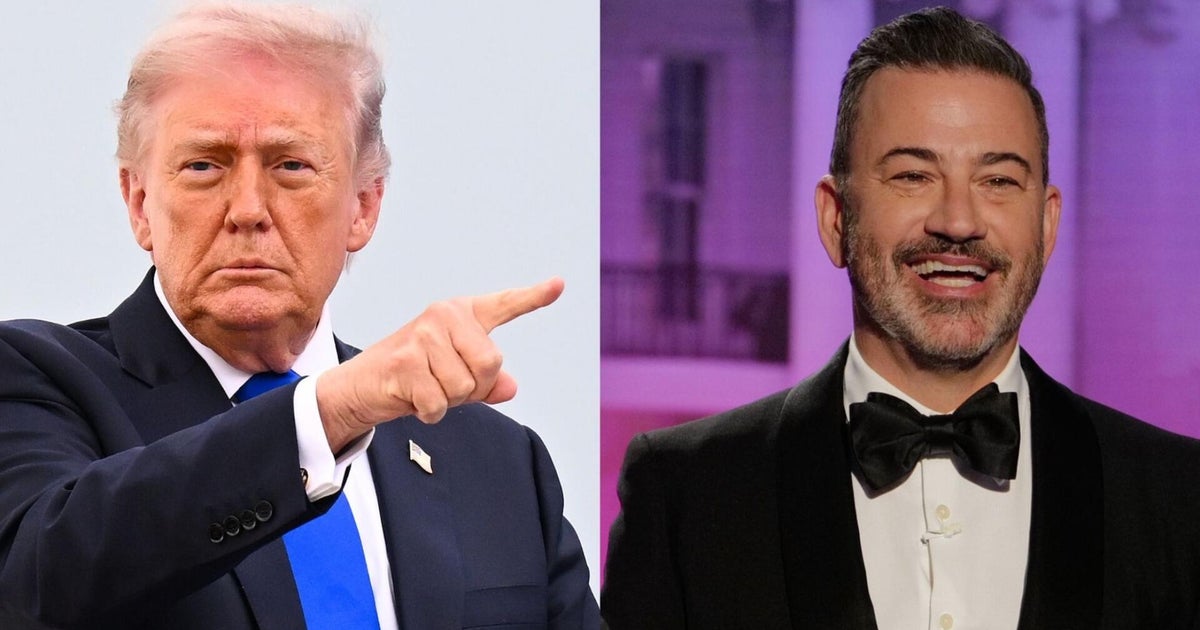
The Federal Communications Commission (FCC) has started an early review of ABC’s broadcast licenses for eight local stations. This action follows demands from President Donald Trump and First Lady Melania Trump for ABC to fire late-night host Jimmy Kimmel.
Key Facts
The FCC is reviewing broadcast licenses for eight local ABC stations.
The review was ordered earlier than usual.
President Donald Trump and First Lady Melania Trump asked ABC to fire Jimmy Kimmel.
Jimmy Kimmel is a late-night television host on ABC.
The FCC is the government agency that regulates broadcast licenses in the U.S.
The situation is connected to disagreements involving President Trump and Kimmel.
ABC owns the local stations under review.
This is a notable government action related to a television network and political figures.
Read the Original
Want the full story? Tap a source to open the original
article.
The Senate Banking Committee is voting on Kevin Warsh’s nomination to be the next Federal Reserve chair. Meanwhile, current Chair Jerome Powell may announce if he plans to stay on the Federal Reserve’s board after his term as chair ends on May 15.
Key Facts
The Senate Banking Committee meets to vote on Kevin Warsh’s nomination for Federal Reserve chair.
Kevin Warsh was nominated by President Donald Trump in January.
The committee is expected to approve Warsh on a party-line vote.
The full Senate will vote on Warsh’s nomination next month.
Jerome Powell is likely holding his last meeting as Fed chair on this day.
Powell may announce if he will remain on the Fed’s board of governors after May 15.
Last year, Warsh supported lowering the Fed’s key interest rate, raising questions about his independence.
Powell’s possible decision to stay on the board after his chair term ends is unusual.
Read the Original
Want the full story? Tap a source to open the original
article.
Colette Delawalla, a clinical psychology doctoral student, started the Stand Up for Science movement in response to the Trump administration's cuts to medical and scientific research and restrictions on government scientists. The movement organized protests across the US and grew into a larger effort to defend science funding and research freedom.
Key Facts
The Trump administration cut $4 billion from medical and scientific research early in its second term.
Government scientists were temporarily banned from speaking at conferences or publicly.
The National Institutes of Health removed grants that conflicted with orders on “gender ideology” and “diversity”.
Colette Delawalla posted on social media planning a protest that quickly gained attention and sparked rallies in over 30 cities.
Stand Up for Science began without support from major scientific groups but grew to over 2,000 volunteers and 22 paid staff.
After initial protests, continued challenges included funding cuts and volunteer burnout.
Delawalla faced criticism from some scientists over her approach and language, including some experiences of sexism within the scientific community.
The movement’s goal has been to protect scientific research freedom and funding under political pressure.
Read the Original
Want the full story? Tap a source to open the original
article.
President Donald Trump’s name and image have been added to various government-related items and programs during his second term. These include a limited edition U.S. passport, a name change to the Kennedy Center, redesigned national park passes, a special visa card, and plans for a new class of battleships.
Key Facts
The State Department plans to issue 25,000 special passports featuring President Trump’s portrait and signature to commemorate the U.S. 250th anniversary.
The John F. Kennedy Center for the Performing Arts was renamed the Trump-Kennedy Center after approval by Trump-appointed board members, without Congress’s official consent.
Some performers canceled shows at the renamed Kennedy Center in protest of the change.
National park entry passes were redesigned to display a portrait of President Trump instead of traditional scenic photos.
The “Gold Card” visa program offers wealthy foreigners faster U.S. residency if they give $1 million or more to the government; the card features Trump’s image and signature.
President Trump announced plans for a new class of powerful “Trump-class battleships” larger than previous U.S. Navy battleships.
Trump’s signature has also appeared on some paper currency and coins during his administration.
These changes are linked to various policy and branding efforts as the country approaches its 250th anniversary in 2026.
Read the Original
Want the full story? Tap a source to open the original
article.
This article discusses recent challenges to the First Amendment, which protects free speech and a free press in the United States. It suggests that actions by President Donald Trump may be causing harm to press freedom.
Key Facts
The First Amendment protects freedom of speech and the press.
President Donald Trump has taken actions that critics say threaten press freedom.
The article implies these actions are causing significant damage to the media.
It uses the phrase "body blows" to describe the impact on the First Amendment.
The consequences for the free press could be long-lasting.
Read the Original
Want the full story? Tap a source to open the original
article.
There are no ads, so there is no reason to bait you. Readers who chip in keep it that way. Most choose $3.99/month, and get the daily digest every morning.
King Charles III visited Washington, D.C., where he spoke before the U.S. Congress. He also attended a state dinner hosted by President Donald Trump and First Lady Melania Trump.
Key Facts
King Charles III addressed the U.S. Congress during his visit to Washington, D.C.
President Donald Trump and First Lady Melania Trump hosted a state dinner for King Charles III.
The visit took place on a Tuesday.
CBS News covered the event and provided highlights.
Roya Nikkhah, a CBS News contributor, reported on the visit.
The visit included formal discussions and ceremonial events.
Read the Original
Want the full story? Tap a source to open the original
article.
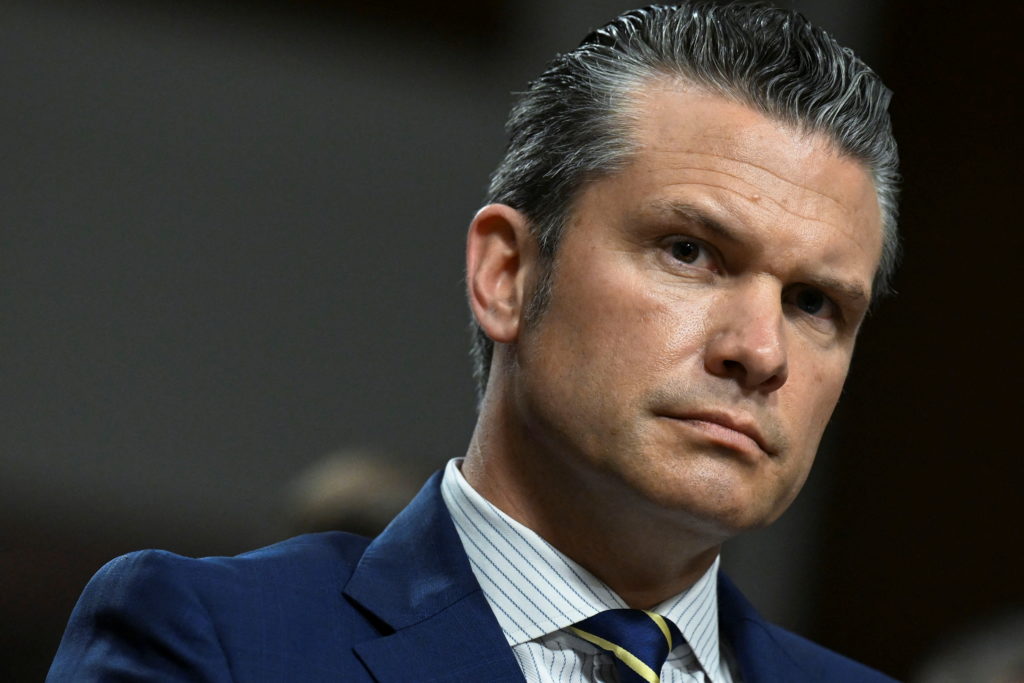
Defense Secretary Pete Hegseth and General Dan Caine testified before the House Armed Services Committee for the first time since President Donald Trump’s administration started the war against Iran. The hearing focused on the 2027 military budget, which proposes the largest defense spending ever, and discussed military needs like drones and missile defenses.
Key Facts
The hearing took place before the House Armed Services Committee.
President Trump’s administration launched the war against Iran, which some Democrats have criticized.
The 2027 military budget proposal requests $1.5 trillion, the highest ever.
Hegseth and Gen. Caine emphasized the need for more drones, missile defense systems, and warships.
Democrats plan to question the high costs of the Iran war and the impact on U.S. military resources.
There was concern over how prepared the military was to handle Iranian drone attacks that caused U.S. troop injuries and deaths.
Some lawmakers want answers about a bombing that killed children at a school during the conflict.
Read the Original
Want the full story? Tap a source to open the original
article.