President Donald Trump claimed he has a 59 percent approval rating, but recent polls show much lower support. Most surveys indicate his approval is below 50 percent, with some showing less than 40 percent approval for his presidency.
Key Facts
President Trump posted on Truth Social that his approval rating is 59 percent.
No recent polls tracked by RealClearPolling or The New York Times show his approval above 50 percent.
Current average polls show about 41 percent approve and 56.5 percent disapprove of Trump’s presidency.
The most recent Times/Siena poll found only 37 percent of people approve of how Trump is handling the presidency.
Trump has repeatedly claimed higher approval ratings than polls show, sometimes saying numbers are in the 60s or 70s percent.
Some analysts suggest Trump may have confused his disapproval rating with his approval rating in his post.
Price increases and international conflicts, like the Iran war, have been linked to drops in Trump’s popularity.
Historical data shows Trump’s highest approval has been around 49-52 percent, below the 59 percent he claimed.
Read the Original
Want the full story? Tap a source to open the original
article.
Two teenagers were arrested in East St. Louis, Illinois, after a shooting killed five members of the same family and injured two others. The shootings happened at three different places in the city, and police said there is no current danger to the public.
Key Facts
Five people from one family died in the shootings.
Two others were seriously hurt.
The suspects are teenagers, aged 15 and 16.
The shootings took place at three different locations in East St. Louis.
Police arrested the two teens on Sunday.
No charges have been announced yet.
The victims were identified by police.
Police said there is no known threat to the public.
Read the Original
Want the full story? Tap a source to open the original
article.
North Carolina will stop sending physical vehicle registration stickers and paper cards by October 1, 2026. Instead, drivers will access their registration records online as part of a new digital system approved by Governor Josh Stein.
Key Facts
North Carolina plans to switch to digital vehicle registrations by October 1, 2026.
Drivers will no longer receive physical license plate stickers or paper registration cards automatically.
The change is meant to reduce costs and make registration processes faster and more efficient.
Other states like Pennsylvania, Idaho, Connecticut, and New Jersey have already stopped using physical registration stickers.
Physical stickers have become less necessary because police use electronic databases to check vehicle registrations.
Drivers will still need to renew registrations yearly, pay fees, and complete inspections.
Printed registration cards will be available by request, but with an extra fee for printing and mailing.
Drivers traveling outside North Carolina may want to keep a printed copy during the early rollout for easier verification.
Read the Original
Want the full story? Tap a source to open the original
article.
President Donald Trump and his administration have increased their confrontations with the media during the first 17 months of his second term. This includes lawsuits, restrictions on press access, and legal actions against reporters, raising concerns about press freedom and how the media covers the government.
Key Facts
President Trump and his allies have filed multiple lawsuits against media companies critical of them.
The Federal Communications Commission (FCC) has applied pressure on networks like ABC that report critically on the administration.
Press access has been reduced at the White House and Pentagon, limiting journalists’ ability to report.
The administration used labor law against The New York Times in a lawsuit related to equal employment, which the paper called politically motivated.
The government conducted a raid on a Washington Post journalist’s home and issued subpoenas to Post and Wall Street Journal reporters over national security stories, some subpoenas later withdrawn.
Five New York Times reporters were subpoenaed to testify before a grand jury, seen by some as an attempt to intimidate journalists.
The administration has increased the presence of conservative-friendly reporters and commentators, which some say weakens traditional investigative journalism.
Media companies face uncertainty and pressure, but many reporters continue to investigate and publish stories about the administration.
Read the Original
Want the full story? Tap a source to open the original
article.
A U.S. Senate committee talked about a problem that makes it hard for poor families to improve their income because they lose government benefits too quickly when they earn more money. This issue, called benefit cliffs, also creates problems for small businesses trying to hire workers. Lawmakers suggested that Congress should allow states to help fix this problem.
Key Facts
Benefit cliffs happen when people lose government help suddenly after a small increase in income.
These cliffs make it difficult for families to move up financially.
Small businesses face challenges finding and keeping workers because of these cliffs.
The issue has existed for many years.
A U.S. Senate committee recently discussed this problem.
Congress is encouraged to take action to reform the system.
States could play a bigger role in fixing these benefit cliffs.
Read the Original
Want the full story? Tap a source to open the original
article.
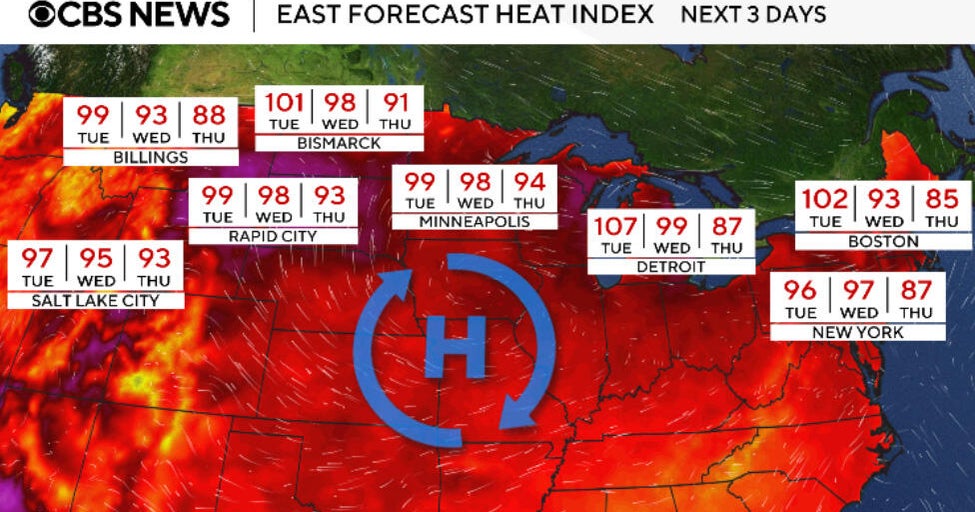
About 100 million people in the United States are facing very high temperatures this week due to a heat dome affecting the West and spreading to the Northeast. The extreme heat has led to record-breaking temperatures, increased wildfire risks, and health warnings.
Key Facts
Billings, Montana reached 111 degrees, a record high for the city.
Salt Lake City hit 109 degrees, breaking its previous record of 107 degrees.
Temperatures are forecasted to be 20 to 30 degrees above normal this week in many areas.
Heat warnings are in effect for parts of Utah, the Dakotas, and much of the Plains to the Northeast.
The heat dome traps hot air over regions, causing prolonged extreme heat between 105 and 115 degrees.
Wildfires are burning in California and Colorado, with evacuations and property damage reported.
Heavy rain and flooding are occurring in parts of the South, including New Orleans.
Officials say more funding is needed to fight wildfires, as cuts have reduced resources.
Read the Original
Want the full story? Tap a source to open the original
article.
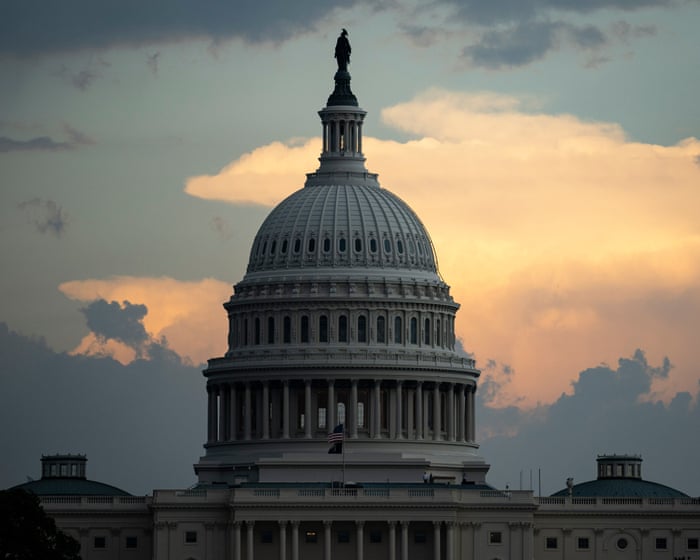
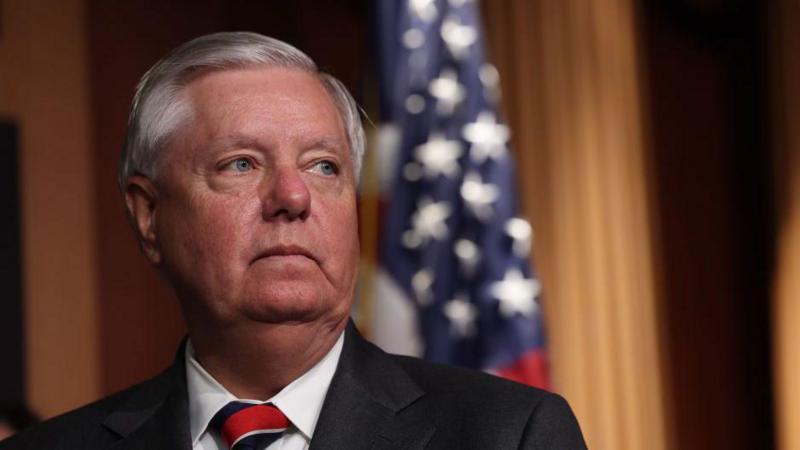
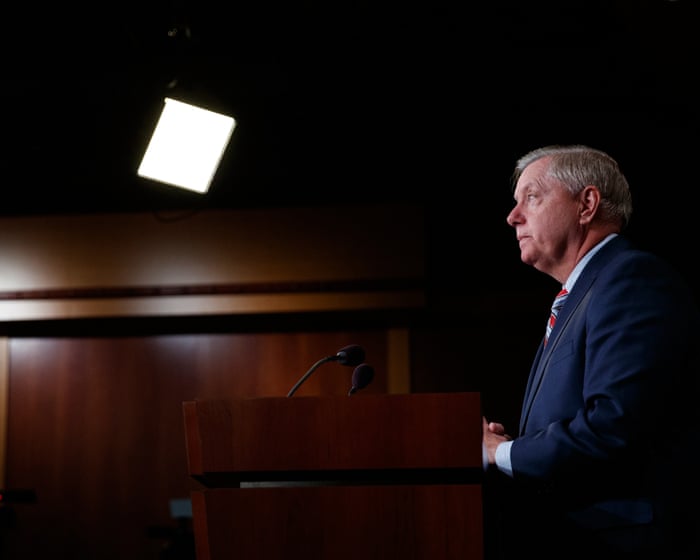
Senator Lindsey Graham of South Carolina has died unexpectedly, creating an urgent need to appoint a replacement as Congress returns. South Carolina Governor Henry McMaster will choose a new senator to serve until January, and a special primary election will determine who runs in November.
Key Facts
Senator Lindsey Graham from South Carolina has passed away while in office.
Governor Henry McMaster will appoint a replacement senator to complete Graham’s term, ending January 3.
A special primary election is scheduled for August 11 to select a candidate for the November Senate race.
The appointed senator is likely to have an advantage in the primary due to name recognition and support.
Republican Congressman Joe Wilson has expressed interest in the Senate seat.
Graham was chair of the budget committee and played a key role in defense spending negotiations.
Mitch McConnell revealed he was hospitalized after a fall but is recovering and continuing Senate work from a rehabilitation center.
Lawmakers from both parties have returned to Congress ahead of the midterm elections where control of Congress is at stake.
Read the Original
Want the full story? Tap a source to open the original
article.
A federal judge dismissed a lawsuit from Navdeep Sharma, an H-1B visa holder stuck in India for about 18 months after his visa interview, ruling that the delay was not legally unreasonable. The court said the government did not unlawfully delay his visa process, even though he was separated from his U.S. citizen family during this time.
Key Facts
Navdeep Sharma is an Indian national working for Tata Consultancy Services in Texas.
He traveled to India for a visa interview after his employer got approval to extend his H-1B status.
After the interview, U.S. consular officials delayed issuing his visa, requesting medical exams and social media information.
Sharma waited about 18 months in India without being able to return to work or his family.
His employer's petition to extend his visa was approved by U.S. Citizenship and Immigration Services in early 2024.
Sharma sued Secretary of State Marco Rubio and others, alleging unlawful delay in visa processing.
The judge ruled that senior officials were not responsible and delayed decisions are often long but not legally unreasonable.
The ruling may make it harder for other visa applicants to challenge long processing delays in court.
Read the Original
Want the full story? Tap a source to open the original
article.
President Donald Trump shared old photos of the White House’s north entrance columns, calling their condition "deplorable." He plans to restore the building’s exterior to look like it did about 100 years ago, aiming to make it a symbol of beauty and pride.
Key Facts
President Trump posted historic photos showing column bases at the White House’s north entrance.
He described the current condition of the columns as "deplorable" and covered by patches and repairs.
The historic images show the bases with visible stone details and clean vertical lines, unlike the smoother patched look today.
The north portico was not part of the original White House but was added in the early 1800s during President James Monroe’s time.
The White House has been renovated many times, including a major rebuild during President Harry Truman’s term (1948–1952) due to structural problems.
Today’s White House appearance is the result of over 200 years of maintenance and changes.
President Trump has announced several improvement projects for the White House and Washington, D.C. during his second term.
Read the Original
Want the full story? Tap a source to open the original
article.
Senator Lindsey Graham died from an aortic dissection, which is a tear in the main artery near the heart, caused by heart disease. Graham, who was 71 and a strong Republican supporter of President Donald Trump, died shortly after returning from a trip to Kyiv, Ukraine.
Key Facts
Lindsey Graham died at age 71 from an aortic dissection caused by cardiovascular disease.
An aortic dissection is a tear in the main artery that carries blood from the heart.
Graham was a Republican senator from South Carolina, elected in 2002.
He was a close ally of President Donald Trump and supported Trump's 2024 election.
Graham recently met Ukrainian President Volodymyr Zelensky in Kyiv before his death.
Known for supporting US military actions abroad, including a strong stance against Iran.
South Carolina’s governor will appoint a temporary replacement until the 2026 election.
Republicans currently hold a narrow majority in the Senate, making this seat important.
Read the Original
Want the full story? Tap a source to open the original
article.
Senator Lindsey Graham, a Republican from South Carolina, died at age 71 after a brief illness. During his 23 years in the Senate, he played a key role in many important negotiations, often working with both Republicans and Democrats to pass legislation.
Key Facts
Lindsey Graham was a U.S. senator from South Carolina for 23 years.
He chaired a budget committee that worked to fund the Department of Homeland Security and helped end a government shutdown.
Graham was known as a dealmaker who worked across party lines on issues like immigration and gun violence.
He supported President Donald Trump, including efforts on healthcare and immigration enforcement.
Graham voted for Supreme Court justices nominated by both Republican and Democratic presidents, but opposed Biden’s nominee Ketanji Brown Jackson.
He served four terms in the U.S. House of Representatives before becoming a senator in 2002.
Graham was involved in bipartisan groups like the “gang of 14” and the “gang of eight” to resolve political conflicts.
He died following a sudden illness at the age of 71.
Read the Original
Want the full story? Tap a source to open the original
article.
A Senate candidate named Graham Platner faced serious accusations from women who dated him, including claims of physical force and nonconsensual sex. Initial reports by the New York Times were cautious and some supporters defended Platner, but later stories revealed stronger allegations, leading Platner to end his campaign.
Key Facts
Graham Platner is a Democratic Senate candidate.
The New York Times reported on accusations from Lyndsey Fifield, who said Platner was physically rough with her.
Platner denied all allegations of violence and nonconsensual acts.
Politico published a story with more serious claims from Jenny Racicot, who said Platner forced her to have sex.
Racicot’s story was more strongly covered by CNN, increasing public attention.
Platner has a controversial background, including a tattoo and sexting after marriage.
Support for Platner declined sharply after the rape allegations and other claims.
Platner ended his Senate campaign following the reports, and Democrats began seeking a replacement.
Read the Original
Want the full story? Tap a source to open the original
article.
Graham Platner, a progressive candidate in Maine, quickly gained national support but faced several scandals before ending his Senate campaign. This contrasts with more carefully planned progressive campaigns in New York, showing different approaches within the left when choosing candidates.
Key Facts
Graham Platner was a progressive Senate candidate in Maine who suspended his campaign due to scandals, including a serious accusation.
National progressive leaders chose Platner based mainly on a short, informal vetting process and his appealing image.
Platner was endorsed by Senator Bernie Sanders and raised over $3 million quickly.
In contrast, New York progressives, led by Zohran Mamdani, carefully planned and supported multiple candidates based on detailed strategy.
Mamdani and his team prioritized certain races and candidates, sometimes changing initial support to back activists and lesser-known candidates.
Platner’s campaign highlights challenges in progressive politics, including how candidates are vetted and the tolerance of misconduct.
The Maine campaign showed the risks of rushing candidate selection without thorough research.
The article encourages the left to reconsider how they support candidates to avoid similar problems in the future.
Read the Original
Want the full story? Tap a source to open the original
article.
Republican lawmakers returned to the Capitol with many tasks to finish and faced challenges after the death of Senator Lindsey Graham, a key Republican leader. President Trump continues to push for new voting restrictions through the Save America Act, which is causing disagreements within the Republican Party and blocking some other important bills.
Key Facts
Senator Lindsey Graham, a leading Republican and ally of President Trump, died suddenly at age 71.
Graham’s death and Senator Mitch McConnell’s health issues reduce the Republican Senate majority by two members.
South Carolina’s governor is expected to appoint a replacement for Graham soon.
President Trump wants the Save America Act to ban mail-in voting and change voting rules nationwide.
The Save America Act passed the House but faces opposition in the Senate from Democrats and some Republicans.
Trump has refused to sign a bipartisan housing bill to pressure Congress on the Save America Act.
The dispute over this voting law has delayed the renewal of a key foreign surveillance law.
Republican leaders hope to resume work with votes on government funding and confirmation hearings for Trump’s nominees.
Read the Original
Want the full story? Tap a source to open the original
article.
Pro-life groups oppose the Biden administration’s rule allowing abortion pills by mail and want the Trump administration’s acting attorney general, Todd Blanche, to stop it. A federal court initially blocked the rule, but the Supreme Court allowed mail shipments to continue. The Trump FDA is reviewing abortion drug safety, which may lead to changes.
Key Facts
Pro-life organizations want to end mail delivery of the abortion pill mifepristone.
They wrote a letter to Todd Blanche, acting U.S. attorney general and President Trump's nominee for the role.
The Biden-era FDA rule allows doctors to prescribe and ship abortion pills by mail, including to states banning abortion.
Louisiana and other states sued to block this rule and won in federal court at first.
The Supreme Court temporarily stopped the block, allowing mail shipments to continue.
In 2025, the Trump FDA began a safety review of abortion drugs like mifepristone.
A Supreme Court Justice argued that the mail-order rule breaks an old law banning mailing abortion drugs, but the court declined to hear the case.
Pro-life advocates believe the problem is mostly with the courts, not the attorney general’s office directly.
Read the Original
Want the full story? Tap a source to open the original
article.
The Democratic Party in the U.S. is experiencing a conflict between progressive members and more moderate, centrist members. This disagreement has grown stronger after Graham Platner left the Senate race in Maine.
Key Facts
Graham Platner exited the Senate race in Maine.
Platner’s exit caused tension within the Democratic Party.
The party is divided between progressives and centrists.
Moderate Democrats feel Platner’s withdrawal supports their views.
Progressives and centrists are debating the party’s future direction.
The conflict reflects ongoing struggles within the Democratic Party after Platner’s departure.
Read the Original
Want the full story? Tap a source to open the original
article.
President Donald Trump and Senate Republicans are working to resolve various disagreements. They have been divided on issues such as extending surveillance powers, handling the war with Iran, ending the filibuster, and passing the SAVE America Act.
Key Facts
President Trump and Senate Republicans have had multiple disagreements.
Topics of disagreement include extending enhanced surveillance authorities.
They also differ on how to approach the war with Iran.
President Trump wants to abolish the filibuster, a Senate rule that allows a minority to block legislation.
There is debate over passing the SAVE America Act.
Senate Majority Leader John faced challenges in June related to these disagreements.
Read the Original
Want the full story? Tap a source to open the original
article.
A woman in Charlotte gained attention online by facing her fear of public speaking. She practiced speaking in public every day and shared her experience.
Key Facts
The woman lives in Charlotte.
She overcame her fear of public speaking by daily practice.
Her story became popular on social media.
ABC News' Danny New reported on her journey.
The focus is on personal growth and building confidence.
No political or international aspects are involved.
The report is part of a larger news segment with various other stories.
Read the Original
Want the full story? Tap a source to open the original
article.
Senator Lindsey Graham from South Carolina died at age 71. The state will hold a special election soon to fill his Senate seat for the remainder of his term and choose a candidate for the upcoming November election.
Key Facts
Lindsey Graham died on July 11, 2026, at the age of 71.
He had won the South Carolina Republican primary last month with nearly 60% of the vote.
South Carolina Governor Henry McMaster will appoint a temporary replacement for Graham's seat.
The governor must announce a special election date within five days after appointing the temporary senator.
A special primary election will be held to select a candidate for the November general election.
Representative Nancy Mace may run in the special election to replace Graham.
The winner of the special primary will face Democrat Annie Andrews in November.
Graham’s current term expires in January 2027.
Read the Original
Want the full story? Tap a source to open the original
article.
An 82-year-old woman in North Carolina survived nine days trapped in her bathtub after a fall by using her foot to turn on the faucet and drinking water to stay alive. She was found semi-conscious when deputies arrived after her brother asked them to check on her wellbeing.
Key Facts
Joan Rivet fell backward into her bathtub on June 1 and could not get out due to a back injury.
She lived alone in Clyde, North Carolina, with her cat, Phoebe.
Rivet used her foot to turn the faucet knob and splashed water to her face to drink.
She lost a lot of energy and went in and out of consciousness during the nine days trapped.
Her brother became worried after she stopped answering calls and asked neighbors and authorities to check on her.
Deputies found her on June 10, and she was taken to the hospital with dehydration and bed sores.
Rivet was treated with IV fluids and liquid food, then moved to a rehabilitation center, where she is recovering.
She credits prayer with helping her endure the ordeal.
Read the Original
Want the full story? Tap a source to open the original
article.