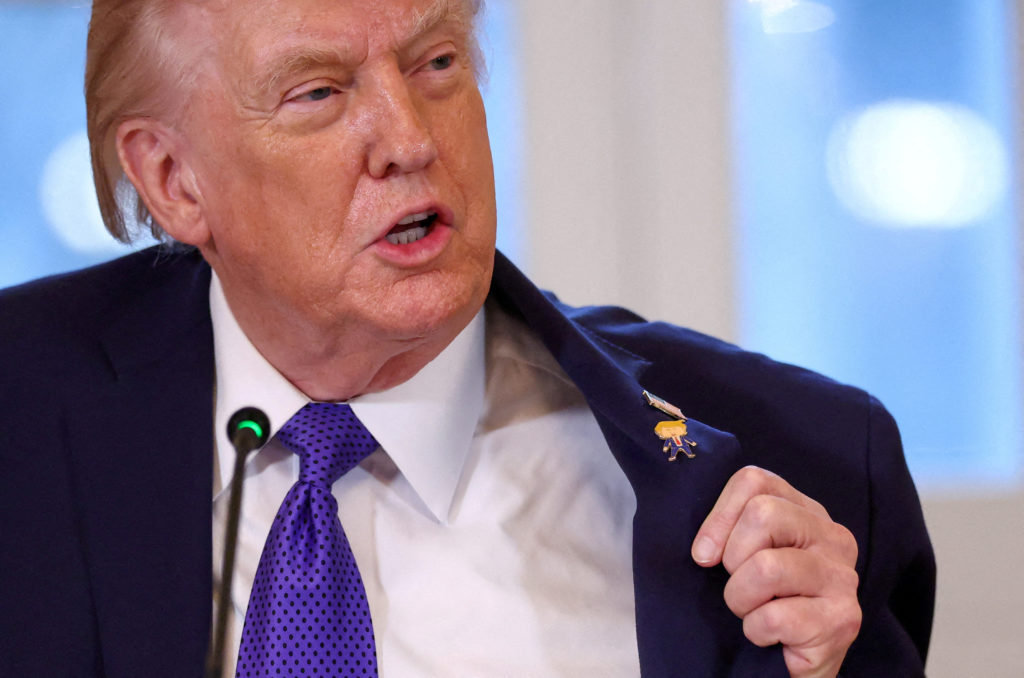
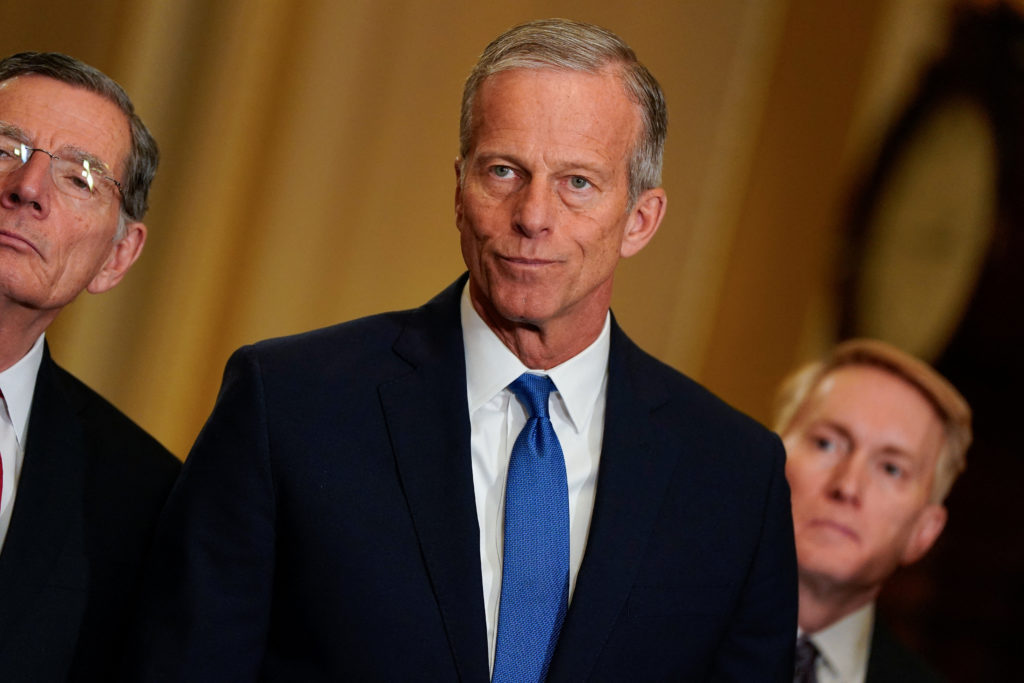
President Trump is trying to lower borrowing costs for people by ordering specific policies, not waiting for the Federal Reserve to cut interest rates. He has directed Fannie Mae and Freddie Mac to buy mortgage bonds and suggested capping credit card rates at 10%. These actions are meant to help people spend less on loans, though their overall economic impact is not certain.
Key Facts
President Trump wants borrowing to be cheaper for consumers.
He ordered Fannie Mae and Freddie Mac to buy $200 billion in mortgage bonds.
This bond buying led to lower mortgage rates, dropping them below 6%.
Trump proposed a cap of 10% on credit card interest rates for one year.
It’s unclear if banks will follow the credit card rate cap without laws forcing them.
Economists warn that such policies might harm the economy by reducing credit access.
Lower mortgage rates could raise housing demand, affecting home prices.
Trump is using executive actions rather than going through Congress or formal regulations.
Read the Original
Want the full story? Tap a source to open the original
article.
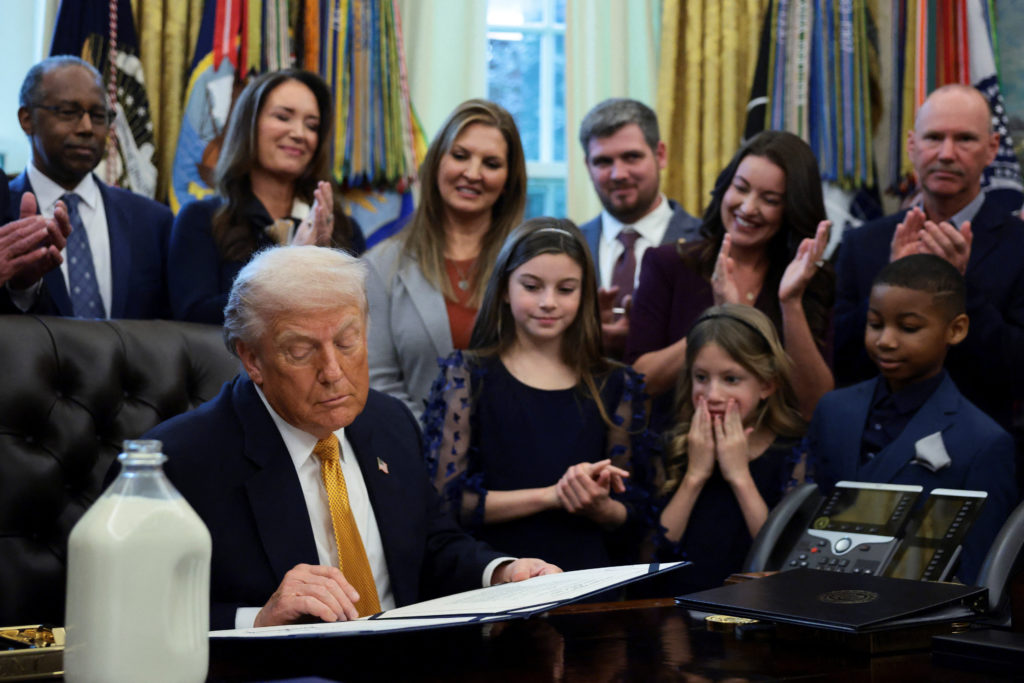
President Donald Trump signed a new law on Wednesday that allows schools to serve whole milk again. This law changes previous rules that limited higher-fat milk options in school meals.
Key Facts
President Donald Trump signed a law to allow whole milk in school lunches.
This law reverses previous rules that restricted higher-fat milk, set during the Obama administration.
The new law is called the Whole Milk for Healthy Kids Act.
Congress approved the Whole Milk for Healthy Kids Act in the fall.
Schools may also start offering fortified soy milk as a nondairy option.
Read the Original
Want the full story? Tap a source to open the original
article.
Home sales in the United States stayed at a 30-year low in 2025 due to high home prices and high mortgage rates. Sales of existing homes have been declining since 2022, with rates beginning to ease in late 2025. The Trump administration proposed measures to increase affordability, though experts think these may have limited effects.
Key Facts
In 2025, home sales in the U.S. totaled 4.06 million, the lowest since 1995.
The median home price in 2025 increased by 1.7% to $414,400.
Mortgage rates were around 7% at the start of the year but ended at 6.15%.
The U.S. housing market has been declining since 2022 due to high mortgage rates.
Proposals from the Trump administration include a 50-year mortgage and mortgage rate reductions.
By late 2025, monthly sales increased, with December home sales reaching an annual rate of 4.35 million.
Inventory of unsold homes rose by 3.5% to 1.18 million by the end of December.
A balanced market between buyers and sellers typically requires a 5- to 6-month supply of homes; current supply is about 3.3 months.
Read the Original
Want the full story? Tap a source to open the original
article.
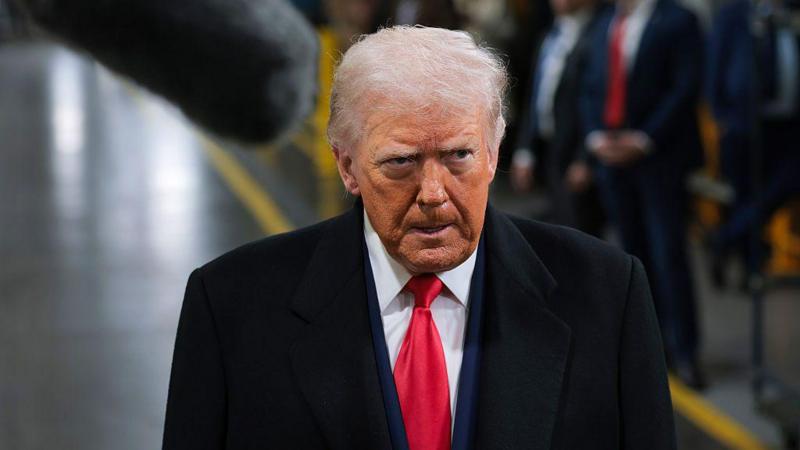
President Donald Trump made a middle-finger gesture at a heckler during his visit to a Ford factory in Detroit, Michigan. The White House defended his actions, describing the response as appropriate to the heckler's comments.
Key Facts
President Trump made the gesture during a tour of a Ford factory in Michigan.
The White House stated the heckler was shouting expletives, prompting Trump's response.
Footage of the incident was published by TMZ, showing the president's reaction.
The heckler referred to Trump as a "paedophile protector," linked to Trump's handling of Jeffrey Epstein files.
The heckler has been suspended by Ford, the United Auto Workers union confirmed to CBS News.
Trump had previously signed a law for the Department of Justice to release files on Epstein, but only some have been made public.
Trump was once associated with Epstein but said they fell out before Epstein's arrest. Trump has not faced accusations of wrongdoing related to Epstein.
The incident occurred before Trump gave a speech at the Detroit Economic Club.
Read the Original
Want the full story? Tap a source to open the original
article.
ICE detained Elias Perez-Zuazo, a Panamanian man, during what was expected to be a routine immigration check-in in Virginia. His husband, a U.S. citizen, had been helping him apply for a green card, and his detention has raised questions about the application process and legal proceedings.
Key Facts
Elias Perez-Zuazo is a Panamanian national who was detained by ICE during a routine check-in.
Perez-Zuazo and his husband, who is a U.S. citizen, are in the process of applying for a green card.
ICE claims Perez-Zuazo crossed the U.S.-Mexico border illegally in November 2021.
An immigration judge ordered his removal in 2021, according to ICE, but Perez-Zuazo’s lawyer disputes this.
A federal judge has temporarily stopped Perez-Zuazo's removal from Virginia while reviewing the legality of his detention.
ICE has been asked to justify Perez-Zuazo's detention and must respond by a set deadline.
The couple married in February 2024 and had started the green card application process.
Concerns have been raised about Perez-Zuazo’s safety if deported to Panama, where same-sex marriage is not legal.
Read the Original
Want the full story? Tap a source to open the original
article.
The Trump administration apologized for mistakenly deporting a Massachusetts college student named Any Lucia Lopez Belloza to Honduras. This happened despite a court order requiring her to stay in the U.S. for at least 72 hours. An ICE officer failed to follow the court order, leading to her deportation.
Key Facts
Any Lucia Lopez Belloza is a 19-year-old student at Babson College in Massachusetts.
She was detained in Boston on November 20, 2025.
Lopez Belloza was deported to Honduras two days later.
A court had ordered immigration officials to keep her in the U.S. for at least 72 hours.
The Trump administration admitted the mistake in federal court and issued an apology.
The error was attributed to an ICE officer not following the court order.
The government’s lawyer stated this was not an intentional violation but a mistake by one individual.
Read the Original
Want the full story? Tap a source to open the original
article.
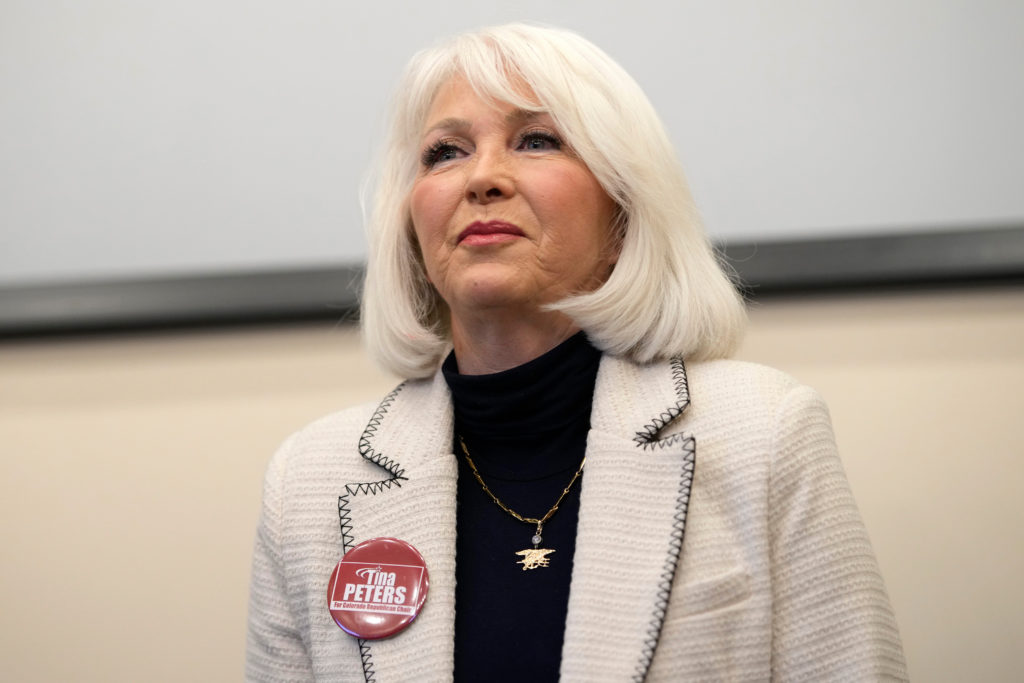
Lawyers for Tina Peters, a former elections clerk in Colorado, are appealing her conviction for her role in a data breach of voting equipment related to the 2020 presidential election. Peters was found guilty of state crimes after promoting unfounded claims about voting machine fraud and is currently serving a nine-year prison sentence.
Key Facts
Tina Peters was a former elections clerk in Mesa County, Colorado.
She was involved in a data breach of the county's voting equipment.
The case is linked to the 2020 presidential election.
Peters was convicted in 2024 for state crimes related to the breach.
She is serving a nine-year sentence in a prison in Pueblo, Colorado.
Her lawyers are appealing the conviction in a state appeals court.
President Donald Trump and Peters' supporters are advocating for her release.
Read the Original
Want the full story? Tap a source to open the original
article.
E. Jean Carroll's lawyers have asked the Supreme Court to dismiss President Donald Trump's attempt to stop a defamation case against him. Carroll claims Trump's comments about her were personal and should not be protected by presidential immunity. The Supreme Court will consider this request as part of their ongoing review.
Key Facts
E. Jean Carroll has a defamation case against President Donald Trump.
Carroll's lawyers filed a document asking the Supreme Court to reject Trump's effort to stop the case.
They argue that Trump's arguments are both procedurally flawed and legally unsupported.
Carroll claims that Trump's statements about her were made in a personal context, not as president.
Lower courts have allowed Carroll's case to continue, dismissing Trump's claims of immunity.
The Supreme Court is set to review the case in their docket as case number 25‑573.
Read the Original
Want the full story? Tap a source to open the original
article.
Supreme Court Justice Neil Gorsuch noted that past rulings on double jeopardy have been unclear. The Court decided unanimously in the case Barrett v. United States that one act cannot lead to two convictions under a specific federal law about firearms used in crimes.
Key Facts
The case Barrett v. United States dealt with the federal law 18 U.S.C. §924 about using firearms in crimes.
The law included provisions about crimes of violence or drug trafficking and penalties if these acts lead to death.
The issue was whether one act could result in two convictions under these provisions.
The Supreme Court ruled unanimously that one act can only lead to one conviction.
Justice Neil Gorsuch expressed concerns about past confusion on double jeopardy.
The Court's decision overturns an earlier ruling and sends the case back for more proceedings.
Justice Ketanji Brown Jackson stated that Congress did not authorize two convictions for one act under these sections.
Read the Original
Want the full story? Tap a source to open the original
article.
The FBI searched the home and devices of Washington Post reporter Hannah Natanson as part of an investigation related to leaked classified reports. This action is part of the Trump administration's efforts to find government leaks. The Justice Department led by Attorney General Pam Bondi is increasingly pursuing actions against suspected leakers, including reversing previous policies that protected reporters' sources.
Key Facts
The FBI searched the home of Hannah Natanson, a reporter for the Washington Post.
Natanson covers the Trump administration and its changes to the federal government.
The search is linked to an investigation into a Maryland administrator accused of taking classified reports.
Attorney General Pam Bondi reversed a policy that previously restricted seizing reporters' phone records.
Natanson has won a Peabody Award and was part of a Pulitzer Prize-winning team.
Press freedom groups express concern over government actions they see as threatening to journalists.
The House Oversight Committee voted to subpoena investigative journalist Seth Harp, leading to calls for protection of journalistic freedom.
Read the Original
Want the full story? Tap a source to open the original
article.
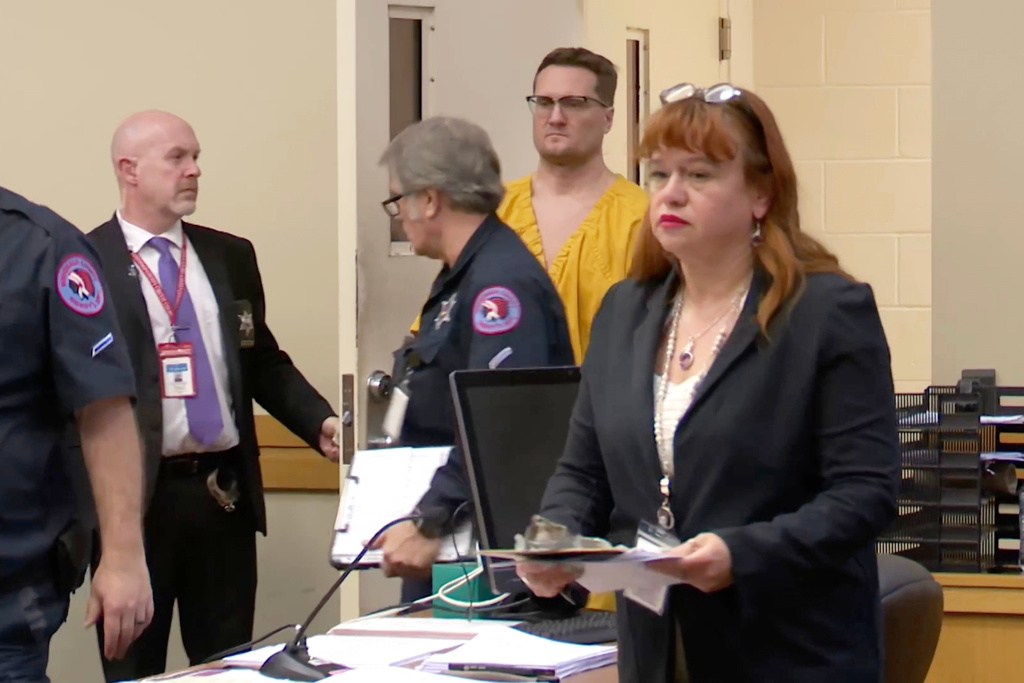
Police in Columbus, Ohio, are investigating the murder of Spencer and Monique Tepe. The suspect, Michael David McKee, was arrested and charged, and police have searched his home for evidence. The case is ongoing as authorities continue to gather and analyze evidence.
Key Facts
Spencer and Monique Tepe were found dead with gunshot wounds in their home on December 30.
Police identified the case as a homicide and arrested Monique's ex-husband, Michael McKee.
McKee is charged with premeditated aggravated murder.
Police consider the attack to be targeted and related to domestic violence.
The Columbus Police Chief confirmed they have evidence linking McKee to the crime.
Investigators retrieved multiple weapons from McKee's home.
McKee plans to plead not guilty and waived his right to an extradition hearing.
He is currently held in Winnebago County Jail awaiting extradition to Ohio.
Read the Original
Want the full story? Tap a source to open the original
article.
The family of Renee Good, who was killed by ICE in Minneapolis on January 7, 2026, has hired the law firm Romanucci & Blandin to investigate her death. The investigation aims to find out how she died and whether it could have been prevented.
Key Facts
Renee Good was killed by ICE in Minneapolis on January 7, 2026.
Her family has hired the law firm Romanucci & Blandin for an independent investigation.
The law firm is based in Chicago and known for civil rights cases.
Antonio M. Romanucci, a partner at the firm, was on the legal team for George Floyd's family.
George Floyd's 2020 death led to widespread protests and increased support for the Black Lives Matter movement.
The investigation seeks to understand what happened to Renee Good on the day she died.
Read the Original
Want the full story? Tap a source to open the original
article.
Each summary links back to the original reporting, so you can check the work. Support that, and get the daily digest every morning. Most choose $3.99/month.
Democratic leaders in the Senate see a small chance to gain a majority in the upcoming elections. They need to win four seats from Republicans, focusing on competitive states. Their confidence grew when Mary Peltola announced her Senate run in Alaska, a typically Republican state.
Key Facts
Democrats need to win four more Senate seats to take a majority from Republicans.
Mary Peltola announced she will run for Senate in Alaska, giving Democrats hope in the typically Republican state.
Democrats have strong candidates running in states like Ohio, North Carolina, and Maine.
The Democratic caucus currently has 47 members, including two independents, while Republicans hold 53 seats.
Independent voters have recently leaned more towards Democrats, according to a Gallup poll.
Age of candidates is a concern, with several Democratic recruits being older, which some voters dislike.
Winning back the Senate is a top priority for Democratic leaders, focusing on who can win in each state.
Read the Original
Want the full story? Tap a source to open the original
article.
Democrat Mary Peltola is leading Republican Senator Dan Sullivan in a poll for Alaska's 2026 U.S. Senate race. The poll suggests Peltola, who has previously won statewide elections, could make the race competitive in a typically Republican-leaning state.
Key Facts
Mary Peltola previously served as a Democratic Representative for Alaska.
She won a special election in 2022, defeating Sarah Palin, and was elected for a full term later that year.
Peltola lost her re-election bid in 2024.
In a recent poll, Peltola leads Sullivan by over 1.5 percentage points.
The poll showed 48% of participants support Peltola, while 46.4% back Sullivan.
The survey included 2,132 Alaska adults with a margin of error of ±2 percentage points.
Peltola raised $1.5 million within the first day of her Senate campaign.
Alaska voters have a high percentage of people with no party affiliation, and the race's outcome could affect Senate control.
Read the Original
Want the full story? Tap a source to open the original
article.
The U.S. State Department announced it will pause immigrant visa processing for 75 countries deemed likely to use public assistance in the U.S. This decision is based on guidelines to limit immigrants who might become "public charges." The suspension starts on January 21, but it does not affect temporary visas like tourist or business visas.
Key Facts
The State Department will suspend immigrant visas for 75 countries, including Afghanistan, Iran, and Russia.
The suspension is part of efforts to prevent immigrants likely to use public assistance.
This policy follows guidelines expanded by President Donald Trump to identify potential "public charges."
Non-immigrant visas, such as tourist or business ones, remain unaffected by this suspension.
The suspension will start on January 21.
Countries affected are primarily in Africa, Asia, and Latin America.
Consular officers will evaluate many factors such as age, health, and English proficiency.
The demand for non-immigrant visas is predicted to rise due to upcoming international events in the U.S. like the 2026 World Cup and 2028 Olympics.
Read the Original
Want the full story? Tap a source to open the original
article.
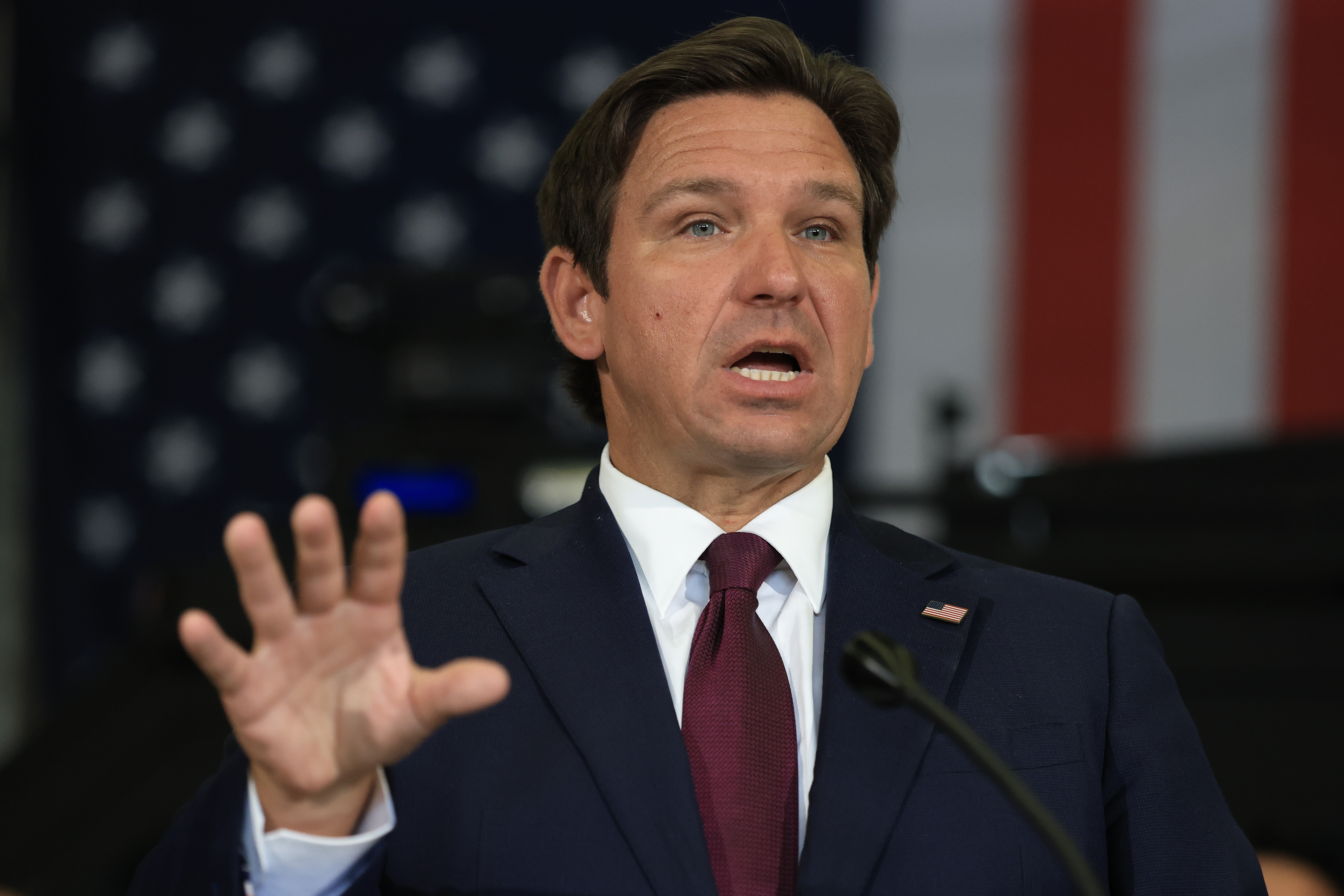
Florida Governor Ron DeSantis talked about his desire to end property taxes in Florida during his State of the State address. He suggested that residents should have the chance to vote on this issue. DeSantis highlighted that property taxes have increased significantly over the years, making it hard for people to afford new homes.
Key Facts
Governor Ron DeSantis wants to eliminate property taxes in Florida.
He suggests a constitutional amendment to let voters decide on property taxes.
Florida does not have a personal income tax, making it a tax-friendly state.
Property tax revenue in Florida went from $32 billion seven years ago to $56 billion last year.
DeSantis says rising property taxes are trapping people in their current homes.
Eliminating property taxes could impact funding for services like 911 and schools.
Critics say it's more likely taxes will be reduced rather than removed entirely.
Read the Original
Want the full story? Tap a source to open the original
article.
More than half of U.S. adults surveyed in a new poll believe President Donald Trump has overextended U.S. military involvement abroad. The poll highlights dissatisfaction with Trump's foreign policy, especially regarding actions in Venezuela. While Republicans generally support Trump's approach, many Democrats and independents think the U.S. should reduce its international military activities.
Key Facts
56% of U.S. adults think President Trump has "gone too far" with military interventions in other countries.
The poll was conducted shortly after Venezuela's President Nicolás Maduro was captured.
A majority of Americans disapprove of Trump's handling of foreign policy and the situation in Venezuela.
Most Republicans believe Trump's foreign policy actions are appropriate, but few want him to escalate further.
About 57% disapprove of Trump's actions in Venezuela, aligning with his overall job approval ratings.
Many Americans see U.S. intervention in Venezuela as beneficial for stopping illegal drug flow.
Nearly half of Americans prefer a "less active" U.S. role in global affairs.
Read the Original
Want the full story? Tap a source to open the original
article.
A federal judge appointed by President Biden decided not to block ICE operations in Minnesota for now, wanting more evidence before making a decision. The state had filed a lawsuit against Homeland Security officials, claiming an increase in federal law enforcement activity, but the judge stressed this decision doesn't show her views on whether the raids are unconstitutional.
Key Facts
A federal judge appointed by President Biden ruled in the case.
The judge decided not to issue a temporary restraining order against ICE.
The state of Minnesota filed the lawsuit against Homeland Security and other federal officials.
The lawsuit aims to stop what it calls an increase in federal law enforcement activity.
Judge Kate Menendez said she needs more evidence before making a final ruling.
Her decision does not indicate her stance on the constitutional issues raised.
Additional legal filings from both sides are expected later in the month.
Read the Original
Want the full story? Tap a source to open the original
article.
On the biggest stories we show what the outlets agree on and where they differ. Readers keep that going, and get the daily digest by email every morning. Most choose $3.99/month.
The Senate is voting on a resolution to limit President Trump's military actions against Venezuela. Five Republican senators joined Democrats to support the resolution, which led to criticism from President Trump. The resolution follows the capture of Venezuelan leader Nicolás Maduro by U.S. troops.
Key Facts
The Senate is considering a resolution to limit military action by President Trump in Venezuela.
Five Republican senators supported advancing this resolution along with Democrats.
President Trump has criticized these Republican senators publicly.
The controversy follows the capture of Venezuelan leader Nicolás Maduro by U.S. forces.
President Trump made remarks against the senators in a speech in Michigan.
Senators receiving criticism include Rand Paul, Lisa Murkowski, and Susan Collins.
Read the Original
Want the full story? Tap a source to open the original
article.
Medicare will stop covering most telehealth services after January 30, except for behavioral health. People in rural areas or specific situations like stroke or home dialysis will still have access. These changes might make it harder for some seniors on Medicare to get healthcare.
Key Facts
Medicare telehealth coverage ends on January 30 for most cases.
Behavioral health services will continue to be covered by telehealth.
People in rural areas can still use telehealth if they meet certain conditions.
Telehealth coverage will still include services for acute stroke and home dialysis.
Many doctors use telehealth regularly, with 71.4 percent doing so weekly.
The changes mean people may need to visit doctors in person more often.
Some Medicare Advantage plans might offer different telehealth options.
Read the Original
Want the full story? Tap a source to open the original
article.